Does An Amendment To A Trust Need To Be Notarized
Description


Get your form ready online
Our built-in tools help you complete, sign, share, and store your documents in one place.
Make edits, fill in missing information, and update formatting in US Legal Forms—just like you would in MS Word.
Download a copy, print it, send it by email, or mail it via USPS—whatever works best for your next step.
Sign and collect signatures with our SignNow integration. Send to multiple recipients, set reminders, and more. Go Premium to unlock E-Sign.
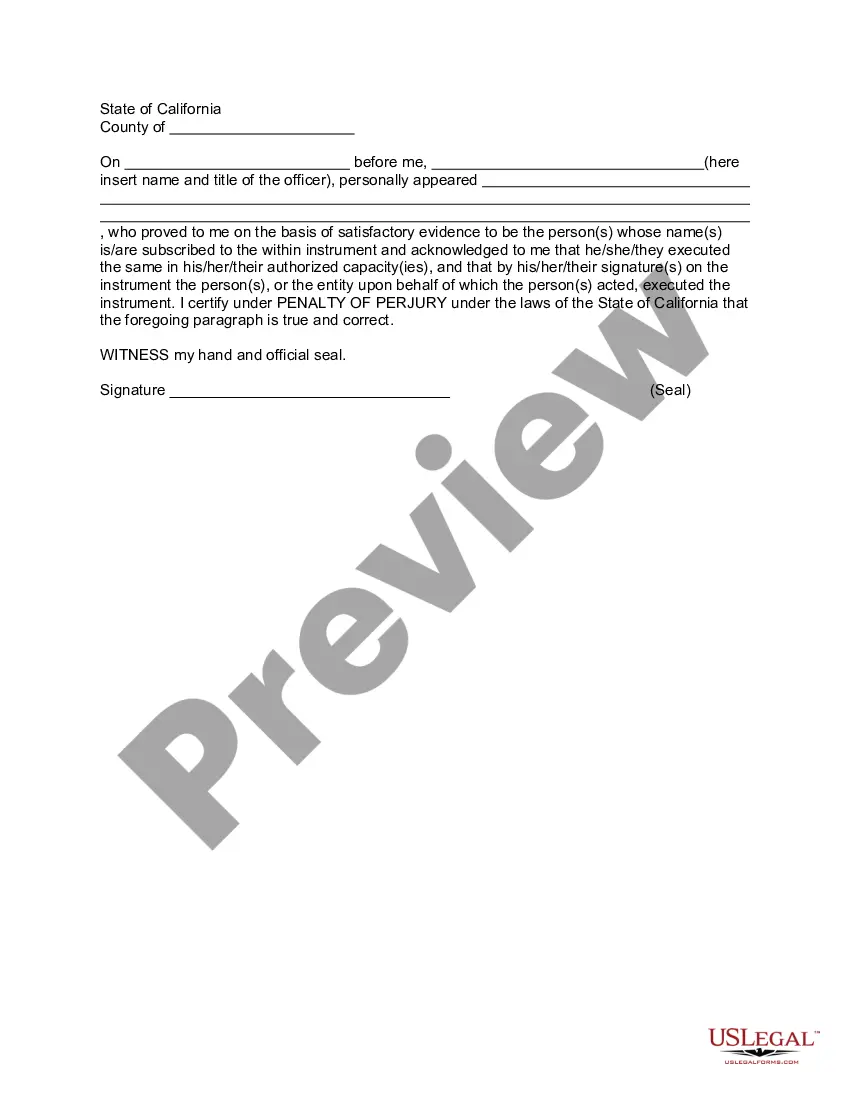
If this form requires notarization, complete it online through a secure video call—no need to meet a notary in person or wait for an appointment.
We protect your documents and personal data by following strict security and privacy standards.

Make edits, fill in missing information, and update formatting in US Legal Forms—just like you would in MS Word.

Download a copy, print it, send it by email, or mail it via USPS—whatever works best for your next step.

Sign and collect signatures with our SignNow integration. Send to multiple recipients, set reminders, and more. Go Premium to unlock E-Sign.

If this form requires notarization, complete it online through a secure video call—no need to meet a notary in person or wait for an appointment.

We protect your documents and personal data by following strict security and privacy standards.
Looking for another form?







How to fill out California Amendment To Living Trust?
- Visit the US Legal Forms website and log into your account if you're an existing user. Make sure your subscription is active to access your documents immediately.
- For first-time users, explore the website and check the preview mode for the trust amendment form you need. Make sure the chosen form matches your local jurisdiction's requirements.
- If you need a different template, utilize the search feature to find the correct document that fits your needs.
- Select your desired subscription plan by clicking on the Buy Now button, then register for an account to gain access to the legal form library.
- Complete your purchase by entering your payment details or using PayPal to finalize the transaction.
- After your purchase, download the document to your device and access it anytime through the My Forms section in your profile.
With US Legal Forms, you gain access to a robust library of over 85,000 legal forms that are easy to fill and edit. This service empowers users and attorneys alike to execute legal documents quickly and efficiently.
Start your journey today and ensure your legal documents are accurate and compliant. Visit US Legal Forms now!
Form popularity
FAQ
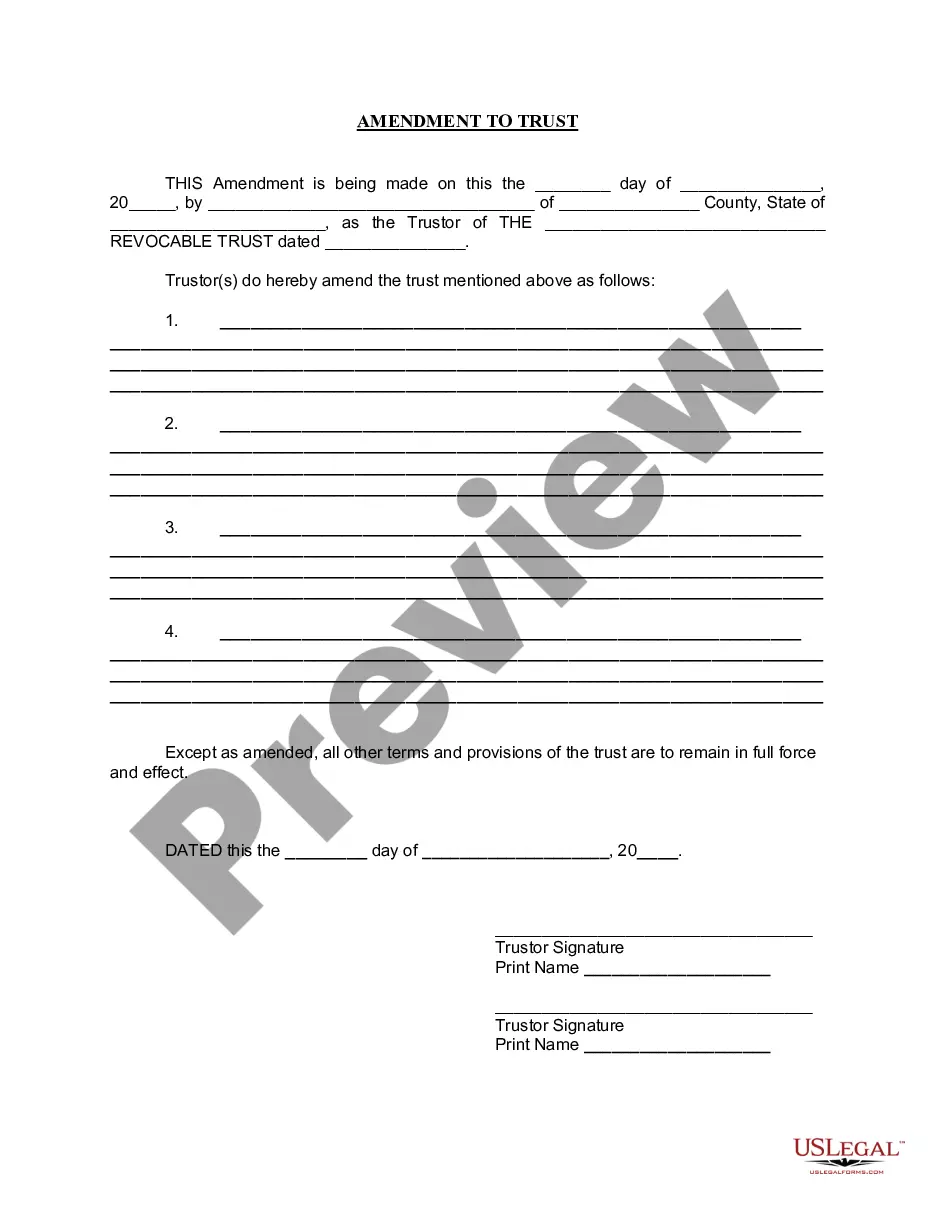
A codicil applies specifically to a will, allowing you to make changes without rewriting the entire document. On the other hand, an amendment to a trust alters the trust’s terms, which can include beneficiaries or asset distribution. Regarding legal requirements, you may wonder, does an amendment to a trust need to be notarized? Typically, yes, to ensure the amendment is valid and enforceable. Using a trusted platform like US Legal Forms helps you navigate these changes with clear templates and guidance.
A trust amendment refers to changes made to existing terms of the trust, while a trust modification often involves altering the fundamental structure or function of the trust. While both processes allow for adjustments, modifications may significantly impact how the trust operates. Regardless of the terminology, it's essential to understand whether an amendment to a trust needs to be notarized, as this influences its legal standing.
Amending a trust can be straightforward if you follow the correct procedures and guidelines. Depending on the complexity of the changes, some individuals find it easy to complete on their own, while others prefer professional assistance. Be sure to check if an amendment to a trust needs to be notarized in your state to ensure that your amendment is legally effective.
You can obtain a trust amendment form through several avenues, including online legal services, legal stationery stores, or from your attorney if you are working with one. Platforms such as USLegalForms offer customizable amendment forms tailored to your specific needs. These resources ensure that you have a valid and legally compliant document, particularly important if you're wondering whether an amendment to a trust needs to be notarized.
While you do not necessarily need a lawyer to make changes to a trust, it is often recommended to seek legal advice. A lawyer can provide guidance, ensure the amendments comply with state laws, and help avoid common pitfalls. This is particularly important if you are unsure whether an amendment to a trust needs to be notarized, as this requirement can differ depending on local regulations.
To amend a trust, you generally need to draft a formal amendment document that specifies the changes you wish to make. This document should clearly state the previous terms and the new terms of the trust. It’s important to review the original trust document for any specific requirements that may relate to the amendment process. Additionally, remember to consider whether an amendment to a trust needs to be notarized, as this may vary by state.
To amend is to formally change a part of the trust document, while to modify often signifies a broader revision that can include better aligning it with current needs or desires. Amendments are specific changes, while modifications may encompass several related adjustments within the trust. Understanding these terms is crucial, especially when evaluating if an amendment to a trust needs to be notarized. Always consult resources like USLegalForms to ensure your changes comply with legal standards.
A trust modification involves changing the terms of a trust, but it might not alter the foundational purpose of the trust. This can include adding new terms or changing the responsibilities of the trustee. Remember, when you ponder, 'Does an amendment to a trust need to be notarized,' many modifications could require preceding amendments to adhere to state laws. Having tools like the USLegalForms platform can simplify this process.
An amendment refers to a formal change in the original trust document, while an adjustment often implies a minor change or correction to existing terms. Amendments typically involve significant alterations that require legal formalities, whereas adjustments may not. Both play distinct roles in managing trusts, so you should carefully consider the implications of each when deciding if an amendment to a trust needs to be notarized.
An amendment in a trust refers to a formal change made to the original trust document. This change can include alterations to the terms of the trust, updates on beneficiaries, or modifications to the trustee's powers. Keep in mind that if you are asking, 'Does an amendment to a trust need to be notarized,' the answer often hinges on your state's laws. By understanding amendments, you can ensure your trust remains aligned with your intentions.