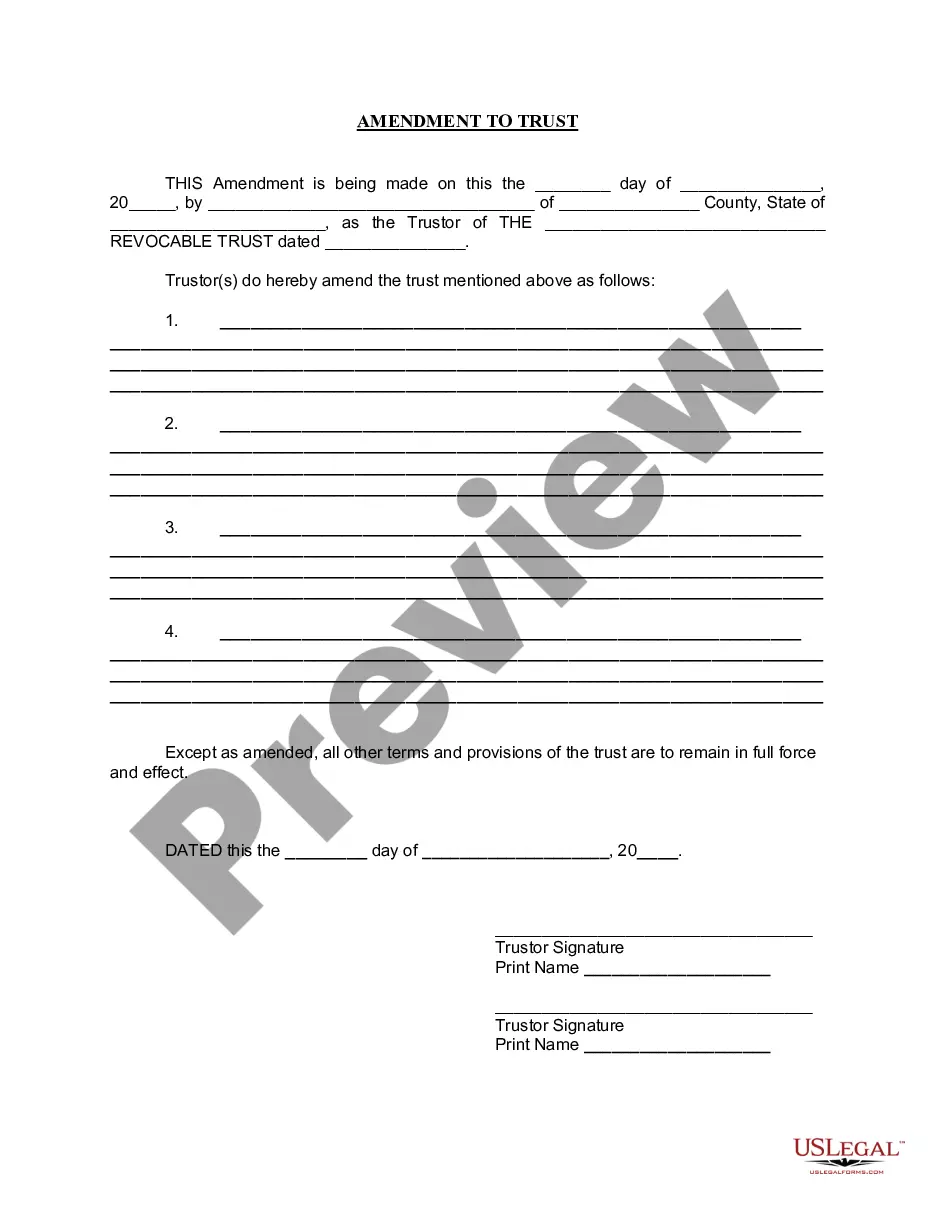
Amendment To Living Trust Form With No Beneficiary
Description

Get your form ready online
Our built-in tools help you complete, sign, share, and store your documents in one place.
Make edits, fill in missing information, and update formatting in US Legal Forms—just like you would in MS Word.
Download a copy, print it, send it by email, or mail it via USPS—whatever works best for your next step.
Sign and collect signatures with our SignNow integration. Send to multiple recipients, set reminders, and more. Go Premium to unlock E-Sign.
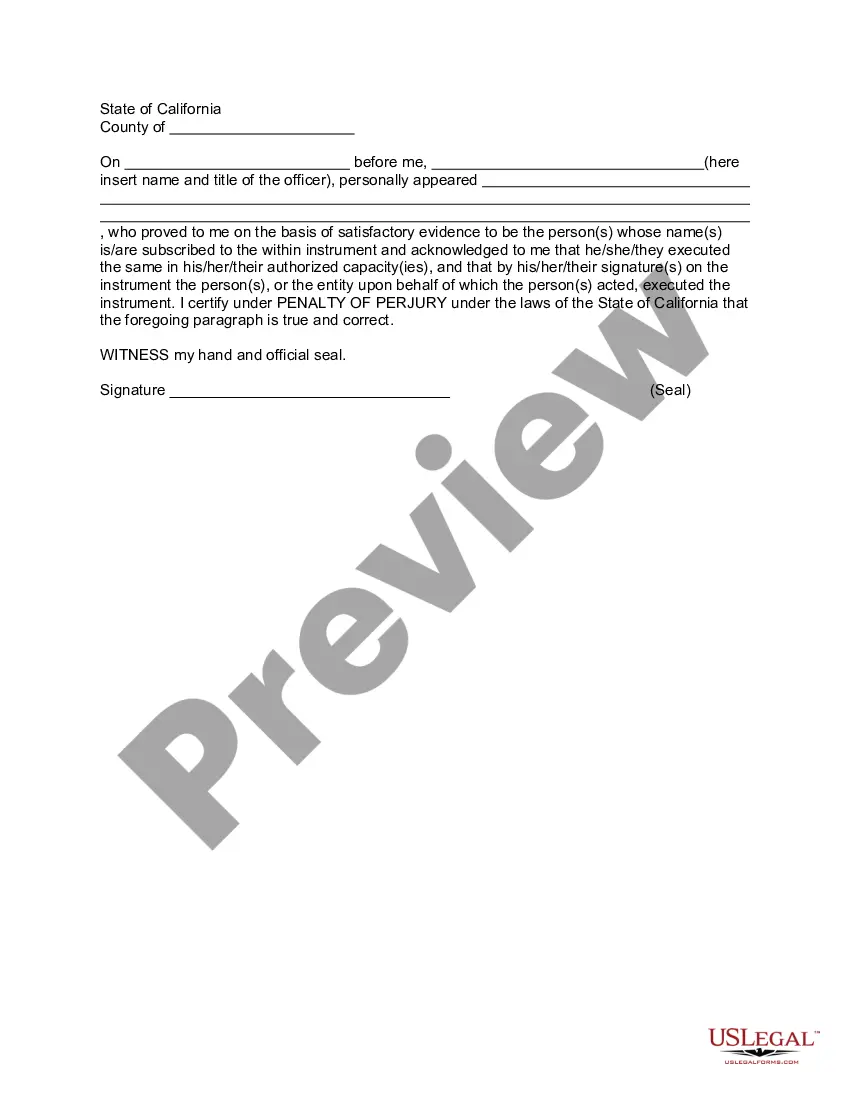
If this form requires notarization, complete it online through a secure video call—no need to meet a notary in person or wait for an appointment.
We protect your documents and personal data by following strict security and privacy standards.

Make edits, fill in missing information, and update formatting in US Legal Forms—just like you would in MS Word.

Download a copy, print it, send it by email, or mail it via USPS—whatever works best for your next step.

Sign and collect signatures with our SignNow integration. Send to multiple recipients, set reminders, and more. Go Premium to unlock E-Sign.

If this form requires notarization, complete it online through a secure video call—no need to meet a notary in person or wait for an appointment.

We protect your documents and personal data by following strict security and privacy standards.
Looking for another form?
How to fill out California Amendment To Living Trust?
Managing legal documents and processes can be a laborious extension to your daily routine.
Modification To Living Trust Document With No Beneficiary and similar documents often require you to locate them and figure out how to fill them out correctly.
For this reason, if you are handling financial, legal, or personal affairs, having a comprehensive and convenient online repository of forms readily available will greatly assist.
US Legal Forms is the leading online service of legal templates, offering over 85,000 state-specific documents and various resources to aid you in completing your paperwork effortlessly.
Is it your first time using US Legal Forms? Register and create an account in just a few minutes and you will have access to the form library and Modification To Living Trust Document With No Beneficiary. Then, follow the steps outlined below to complete your form: Be sure to have located the correct document using the Review feature and examining the form description. Select Buy Now when ready, and choose the monthly subscription plan that fits you. Click Download and then fill out, eSign, and print the form. US Legal Forms has twenty-five years of experience assisting users manage their legal documents. Find the form you need today and simplify any process with ease.
- Explore the collection of relevant documents accessible to you with just one click.
- US Legal Forms provides state- and county-specific documents available for download at any time.
- Protect your document management processes with superior support that allows you to prepare any form in minutes without any additional or concealed fees.
- Simply Log In to your account, find Modification To Living Trust Document With No Beneficiary, and obtain it immediately from the My documents section.
- You can also access previously downloaded documents.
Form popularity
FAQ
Disinheriting Beneficiaries Who Contest If the decedent's estate plan contained a no-contest clause, a trustee can remove a beneficiary who contests the decedent's estate plan. A no-contest is a common trust provision intended to ward off potential attempts to overturn the estate plan.
Irrevocable trusts are just that ? irrevocable. Therefore, when asking the question ?can an irrevocable trust be amended?? the answer is usually ?no? you normally cannot revoke or amend them.
In most cases, a trust deed generally offers two processes for the removal of a beneficiary. Most commonly, the beneficiary can sign a document to renunciate all interests as a beneficiary. Otherwise, the trustee may have discretionary power to revoke the beneficiary.
A revocable trust can be modified while the Grantor is alive. Revising the terms of a trust is known as ?amending? the trust. An amendment is generally appropriate when there are only a few minor changes to make, like rewording a certain paragraph, changing the successor trustee, or modifying beneficiaries.
It's important to know what you want to change and where in your trust document this information lives (such as the article number you're amending). Fill out the amendment form. Complete the entire form. It's important to be clear and detailed in describing your changes.