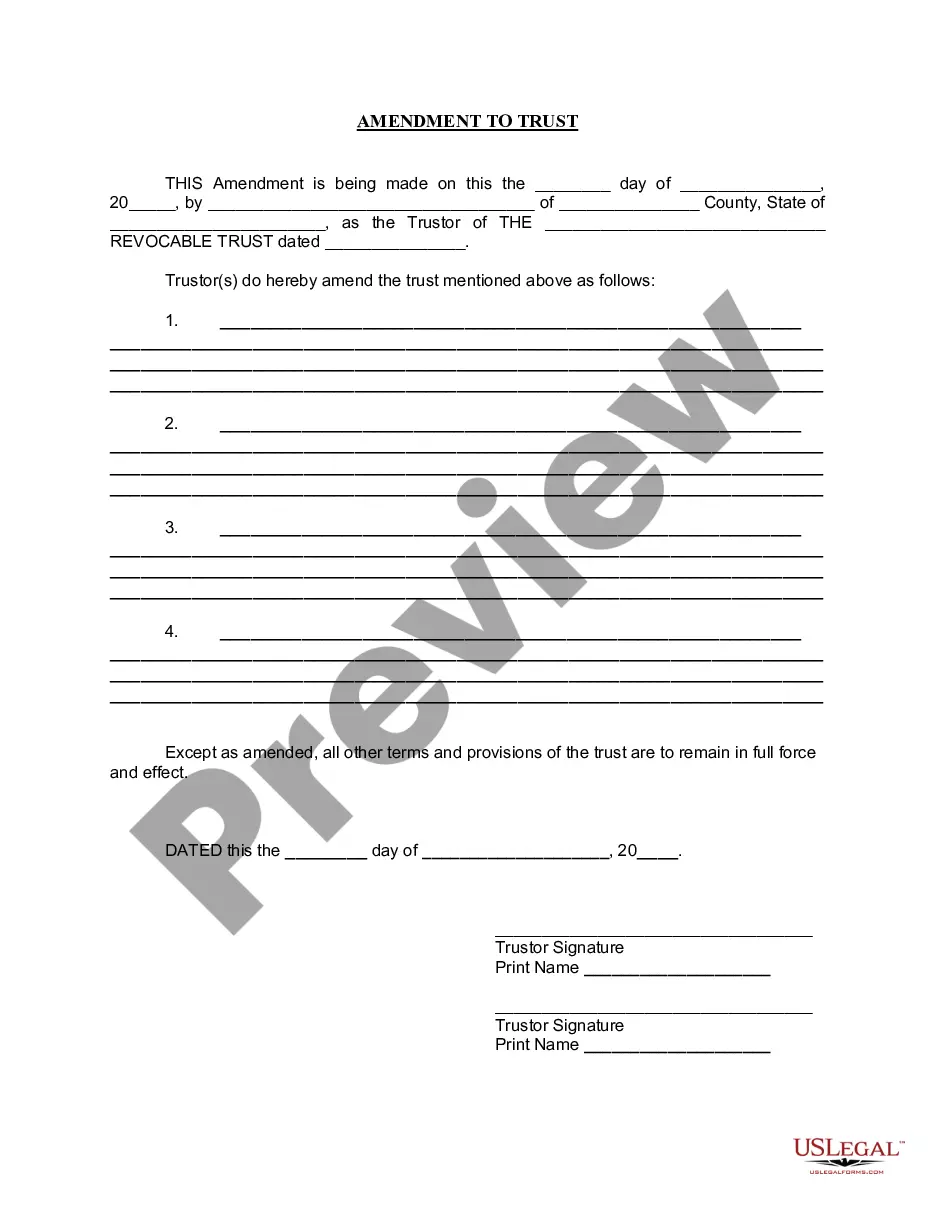
Amendment Living Trust With The Trustee
Description


Get your form ready online
Our built-in tools help you complete, sign, share, and store your documents in one place.
Make edits, fill in missing information, and update formatting in US Legal Forms—just like you would in MS Word.
Download a copy, print it, send it by email, or mail it via USPS—whatever works best for your next step.
Sign and collect signatures with our SignNow integration. Send to multiple recipients, set reminders, and more. Go Premium to unlock E-Sign.
If this form requires notarization, complete it online through a secure video call—no need to meet a notary in person or wait for an appointment.
We protect your documents and personal data by following strict security and privacy standards.

Make edits, fill in missing information, and update formatting in US Legal Forms—just like you would in MS Word.

Download a copy, print it, send it by email, or mail it via USPS—whatever works best for your next step.

Sign and collect signatures with our SignNow integration. Send to multiple recipients, set reminders, and more. Go Premium to unlock E-Sign.

If this form requires notarization, complete it online through a secure video call—no need to meet a notary in person or wait for an appointment.

We protect your documents and personal data by following strict security and privacy standards.
Looking for another form?








How to fill out California Amendment To Living Trust?
- If you are a returning user, log in and ensure your subscription is active before downloading the required form template to your device.
- For first-time users, start by reviewing the Preview mode and description of the Amendment living trust to confirm it meets your specific requirements and local jurisdiction.
- If you need a different template, utilize the Search feature to find a more suitable one. Once you've found the correct document, proceed to the next step.
- Purchase the document by clicking the Buy Now button, then select your preferred subscription plan and create an account for access to the extensive library.
- Complete your transaction by entering your payment details through credit card or PayPal, then finalize your order.
- Download your Amendment living trust form to your device. Access it anytime later in the My documents section of your profile.
Concluding your Amendment living trust process is straightforward with US Legal Forms. Their comprehensive collection and expert support ensure that your documents are not only correctly filled out but remain legally sound.
Empower your legal needs today for a smoother planning experience!
Form popularity
FAQ
Unlike a will, a living trust does not use a codicil. Instead, you can amend a living trust with the trustee to add or modify provisions. The process is similar to creating an original amendment, allowing you to adjust details as needed. Clarity is key, as any changes must reflect your true intentions and must comply with applicable laws.
Changing a living trust can be straightforward, depending on the complexity of the amendments. If you want to amend a living trust with the trustee, you should ensure that the changes reflect your current needs and circumstances. It might involve reviewing and possibly re-evaluating the trust's provisions. The good news is that tools like USLegalForms can guide you in making these changes easily.
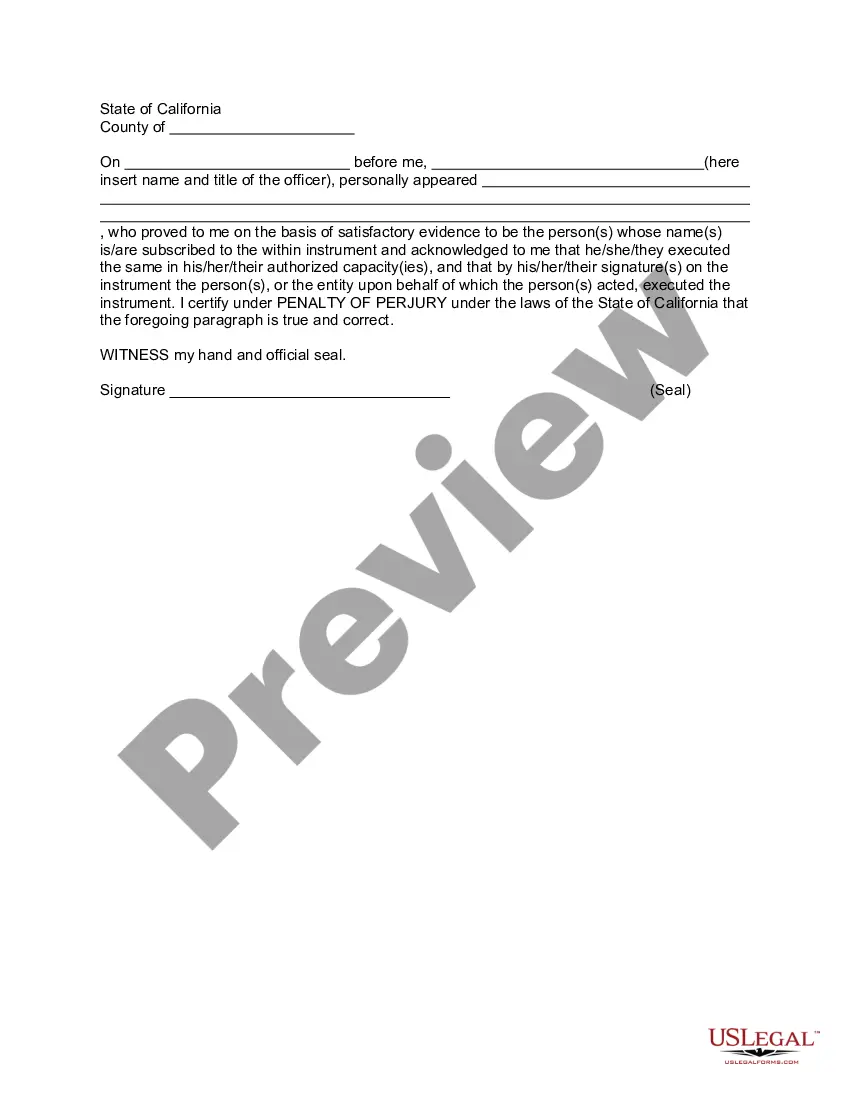
To write an amendment to a living trust, begin by clearly identifying the original trust document and stating that your new document is an amendment. Next, specify the changes you want to make, ensuring you include details like names, dates, and specific clauses. After drafting, it is crucial to sign the amendment in front of a notary or witnesses as required by state law. This way, you can effectively amend a living trust with the trustee while ensuring legality.
You do not necessarily need a lawyer to make changes to a trust, but having one can simplify the process. If you choose to amend a living trust with the trustee, a lawyer can help ensure your amendment aligns with legal requirements. They can also provide guidance on any state-specific laws you should consider. Overall, while it is possible to do it yourself, consulting a professional can save you time and potential issues.
Yes, you can write a codicil yourself, provided you follow legal guidelines. Ensure it clearly states the changes to your existing trust, referencing it accurately. While creating a codicil as an amendment living trust with the trustee may seem easy, it is advisable to seek assistance if you have any doubts. Using a platform like US Legal Forms can provide templates and guidance to help you through.
To amend a trust document, begin by reviewing the original trust to understand what needs changing. Draft the amendment living trust with the trustee, detailing the specific alterations you want to implement. After that, sign and date the document, ensuring both you and the trustee have copies. If you feel uncertain about the process, consider consulting a legal expert.
Amending a trust is usually straightforward. It involves drafting an amendment living trust with the trustee that identifies the specific changes you wish to make. While the process is simple, it can appear complicated without proper direction. Utilizing services like US Legal Forms can guide you through the necessary steps to ensure your trust reflects your current wishes.
An example of a written codicil may include a statement such as, 'I hereby amend my living trust dated date by adding the following provisions.' You can specify the changes, whether it's altering beneficiaries or modifying trustee roles. This format clearly outlines your intentions. Always keep the amendment living trust with the trustee updated and organized.
A codicil does not have to be handwritten, but it must be signed and dated by you. If creating a written codicil that serves as an amendment living trust with the trustee, it is wise to type it for clarity. Using a computer can also enhance legibility, reducing the chance of misunderstandings. No matter how you compose it, ensure it meets legal requirements.
Generally, an amendment to a trust does not need to be recorded with the state. However, it is crucial to keep a copy of the amendment living trust with the trustee in your personal records. Doing so helps clarify your wishes and ensures that the trustee can follow them accurately. For peace of mind, consult an attorney for guidance specific to your situation.