Tenant Rules For Pets
Description
Get your form ready online
Our built-in tools help you complete, sign, share, and store your documents in one place.
Make edits, fill in missing information, and update formatting in US Legal Forms—just like you would in MS Word.
Download a copy, print it, send it by email, or mail it via USPS—whatever works best for your next step.
Sign and collect signatures with our SignNow integration. Send to multiple recipients, set reminders, and more. Go Premium to unlock E-Sign.
If this form requires notarization, complete it online through a secure video call—no need to meet a notary in person or wait for an appointment.
We protect your documents and personal data by following strict security and privacy standards.

Make edits, fill in missing information, and update formatting in US Legal Forms—just like you would in MS Word.

Download a copy, print it, send it by email, or mail it via USPS—whatever works best for your next step.

Sign and collect signatures with our SignNow integration. Send to multiple recipients, set reminders, and more. Go Premium to unlock E-Sign.

If this form requires notarization, complete it online through a secure video call—no need to meet a notary in person or wait for an appointment.

We protect your documents and personal data by following strict security and privacy standards.
Looking for another form?







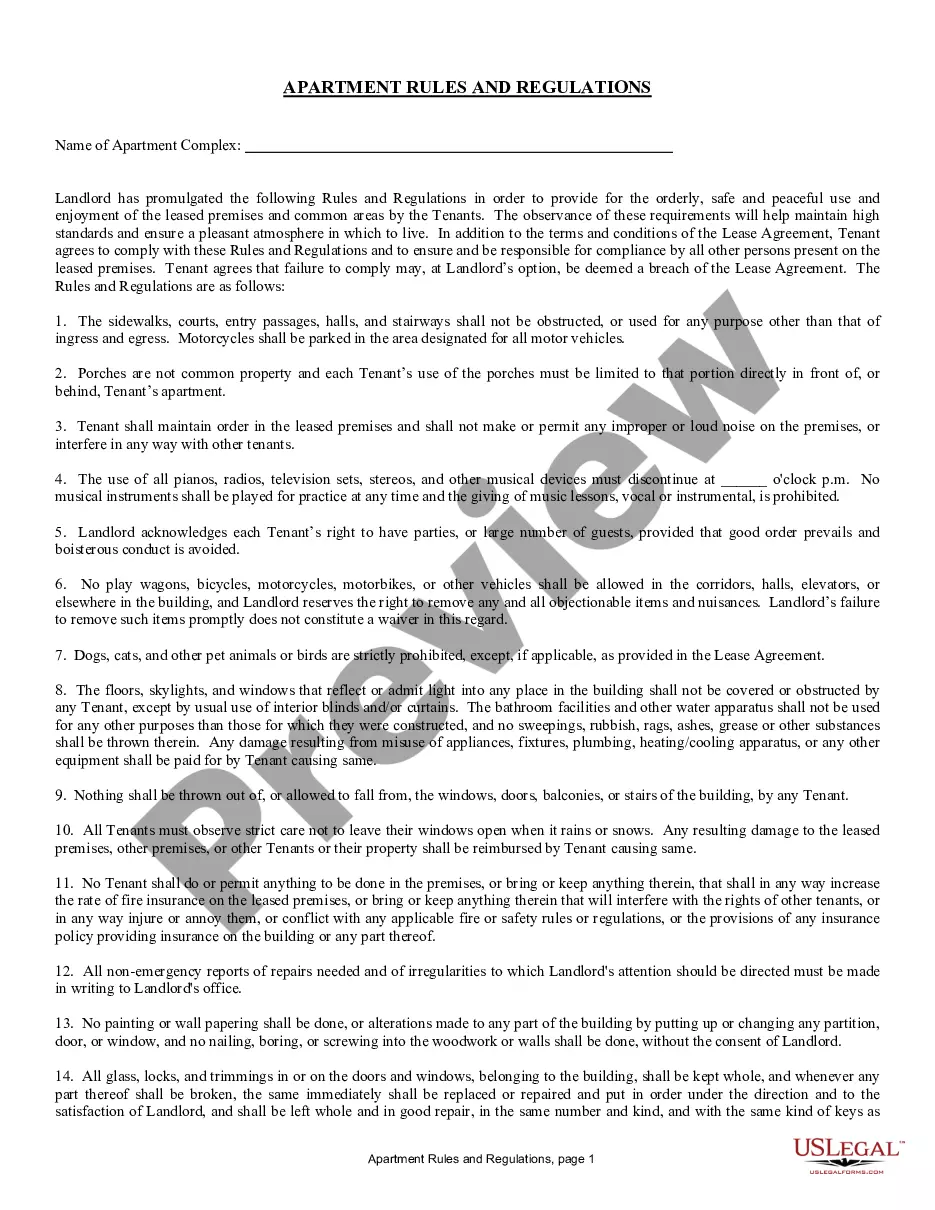
How to fill out California Apartment Rules And Regulations?
- If you're an existing user, log in to your account and locate the desired document. Click the Download button after ensuring your subscription is active.
- If you're new to US Legal Forms, start by reviewing the Preview mode and ensuring the template meets your local jurisdiction's requirements.
- If necessary, use the Search tab to find the right document. Make sure it aligns with your needs.
- Proceed to purchase by clicking the Buy Now button and selecting your preferred subscription plan. You will need to create an account.
- Complete your transaction by entering your payment information, either through a credit card or PayPal.
- Once purchased, download the document to your device. You can access it anytime through the My Forms section of your profile.
In conclusion, US Legal Forms empowers users with a robust library of over 85,000 legal forms, helping you manage tenant rules for pets efficiently. With premium expert assistance available, you can ensure your documents are accurate and compliant.
Start your legal journey today and explore how US Legal Forms can simplify your document needs!
Form popularity
FAQ
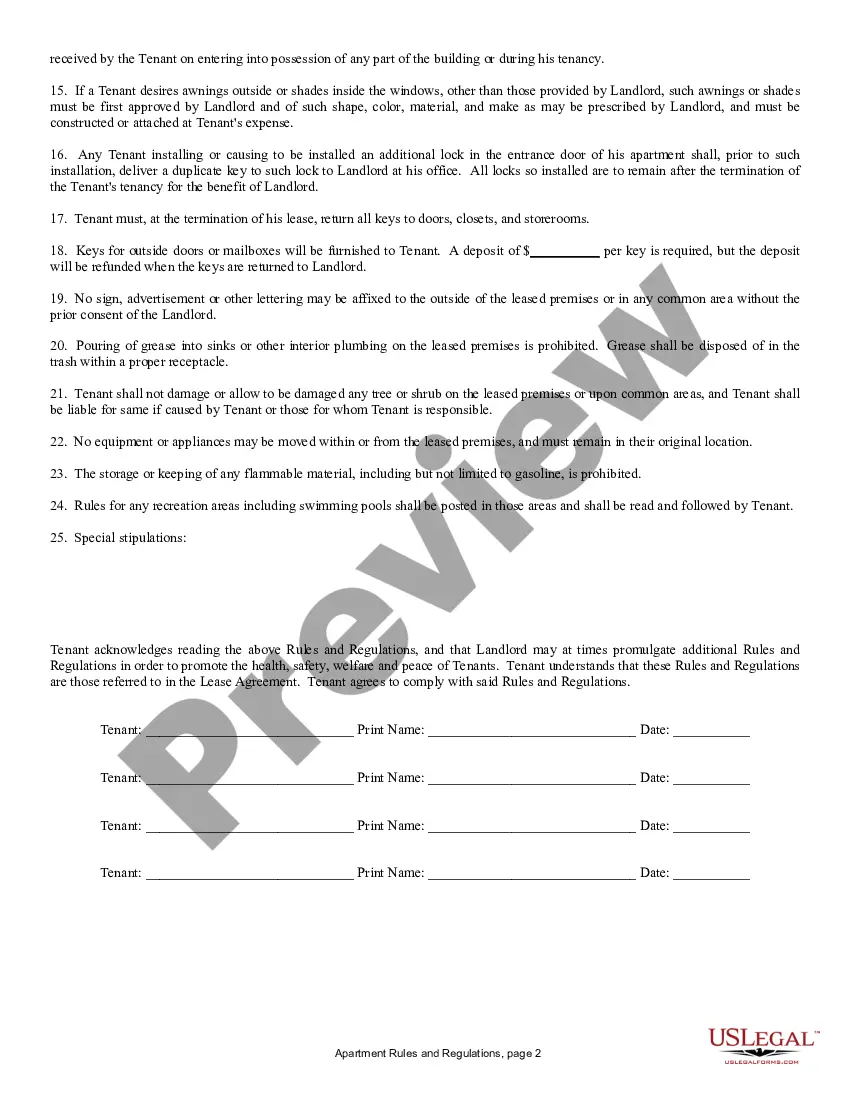
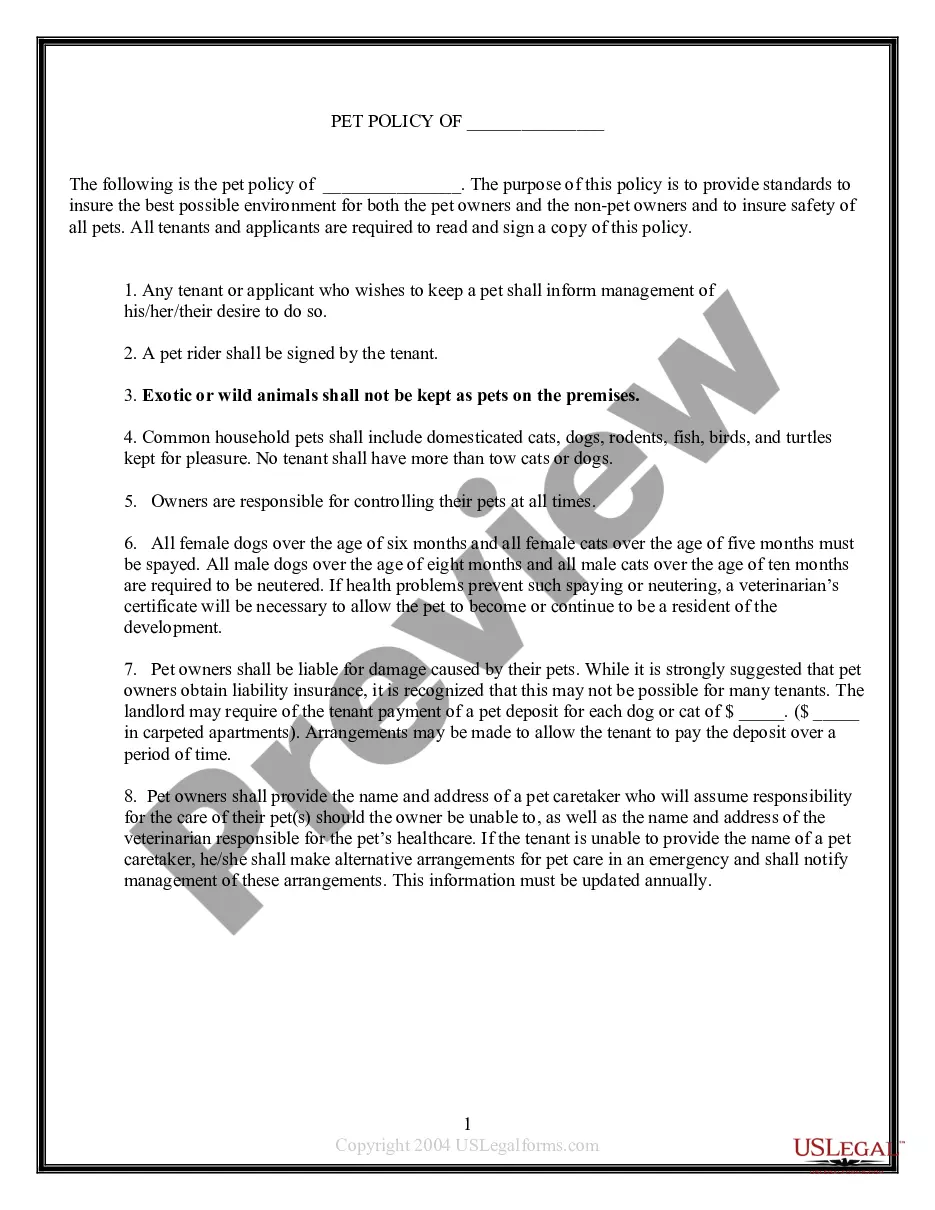
In Minnesota, landlords can require a pet deposit but must adhere to specific regulations. The deposit cannot exceed one month's rent, and it must be returned after you move out if there is no damage caused by your pet. Educating yourself on the tenant rules for pets in Minnesota is vital to ensure compliance and maintain a positive landlord-tenant relationship.
Yes, a landlord may evict you for breaching a no-pet clause in your lease agreement. Many tenants share their experiences on platforms like Reddit, illustrating that violating tenant rules for pets can lead to legal consequences. It’s essential to understand your lease and communicate with your landlord to avoid such situations.
Navigating around a no-pet policy can be challenging. One option is to have open communication with your landlord, expressing your desire for a pet and discussing potential compromises. You might also explore accommodations like pet references or paying a pet deposit, though this depends on the specific tenant rules for pets in your lease.
While getting around a no pet policy can be challenging, transparency is crucial. Discuss your wishes with your landlord and suggest mutually beneficial terms, such as additional deposits or adhering to tenant rules for pets. Sometimes explaining the benefits of having a well-behaved pet can sway their decision.
Negotiating a no pet policy starts with understanding the reasons behind it. Approach your landlord and propose solutions that align with tenant rules for pets, such as paying a pet deposit or offering to increase your monthly rent. Clear communication and a willingness to compromise can lead to a favorable outcome.
Having a pet in an apartment with a strict no-pet policy can lead to several complications. Landlords might impose penalties, such as fines or eviction proceedings, based on tenant rules for pets. Therefore, addressing this issue directly with your landlord can sometimes lead to a resolution that benefits both parties.
When asking your landlord to allow pets, open the conversation politely. Explain the reasons why having a pet is important to you, and offer to adhere to any tenant rules for pets they might have. Providing references from previous landlords or a pet resume can also show your seriousness and commitment to responsible pet ownership.
Navigating pet restrictions requires a thoughtful approach. First, read your lease agreement to understand tenant rules for pets. After that, you may want to discuss possible solutions, such as paying a pet deposit or offering a pet resume to demonstrate responsibility. Be transparent with your landlord about your pet's characteristics.
Without pet insurance, you can still care for your pet by budgeting for routine vet visits and vaccinations. Additionally, consider creating an emergency fund specifically for your pet's health needs. Understanding tenant rules for pets can also help you decide the best course of action when looking for pet-friendly housing.
Yes, having too many pets can lead to eviction if it violates the tenant rules for pets stated in your lease. Landlords often have a limit on the number of pets allowed to maintain property conditions and community standards. If you're considering getting another pet, check your lease terms first. Open communication with your landlord may help you find a compromise.