Theft By Conversion California For Families
Description
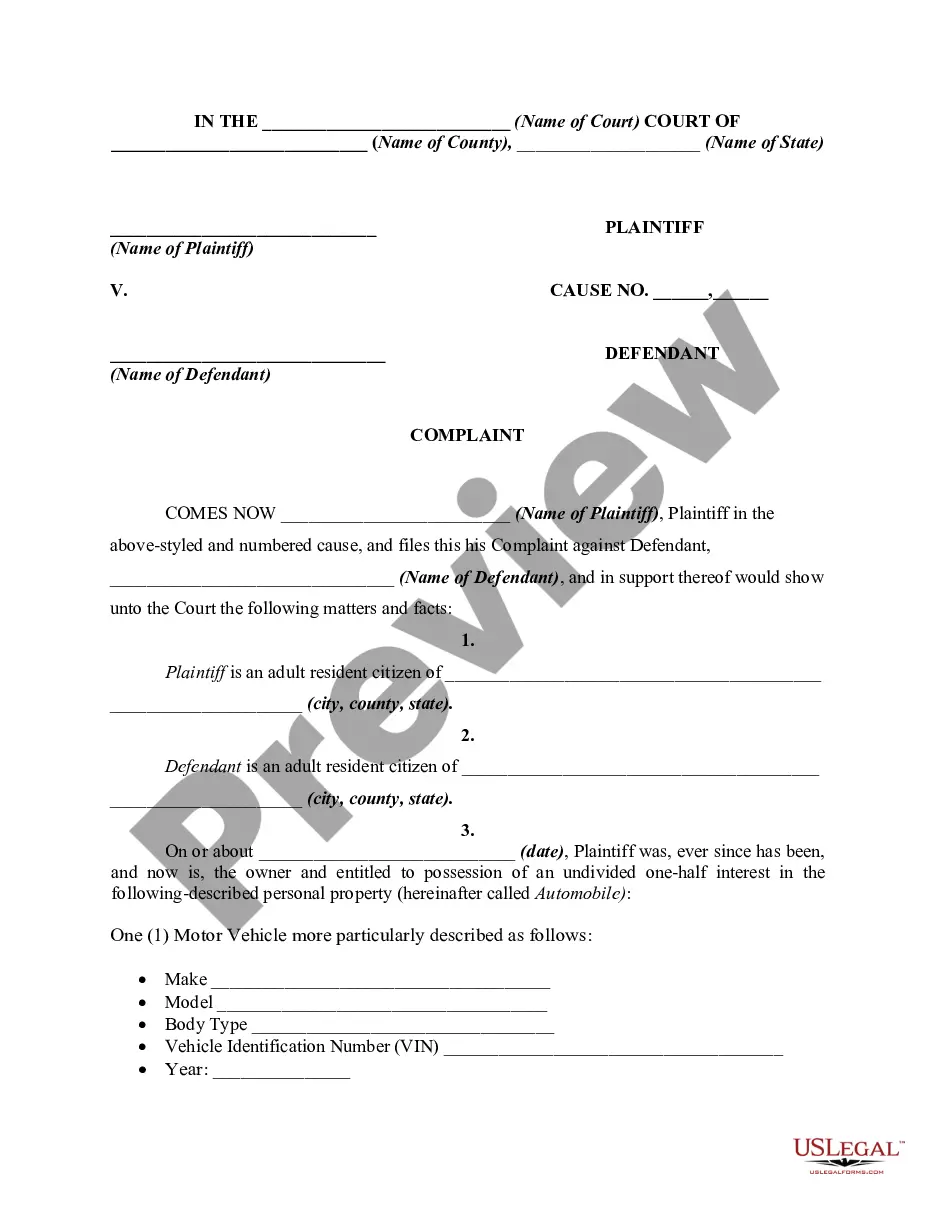
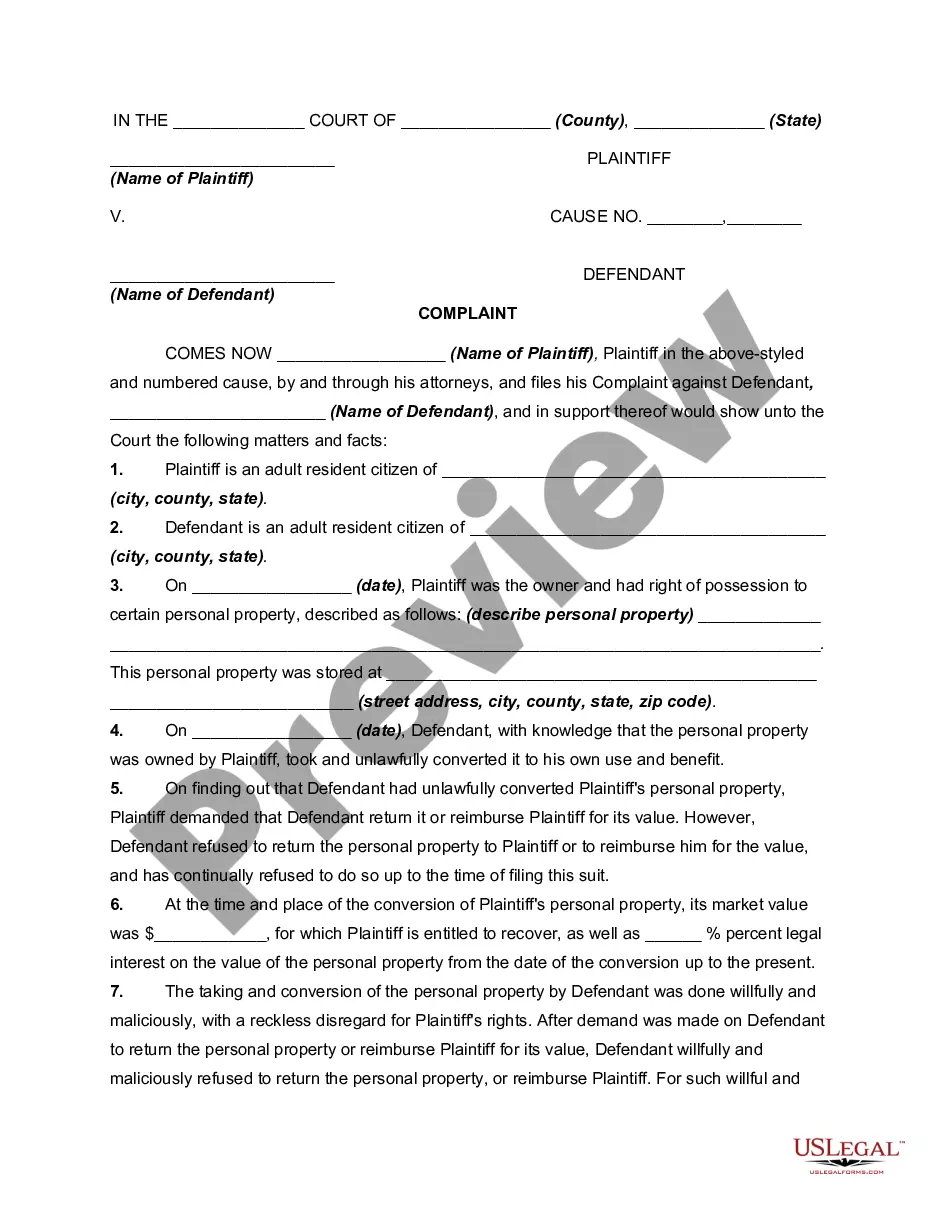
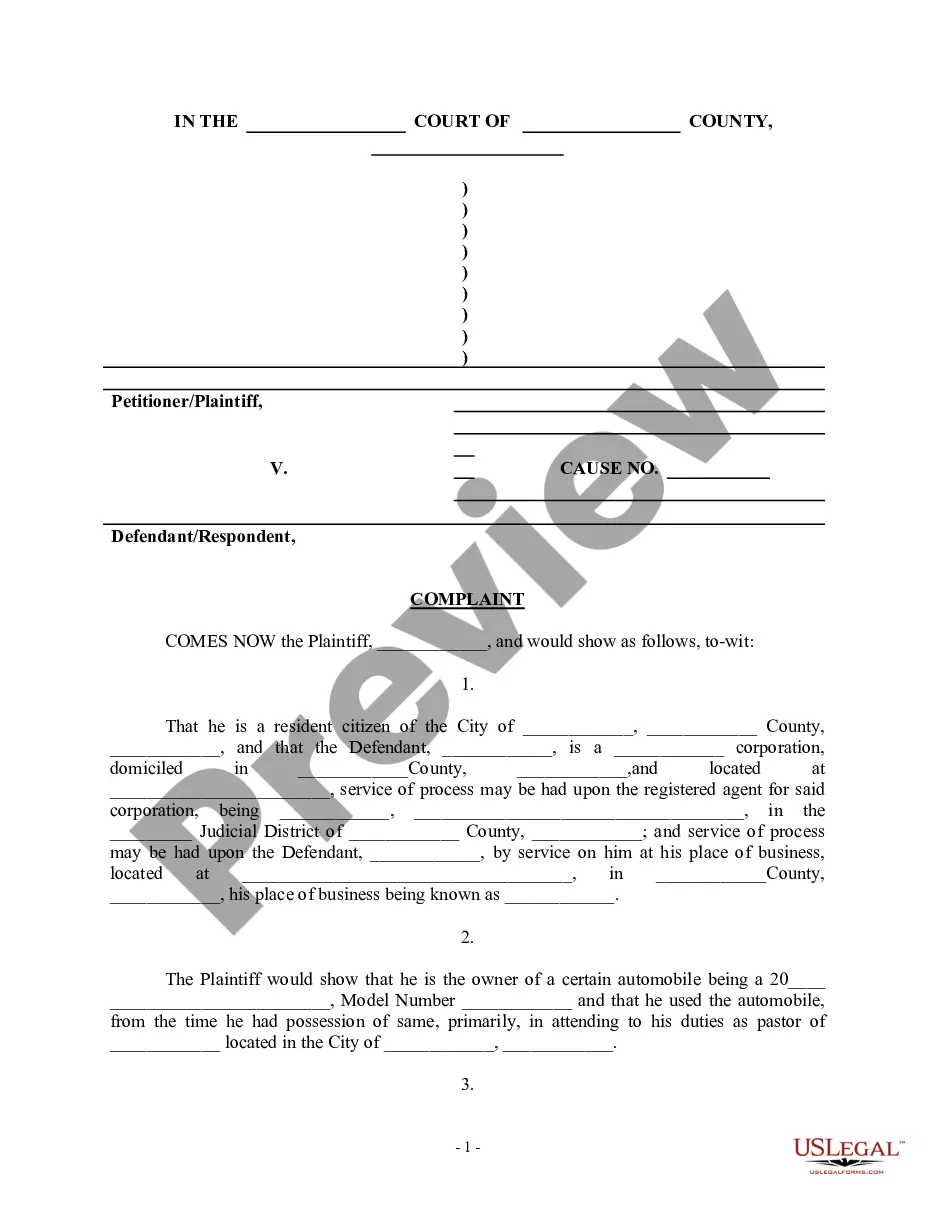
Get your form ready online
Our built-in tools help you complete, sign, share, and store your documents in one place.
Make edits, fill in missing information, and update formatting in US Legal Forms—just like you would in MS Word.
Download a copy, print it, send it by email, or mail it via USPS—whatever works best for your next step.
Sign and collect signatures with our SignNow integration. Send to multiple recipients, set reminders, and more. Go Premium to unlock E-Sign.
If this form requires notarization, complete it online through a secure video call—no need to meet a notary in person or wait for an appointment.
We protect your documents and personal data by following strict security and privacy standards.

Make edits, fill in missing information, and update formatting in US Legal Forms—just like you would in MS Word.

Download a copy, print it, send it by email, or mail it via USPS—whatever works best for your next step.

Sign and collect signatures with our SignNow integration. Send to multiple recipients, set reminders, and more. Go Premium to unlock E-Sign.

If this form requires notarization, complete it online through a secure video call—no need to meet a notary in person or wait for an appointment.

We protect your documents and personal data by following strict security and privacy standards.
Looking for another form?







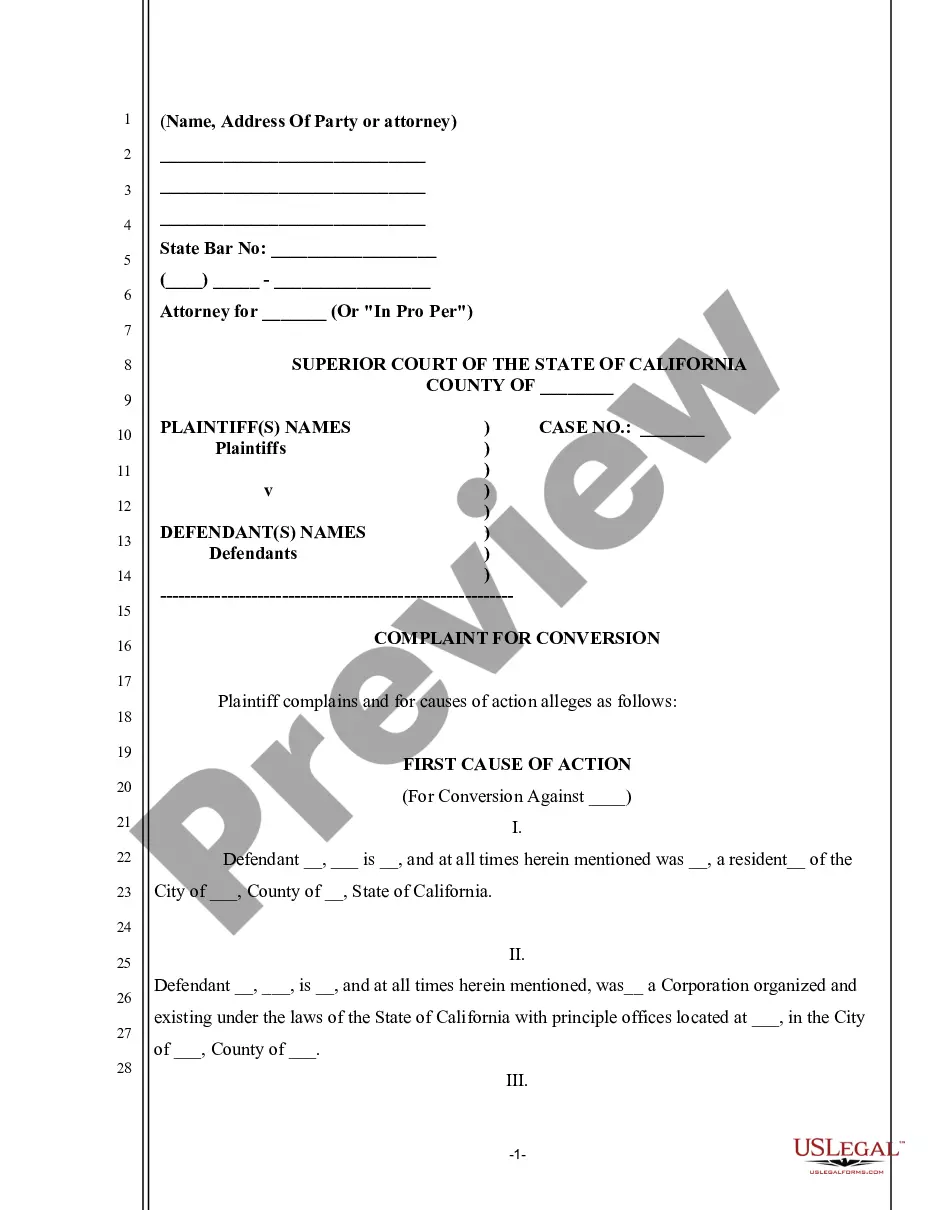
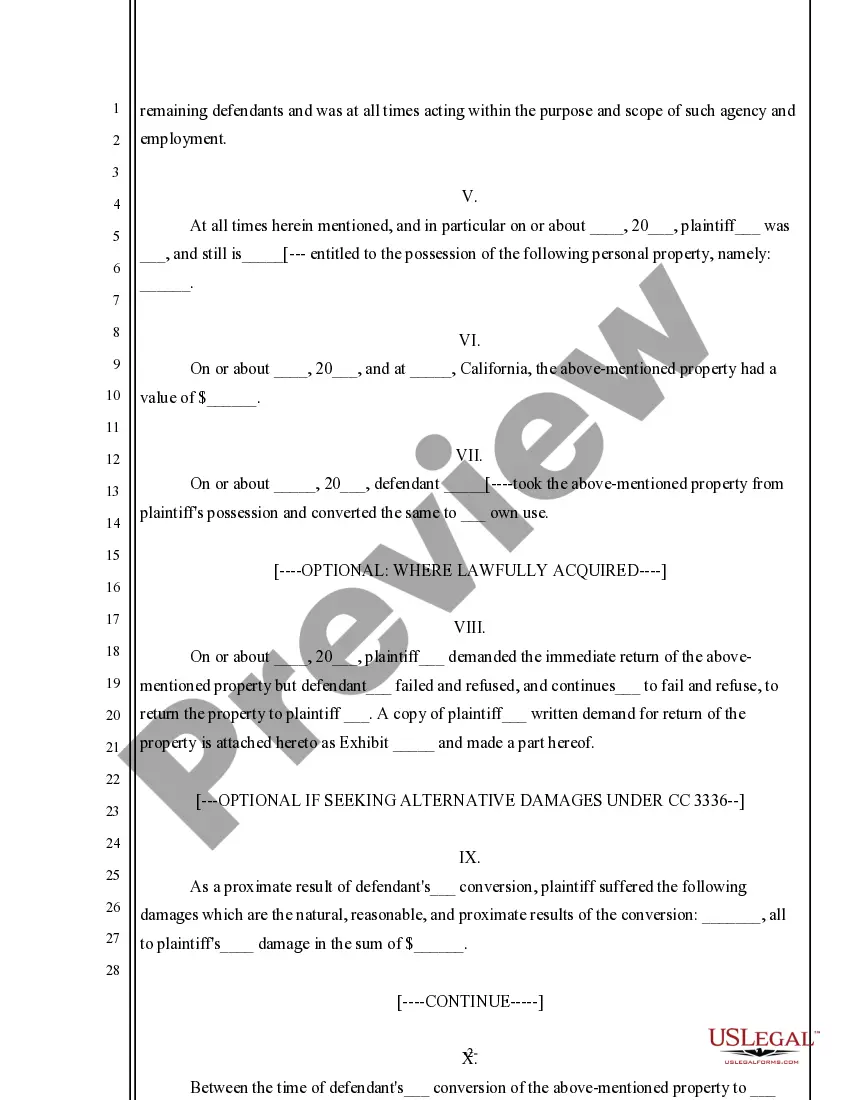
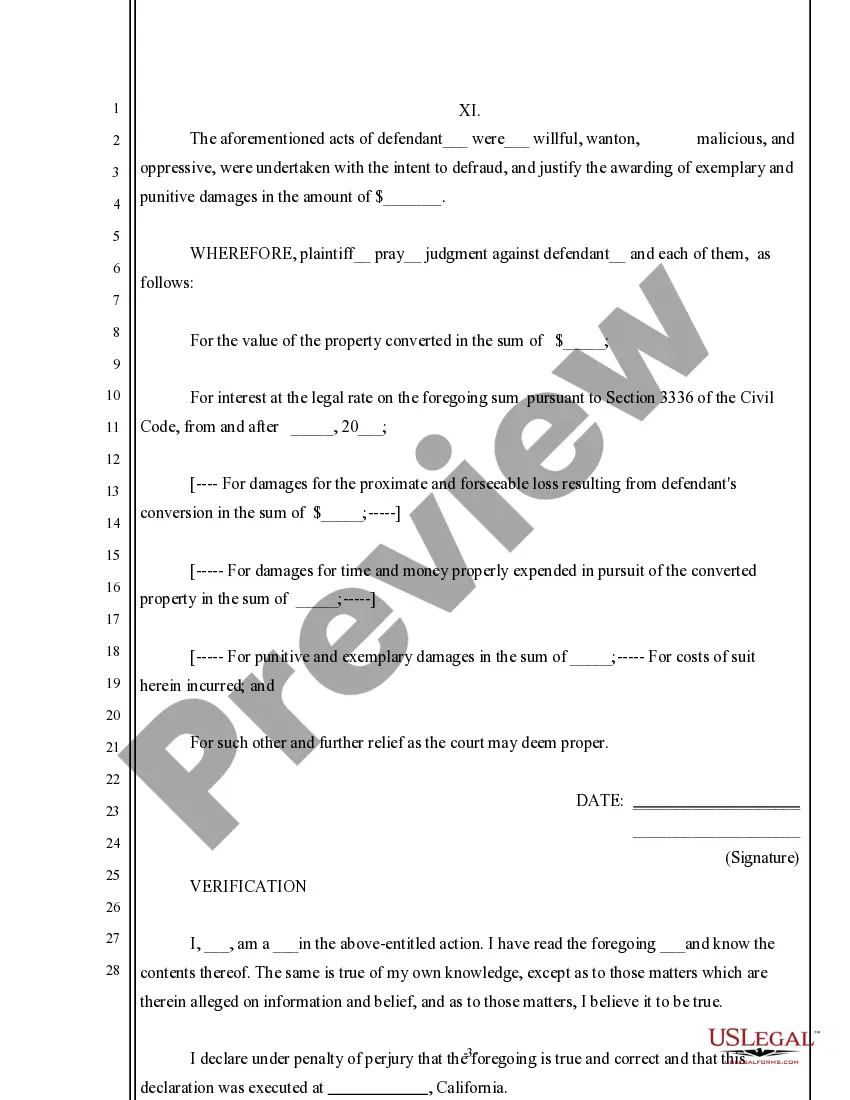
How to fill out California Complaint For Conversion Of Personal Property?
Whether for commercial objectives or personal affairs, everyone must confront legal circumstances at some stage in their life.
Filling out legal paperwork necessitates meticulous care, starting from choosing the correct form template.
With an extensive US Legal Forms catalog available, you do not need to waste time searching for the right sample online. Utilize the library’s user-friendly navigation to find the correct template for any circumstance.
- For example, if you select an incorrect version of a Theft By Conversion California For Families, it will be rejected upon submission.
- Thus, it is vital to obtain a trustworthy source of legal documents like US Legal Forms.
- If you wish to acquire a Theft By Conversion California For Families template, follow these straightforward steps.
- 1. Obtain the sample you require by utilizing the search feature or catalog browsing.
- 2. Review the form’s details to ensure it aligns with your situation, state, and area.
- 3. Click on the form’s preview to evaluate it.
- 4. If it is the incorrect form, return to the search tool to find the Theft By Conversion California For Families template you need.
- 5. Download the template when it suits your requirements.
- 6. If you already possess a US Legal Forms profile, click Log in to access previously saved documents in My documents.
- 7. If you don’t have an account yet, you can download the form by clicking Buy now.
- 8. Choose the suitable pricing option.
- 9. Complete the profile registration form.
- 10. Select your payment method: you can use a credit card or PayPal account.
- 11. Choose the file format you desire and download the Theft By Conversion California For Families.
- 12. Once it is saved, you can complete the form using editing software or print it out and finish it by hand.
Form popularity
FAQ
The most common type of remedies offered to victims of property conversion are monetary damages that are equal to the full value of the property. The value of the property will be calculated based on what the fair market value of the property was at the time the conversion took place.
To establish a conversion claim, a plaintiff must prove that: it had a possessory interest in the property, the defendants intentionally interfered with the plaintiff's possession, and. the defendants' acts are the legal cause of the plaintiff's loss of property.
An example might be tapping someone's secured wireless LAN or public utility line (which could also amount to theft of services). Another example might be taking a joy ride in a car, never intending to keep it from the owner.
Under California law, the elements required to prove a claim of conversion are: (1) the plaintiff's ownership or right to possession of the property; (2) the defendant's conversion by a wrongful act or in a manner that is inconsistent with the plaintiff's property rights; and (3) resulting damages. (Burlesci v.
The standard remedy for conversion is return of the property in question or damages for the fair market value of the property.