Notice Termination Tenancy California Without Lease
Description

Get your form ready online
Our built-in tools help you complete, sign, share, and store your documents in one place.
Make edits, fill in missing information, and update formatting in US Legal Forms—just like you would in MS Word.
Download a copy, print it, send it by email, or mail it via USPS—whatever works best for your next step.
Sign and collect signatures with our SignNow integration. Send to multiple recipients, set reminders, and more. Go Premium to unlock E-Sign.
If this form requires notarization, complete it online through a secure video call—no need to meet a notary in person or wait for an appointment.
We protect your documents and personal data by following strict security and privacy standards.

Make edits, fill in missing information, and update formatting in US Legal Forms—just like you would in MS Word.

Download a copy, print it, send it by email, or mail it via USPS—whatever works best for your next step.

Sign and collect signatures with our SignNow integration. Send to multiple recipients, set reminders, and more. Go Premium to unlock E-Sign.

If this form requires notarization, complete it online through a secure video call—no need to meet a notary in person or wait for an appointment.

We protect your documents and personal data by following strict security and privacy standards.
Looking for another form?






How to fill out California 60 Day Notice Of Termination - Residential Month-to-Month Tenancy?
Managing legal papers and processes can be a lengthy addition to your daily routine.
Documents like Notice Termination Tenancy California Without Lease frequently require you to locate them and navigate the procedures to finish them accurately.
Thus, whether you are handling financial, legal, or personal issues, having an extensive and functional online library of forms readily available will be tremendously beneficial.
US Legal Forms is the premier online platform for legal templates, boasting over 85,000 state-specific documents along with various tools to help you complete your paperwork effortlessly.
Is it your first time using US Legal Forms? Sign up and create your account within minutes to access the form library and Notice Termination Tenancy California Without Lease. Then, follow the steps below to complete your document.
- Browse the collection of pertinent documents accessible to you with just one click.
- US Legal Forms provides state- and county-specific forms available anytime for download.
- Safeguard your document management processes with a reliable service that enables you to prepare any form in minutes without incurring additional or concealed charges.
- Simply Log In to your account, find Notice Termination Tenancy California Without Lease, and obtain it instantly in the My documents section.
- You can also retrieve previously saved forms.
Form popularity
FAQ
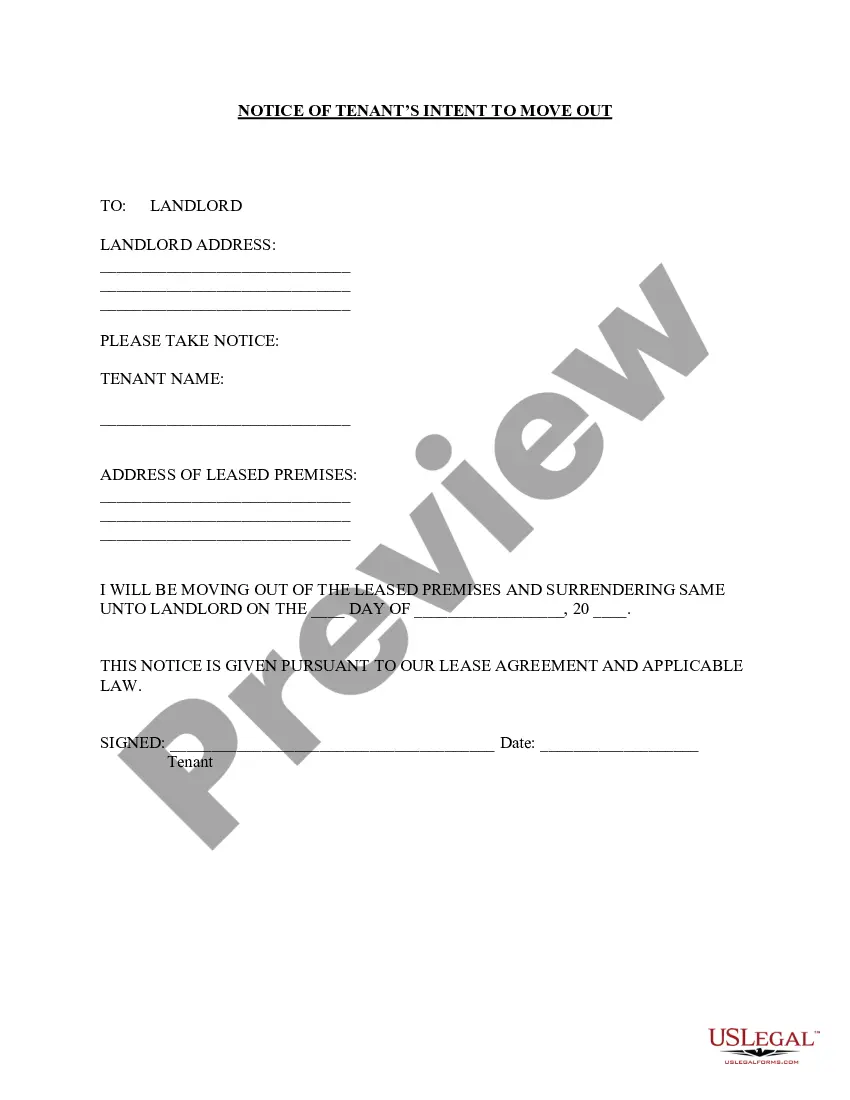
I, (Tenant's Name), am writing to inform you that I intend to terminate my lease agreement. I am delivering this notice (number of days before your lease ends) days before my lease for (rental unit address) comes to an end. The last day of my tenancy will be on (day, month, year).
I wish to inform you that I will be terminating my lease on [date you plan to terminate]. This letter provides the necessary notice of [required notice] as outlined in the lease. I will move out my belongings and return my keys to [address of property management office] by [date you plan to terminate].
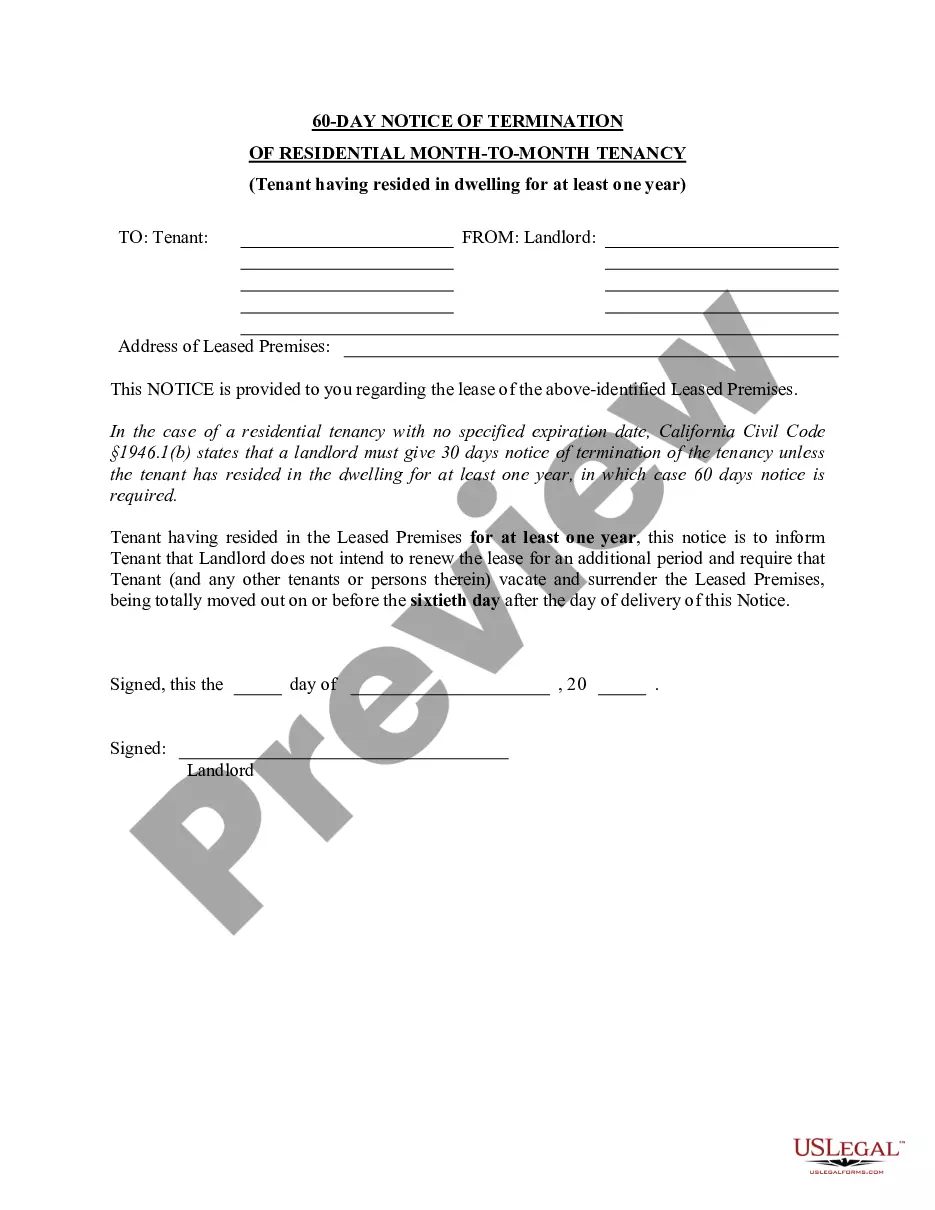
If you want to evict a month-to-month tenant in California, you will have to give them a 30-day notice if they've been living in your dwellings for under a year, or a 60-day notice if they've been living in your unit for over a year.
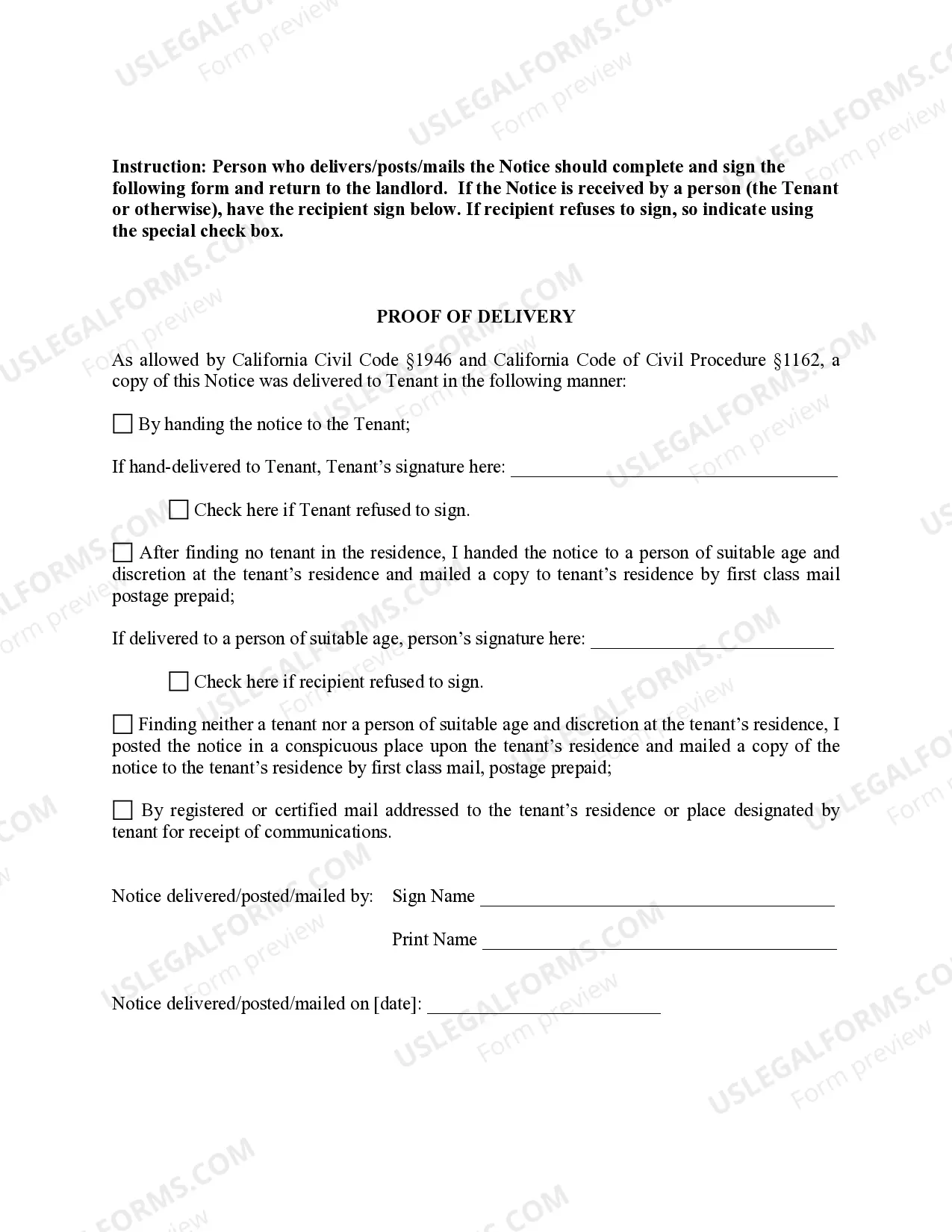
There are 3 ways to deliver a Notice Hand deliver the Notice. This is when you, or someone else 18 or older, hands the Notice to one of the tenants. Give the Notice to another adult in the home or where your tenant works and mail a copy to the tenant. ... Post and mail the Notice.
How do I evict a commercial tenant? Give notice to the tenant. This may be in the form of an Eviction Notice. ... Let the tenant respond. ... File a lawsuit to evict. ... Serve the tenant with the complaint. ... Schedule a court hearing. ... Go to court. ... Start the eviction.