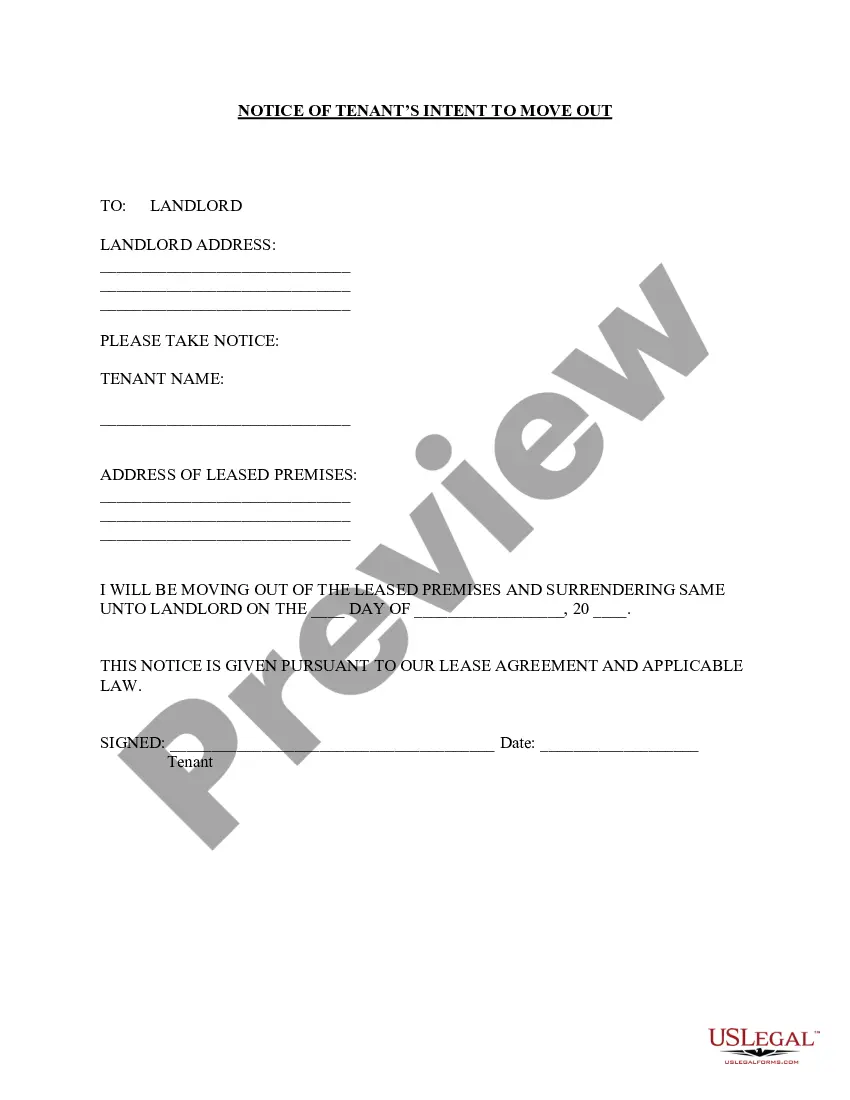
Termination Tenancy Lease Without Penalty
Description

Get your form ready online
Our built-in tools help you complete, sign, share, and store your documents in one place.
Make edits, fill in missing information, and update formatting in US Legal Forms—just like you would in MS Word.
Download a copy, print it, send it by email, or mail it via USPS—whatever works best for your next step.
Sign and collect signatures with our SignNow integration. Send to multiple recipients, set reminders, and more. Go Premium to unlock E-Sign.
If this form requires notarization, complete it online through a secure video call—no need to meet a notary in person or wait for an appointment.
We protect your documents and personal data by following strict security and privacy standards.

Make edits, fill in missing information, and update formatting in US Legal Forms—just like you would in MS Word.

Download a copy, print it, send it by email, or mail it via USPS—whatever works best for your next step.

Sign and collect signatures with our SignNow integration. Send to multiple recipients, set reminders, and more. Go Premium to unlock E-Sign.

If this form requires notarization, complete it online through a secure video call—no need to meet a notary in person or wait for an appointment.

We protect your documents and personal data by following strict security and privacy standards.
Looking for another form?
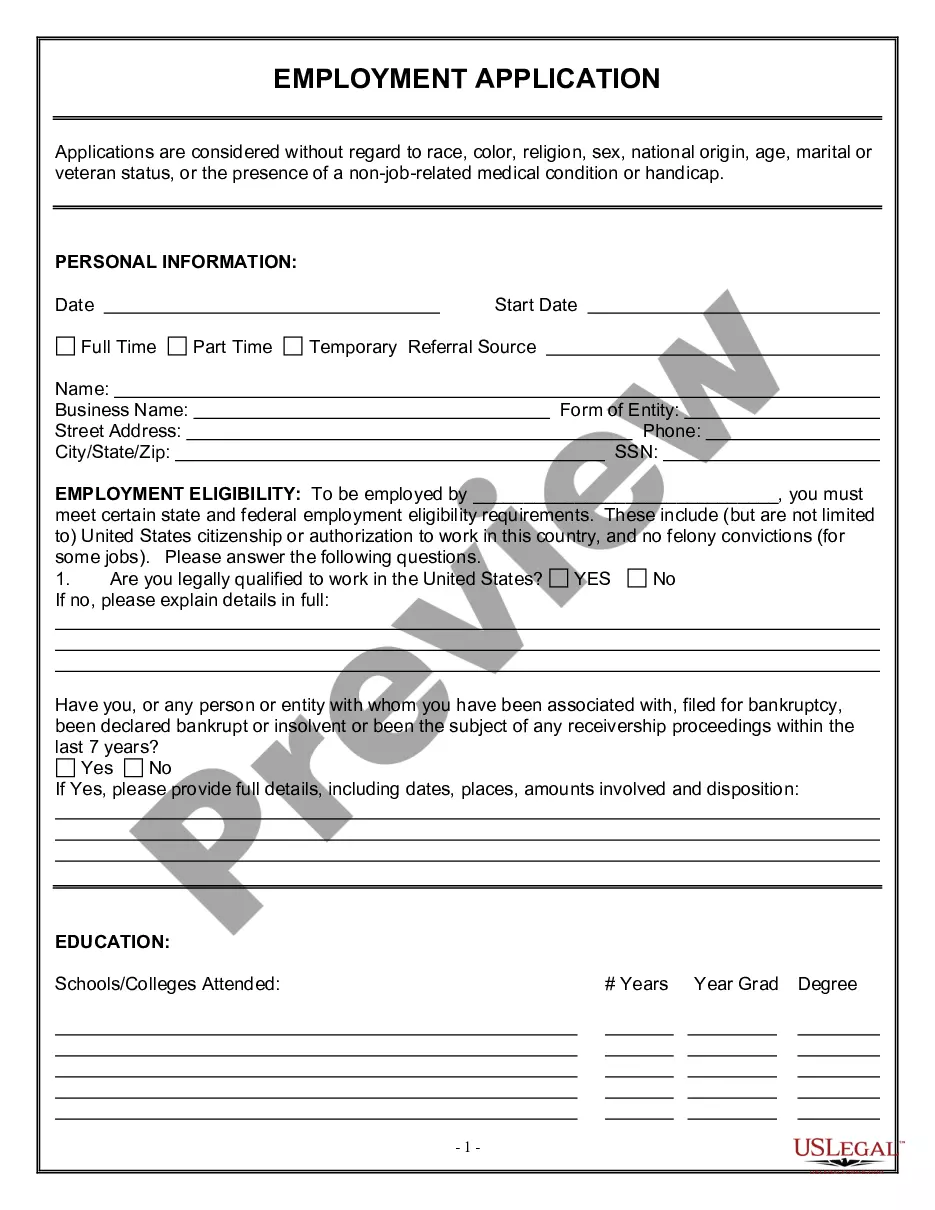







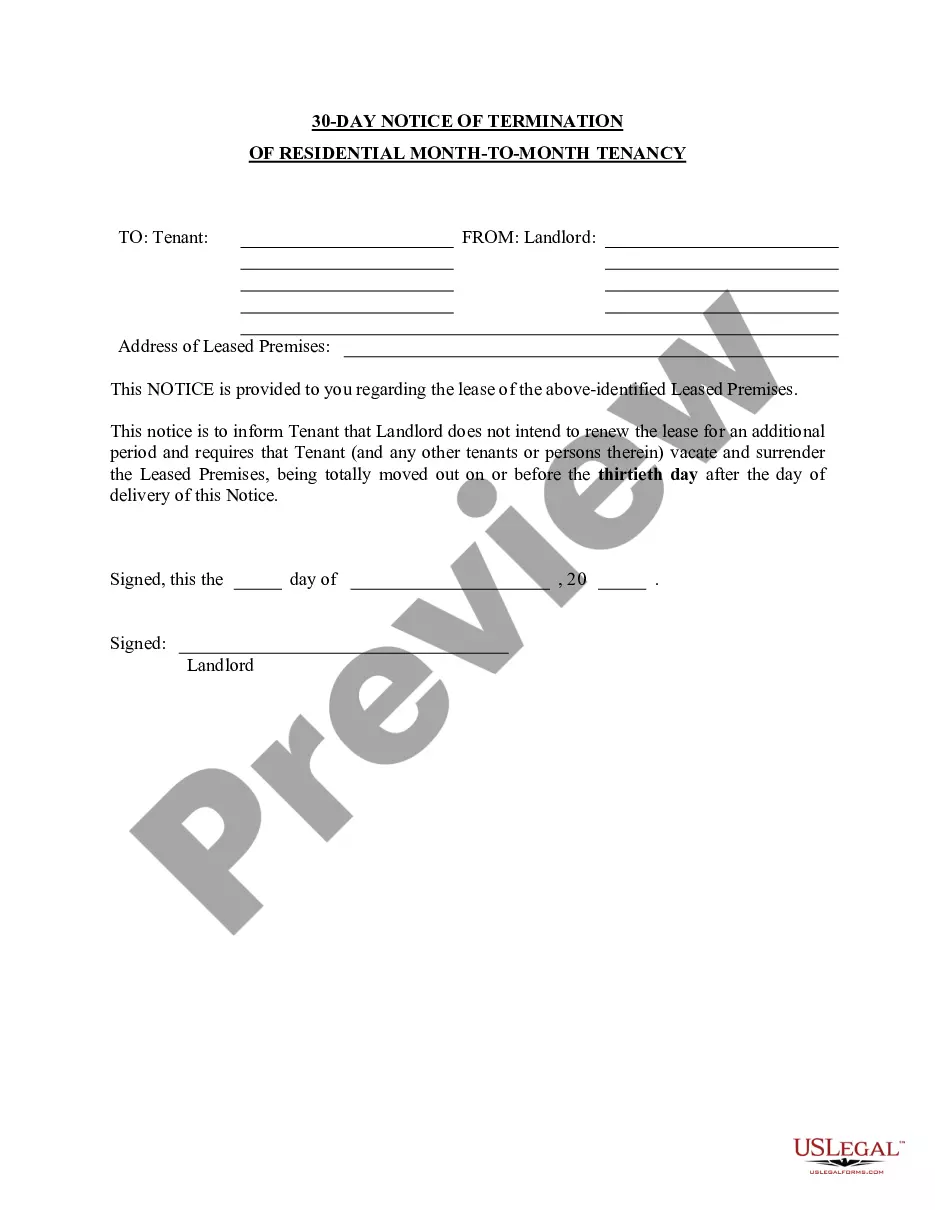
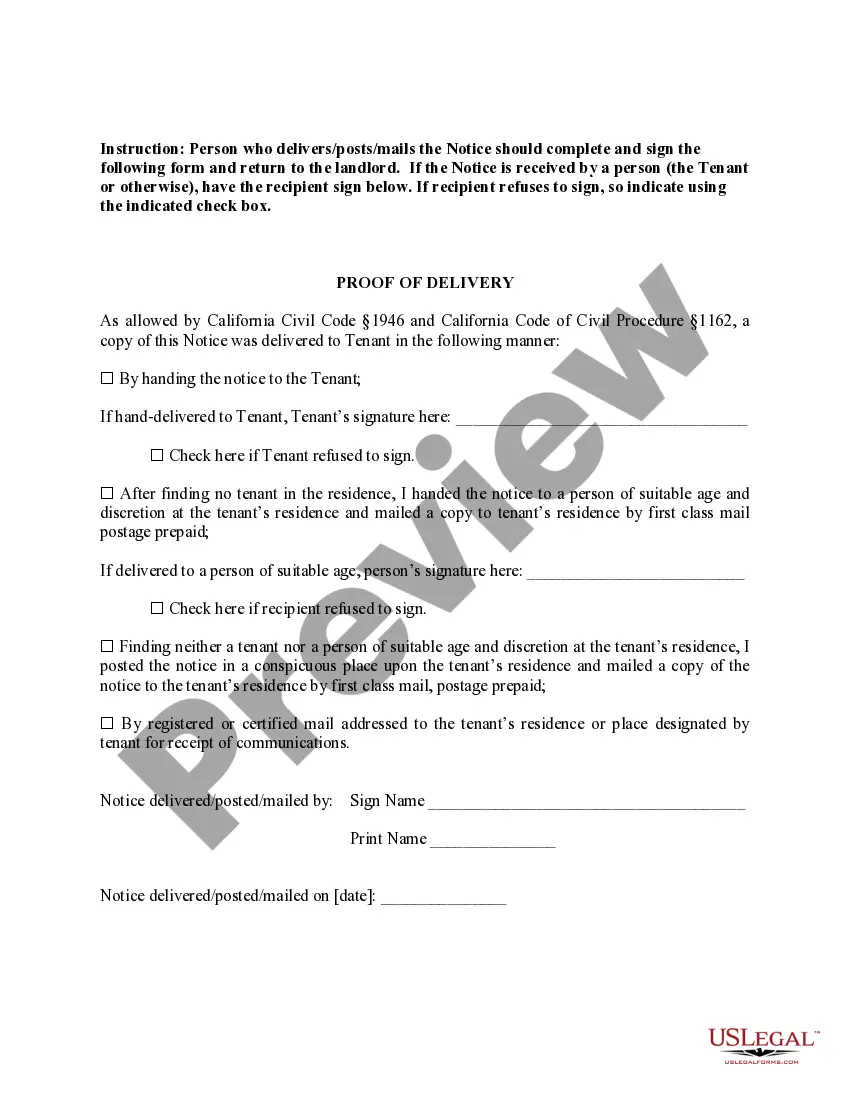
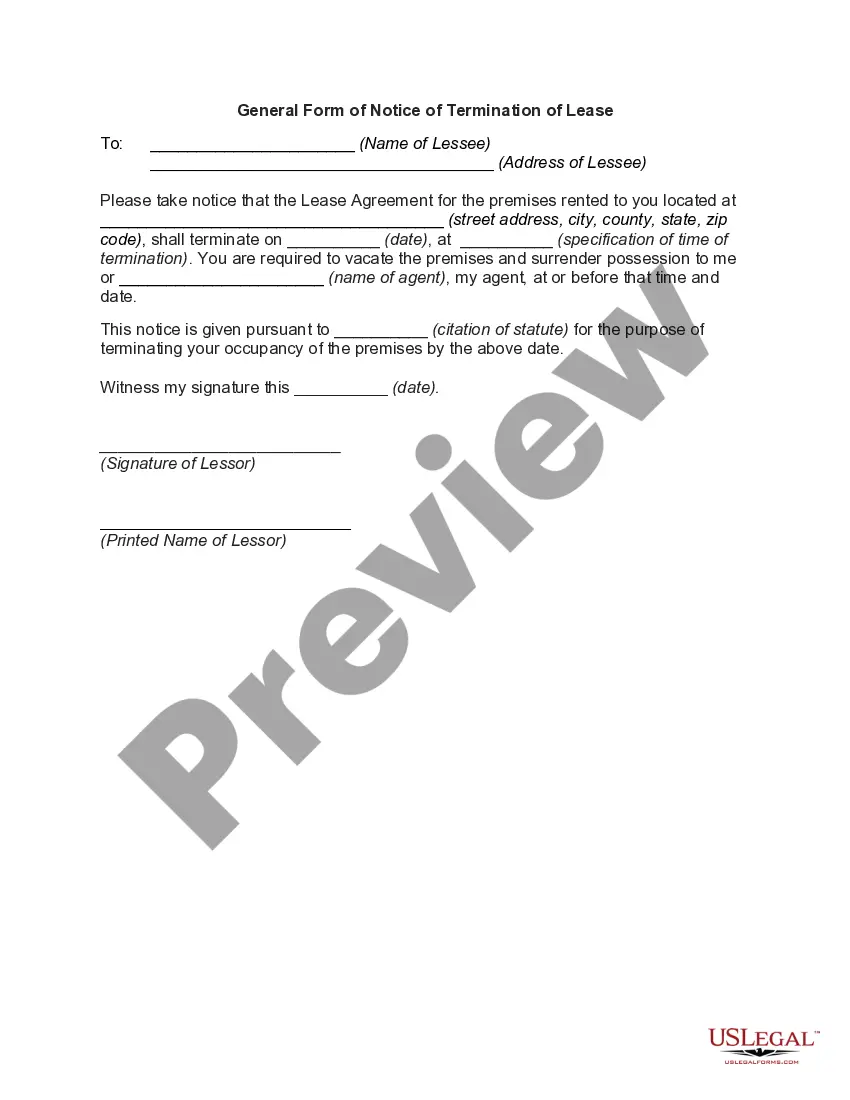
How to fill out California 30 Day Notice Of Termination - Residential Month-to-Month Tenancy - Nonrenewal Of Lease?
Managing legal documents and processes can be a lengthy addition to your day.
Terminating a Tenancy Lease Without Penalty and similar forms typically necessitate that you search for them and understand how to fill them out correctly.
As a result, whether you're addressing financial, legal, or personal issues, having a thorough and accessible online repository of forms at your disposal will be immensely beneficial.
US Legal Forms is the premier online source for legal documents, featuring over 85,000 state-specific forms and a variety of tools to assist you in completing your paperwork swiftly.
If you are using US Legal Forms for the first time, register and create your account in just a few minutes to gain access to the form library and the Termination Tenancy Lease Without Penalty. Then follow the outlined steps to fill out your form.
- Browse the collection of applicable documents available to you with a single click.
- US Legal Forms provides state- and county-specific forms available for download at any time.
- Streamline your document management tasks with a high-quality service that enables you to create any form within minutes, free from additional or concealed charges.
Form popularity
FAQ
Health issues or significant life changes serve as strong excuses to break a lease. Valid reasons can assist you in negotiating better terms for your lease termination. A carefully crafted approach focusing on a termination of tenancy lease without penalty will support your discussion with the landlord.
While breaking a lease does not automatically ruin your credit, it can lead to negative consequences if reported. A formal notice and settlement can help you avoid penalties, facilitating a termination of tenancy lease without penalty. Utilizing a platform like US Legal Forms can guide you through this process efficiently.
Breaking a lease early can potentially impact your credit, especially if the landlord reports it or sends your account to collections. However, if you can negotiate an agreement to terminate your tenancy lease without penalty, you can minimize credit damage. Always aim to communicate openly with your landlord to find a mutually beneficial solution.
In New Jersey, tenants can break a lease early under specific circumstances such as domestic violence or the property being uninhabitable. Ensure you communicate with your landlord and outline your situation clearly. This approach increases your chances of a smooth termination of tenancy lease without penalty.
When considering termination of a tenancy lease without penalty, valid excuses can include job relocation, health issues, or unsafe living conditions. It is crucial to document these situations thoroughly. An adequate reason helps to negotiate with your landlord, potentially avoiding penalties.
When breaking a lease, it’s crucial to be clear and respectful. Start by informing your landlord of your decision, providing your reasons, and expressing gratitude for their understanding. Reinforcing your intent to leave on positive terms can assist in achieving termination tenancy lease without penalty. Effective communication is the key to navigating this situation successfully.
When writing a letter to request breaking a lease, clearly state your intent and include your reasons. Be polite and professional, and mention any supportive documentation attached. Use a template available on platforms like US Legal Forms to ensure you include all necessary details. This structured approach can facilitate a smoother process for termination tenancy lease without penalty.
The best excuse to break a lease often involves valid, documented reasons like health concerns, a job transfer, or unsafe living conditions. Presenting clear evidence can support your case for termination tenancy lease without penalty. It's important to communicate openly with your landlord to see if they are amenable to your request. This solution may allow you to leave without incurring additional costs.
Breaking a lease can negatively impact your credit if the landlord reports the incident to credit agencies. However, if you follow the correct procedures for termination tenancy lease without penalty, you can minimize potential damage. Communicating with your landlord and settling obligations can also protect your credit score. Always aim to leave on good terms whenever possible.
Breaking a lease without penalty typically involves understanding both the lease agreement and local laws. You may be able to negotiate with your landlord or prove specific circumstances like health issues or job relocation. Familiarizing yourself with these components can lead to a smoother transition. US Legal Forms can provide resources and templates to assist you during this process.