Notice Time For Rent Increase
Description




Get your form ready online
Our built-in tools help you complete, sign, share, and store your documents in one place.
Make edits, fill in missing information, and update formatting in US Legal Forms—just like you would in MS Word.
Download a copy, print it, send it by email, or mail it via USPS—whatever works best for your next step.
Sign and collect signatures with our SignNow integration. Send to multiple recipients, set reminders, and more. Go Premium to unlock E-Sign.
If this form requires notarization, complete it online through a secure video call—no need to meet a notary in person or wait for an appointment.
We protect your documents and personal data by following strict security and privacy standards.

Make edits, fill in missing information, and update formatting in US Legal Forms—just like you would in MS Word.

Download a copy, print it, send it by email, or mail it via USPS—whatever works best for your next step.

Sign and collect signatures with our SignNow integration. Send to multiple recipients, set reminders, and more. Go Premium to unlock E-Sign.

If this form requires notarization, complete it online through a secure video call—no need to meet a notary in person or wait for an appointment.

We protect your documents and personal data by following strict security and privacy standards.
Looking for another form?







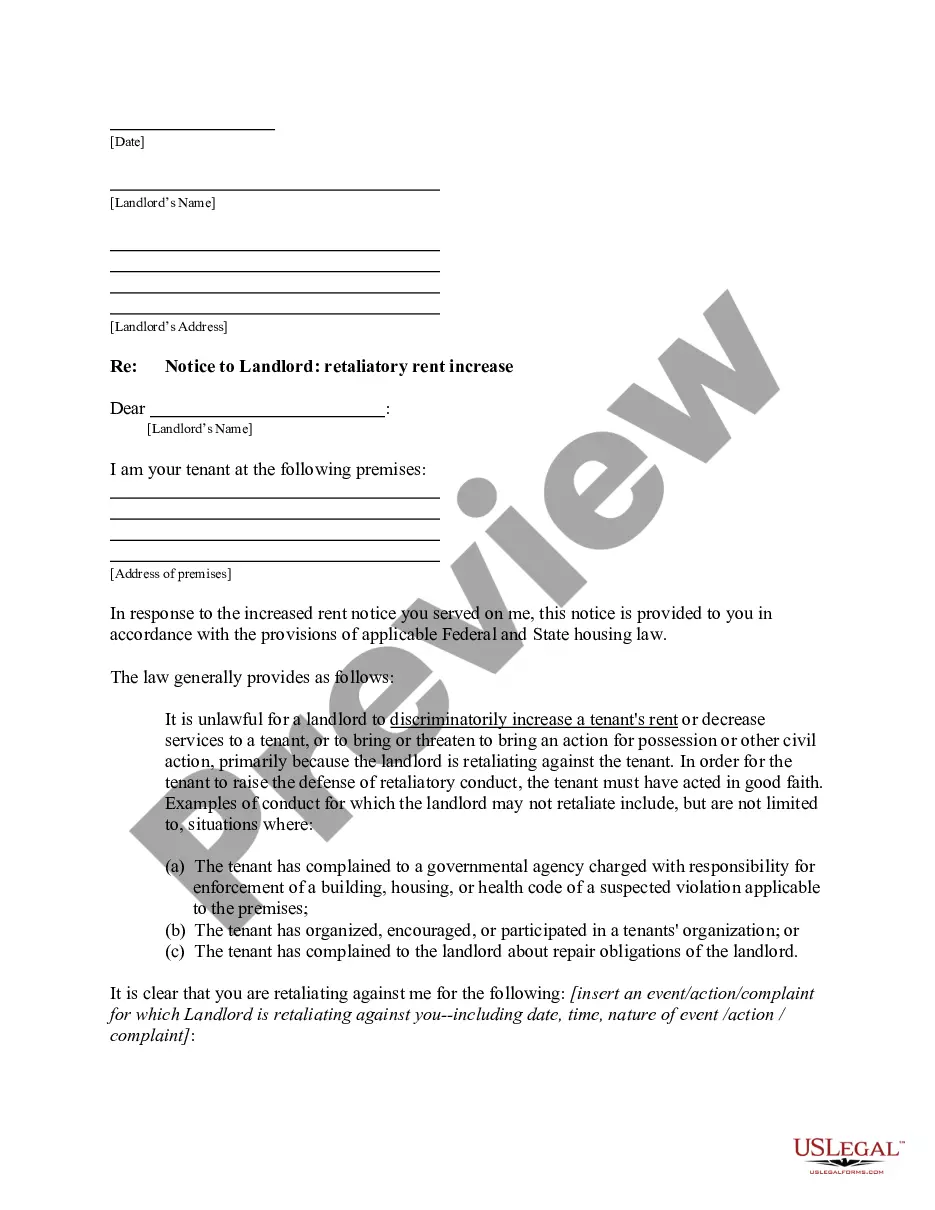
How to fill out California Letter From Tenant To Landlord Containing Notice To Landlord To Withdraw Retaliatory Rent Increase?
- Log in to your US Legal Forms account if you are an existing user. Ensure your subscription is active to access the needed form templates.
- If you're new, start by checking out the form descriptions. Make sure to select the template that adheres to your local jurisdiction requirements.
- Search for additional templates if necessary. Use the Search feature to find the right document that fits your needs.
- Purchase the document by clicking 'Buy Now,' then choose your desired subscription plan. You'll need to register for an account to continue.
- Complete your payment by entering your credit card information or using PayPal to ensure your subscription is active.
- Download the selected form to your device, allowing you to complete it easily. You can also access it later in the 'My Forms' section of your profile.
Following these steps will simplify the process of managing rent increase notifications. By utilizing US Legal Forms, you can ensure that all documents are properly filled out and legally compliant.
Take control of your rental agreements today by exploring US Legal Forms and accessing the resources you need for effective property management.
Form popularity
FAQ
Legally, a landlord in New Jersey can raise your rent by any amount if there are no local rent control laws in place. However, the increase must be communicated with the appropriate notice time for rent increase. Always stay informed about your local regulations to know your rights and obligations.
When approaching your landlord about a rent increase, first, review your lease agreement and local laws. Schedule a meeting to discuss any concerns, and be prepared with relevant market data. Utilize platforms like US Legal Forms to help you draft any necessary documents. Clear communication can lead to a better understanding of the notice time for rent increase.
The proper notice for rent increase in New Jersey usually requires at least 30 days' written notice for month-to-month agreements. Always follow local ordinances, as some areas may have stricter rules. Ensuring you comply with these guidelines helps you manage your housing situation effectively regarding notice time for rent increase.
Landlords in New Jersey need to give tenants a minimum of 30 days' notice before implementing a rent increase for month-to-month leases. If your lease specifies a longer notice period, adhere to that. Knowing these regulations can avoid future conflicts regarding the notice time for rent increase.
In New Jersey, landlords must provide at least 30 days' notice for rent increases if the lease is month-to-month. For longer leases, refer to your agreement, as it often dictates the required notice time for rent increase. Understanding these timelines helps maintain a positive relationship with your landlord.
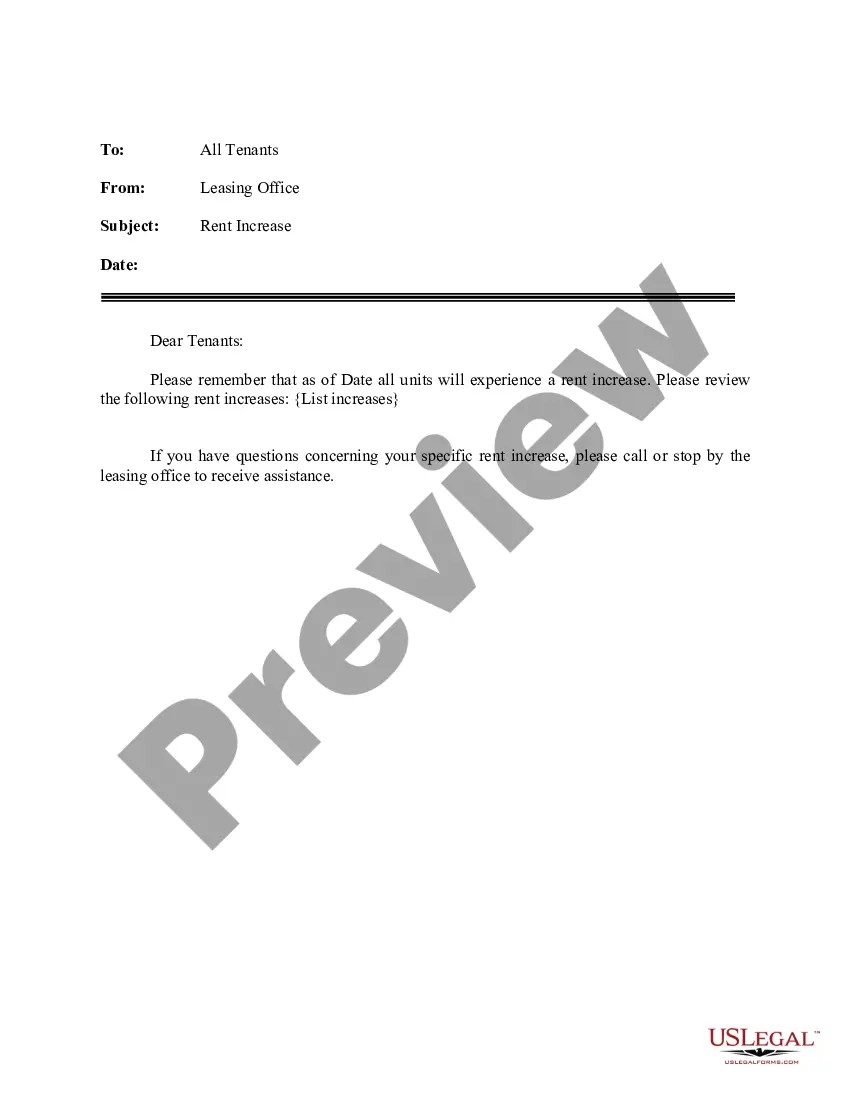
To write a notice letter for a rent increase, start with your contact details, the date, and your tenant's information. Clearly state the new rent amount and the effective date. Always include the required notice time for rent increase as per state law or your lease agreement. A well-crafted letter ensures clear communication and professionalism.
In New Jersey, there isn't a statewide limit on rent increases for most residential properties. However, local rent control laws might impose specific restrictions. Always check your municipality’s regulations to determine the maximum rent increase allowed. This is essential information that might influence the notice time for rent increase.
In New Jersey, the average rent increase per year typically ranges between 2% to 5%. However, this can vary based on the local market conditions and property type. To understand specific trends in your area, consider consulting local real estate reports. Being informed helps you anticipate any potential notice time for rent increase.
When discussing a rent increase with your landlord, express your understanding of the market conditions but also share your concerns. Highlight why you believe the increase may be excessive based on your local area's rent trends. This open conversation can foster a good relationship and may lead to a more agreeable resolution. Remember to reference the notice time for rent increase to ensure compliance.
The amount a landlord can raise rent depends on state laws and local regulations. While some states have strict limits, others leave it up to landlords and tenants to negotiate. Always research the laws in your area to find out the specific limits. Keep in mind the notice time for rent increase, as it also varies between states.