Ca Increase Rent With Cpi
Description

Get your form ready online
Our built-in tools help you complete, sign, share, and store your documents in one place.
Make edits, fill in missing information, and update formatting in US Legal Forms—just like you would in MS Word.
Download a copy, print it, send it by email, or mail it via USPS—whatever works best for your next step.
Sign and collect signatures with our SignNow integration. Send to multiple recipients, set reminders, and more. Go Premium to unlock E-Sign.
If this form requires notarization, complete it online through a secure video call—no need to meet a notary in person or wait for an appointment.
We protect your documents and personal data by following strict security and privacy standards.

Make edits, fill in missing information, and update formatting in US Legal Forms—just like you would in MS Word.

Download a copy, print it, send it by email, or mail it via USPS—whatever works best for your next step.

Sign and collect signatures with our SignNow integration. Send to multiple recipients, set reminders, and more. Go Premium to unlock E-Sign.

If this form requires notarization, complete it online through a secure video call—no need to meet a notary in person or wait for an appointment.

We protect your documents and personal data by following strict security and privacy standards.
Looking for another form?







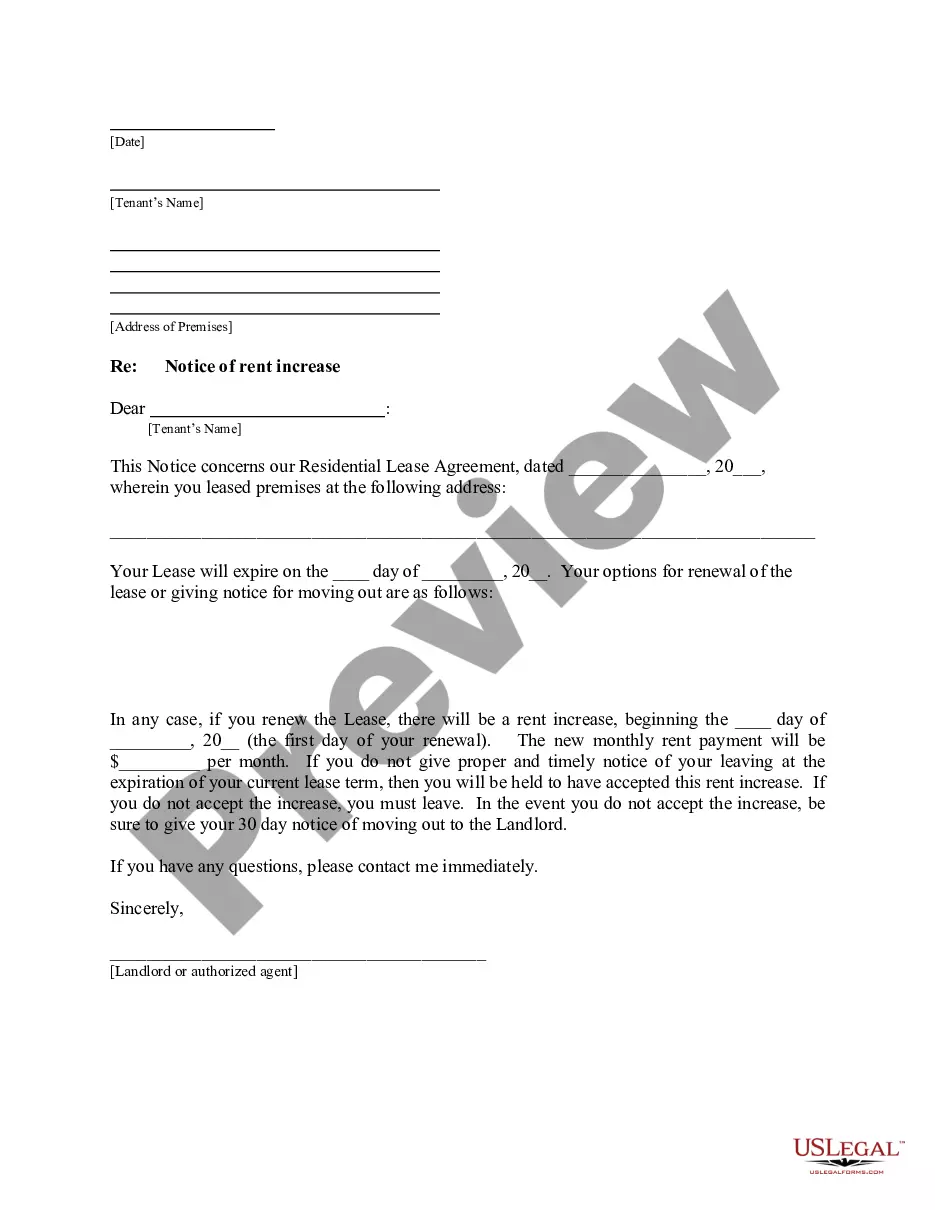
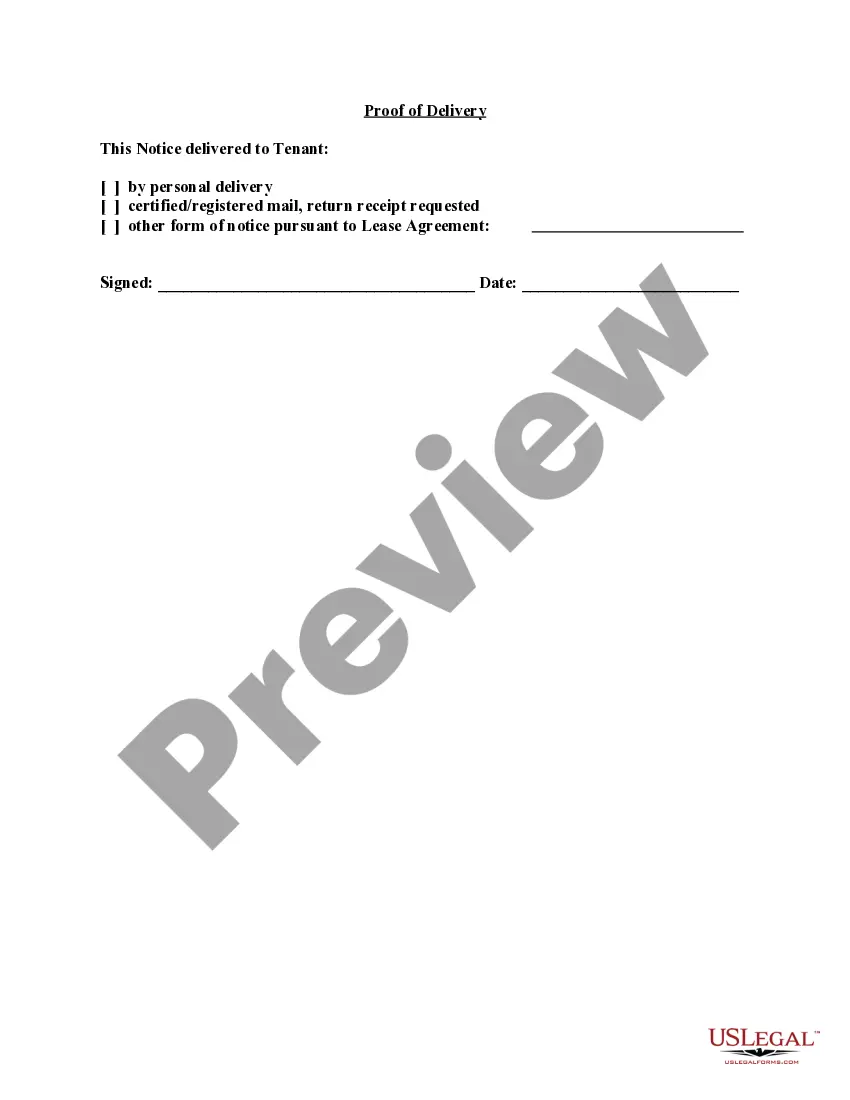
How to fill out California Letter From Landlord To Tenant About Intent To Increase Rent And Effective Date Of Rental Increase?
Regardless of whether it's for professional reasons or personal issues, every individual will encounter legal matters at some stage in their life.
Completing legal paperwork necessitates meticulous attention, starting from selecting the correct form template.
With a vast collection of US Legal Forms available, you won’t need to waste time searching for the proper template online. Utilize the library's straightforward navigation to find the right template for any circumstance.
- Locate the template you require using the search bar or catalog browsing.
- Review the details of the form to ensure it corresponds with your situation, state, and locality.
- Select the form's preview to view it.
- If it is the wrong document, return to the search feature to find the Ca Increase Rent With Cpi example you need.
- Acquire the template when it satisfies your needs.
- If you already possess a US Legal Forms account, simply click Log in to access previously saved documents in My documents.
- If you do not yet have an account, you can obtain the form by clicking Buy now.
- Select the appropriate payment option.
- Fill out the profile registration form.
- Choose your payment method: you can opt for a credit card or PayPal account.
- Select the desired file format and download the Ca Increase Rent With Cpi.
- Once saved, you can complete the form using editing software or print it out and finish it manually.
Form popularity
FAQ
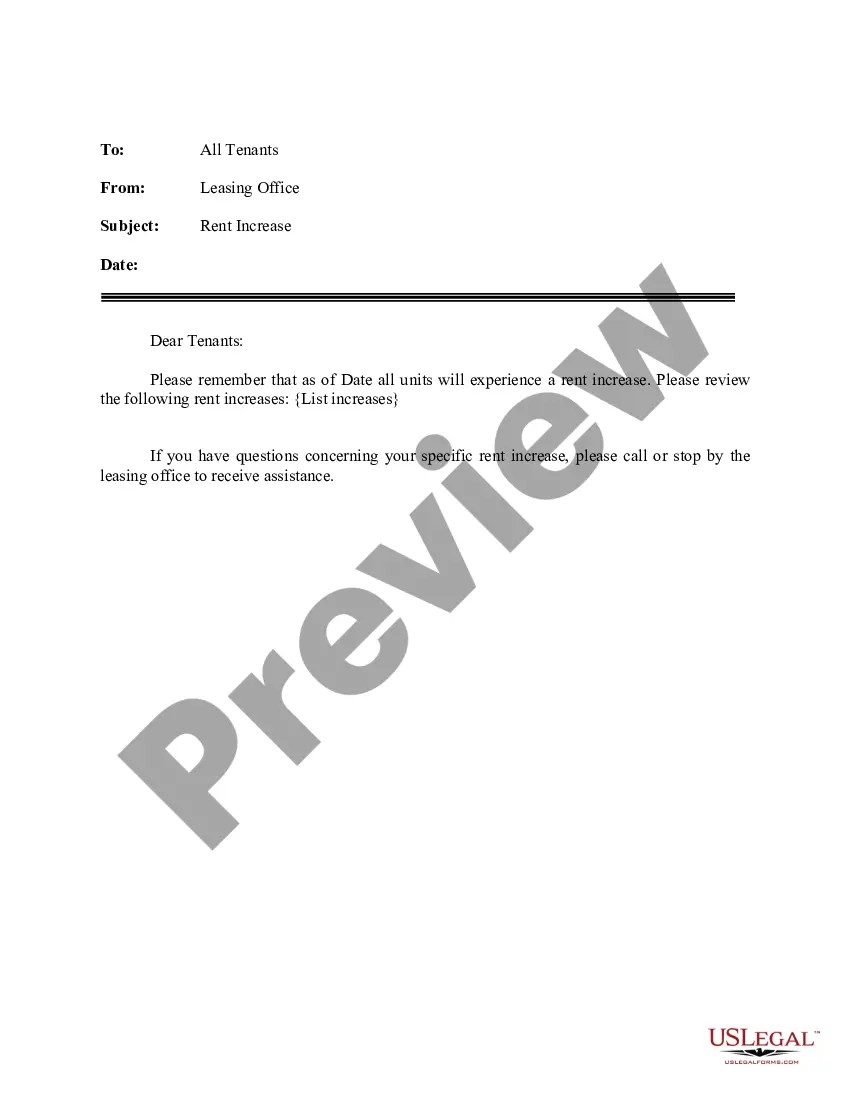
Rent is generally not included in core inflation, which focuses on the prices of goods and services excluding volatile categories. However, it remains a crucial component of the overall inflation picture. Therefore, understanding the distinction can help landlords effectively navigate how to increase rent with CPI, keeping their adjustments grounded in overall economic trends.
Calculating rent with CPI involves taking the current rent amount and multiplying it by the CPI increase percentage. For instance, if the CPI has risen by 2%, simply multiply your current rent by 1.02 to find the new rent amount. This straightforward approach can help landlords effectively manage rent according to economic changes.
To increase rent based on CPI, start by reviewing the latest CPI data relevant to your area. Determine the percentage increase in the CPI over a specific period, then apply this percentage to your current rent. Using this method ensures that your rent adjustments remain fair and compliant with market conditions.
To use CPI for calculating a salary increase, reference the current and previous CPI figures to assess inflation rates. For example, if your salary does not keep pace with CPI increases, you may not be maintaining your purchasing power. Consider discussing these calculations with your employer to negotiate a fair raise.
To calculate a rent increase using CPI, first note the CPI index for the original rental period and the current period. Then, use the formula: (Current CPI - Original CPI) / Original CPI x 100. This calculation provides the percentage to apply to your current rent, ensuring compliance with the stipulated laws.
In California, a landlord cannot raise rent by 20% without justification. The state has rent control laws that usually limit annual increases to a certain percentage, often based on the CPI. Consult local regulations to understand your rights, and consider reaching out to uslegalforms for clarity on applicable laws and documentation.
Using CPI to calculate a rent increase involves identifying the current and previous CPI values relevant to your lease period. Subtract the previous CPI from the current CPI to determine the increase. Multiply this change by your current rent amount to find the new rent, ensuring that you comply with California regulations.
To calculate an increase with CPI, start by finding the current CPI value and the CPI value from a previous period. Then, subtract the earlier CPI from the current CPI to find the change. Finally, divide that change by the earlier CPI, and multiply the result by 100 to express it as a percentage increase.
A private landlord in California can increase rent as much as the law permits, which is currently capped at 5% plus the CPI, with a maximum of 10% in any given year. This cap allows landlords to adjust rents in accordance with inflation while also providing tenants with a level of protection against excessive increases. To better understand your rent rights, you can use resources like US Legal Forms to get informed and stay compliant.
Certain tenants, such as those living in single-family homes owned by an individual landlord who owns less than three properties, may be exempt from California's rent control laws. Additionally, affordable housing developments and certain government-subsidized rentals also often benefit from exemptions. It’s essential to check your specific situation to determine if you qualify for any exemptions regarding rent increases.