California Letter from Landlord to Tenant about Intent to increase rent and effective date of rental increase
What this document covers
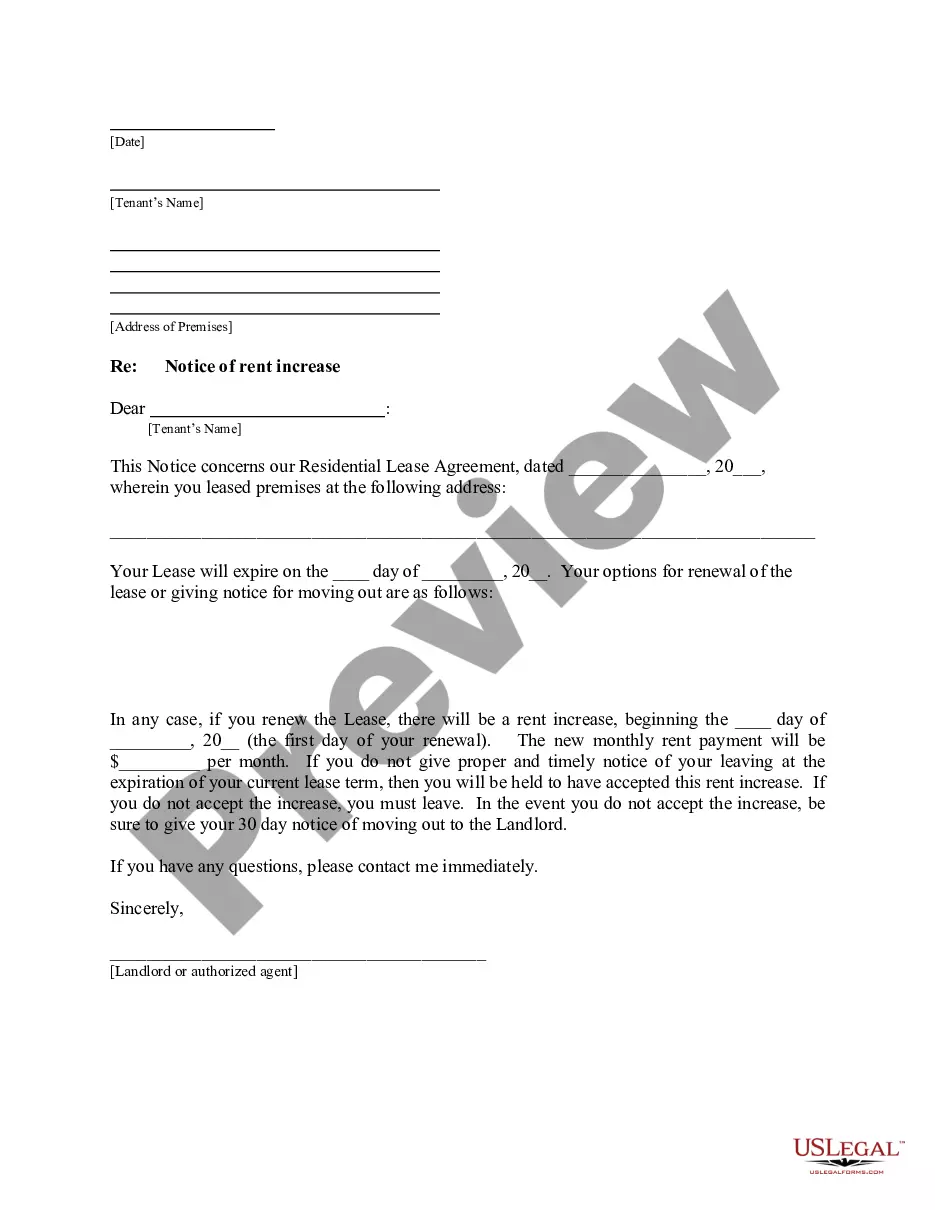
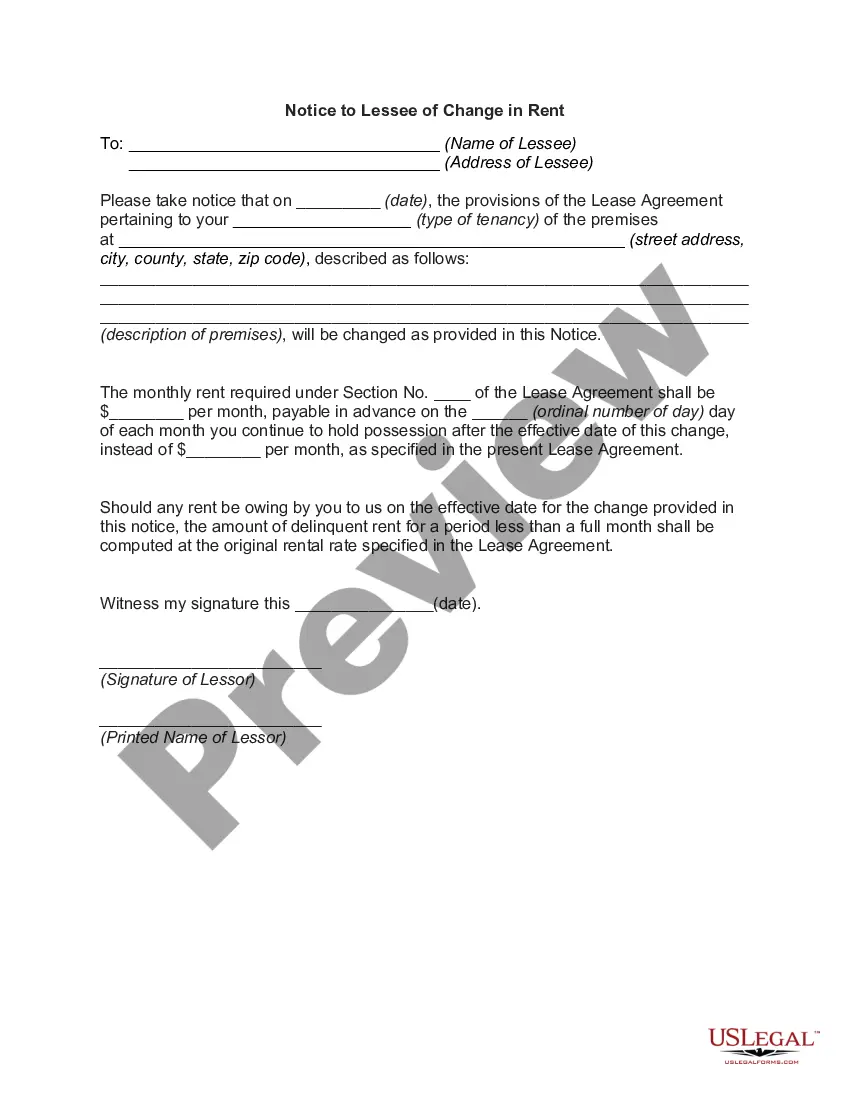
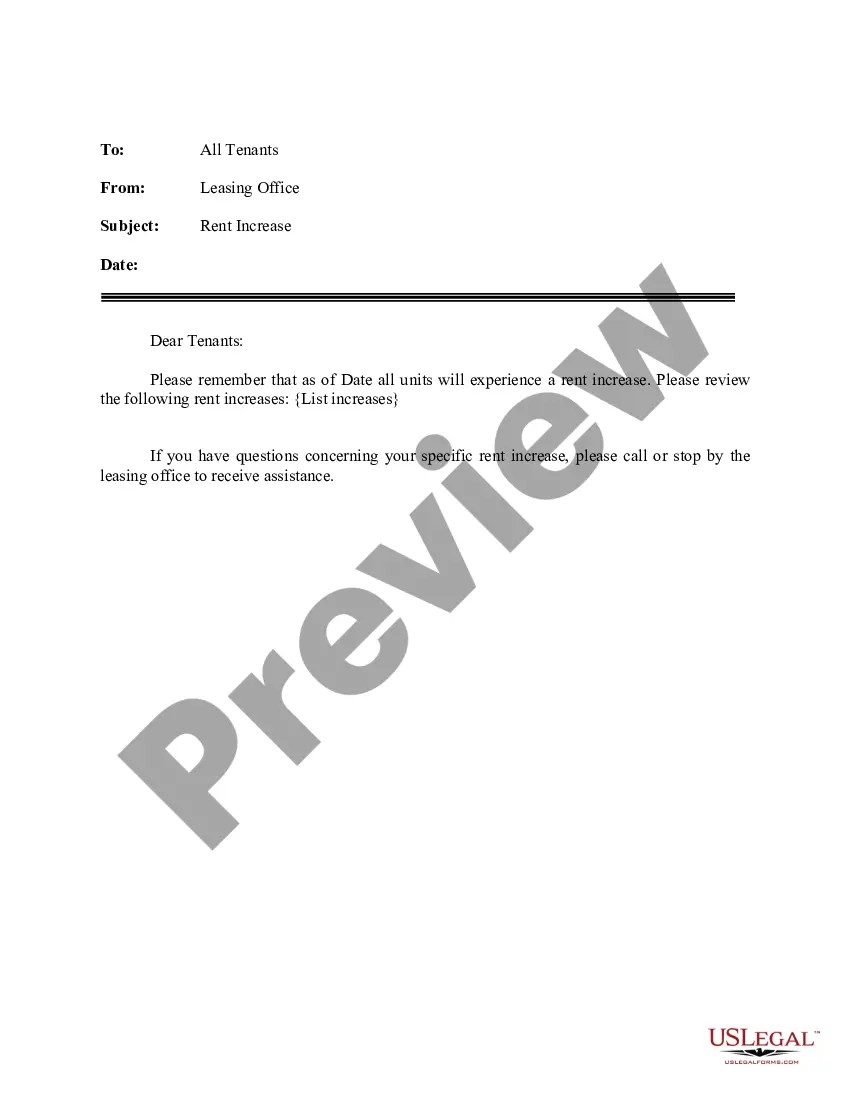
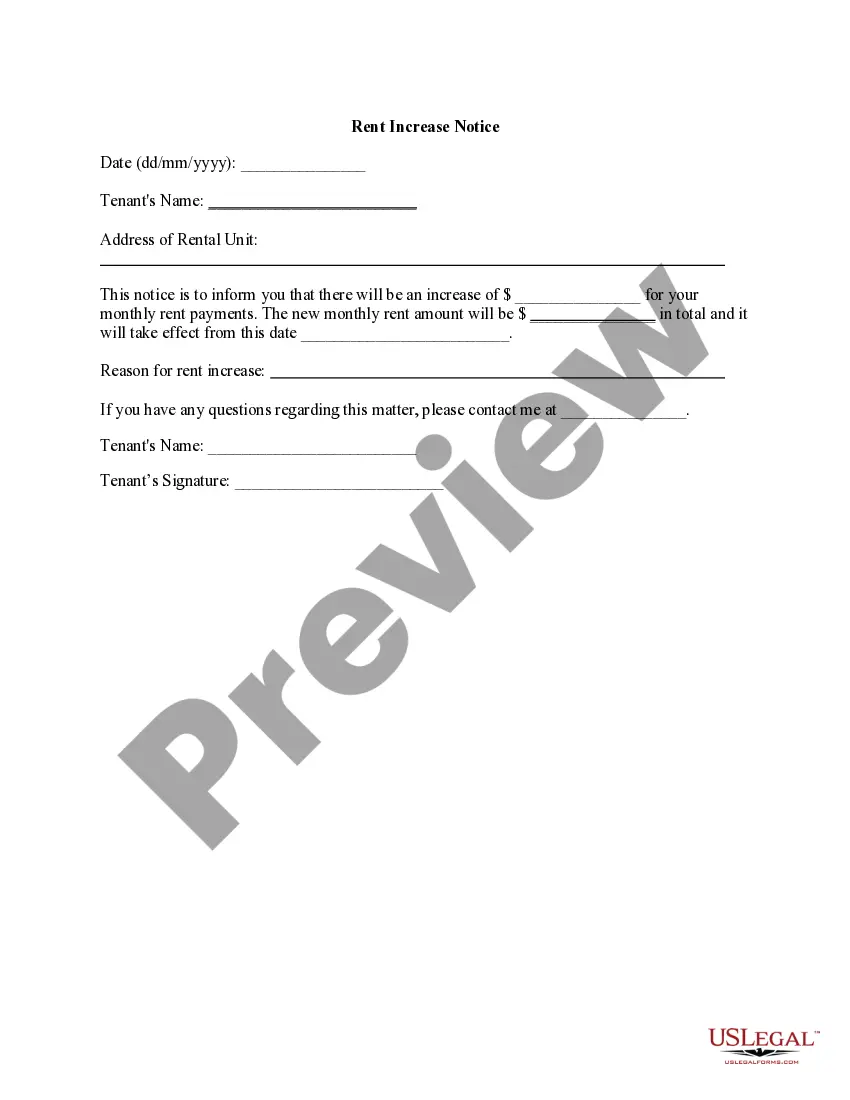
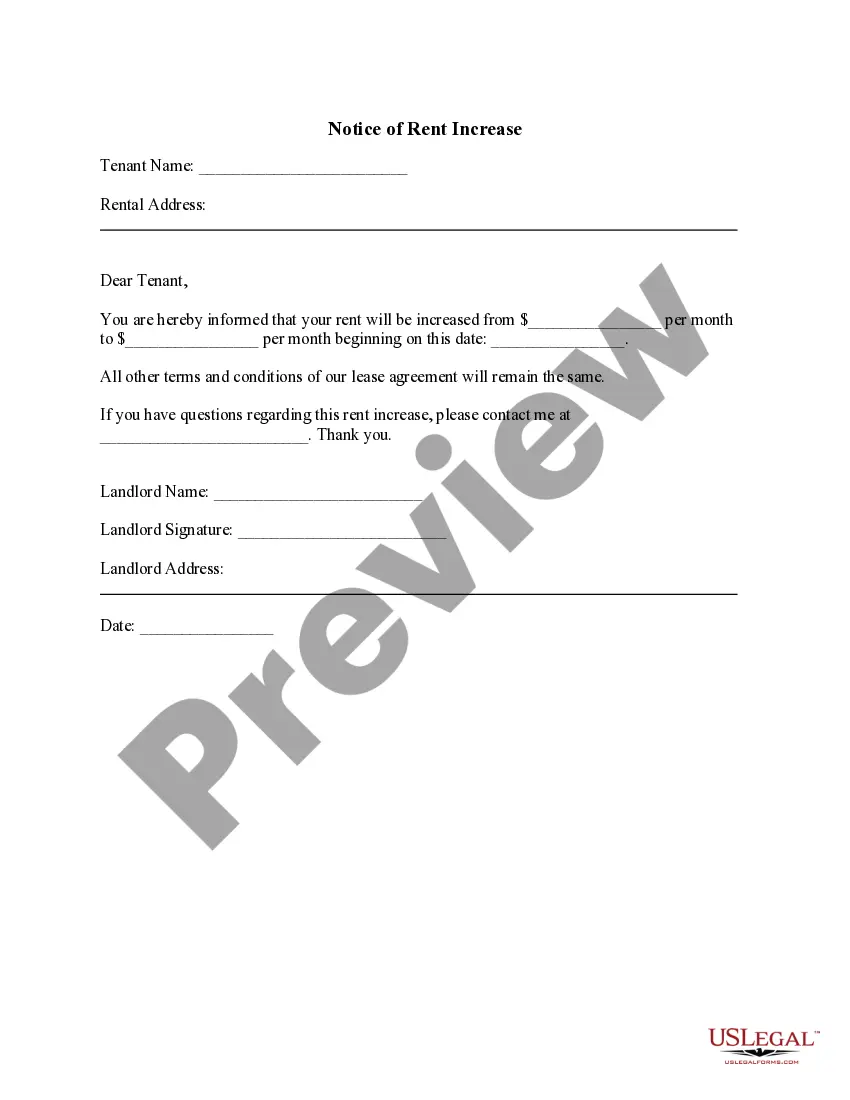
This form is a notification from the landlord to the tenant regarding an increase in rent after the expiration of the lease term. It outlines the effective date of the rent increase and provides the tenant with options concerning their lease agreement. This form is essential for legally communicating changes in rental terms and ensuring that tenants are properly informed about their choices moving forward.
Form components explained
- Identification of the parties involved (landlord and tenant).
- Details of the original Residential Lease Agreement, including dates and property address.
- Notification of the lease expiration date.
- Clarification of tenant options regarding rent increase or vacating the property.
- Contact information for the landlord or authorized agent.

When to use this document
This form should be used when a landlord intends to increase the rent at the conclusion of a residential lease term. It is particularly relevant when the lease is set to expire, and the landlord wants to ensure the tenant is aware of the upcoming changes in rent. Using this form helps to document the communication and provides clarity to the tenant on their options.
Who this form is for
This form is intended for:
- Landlords who are notifying their tenants about an increase in rent.
- Property managers or authorized agents acting on behalf of landlords.
- Tenants who need to understand their rights regarding rental increases under their lease agreement.
Instructions for completing this form
To complete this form, follow these steps:
- Identify the landlord and tenant parties by entering their names.
- Specify the property address where the rental agreement applies.
- Enter the date of the original lease agreement.
- Fill in the lease expiration date.
- Clarify the new rent amount and the effective date for this increase.
- Add the landlord's signature and contact information at the bottom.
Is notarization required?
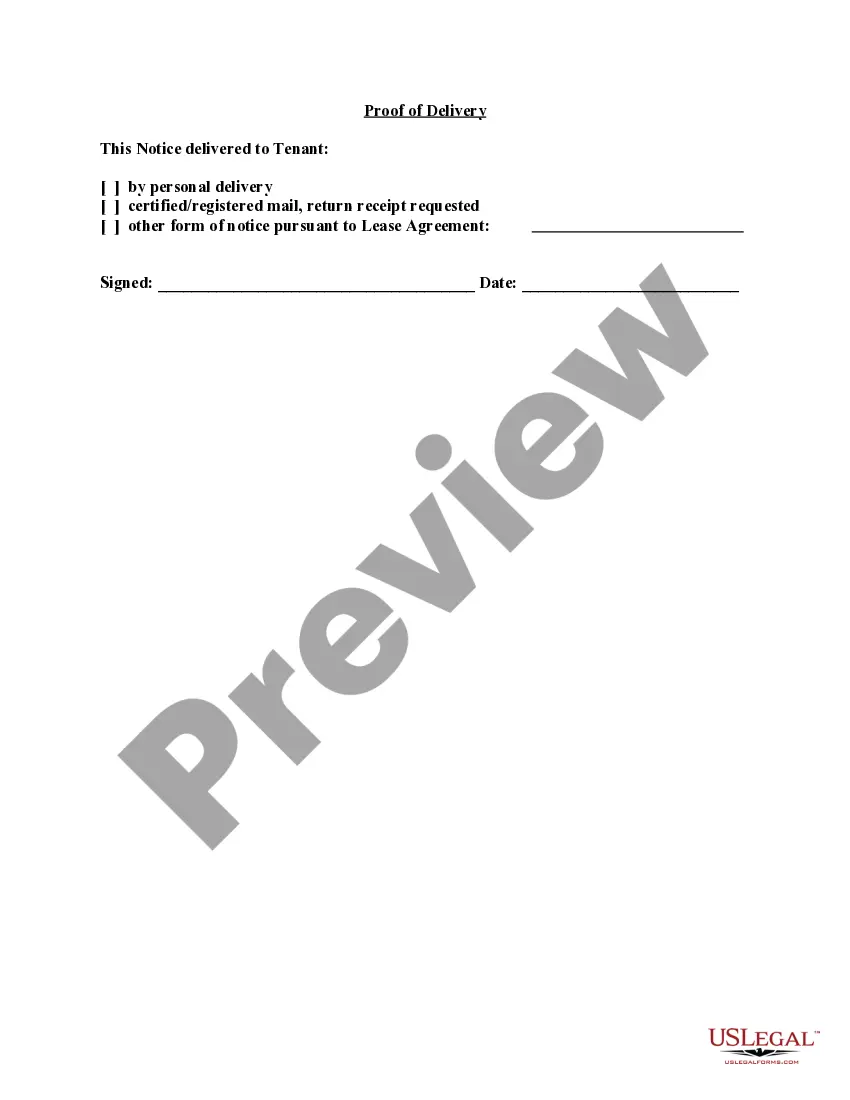
This form does not typically require notarization unless specified by local law. It is advisable to check local regulations to confirm requirements regarding delivery and acknowledgment of this notice.
Get your form ready online
Our built-in tools help you complete, sign, share, and store your documents in one place.
Make edits, fill in missing information, and update formatting in US Legal Forms—just like you would in MS Word.
Download a copy, print it, send it by email, or mail it via USPS—whatever works best for your next step.
Sign and collect signatures with our SignNow integration. Send to multiple recipients, set reminders, and more. Go Premium to unlock E-Sign.
If this form requires notarization, complete it online through a secure video call—no need to meet a notary in person or wait for an appointment.
We protect your documents and personal data by following strict security and privacy standards.

Make edits, fill in missing information, and update formatting in US Legal Forms—just like you would in MS Word.

Download a copy, print it, send it by email, or mail it via USPS—whatever works best for your next step.

Sign and collect signatures with our SignNow integration. Send to multiple recipients, set reminders, and more. Go Premium to unlock E-Sign.

If this form requires notarization, complete it online through a secure video call—no need to meet a notary in person or wait for an appointment.

We protect your documents and personal data by following strict security and privacy standards.
Common mistakes to avoid
- Failing to provide the correct lease expiration date.
- Not informing the tenant within the required notice period as dictated by state law.
- Omitting essential details such as the new rent amount.
- Using unclear language that may confuse the tenant regarding their options.
Why use this form online
- Convenience of online access for immediate form download.
- Editability, allowing landlords to personalize the form easily.
- Reliability, with attorney-drafted templates ensuring legal compliance.
Legal use & context
- This notice serves as a formal communication method to inform tenants of rent changes, which can be critical for legal enforceability.
- Ensures landlords maintain proper documentation of communication regarding rental terms.
Quick recap
- This form is essential for notifying tenants about a rent increase at the end of a lease term.
- Clear documentation helps protect the landlord's interests and informs tenants of their options.
- Ensure compliance with state laws regarding notice periods and rent increases.
Looking for another form?

Form popularity
FAQ
The new rent increase law in California, effective since January 1, 2020, limits annual rent increases to 5% plus inflation or 10% of the current rent, whichever is lower. This law aims to provide greater stability for tenants while allowing landlords a reasonable increase. Always reference this law in a California Letter from Landlord to Tenant about Intent to increase rent and effective date of rental increase to ensure compliance.
To dispute a rent increase, begin by reviewing the terms of your lease and any applicable local laws. Gather evidence supporting your case and communicate your concerns to your landlord in a clear, professional manner. Using a California Letter from Landlord to Tenant about Intent to increase rent and effective date of rental increase can formalize your position.
Tenants in California cannot simply refuse a rent increase if it falls within legal limits. However, if a tenant feels the increase is excessive or illegal, they can address this with their landlord. Documenting concerns in a California Letter from Landlord to Tenant about Intent to increase rent and effective date of rental increase can help clarify the issues at stake.
For rent increases, landlords in California must provide a written notice of at least 30 days for increases less than 10%. If the increase is 10% or more, a written notice of 90 days is required. This ensures clear communication and is typically documented using a California Letter from Landlord to Tenant about Intent to increase rent and effective date of rental increase.
In California, tenants usually must provide at least 30 days' notice before ending a month-to-month lease. If you live in a rental with a fixed-term lease, be sure to follow the lease terms regarding notice periods. When discussing changes in your lease, it helps to refer to a California Letter from Landlord to Tenant about Intent to increase rent and effective date of rental increase.
To write a 30-day notice to your landlord in California, start with your name, address, and the date. Clearly state that the notice serves to inform your landlord of your intention to terminate the lease. Make sure to include any relevant dates and sign the letter. This ensures proper documentation, facilitating communication regarding a California Letter from Landlord to Tenant about Intent to increase rent and effective date of rental increase.
In California, the statewide rent control law allows landlords to increase rent up to 5% plus the local rate of inflation, or a total of 10%, whichever is lower. It’s important to note that certain cities have their own regulations that may be stricter. A California Letter from Landlord to Tenant about Intent to increase rent and effective date of rental increase should reflect these legal limits.
When writing a recommendation letter for a tenant, begin with a positive greeting and your relationship to the tenant. Highlight the tenant's reliable payment history and maintenance of the property, emphasizing their respect for lease terms. Clearly state your willingness to recommend them and provide your contact information for any follow-up questions. A well-crafted recommendation can support your tenant's next housing application, reflecting your professional standing as a landlord.
To write a California Letter from Landlord to Tenant about Intent to increase rent and effective date of rental increase, start by clearly stating the current rent, the new rent amount, and the effective date of the increase. Be sure to include a respectful greeting and an acknowledgment of the tenant's role in your property. It is also a good idea to provide a brief explanation for the rent increase, such as changes in market conditions or improvements to the property. Finally, adhere to any local regulations governing the notification period for rent increases.
Giving a 30-day notice to a landlord in California starts with drafting a letter that clearly states your intention, whether to vacate or adjust payment terms. Include your name, address, the date of the notice, and the details of your intent. Ensure that you keep a copy for your records and deliver it according to the agreed method of communication. This ensures clarity and protects your rights as a tenant.