Rent Control Law For Commercial Space Philippines
Description

Get your form ready online
Our built-in tools help you complete, sign, share, and store your documents in one place.
Make edits, fill in missing information, and update formatting in US Legal Forms—just like you would in MS Word.
Download a copy, print it, send it by email, or mail it via USPS—whatever works best for your next step.
Sign and collect signatures with our SignNow integration. Send to multiple recipients, set reminders, and more. Go Premium to unlock E-Sign.
If this form requires notarization, complete it online through a secure video call—no need to meet a notary in person or wait for an appointment.
We protect your documents and personal data by following strict security and privacy standards.

Make edits, fill in missing information, and update formatting in US Legal Forms—just like you would in MS Word.

Download a copy, print it, send it by email, or mail it via USPS—whatever works best for your next step.

Sign and collect signatures with our SignNow integration. Send to multiple recipients, set reminders, and more. Go Premium to unlock E-Sign.

If this form requires notarization, complete it online through a secure video call—no need to meet a notary in person or wait for an appointment.

We protect your documents and personal data by following strict security and privacy standards.
Looking for another form?







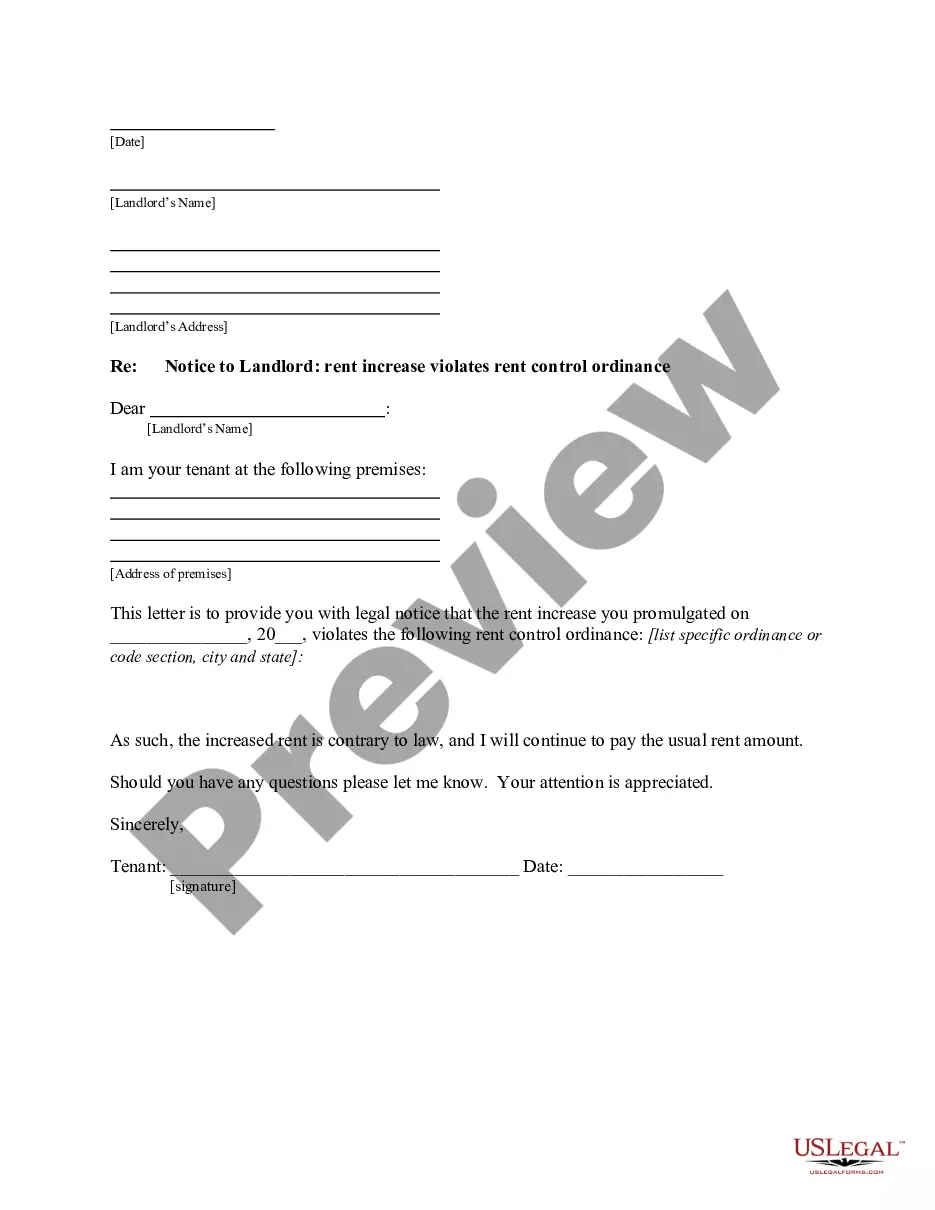
How to fill out California Letter From Tenant To Landlord Containing Notice To Landlord To Withdraw Improper Rent Increase Due To Violation Of Rent Control Ordinance?
Handling legal documentation can be exasperating, even for the most adept professionals.
When you are in search of a Rent Control Regulation for Commercial Space in the Philippines and lack the time to seek out the suitable and current version, the process can be overwhelming.
US Legal Forms caters to any needs you may have, from individual to corporate paperwork, all consolidated in one place.
Utilize cutting-edge tools to complete and manage your Rent Control Regulation for Commercial Space in the Philippines.
Below are the steps to follow after downloading the necessary form: Confirm that it is the correct form by previewing it and reviewing its details.
- Tap into a supporting resource pool of articles, tutorials, and guides pertinent to your situation and requirements.
- Conserve time and effort trying to locate the documents you need, and utilize US Legal Forms’ sophisticated search and Preview tool to find the Rent Control Regulation for Commercial Space in the Philippines and obtain it.
- If you possess a membership, Log In to your US Legal Forms account, search for the form, and retrieve it.
- Examine the My documents tab to review the documents you have previously downloaded and to manage your files as you wish.
- If this is your first experience with US Legal Forms, create an account and enjoy limitless access to all the advantages of the library.
- A robust online form repository can be a transformative solution for anyone looking to manage these scenarios efficiently.
- US Legal Forms is a frontrunner in online legal paperwork, with over 85,000 specific legal forms accessible to you at any moment.
- With US Legal Forms, you gain access to a comprehensive array of state- or county-specific legal and business documents.
Form popularity
FAQ
The allowable increase in rent under the Rent Control Law for commercial space in the Philippines is typically set at 7% for a given period, but this can vary based on the specifics of the lease agreement and local ordinances. It's important to check the latest regulations as they can change. The Rent Control Law for commercial space in the Philippines is designed to protect both landlords and tenants, ensuring fair and reasonable rental rates. For more detailed guidance, consider exploring resources on the US Legal Forms platform, where you can find documentation and legal insights tailored to your needs.
In the Philippines, the amount a landlord can increase rent is governed by the rent control law for commercial space, which typically sets a stipulated percentage based on various factors. This percentage may change depending on economic conditions and local regulations. It is crucial for landlords to stay updated on these laws and any amendments that may affect their ability to increase rent. Seeking advice from legal experts can also help navigate this aspect effectively.
Evicting a commercial tenant in the Philippines involves following legal procedures outlined in the rent control law for commercial space. Landlords must have valid grounds for eviction, such as non-payment or breach of lease terms, and must file the appropriate notices and documents. Understanding the legal process helps avoid complications and ensures compliance with local regulations. For more detailed guidance, consider consulting with a legal professional to navigate the eviction process smoothly.
The rent control act for commercial spaces in the Philippines governs how landlords manage rent increases and tenant rights. This act is designed to offer stability in the rental market and protect the interests of both landlords and tenants. By understanding this act, landlords can ensure that their practices align with legal requirements, and tenants can be aware of their rights. Staying informed about these regulations is crucial for a sound rental experience.
Typically, the rent control law for commercial space in the Philippines requires landlords to provide adequate notice to tenants when intending to increase rent or terminate leases. This notice period can vary but often falls within a 30- to 60-day window. It is essential to check the specific lease agreement and local laws to meet the required notice duration. Providing sufficient notice not only adheres to legal standards but also helps maintain a positive landlord-tenant relationship.
The rent control law in the Philippines aims to protect tenants from exorbitant rental rates and to regulate the rental market. This law stipulates the conditions under which landlords can increase rents and establishes guidelines for rental agreements. Understanding this law is crucial for both landlords and tenants, as it lays out the rights and responsibilities of each party. Compliance with this law ensures a fair rental experience and minimizes disputes.
The maximum rent increase allowed under the rent control law for commercial space in the Philippines is generally set at a percentage based on existing regulations. Typically, this amount does not exceed a certain limit specified by local authorities. It's important to stay updated with the latest laws, as changes can occur that affect this cap. Consulting with legal experts can also provide clarity on your specific circumstances.
The new rental law in the Philippines enhances the existing Rent Control Law for commercial space in the Philippines by establishing clearer guidelines for rental agreements. This law aims to protect both tenants and landlords by promoting transparency and fairness in rental practices. It includes provisions for grievance procedures and stipulated rent increases. Staying informed about these changes can help tenants make better decisions regarding their leasing agreements.
Under the Rent Control Law for commercial space in the Philippines, landlords can increase rent up to 10% annually, but this is subject to certain conditions. This increase is allowed only if the property has been properly registered under the law. Tenants should keep track of any proposed rent increases and ensure they comply with legal limits. Understanding these limits helps tenants negotiate better terms and avoid unexpected financial burdens.
In the Philippines, landlords cannot evict tenants immediately without following the legal process. The Rent Control Law for commercial space in the Philippines requires landlords to provide proper notice and valid grounds for eviction, such as non-payment of rent or violations of lease terms. It is important for tenants to be aware of their rights and seek legal advice if faced with eviction. This approach can prevent unjust removals from formal commercial spaces.