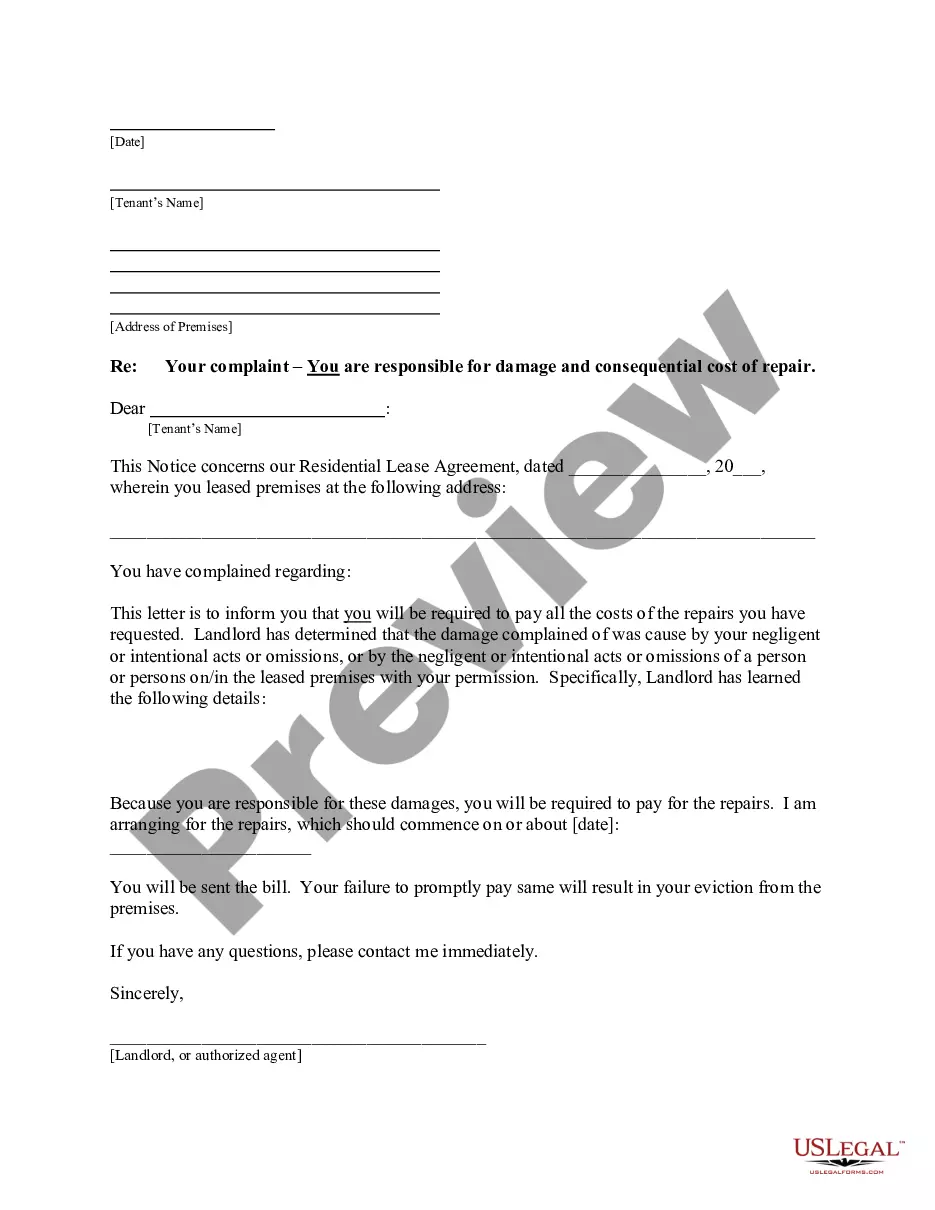
Landlord Noise Complaint Letter To Tenant
Description


Get your form ready online
Our built-in tools help you complete, sign, share, and store your documents in one place.
Make edits, fill in missing information, and update formatting in US Legal Forms—just like you would in MS Word.
Download a copy, print it, send it by email, or mail it via USPS—whatever works best for your next step.
Sign and collect signatures with our SignNow integration. Send to multiple recipients, set reminders, and more. Go Premium to unlock E-Sign.
If this form requires notarization, complete it online through a secure video call—no need to meet a notary in person or wait for an appointment.
We protect your documents and personal data by following strict security and privacy standards.

Make edits, fill in missing information, and update formatting in US Legal Forms—just like you would in MS Word.

Download a copy, print it, send it by email, or mail it via USPS—whatever works best for your next step.

Sign and collect signatures with our SignNow integration. Send to multiple recipients, set reminders, and more. Go Premium to unlock E-Sign.

If this form requires notarization, complete it online through a secure video call—no need to meet a notary in person or wait for an appointment.

We protect your documents and personal data by following strict security and privacy standards.
Looking for another form?

Form popularity
FAQ
Writing a noise complaint letter to your tenant involves stating the specific issues clearly and without ambiguity. Include details about the complaints you've received and how they violate lease terms. Be sure to outline the necessary steps the tenant should take to resolve the noise issue and offer to discuss any misunderstandings openly.
Start your formal letter about noise pollution with your contact information, followed by the recipient's details. Clearly define the noise issues and include any relevant data or examples. Highlight the impact of noise pollution on your well-being and request specific actions to address it.
In a strongly worded letter of complaint, maintain a firm yet respectful tone. State the problem clearly, and emphasize the negative impact it has caused. Be specific about any actions you expect from the recipient, and consider providing a deadline for a response.
To write a noise complaint letter, begin with a clear subject line and include your name, address, and the date. Describe the noise problem comprehensively, including specific incidents and times. End with a request for action or an offer to discuss the matter further, making it clear that you want a resolution.
When writing a letter to your neighbors about noise, start with a friendly greeting. Clearly explain the noise issue and how it affects you. Use a respectful tone and propose a constructive solution or request their cooperation in keeping the noise down.
To send a noise complaint to your landlord, write a clear and concise letter outlining the specific issues. Be sure to include times and details about the disturbances. A well-structured complaint not only captures attention but also supports your case in resolving the situation effectively.
Yes, a landlord can evict a tenant for noise disturbances if it's persistent and disruptive to other tenants. Before eviction, it's best for the landlord to document complaints and issue a formal warning. This step demonstrates the landlord's commitment to maintaining peace in the property.
You can start by approaching your neighbors calmly and expressing your concerns. A polite conversation can go a long way. Use phrases like, 'I have noticed that noise has been a bit loud lately, and it affects my comfort.' Consider offering a solution or compromise to address the issue together.