Tenant Landlord Codes For Tenants
Description


Get your form ready online
Our built-in tools help you complete, sign, share, and store your documents in one place.
Make edits, fill in missing information, and update formatting in US Legal Forms—just like you would in MS Word.
Download a copy, print it, send it by email, or mail it via USPS—whatever works best for your next step.
Sign and collect signatures with our SignNow integration. Send to multiple recipients, set reminders, and more. Go Premium to unlock E-Sign.
If this form requires notarization, complete it online through a secure video call—no need to meet a notary in person or wait for an appointment.
We protect your documents and personal data by following strict security and privacy standards.

Make edits, fill in missing information, and update formatting in US Legal Forms—just like you would in MS Word.

Download a copy, print it, send it by email, or mail it via USPS—whatever works best for your next step.

Sign and collect signatures with our SignNow integration. Send to multiple recipients, set reminders, and more. Go Premium to unlock E-Sign.

If this form requires notarization, complete it online through a secure video call—no need to meet a notary in person or wait for an appointment.

We protect your documents and personal data by following strict security and privacy standards.
Looking for another form?






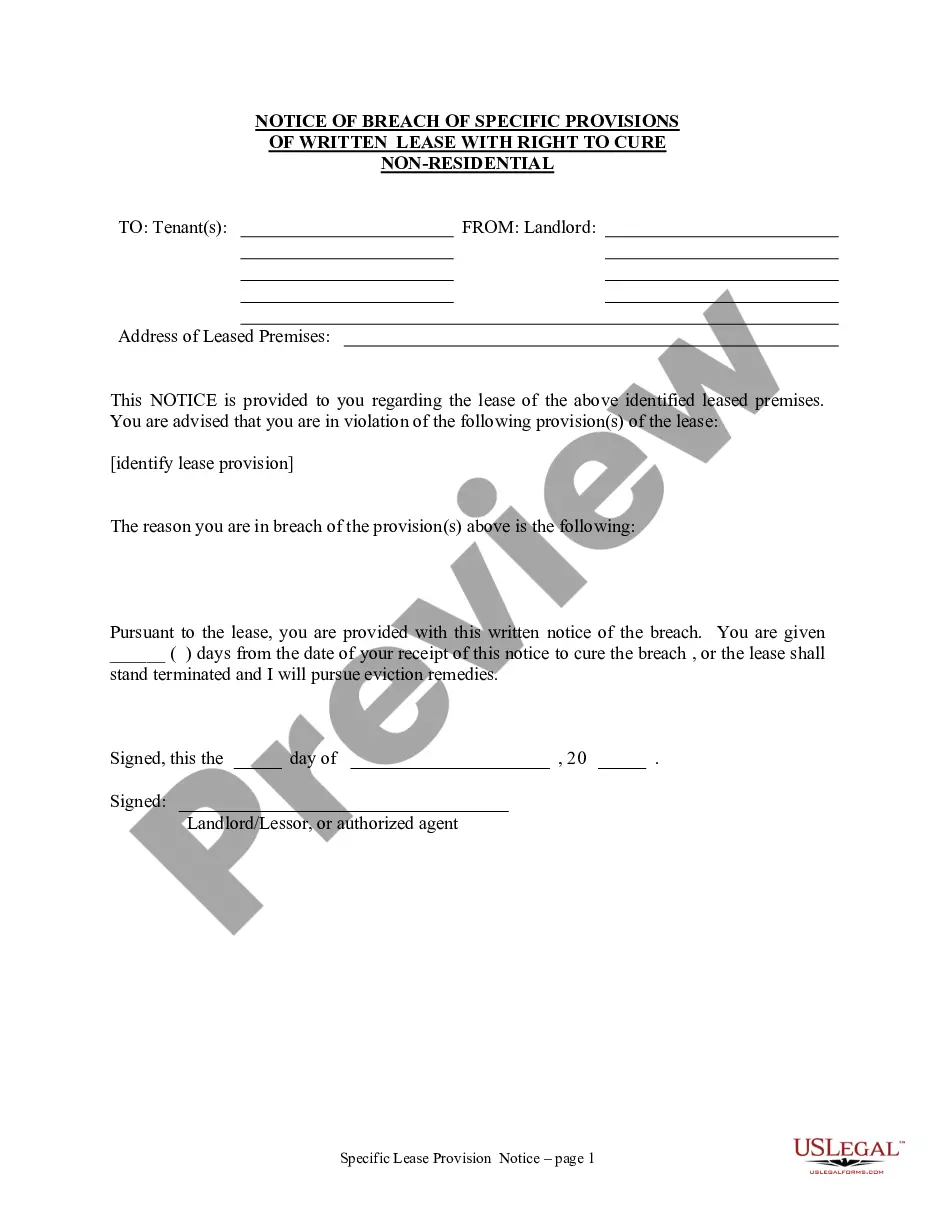

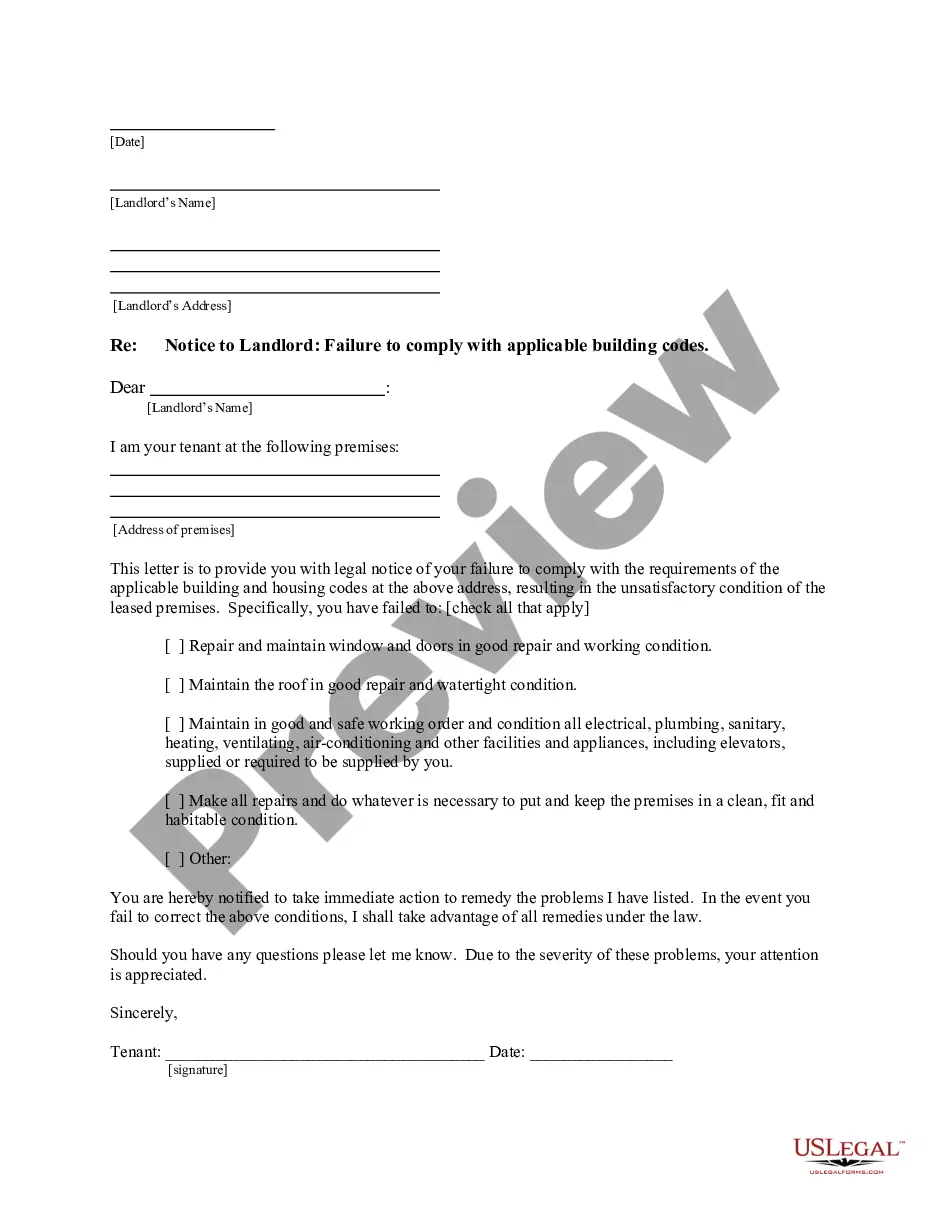
How to fill out California Letter From Tenant To Landlord For Failure Of Landlord To Comply With Building Codes Affecting Health And Safety Or Resulting In Untenantable Condition - Demand For Remedy?
- If you are a returning user, log in to your account and download the required form template by clicking the Download button. Ensure your subscription is active; if not, renew it based on your chosen plan.
- For first-time users, start by browsing the Preview mode and checking the form description to confirm it meets your needs and local jurisdiction requirements.
- If you find any discrepancies, utilize the Search feature at the top to locate the appropriate form.
- Once you have identified the correct document, click on the Buy Now button and select your preferred subscription plan, creating an account for access.
- Enter your payment details through credit card or PayPal to complete the purchase for your subscription.
- Lastly, download the form to your device and access it anytime via the My Forms section of your profile.
Utilizing US Legal Forms not only simplifies the process of obtaining necessary legal documents but also empowers users to confidently manage their rights regarding tenant landlord codes. With more forms and tailored resources than competitors, you can trust the accuracy and comprehensiveness of each document.
Empower yourself today by leveraging the resources of US Legal Forms for all your legal document needs. Start now and ensure your rights as a tenant are well protected.
Form popularity
FAQ
In South Carolina, the law does not impose a limit on how much a landlord can raise rent. However, landlords must provide proper notice as detailed in the lease agreement, usually 30 days. Being familiar with tenant landlord codes for tenants can help you understand your lease and any potential rent increases.
In South Carolina, if a guest stays for an extended period, typically more than 14 consecutive days, they might be considered a tenant under the law. This shift in status can affect the rights and obligations of both parties according to tenant landlord codes for tenants. It's wise to clarify guest policies with your landlord to avoid misunderstandings.
In South Carolina, a landlord must provide a written notice of termination, which varies based on the rental agreement. Typically, a 30-day notice is required for month-to-month tenants. Understanding these tenant landlord codes for tenants can help you prepare for a move and ensure your rights are upheld.
The Tenant Protection Act in South Carolina is designed to enhance the rights and protections for renters. This act includes provisions that align with tenant landlord codes for tenants, ensuring that tenants receive appropriate notice for evictions and have access to necessary repairs. Understanding this act can help tenants navigate their rights effectively.
Tenants in South Carolina have numerous rights, including the right to a livable property, privacy, and protection from retaliation. These rights are protected under tenant landlord codes for tenants, which ensure safe living conditions. Additionally, tenants can seek recourse if their rights are violated.
In Minnesota, tenants have the right to refuse entry to their landlords under certain conditions. According to tenant landlord codes for tenants, a landlord must provide reasonable notice, typically 24 hours, except in emergencies. If a landlord fails to give this notice, you can deny them entry.
In Kansas, tenants can report landlords to the local housing authority or the Kansas Attorney General’s office. If you believe your landlord has violated tenant landlord codes for tenants, filing a complaint may be essential. Moreover, local agencies often provide guidance on how to address housing issues.
In California, the civil code governing landlord-tenant relationships is primarily contained in Civil Code Section 1940-1954. These codes outline the rights and responsibilities of both landlords and tenants, ensuring fair treatment. Familiarizing yourself with these tenant landlord codes for tenants is vital, especially when navigating lease agreements or disputes.
To fill out a landlord application, be honest and thorough, providing all requested information clearly. Include your rental history, income details, and references to establish credibility. Understanding tenant landlord codes for tenants can enhance your application, so using resources like uslegalforms can guide you through the necessary steps.
Red flags on a rental application may include inconsistent employment history or negative credit reports. Additionally, applicants with previous evictions can raise concern among landlords. Recognizing these red flags can help you better understand tenant landlord codes for tenants and ensure you present a strong application.