Tenants Rights With Rent Increase
Description



Get your form ready online
Our built-in tools help you complete, sign, share, and store your documents in one place.
Make edits, fill in missing information, and update formatting in US Legal Forms—just like you would in MS Word.
Download a copy, print it, send it by email, or mail it via USPS—whatever works best for your next step.
Sign and collect signatures with our SignNow integration. Send to multiple recipients, set reminders, and more. Go Premium to unlock E-Sign.
If this form requires notarization, complete it online through a secure video call—no need to meet a notary in person or wait for an appointment.
We protect your documents and personal data by following strict security and privacy standards.

Make edits, fill in missing information, and update formatting in US Legal Forms—just like you would in MS Word.

Download a copy, print it, send it by email, or mail it via USPS—whatever works best for your next step.

Sign and collect signatures with our SignNow integration. Send to multiple recipients, set reminders, and more. Go Premium to unlock E-Sign.

If this form requires notarization, complete it online through a secure video call—no need to meet a notary in person or wait for an appointment.

We protect your documents and personal data by following strict security and privacy standards.
Looking for another form?
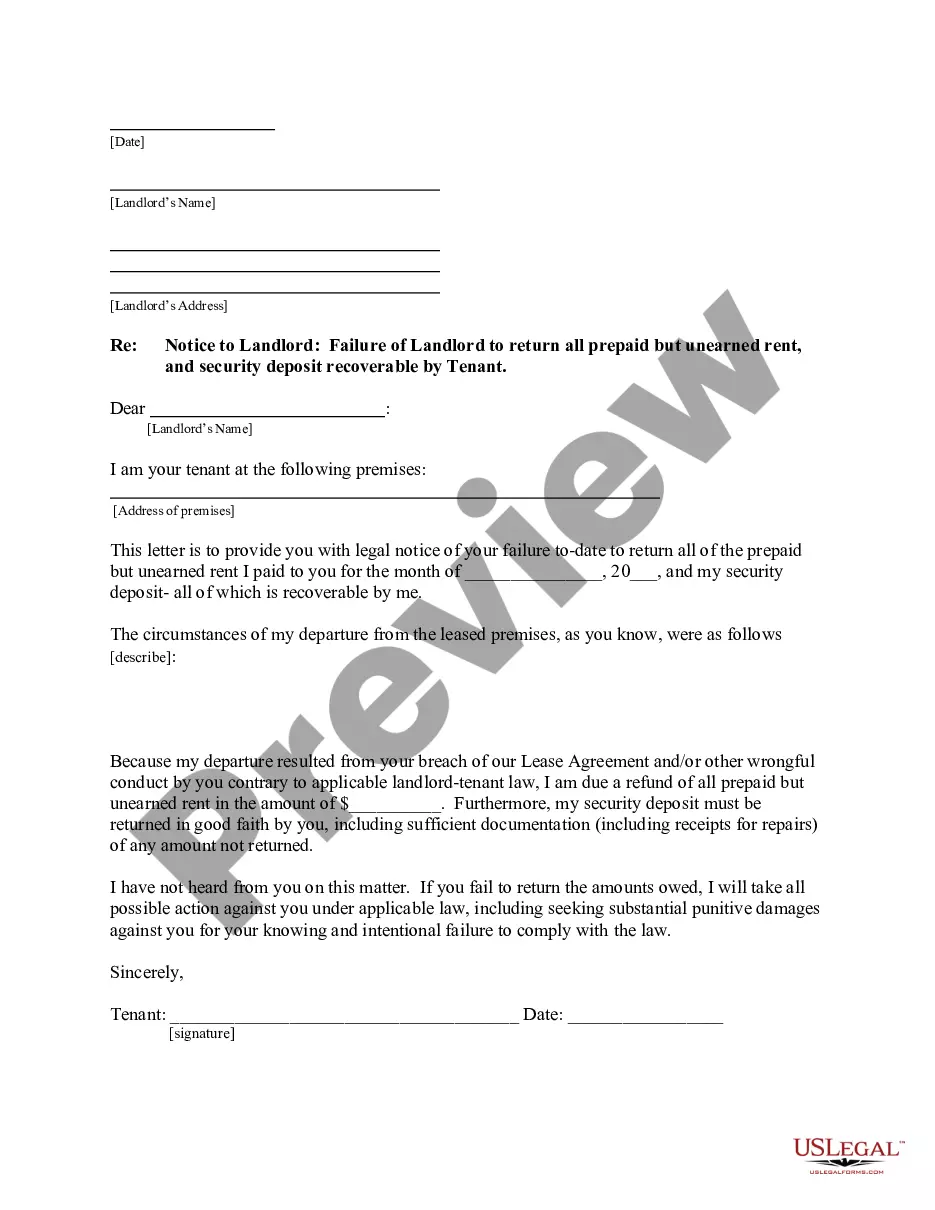
How to fill out California Letter From Tenant To Landlord For Failure Of Landlord To Return All Prepaid And Unearned Rent And Security Recoverable By Tenant?
- If you're a returning user, log in to access your account and download the necessary form template. Don't forget to check your subscription status and renew if needed.
- New to US Legal Forms? Start by browsing through the Preview mode and form descriptions to select a template that suits your needs and meets local jurisdiction requirements.
- Should you need a different template, utilize the Search function to find one that fits your criteria. Once you find the right form, proceed to the next step.
- To purchase the document, click the Buy Now button and select your preferred subscription plan. You'll need to create an account to unlock the full library.
- Complete your purchase by entering your payment details via credit card or PayPal.
- Finally, download your chosen form and save it to your device. You can also find it in the My Forms section of your profile whenever you need it.
In conclusion, US Legal Forms equips you with the necessary tools to navigate tenant rights amidst rent increases. With access to a vast library and expert assistance, you can ensure that your legal documents are accurate and compliant.
Don't wait any longer; start protecting your rights today!
Form popularity
FAQ
The maximum allowable rent increase often depends on local regulations and the lease agreement. In many areas, landlords are required to provide adequate notice and comply with local rent laws. Knowing your tenants rights with rent increase is crucial to understand your options if you believe the hike is unjust. Platforms like USLegalForms can offer resources and documentation to help you navigate these situations effectively.
In California, state laws allow certain cities to have rent control measures which often limit increases to 5% plus inflation, or 10%, whichever is lower. However, landlords can propose higher increases under specific circumstances. It's vital to understand your tenants rights with rent increase if you face a proposed rise that seems excessive. Always consider consulting with legal experts to navigate complex rent regulations.
In Texas, there are generally no limits on how much a landlord can raise rent. However, landlords must provide a written notice to tenants at least 30 days before any increase. Being informed about your tenants rights with rent increase can empower you to negotiate or contest drastic hikes. Make sure to keep communication open with your landlord to foster a better renting experience.
The amount a landlord can raise rent often varies based on local laws and regulations. In many places, there is no strict limit, but landlords typically must provide notice ahead of a rent increase. Understanding your tenants rights with rent increase can help you ensure that the adjustments are fair and within legal limits. Always check your local housing authority for specific guidelines.
When explaining a rent increase to a tenant, clarity and transparency are key. You should provide a clear rationale behind the increase, such as rising maintenance costs or improvements to the property. By discussing tenants rights with rent increase openly, you can foster a better understanding and maintain a positive landlord-tenant relationship.
In New York City, property owners of rent-stabilized apartments typically face limits set annually by the Rent Guidelines Board. These limits can vary, and the percentage might be below or above inflation rates. To navigate these changes effectively, being informed about tenants rights with rent increase is essential for any tenant.
The maximum amount a landlord can raise rent in New York can vary greatly depending on the type of rental property and local laws. In some cases, landlords must adhere to strict guidelines, while in others, there might be more flexibility. Knowing your tenants rights with rent increase is important to negotiate and understand any proposed changes.
Yes, there is a limit on how much a landlord can raise rent in New York State, particularly in rent-stabilized apartments. This limit can depend on various factors, including inflation and specific guidelines set by the state. Familiarizing yourself with your tenants rights with rent increase is essential for understanding what to expect when your landlord wants to increase your rent.
As a tenant in New York, you have several rights that protect you from unfair practices. You have the right to live in a well-maintained property and receive proper notice before any rent increase. Being aware of your tenants rights with rent increase can empower you when negotiating with landlords or dealing with disputes.
Yes, New York City has specific rent control regulations that limit how much landlords can raise rents. These regulations vary based on the type of rental agreement and the property’s status. Understanding tenants rights with rent increase in New York is crucial to ensure you're informed before a landlord proposes a hike in rent.