Ca Divorce Form Fl-142
Description

Get your form ready online
Our built-in tools help you complete, sign, share, and store your documents in one place.
Make edits, fill in missing information, and update formatting in US Legal Forms—just like you would in MS Word.
Download a copy, print it, send it by email, or mail it via USPS—whatever works best for your next step.
Sign and collect signatures with our SignNow integration. Send to multiple recipients, set reminders, and more. Go Premium to unlock E-Sign.
If this form requires notarization, complete it online through a secure video call—no need to meet a notary in person or wait for an appointment.
We protect your documents and personal data by following strict security and privacy standards.

Make edits, fill in missing information, and update formatting in US Legal Forms—just like you would in MS Word.

Download a copy, print it, send it by email, or mail it via USPS—whatever works best for your next step.

Sign and collect signatures with our SignNow integration. Send to multiple recipients, set reminders, and more. Go Premium to unlock E-Sign.

If this form requires notarization, complete it online through a secure video call—no need to meet a notary in person or wait for an appointment.

We protect your documents and personal data by following strict security and privacy standards.
Looking for another form?







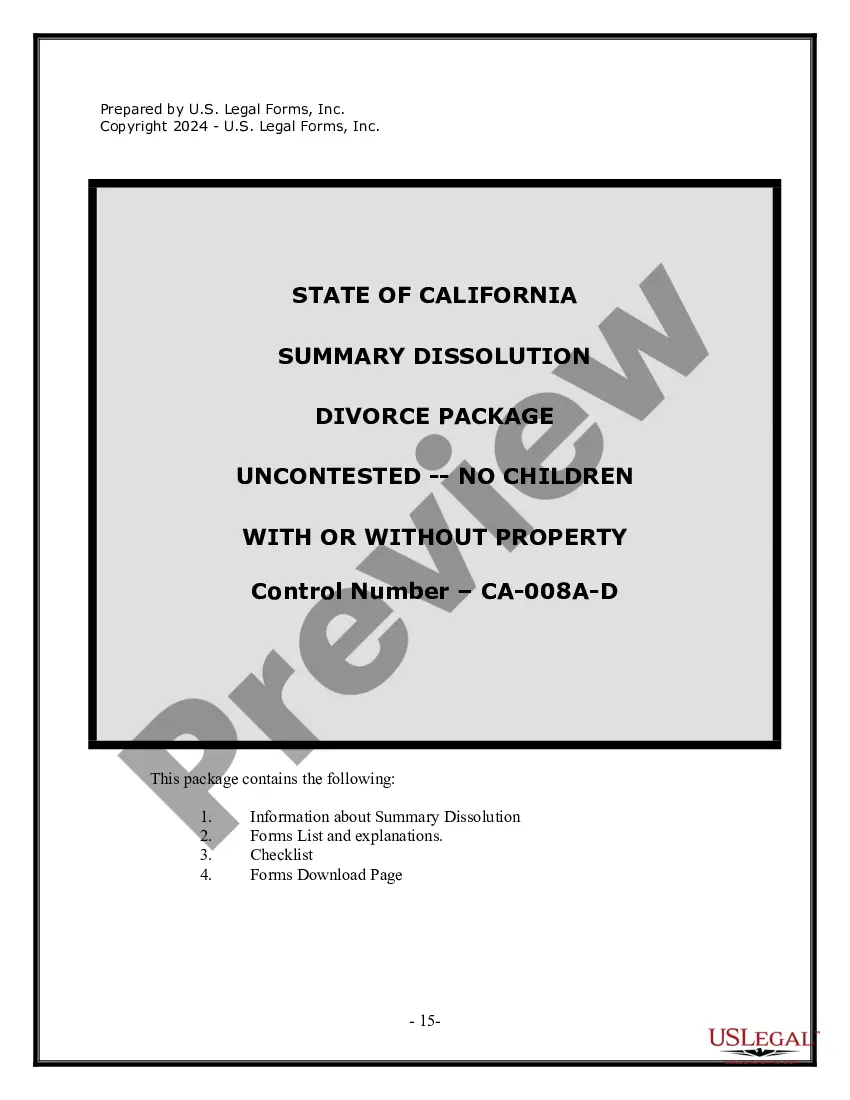
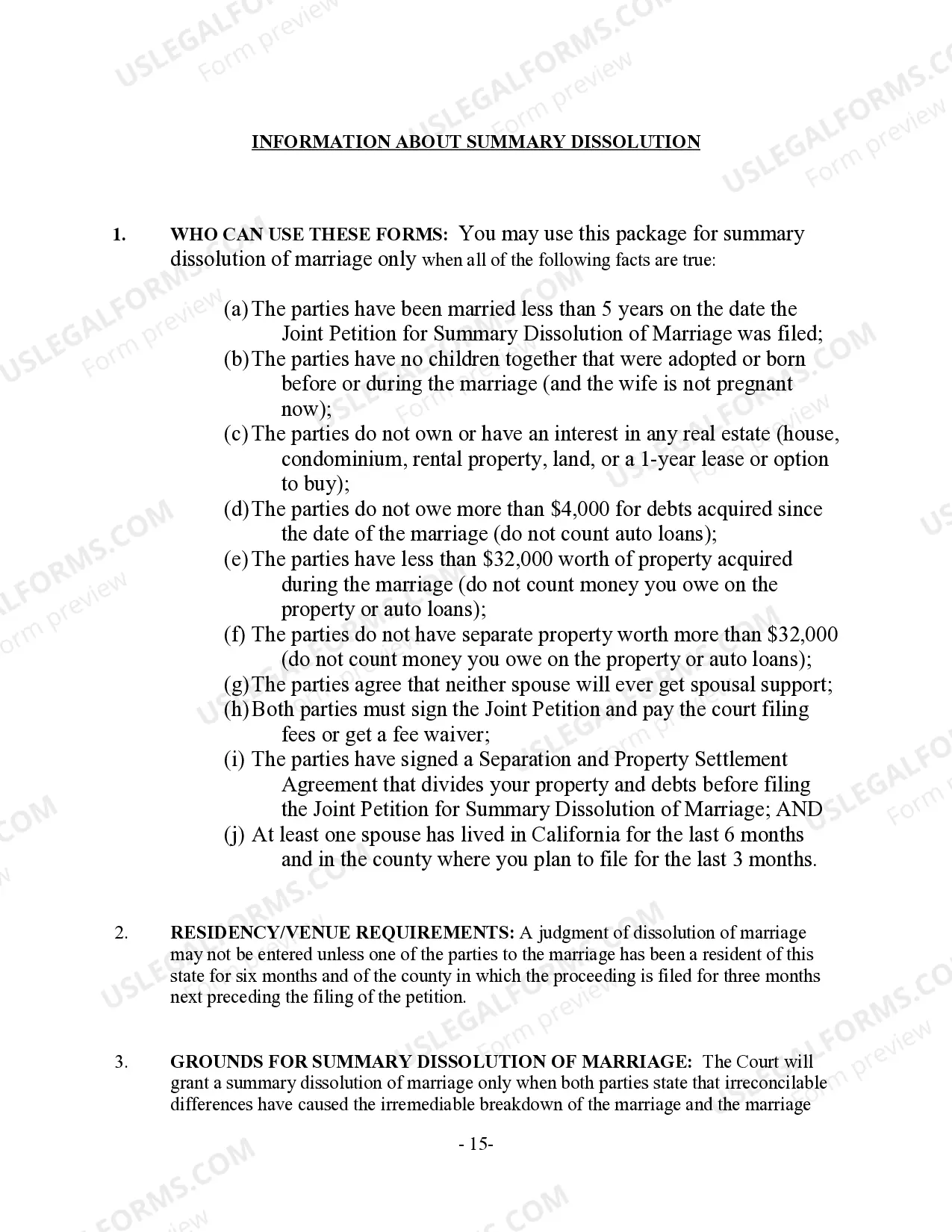
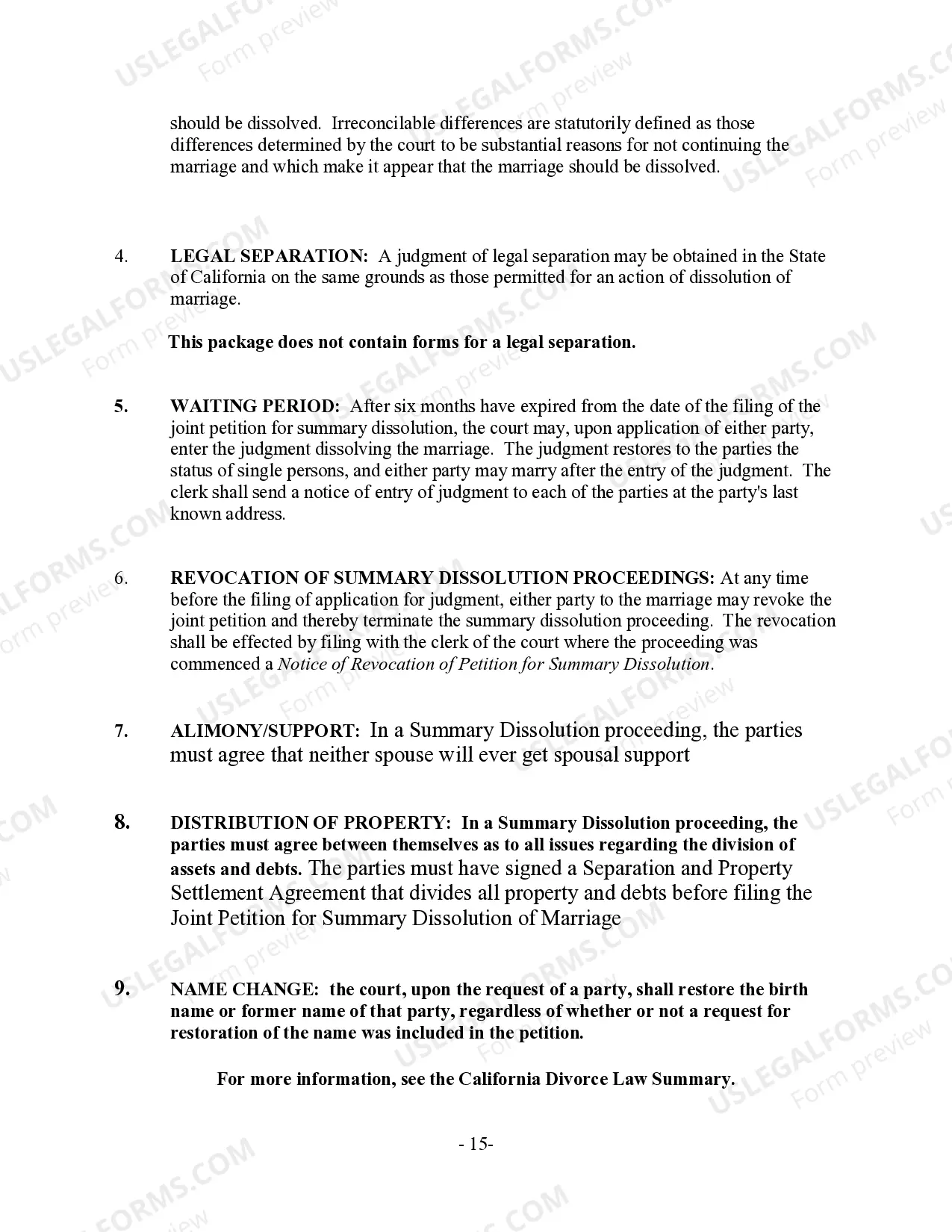
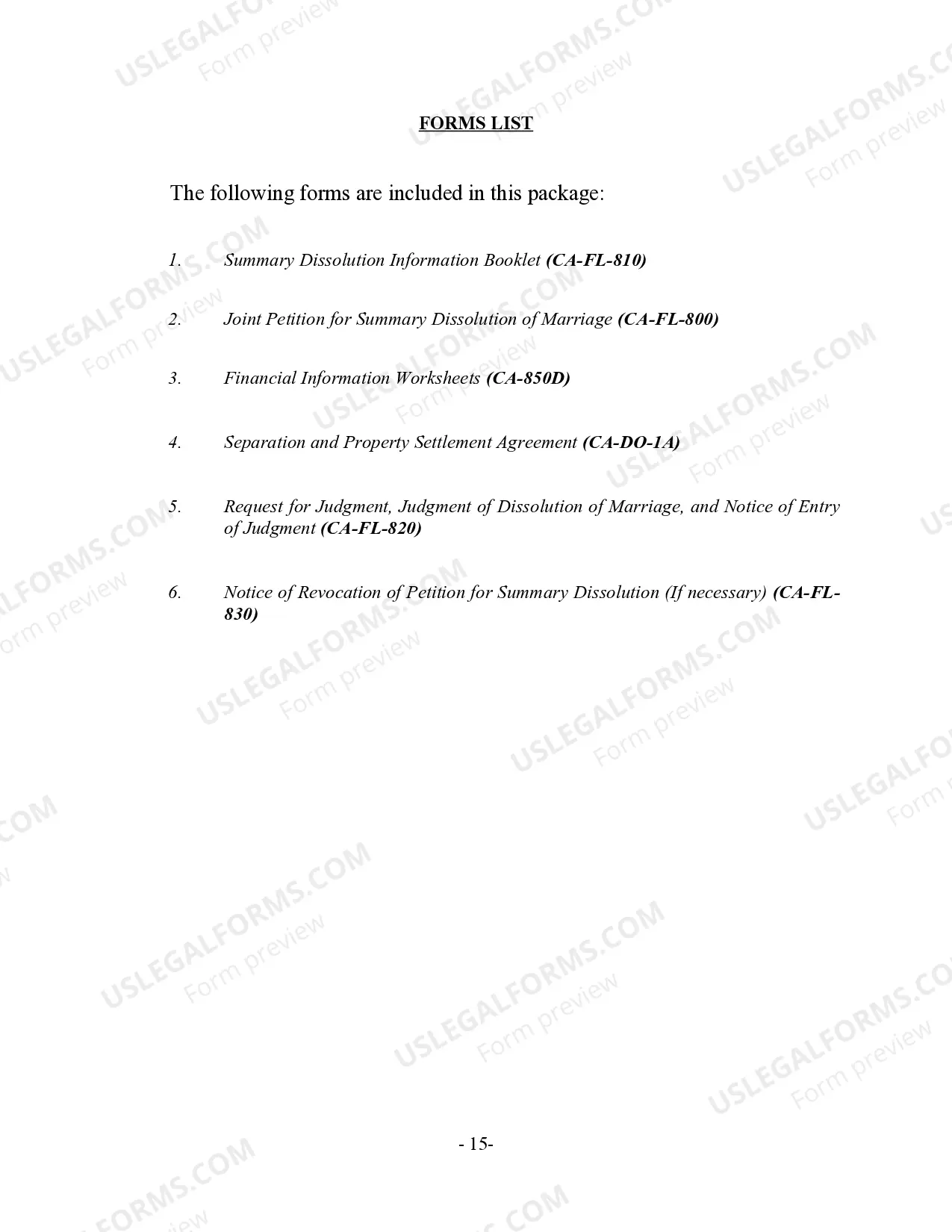
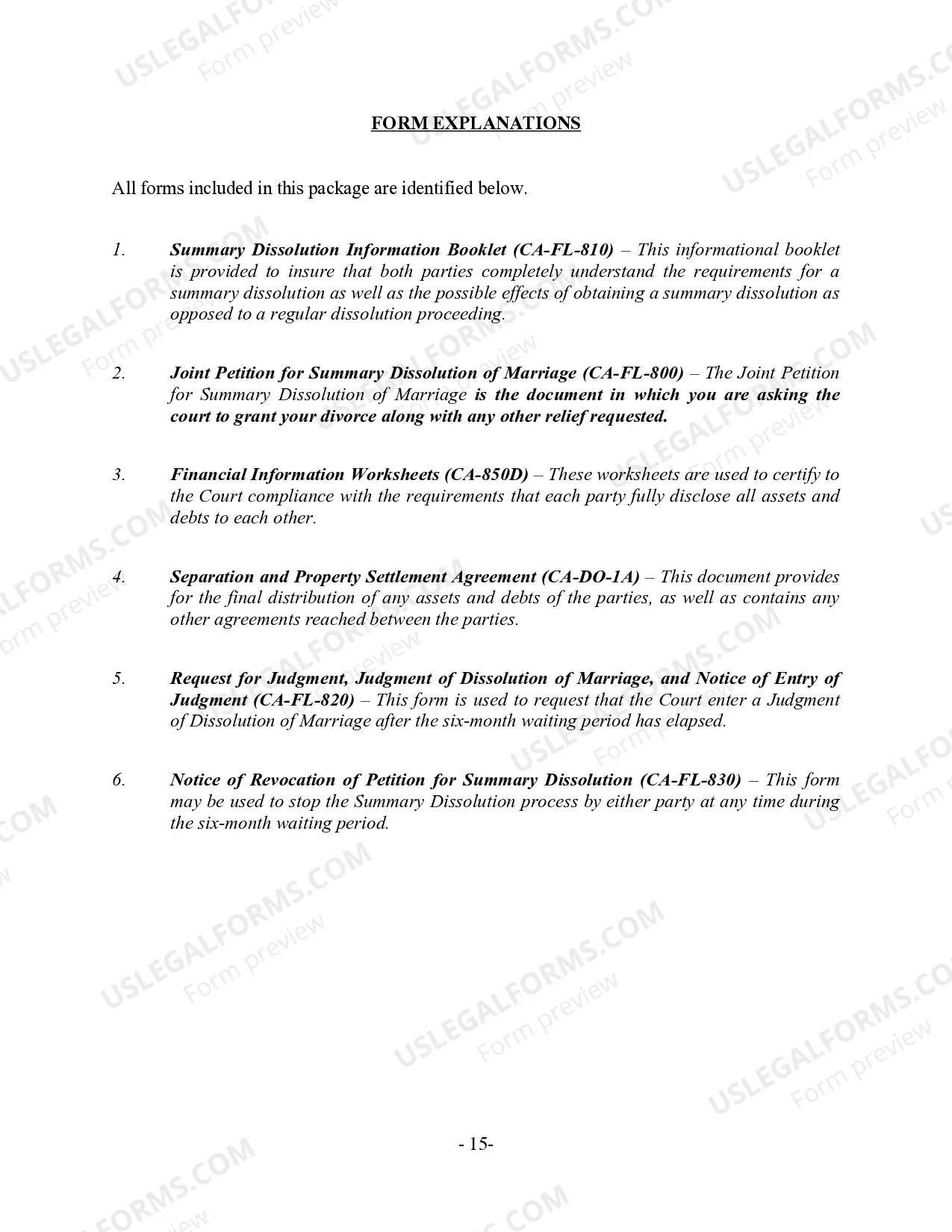
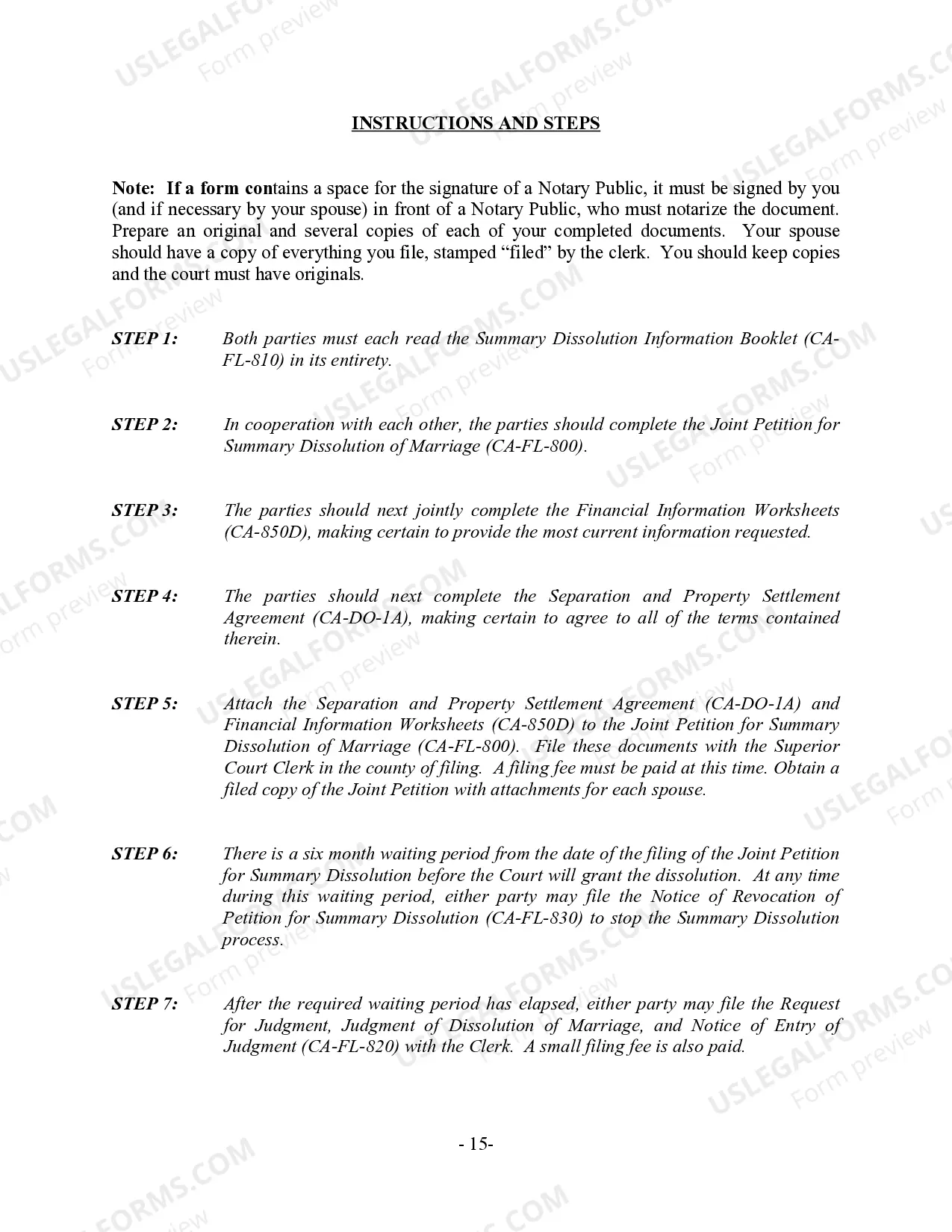
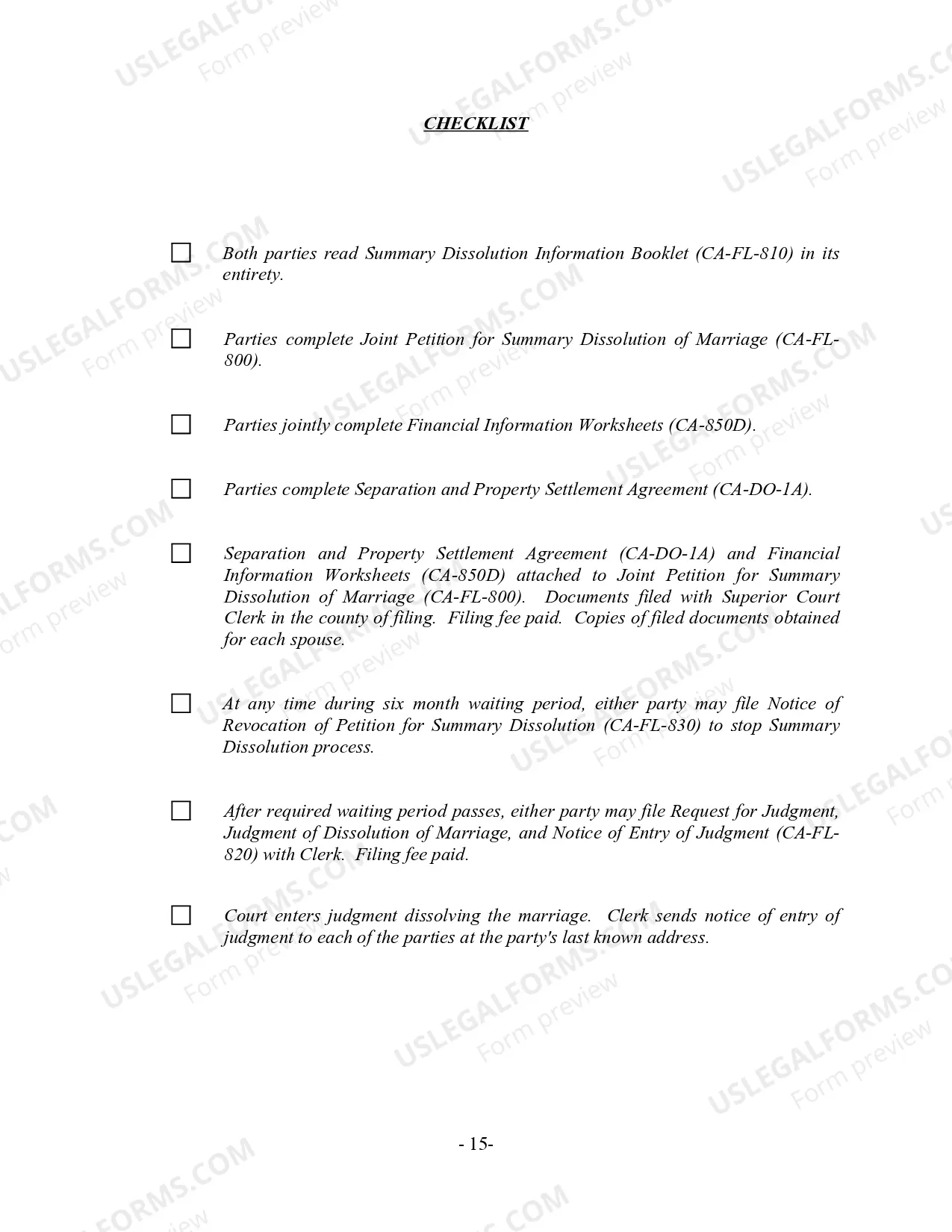
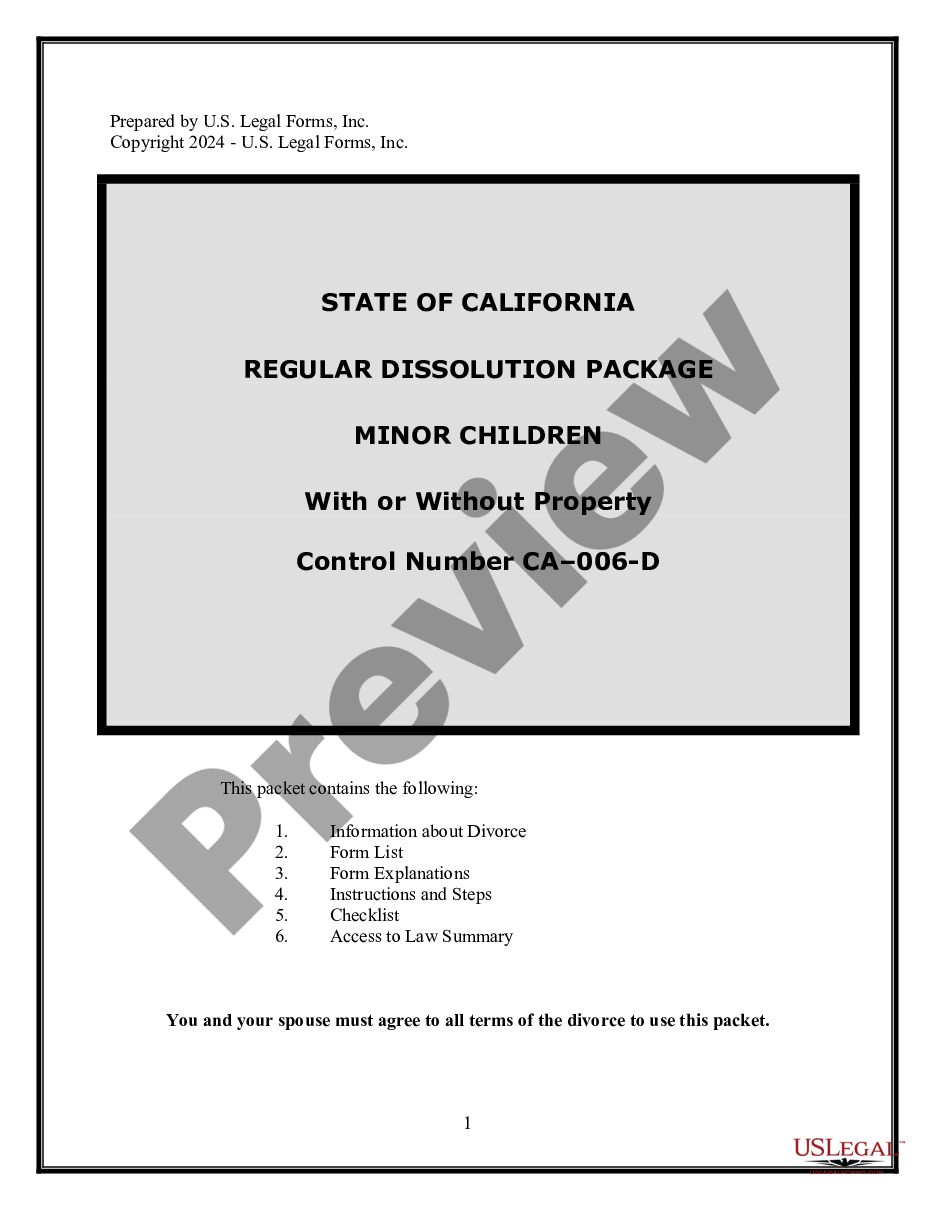
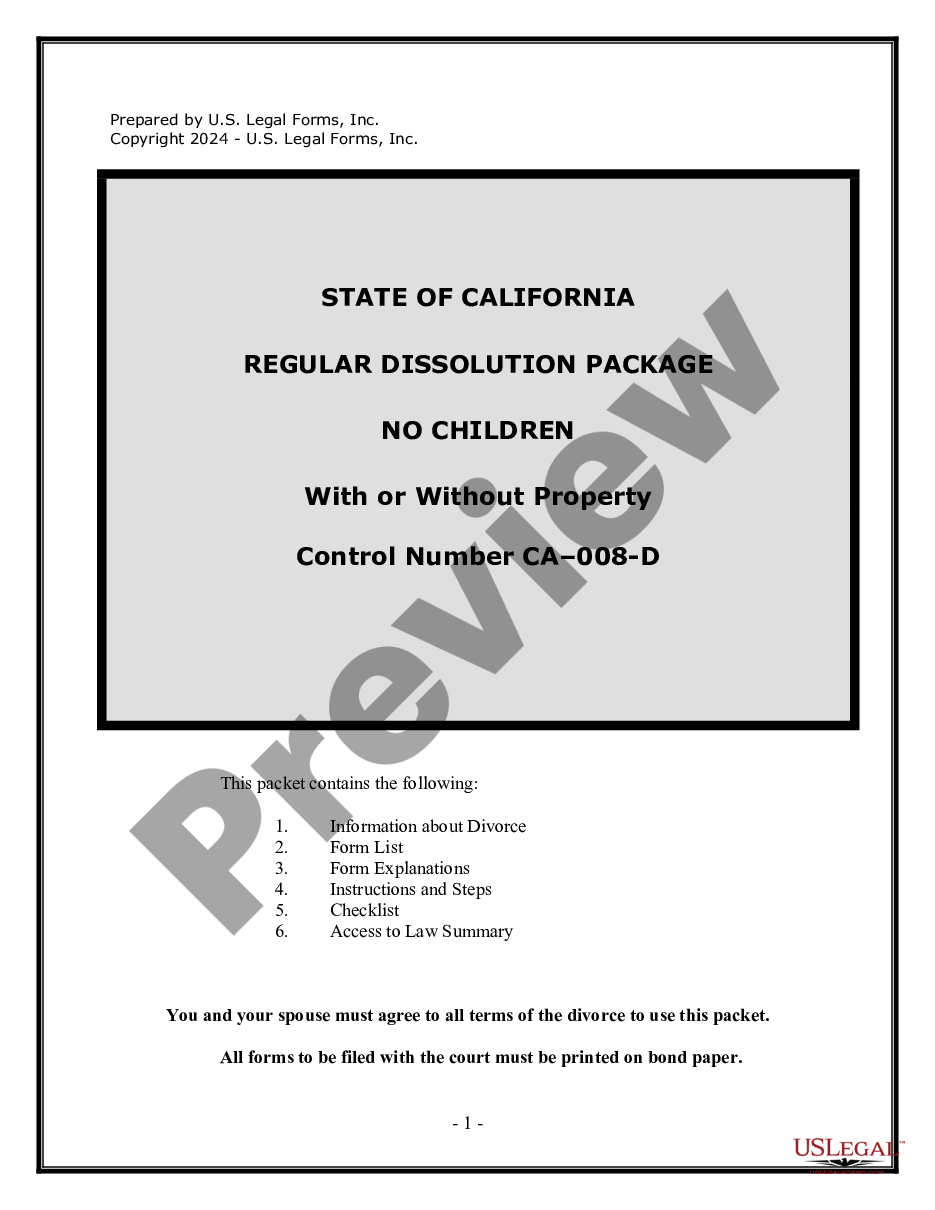
How to fill out California Summary Dissolution Of Marriage Package With No Children - Divorce?
Regardless of whether it's for professional reasons or personal issues, everyone must confront legal matters at some point in their lives.
Filling out legal documents necessitates meticulous attention, beginning with selecting the correct form template. For instance, if you choose an incorrect version of the Ca Divorce Form Fl-142, it will be rejected upon submission.
With an extensive US Legal Forms catalog available, you will never need to waste time searching for the correct sample online. Utilize the library’s straightforward navigation to discover the suitable template for any circumstance.
- Acquire the sample you require using the search bar or catalog browsing.
- Review the form’s description to confirm it aligns with your circumstance, state, and locality.
- Click on the form’s preview to view it.
- If it is not the correct form, return to the search feature to find the Ca Divorce Form Fl-142 sample you need.
- Obtain the file once it satisfies your criteria.
- If you possess a US Legal Forms account, click Log in to access previously stored templates in My documents.
- If you do not have an account yet, you can acquire the form by clicking Buy now.
- Choose the suitable pricing option.
- Complete the profile registration form.
- Select your payment method: you can utilize a credit card or PayPal account.
- Choose the document format you prefer and download the Ca Divorce Form Fl-142.
- Once downloaded, you can fill out the form using editing software or print it out and complete it by hand.
Form popularity
FAQ
Yes, you must file the FL 142 form with the court as part of your divorce proceedings in California. This form ensures that both parties are transparent about their financial circumstances. Submitting the CA divorce form FL-142 is a critical step in the overall divorce process. To make this step easier, consider using UsLegalForms to guide you through the filing requirements.
The FL 142 form, also known as the Declaration of Disclosure, is essential in California divorce proceedings. It provides a comprehensive account of your financial situation and is required for both parties to disclose their assets and debts. Completing this form accurately is vital for a fair and equitable division of property. Utilizing resources from UsLegalForms can assist you in filling out the CA divorce form FL-142 correctly.
The six-month rule in California dictates that at least six months must pass from the date a divorce petition is filed before a judge can finalize the divorce. This waiting period allows both parties to reflect and settle any disputes. Understanding this timeline is crucial for effective planning during your divorce. Using the CA divorce form FL-142 can help you navigate this process smoothly.
Yes, you can file for divorce in California without a lawyer. Many individuals choose to represent themselves, especially when their cases are straightforward. However, it's essential to understand the legal processes involved. Using resources like the CA divorce form FL-142 can simplify this process and ensure you meet all requirements.
A brief review of the forms and what you do with each: FL-140: Only served on your spouse. FL-141 (this form): Filed with the court AND served on your spouse.
Instead, each of you has to serve a copy of all the completed forms on the other. You keep the original of your disclosure forms. You DO need to file with the court a form called the Declaration Regarding Service of Declaration of Disclosure (Form FL-141).
How to file proof of completed disclosures Fill out a form. Fill out Declaration Regarding Service of Declaration of Disclosure (form FL-141). This form tells the court you sent the required disclosures. ... Take your forms to the court clerk. Go to the same courthouse where you filed your initial divorce papers.
California Divorce Form FL-140 1: Schedule of Assets & Debts. You'll include your completed Schedule of Assets & Debts (FL-142), so check box 1. 2: Income & Expense Declaration. Also required is your Income & Expense Declaration (FL-150), so check box 2. 3: Income Tax Returns. ... 4-6: Personal Statements. ... Sign, Date, and Serve.