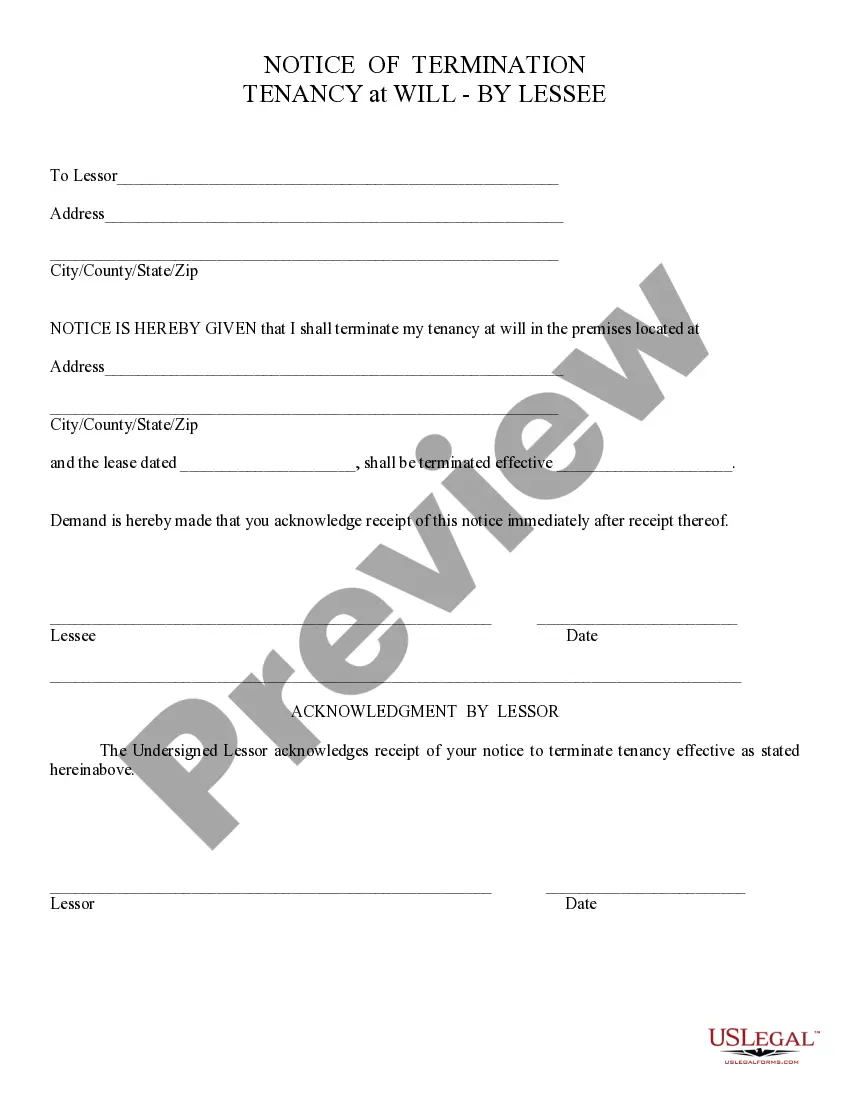
Tenancy By For Each
Description

Get your form ready online
Our built-in tools help you complete, sign, share, and store your documents in one place.
Make edits, fill in missing information, and update formatting in US Legal Forms—just like you would in MS Word.
Download a copy, print it, send it by email, or mail it via USPS—whatever works best for your next step.
Sign and collect signatures with our SignNow integration. Send to multiple recipients, set reminders, and more. Go Premium to unlock E-Sign.
If this form requires notarization, complete it online through a secure video call—no need to meet a notary in person or wait for an appointment.
We protect your documents and personal data by following strict security and privacy standards.

Make edits, fill in missing information, and update formatting in US Legal Forms—just like you would in MS Word.

Download a copy, print it, send it by email, or mail it via USPS—whatever works best for your next step.

Sign and collect signatures with our SignNow integration. Send to multiple recipients, set reminders, and more. Go Premium to unlock E-Sign.

If this form requires notarization, complete it online through a secure video call—no need to meet a notary in person or wait for an appointment.

We protect your documents and personal data by following strict security and privacy standards.
Looking for another form?
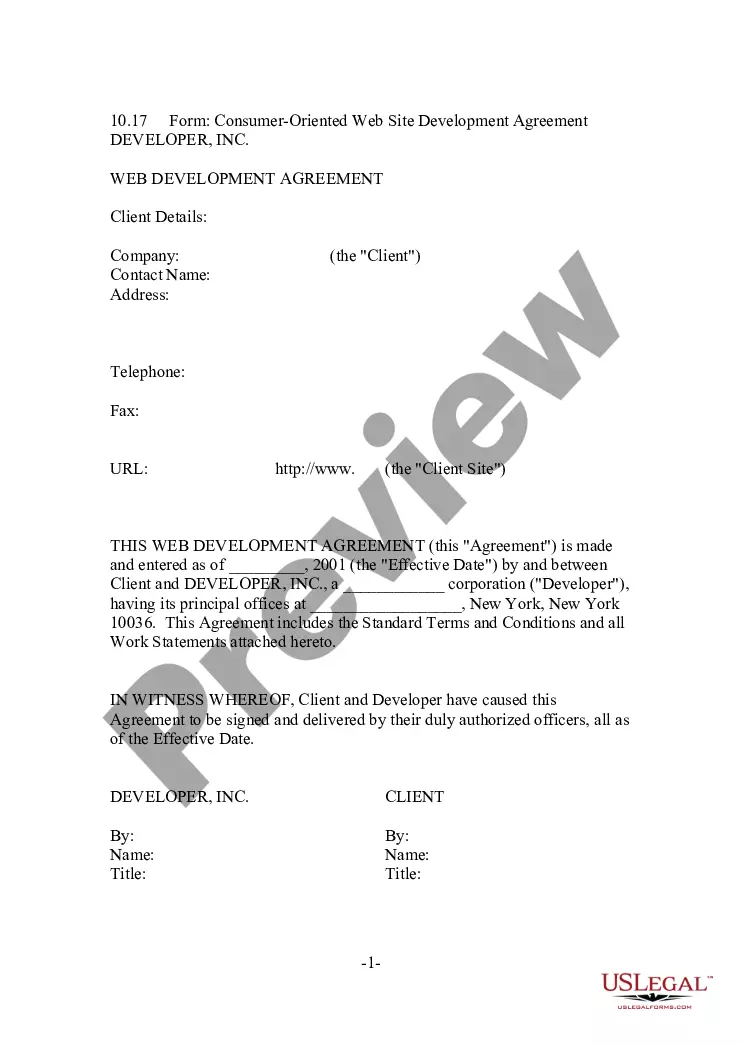

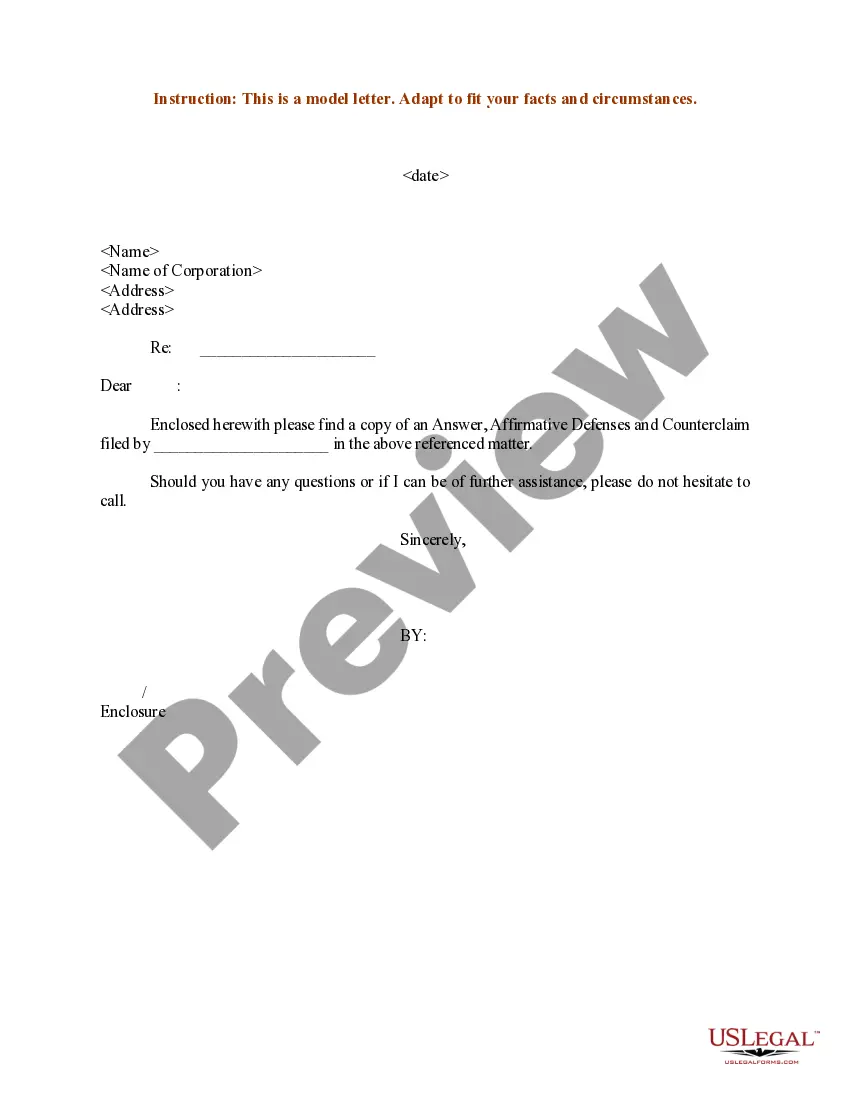





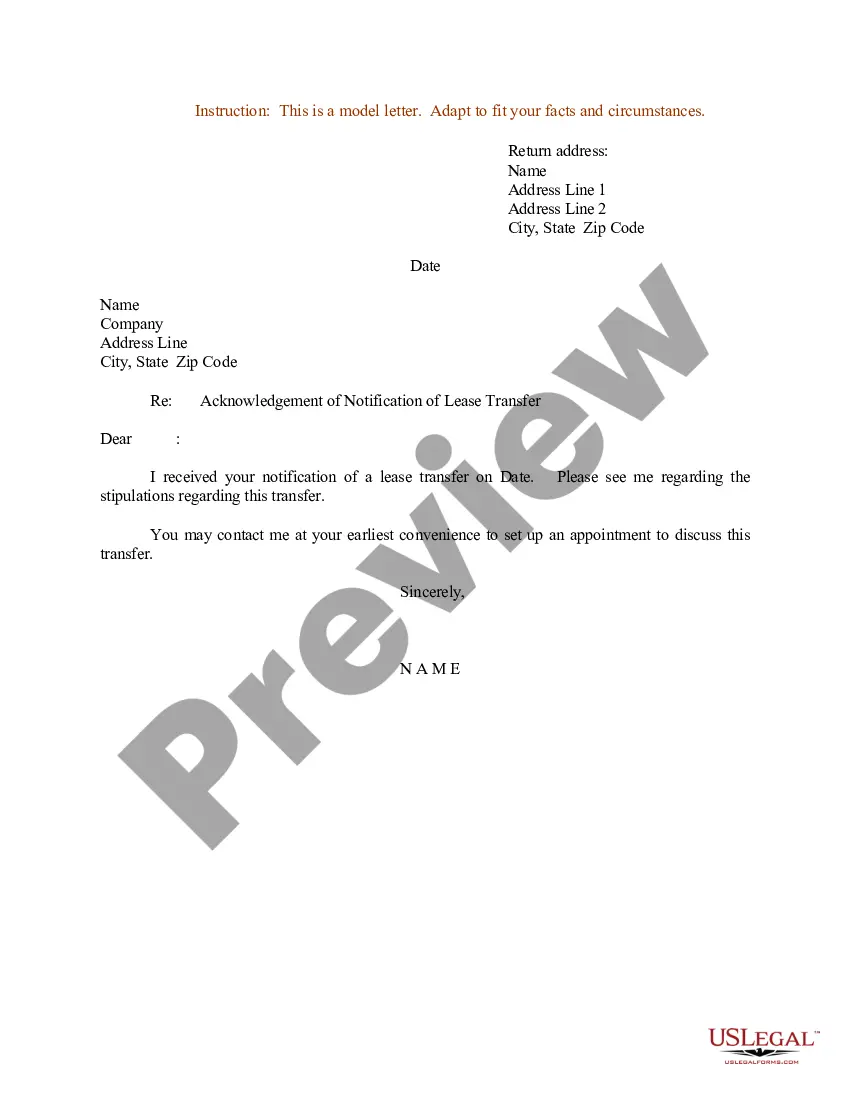

How to fill out Arizona Termination Of Tenancy At Will By The Lessee?
- If you're a returning user, visit the US Legal Forms site and log into your account. Ensure your subscription is active and click the Download button for your required template.
- First-time users should start by checking the form description and Preview mode to ensure they select the right tenancy by for each document that aligns with their local jurisdiction.
- If necessary, use the Search tab to find additional templates to meet your requirements while ensuring consistency.
- Once the correct document is found, click on the Buy Now button and choose an appropriate subscription plan while creating an account for access to the legal library.
- Complete your purchase by entering your payment details through credit card or PayPal, securing your subscription.
- Finally, download the document to your device. You can revisit this form anytime from the My Forms section of your profile.
By leveraging US Legal Forms, individuals and lawyers can easily draft and manage legal documents without hassle. The platform boasts a wealth of resources, making it a go-to for all your legal documentation needs.
Take control of your legal documentation today! Explore the resources at US Legal Forms for effortless access to forms that empower you in your legal journey.
Form popularity
FAQ
A common example of a tenancy by the entirety occurs when a married couple jointly purchases a home. In this case, both spouses own the property equally and have the right of survivorship, meaning that if one spouse passes away, the ownership automatically transfers to the surviving spouse. This arrangement not only simplifies asset transfer but also enhances financial security for couples. To explore options for establishing tenancy by the entirety, consider utilizing the resources available on the US Legal Forms platform.
When comparing joint tenancy and tenancy by the entirety, it's essential to understand the different benefits each offers. Tenancy by the entirety provides stronger protection against creditors, as this arrangement only applies to married couples. In contrast, joint tenancy allows for more flexibility, as it can include any number of owners. Therefore, your choice should depend on your marital status and your financial goals.
The best tenant is someone who respects the property and abides by the lease terms. Ideally, tenants who are financially stable, maintain open communication, and demonstrate a commitment to their living situation prove to be excellent choices. For married couples, arrangements like Tenancy by the Entirety can enhance stability and foster a positive tenant-landlord relationship. Landlords seeking reliable tenants may also find value in screening processes that consider these qualities.
The best deed for a married couple typically depends on their goals and relationship dynamics. Many couples benefit from a Tenancy by the Entirety deed, offering automatic rights of survivorship and protection against creditors. This ensures that if one spouse passes away, the other automatically inherits the property, preventing complicated legal issues. Using reputable resources, like uslegalforms, can guide couples in selecting the right deed for their unique circumstances.
Most married couples tend to choose Tenancy by the Entirety when co-owning property. This arrangement provides several benefits, making it the preferred option for couples looking for shared ownership with added protections. Joint tenancy and tenants in common both have their merits, but Tenancy by the Entirety stands out for the stability it offers to married couples. Consulting with a knowledgeable platform like uslegalforms can help clarify the best option for your specific situation.
Landlords often view married couples as more stable tenants for various reasons. Married couples typically show commitment to maintaining their residence and fulfilling rental agreements. Additionally, this stability can lead to fewer issues and drama in rental situations, making landlords inclined to prefer tenants in enduring relationships, such as those benefiting from Tenancy by the Entirety. That said, each landlord has unique preferences, and open communication can clarify expectations.
Tenancy by the Entirety (TBE) and Tenancy in Common (TIC) serve different needs for couples. TBE applies exclusively to married couples and offers unique protections, such as preventing one spouse from selling their share without the other's consent. On the other hand, TIC allows for ownership in fractional shares, where each tenant can sell or transfer their interest independently. Understanding these differences helps couples choose the right arrangement for their needs.
Creating a tenancy by the entirety in Florida is a straightforward process but requires attention to detail. Start by acquiring a deed that specifies the property is owned by both spouses under tenancy by the entirety. Make sure to include the correct legal language to avoid any confusion. If you need assistance with drafting the deed or have questions about the process, USLegalForms can provide the resources and support necessary to achieve your goals.
Married couples in Florida typically hold title through tenancy by the entirety, as it provides legal benefits and protections unique to spouses. This method ensures that both partners have an equal ownership share and safeguards the property from individual creditors. Alternatively, couples can consider joint tenancy or a revocable trust, but these options may not provide the same protections as tenancy by the entirety. Consulting with USLegalForms can offer you tailored advice based on your needs.
The main difference between joint tenancy and tenancy by the entirety in Florida lies in the ownership rights. Joint tenancy allows multiple owners to hold an equal share of the property, whereas tenancy by the entirety is exclusively for married couples, giving them equal rights and protection against creditors. In tenancy by the entirety, if one spouse passes away, the surviving spouse automatically inherits the entire property without the need for probate. Understanding these differences can help you choose the best ownership structure for your situation.