Beneficiary Transfer Death With Estate
Description


Get your form ready online
Our built-in tools help you complete, sign, share, and store your documents in one place.
Make edits, fill in missing information, and update formatting in US Legal Forms—just like you would in MS Word.
Download a copy, print it, send it by email, or mail it via USPS—whatever works best for your next step.
Sign and collect signatures with our SignNow integration. Send to multiple recipients, set reminders, and more. Go Premium to unlock E-Sign.
If this form requires notarization, complete it online through a secure video call—no need to meet a notary in person or wait for an appointment.
We protect your documents and personal data by following strict security and privacy standards.

Make edits, fill in missing information, and update formatting in US Legal Forms—just like you would in MS Word.

Download a copy, print it, send it by email, or mail it via USPS—whatever works best for your next step.

Sign and collect signatures with our SignNow integration. Send to multiple recipients, set reminders, and more. Go Premium to unlock E-Sign.

If this form requires notarization, complete it online through a secure video call—no need to meet a notary in person or wait for an appointment.

We protect your documents and personal data by following strict security and privacy standards.
Looking for another form?

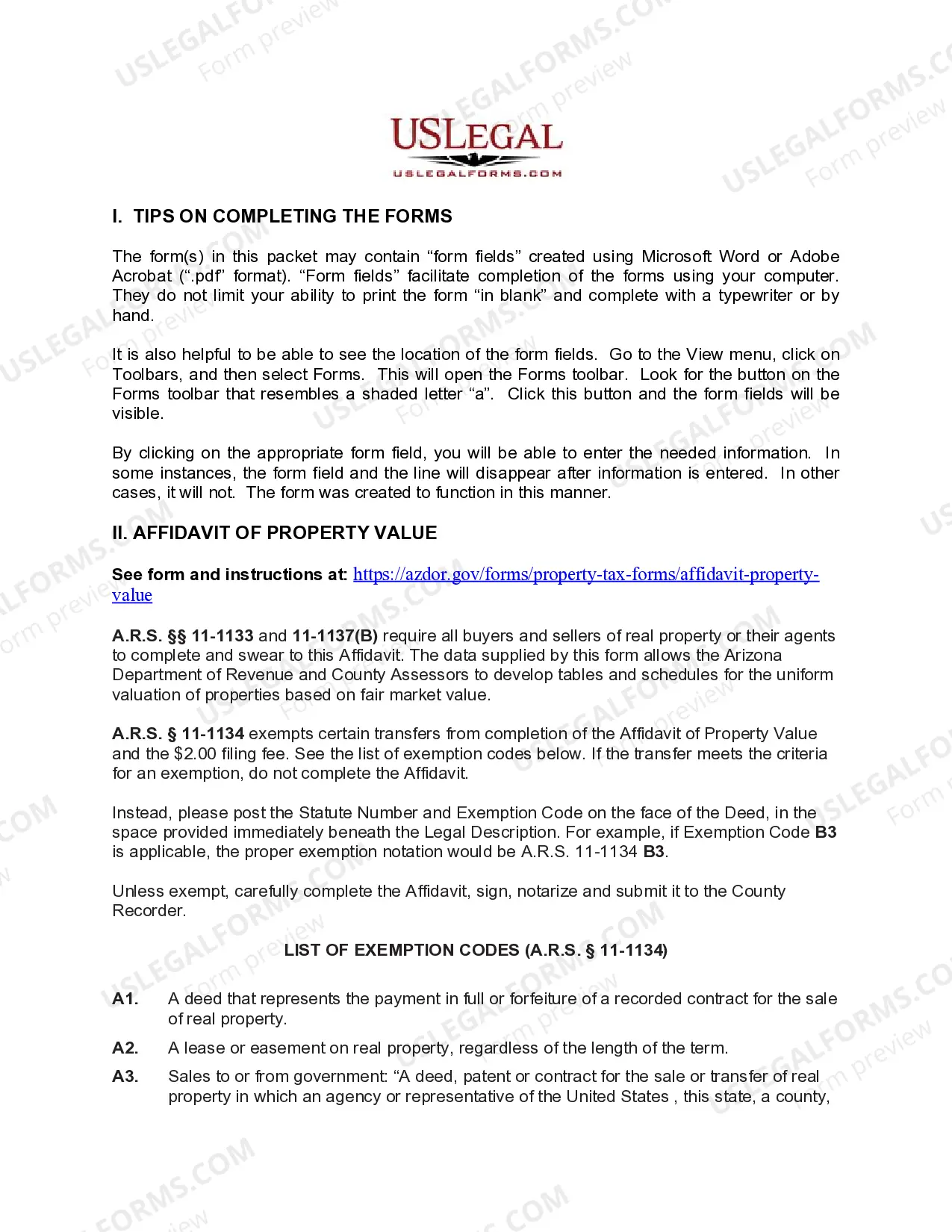
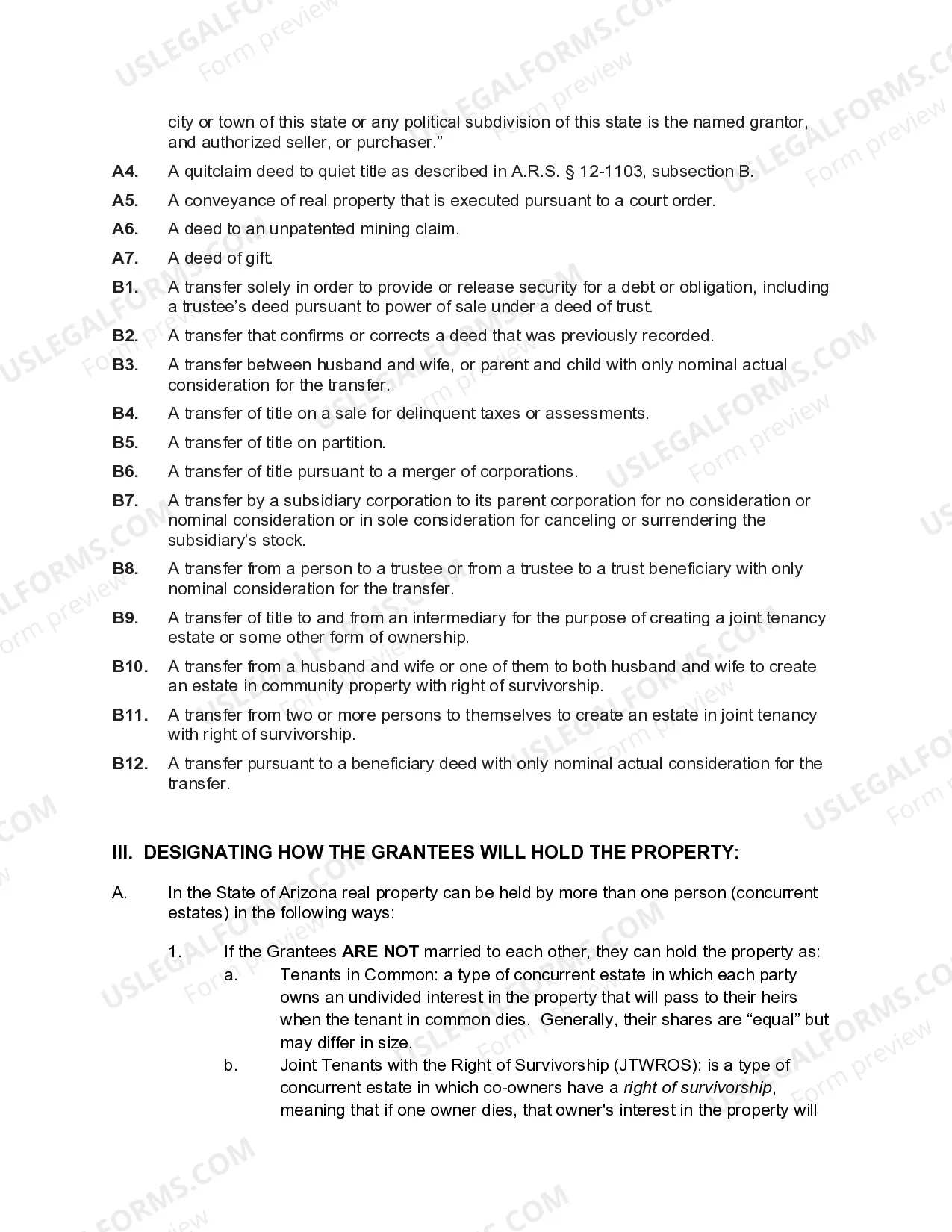
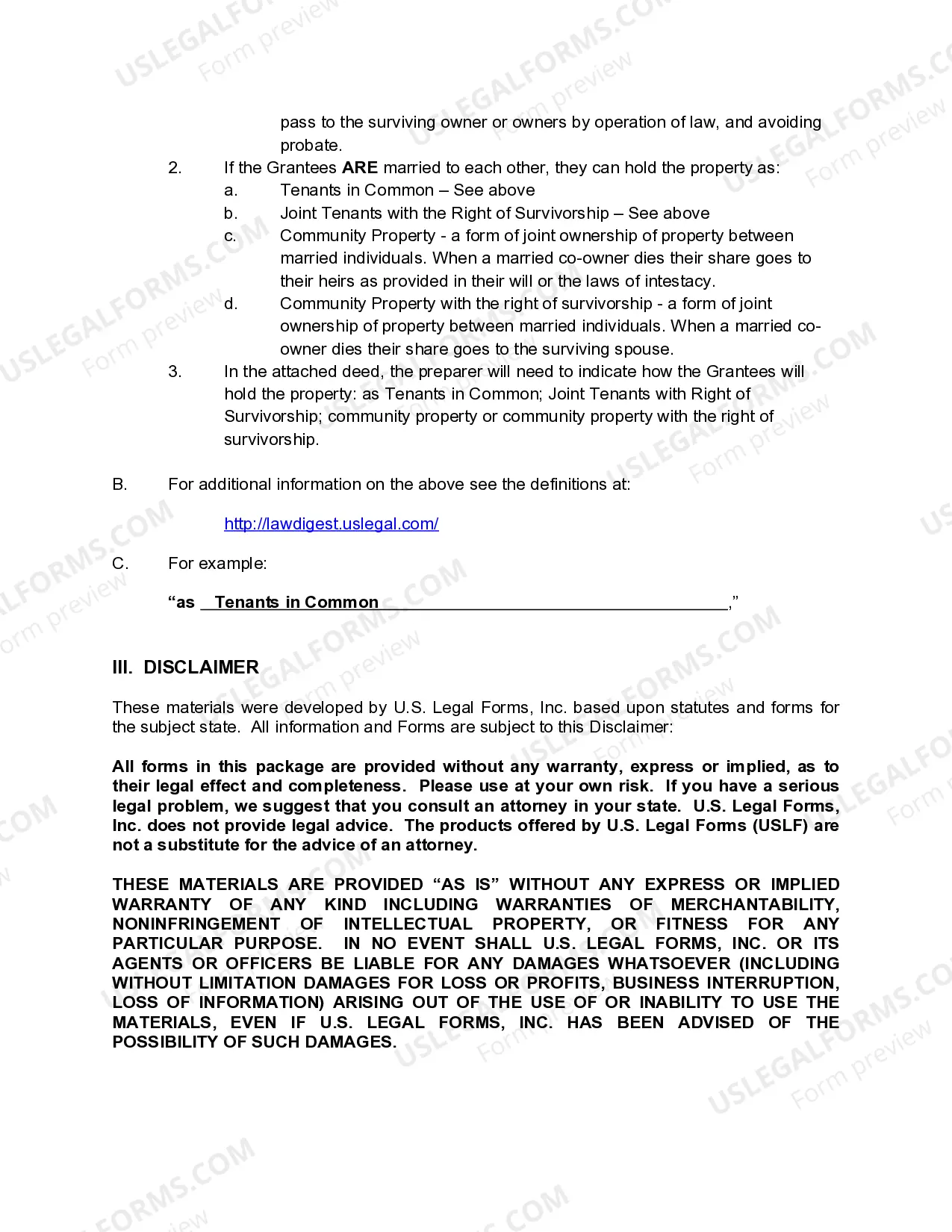
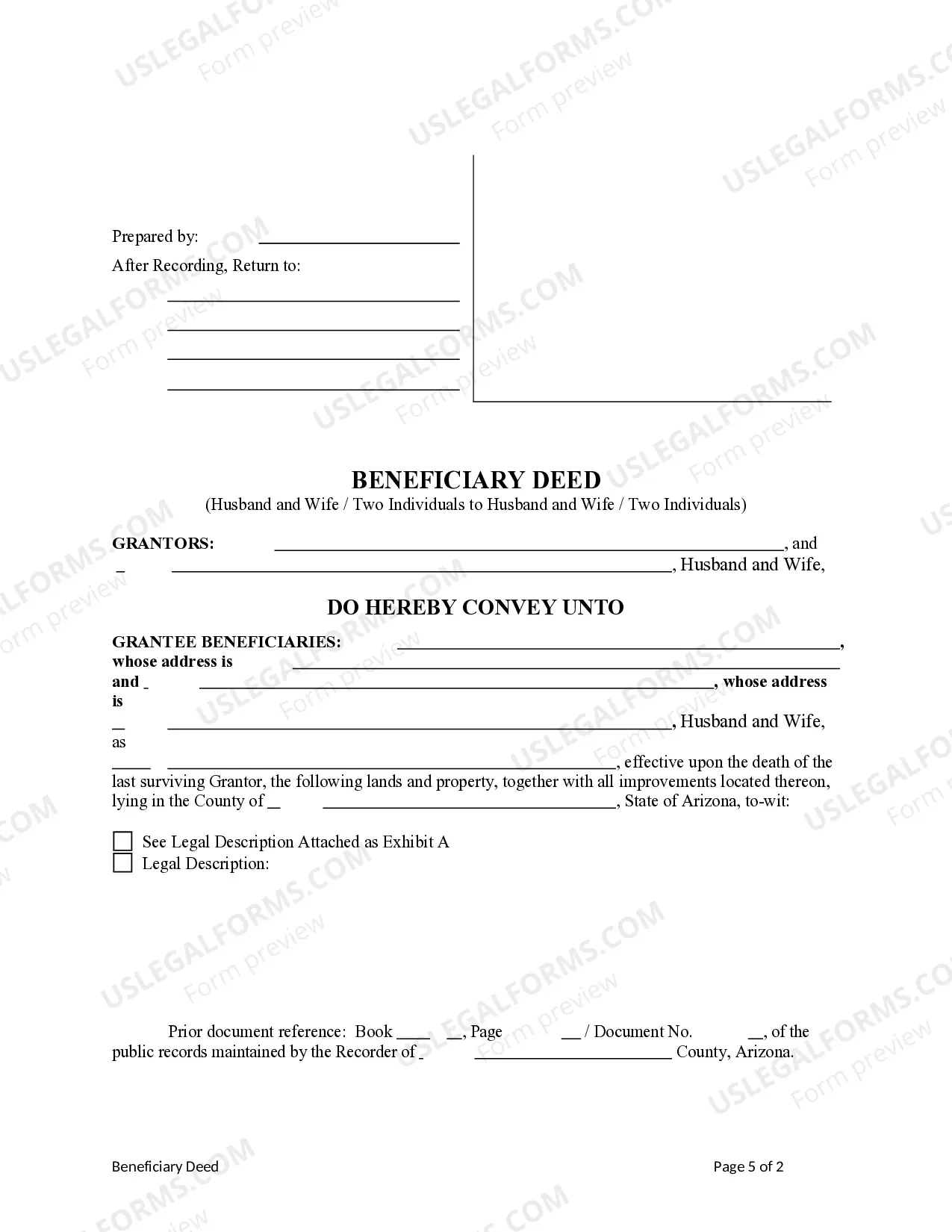
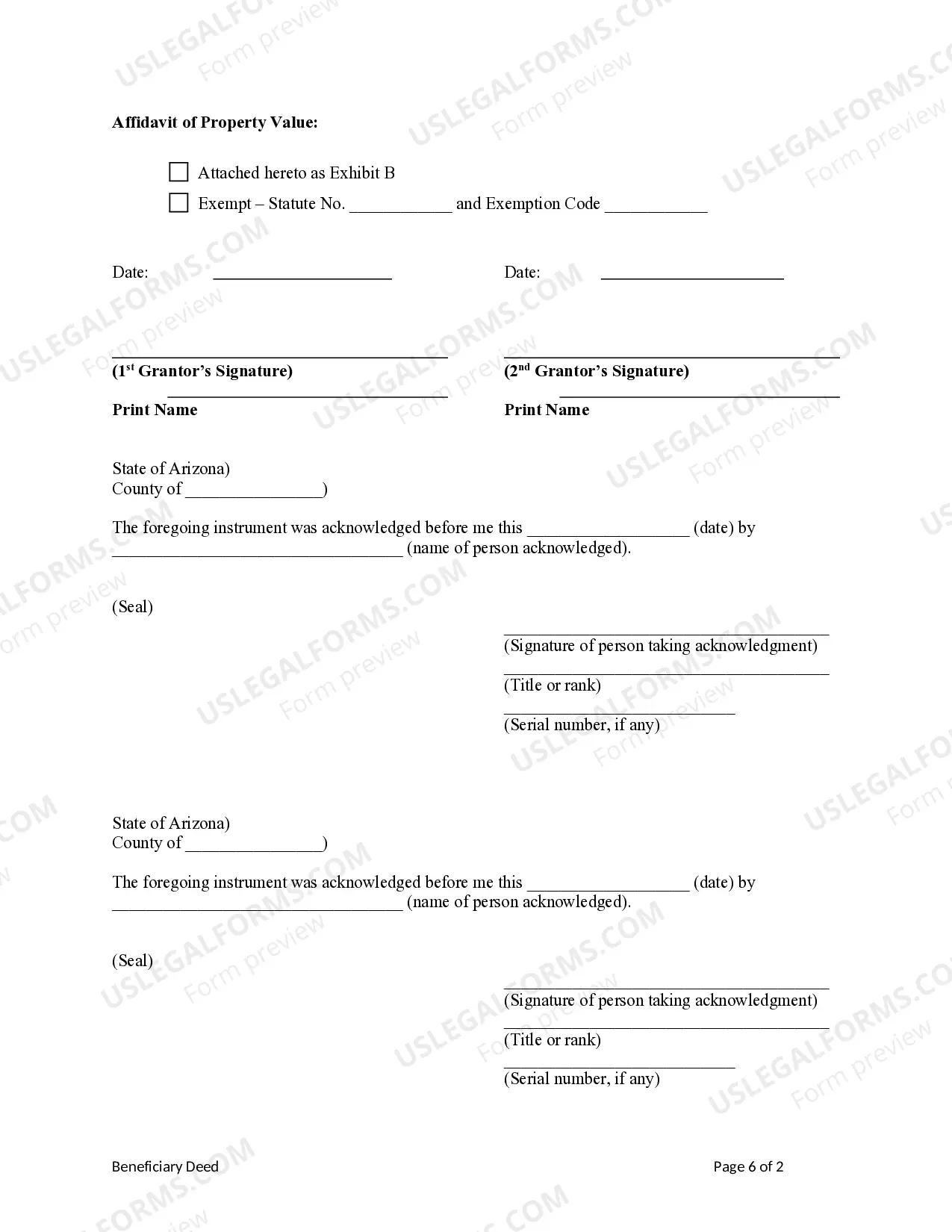
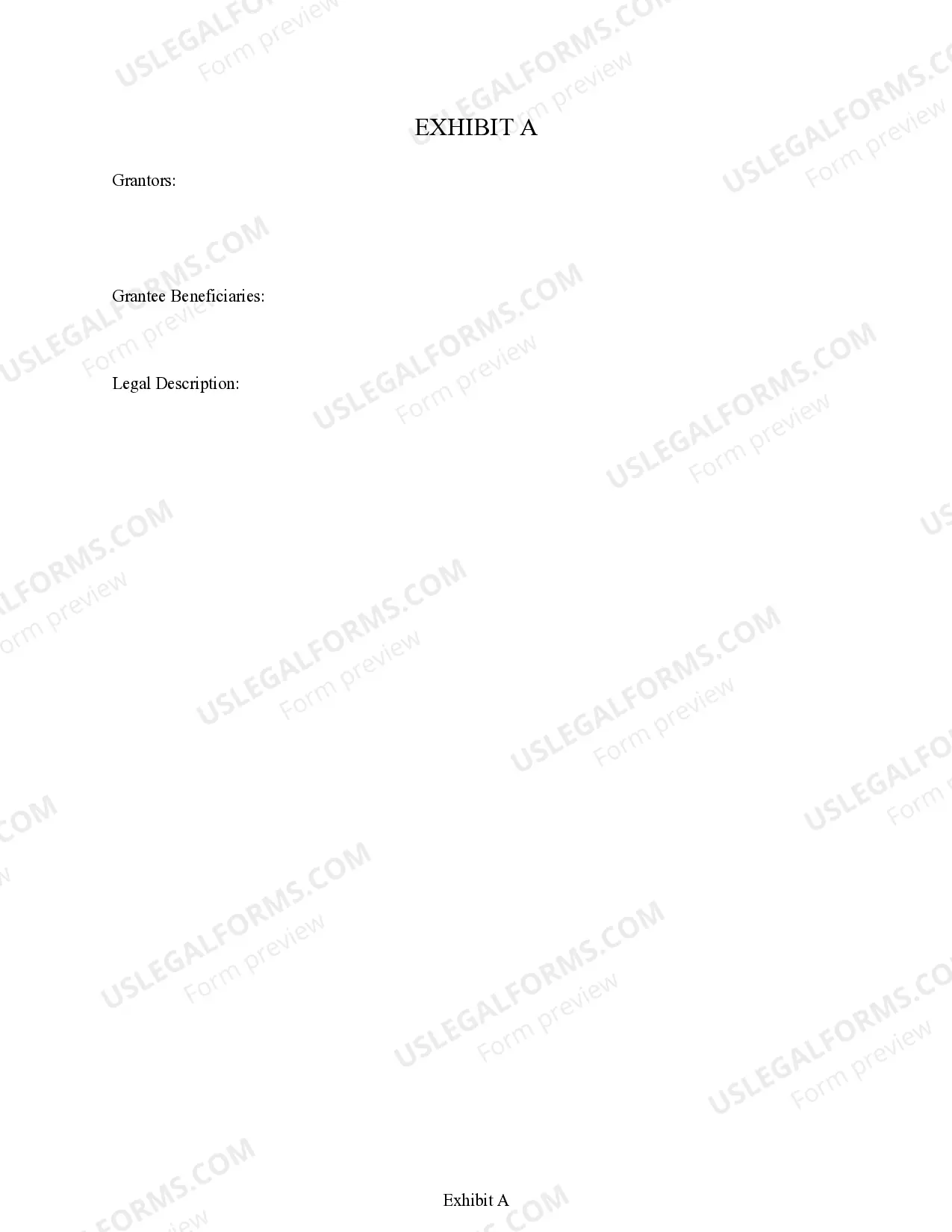
How to fill out Arizona Beneficiary Or Transfer Of Death (TOD) Deed - Husband And Wife / Two Individuals To Husband And Wife / Two Individuals?
- For returning users, log in to your account and download the appropriate form by clicking the Download button. Ensure that your subscription remains valid to proceed.
- If you’re new to US Legal Forms, start by exploring the Preview mode and the form description. Confirm that you have selected the right document that meets both your needs and your local jurisdiction requirements.
- Search for an alternative template if necessary. Utilize the Search tab above if you notice any discrepancies. Once you identify a suitable option, proceed to the next step.
- Purchase your document by clicking the Buy Now button. Choose your desired subscription plan, which requires you to create an account for access to the resources.
- Complete your purchase by providing your credit card information or utilizing your PayPal account to finalize your subscription.
- Download your selected form to your device. You can also find it anytime in the My Forms section of your profile.
Using US Legal Forms equips individuals and attorneys with the tools to effectively manage legal documentation. Their vast collection of over 85,000 forms ensures you’ll find appropriate templates quickly.
Start your legal journey today by accessing US Legal Forms and ensure your documents are precise and legally sound!
Form popularity
FAQ
When a beneficiary of an estate dies, their share might revert back to the estate, or it could be passed to their own heirs, depending on state law and the terms of the will. This can complicate the distribution process, potentially delaying asset transfer. Being proactive with estate planning helps avoid confusion or conflict among heirs. A comprehensive plan that addresses beneficiary transfer death with estate can safeguard against these uncertain outcomes.
TOD accounts are exclusively designated for a beneficiary and usually do not form part of the estate during probate. Upon the account holder's death, the funds directly transfer to the named beneficiary, avoiding the complexities of probate. However, it is essential to examine potential estate liabilities that may arise. This understanding enables you to navigate the beneficiary transfer death with estate effectively and confidently.
TOD accounts generally are not included in an estate for probate purposes. These accounts transfer directly to the designated beneficiaries upon the account holder's death, bypassing the probate process entirely. However, the assets may still have implications regarding estate taxes and debts. It's crucial to evaluate your situation, as the beneficiary transfer death with estate may have subtle complexities depending on your financial and familial circumstances.
Certain assets may not be included in an estate, such as life insurance proceeds or retirement accounts with designated beneficiaries. Additionally, jointly owned properties or assets with a TOD designation typically transfer outside of the probate process. Understanding what isn't part of your estate can simplify the beneficiary transfer process. Consider how this aligns with your broader plans for beneficiary transfer death with estate to ensure clarity.
Transferring stock from an estate to a beneficiary typically begins with executing the will or trust documents. You will need to contact the company holding the stock and provide necessary documentation like the death certificate and probate court documents. Each company may have its own requirements, so it’s wise to reach out directly or consult an expert. This process involves careful consideration of how beneficiary transfer death with estate impacts tax implications and ownership rights.
The disadvantage of a transfer on death (TOD) designation is that it may not account for all estate assets. When you list assets to transfer directly to a beneficiary, certain debts or taxes might be overlooked, which can lead to complications. Additionally, a TOD does not provide protection for the assets during your lifetime, making it vulnerable if you face financial issues. Therefore, careful planning is essential when considering beneficiary transfer death with estate.
Yes, transfer on death accounts are considered part of your estate when calculating the overall value for estate tax purposes. However, the assets in a TOD account typically pass directly to the designated beneficiaries without going through probate. This feature plays a significant role in facilitating a smoother beneficiary transfer death with estate. For more detailed information on managing your estate, US Legal Forms offers comprehensive resources to assist you.
Transfer on death accounts generally avoid probate, but they may still be subject to estate tax depending on the total value of your estate. When you pass away, the funds in these accounts can be included in your estate for tax purposes. Therefore, understanding the implications of beneficiary transfer death with estate is essential for financial planning. To navigate these complexities, consider consulting resources available through US Legal Forms.
You do not necessarily need a lawyer for a transfer on death (TOD) deed, but consulting one can simplify the process. A legal expert can ensure that the deed complies with state laws and is correctly executed. This is especially important, as the TOD deed plays a crucial role in ensuring effective beneficiary transfer death with estate. Using US Legal Forms can provide you with the necessary forms and guidance to facilitate the process.
Transfer on death deeds also come with specific disadvantages you should consider. For instance, they can create potential conflicts among heirs if not clearly specified. Furthermore, they offer limited protection against creditors, which can jeopardize your estate's stability. It's crucial to assess these factors while planning for beneficiary transfer death with estate, ensuring you choose the right path for your legacy.