Transfer Death Deed Beneficiary With Estate
Description

Get your form ready online
Our built-in tools help you complete, sign, share, and store your documents in one place.
Make edits, fill in missing information, and update formatting in US Legal Forms—just like you would in MS Word.
Download a copy, print it, send it by email, or mail it via USPS—whatever works best for your next step.
Sign and collect signatures with our SignNow integration. Send to multiple recipients, set reminders, and more. Go Premium to unlock E-Sign.
If this form requires notarization, complete it online through a secure video call—no need to meet a notary in person or wait for an appointment.
We protect your documents and personal data by following strict security and privacy standards.

Make edits, fill in missing information, and update formatting in US Legal Forms—just like you would in MS Word.

Download a copy, print it, send it by email, or mail it via USPS—whatever works best for your next step.

Sign and collect signatures with our SignNow integration. Send to multiple recipients, set reminders, and more. Go Premium to unlock E-Sign.

If this form requires notarization, complete it online through a secure video call—no need to meet a notary in person or wait for an appointment.

We protect your documents and personal data by following strict security and privacy standards.
Looking for another form?







How to fill out Arkansas Transfer On Death Deed Or TOD - Beneficiary Deed For One Individual To Four Individuals?
- Log in to your US Legal Forms account or create a new one if it's your first visit. Remember to ensure your subscription is valid or renew it if necessary.
- Browse through the form descriptions and preview available templates to find the one that meets your specific needs and jurisdiction.
- If the form isn’t suitable, utilize the Search function to locate the correct document.
- Select the form by clicking the Buy Now button and choose an appropriate subscription plan. Registration is required to access the forms.
- Complete your purchase securely using either a credit card or PayPal account.
- Download your completed form to your device. You can access it at any time from the My Forms section in your account.
In conclusion, using US Legal Forms not only simplifies the transfer of a death deed beneficiary but also ensures you have access to the most suitable legal templates. Their extensive library and expert assistance provide a reliable way to manage your legal documents efficiently.
Start your legal journey today by visiting US Legal Forms and discover the ease of obtaining your legal documents!
Form popularity
FAQ
Another common name for a transfer on death deed is a beneficiary deed. This terminology reflects its purpose of designating a beneficiary who receives the property without the need for probate upon the owner's death. Using a transfer death deed beneficiary with estate can simplify the estate planning process and provide clarity for your heirs.
After a person's death, a transfer on death deed typically becomes effective immediately, allowing the property to pass to the designated beneficiary without delay. However, the beneficiary should take action to formally record the deed according to local laws to solidify their ownership. Ensuring the timely recording can prevent potential disputes down the line, so it's wise to consult with legal experts for guidance.
Life estate deeds come with several disadvantages worth noting. First, they can create complications with property taxes and maintenance responsibilities, as both the grantor and remainderman may have equal rights but differing interests. Additionally, selling a life estate can be tricky, as both parties must agree, which could complicate estate planning. Exploring a transfer death deed beneficiary with estate might offer a more straightforward option.
No, although a transfer on death deed and a life estate both involve transferring property upon death, they function differently. A transfer on death deed enables the property to go directly to the designated beneficiary without going through probate, while a life estate allows the current owner to maintain control over the property during their lifetime. It's important to choose the right option for your estate planning needs.
No, a transfer on death deed is not the same as a life estate deed. A transfer on death deed allows you to transfer property automatically to a designated beneficiary when you pass away, whereas a life estate deed grants someone the right to use the property during their lifetime, with the property passing to another party after their death. Understanding the nuances between these two options can help you make informed decisions regarding property and beneficiaries.
You cannot transfer a deed to a dead person because a deceased individual cannot hold title to property. However, you can transfer the property to the beneficiaries named in a death deed. To effectively manage the transition, consider using our service to transfer death deed beneficiary with estate, which simplifies the process and ensures legal compliance. By designating beneficiaries in advance, you can avoid complications and make the transfer smoother for your loved ones.
TOD accounts can be a worthwhile option for easy estate transfer, providing a straightforward way to pass assets to your chosen beneficiary. However, it is essential to consider your entire estate plan, as these accounts do not protect assets from creditors or estate taxes. Using a reliable platform like uslegalforms can help you efficiently create the necessary documentation to ensure your wishes are fulfilled effectively.
A Transfer on Death deed generally does not avoid inheritance tax, as tax laws depend on the total value of the estate at the time of death. While the TOD deed simplifies the transfer process, it does not eliminate any potential taxes your estate may owe. Consulting a tax professional or estate planning expert is advisable for specific guidance tailored to your situation.
One disadvantage of a Transfer on Death deed is that it may not be accepted in all states or may have specific requirements you must meet. Additionally, establishing a TOD deed doesn't protect your property from creditors, and the beneficiary might face issues if they cannot manage the estate effectively. You should carefully weigh the pros and cons of using a TOD deed against other estate planning tools.
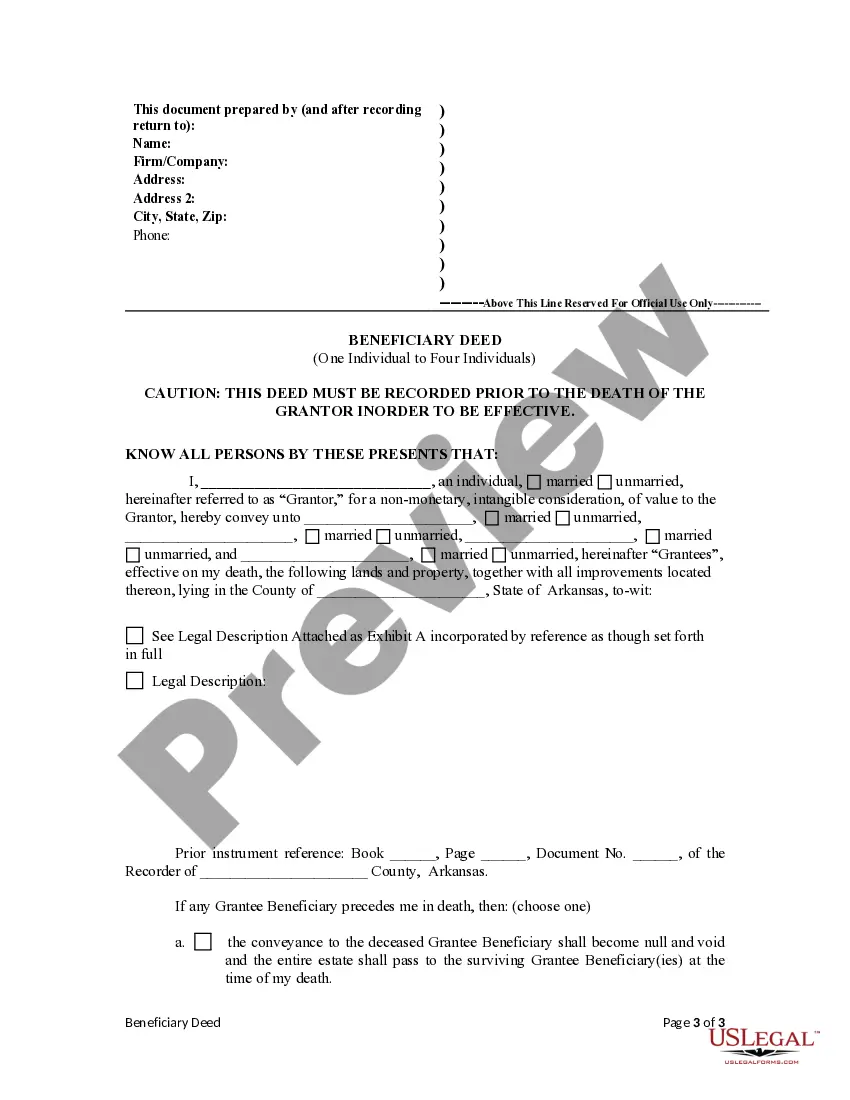
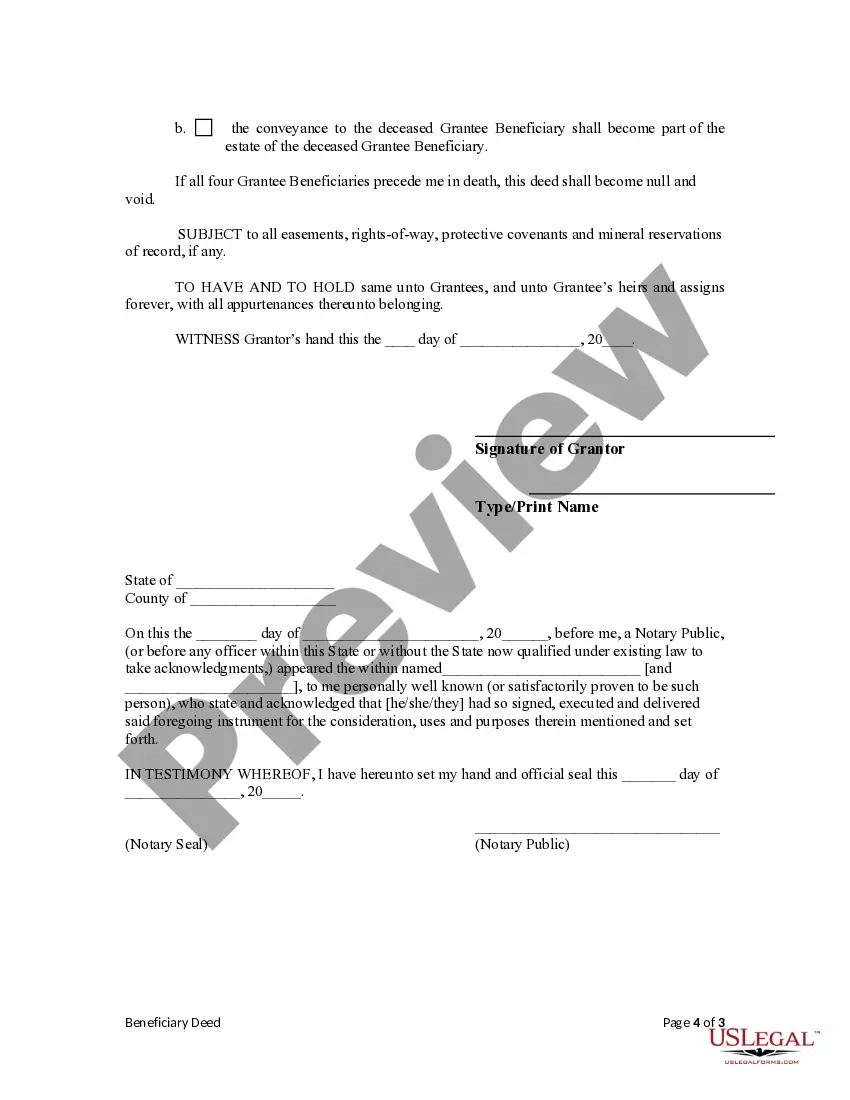
To write a beneficiary deed, start by including the legal description of the property and the details of the beneficiary, such as their name and address. Next, ensure that the deed is signed and notarized to validate it. It's important to file the completed deed with your local county recorder's office, as this formalizes the transfer death deed beneficiary with estate upon your passing.