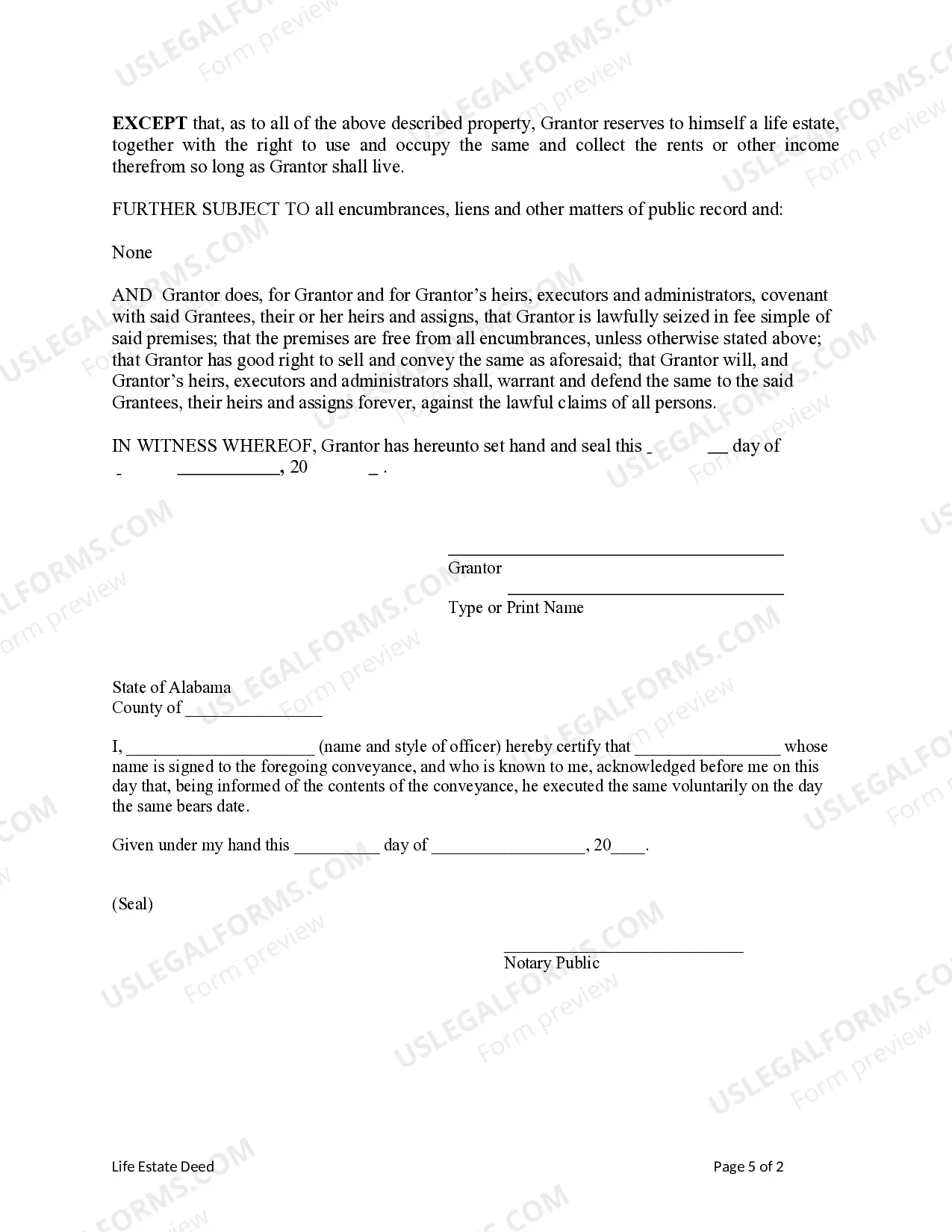
Life Estate For Real Estate
Description
Get your form ready online
Our built-in tools help you complete, sign, share, and store your documents in one place.
Make edits, fill in missing information, and update formatting in US Legal Forms—just like you would in MS Word.
Download a copy, print it, send it by email, or mail it via USPS—whatever works best for your next step.
Sign and collect signatures with our SignNow integration. Send to multiple recipients, set reminders, and more. Go Premium to unlock E-Sign.
If this form requires notarization, complete it online through a secure video call—no need to meet a notary in person or wait for an appointment.
We protect your documents and personal data by following strict security and privacy standards.

Make edits, fill in missing information, and update formatting in US Legal Forms—just like you would in MS Word.

Download a copy, print it, send it by email, or mail it via USPS—whatever works best for your next step.

Sign and collect signatures with our SignNow integration. Send to multiple recipients, set reminders, and more. Go Premium to unlock E-Sign.

If this form requires notarization, complete it online through a secure video call—no need to meet a notary in person or wait for an appointment.

We protect your documents and personal data by following strict security and privacy standards.
Looking for another form?







Form popularity
FAQ
A life estate may be considered invalid for several reasons. For example, if the granting deed lacks proper language or is executed under coercion, it could be challenged in court. Additionally, if the life tenant is declared legally incompetent at the time of the transfer, the life estate is jeopardized. Ensuring compliance with legal requirements is essential to maintaining a valid life estate.
While it is not mandatory to record a life estate for real estate, it is strongly recommended. Recording the life estate provides public notice of the property rights, protecting the interests of all parties involved. This legal documentation can help prevent future disputes over ownership or rights to the property. Using uslegalforms can simplify the recording process.
The IRS has specific regulations regarding life estates for real estate, particularly concerning taxes. For instance, the value of the life estate is included in the life tenant's estate for tax purposes. Furthermore, income generated from the property may affect the life tenant's tax filings. Consulting a tax professional can provide clarity and ensure compliance with IRS guidelines.
Although a life estate offers advantages, there are downsides to consider. One major drawback is that the life tenant cannot sell or transfer the property without the remainderman's consent. Additionally, if the life tenant incurs debts, creditors may claim the property before the remainderman inherits it. Understanding these limitations is crucial before establishing a life estate.
When a life tenant passes away, the life estate for real estate automatically terminates. The property typically transfers to the remainderman, who is the person designated to take over the ownership. This seamless transition helps avoid lengthy legal disputes about property ownership. It is important for parties involved to understand their rights to facilitate this process.
To establish a life estate for real estate, specific language must be included in the property deed. Typically, you will see phrases like 'for the life of' the individual receiving the estate. This clear wording indicates that the rights to the property are limited to the lifespan of the life tenant. If you need help crafting such legal language, consider using uslegalforms to create an accurate and effective deed.
One significant disadvantage of a life estate deed is the potential for reduced control over the property. The life tenant cannot sell or mortgage the property without the consent of the remainderman. Additionally, if the life tenant incurs debts, creditors may have claims against the property, complicating ownership. We recommend considering these factors carefully when exploring life estate for real estate, and consulting a legal expert can provide clarity.
Life property refers to any assets tied to the concept of a life estate, where ownership is limited to the duration of one's life. This can include real estate or personal property that a life tenant can use, benefit from, or dispose of during their lifetime. Understanding life property is essential for anyone involved in estate planning or navigating the complexities of real estate transactions. Utilizing resources like uslegalforms can simplify the process.
Another name for a life estate is a 'life tenancy.' This term highlights the nature of the ownership, which is tied to the life of the individual. The rights and responsibilities remain with the life tenant during their lifetime, after which the ownership passes to the specified beneficiary. Knowing the terminology will help you navigate discussions about life estate for real estate with clarity.
A life estate in real estate grants an individual ownership of a property for the duration of their lifetime. This means that the person can use, benefit from, and live in the property as long as they are alive. After their passing, the property typically transfers to a designated beneficiary, often referred to as a remainderman. Understanding the implications of a life estate for real estate is crucial for proper estate planning.
