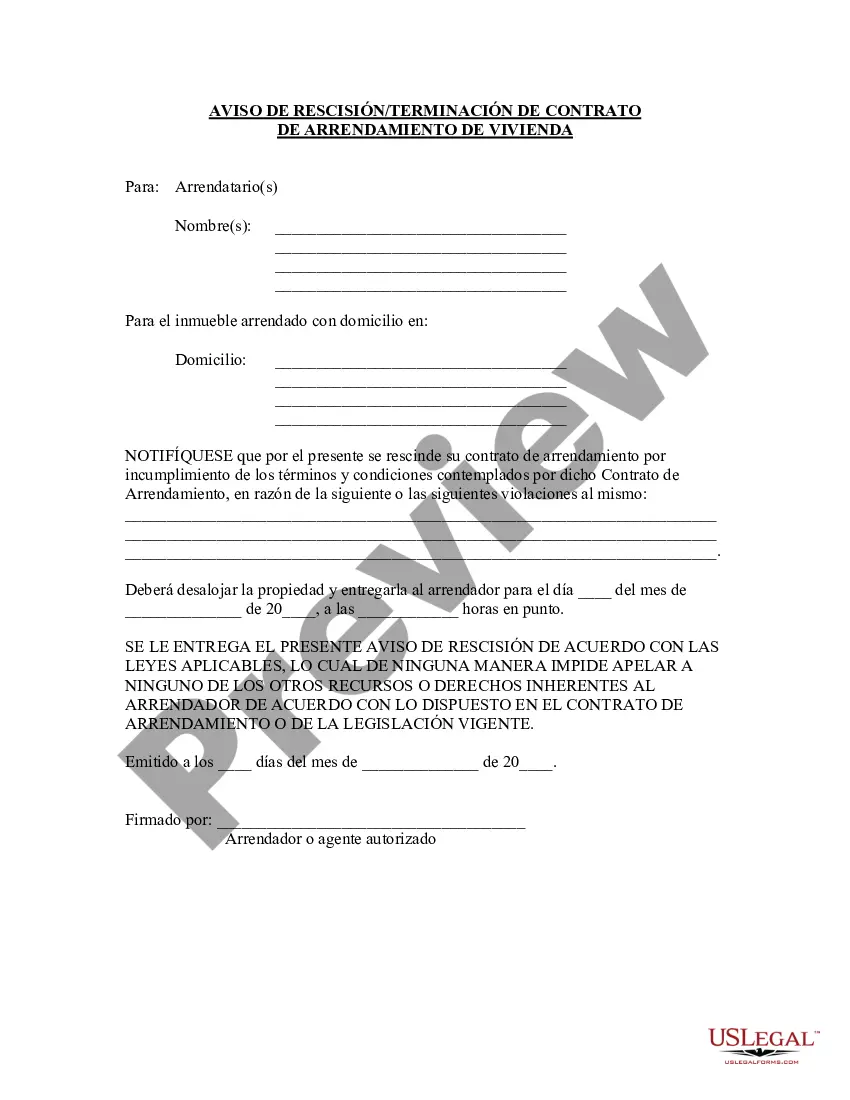
Nonpayment Landlord Form For Tenant
Description



Get your form ready online
Our built-in tools help you complete, sign, share, and store your documents in one place.
Make edits, fill in missing information, and update formatting in US Legal Forms—just like you would in MS Word.
Download a copy, print it, send it by email, or mail it via USPS—whatever works best for your next step.
Sign and collect signatures with our SignNow integration. Send to multiple recipients, set reminders, and more. Go Premium to unlock E-Sign.
If this form requires notarization, complete it online through a secure video call—no need to meet a notary in person or wait for an appointment.
We protect your documents and personal data by following strict security and privacy standards.

Make edits, fill in missing information, and update formatting in US Legal Forms—just like you would in MS Word.

Download a copy, print it, send it by email, or mail it via USPS—whatever works best for your next step.

Sign and collect signatures with our SignNow integration. Send to multiple recipients, set reminders, and more. Go Premium to unlock E-Sign.

If this form requires notarization, complete it online through a secure video call—no need to meet a notary in person or wait for an appointment.

We protect your documents and personal data by following strict security and privacy standards.
Looking for another form?










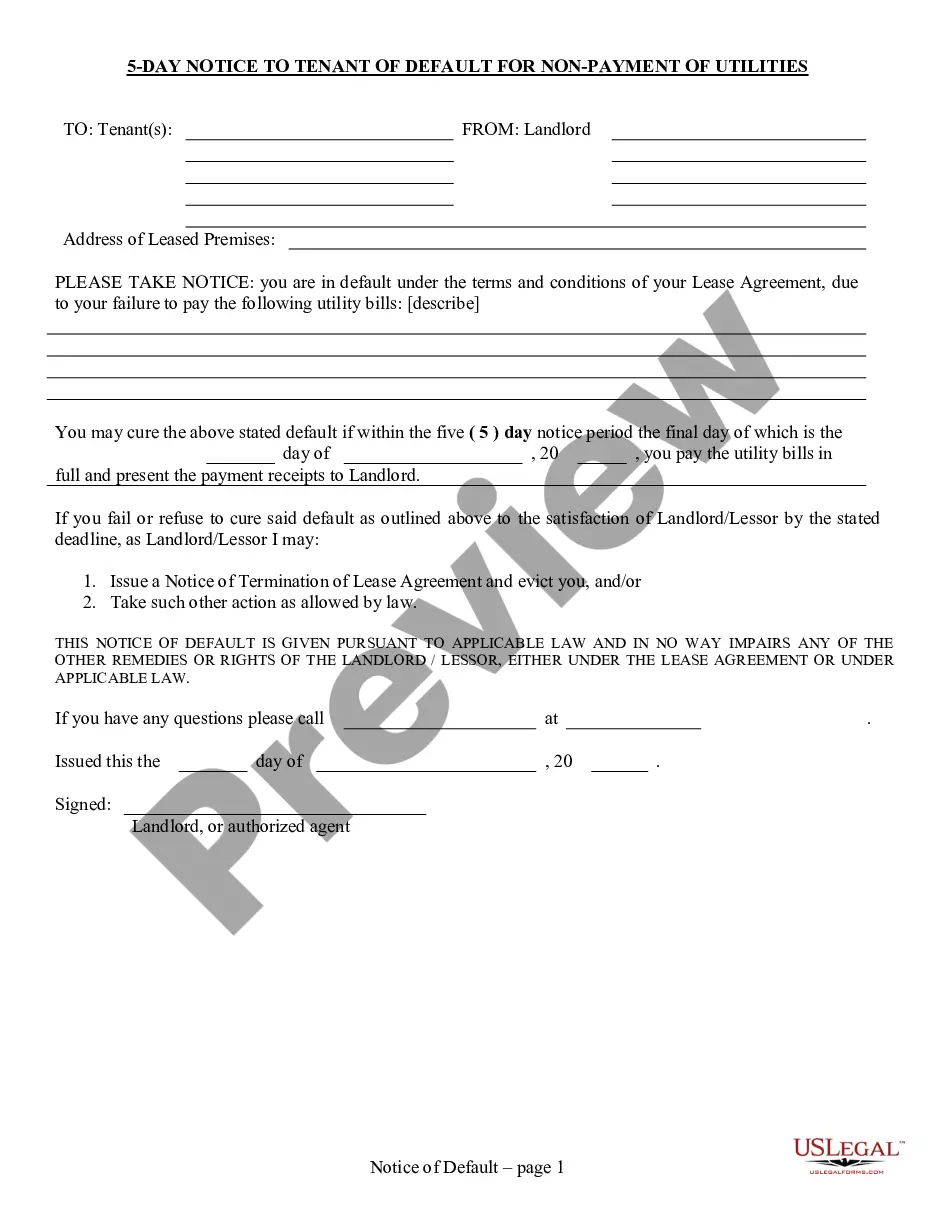
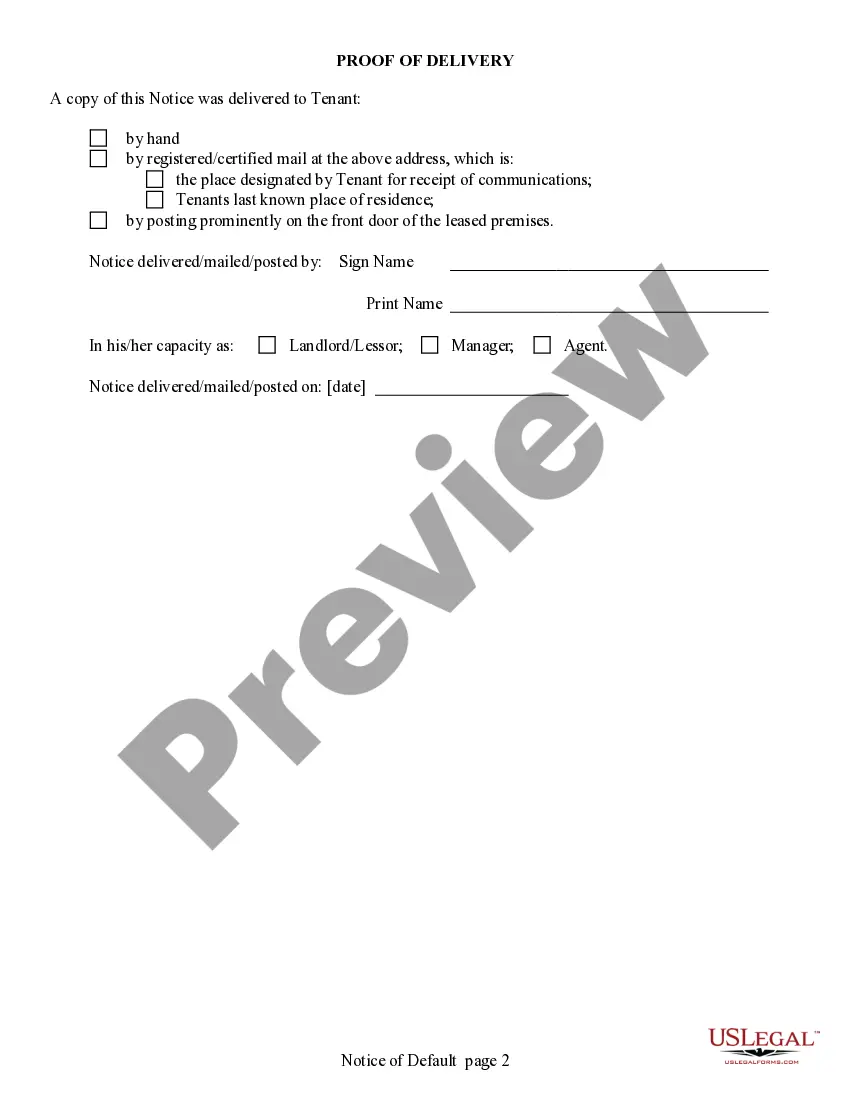
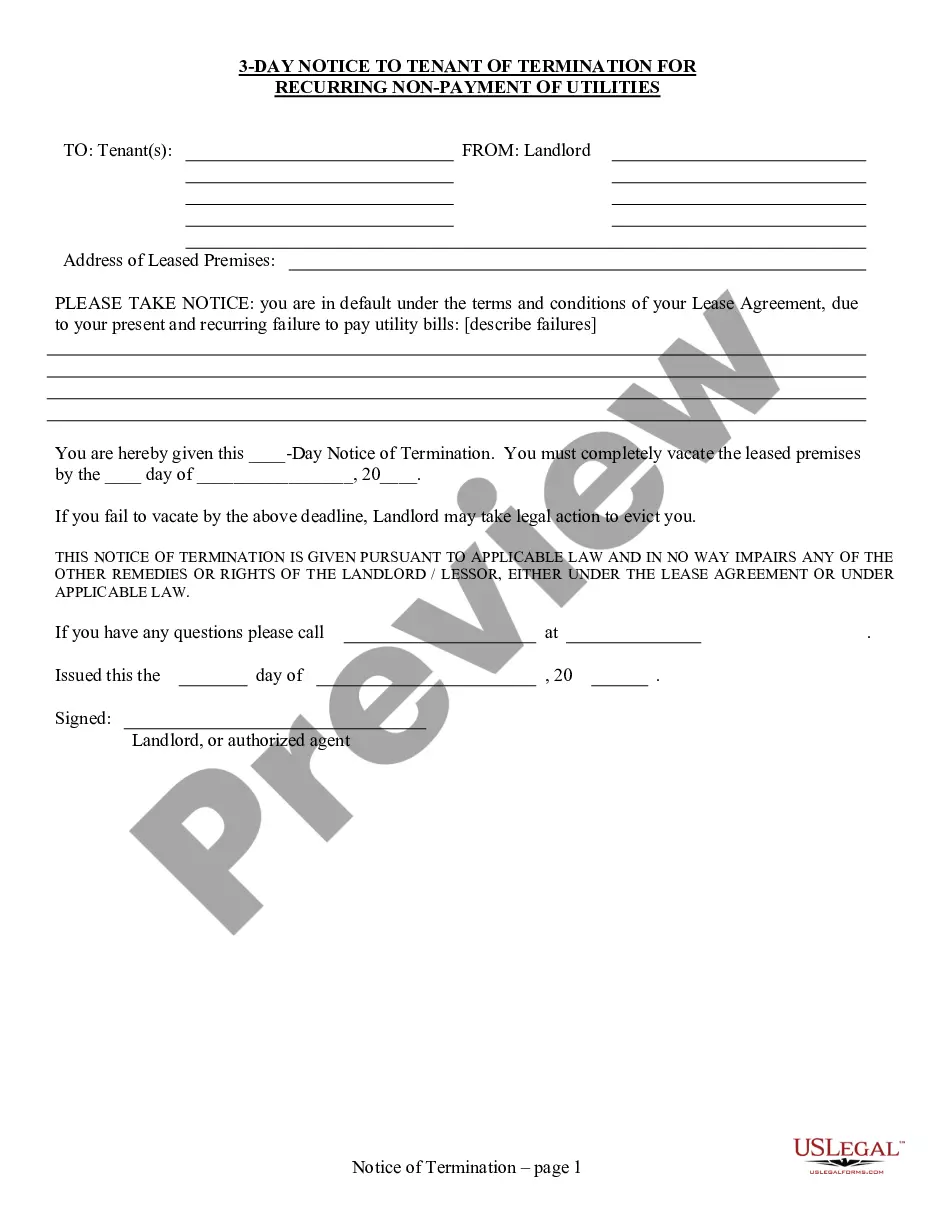
How to fill out Alaska 5 Day Notice To Tenant Of Default For Nonpayment Of Utilities - Residential From Landlord To Tenant?
- Log into your US Legal Forms account if you're a returning user, ensuring your subscription is active.
- If you're new to the platform, start by browsing the form collection. Use the Preview mode to check descriptions and ensure the selected form fits your requirements.
- If you find discrepancies or need alternatives, utilize the Search feature to locate the appropriate template.
- Select the desired form and click on the Buy Now button. Choose a subscription plan that meets your needs and create an account for full access.
- Complete your purchase by entering your payment information, either via credit card or PayPal.
- Once the payment is processed, download your nonpayment landlord form for tenant and save it to your device for completion. You can also access it anytime in the My Forms section of your account.
By following these straightforward steps, you can easily acquire the necessary legal documents through US Legal Forms. The platform not only offers a robust collection of forms but also guarantees legal compliance with local regulations.
Ready to simplify your legal documentation process? Visit US Legal Forms today and find the perfect solution tailored to your needs!
Form popularity
FAQ
In New York, landlords cannot lock out tenants, raise rent during an active lease period, or retaliate against tenants for asserting their rights. Additionally, they must provide a safe and habitable living environment. Tenants can benefit from using a nonpayment landlord form for tenant to document any grievances or disputes. Understanding your rights helps establish a fair relationship with your landlord.
To write a letter to someone who is not paying rent, be clear about the amount owed and the due date. Politely remind them of the lease terms and the importance of timely payments. Our nonpayment landlord form for tenant provides a straightforward template that helps you convey your message clearly and professionally, encouraging prompt action.
When writing a letter to your landlord regarding late rent, explain the reasons for the delay and express your commitment to resolving the issue. Include specific details such as the due date and the expected payment date. Utilizing our nonpayment landlord form for tenant can help structure your communication effectively, ensuring you address all necessary points professionally.
To write a letter to a tenant for nonpayment of rent, start by clearly stating the issue and the amount due. Include a deadline for payment, as well as any potential consequences for not addressing the overdue rent. Using our nonpayment landlord form for tenant on US Legal Forms can simplify this process and provide you with a professional template tailored to your needs.
A landlord waiver form is a legal document that releases a landlord from certain responsibilities or liabilities under the lease agreement. This form is often used when the landlord allows a tenant to skip specific obligations, such as making a timely rent payment. Properly using a waiver form ensures clarity between both parties and can prevent future disputes. For guidance on various forms, including a nonpayment landlord form for tenant, consider consulting resources like US Legal Forms.
When crafting a demand letter for unpaid rent, include specific details, such as the amount due, the dates of payment, and any applicable lease clauses. Clearly state the consequences of not settling the account, but do so in a respectful tone to encourage a positive resolution. A well-structured demand letter can serve as a necessary step towards resolving the issue. Using a nonpayment landlord form for tenant will lend credibility and support to your demand.
To write a formal letter to a tenant, start with your contact information followed by the date, and then the tenant's information. Use a polite greeting, clearly state the purpose of your letter, and provide any necessary details about the issue at hand. It is crucial to maintain a professional tone throughout the letter, ensuring clarity and respect. Incorporating a nonpayment landlord form for tenant can formalize your communication and emphasize the importance of the message.
A tenant authorization form is a document that allows a landlord or property manager to communicate or manage certain aspects of a tenant's rental agreement. This form typically grants permission for landlords to discuss the tenant's account with third parties such as housing authorities or financial institutions. Having a proper form can streamline issues related to rent and communication. To easily handle tenant-management tasks, consider using a nonpayment landlord form for tenant.
When writing a hardship letter to a landlord for delinquent rent, you should explain your current financial situation honestly and clearly. Mention the factors that have contributed to your inability to make the payment and express your willingness to work out a solution. It is useful to propose a payment plan or request temporary leniency, as this can foster cooperation. Using a nonpayment landlord form for tenant can help structure your request in a professional way.
To write a letter to a tenant for a late payment, start by clearly stating the amount owed, the due date, and any late fees that may apply. It is important to include a request for payment along with any relevant details about the lease agreement. Additionally, consider mentioning a possible deadline for the payment to encourage prompt action. If necessary, you can also include a nonpayment landlord form for tenant to formalize the communication.