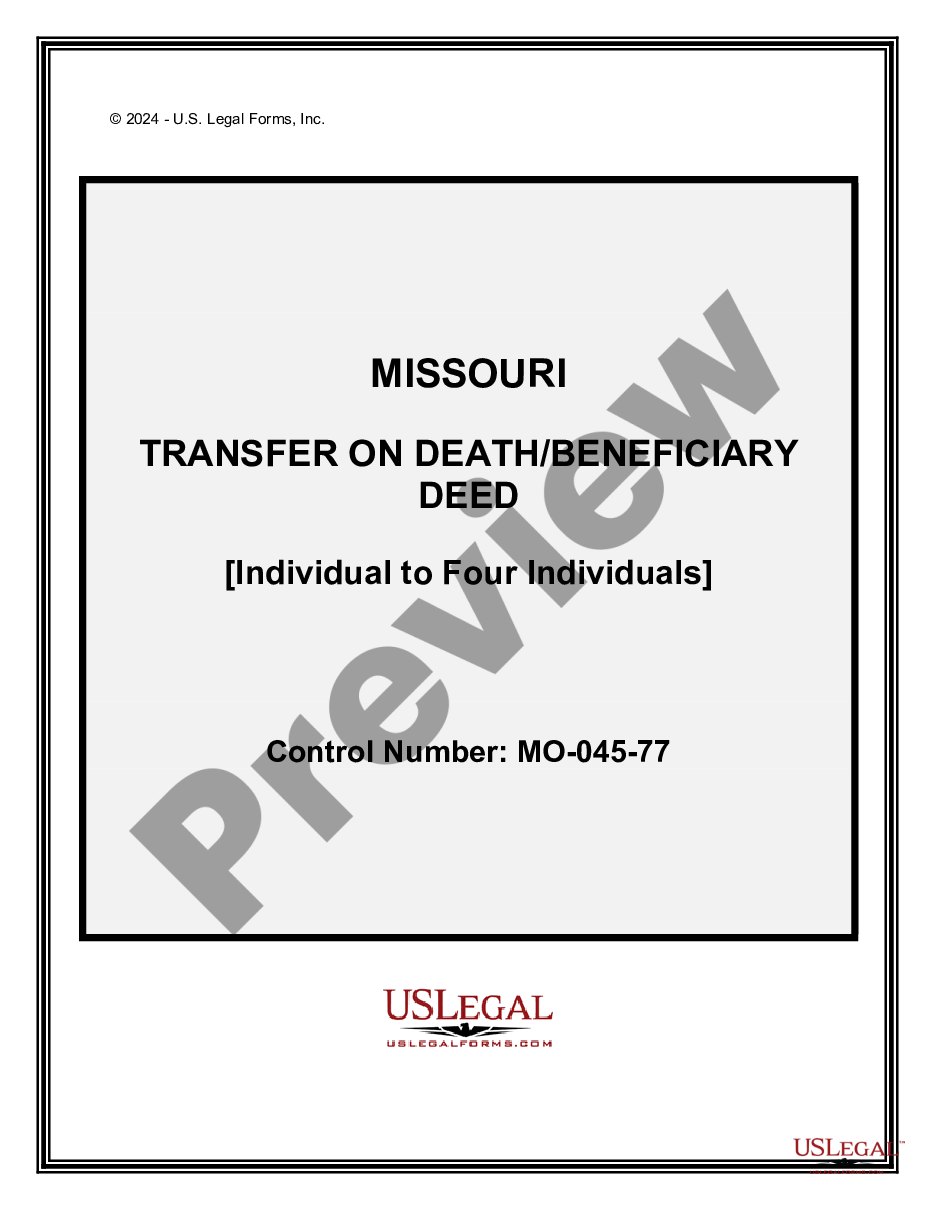
Missouri Beneficiary Deed or TOD - Transfer on Death Deed from an Individual to Four Individuals
Overview of this form
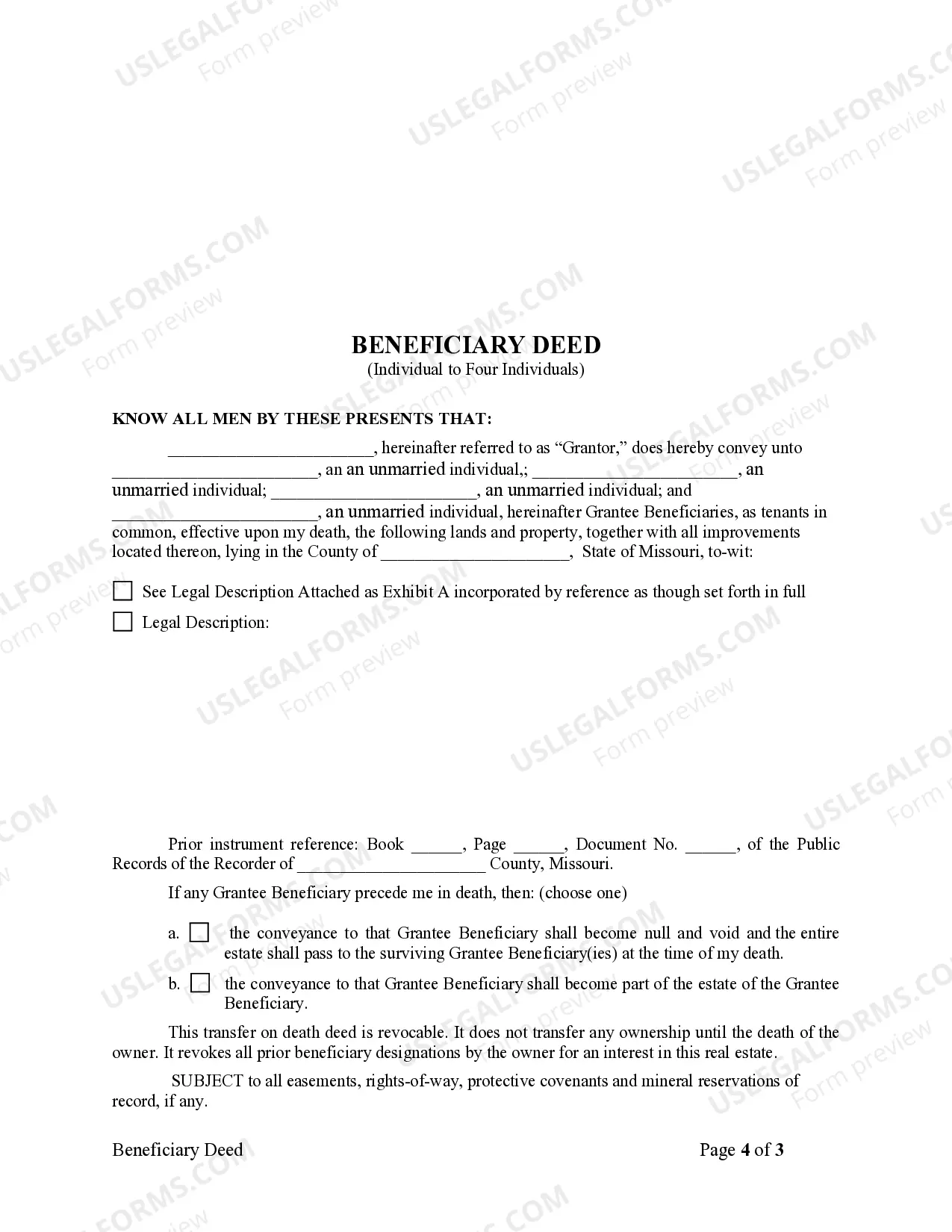
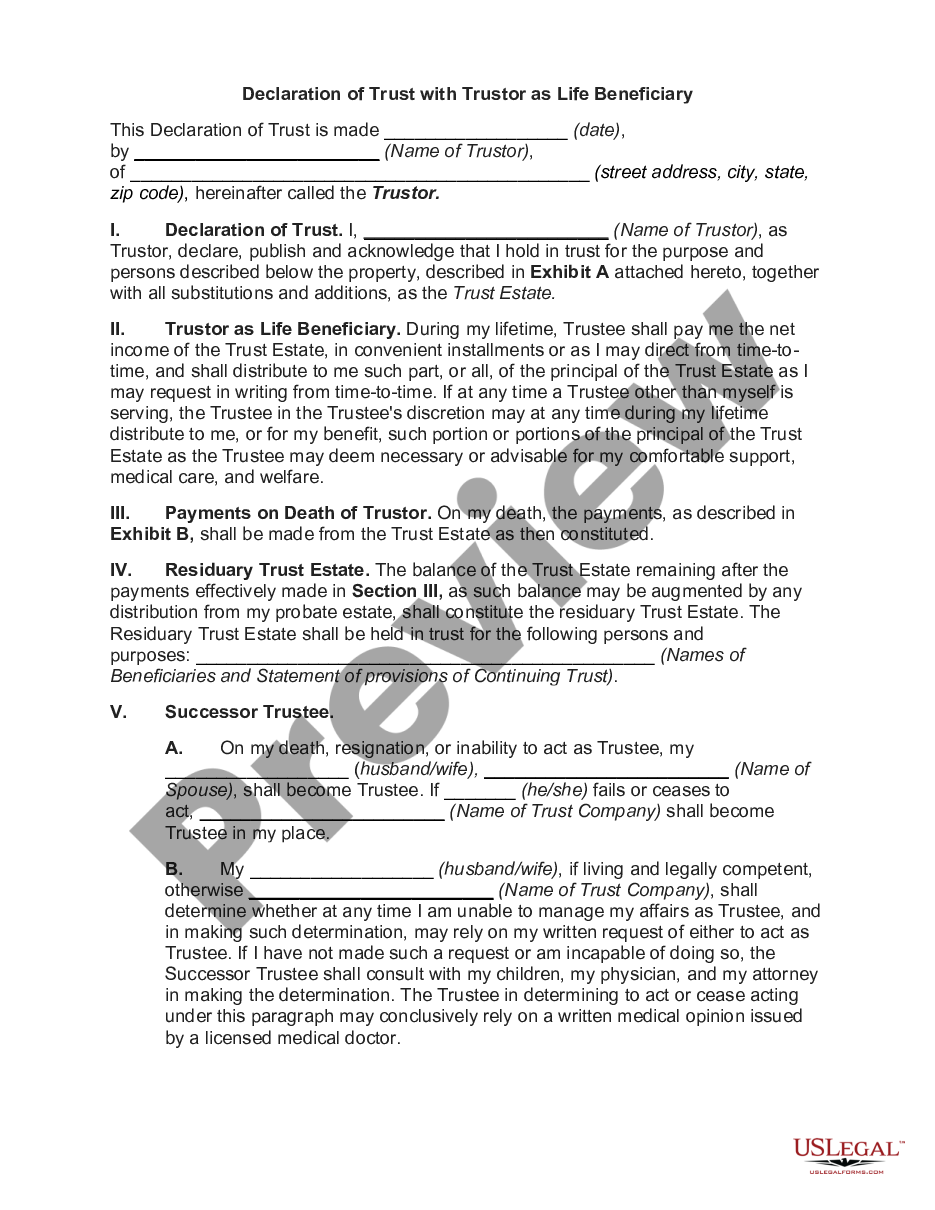
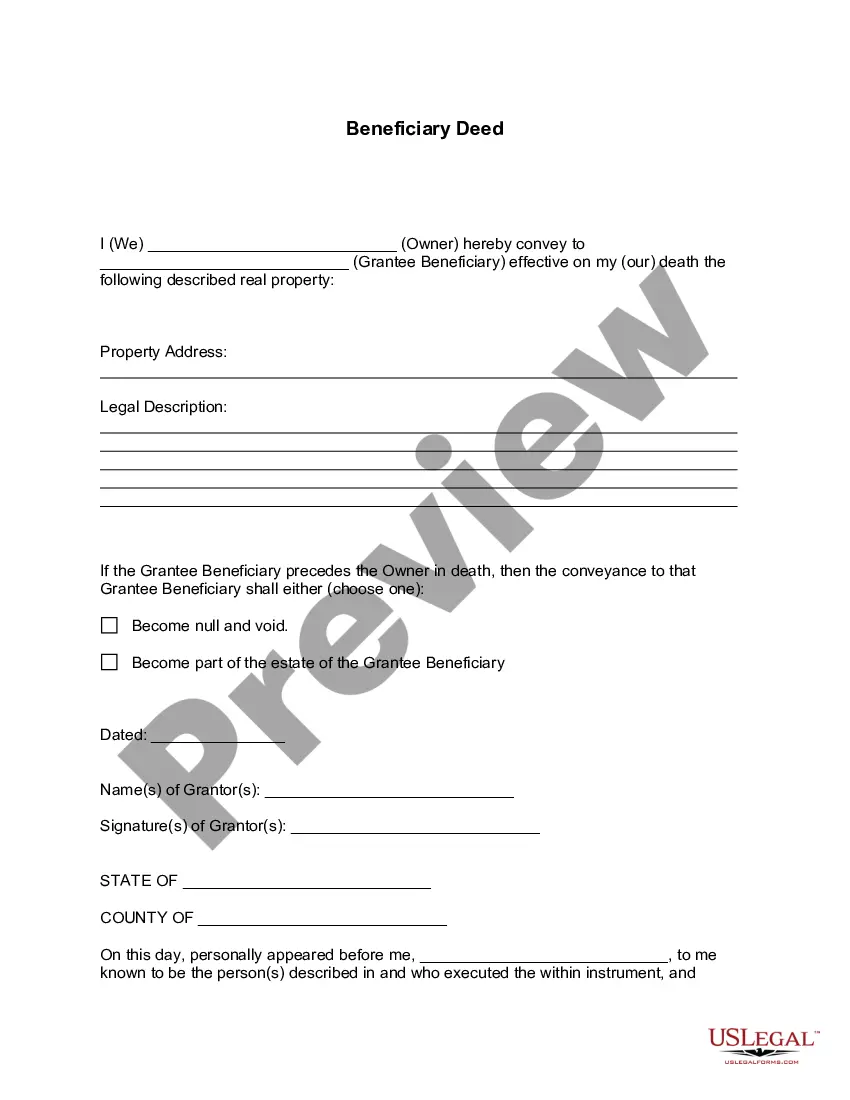
The Beneficiary Deed or Transfer on Death Deed is a legal document that allows an individual, known as the Grantor, to transfer property ownership to four individuals, referred to as Grantees, effective upon the Grantor's death. This form is revocable during the Grantor's lifetime, providing flexibility not typically available in standard deeds. Unlike a last will, it avoids probate and transfers property directly to the Grantees upon the Grantor's passing, making it a vital tool for estate planning.
Key components of this form
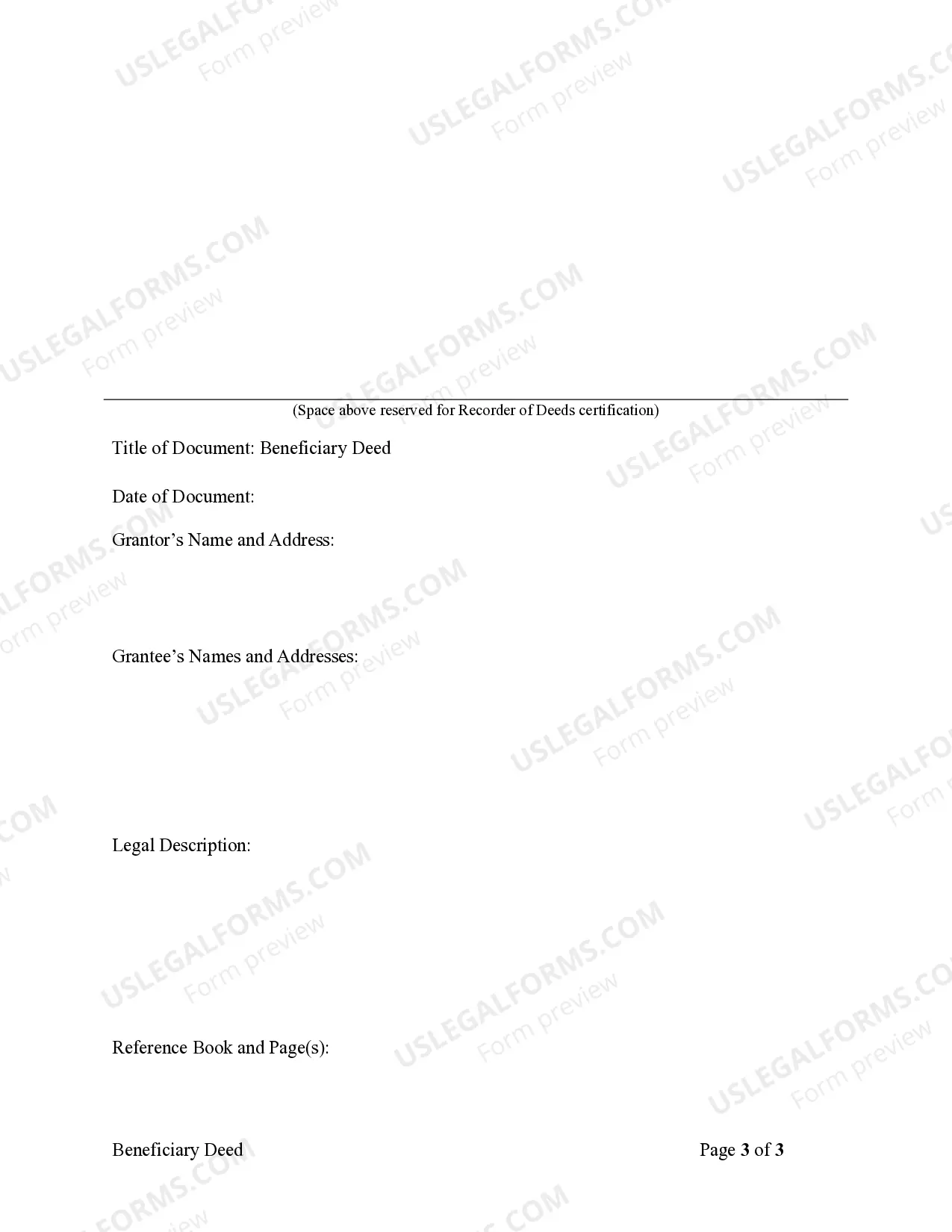
- Identification of the Grantor and Grantees.
- Legal description of the property to be transferred.
- Clauses outlining the conditions of the transfer upon the Grantor's death.
- Revocability statement indicating the Grantor can change the deed before death.
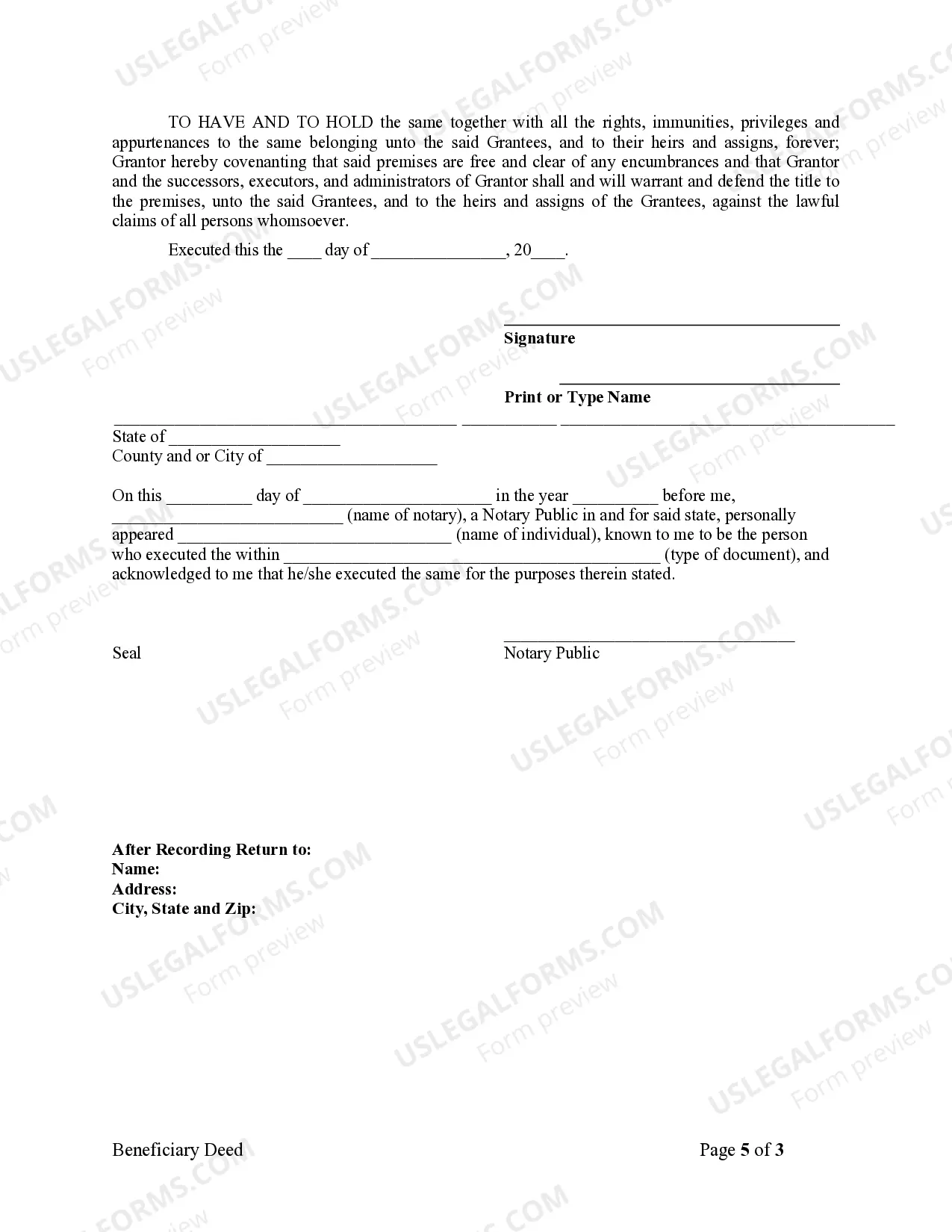
- Signatures required for the execution of the deed.


Situations where this form applies
This form is used when an individual wishes to transfer real estate to multiple beneficiaries after their death while maintaining control of the property during their lifetime. It is particularly useful for those looking to minimize probate costs and streamline the transfer process of their assets to loved ones. Situations may include estate planning for property owners wanting to ensure their property is inherited by specific individuals without legal complications after their passing.
Intended users of this form
- Individuals who own real estate and want to designate beneficiaries.
- Property owners looking to avoid probate for their estate.
- Those who wish to keep control of their property until death.
- Individuals considering multiple heirs for real estate ownership.
Steps to complete this form
- Identify the Grantor and enter their personal details at the top of the form.
- Specify the names of the four Grantees who will receive the property.
- Provide the legal description of the property to be transferred.
- Review the revocability clause and ensure it meets your intentions.
- Sign and date the document in the required space provided.
Does this form need to be notarized?
This form needs to be notarized to ensure legal validity. US Legal Forms provides secure online notarization powered by Notarize, allowing you to complete the process through a verified video call, available anytime.
Get your form ready online
Our built-in tools help you complete, sign, share, and store your documents in one place.
Make edits, fill in missing information, and update formatting in US Legal Forms—just like you would in MS Word.
Download a copy, print it, send it by email, or mail it via USPS—whatever works best for your next step.
Sign and collect signatures with our SignNow integration. Send to multiple recipients, set reminders, and more. Go Premium to unlock E-Sign.
If this form requires notarization, complete it online through a secure video call—no need to meet a notary in person or wait for an appointment.
We protect your documents and personal data by following strict security and privacy standards.

Make edits, fill in missing information, and update formatting in US Legal Forms—just like you would in MS Word.

Download a copy, print it, send it by email, or mail it via USPS—whatever works best for your next step.

Sign and collect signatures with our SignNow integration. Send to multiple recipients, set reminders, and more. Go Premium to unlock E-Sign.

If this form requires notarization, complete it online through a secure video call—no need to meet a notary in person or wait for an appointment.

We protect your documents and personal data by following strict security and privacy standards.
Common mistakes to avoid
- Failing to include the legal description of the property accurately.
- Not signing the document, risking its validity.
- Using outdated forms that do not comply with current state laws.
- Inaccurate identification of Grantees, which may create confusion later.
Advantages of online completion
- Convenient access to professionally drafted forms that are easy to complete.
- Edit and customize the document to suit your specific needs.
- Downloadable for immediate use, saving time compared to traditional methods.
- Incorporates legal guidance to ensure compliance with state laws.
Looking for another form?


Form popularity
FAQ
While a TOD deed offers many benefits, it also has disadvantages. One primary concern is that it does not avoid probate if the property has other debts. Additionally, if you decide to sell the property, you must revoke the TOD deed, which can complicate matters. It's advisable to consider these factors and consult a legal professional before proceeding.
Filling out a TOD - Transfer on Death Deed from an Individual to Four Individuals requires you to provide your name and the legal description of the property. Clearly list the four beneficiaries, including their addresses. It’s important to sign the document in front of a notary public to ensure its validity. Using platforms like USLegalForms can simplify this process, providing you with templates and guidance.
To fill out a Missouri Beneficiary Deed form, start by entering your name as the owner of the property. Next, list the names of the four individuals you wish to designate as beneficiaries. Make sure to include their addresses and relationships to you. Finally, sign and date the form in front of a notary public for it to be legally binding.
You can obtain a copy of a beneficiary deed from the county recorder's office where the property is located. They maintain public records of all recorded deeds, including the Missouri Beneficiary Deed or TOD - Transfer on Death Deed from an Individual to Four Individuals. Alternatively, platforms like USLegalForms can provide you with access to templates and resources to help you locate or create the necessary documents. This can simplify your search and ensure you have the correct information.
While a transfer on death deed offers benefits, it also has some disadvantages to consider. For instance, it does not allow for the transfer of property if the owner becomes incapacitated; the deed only takes effect at death. Additionally, creditors may still pursue claims against the property after your passing, which could affect the beneficiaries. It's essential to weigh these factors when deciding on a Missouri Beneficiary Deed or TOD - Transfer on Death Deed from an Individual to Four Individuals.
The TOD rule in Missouri allows property owners to transfer real estate to designated beneficiaries upon their death, bypassing the probate process. This rule is designed to simplify estate management and ensure a smooth transition of assets. With a Missouri Beneficiary Deed or TOD - Transfer on Death Deed from an Individual to Four Individuals, your property can automatically pass to your chosen beneficiaries. It's an efficient way to handle your estate planning.
To obtain a beneficiary deed in Missouri, you can start by drafting the deed that outlines your intentions. You can find templates and forms on platforms like USLegalForms, which offer step-by-step guidance. Once you have filled out the form, you must sign it in front of a notary and then record it with the county recorder's office. This ensures that your Missouri Beneficiary Deed or TOD - Transfer on Death Deed from an Individual to Four Individuals is legally binding.
Yes, a transfer on death deed is available in Missouri. This legal document allows you to designate beneficiaries who will receive your property upon your death without going through probate. The Missouri Beneficiary Deed, also known as a TOD - Transfer on Death Deed, simplifies the transfer process, making it easier for your loved ones. It is an effective way to manage your estate planning.