Florida Last Will and Testament for a Widow or Widower with Adult and Minor Children
Overview of this form
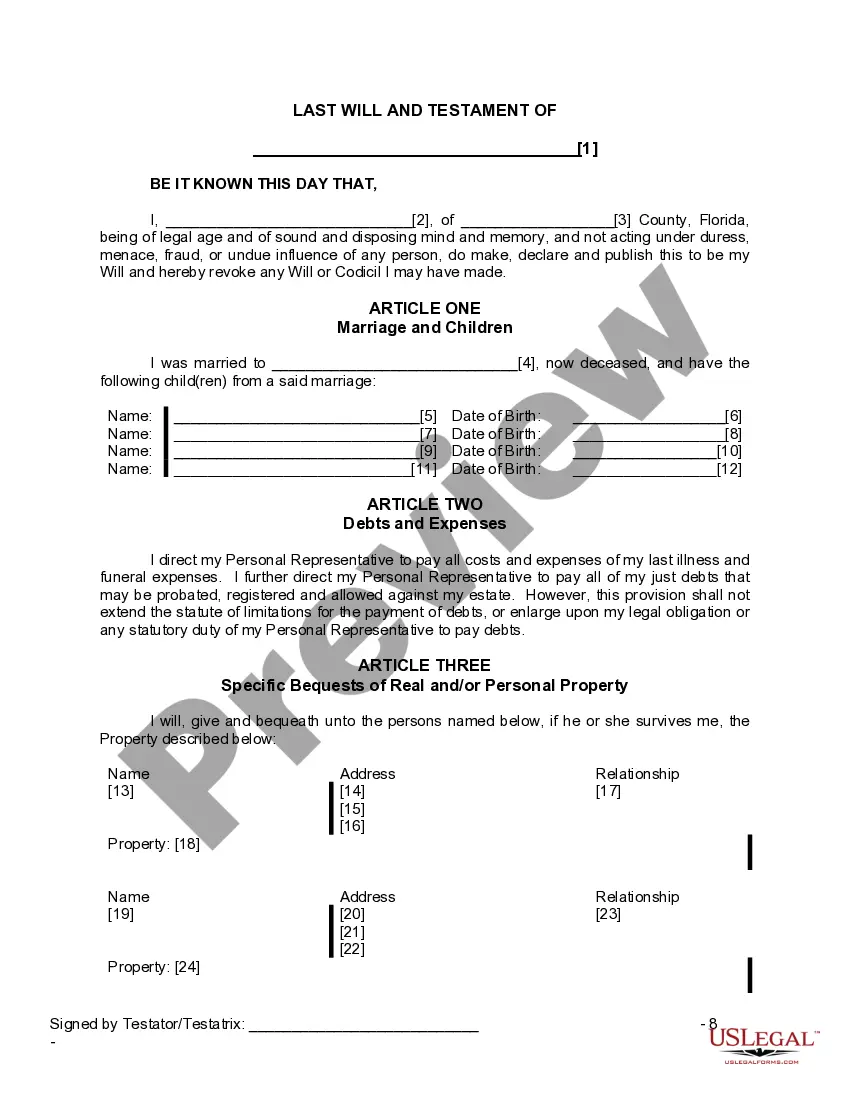
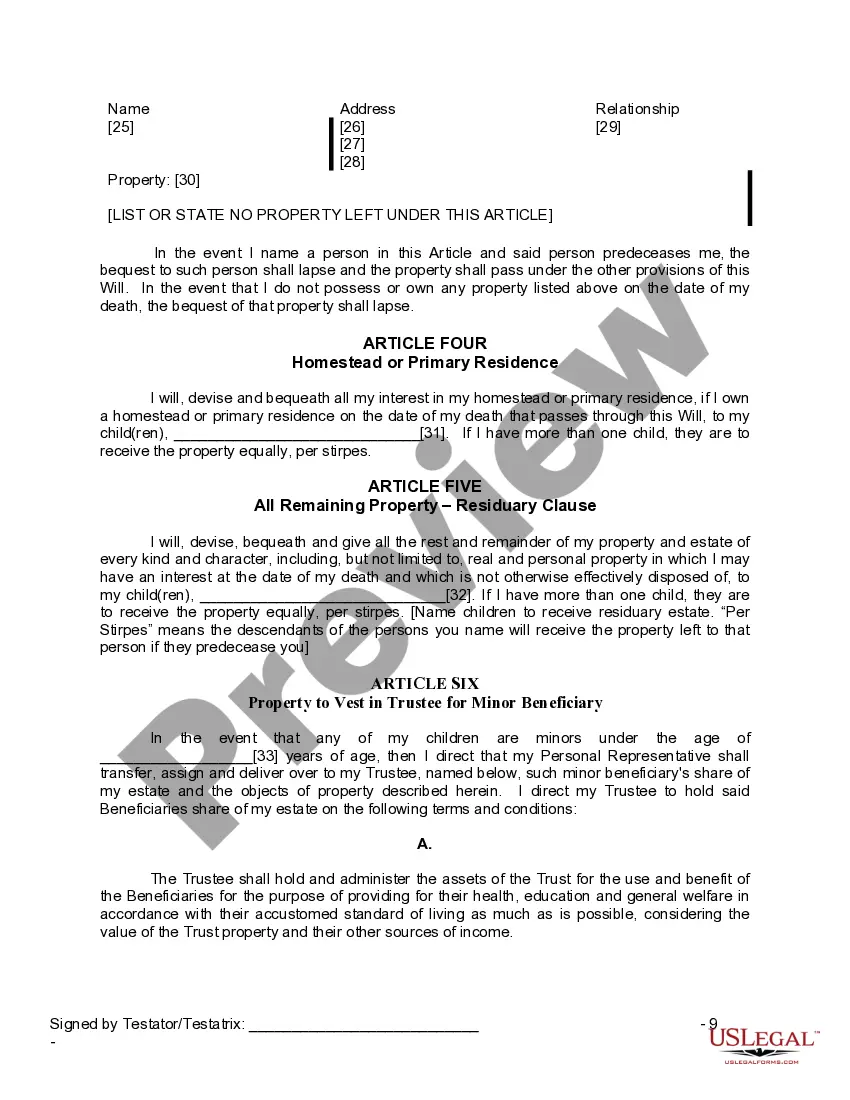
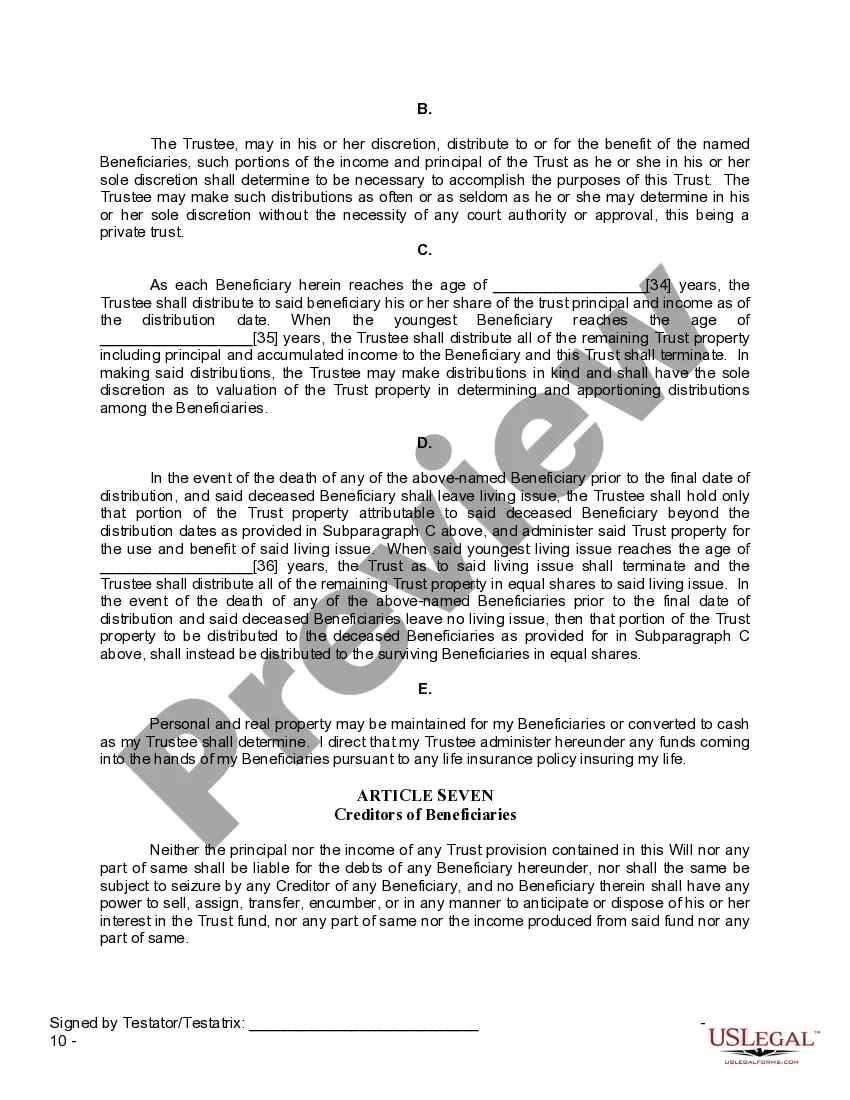
This Last Will and Testament for a widow or widower with adult and minor children is a legal document that outlines how your assets and properties will be distributed upon your death. It specifies the appointment of a personal representative, who will manage your estate, as well as designates guardians for your minor children and trustees for any assets left to them. This form is tailored specifically for those who have lost their spouse and need to ensure that their wishes are followed regarding their estate and children.
Key parts of this document
- The appointment of a personal representative or executor.
- Designating who will receive your property and any specific bequests.
- Provisions for minor children's assets through a trust.
- Appointment of a guardian for minor children.
- Self-proving affidavit for easier probate process.
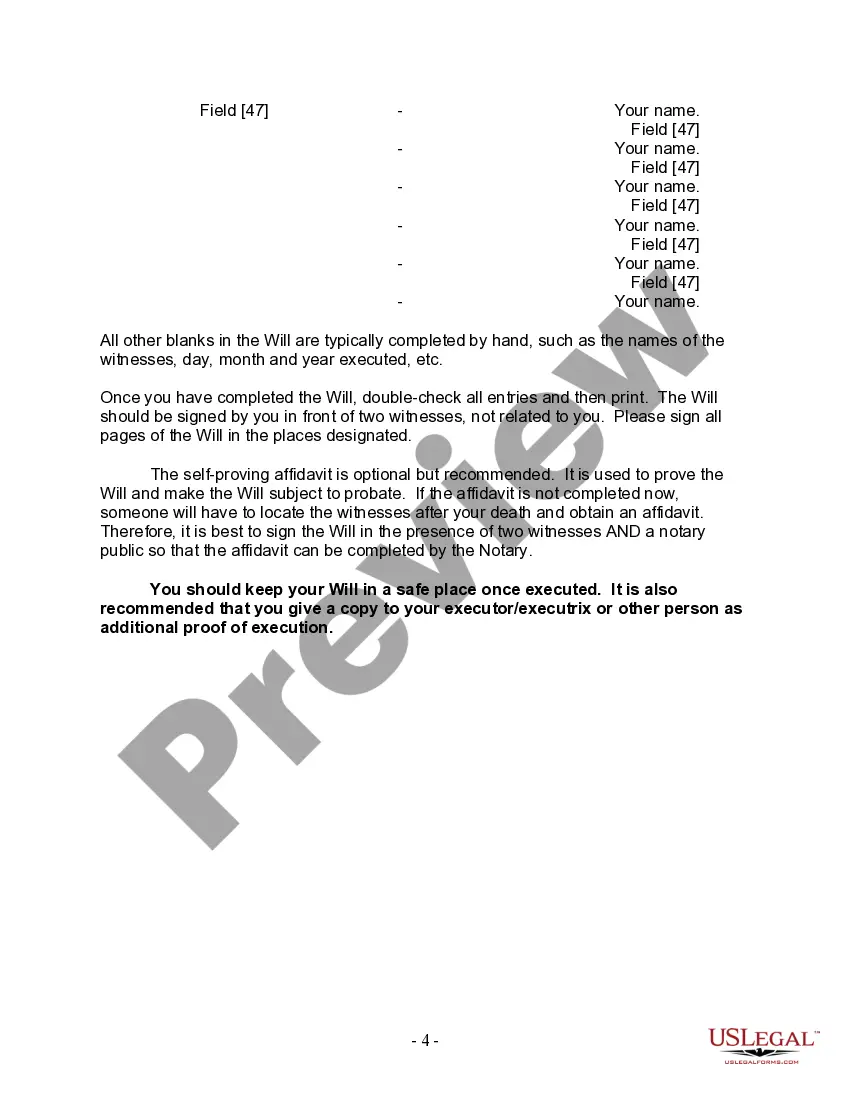
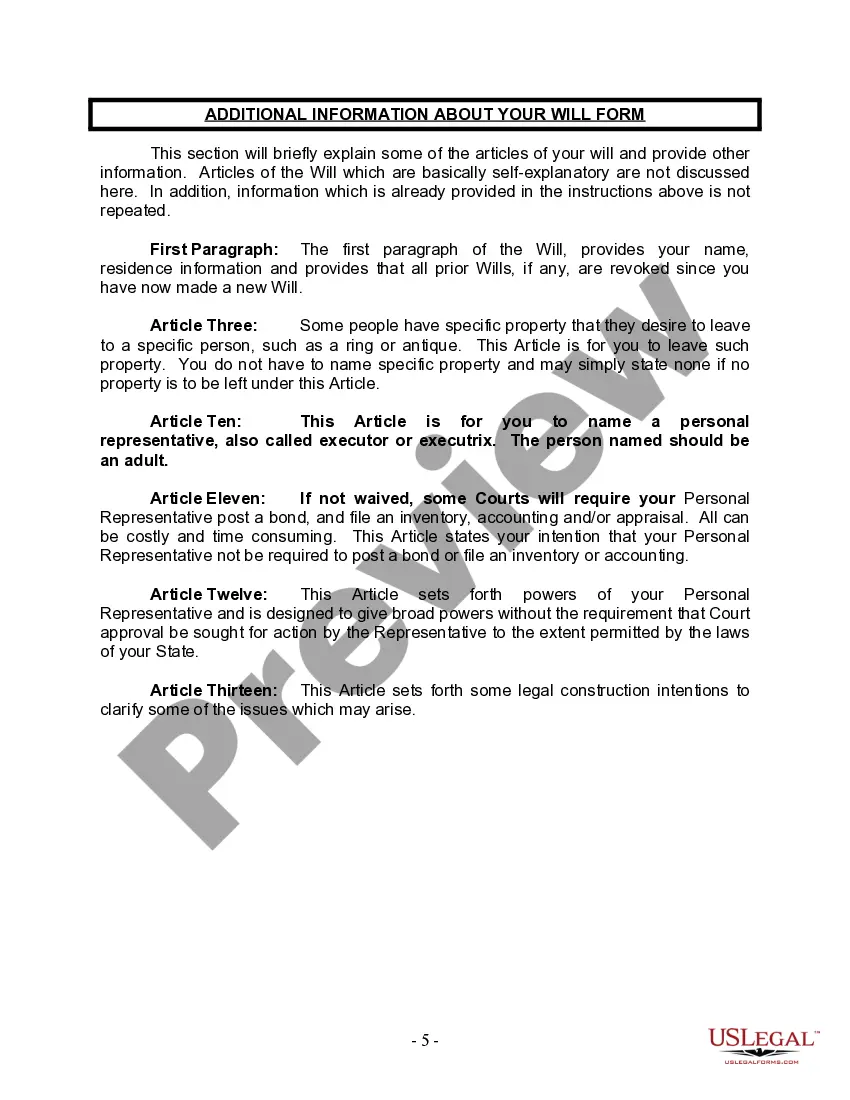
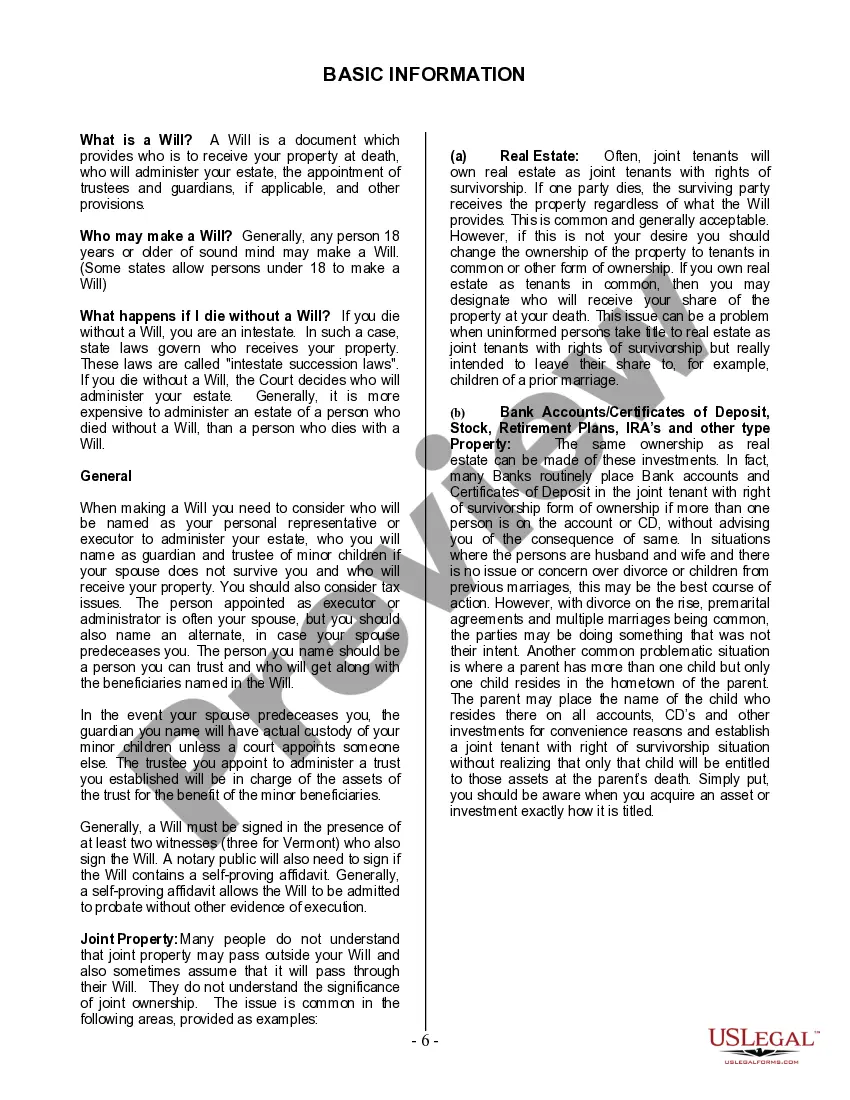



Situations where this form applies
This form is essential when a widow or widower wishes to set clear directives regarding their property and the care of their children after their passing. It is particularly valuable if you have both adult and minor children and want to ensure that all parties are taken care of according to your wishes.
Intended users of this form
This form is recommended for:
- Widows or widowers with both adult and minor children.
- Individuals looking to clarify the distribution of their assets.
- Parents wanting to establish trusts for their minor children.
- Anyone who has lost a spouse and needs to make new arrangements regarding their estate.
Instructions for completing this form
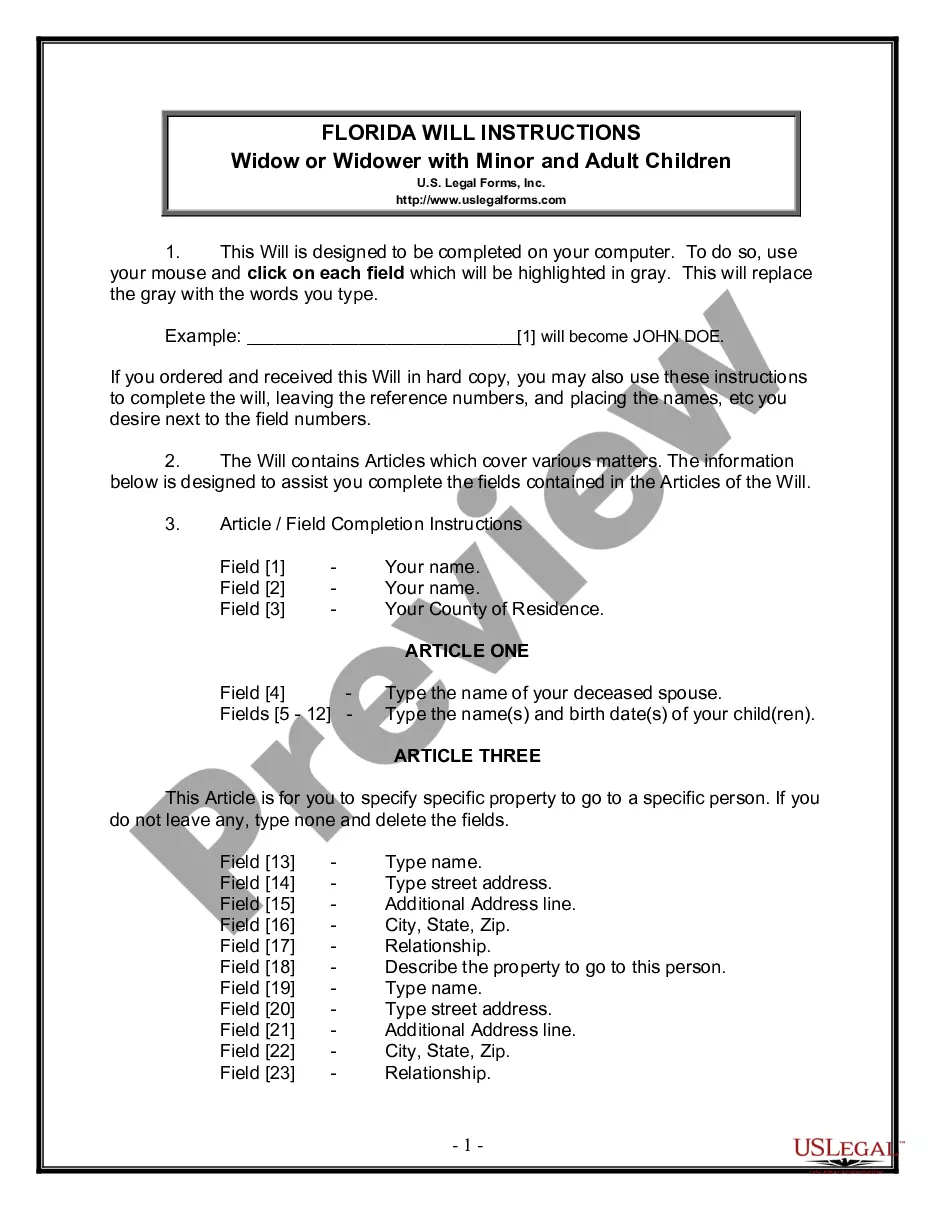
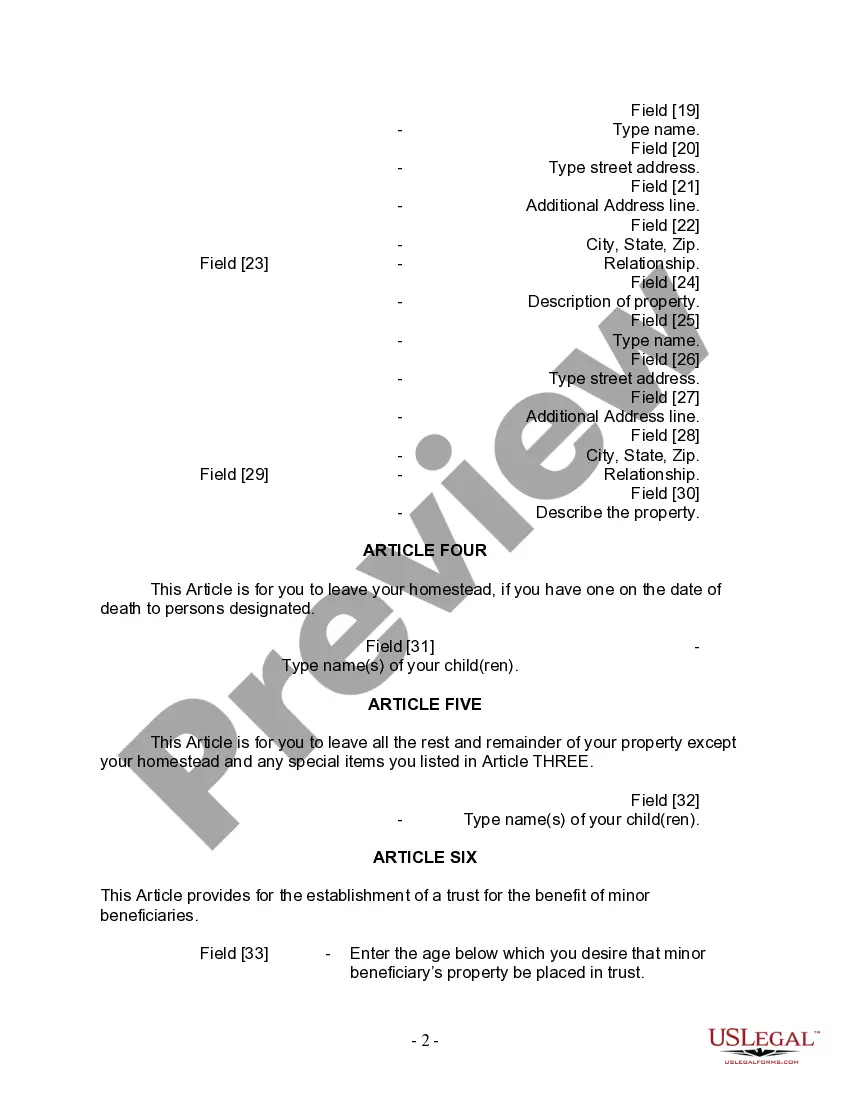
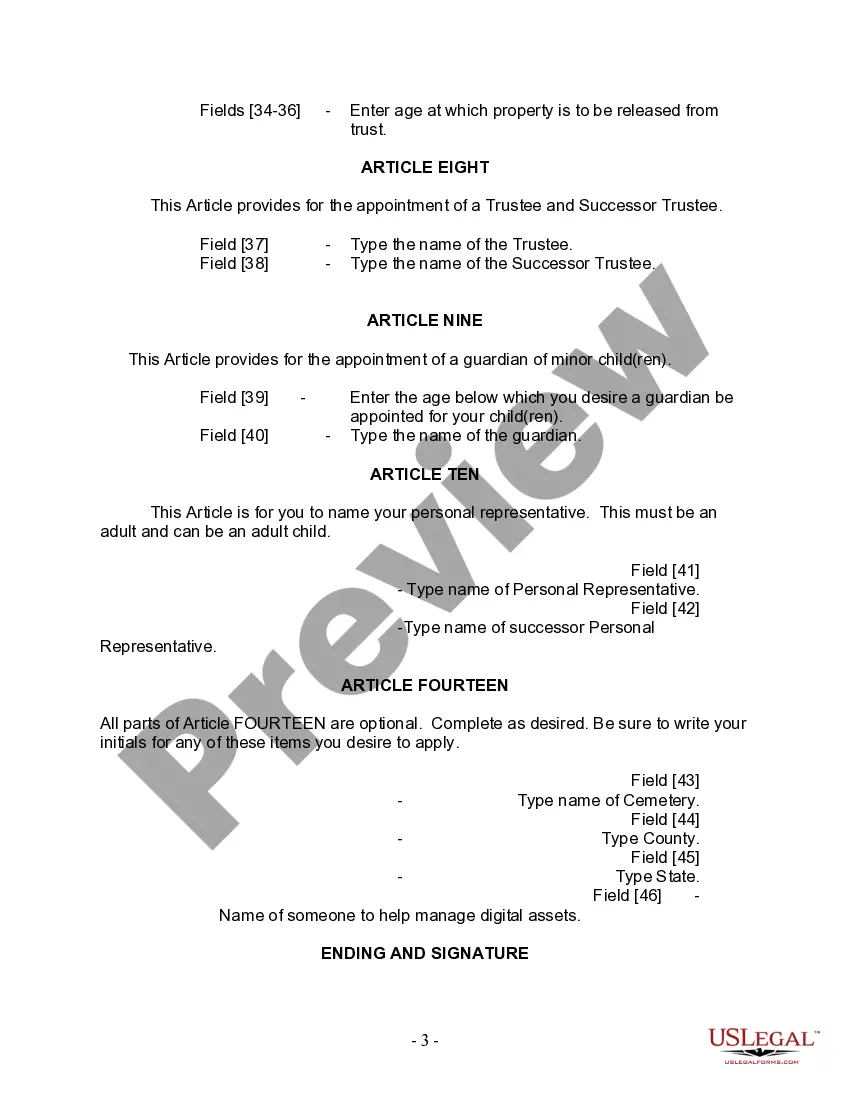
- Enter your full name and county of residence.
- List the name of your deceased spouse and the names and birthdates of your children.
- Specify any particular property you wish to leave to specific individuals.
- Designate guardians and trustees as required for minor children.
- Ensure the will is signed in front of two witnesses who are not related to you.
Does this form need to be notarized?
Yes, this form must be notarized to be legally valid. It is recommended to sign the will in the presence of a notary public along with the witnesses. U.S. Legal Forms provides integrated online notarization to facilitate this process conveniently.
Get your form ready online
Our built-in tools help you complete, sign, share, and store your documents in one place.
Make edits, fill in missing information, and update formatting in US Legal Forms—just like you would in MS Word.
Download a copy, print it, send it by email, or mail it via USPS—whatever works best for your next step.
Sign and collect signatures with our SignNow integration. Send to multiple recipients, set reminders, and more. Go Premium to unlock E-Sign.
If this form requires notarization, complete it online through a secure video call—no need to meet a notary in person or wait for an appointment.
We protect your documents and personal data by following strict security and privacy standards.

Make edits, fill in missing information, and update formatting in US Legal Forms—just like you would in MS Word.

Download a copy, print it, send it by email, or mail it via USPS—whatever works best for your next step.

Sign and collect signatures with our SignNow integration. Send to multiple recipients, set reminders, and more. Go Premium to unlock E-Sign.

If this form requires notarization, complete it online through a secure video call—no need to meet a notary in person or wait for an appointment.

We protect your documents and personal data by following strict security and privacy standards.
Typical mistakes to avoid
- Failing to have the will signed in front of two qualified witnesses.
- Not specifying who will serve as a personal representative or guardian.
- Neglecting to update the will after major life changes.
Benefits of completing this form online
- Immediate access to legal forms without waiting for mail or in-person consultations.
- Ability to fill out the form electronically, ensuring clarity and legibility.
- Comprehensive instructions provided, guiding you step-by-step through the completion process.
Quick recap
- Creating a clear Last Will and Testament is crucial for managing your estate after death.
- Having a trust in place for minor children can safeguard their inheritance until they reach an appropriate age.
- Always ensure your will is executed following state laws to avoid complications during probate.
Looking for another form?
Form popularity
FAQ
For a will to be valid in Florida, it must be in writing, signed by the testator (the person creating the will), and witnessed by two people who are not beneficiaries. These requirements are essential for ensuring your Florida Last Will and Testament for a Widow or Widower with Adult and Minor Children is legally enforceable. Additionally, clear intent must be present in the document to dispose of property upon death. If you need assistance in drafting a valid will, consider utilizing resources from US Legal Forms to simplify the process.
In Florida, a will may not completely override a spouse's rights, particularly concerning assets owned jointly or homestead property. However, the distribution specified in a Florida Last Will and Testament for a Widow or Widower with Adult and Minor Children generally determines how assets are divided after death. If you have concerns about spousal rights, consider consulting a legal professional to understand your specific scenario better. Using tools from US Legal Forms can also provide clarity on this matter.
A surviving spouse cannot unilaterally change the executor named in a Florida will. If you wish to change the executor after the deceased's passing, you would need to petition the court for a modification. In the context of a Florida Last Will and Testament for a Widow or Widower with Adult and Minor Children, it's crucial to understand your rights and the appropriate legal steps. Platforms like US Legal Forms can offer guidance in such situations.
In Florida, a living will does not necessarily require notarization to be legally effective. However, having your Florida Last Will and Testament for a Widow or Widower with Adult and Minor Children notarized can enhance its credibility and help avoid conflicts later. It’s essential to ensure your wishes are clearly stated and documented appropriately. For more detailed assistance, explore resources like US Legal Forms.
In Florida, a last will and testament typically does not need to be notarized to be valid. However, having your Florida Last Will and Testament for a Widow or Widower with Adult and Minor Children notarized can provide added security and simplify the probate process. It helps prove the authenticity of the document, which may reduce potential disputes among heirs. For the best assurance, consider seeking guidance from legal platforms like US Legal Forms.
A last will and testament in Florida must be in writing, signed by the testator, and witnessed by at least two individuals. These requirements help ensure that the document is valid and follows Florida law. Engaging in the creation of a Florida Last Will and Testament for a Widow or Widower with Adult and Minor Children requires careful consideration of these legal standards to avoid complications later.
Yes, filing a will with the court in Florida is necessary once the testator has passed away. This formal process allows the court to validate the will and ensures that your intended distribution is honored. For those navigating the Florida Last Will and Testament for a Widow or Widower with Adult and Minor Children, working with professionals can ease this process.
To submit a will in Florida, you must take it to the probate court in the county where the deceased lived. You will need to provide a death certificate and other relevant documentation to initiate the probate process. It is important to ensure that the Florida Last Will and Testament for a Widow or Widower with Adult and Minor Children is presented promptly after death to ensure compliance with state laws.
In Florida, a surviving spouse does not automatically inherit everything unless there is no surviving child or if the assets are solely in the spouse's name. For a Florida Last Will and Testament for a Widow or Widower with Adult and Minor Children, the distribution depends on the will's terms and whether children are involved. This can significantly affect asset division, so it's vital to carefully consider how the will is structured.
If a will is not filed in Florida, the estate may be considered 'intestate,' meaning it will follow state laws for distribution. This could lead to heirs inheriting assets in a manner that did not align with the decedent’s wishes. For those with a Florida Last Will and Testament for a Widow or Widower with Adult and Minor Children, it is crucial to file the will to ensure asset distribution is as planned.