Florida Last Will and Testament for a Married Person with No Children
What this document covers
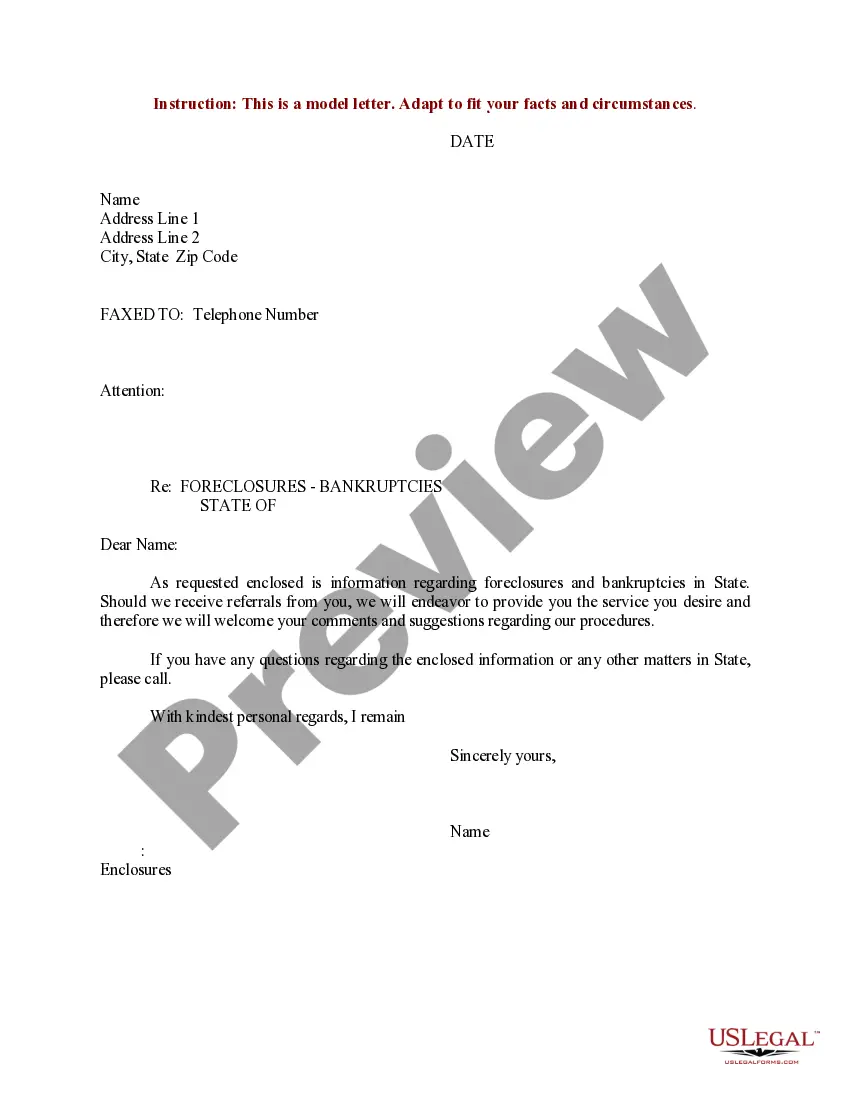
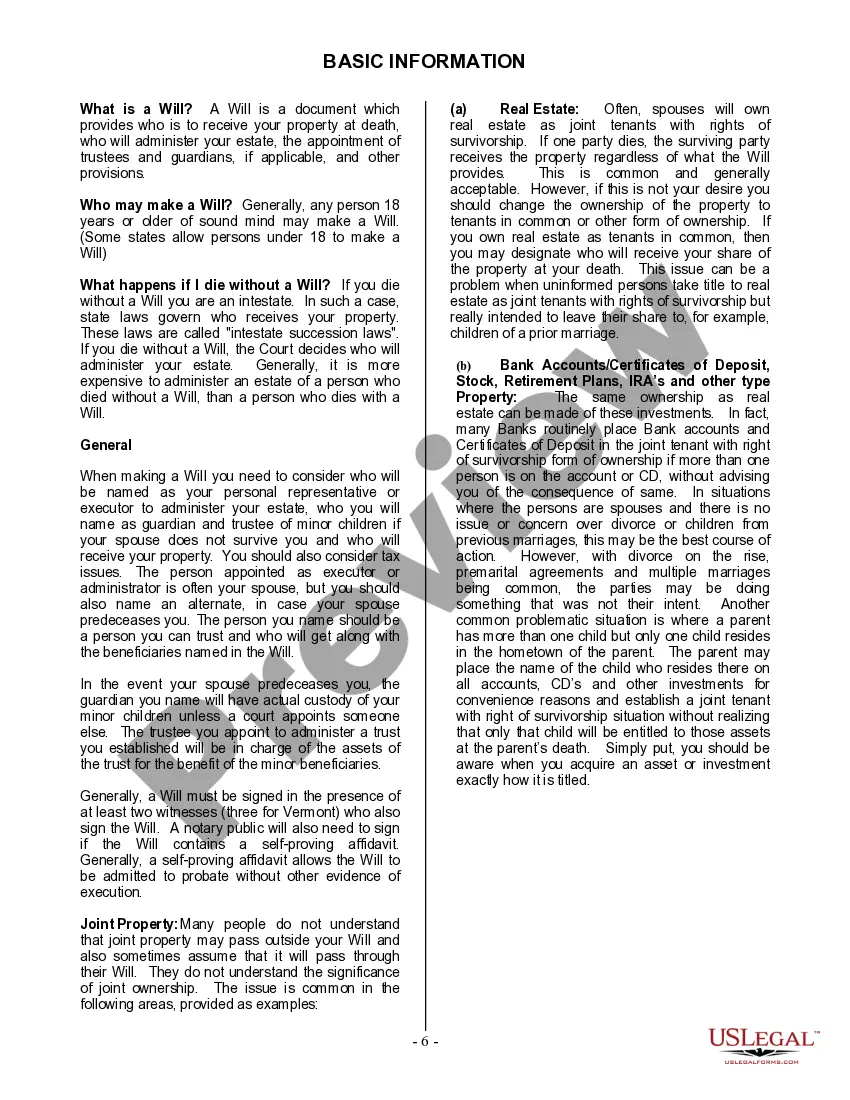
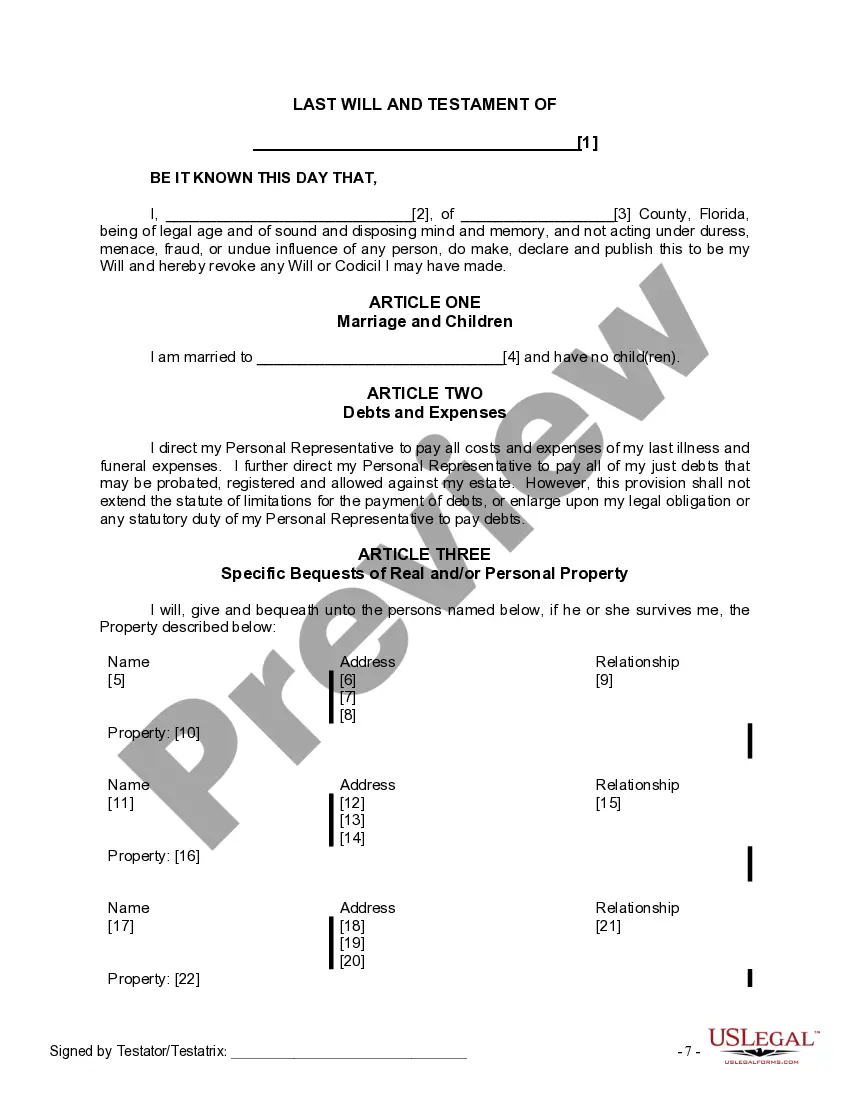
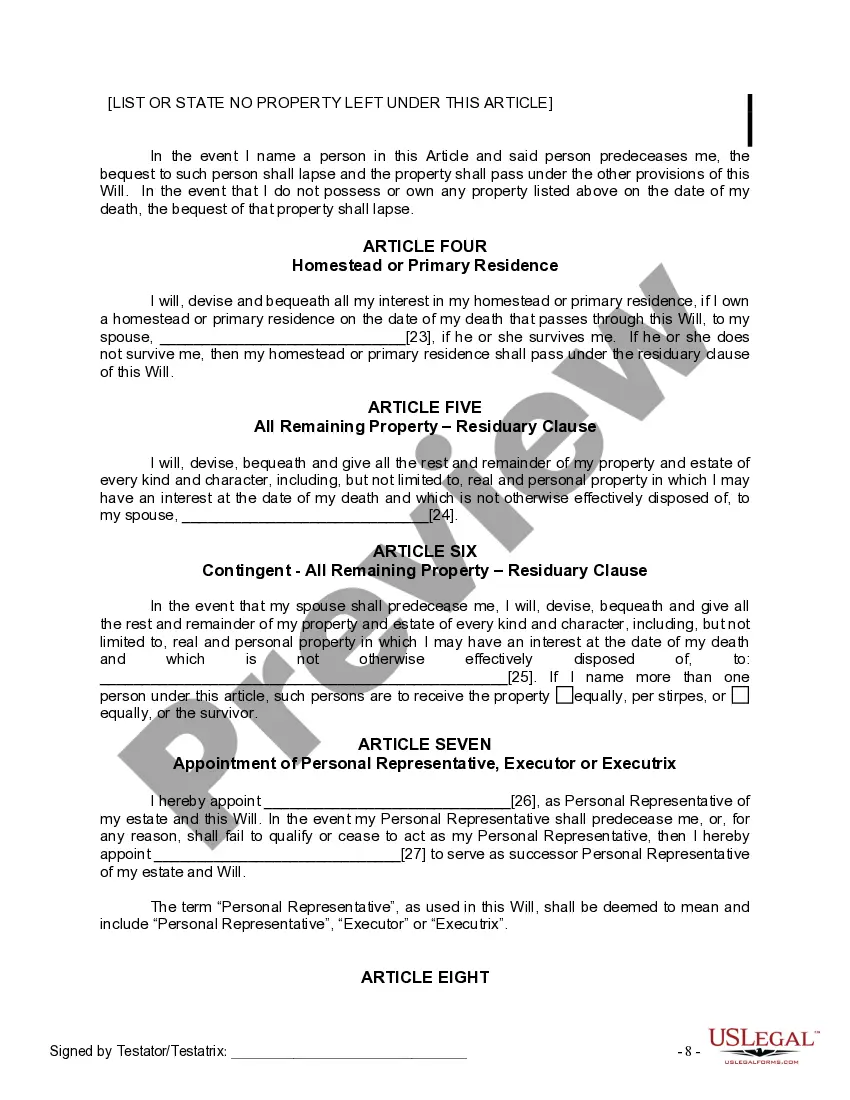
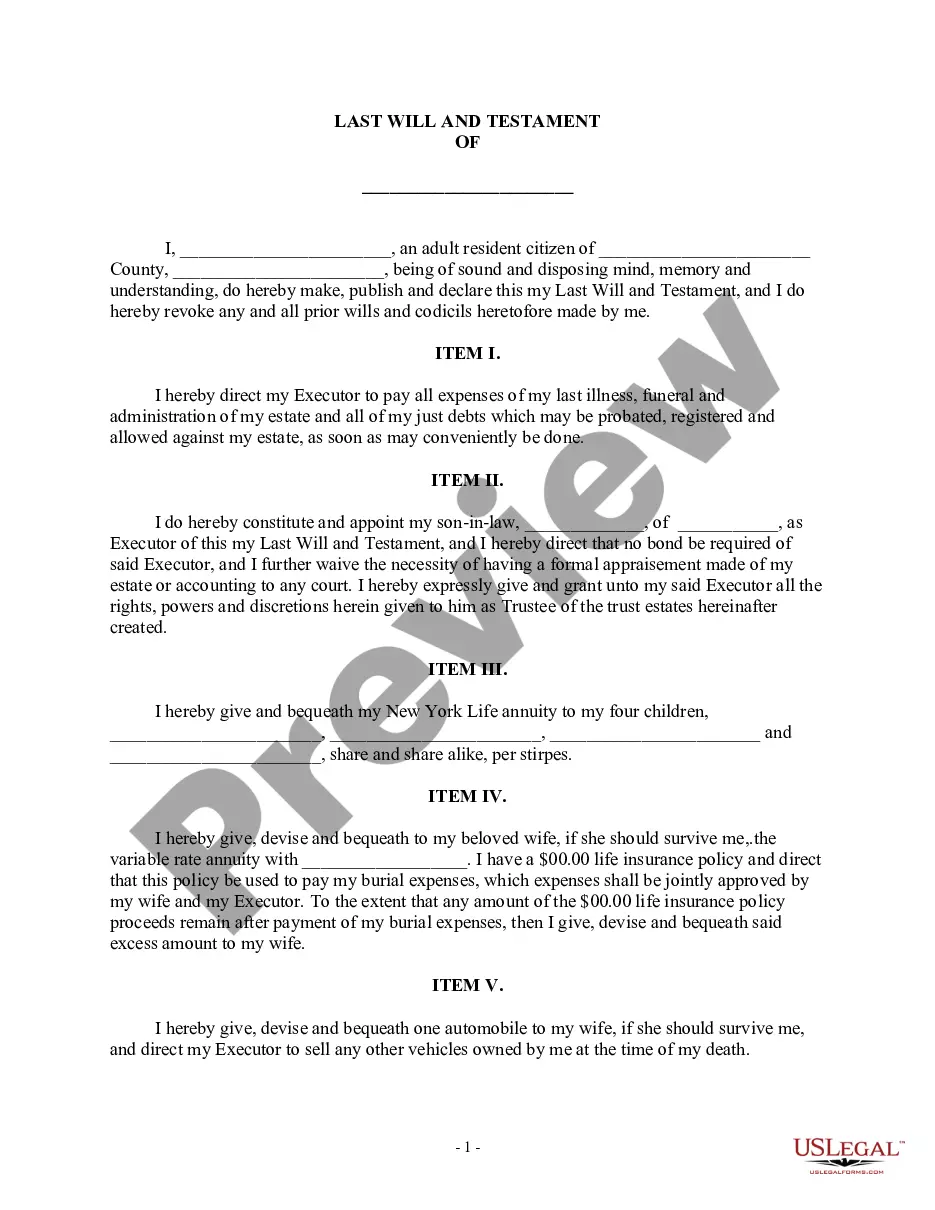
This Last Will and Testament for a Married Person with No Children is a legal document that outlines your wishes regarding the distribution of your property after your death. It is specifically tailored for individuals who are married and do not have any children, allowing you to designate your spouse as the primary beneficiary while also detailing other provisions for the distribution of your estate. Unlike other types of wills, this form addresses situations typically faced by couples without children, simplifying the process of estate planning for your unique circumstances.
Key parts of this document
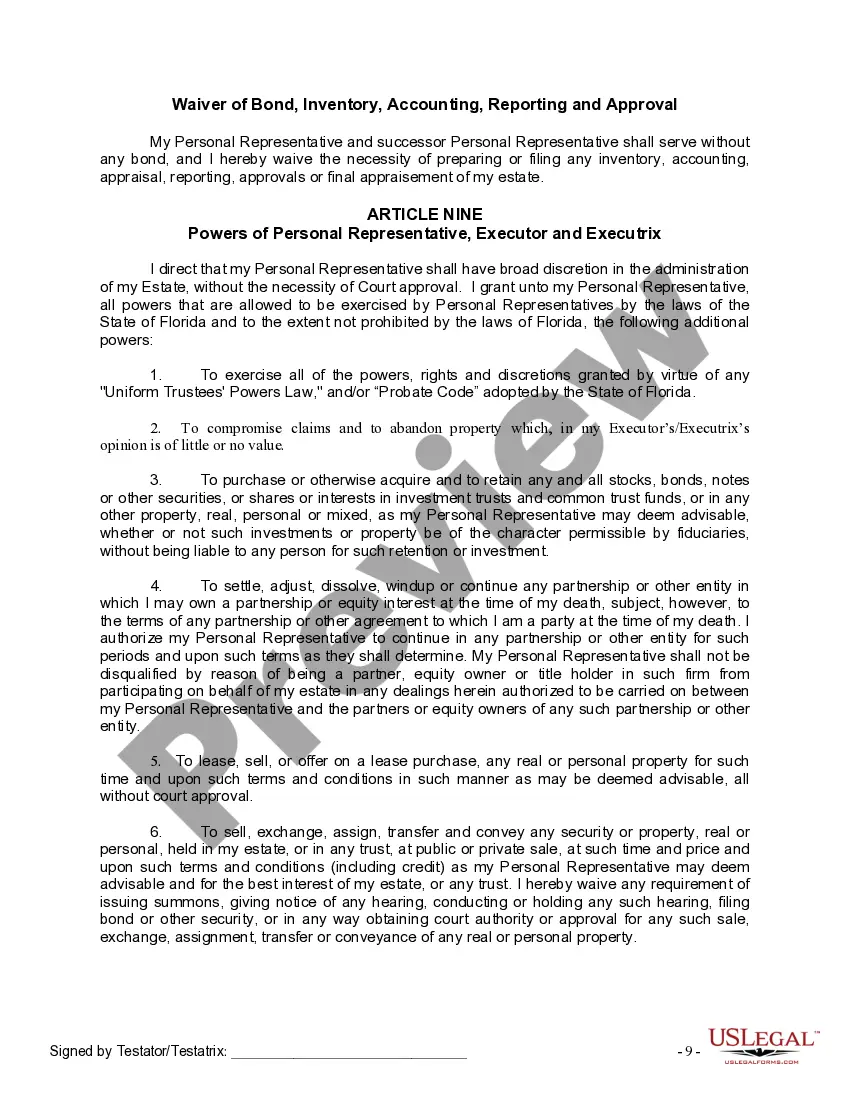
- Appointment of a personal representative to administer your estate.
- Specifications on how assets should be divided, including provisions for your spouse.
- Directions for the transfer of specific property to designated beneficiaries.
- Instructions regarding the payment of debts and expenses from your estate.
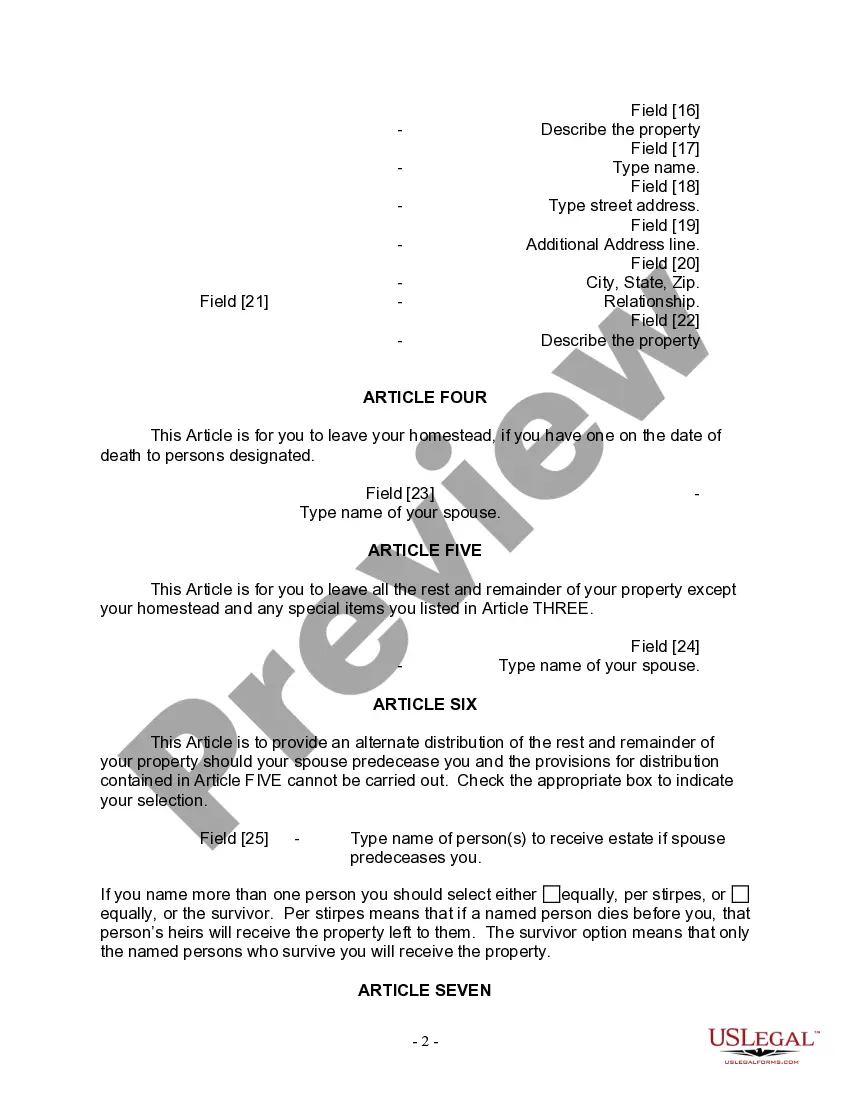
- Contingent provisions for asset distribution in case your spouse does not survive you.




When to use this document
This form is ideal for married individuals who wish to ensure that their assets are distributed according to their wishes after their passing. You should use this will if you want to provide clear guidance on who receives your property, specifically if you do not have children and your spouse will be the primary beneficiary. It is particularly useful when planning for potential situations such as your spouse predeceasing you, as it includes provisions to determine the distribution of your estate under such circumstances.
Intended users of this form
- Married individuals without children.
- Those who want to designate their spouse as the primary recipient of their property.
- Individuals looking to simplify the estate planning process with a straightforward will.
- People who may have specific property they wish to bequeath to others.
Steps to complete this form
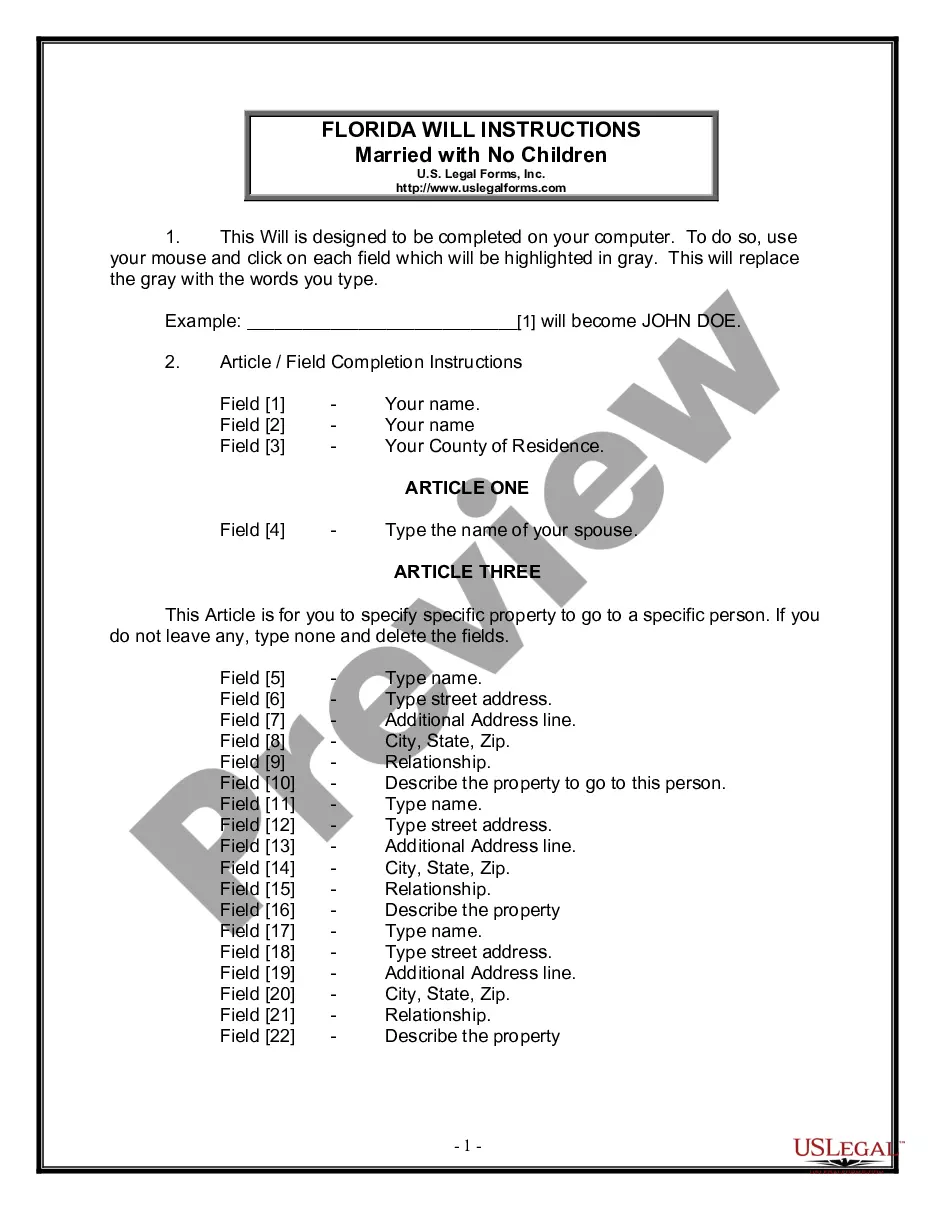
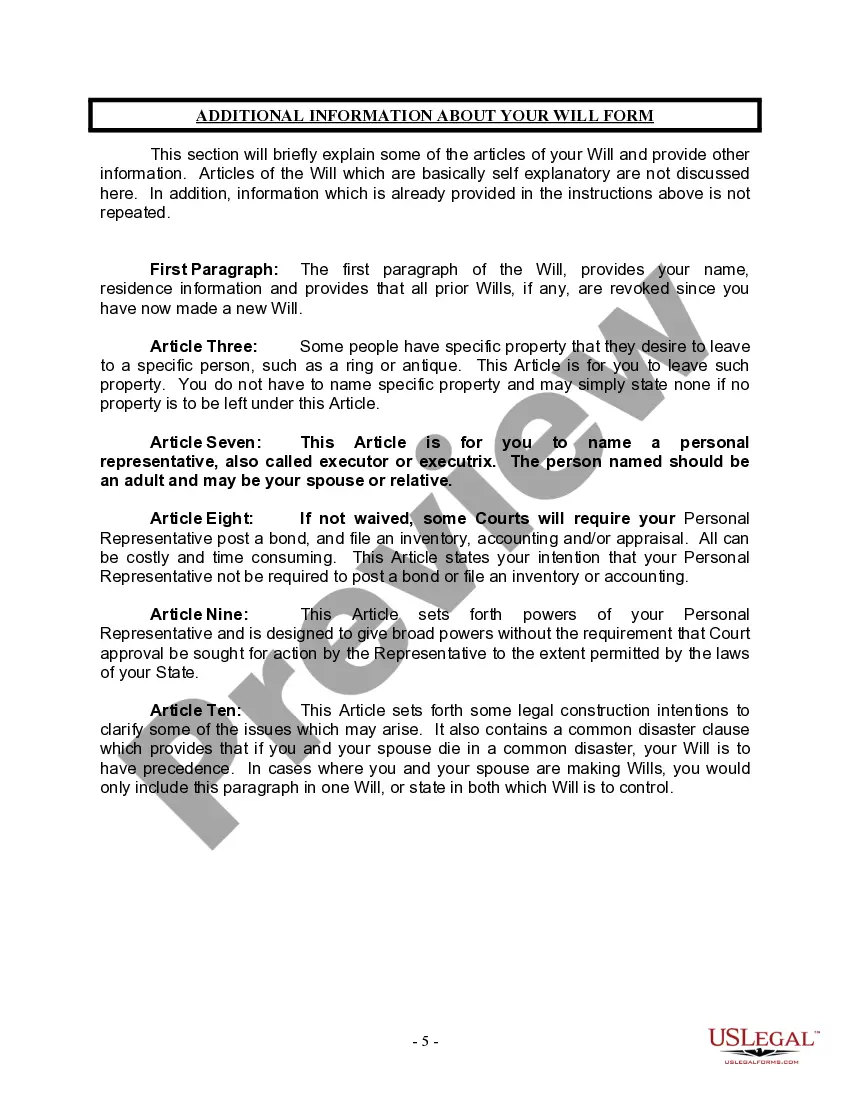
- Enter your name and county of residence at the top of the document.
- Specify your spouse's name in the designated section.
- Outline any specific bequests of property and provide details such as names, addresses, and relationships of beneficiaries.
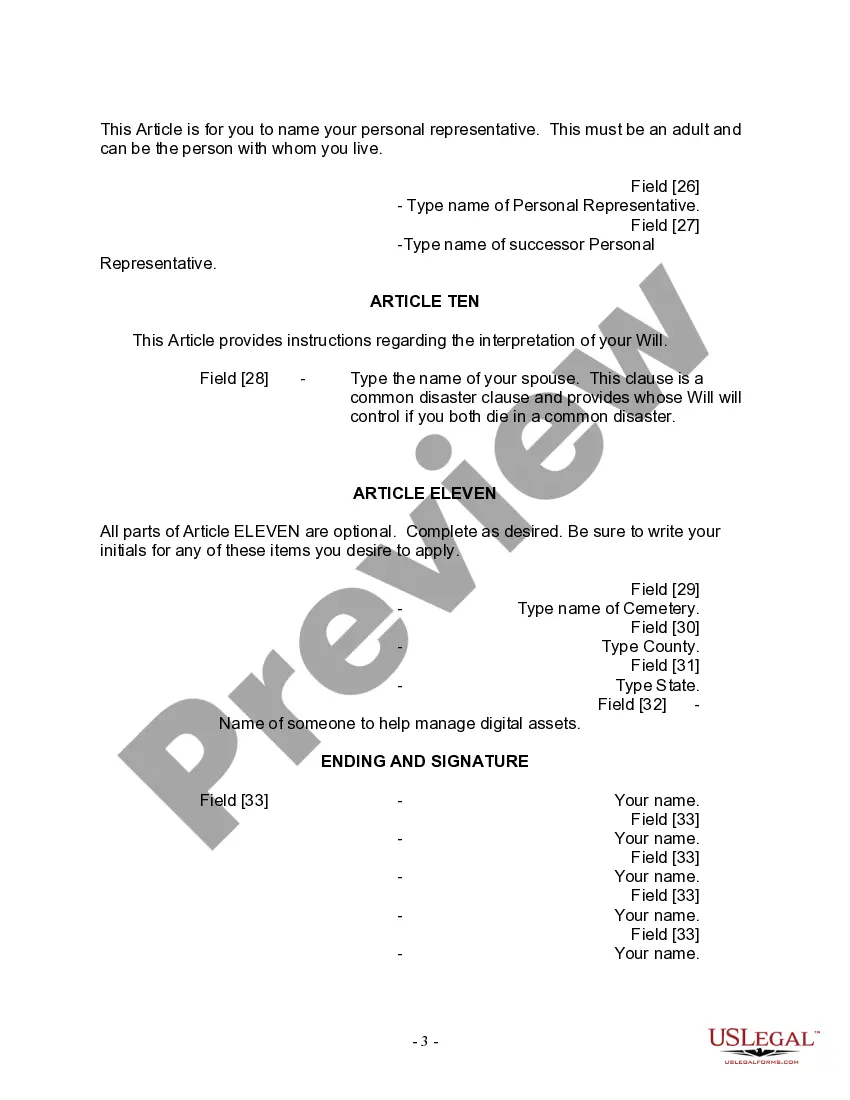
- Designate a personal representative to oversee the execution of your will.
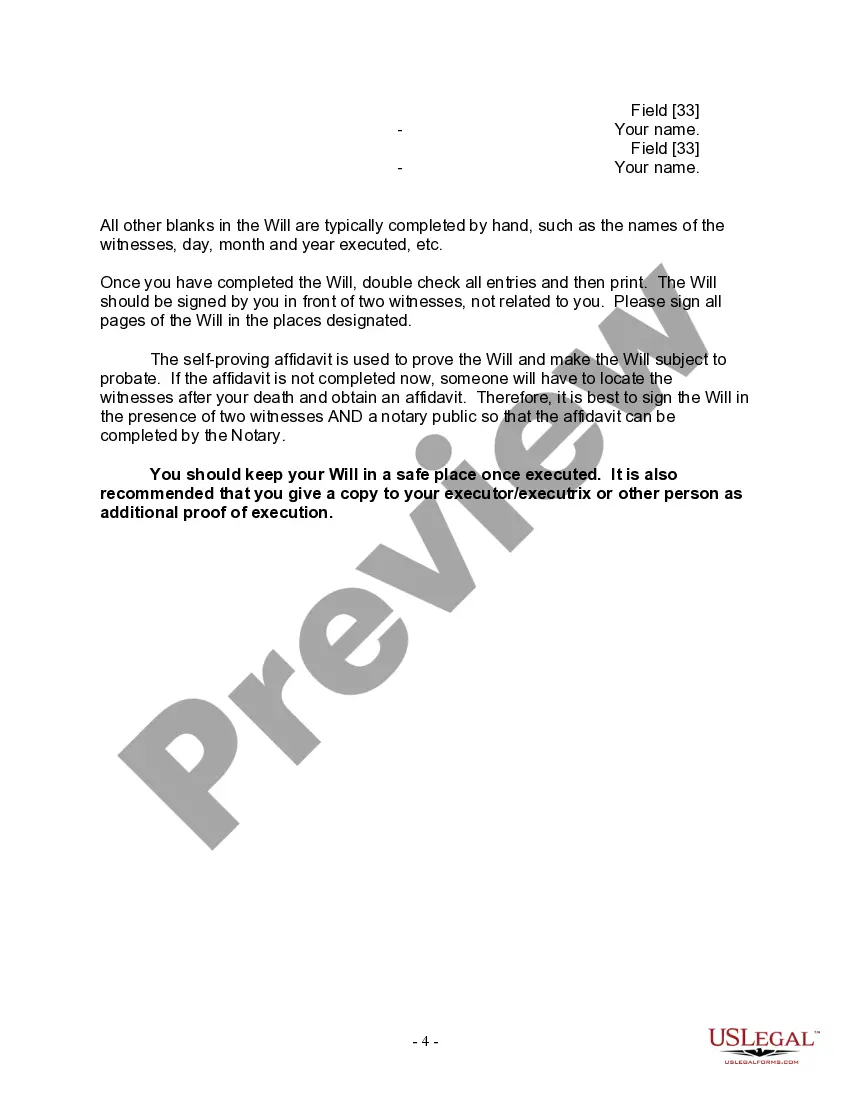
- Ensure the will is signed in the presence of two witnesses, and complete the self-proving affidavit for easier probate processing.
Notarization guidance
This document requires notarization to meet legal standards. US Legal Forms provides secure online notarization powered by Notarize, allowing you to complete the process through a verified video call, available 24/7.
Get your form ready online
Our built-in tools help you complete, sign, share, and store your documents in one place.
Make edits, fill in missing information, and update formatting in US Legal Forms—just like you would in MS Word.
Download a copy, print it, send it by email, or mail it via USPS—whatever works best for your next step.
Sign and collect signatures with our SignNow integration. Send to multiple recipients, set reminders, and more. Go Premium to unlock E-Sign.
If this form requires notarization, complete it online through a secure video call—no need to meet a notary in person or wait for an appointment.
We protect your documents and personal data by following strict security and privacy standards.

Make edits, fill in missing information, and update formatting in US Legal Forms—just like you would in MS Word.

Download a copy, print it, send it by email, or mail it via USPS—whatever works best for your next step.

Sign and collect signatures with our SignNow integration. Send to multiple recipients, set reminders, and more. Go Premium to unlock E-Sign.

If this form requires notarization, complete it online through a secure video call—no need to meet a notary in person or wait for an appointment.

We protect your documents and personal data by following strict security and privacy standards.
Common mistakes to avoid
- Failing to sign the will in front of the required witnesses.
- Not specifying alternative beneficiaries in case the primary beneficiary predeceases the testator.
- Overlooking the need to keep the will in a safe place where it can be easily found after death.
- Not updating the will after significant life changes such as relocation or changes in marital status.
Why use this form online
- Convenience of filling out the form electronically from anywhere at any time.
- Editable fields allow for easy adjustments before finalizing the will.
- Access to a professionally drafted document that meets state requirements.
- Immediate download option upon completion for quick execution of the will.
Key takeaways
- Creating a Last Will and Testament is essential for married individuals without children to ensure proper estate distribution.
- Designating a personal representative streamlines the process of settling the estate after death.
- Using this form allows for customization of bequests while adhering to state-specific legal requirements.
Looking for another form?

Form popularity
FAQ
Even if you are married and don’t have children, having a Florida Last Will and Testament for a Married Person with No Children is crucial for safeguarding your assets. A will ensures your property goes to your spouse or designated beneficiaries according to your preferences. Without a will, the state’s laws dictate asset distribution, which may not align with your wishes. Using a platform like USLegalForms makes creating your will straightforward and ensures your intentions are legally documented.
Many married couples choose to create individual wills to ensure their specific wishes are fulfilled after passing. A Florida Last Will and Testament for a Married Person with No Children may address unique assets or personal sentiments that require individual attention. Additionally, having separate wills can prevent potential conflicts in estate distribution. Ultimately, it is important to consider personal circumstances when deciding on this matter.
In Florida, the duration of marriage does not dictate right to marital assets. As a legally married spouse, you are entitled to a share of the estate upon divorce or death, regardless of the length of the marriage. However, establishing a Florida Last Will and Testament for a Married Person with No Children can help clarify intentions and protect your interests. Take the proactive step of addressing your estate plan to avoid future complications.
Marriage generally revokes a will in Florida unless the will was made in contemplation of marriage. If you are a married person without children, it’s vital to create a new Florida Last Will and Testament to reflect your current situation. Updating your will ensures that your assets are distributed according to your desires. Don’t rely on your previous documents, as they might not represent your current intentions.
In Florida, a surviving spouse does not automatically inherit everything if there are children from a prior relationship. However, if there are no children, the surviving spouse may inherit the entire estate. When creating a Florida Last Will and Testament for a Married Person with No Children, it’s crucial to specify your intentions clearly to avoid confusion. This clarity can help ensure that your wishes are followed after your passing.
In Florida, marriage does not automatically override your existing will. However, the law may impact the distribution of your estate upon your death. If you have created a Florida Last Will and Testament for a Married Person with No Children, you should review it after marriage to ensure it aligns with your current wishes. It’s essential to understand how spousal rights can affect your estate plans.
A living will in Florida does not require notarization to be valid. However, you may choose to have your living will notarized for added security and to ensure there are no disputes about its validity. It is essential to keep this document accessible, especially for individuals focusing on their Florida Last Will and Testament for a Married Person with No Children.
In Florida, a will does not need to be recorded while the testator is alive. However, once the testator passes away, the will must be filed with the probate court to begin the estate administration process. It is advisable to store the will in a safe place and inform your spouse or a trusted individual about its location, especially when it is a Florida Last Will and Testament for a Married Person with No Children.
A will must meet several criteria to be valid in Florida, especially when discussing a Florida Last Will and Testament for a Married Person with No Children. The testator must declare the document as their will in front of two witnesses. Each witness must sign the will in the presence of the testator, which ensures its legality according to Florida law.
To create a valid Florida Last Will and Testament for a Married Person with No Children, you must be at least 18 years old and of sound mind. The document should be written clearly and specifically outline how you want your assets distributed. Additionally, you need to sign the will in the presence of two witnesses, who must also sign the will to validate it.