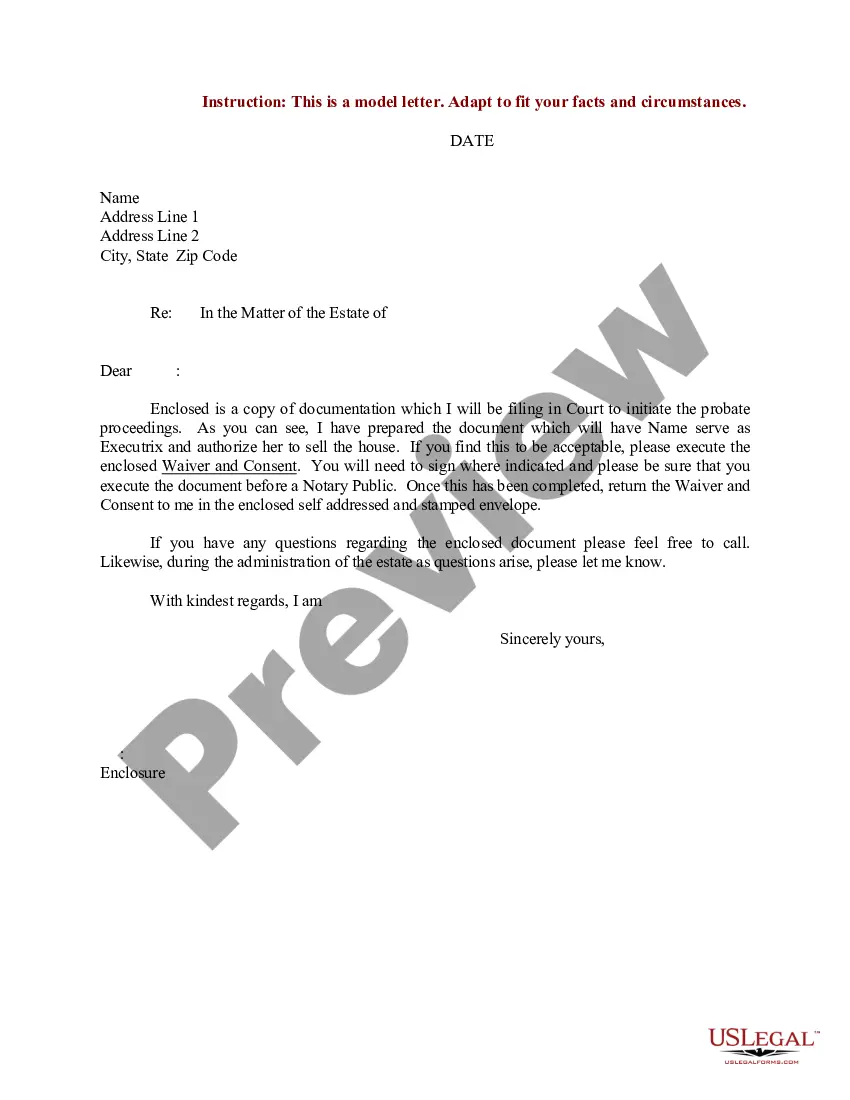
Florida Last Will and Testament for Single Person with Adult and Minor Children
Understanding this form
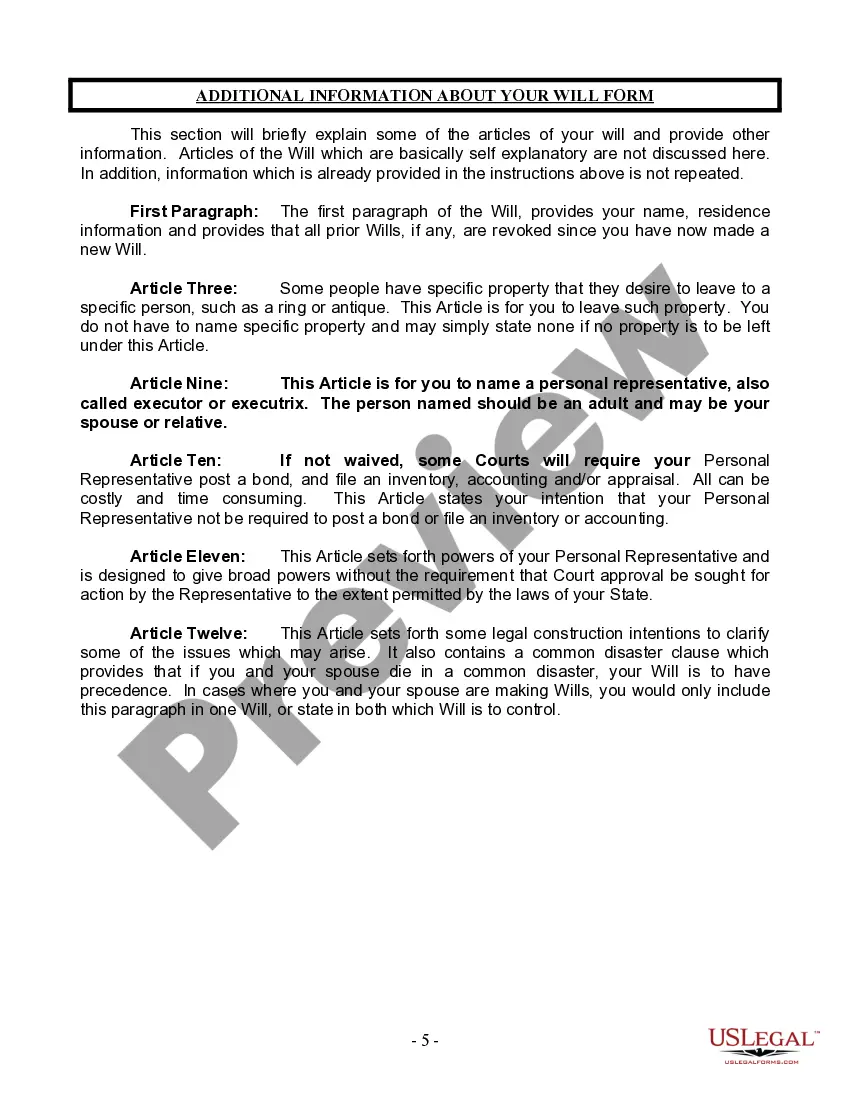
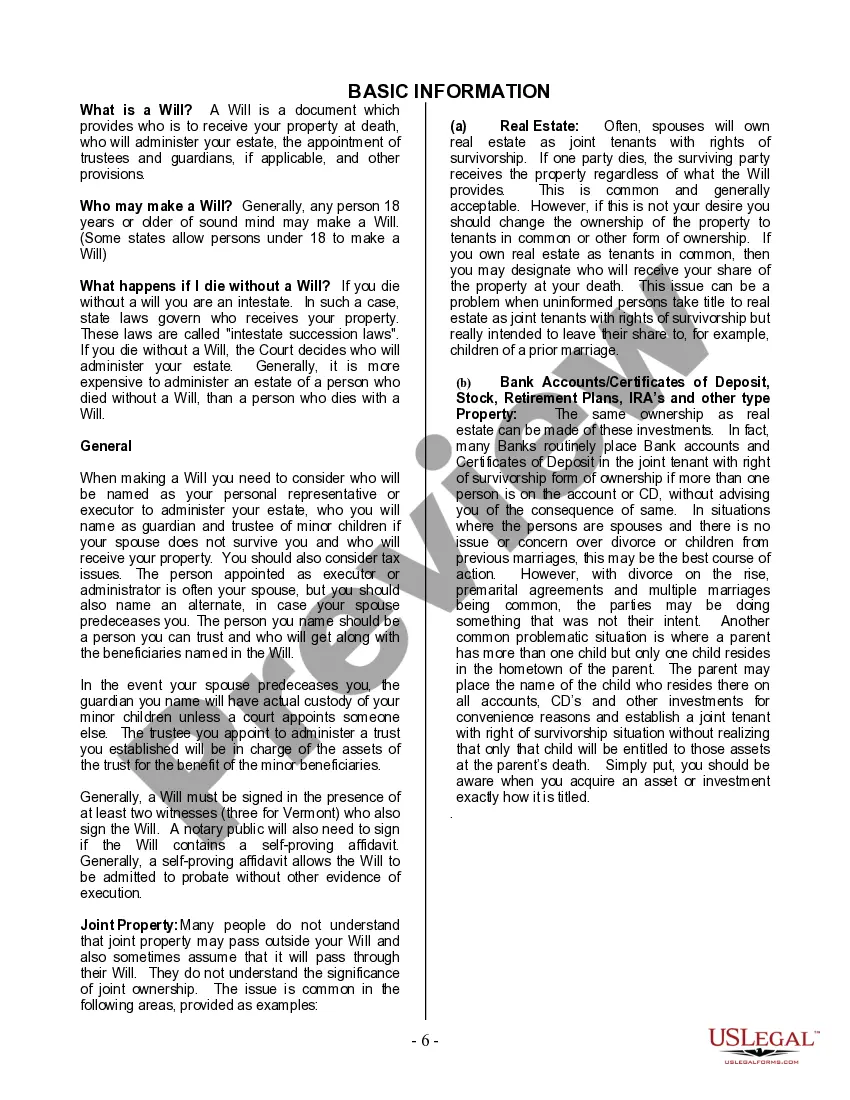
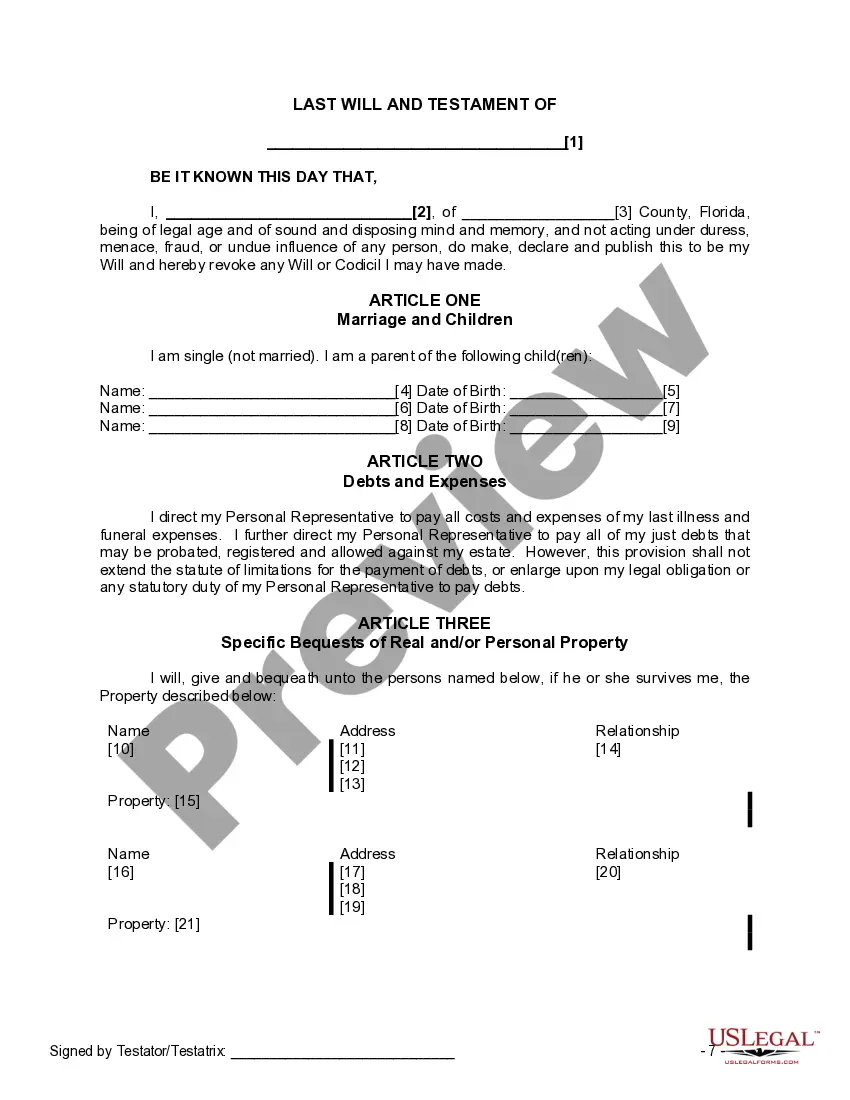
The Last Will and Testament for Single Person with Adult and Minor Children is a legal document that specifies how a person's assets will be distributed after their death. This form is tailored for individuals who are single and have both adult and minor children. It includes provisions for appointing an executor, designating beneficiaries, and establishing guardianship for minor children. Unlike wills intended for married individuals, this will addresses the specific needs and scenarios relevant to single parents.
Key parts of this document
- Appointment of a personal representative or executor.
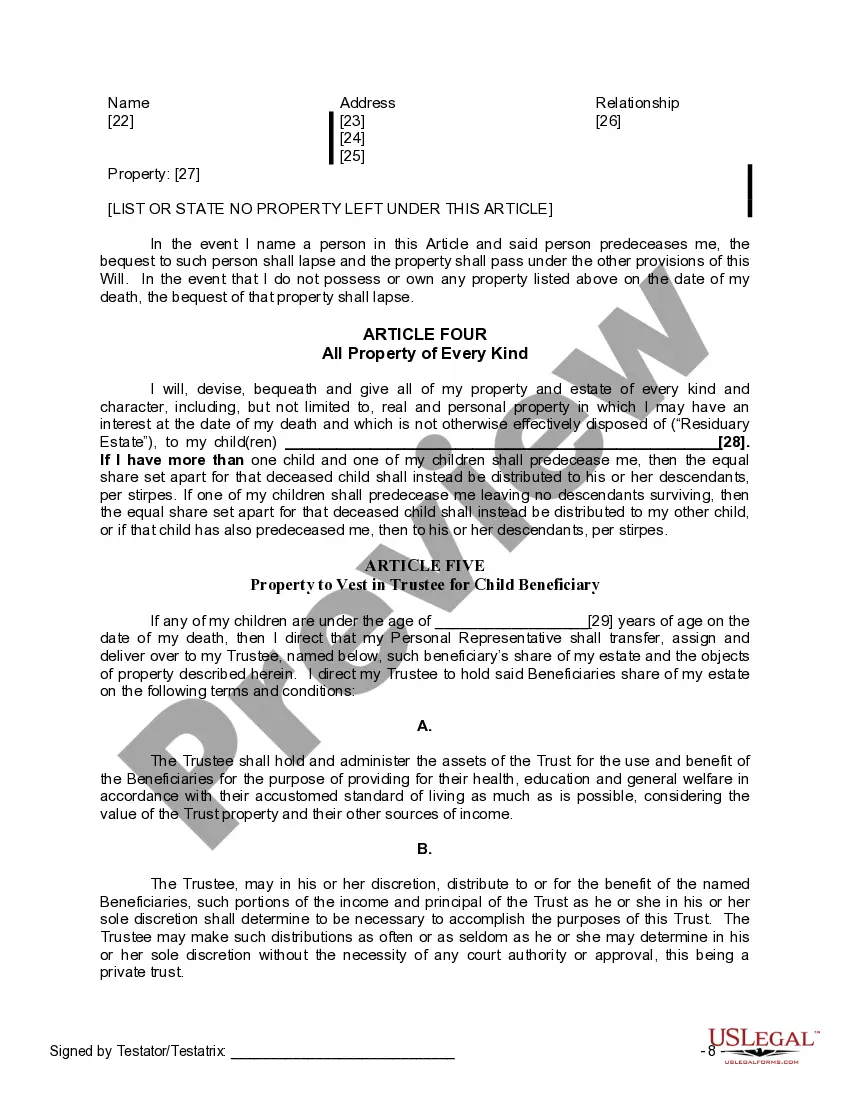
- Designation of beneficiaries, including specific property bequests.
- Equal distribution of assets to children, with provisions for descendants.
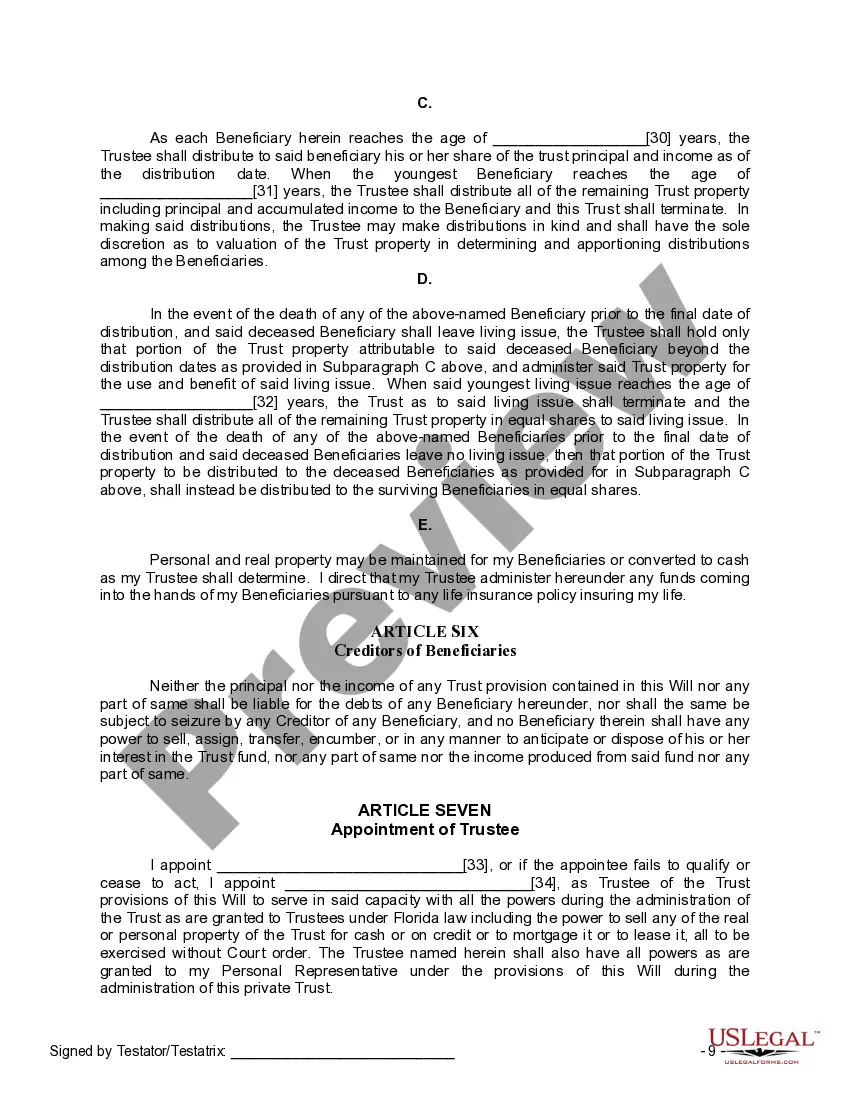
- Establishment of a trust for minor beneficiaries.
- Appointment of a guardian for minor children.
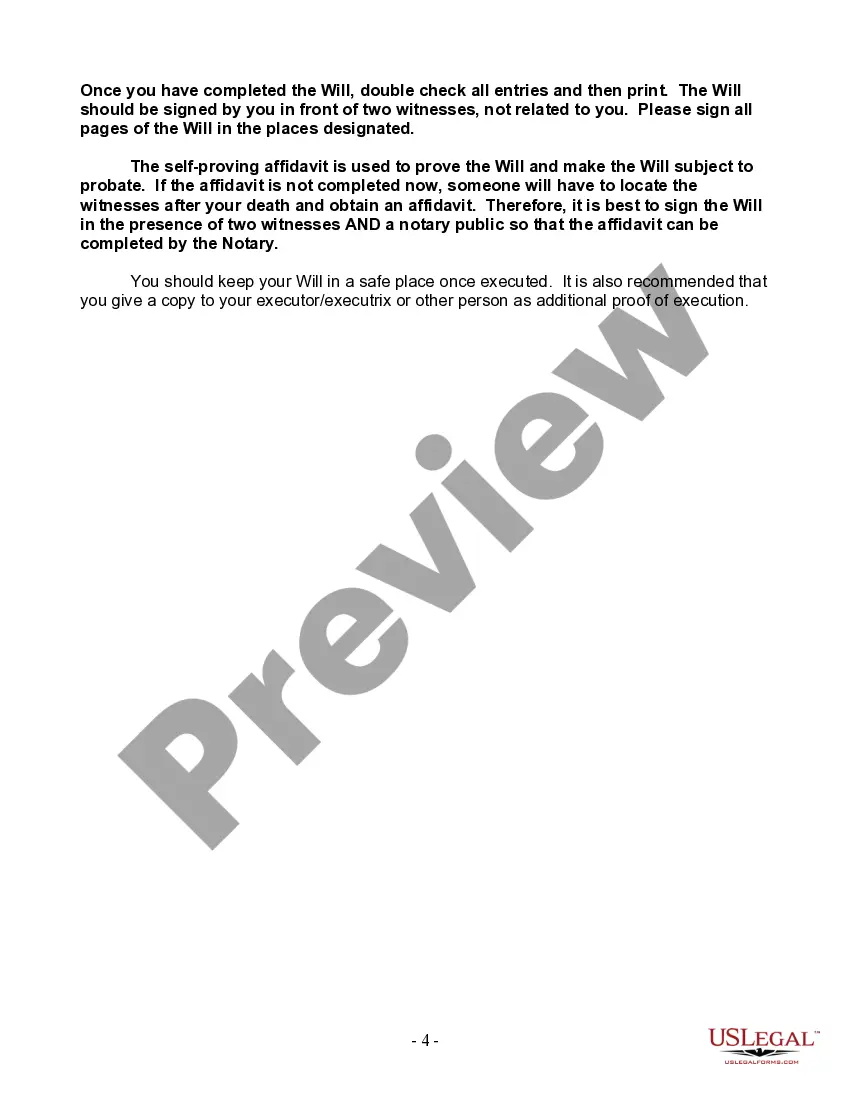
- Signing requirements, including witness and notary stipulations.





Situations where this form applies
This form is necessary when a single parent wants to ensure their children are provided for after their death. It is particularly useful in situations where the parent wishes to manage the inheritance for minor children, appoint a guardian, and make specific bequests. It is also important for individuals who want to ensure a smooth distribution of their estate and avoid potential family disputes.
Who can use this document
- Single individuals who have both adult and minor children.
- Parents wishing to specify guardianship for their minor children.
- Those who want to designate specific heirs for certain assets.
- Any individual looking to arrange their estate in a legally binding manner.
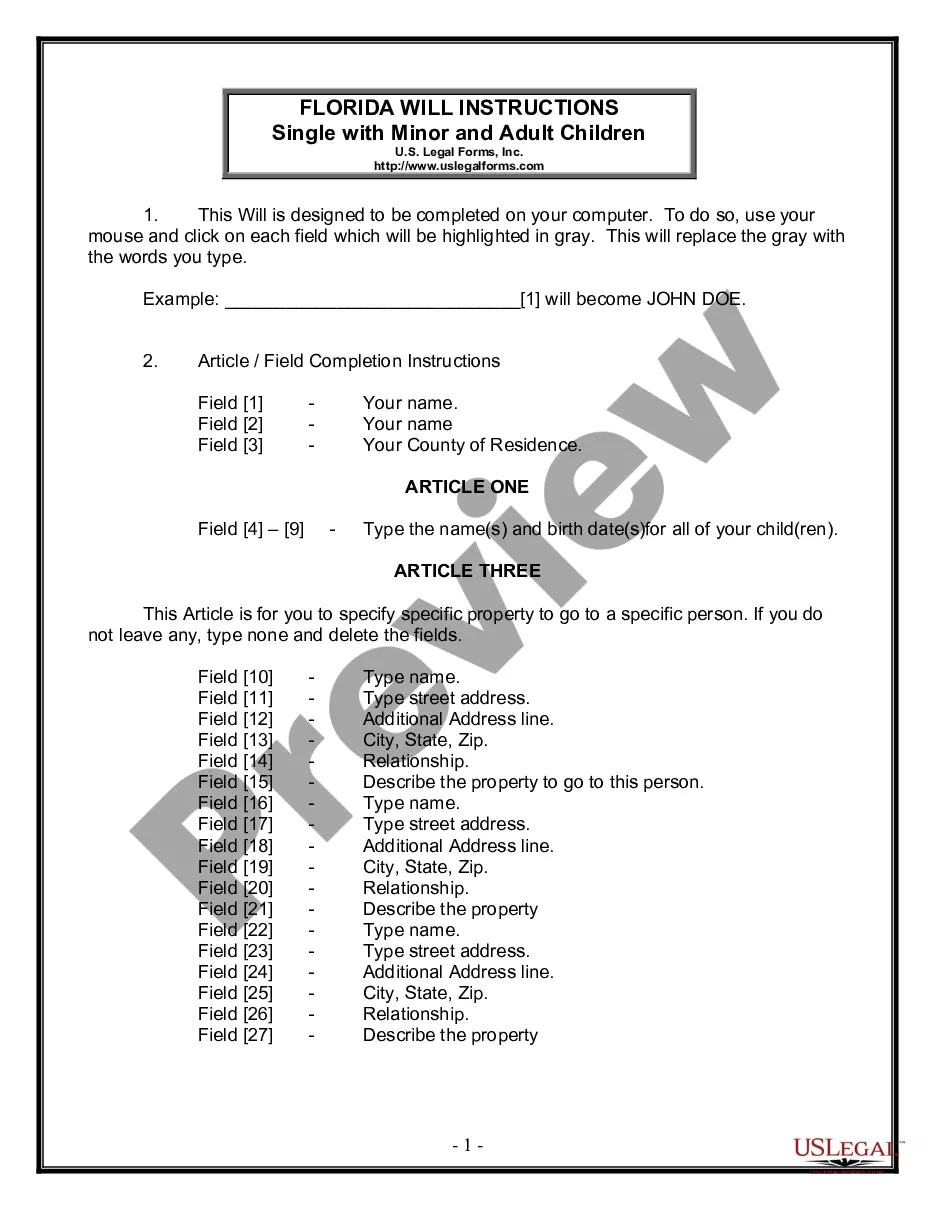
Instructions for completing this form
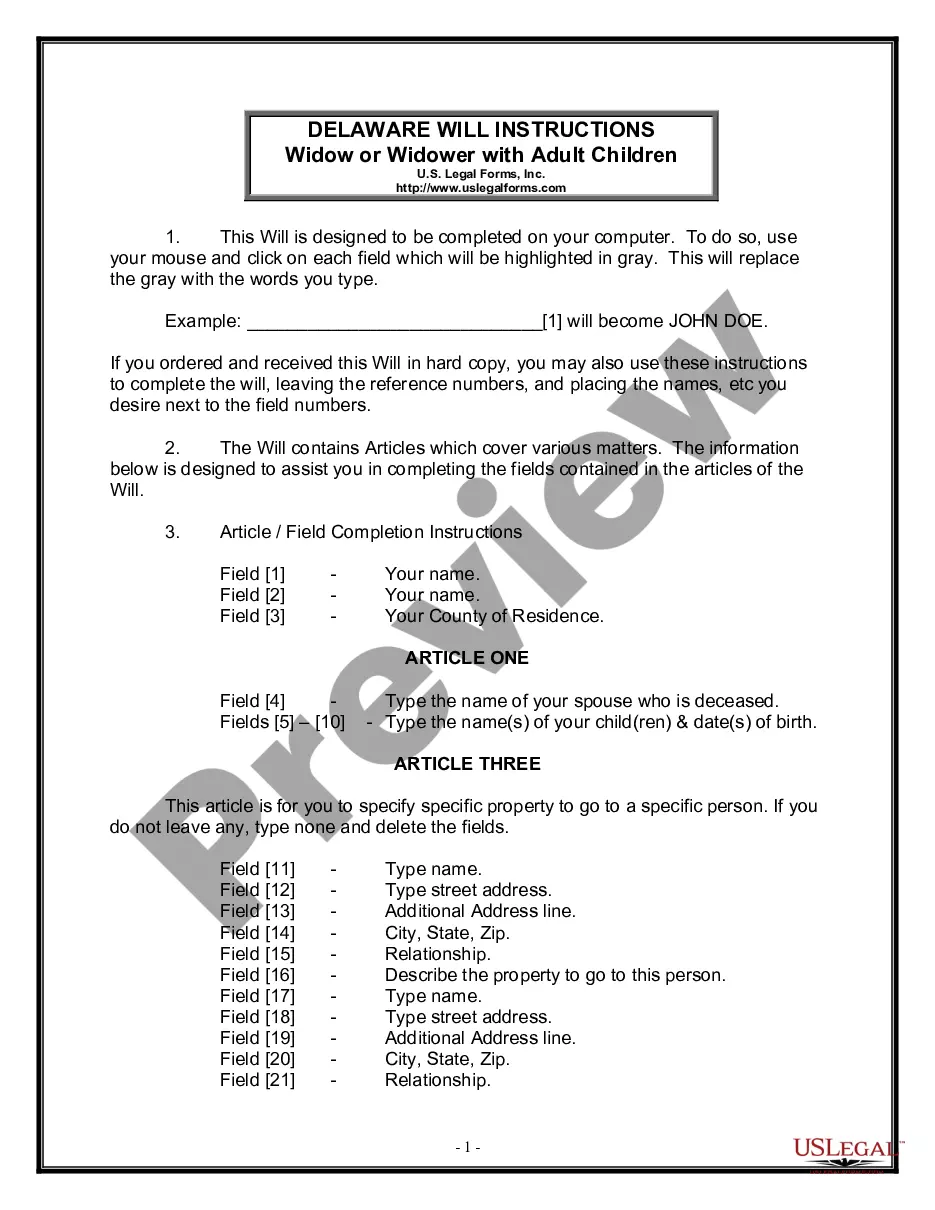
- Identify yourself by entering your full name and county of residence.
- List all of your children, including their names and birth dates.
- Specify any property you want to bequeath to specific individuals, if applicable.
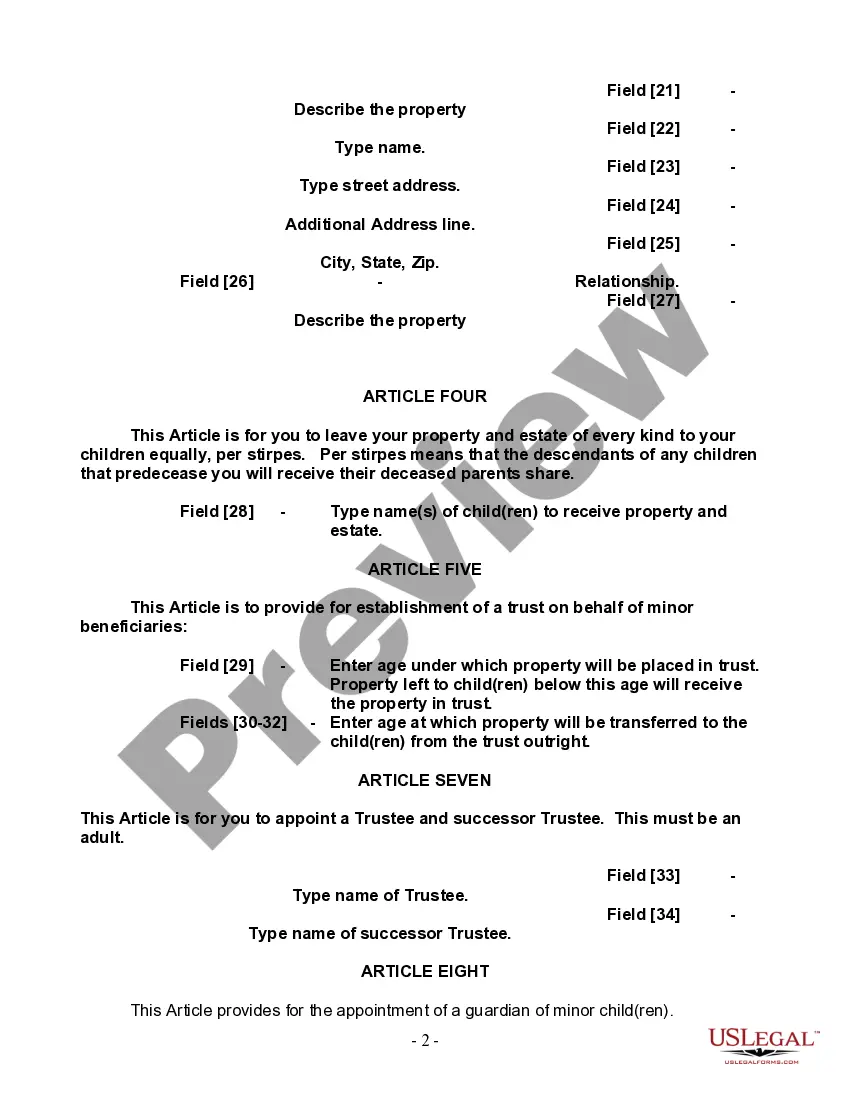
- Designate a trustee for any assets held in trust for minor children.
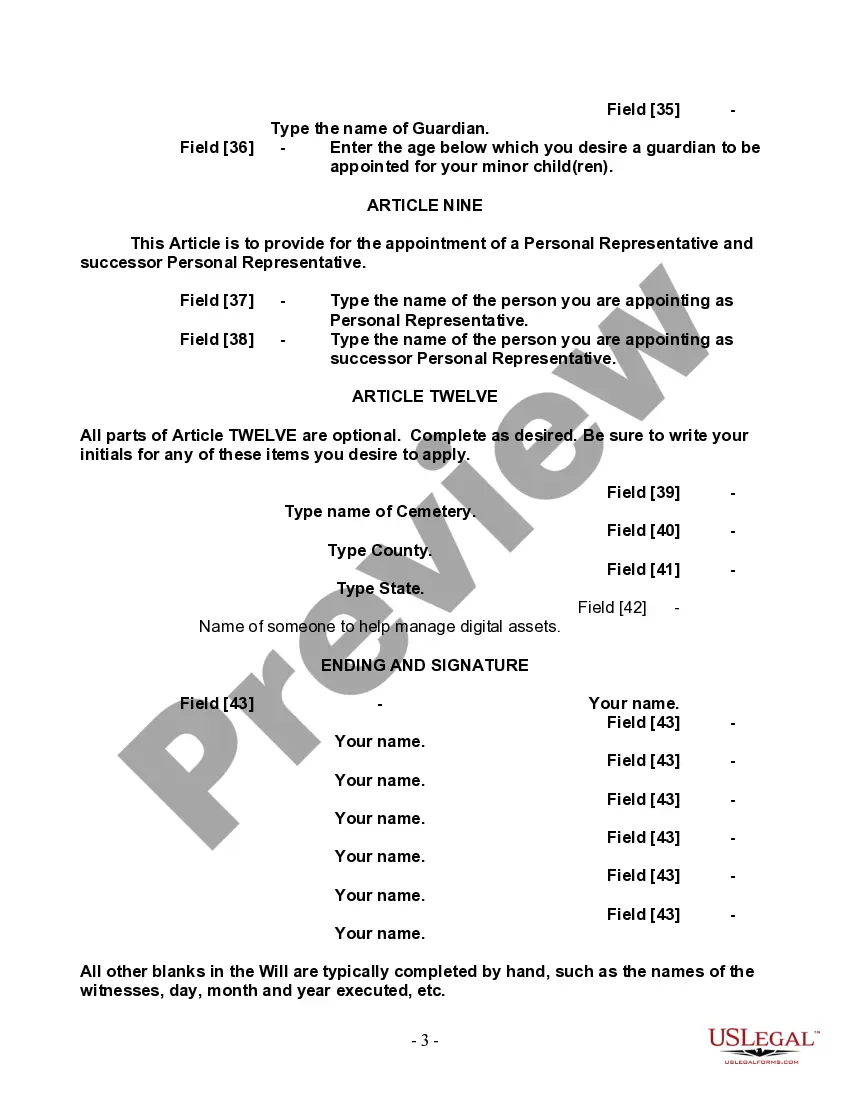
- Complete the sections for guardianship of minor children and personal representatives.
- Sign the will in front of two witnesses and have it notarized if desired.
Does this document require notarization?
This form must be notarized to be legally valid. US Legal Forms provides secure online notarization powered by Notarize, allowing you to complete the process through a verified video call.
Get your form ready online
Our built-in tools help you complete, sign, share, and store your documents in one place.
Make edits, fill in missing information, and update formatting in US Legal Forms—just like you would in MS Word.
Download a copy, print it, send it by email, or mail it via USPS—whatever works best for your next step.
Sign and collect signatures with our SignNow integration. Send to multiple recipients, set reminders, and more. Go Premium to unlock E-Sign.
If this form requires notarization, complete it online through a secure video call—no need to meet a notary in person or wait for an appointment.
We protect your documents and personal data by following strict security and privacy standards.

Make edits, fill in missing information, and update formatting in US Legal Forms—just like you would in MS Word.

Download a copy, print it, send it by email, or mail it via USPS—whatever works best for your next step.

Sign and collect signatures with our SignNow integration. Send to multiple recipients, set reminders, and more. Go Premium to unlock E-Sign.

If this form requires notarization, complete it online through a secure video call—no need to meet a notary in person or wait for an appointment.

We protect your documents and personal data by following strict security and privacy standards.
Common mistakes
- Failing to have the will witnessed by two unrelated persons.
- Not including a self-proving affidavit, which can complicate probate.
- Omitting specifics about property or beneficiaries, leading to confusion.
- Forgetting to sign the will on every designated line.
Advantages of online completion
- Easy accessibility to legally compliant templates drafted by licensed attorneys.
- Edit and personalize the form directly on your computer for convenience.
- Save time by downloading immediately after completion.
- Revisions can be made easily, ensuring that your wishes are always up to date.
Looking for another form?
Form popularity
FAQ
It defines how a single person’s assets are distributed after death, including equal distribution to children with provisions for descendants, names an executor, designates beneficiaries, creates a trust for minor beneficiaries, and appoints guardians for minor children. It’s tailored for single parents and includes signing requirements with witnesses and a notary stipulation to support probate.
Yes, you can draft your own will in Florida and have it notarized, but notarization alone doesn’t make a will valid. This form’s signing requirements include witnesses and notary stipulations, and a self-proved will (notarized by witnesses) can simplify probate.
You can, and this Florida Last Will and Testament for Single Person with Adult and Minor Children provides a structured template for a single parent to appoint an executor, guardians for minor children, and a trust for minors. For complex estates, professional legal advice is recommended.
This form directs equal distribution of assets to children, with provisions for descendants and a separate trust for minor beneficiaries, plus a guardian appointment. Using these features helps ensure minors are cared for and assets pass to the intended heirs, while aiming to minimize disputes.
This form includes signing requirements with witnesses and notary stipulations. To execute, the testator should sign in the presence of two witnesses; Florida also allows self-proved wills with a notary. The document is designed to facilitate probate and ensure valid execution, though consulting an attorney is advised for complex estates.
It’s tailored to a single person who has adult and minor children, with explicit guardianship provisions for minor children and a trust for minor beneficiaries, and it distributes assets to the children rather than a spouse. This differentiates it from wills designed for married individuals.