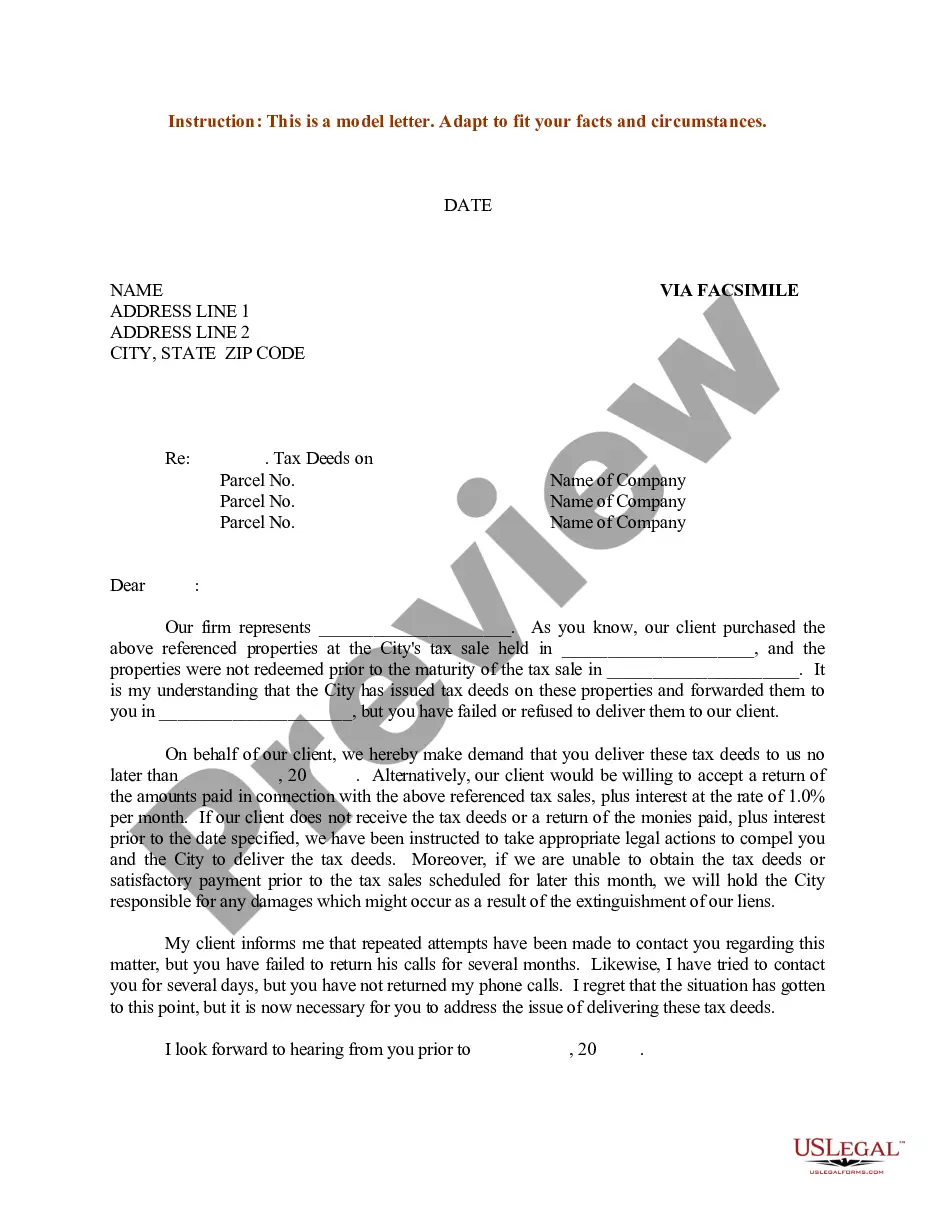
Florida Warranty Deed to Separate Property, or Joint Property, to Two Individuals as Joint Tenants
Understanding this form
The Warranty Deed to Separate Property, or Joint Property, to Two Individuals as Joint Tenants is a legal document that transfers ownership of real estate to two people, allowing them to hold the title as joint tenants. This means both individuals will share equal ownership of the property, and the right of survivorship applies, ensuring that if one owner passes away, the other automatically inherits their share. This form is distinct from other types of deeds, as it specifically outlines joint tenancy rather than sole ownership or tenancy in common.
Main sections of this form
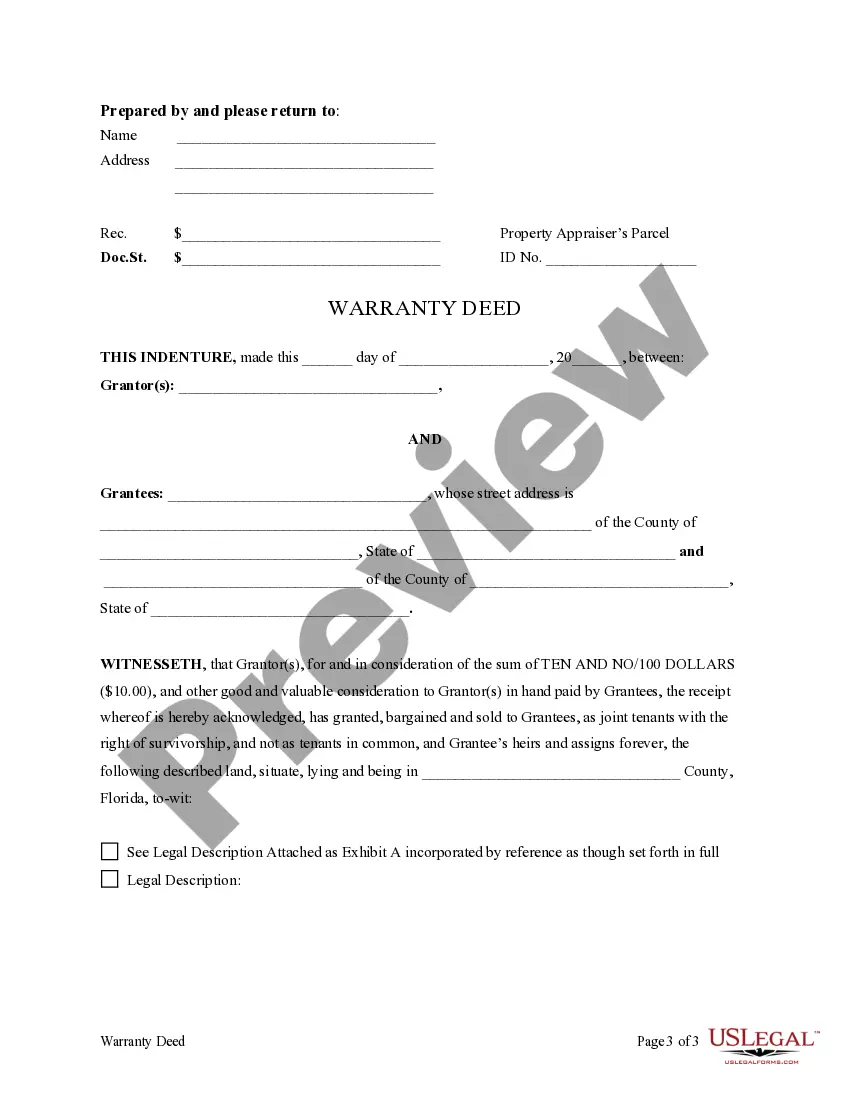
- Identification of the grantor (the person transferring the property).
- Identification of the grantees (the two individuals receiving the property).
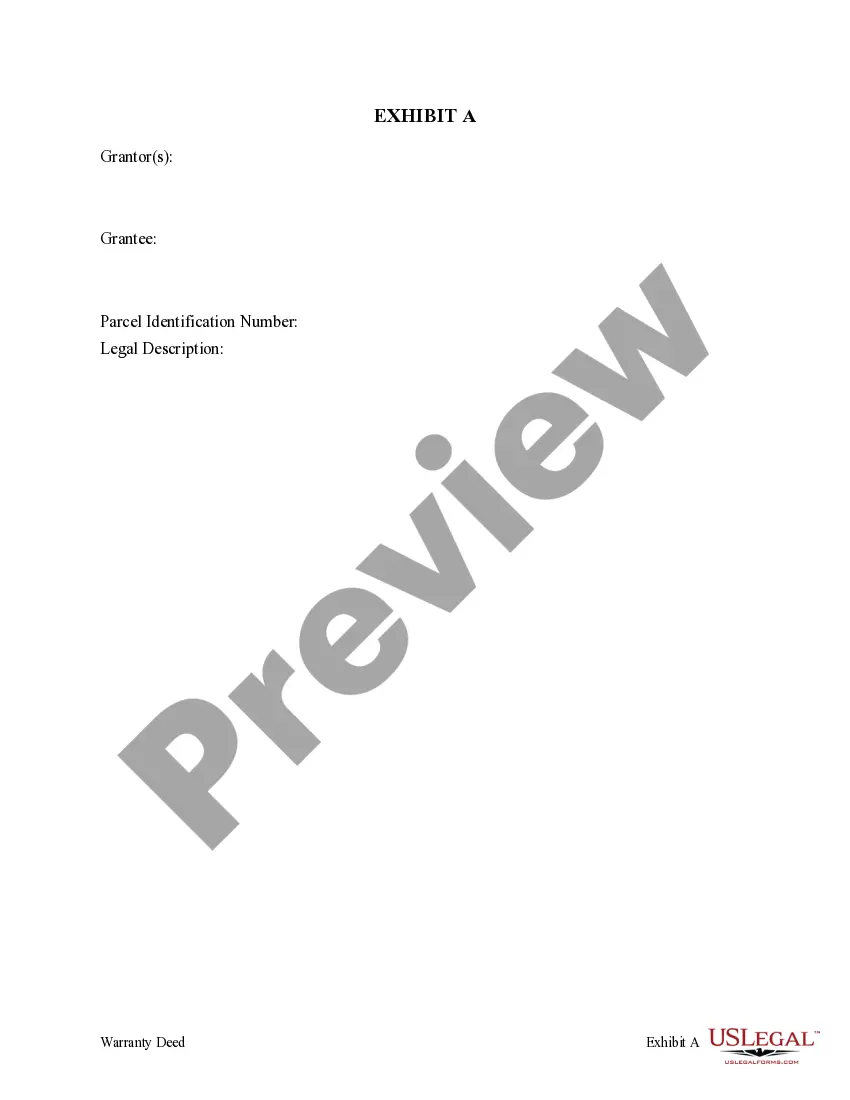
- Description of the property being transferred, including its legal description.
- Statement of intent to create a joint tenancy between the grantees.
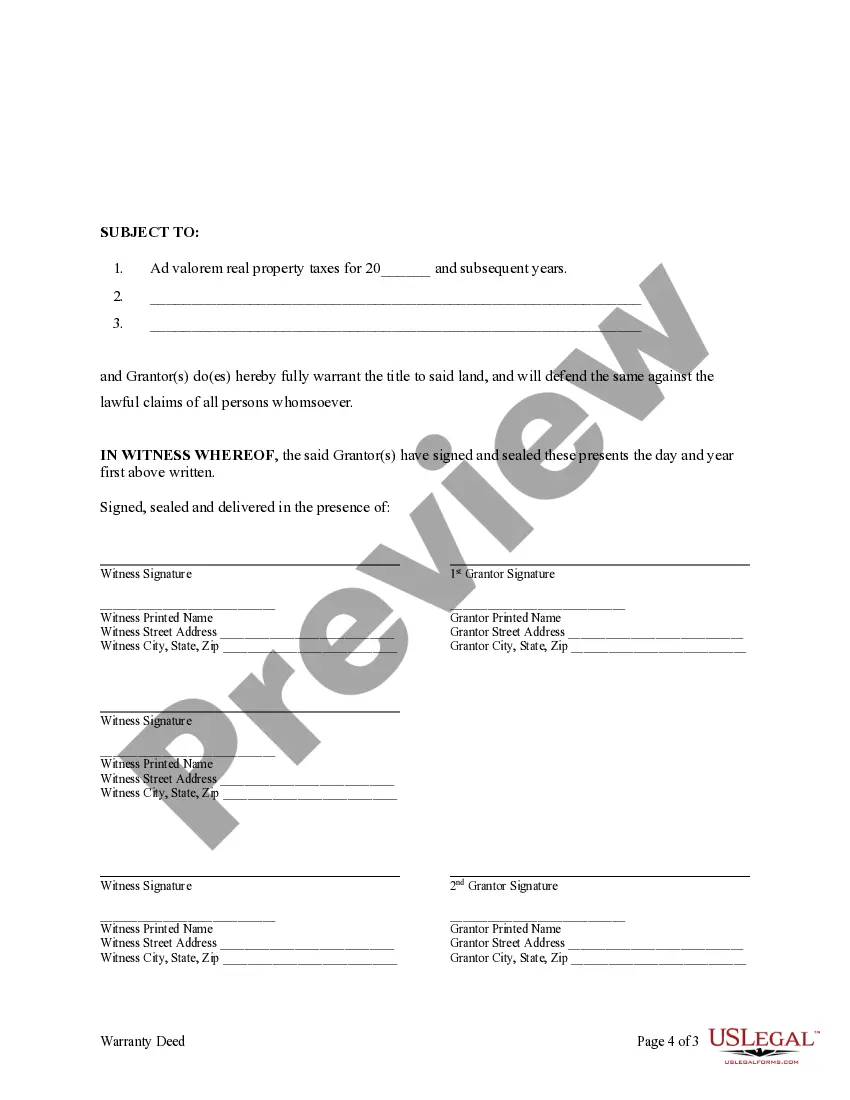
- Signature lines for the grantor and witnesses.




Common use cases
This warranty deed form is useful in situations where two individuals wish to own property together and want to ensure that if one of them dies, the other will retain full ownership. Typical scenarios include spouses purchasing a home together, partners acquiring property for investment, or family members managing shared real estate assets.
Intended users of this form
- Couples who want to purchase a home together.
- Friends or partners wanting to invest in real estate.
- Family members who plan to jointly own property.
- Any individuals seeking to establish a joint tenancy arrangement for shared property ownership.
How to prepare this document
- Identify the grantor by entering their full name and address.
- List both grantees' names and addresses, ensuring that they are correctly spelled.
- Provide a detailed legal description of the property to avoid any future disputes.
- Include the date of the transfer and confirm the intention to hold the property as joint tenants.
- Have the grantor sign the document in the presence of required witnesses.
Notarization guidance
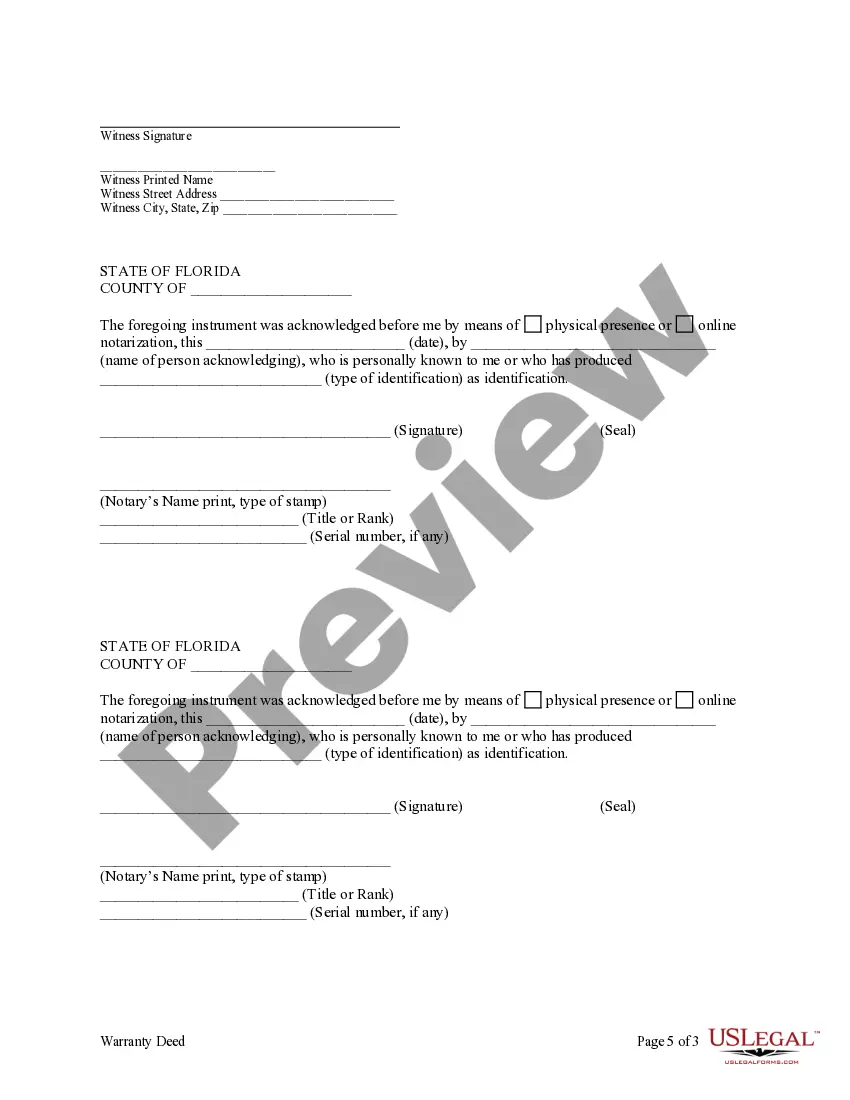
This form does not typically require notarization unless specified by local law. However, having the deed notarized can provide an extra layer of authenticity and may be required for recording purposes in some jurisdictions.
Get your form ready online
Our built-in tools help you complete, sign, share, and store your documents in one place.
Make edits, fill in missing information, and update formatting in US Legal Forms—just like you would in MS Word.
Download a copy, print it, send it by email, or mail it via USPS—whatever works best for your next step.
Sign and collect signatures with our SignNow integration. Send to multiple recipients, set reminders, and more. Go Premium to unlock E-Sign.
If this form requires notarization, complete it online through a secure video call—no need to meet a notary in person or wait for an appointment.
We protect your documents and personal data by following strict security and privacy standards.

Make edits, fill in missing information, and update formatting in US Legal Forms—just like you would in MS Word.

Download a copy, print it, send it by email, or mail it via USPS—whatever works best for your next step.

Sign and collect signatures with our SignNow integration. Send to multiple recipients, set reminders, and more. Go Premium to unlock E-Sign.

If this form requires notarization, complete it online through a secure video call—no need to meet a notary in person or wait for an appointment.

We protect your documents and personal data by following strict security and privacy standards.
Common mistakes
- Failing to provide the complete legal description of the property.
- Not properly identifying and signing witnesses, which may render the deed invalid.
- Using incorrect names or misspellings for participants, leading to legal issues later.
- Neglecting to indicate the joint tenancy clearly in the deed.
Benefits of using this form online
- Access to legally vetted templates created by licensed attorneys.
- Convenient digital completion, allowing for easy edits and adjustments.
- Instant download capability, eliminating the need for in-person visits.
- Secure storage of completed forms for future reference.
Looking for another form?

Form popularity
FAQ
Yes, you can add someone to a warranty deed. This process involves creating a new Florida Warranty Deed to Separate Property, or Joint Property, to Two Individuals as Joint Tenants, which includes the new co-owner's name. It's important to ensure that all legal requirements are met during this process, as it establishes shared ownership and rights. US Legal Forms offers resources and templates to simplify this process and keep it legally sound.
Adding someone to a deed may have several disadvantages. It can complicate property ownership, as both parties must agree on all decisions regarding the property. Additionally, this action may affect your taxes or liability. It's wise to consult with a professional to discuss how a Florida Warranty Deed to Separate Property, or Joint Property, to Two Individuals as Joint Tenants might impact your situation.
When two people are on a deed, it is commonly referred to as joint tenancy. This form of ownership provides both individuals with equal rights to the property, which is detailed in the Florida Warranty Deed to Separate Property, or Joint Property, to Two Individuals as Joint Tenants. Joint tenancy also allows the property to pass directly to the surviving tenant upon death, avoiding probate. This can be a significant advantage in estate planning.
Yes, you can have two names on a deed. When you create a Florida Warranty Deed to Separate Property, or Joint Property, to Two Individuals as Joint Tenants, both names are listed as co-owners. This process ensures that each individual has equal rights to the property. This setup is common for couples or business partners.
No, joint tenancy and tenancy in common are not the same in Florida. While both involve two or more owners sharing property, joint tenancy includes rights of survivorship, meaning the death of one owner results in their share passing to the other owner. Conversely, in tenancy in common, each owner holds an individual share that can be inherited or sold separately, a crucial distinction when considering a Florida Warranty Deed to Separate Property, or Joint Property, to Two Individuals as Joint Tenants.
For most married couples, joint tenancy is often considered the best option, as it ensures both partners have equal rights to the property and the right of survivorship. This arrangement simplifies the transfer of property after the death of one spouse, allowing the surviving spouse to inherit the whole property directly. You can establish this form of ownership through a Florida Warranty Deed to Separate Property, or Joint Property, to Two Individuals as Joint Tenants.
In Florida, joint tenancy features equal ownership with the right of survivorship, while tenancy in common provides for separate ownership that can be unequal among parties. This means that with joint tenancy, when one owner dies, their share automatically goes to the other owner. On the other hand, tenants in common can leave their share to others upon passing. Clearly, the choice between these two forms impacts how property is transferred after death, especially when using a Florida Warranty Deed to Separate Property, or Joint Property, to Two Individuals as Joint Tenants.
Filling out a warranty deed in Florida requires specific details. First, you must include the names of the grantor and grantee, along with a description of the property. The document must then be signed and notarized, ensuring it meets Florida's legal requirements. If you're unsure about the steps, uslegalforms can guide you through creating a Florida Warranty Deed to Separate Property, or Joint Property, to Two Individuals as Joint Tenants.
The biggest difference lies in the rights of ownership. In a joint tenancy, co-owners have equal shares and the right of survivorship, meaning that if one owner passes away, their share automatically transfers to the surviving owner. In contrast, a tenancy in common allows for unequal shares among co-owners, and when one owner dies, their share can be passed to their heirs through a Florida Warranty Deed to Separate Property, or Joint Property, to Two Individuals as Joint Tenants.
Yes, anyone can prepare a deed in Florida, but they must follow the legal requirements set forth by state law. While it's possible to do it yourself, many prefer to use user-friendly platforms like USLegalForms to ensure compliance. This helps in properly drafting the Florida Warranty Deed to Separate Property, or Joint Property, to Two Individuals as Joint Tenants.