Florida Notice of Lease for Recording
Overview of this form
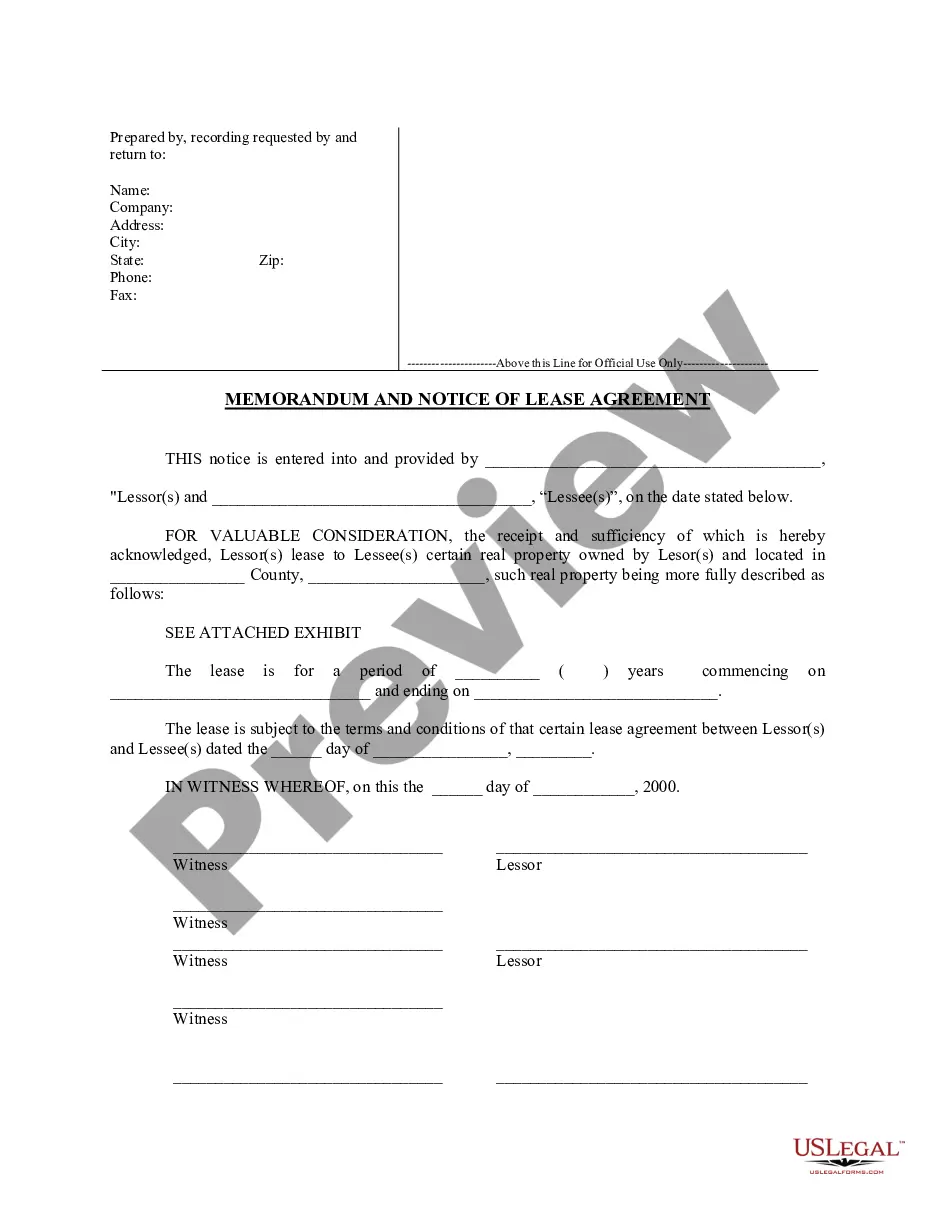
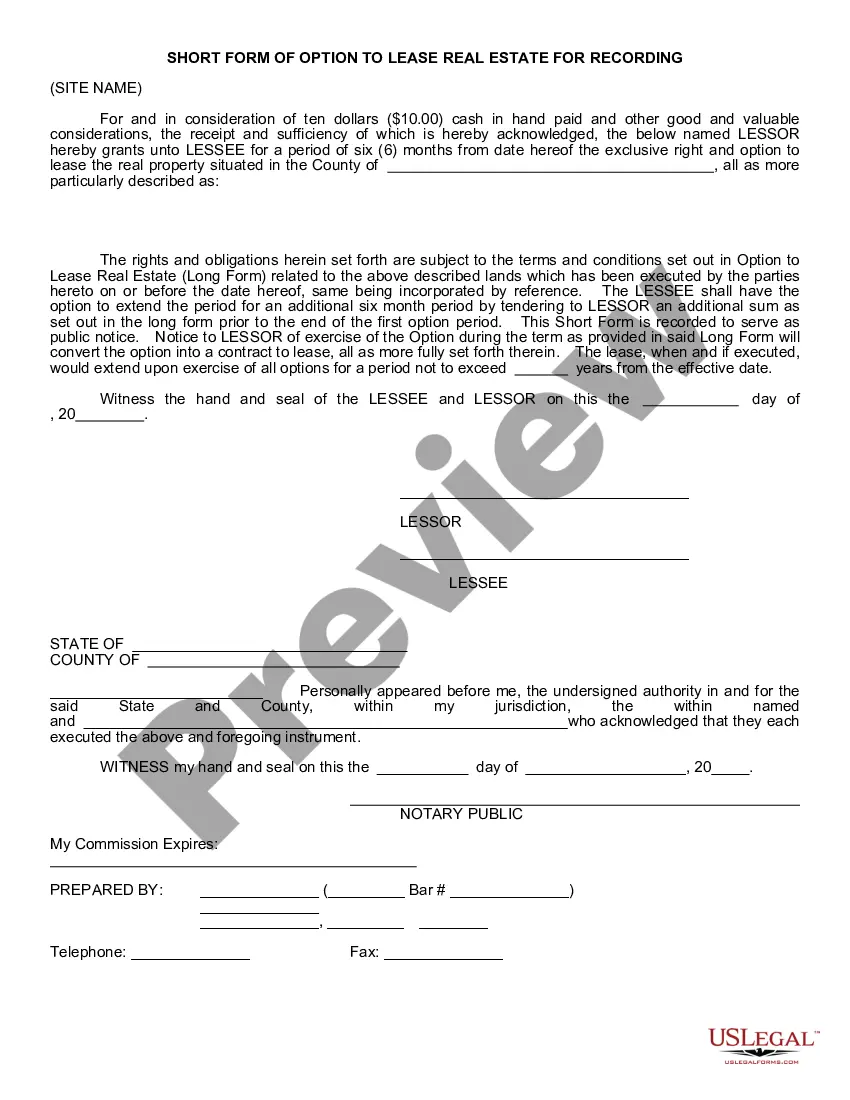
The Notice of Lease for Recording is a legal document used to notify interested parties that a lease exists on a specific piece of real estate. This memorandum serves as a simplified alternative to recording the entire lease agreement in official property records. By providing this notice, property owners can protect their interests and ensure that the lease terms are recognized, creating a public record of the lease's existence.
Key components of this form
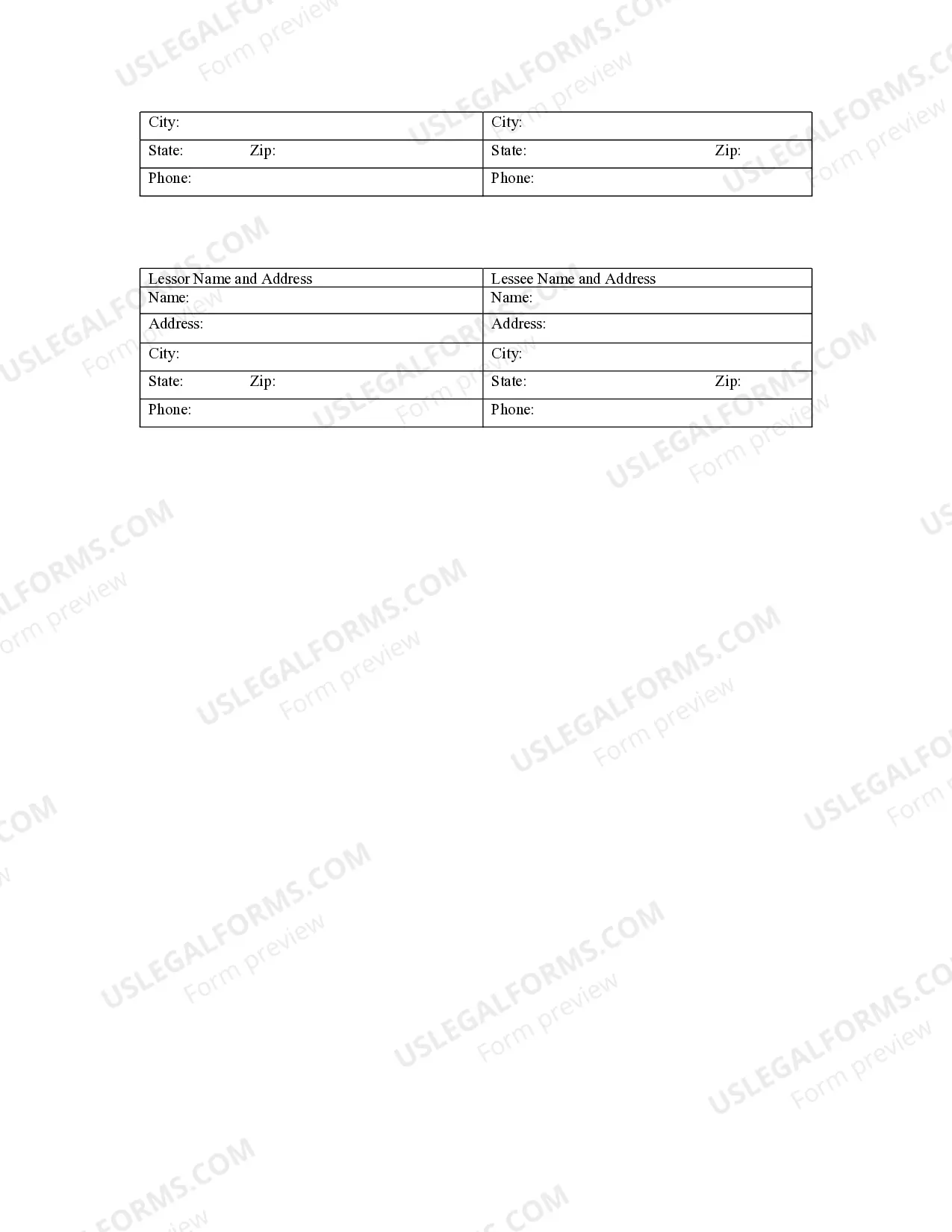
- Prepared by and return to information: Includes the names, addresses, phone numbers, and optional fax numbers of the parties involved.
- Memorandum and notice section: Names the lessor and lessee and states the property being leased.
- Property description: A detailed description of the leased property is included or referenced within the form.
- Lease term: Specifies the duration of the lease and the commencement and termination dates.
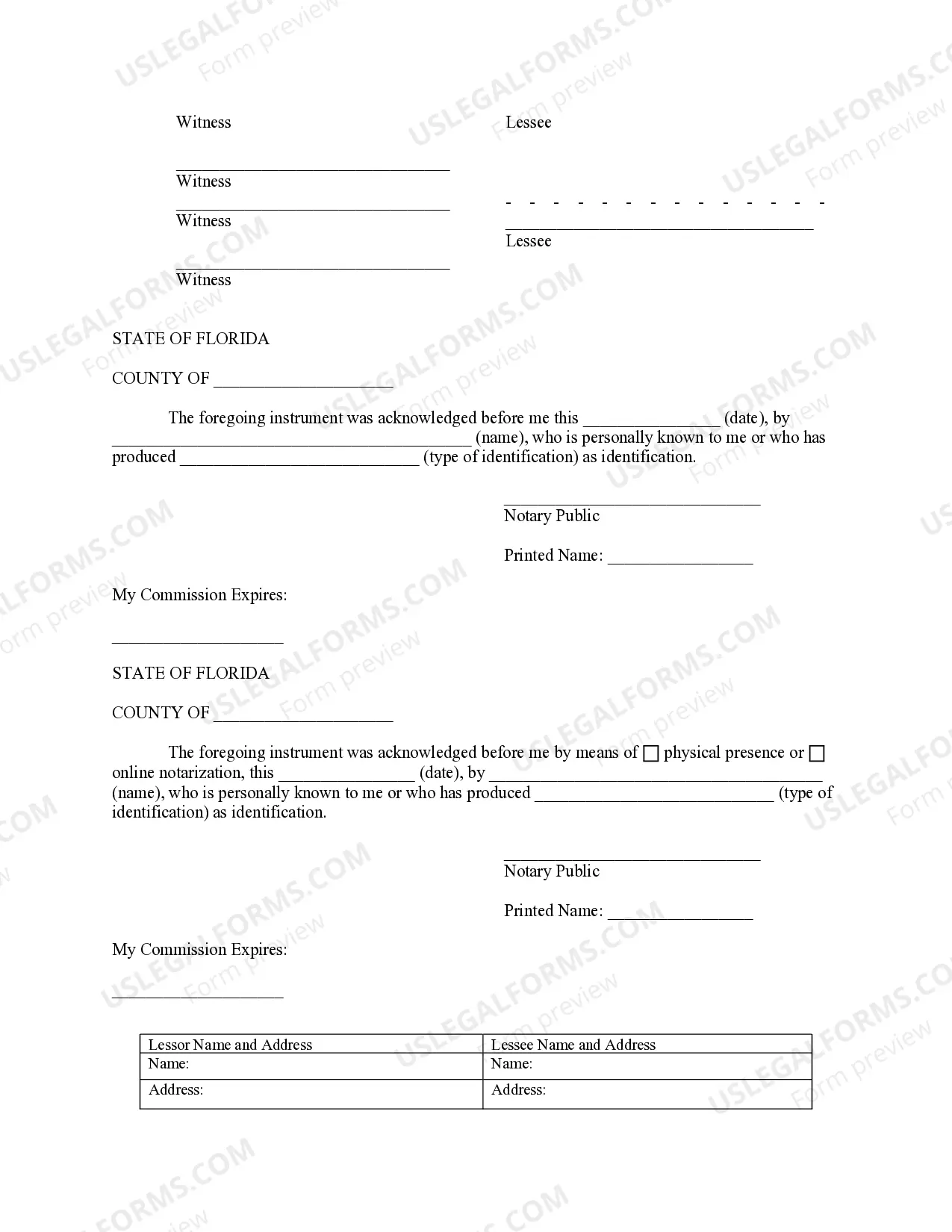
- Witness and signature sections: Requires signatures from all parties and witnesses to validate the document.
- Notary acknowledgment: A section for notary validation to authenticate the signatures, crucial for legal recognition.

When to use this form
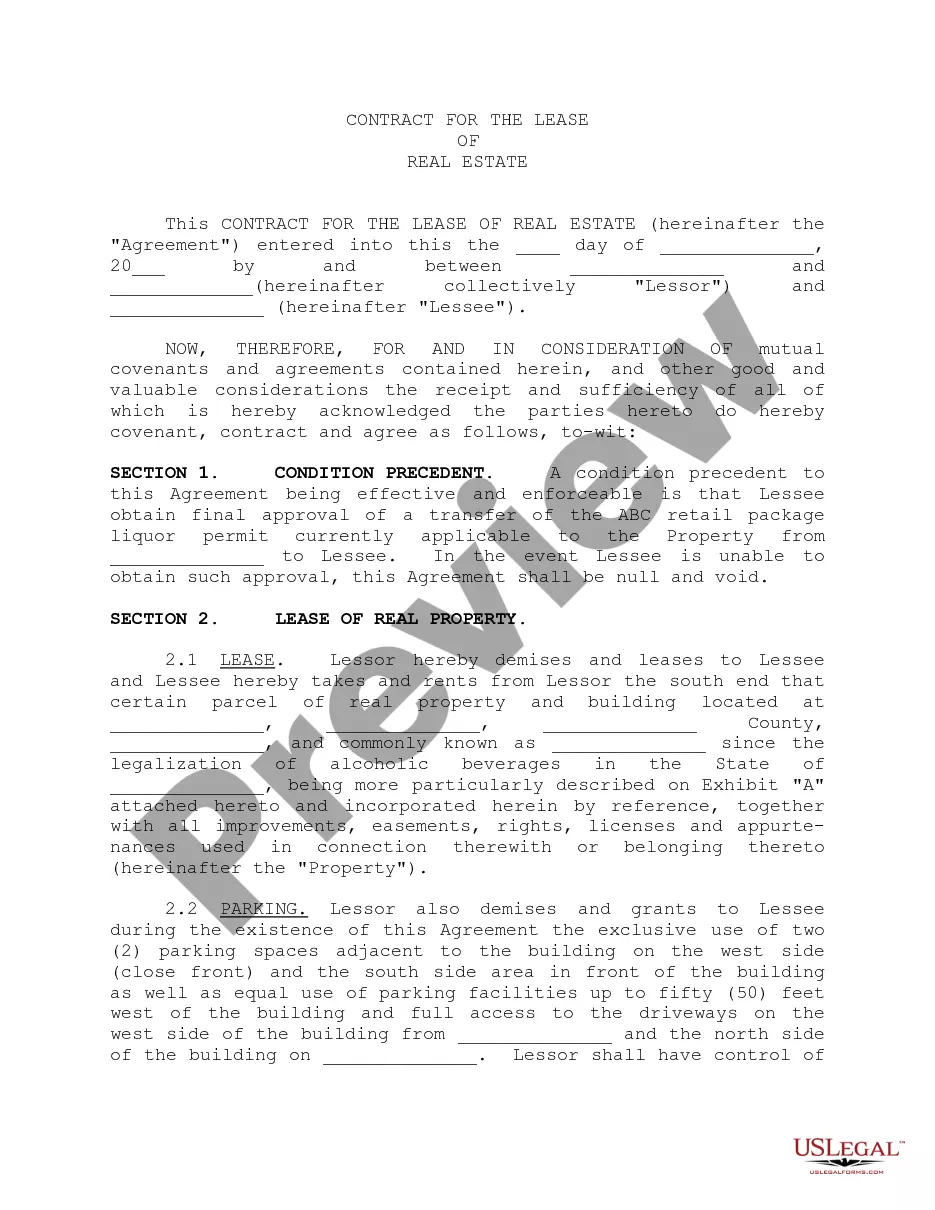
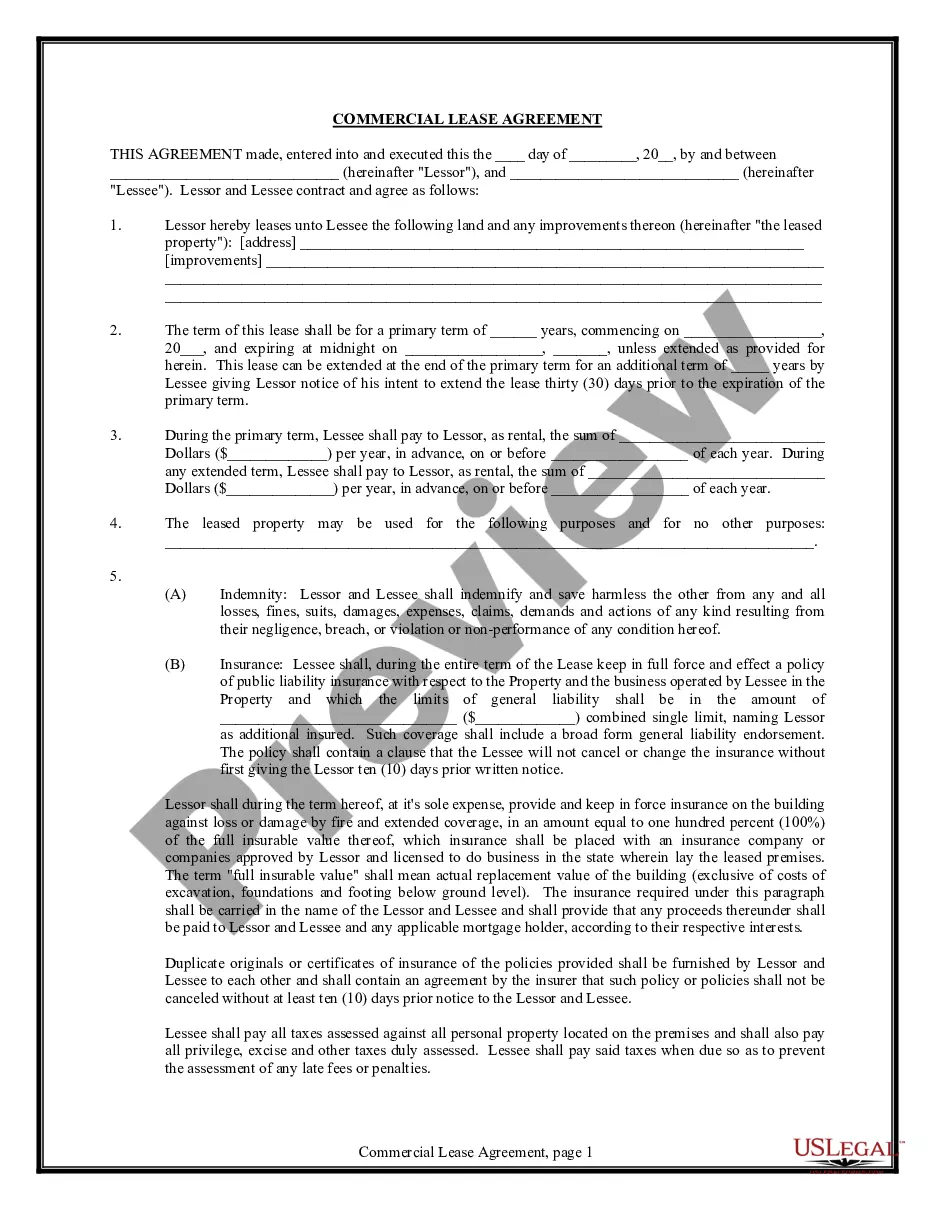
This form is instrumental when a property owner wants to provide public notice of a lease agreement without the need to disclose all the terms and details of the lease itself. It is useful when leasing residential or commercial property, particularly when aiming to establish a record of the lease for future reference or to secure a potential priority over other claims against the property.
Who can use this document
- Property owners (lessors) who are renting their property to tenants (lessees).
- Landlords managing multiple rental properties who want to ensure proper documentation is in place.
- Commercial property owners leasing out business spaces.
- Real estate attorneys needing a quick solution to inform third parties of a leasehold interest.
Steps to complete this form
- Identify the parties involved: Clearly state the names of the lessor and lessee.
- Describe the property: Provide a complete description of the property being leased, including county and any additional identifying details.
- Specify the lease term: Fill in the duration of the lease, including the start and end dates.
- Gather signatures: Ensure all parties and witnesses sign the document in the designated areas.
- Complete notarization: If applicable, have the document notarized to authenticate the signatures.
Does this document require notarization?
Notarization is required for this form to take effect. Our online notarization service, powered by Notarize, lets you verify and sign documents remotely through an encrypted video session, available 24/7.
Get your form ready online
Our built-in tools help you complete, sign, share, and store your documents in one place.
Make edits, fill in missing information, and update formatting in US Legal Forms—just like you would in MS Word.
Download a copy, print it, send it by email, or mail it via USPS—whatever works best for your next step.
Sign and collect signatures with our SignNow integration. Send to multiple recipients, set reminders, and more. Go Premium to unlock E-Sign.
If this form requires notarization, complete it online through a secure video call—no need to meet a notary in person or wait for an appointment.
We protect your documents and personal data by following strict security and privacy standards.

Make edits, fill in missing information, and update formatting in US Legal Forms—just like you would in MS Word.

Download a copy, print it, send it by email, or mail it via USPS—whatever works best for your next step.

Sign and collect signatures with our SignNow integration. Send to multiple recipients, set reminders, and more. Go Premium to unlock E-Sign.

If this form requires notarization, complete it online through a secure video call—no need to meet a notary in person or wait for an appointment.

We protect your documents and personal data by following strict security and privacy standards.
Typical mistakes to avoid
- Failing to provide a complete property description, leading to confusion regarding the lease.
- Not obtaining necessary signatures or witness confirmations, which can invalidate the document.
- Overlooking the notarization process, particularly where state law requires it.
- Leaving out essential information, such as the dates of the lease, which are crucial for clarity and legality.
Why complete this form online
- Convenience: Easily complete and download the form from anywhere, saving time and effort.
- Editability: Modify the form as needed before finalizing, ensuring accuracy and compliance.
- Reliability: Access forms created by licensed attorneys, guaranteeing legal soundness and relevance.
Looking for another form?

Form popularity
FAQ
Yes, in Florida, landlords are required to provide a copy of the lease to the tenant. This is a crucial part of ensuring both parties understand their rights and responsibilities. To further safeguard your interests, consider securing a Florida Notice of Lease for Recording through USLegalForms, which can provide an added layer of legal protection.
Recording a lease refers to the process of filing the lease with a governmental office, making it part of the public record. This is beneficial for establishing your rights and interests in the property. By filing a Florida Notice of Lease for Recording, you ensure that your lease is recognized legally, which can protect you from disputes.
Typically, both the landlord and the tenant retain copies of the lease. The landlord usually keeps the original for their records, while the tenant should receive a signed copy. For those using the Florida Notice of Lease for Recording, ensure that your copy is stored safely, as it serves as an important legal document.
To get proof of a lease, start by revisiting your saved documents or email confirmations. You can request a duplicate from your landlord too. For extra assurance, utilizing the USLegalForms service to record your lease will furnish you with an official Florida Notice of Lease for Recording, serving as solid evidence of your rental agreement.
Obtaining proof of lease can be straightforward. Keep a signed copy of your lease for your records. If needed, you may ask your landlord to provide a copy, or use the services from USLegalForms to create a formal Florida Notice of Lease for Recording, ensuring you have documented proof.
Lease documents are generally not public records, as they typically contain private information. However, when a lease is recorded, such as with a Florida Notice of Lease for Recording, it becomes part of the public record. This means that while the lease itself is private, certain details may be accessible once filed. Always check your local recording office for specifics.
If your landlord doesn't have a copy of your lease, it can create uncertainty about the terms of your rental agreement. You should attempt to retrieve a copy from your own records. Additionally, you may consider asking your landlord for a duplicate. It's crucial to establish a clear record, especially when dealing with a Florida Notice of Lease for Recording.
Under ASC 842, leases are primarily classified into two types: operating leases and finance leases. Each type has specific implications for how they are recorded on financial statements, affecting both lessors and lessees. Knowing the differences helps you make informed decisions about your leasing options. By using the Florida Notice of Lease for Recording, you can ensure your lease agreement aligns with ASC 842 requirements, enhancing your financial planning.
To record a lease agreement in Florida, you must prepare the lease document, have it signed by all parties, and then submit it to the county clerk's office where the property is located. This process ensures that your rights as a tenant or landlord are legally recognized. Additionally, using the Florida Notice of Lease for Recording can simplify this process by guiding you through the necessary steps. Ensuring proper recording helps maintain transparency and protection for all parties involved.
The GAAP standard for leases refers to the Generally Accepted Accounting Principles governing how leases are recorded and reported in financial statements. These standards require leases to be classified as either operating or finance leases. For landlords and tenants alike, understanding these classifications can affect financial reporting and obligations. Utilizing a Florida Notice of Lease for Recording can assist in adhering to these standards by providing documented proof of lease terms.