Florida Letter from Tenant to Landlord containing Notice of failure to return security deposit and demand for return
Overview of this form
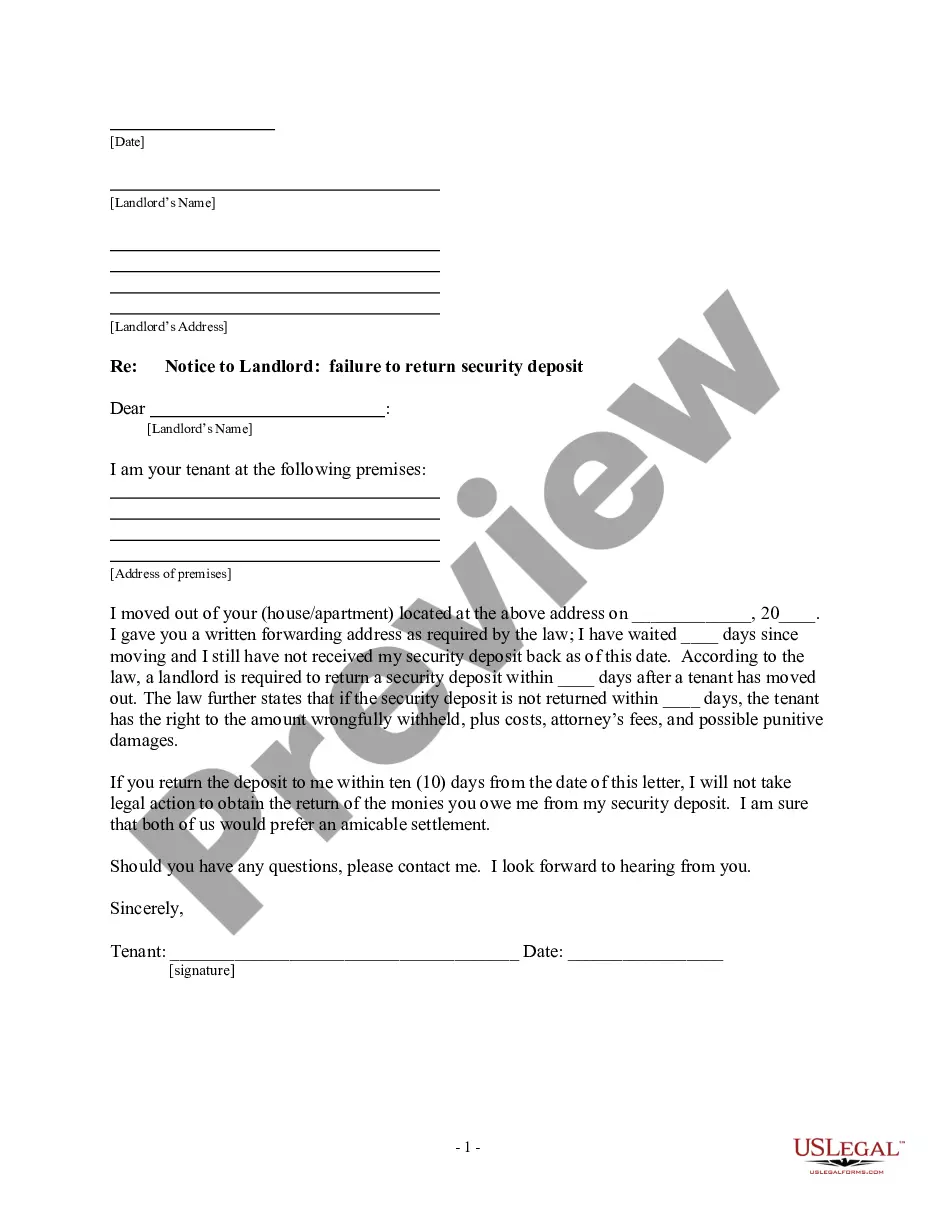
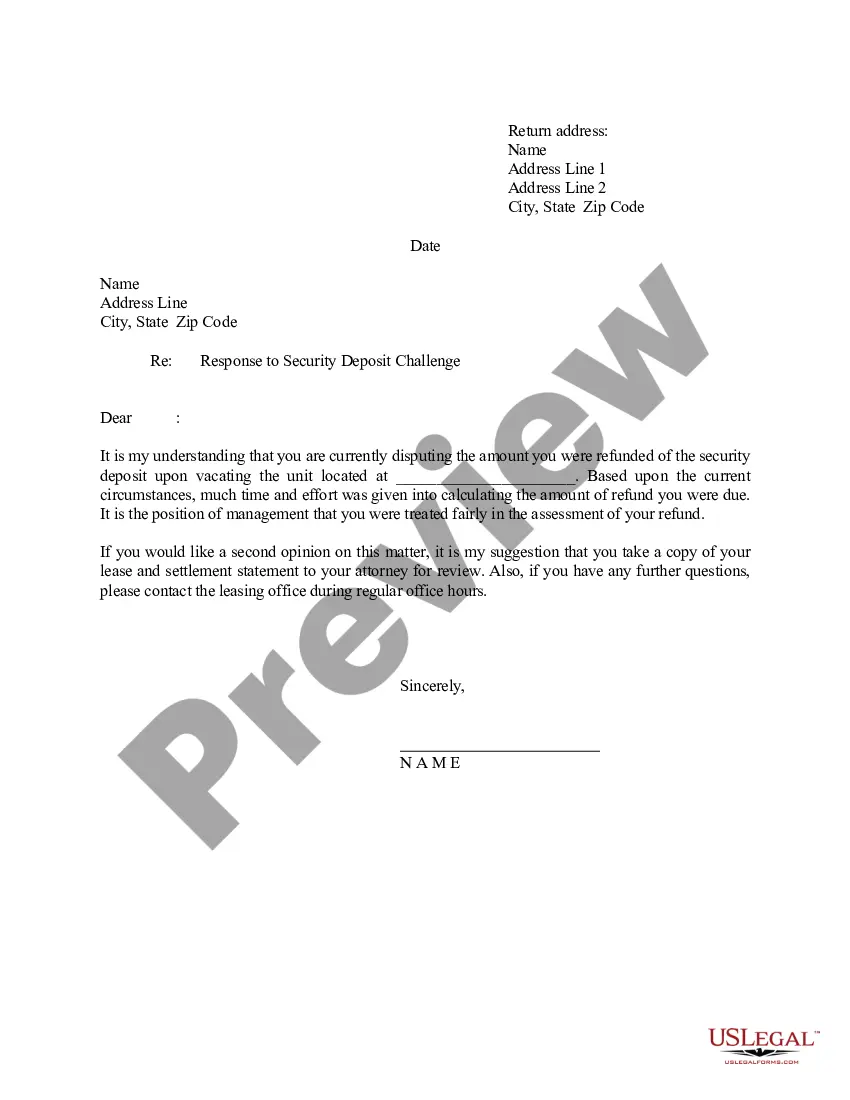
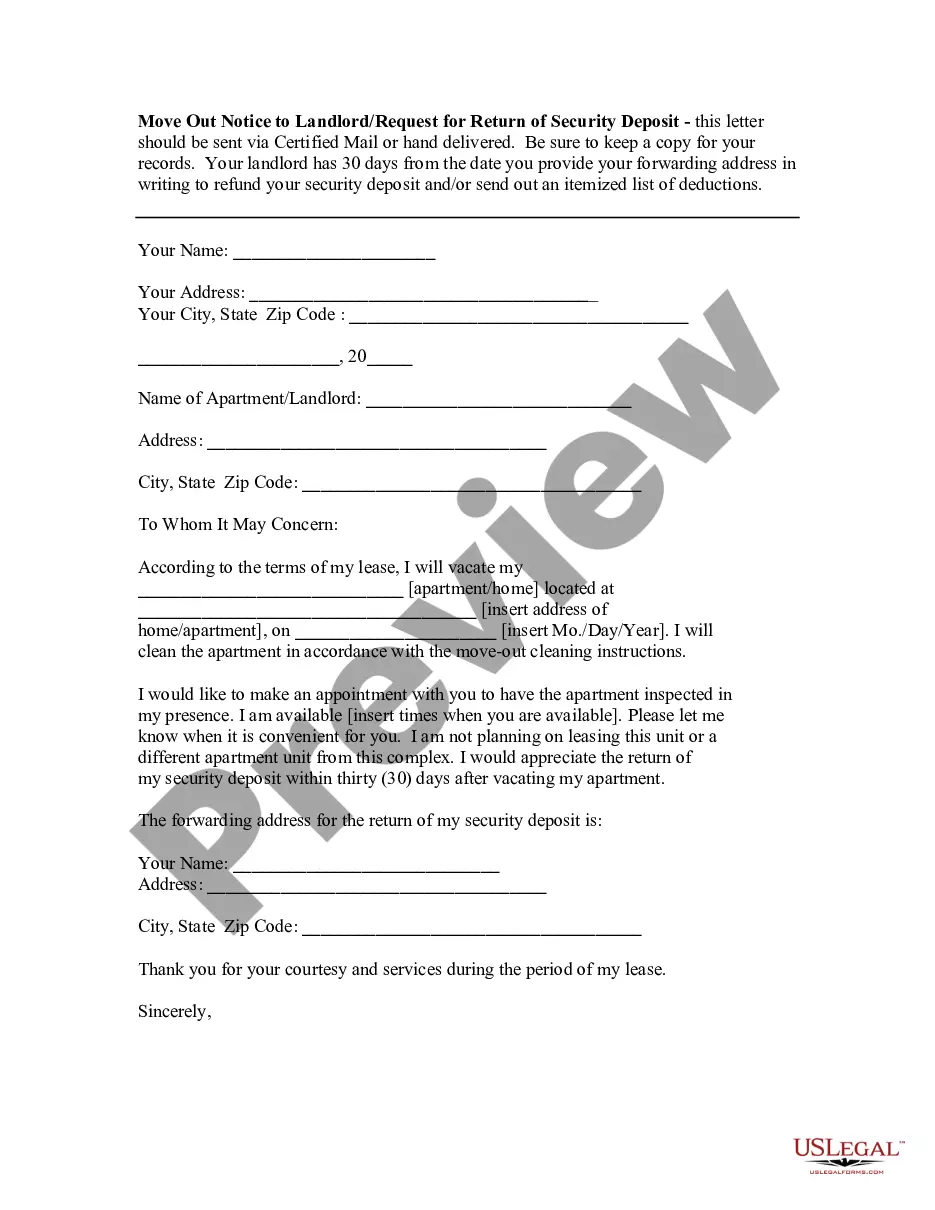
This letter from tenant to landlord serves as a formal demand for the return of a tenant's security deposit after vacating a rental property. It is crucial for tenants who have not received their deposit back within the legally mandated timeframe. This form differs from informal requests as it explicitly informs the landlord of their obligations under state law and the consequences of failing to comply.
Main sections of this form
- Identification of the tenant and landlord.
- Specific reference to the security deposit and the rental property.
- The deadline for returning the deposit, typically ten days.
- Clear statement of intent to pursue legal action if the deposit is not returned.
- Space for the tenant's signature and date.

Situations where this form applies
This form should be used when a tenant has vacated a rental property and has not received their security deposit back within the timeframe allowed by state law. It is commonly utilized in situations where communication with the landlord has failed, and formal notice is required to prompt action. This letter serves as a final attempt to resolve the issue amicably before considering legal proceedings.
Who this form is for
- Tenants who have recently moved out of a rental property.
- Tenants who have not received their security deposit back in a timely manner.
- Individuals seeking to formally notify their landlord of legal obligations regarding security deposits.
Completing this form step by step
- Identify yourself as the tenant and provide your new address.
- Enter the landlord's name and mailing address.
- Specify the property you rented and the duration of your tenancy.
- Clearly state the amount of the security deposit owed.
- Include the date by which you expect the deposit to be returned.
- Sign and date the letter before sending it to the landlord.
Does this form need to be notarized?
This form does not typically require notarization unless specified by local law. It is advisable to check your state's requirements to ensure compliance.
Get your form ready online
Our built-in tools help you complete, sign, share, and store your documents in one place.
Make edits, fill in missing information, and update formatting in US Legal Forms—just like you would in MS Word.
Download a copy, print it, send it by email, or mail it via USPS—whatever works best for your next step.
Sign and collect signatures with our SignNow integration. Send to multiple recipients, set reminders, and more. Go Premium to unlock E-Sign.
If this form requires notarization, complete it online through a secure video call—no need to meet a notary in person or wait for an appointment.
We protect your documents and personal data by following strict security and privacy standards.

Make edits, fill in missing information, and update formatting in US Legal Forms—just like you would in MS Word.

Download a copy, print it, send it by email, or mail it via USPS—whatever works best for your next step.

Sign and collect signatures with our SignNow integration. Send to multiple recipients, set reminders, and more. Go Premium to unlock E-Sign.

If this form requires notarization, complete it online through a secure video call—no need to meet a notary in person or wait for an appointment.

We protect your documents and personal data by following strict security and privacy standards.
Typical mistakes to avoid
- Failing to include the complete address of the landlord.
- Not specifying the exact amount of the security deposit.
- Omitting the deadline for return of the deposit.
- Sending the letter without a signature.
Advantages of online completion
- Conveniently accessible anytime for immediate use.
- Easily editable to suit specific circumstances and state requirements.
- Reliable templates that ensure compliance with legal standards.
Legal use & context
This form serves as a legal notice under state laws regarding security deposits. It establishes clear communication and may serve as evidence of the tenant's attempts to recover their funds in case of further legal proceedings.
Summary of main points
- A formal demand letter is essential when a security deposit is not returned.
- Timely communication with the landlord can often resolve the issue.
- The letter should clearly state the tenant's rights and legal obligations of the landlord.
Looking for another form?





Form popularity
FAQ
This form is a formal written notice by a tenant to a landlord after tenancy ends, demanding the return of the security deposit and identifying that the landlord failed to return it within Florida's required timeframe. Use it when the deposit is not refunded promptly to document the demand and set a response deadline (typically ten days).
A demand letter for return of security deposit in Florida is a formal written notice by a tenant to a landlord demanding the refund of the security deposit after moving out. This Florida form lists both parties' names and addresses, the date, and a clear deadline (often ten days) to refund to avoid further action.
If the landlord does not return the security deposit by the deadline, this form helps start a formal process by documenting the issue and the demand. It signals that legal action may follow under Florida law, and it creates a paper trail to support any later claim for the deposit.
Keep statements factual and to the point: include the tenant and landlord details, the date, a clear demand for the return, and the deadline. Do not include threats or unsupported claims. This form provides these key elements and a space for the tenant's signature.
Fill in the tenant and landlord names and addresses, the date, a clear statement demanding the return of the security deposit, and a deadline for response (typically ten days). Leave space for the tenant's signature, then deliver the letter to the landlord.
This form is tailored for Florida tenants; it explicitly notes the landlord's failure to return the deposit and provides the required identifiers (tenant and landlord names/addresses), a date, a signature line, and a specific deadline (often ten days) before pursuing legal action. A generic letter may miss these Florida-specific elements.