Washington Heirship Affidavit - Descent

What is this form?
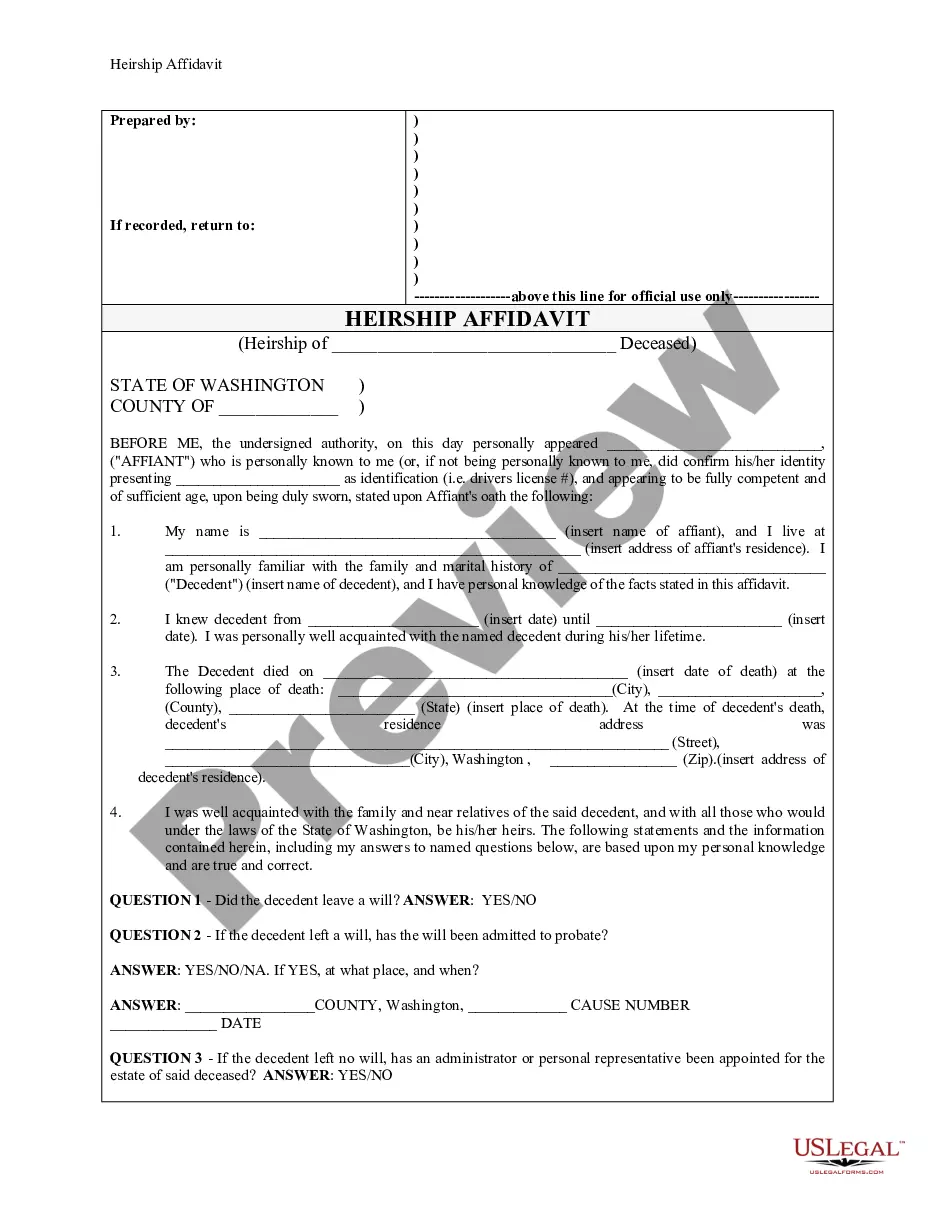
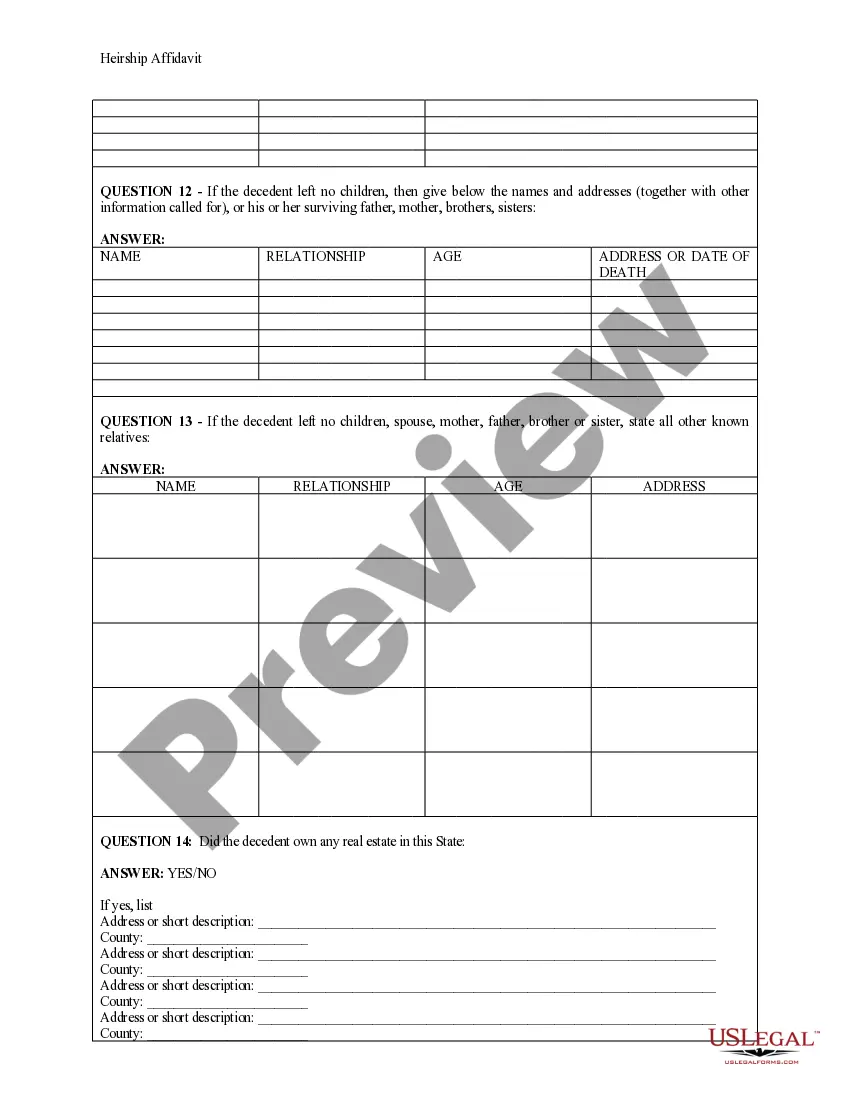
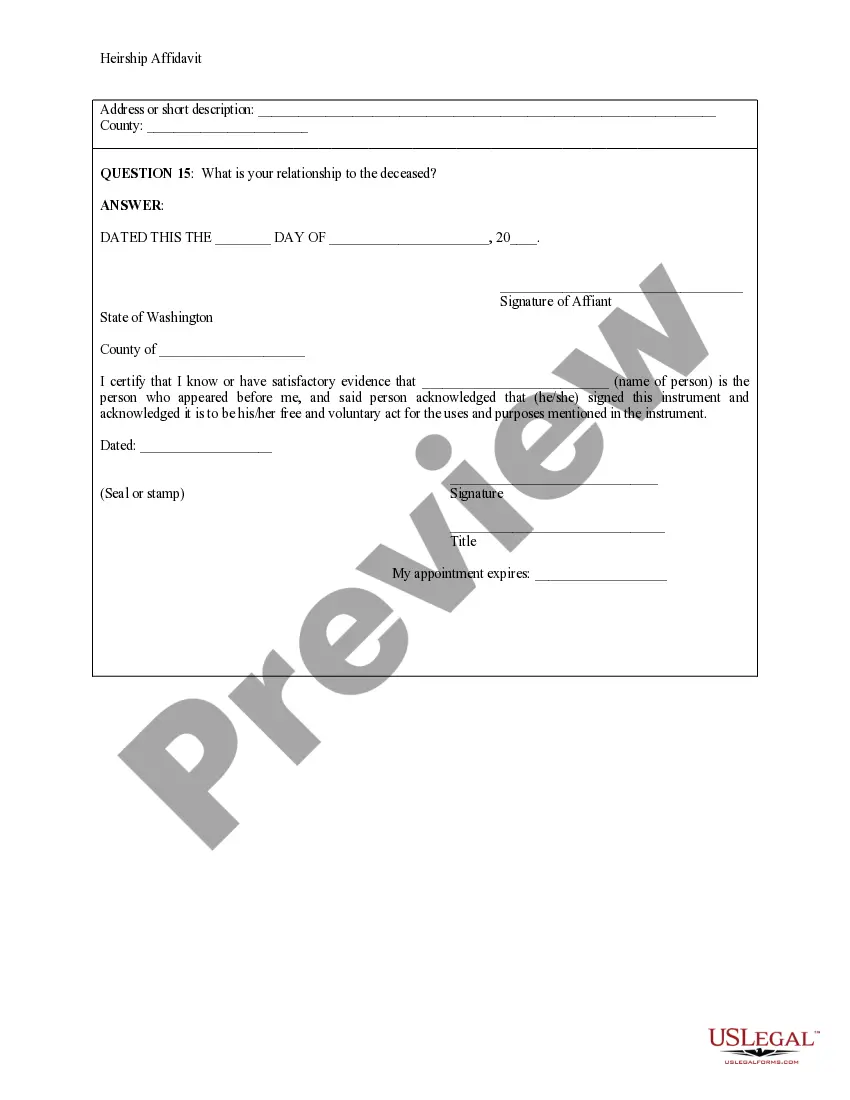
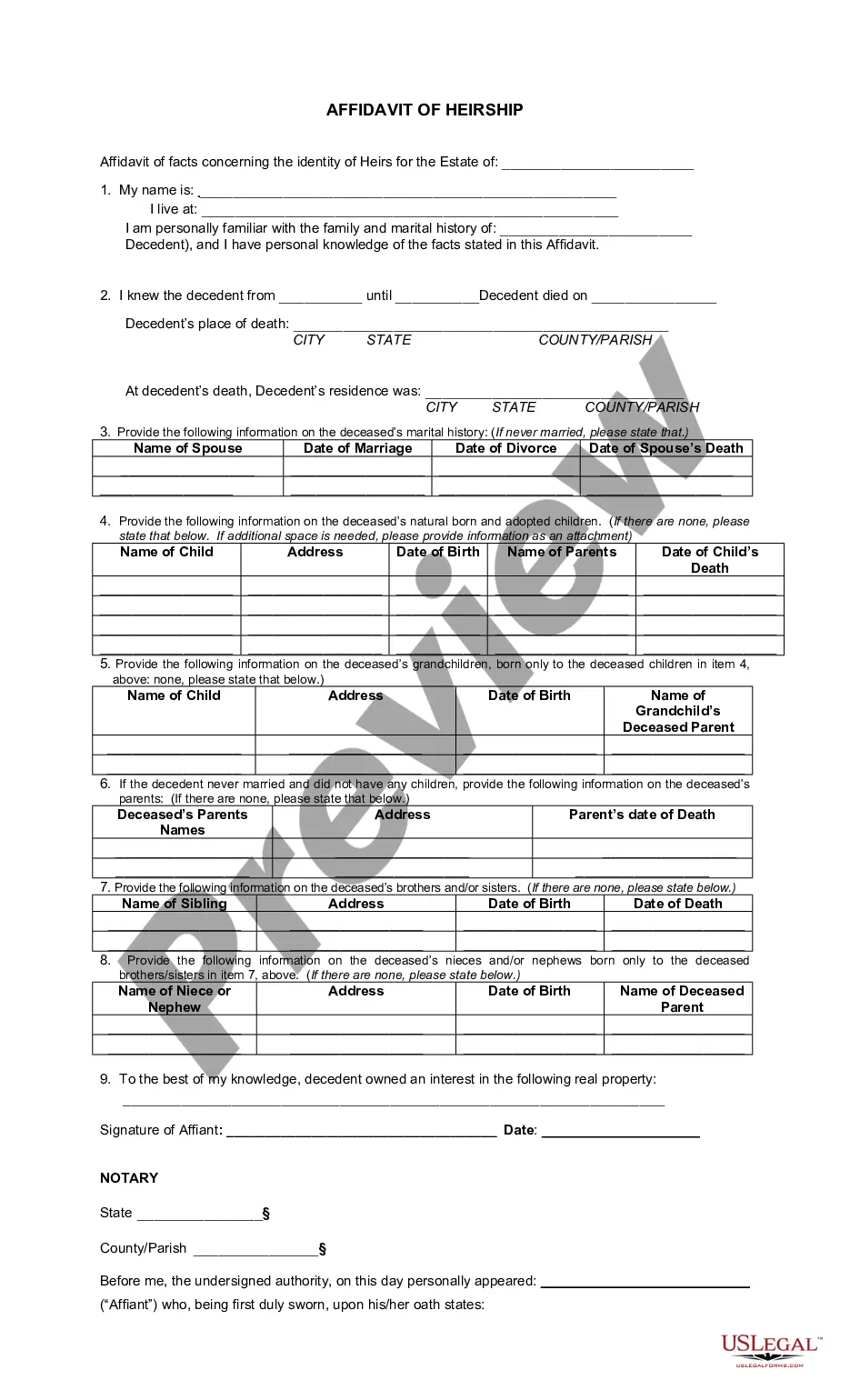
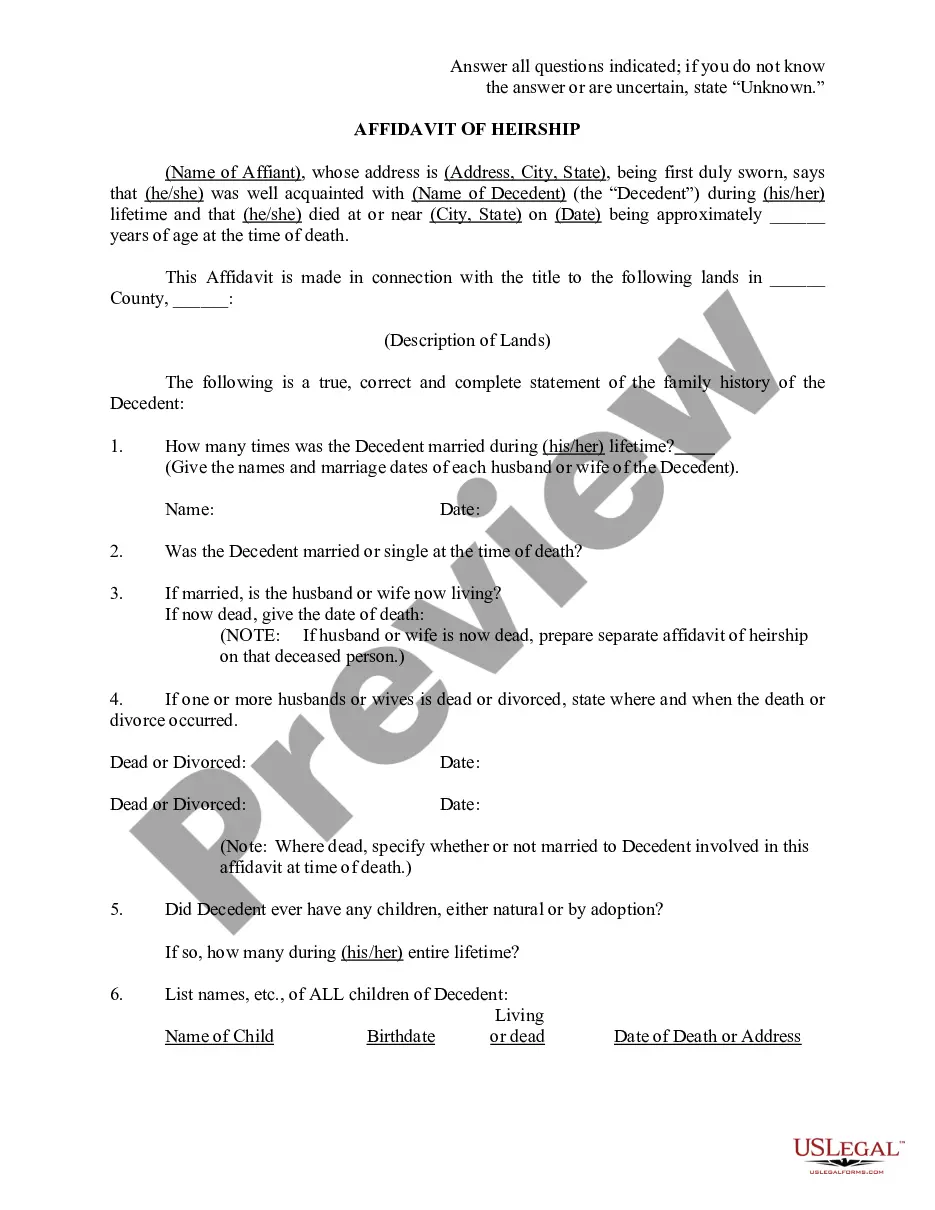
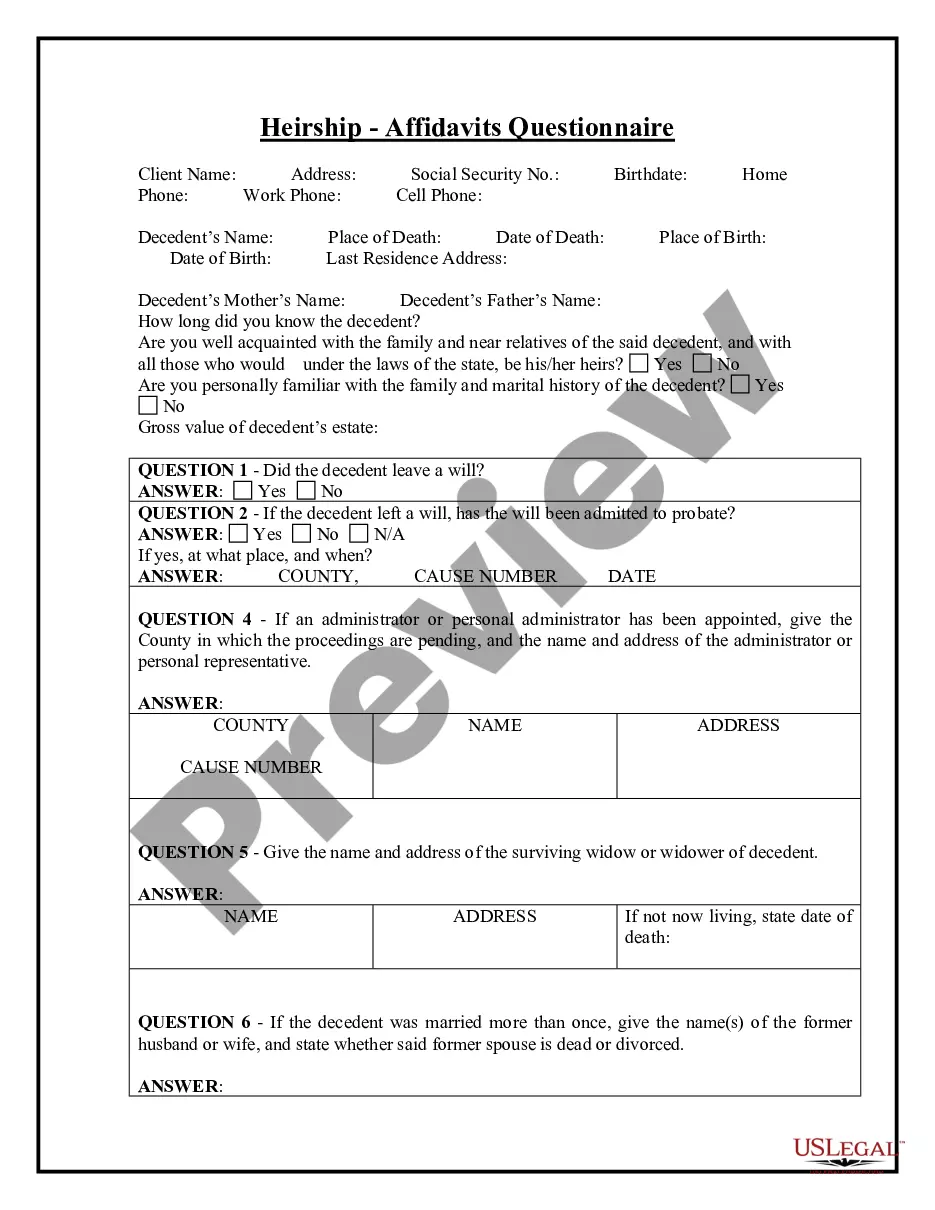
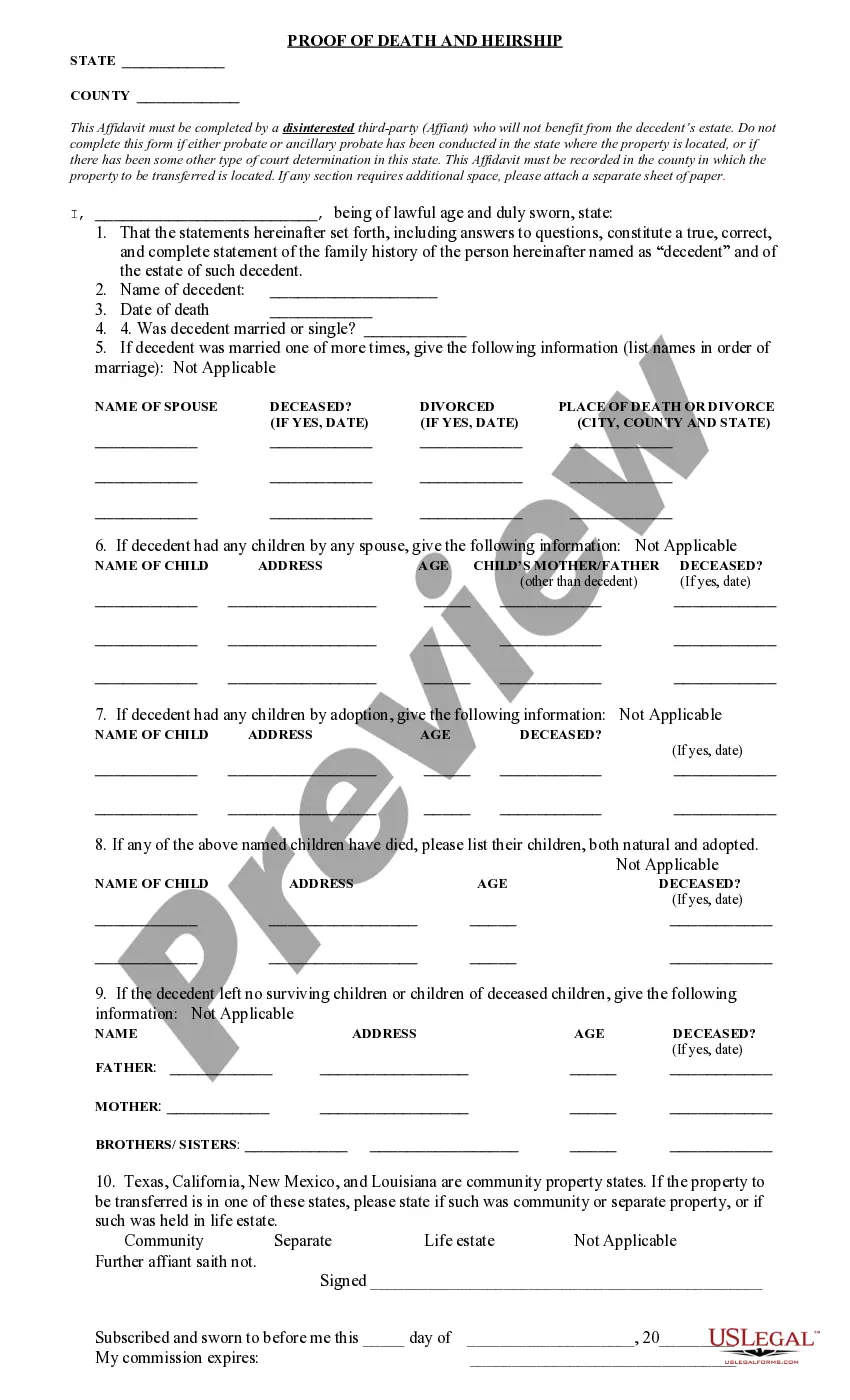
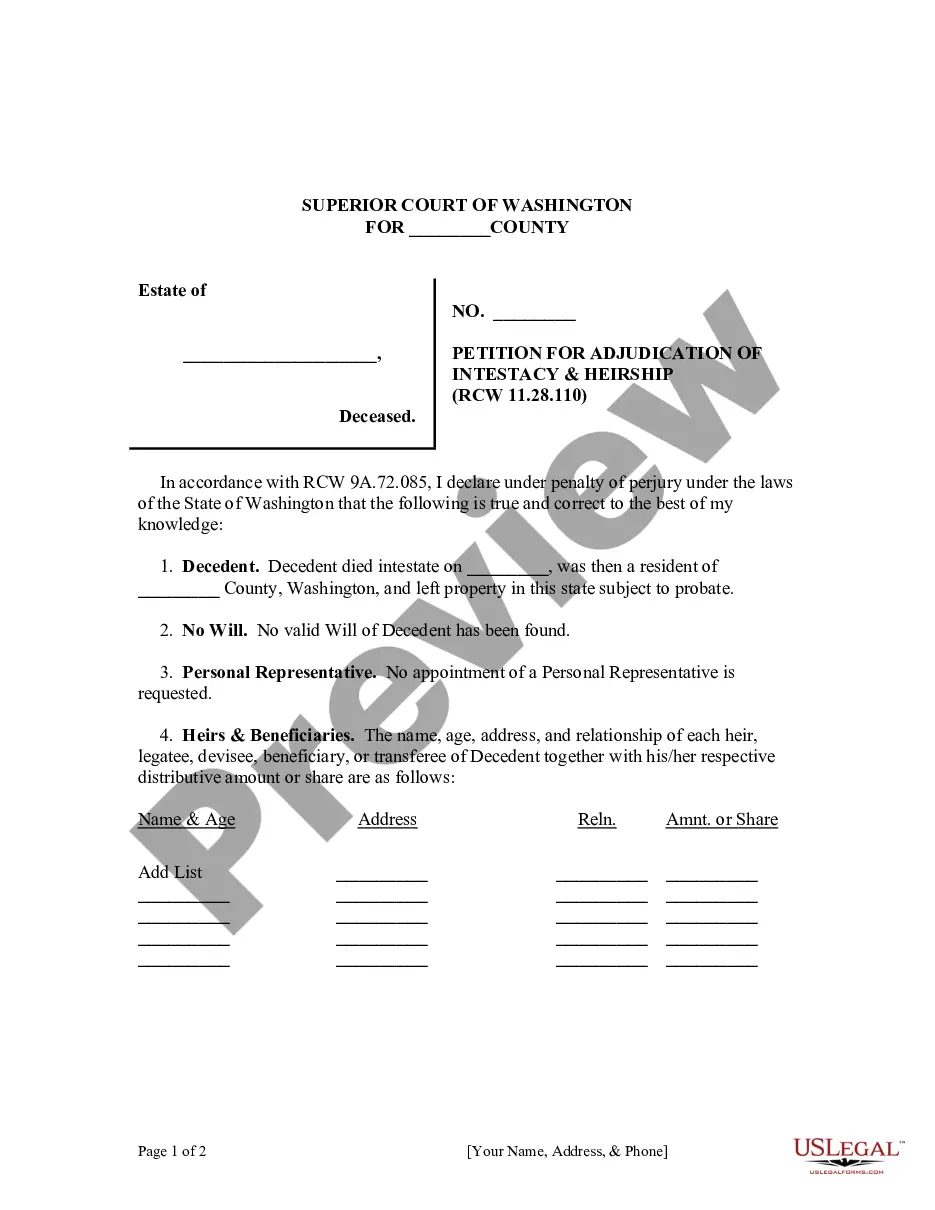
The Heirship Affidavit is a legal document that establishes the heirs of a deceased person. It is primarily used to confirm ownership of personal and real property when an estate has not been opened, particularly in cases where the deceased did not leave a will. This form is vital for individuals needing to prove their right to inherit assets from an estate without formal probate proceedings.
Form components explained
- Affiant's personal information and address
- Details about the deceased, including name, date of birth, and date of death
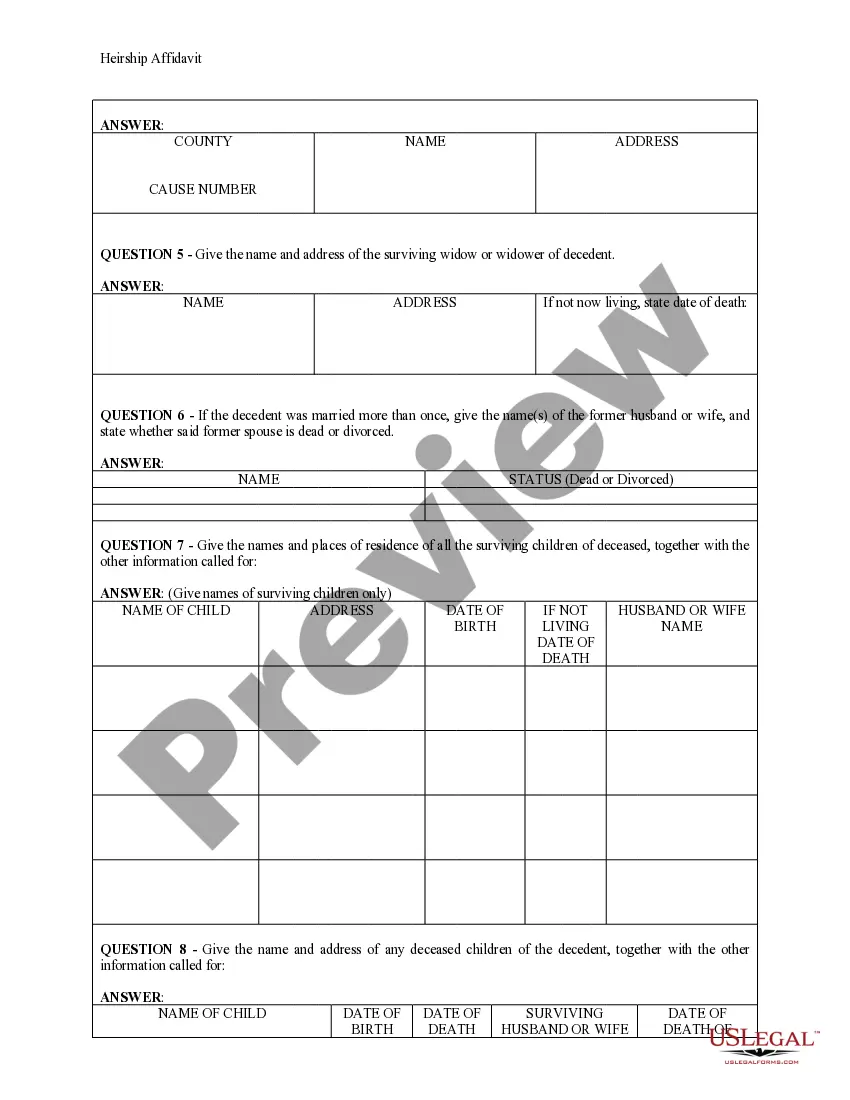
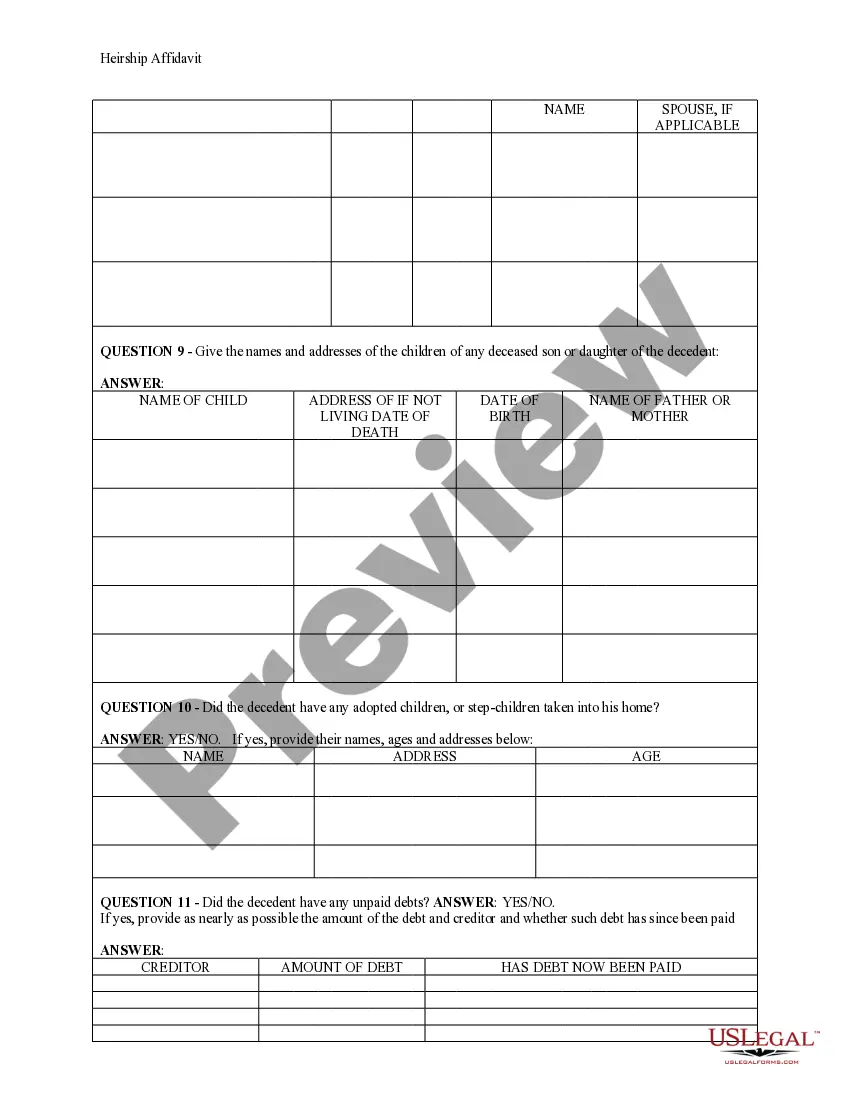
- Questions about the deceased's marital status and children
- Information regarding any wills or probate proceedings
- Details about the deceased's assets, including real estate holdings
- Affidavit signature and notarization section
Situations where this form applies
This form is needed when a person passes away without a will, leaving behind heirs. It helps establish rightful ownership of the deceased's assets, such as land or property, particularly when heirs want to sell or transfer those assets. For instance, if a son wants to sell property left by his deceased parent, he may need to provide this affidavit to prove his status as an heir.
Who this form is for
- Heirs of a deceased person seeking to establish their inheritance
- Individuals needing to sell or transfer property inherited from a deceased relative
- Persons without a will from the deceased
- Those who are familiar with the deceased's family and marital history
How to complete this form
- Begin by entering the affiant's personal information, including their name and address.
- Provide details about the deceased, including their full name, date of birth, and date of death.
- Answer relevant questions regarding the presence of a will, any probate actions, and relationships to the deceased.
- List all known heirs, including children and spouses, along with their addresses and relevant details.
- Sign the affidavit before a notary public to ensure its legality.
Does this document require notarization?
Yes, this form must be notarized to be legally valid. It requires the affiant to sign in the presence of a notary public, ensuring that the document is authenticated. US Legal Forms offers integrated online notarization, providing a secure solution to complete this step via a video call.
Get your form ready online
Our built-in tools help you complete, sign, share, and store your documents in one place.
Make edits, fill in missing information, and update formatting in US Legal Forms—just like you would in MS Word.
Download a copy, print it, send it by email, or mail it via USPS—whatever works best for your next step.
Sign and collect signatures with our SignNow integration. Send to multiple recipients, set reminders, and more. Go Premium to unlock E-Sign.
If this form requires notarization, complete it online through a secure video call—no need to meet a notary in person or wait for an appointment.
We protect your documents and personal data by following strict security and privacy standards.

Make edits, fill in missing information, and update formatting in US Legal Forms—just like you would in MS Word.

Download a copy, print it, send it by email, or mail it via USPS—whatever works best for your next step.

Sign and collect signatures with our SignNow integration. Send to multiple recipients, set reminders, and more. Go Premium to unlock E-Sign.

If this form requires notarization, complete it online through a secure video call—no need to meet a notary in person or wait for an appointment.

We protect your documents and personal data by following strict security and privacy standards.
Typical mistakes to avoid
- Failing to provide accurate information about the deceased and heirs.
- Not answering all questions in the affidavit, which can cause delays.
- Overlooking the notarization step, making the affidavit invalid.
Advantages of online completion
- Convenience of filling out the form at your own pace from anywhere.
- Editability allows you to make adjustments easily before finalizing.
- Access to reliable templates drafted by licensed attorneys ensures legal compliance.
Key takeaways
- The Heirship Affidavit is essential for establishing heirship when a will is not available.
- It provides a clear method for heirs to claim their rights to the deceased's properties.
- Proper completion and notarization are crucial for the validity of the form.
Looking for another form?



Form popularity
FAQ
When you use a small estate affidavit , you have to pay the decedent's bills before paying money to anyone else. For example, the decedent might have owed money to a credit card company when they died. If you use the small estate affidavit, you must give money from the estate to pay the credit card company.
Does an affidavit of heirship need to be recorded in Texas? Yes, after the affidavit is signed and executed, it must be filed with the county deed records where the decedent's real property is located.
1. This form should be completed by someone other than an Heir. This person should be someone who is familiar with the family history of the deceased (decedent), and who will obtain no benefit from the Estate. The person who fills out the form is referred to as the AFFIANT.
Harris County Civil Courthouse. 201 Caroline, Suite 800. (713) 274-8585.
An affidavit of heirship must be filed with the real property records in the county where the land is located. Call the county clerk and ask how much their filing fees are. The filing fees vary from county to county.
An affidavit of heirship should be signed by two disinterested witnesses. To qualify as a disinterested witness, one must be knowledgeable about the deceased and his or her family history, but cannot benefit financially from the estate.
In most states, however, there is the option to use a small estate affidavit when the assets of the estate are under a certain dollar amount, which varies by state. An attorney is not required to file a small estate affidavit, although it may be helpful to consult with one prior to filing the small estate affidavit.
Maximum $100,000. Laws Section 11.62.010. Step 1 Write in your name at the top (successor's name) Step 2 Write in the state and county. Step 3 Write in your name again. Step 4 Write in the name of the decedent in Section 1 as well as decedent's SSN. Step 5 Write in your name and address.
A fee of $15 for the first page and $4 for each additional page is common. Ask if you can file the two affidavits of heirship as one document. Some counties let you file the two affidavits of heirship as one document if the decedent and property descriptions are the same.