Boilerplate Clauses
What this document covers
The Boilerplate Clauses form is a customizable legal document designed to establish foundational agreements in partnership matters. It includes critical standard provisions that clarify communication, binding agreements, and overall partnership structure. Utilizing this form can help streamline the drafting process and ensure essential legal protections are included, saving you both time and money compared to formulating these clauses from scratch.
Main sections of this form
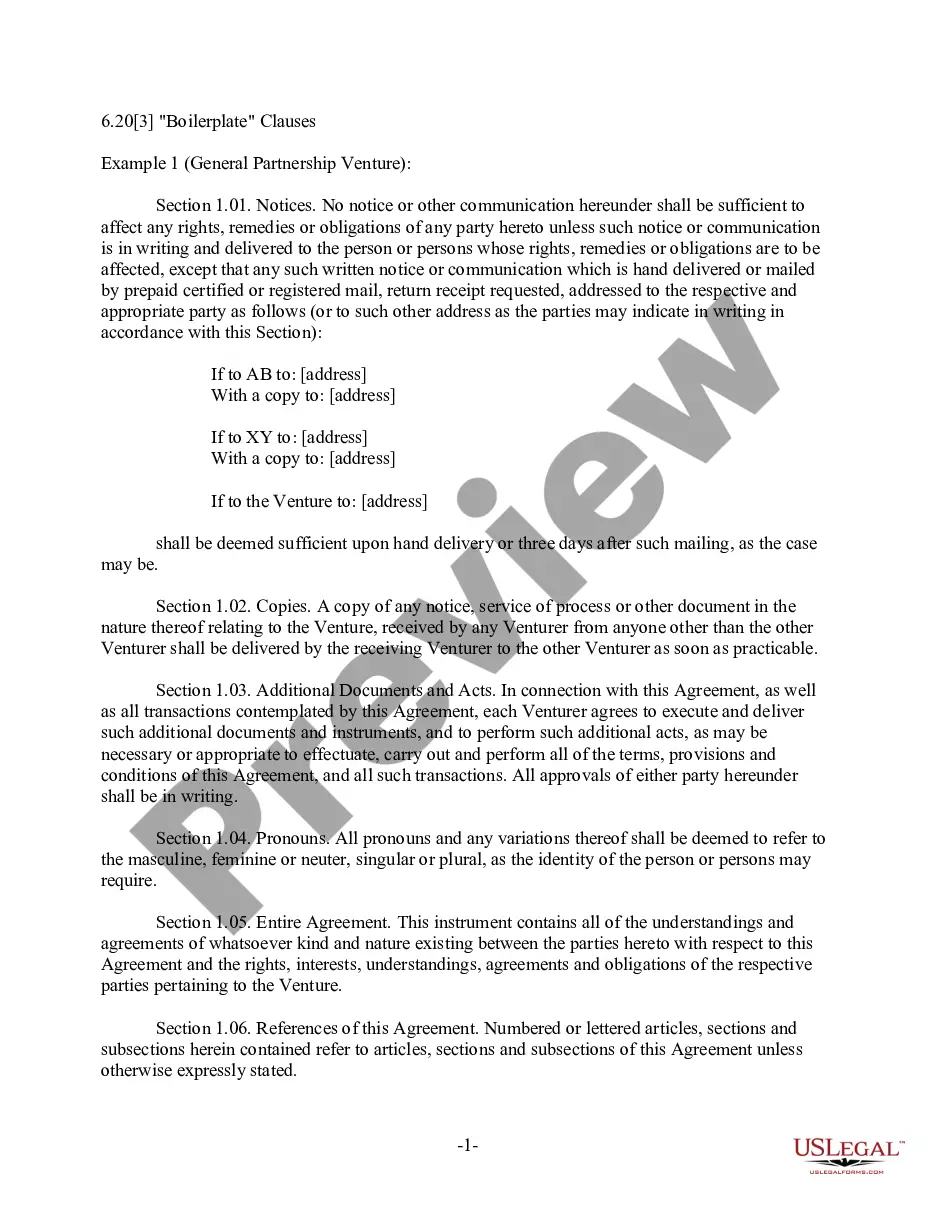
- Notices: Specifies how communications between parties should be made and documented.
- Copies: Outlines the procedure for sharing notices and documents among partners.
- Additional Documents and Acts: Requires partners to execute necessary documents and actions to uphold the agreement.
- Entire Agreement: Declares that the document captures all mutual understandings between the parties regarding the agreement.
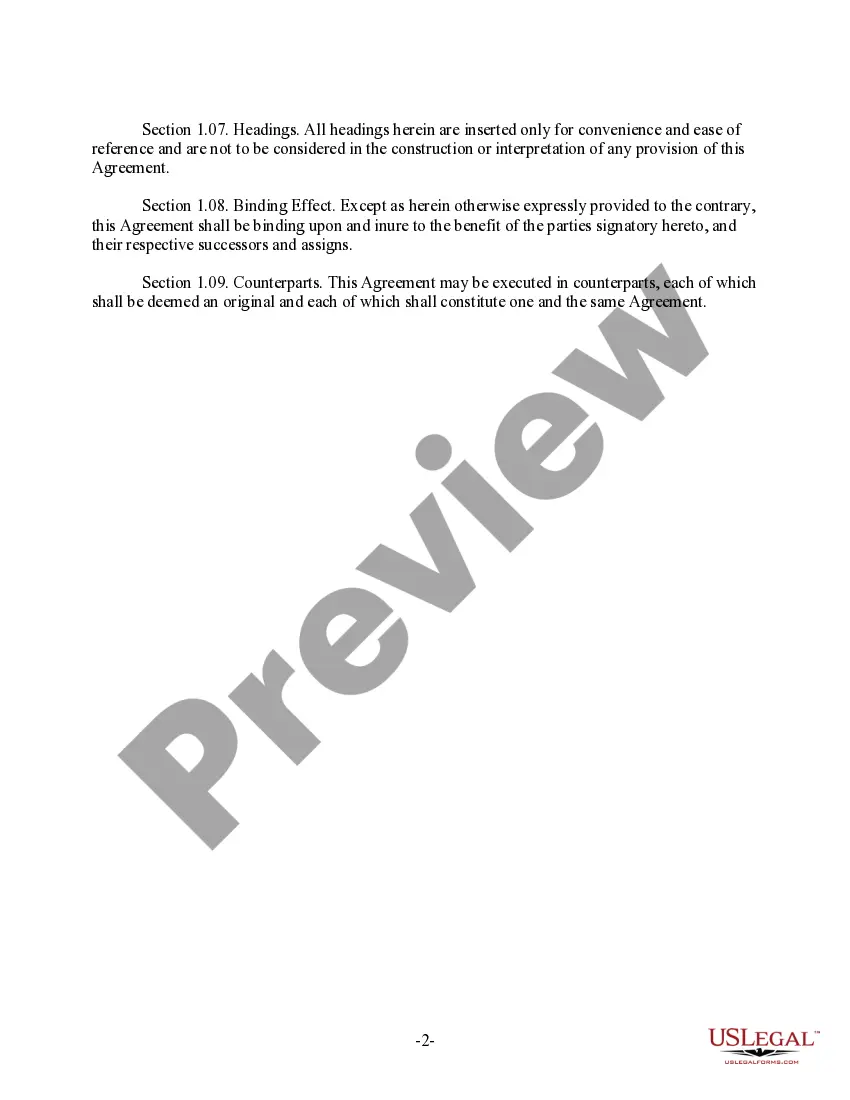
- Binding Effect: Affirms that the agreement will benefit and bind all parties involved.
When to use this document
This form is useful in various real-world situations, including establishing a new partnership, drafting agreements for existing partnerships, or when partners need clarity on their obligations and communication protocols. It is particularly beneficial for small business owners and entrepreneurs who are entering into formal collaborations.
Who this form is for
- Business partners looking to formalize their agreements
- Entrepreneurs starting a new venture requiring clear terms
- Individuals involved in partnership negotiations
- Legal professionals drafting partnership agreements
Completing this form step by step
- Identify the parties involved in the partnership.
- Specify the addresses for formal communication.
- Fill in any required additional documents or actions that may be necessary.
- Review each clause carefully to ensure it meets your specific needs.
- Obtain signatures from all parties to finalize the agreement.
Notarization guidance
Notarization is generally not required for this form. However, certain states or situations might demand it. You can complete notarization online through US Legal Forms, powered by Notarize, using a verified video call available anytime.
Get your form ready online
Our built-in tools help you complete, sign, share, and store your documents in one place.
Make edits, fill in missing information, and update formatting in US Legal Forms—just like you would in MS Word.
Download a copy, print it, send it by email, or mail it via USPS—whatever works best for your next step.
Sign and collect signatures with our SignNow integration. Send to multiple recipients, set reminders, and more. Go Premium to unlock E-Sign.
If this form requires notarization, complete it online through a secure video call—no need to meet a notary in person or wait for an appointment.
We protect your documents and personal data by following strict security and privacy standards.

Make edits, fill in missing information, and update formatting in US Legal Forms—just like you would in MS Word.

Download a copy, print it, send it by email, or mail it via USPS—whatever works best for your next step.

Sign and collect signatures with our SignNow integration. Send to multiple recipients, set reminders, and more. Go Premium to unlock E-Sign.

If this form requires notarization, complete it online through a secure video call—no need to meet a notary in person or wait for an appointment.

We protect your documents and personal data by following strict security and privacy standards.
Avoid these common issues
- Failing to specify correct addresses for notices.
- Not including all necessary parties in the agreement.
- Overlooking required signatures or witnesses.
- Neglecting to update the form for specific state laws.
Advantages of online completion
- Convenience of accessing and editing the form at any time.
- Cost-effective solution for legal documentation needs.
- No need for travel; complete the process from home.
- Templates are drafted by licensed attorneys, ensuring reliability.
Legal use & context
- Boilerplate clauses are legally recognized as standard practice in partnership agreements.
- These clauses help clarify the rights and responsibilities of each partner.
- Properly drafted agreements can prevent future disputes and misunderstandings.
Main things to remember
- The Boilerplate Clauses form helps establish essential legal terms in partnerships.
- It is adaptable for various jurisdictions and partnership situations.
- Completing this form carefully can protect your rights and clarify obligations.
Looking for another form?
Form popularity
FAQ
The term boilerplate refers to standardized text, copy, documents, methods, or procedures that may be used over again without making major changes to the original.In the field of contract law, documents contain boilerplate language, which is a language that is considered generic or standard in contracts.
Obligations of all parties. Ownership. Termination rights. Confidentiality. Limitation/indemnification of liability.
Slang for standard provisions in a contract, form, or legal pleading that are routine and often preprinted. Boilerplate provisions are meant to be used in many contracts, but some may not apply to every situation.
A boilerplate question isn't actually a real question, it is a simple display of text. Therefore in the newer versions it is called "text display" or something. The topic has been locked.
They were called boilerplates because of their resemblance to the thick, tough steel sheets used to build steam boilers.
Slang for standard provisions in a contract, form, or legal pleading that are routine and often preprinted. Boilerplate provisions are meant to be used in many contracts, but some may not apply to every situation.
The term boilerplate refers to standardized language in a contract that usually appears at the end of the agreement (often in a section titled miscellaneous or general terms).You should remember that every clause in a contract may be negotiated even the boilerplate provisions.
The basic elements required for the agreement to be a legally enforceable contract are: mutual assent, expressed by a valid offer and acceptance; adequate consideration; capacity; and legality. In some states, element of consideration can be satisfied by a valid substitute.
Seven essential elements must be present before a contract is binding: the offer, acceptance, mutual assent (also known as meeting of the minds), consideration, capacity, and legality. Contracts are typically in writing and signed to prove all of those elements are present.