Electric Powerline Easement
Overview of this form
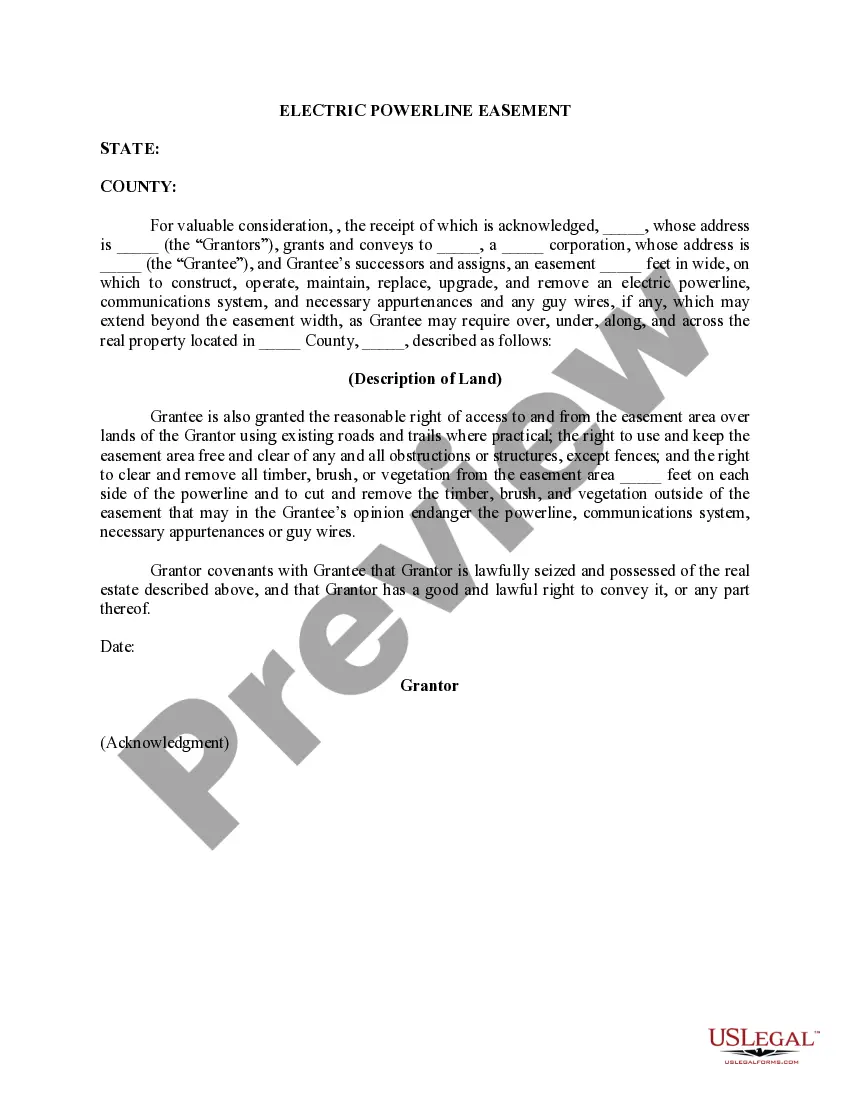
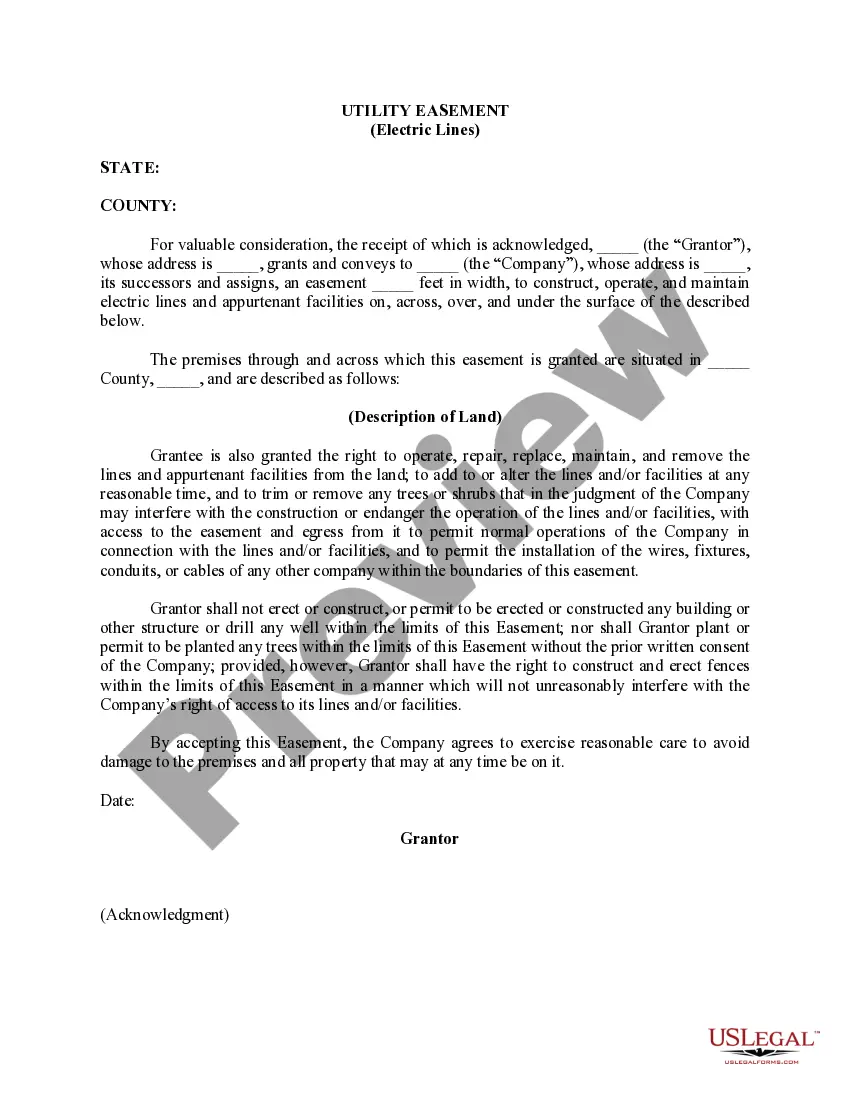
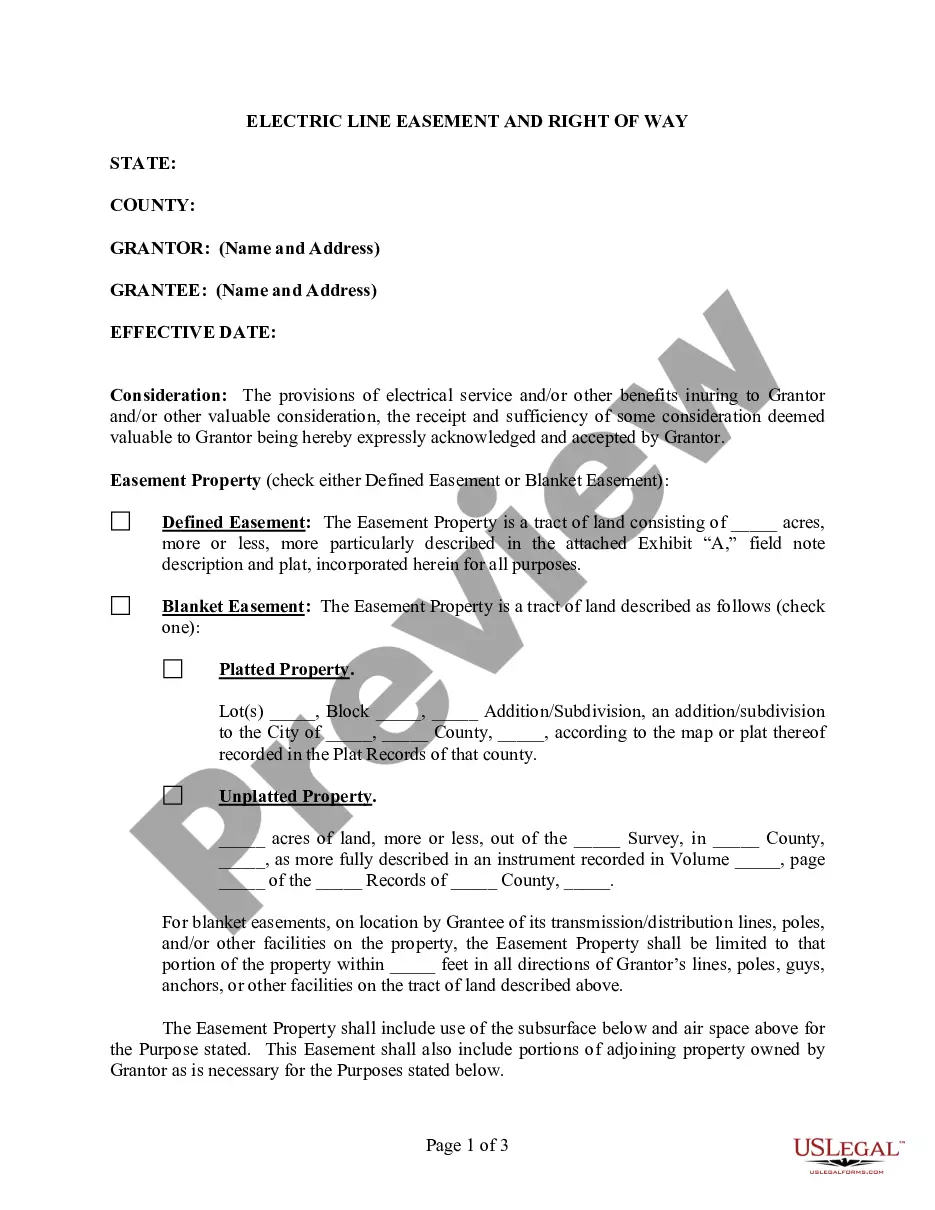
The Electric Powerline Easement form is a legal document that grants permission for the installation and operation of electric powerlines on a property. This easement allows utility companies to construct, maintain, and access the necessary infrastructure while specifying the rights and limitations for both the grantor and grantee. Unlike general property agreements, this form focuses specifically on electric powerline rights and the conditions surrounding them.
Form components explained
- Identification of Parties: Names and addresses of the grantor (property owner) and grantee (utility company).
- Property Description: Detailed description of the property where the easement will be granted.
- Easement Specifications: The width of the easement and rights of access for the grantee.
- Vegetation Management: Rights concerning the removal of trees and vegetation to ensure safety and access.
- Covenants: Assurance that the grantor has the legal authority to grant the easement.
When this form is needed
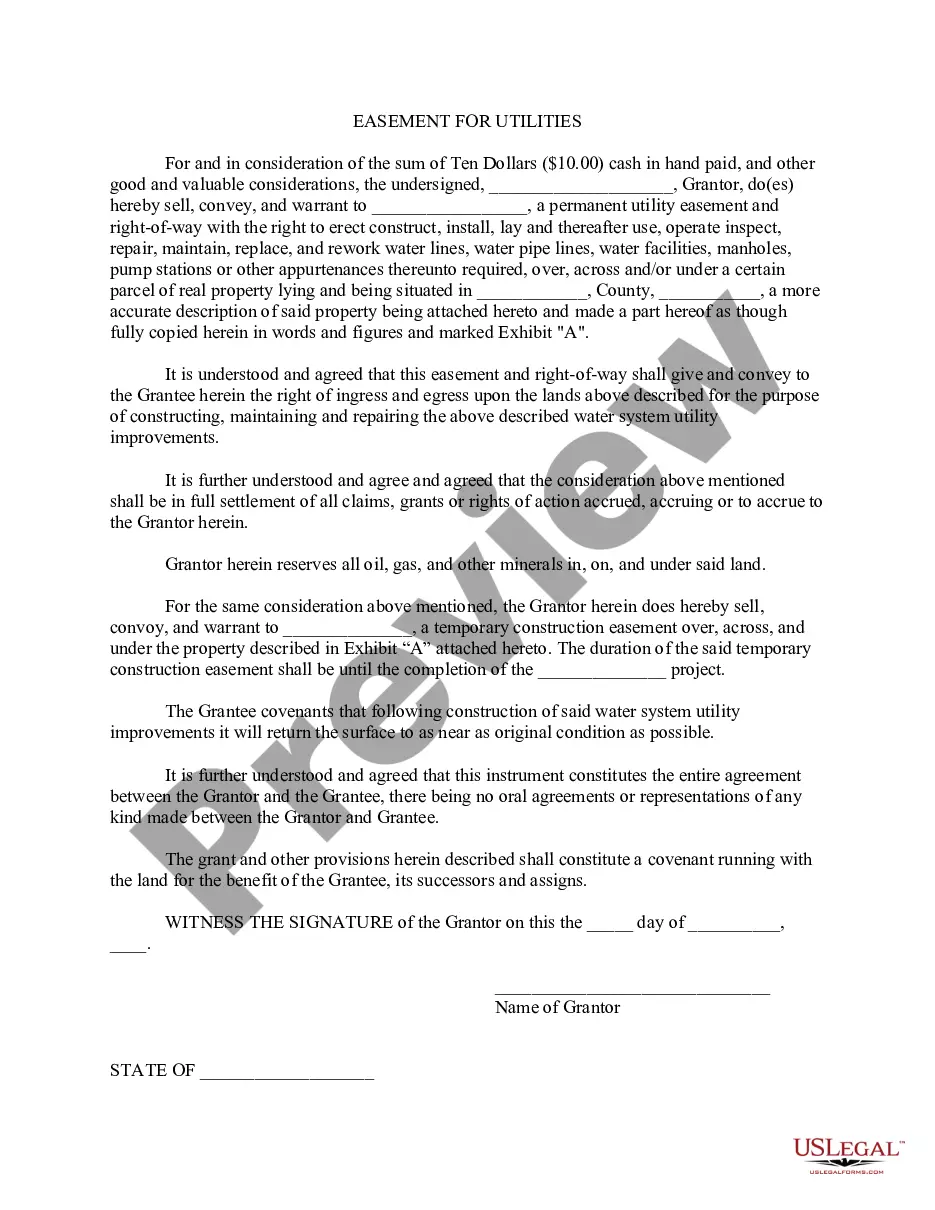
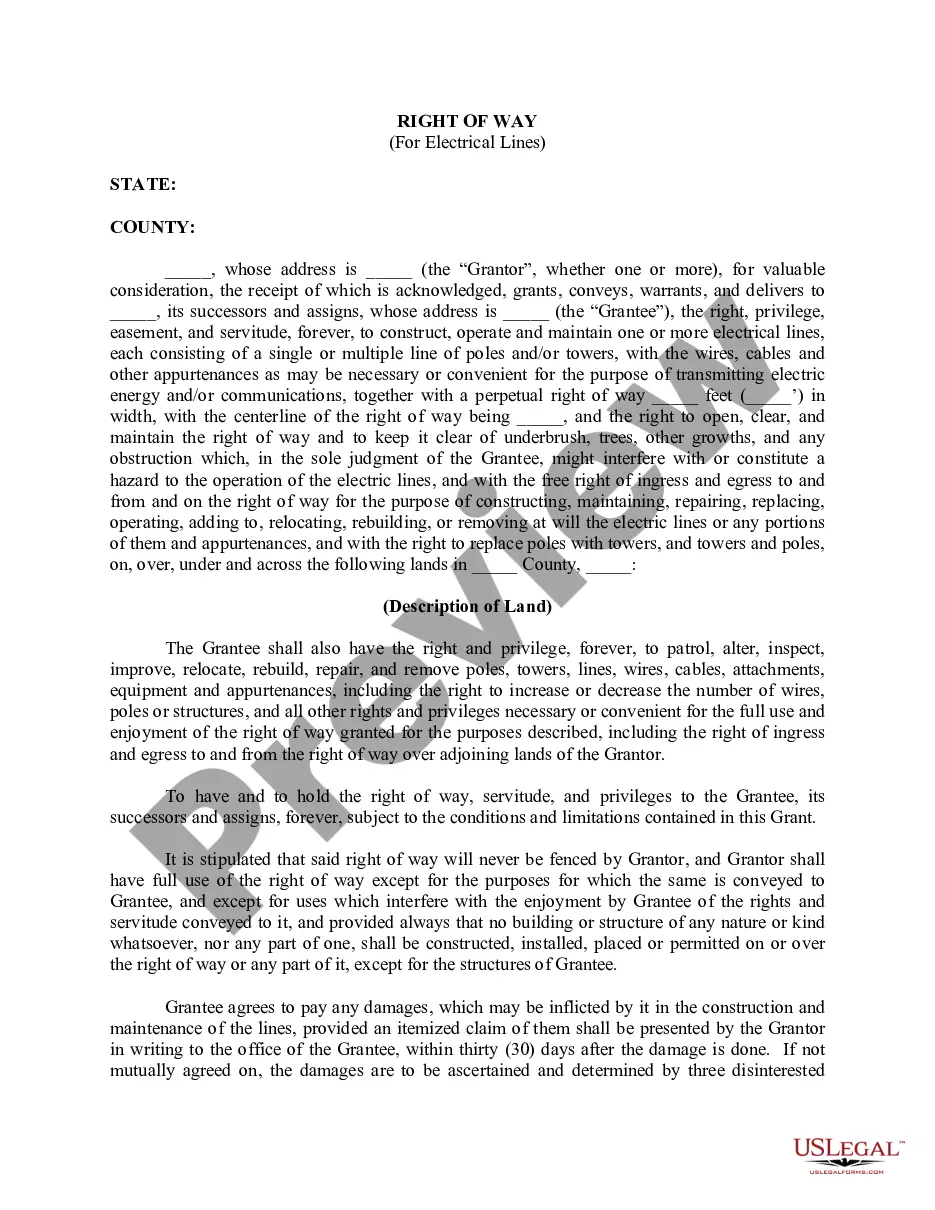
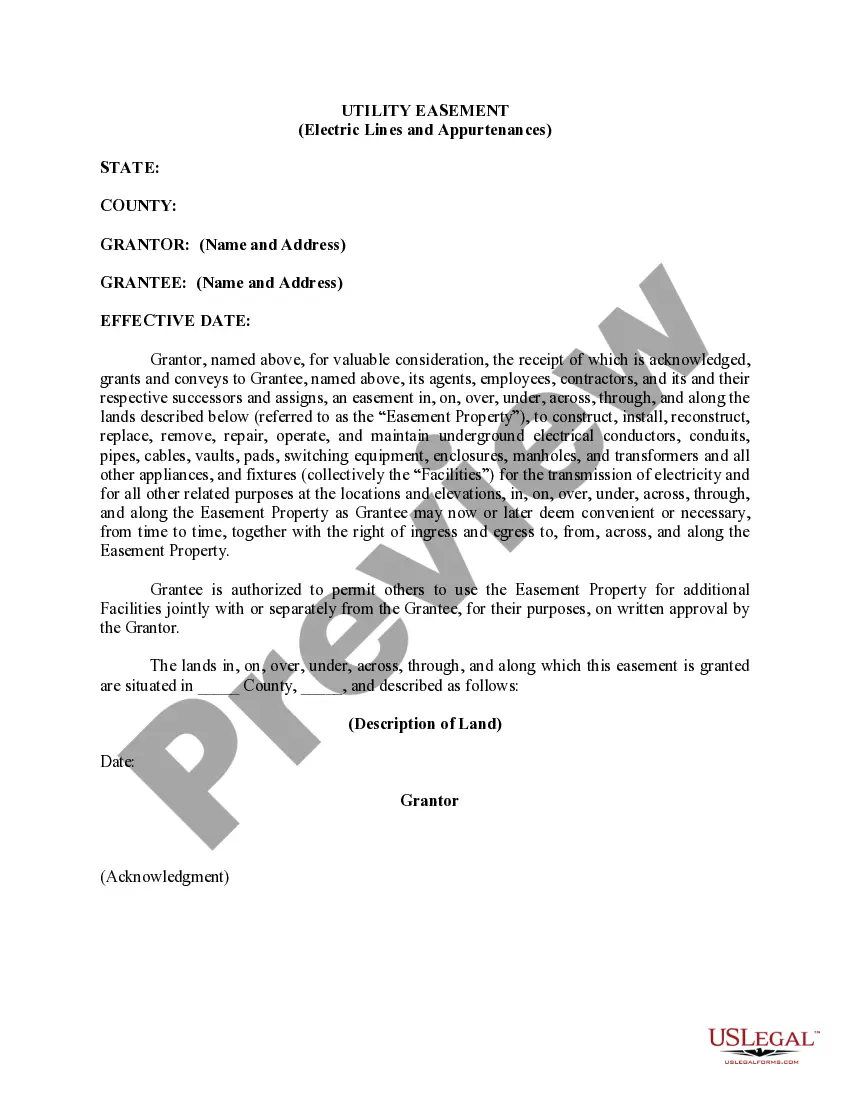
You should use the Electric Powerline Easement form when a utility company needs to install, operate, or maintain electric powerlines across your property. This form is essential if you wish to grant them the necessary rights while also outlining the terms of access and maintenance. It is commonly utilized during infrastructure projects, particularly in residential or commercial developments where powerline installation is required.
Intended users of this form
- Property owners who are granting easements for electric powerlines.
- Utility companies requiring access to install and maintain powerlines.
- Real estate developers needing to establish easements as part of property development.
How to prepare this document
- Identify the parties by completing the names and addresses of both the grantor and grantee.
- Specify the property by providing a detailed description of the land involved.
- Indicate the width of the easement to be granted for the powerline installation.
- Include the rights concerning access and maintenance within the easement area.
- Ensure the grantor's legal authority to convey the easement is documented through appropriate acknowledgment.
Does this form need to be notarized?
This document requires notarization to meet legal standards. US Legal Forms provides secure online notarization powered by Notarize, allowing you to complete the process through a verified video call, available 24/7.
Get your form ready online
Our built-in tools help you complete, sign, share, and store your documents in one place.
Make edits, fill in missing information, and update formatting in US Legal Forms—just like you would in MS Word.
Download a copy, print it, send it by email, or mail it via USPS—whatever works best for your next step.
Sign and collect signatures with our SignNow integration. Send to multiple recipients, set reminders, and more. Go Premium to unlock E-Sign.
If this form requires notarization, complete it online through a secure video call—no need to meet a notary in person or wait for an appointment.
We protect your documents and personal data by following strict security and privacy standards.

Make edits, fill in missing information, and update formatting in US Legal Forms—just like you would in MS Word.

Download a copy, print it, send it by email, or mail it via USPS—whatever works best for your next step.

Sign and collect signatures with our SignNow integration. Send to multiple recipients, set reminders, and more. Go Premium to unlock E-Sign.

If this form requires notarization, complete it online through a secure video call—no need to meet a notary in person or wait for an appointment.

We protect your documents and personal data by following strict security and privacy standards.
Typical mistakes to avoid
- Failing to accurately describe the property, which can lead to disputes over boundaries.
- Leaving out important details about the rights granted, such as access or vegetation management.
- Not obtaining proper signatures from all parties involved, resulting in an invalid agreement.
Benefits of completing this form online
- Convenient access allows you to complete the form at your own pace.
- Editability features enable you to customize the document to meet your specific needs.
- Reliability of professionally drafted templates ensures compliance with legal standards.
Looking for another form?
Form popularity
FAQ
Express Grant by Instrument. An express grant by written instrument is the most common source of an easement. Implied. The owner of a large tract of land splits up the land with one or more parcels that do not abut a public highway or road. Necessity. Dedication.
BPA does not recommend that anyone attempt to calculate how close they can come to a power line. As a general precaution, when under a line, never put yourself or any object any higher than 14 feet above the ground. The National Electrical Safety Code specifies a minimum safe clearance for each operating volt- age.
Utility easements are one of the most common types of easements for private property, which generally allow public utility companies access to the property for the purpose of installing, repairing and maintaining utility lines.
What is a right-of-way? It is a legal agreement that allows us access to the property directly beneath and to either side of an electric power line. Also called an easement, the right-of-way allows us to enter the property at any time, to perform maintenance or repairs to our equipment.
An easement held by an electricity provider allows it to erect and maintain electric power equipment on your land. The easement gives the electric power company the right to use a property for this specific purpose only.
When termed as a utility easement, it means a utility company's right to access and control the portion of another person's land that is located near utility facilities and structures (i.e. utility poles, transformers, overhead or underground electrical lines).
An easement can decrease the value of a real estate, increase the value of the real estate or it can have no impact on the value of the real estate at all. The most important fact is that each property and situation should be evaluated on individual basis, taking into account all the circumstances.
The bottom line is that developers and builders who are presented with utility company easement forms should not just sign them, but think about the kinds of issues they can present. It is easier to negotiate these concessions up front before the lines go in, than to ask the utility company to amend its easement later.
An easement held by an electricity provider allows it to erect and maintain electric power equipment on your land. The easement gives the electric power company the right to use a property for this specific purpose only.