Gas Storage Agreement
Understanding this form
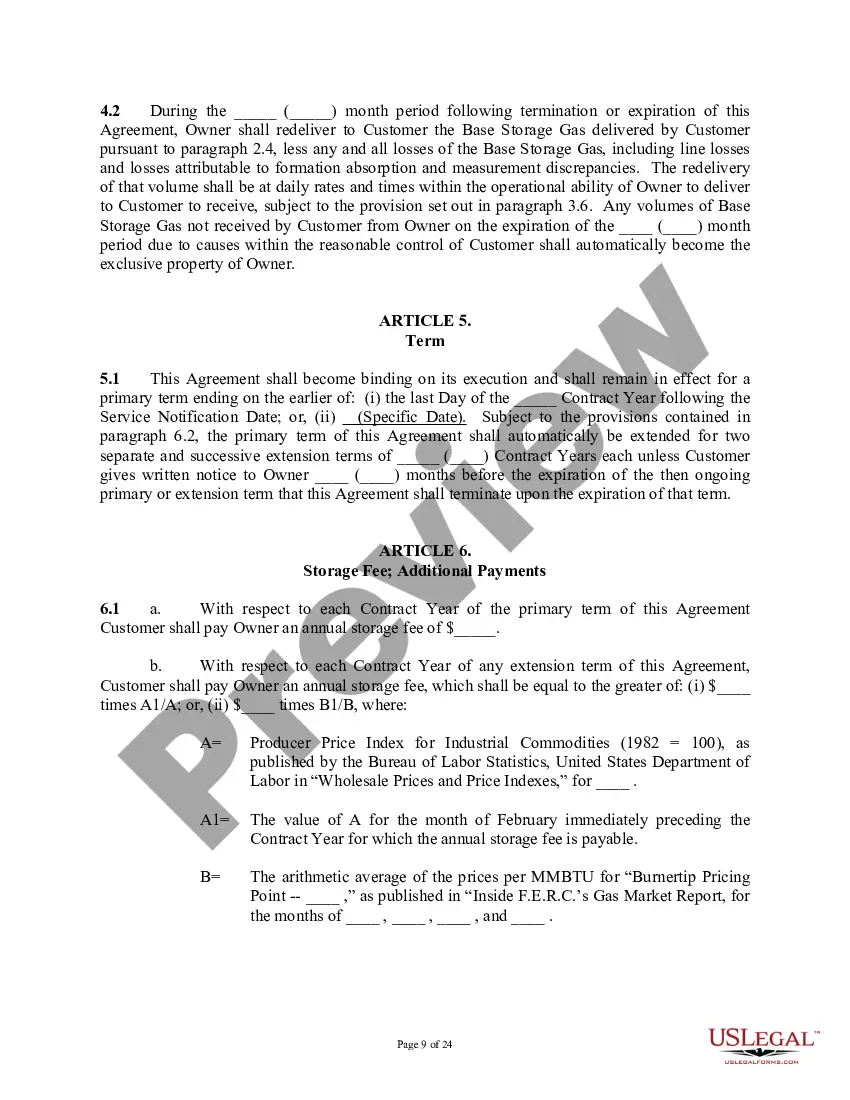
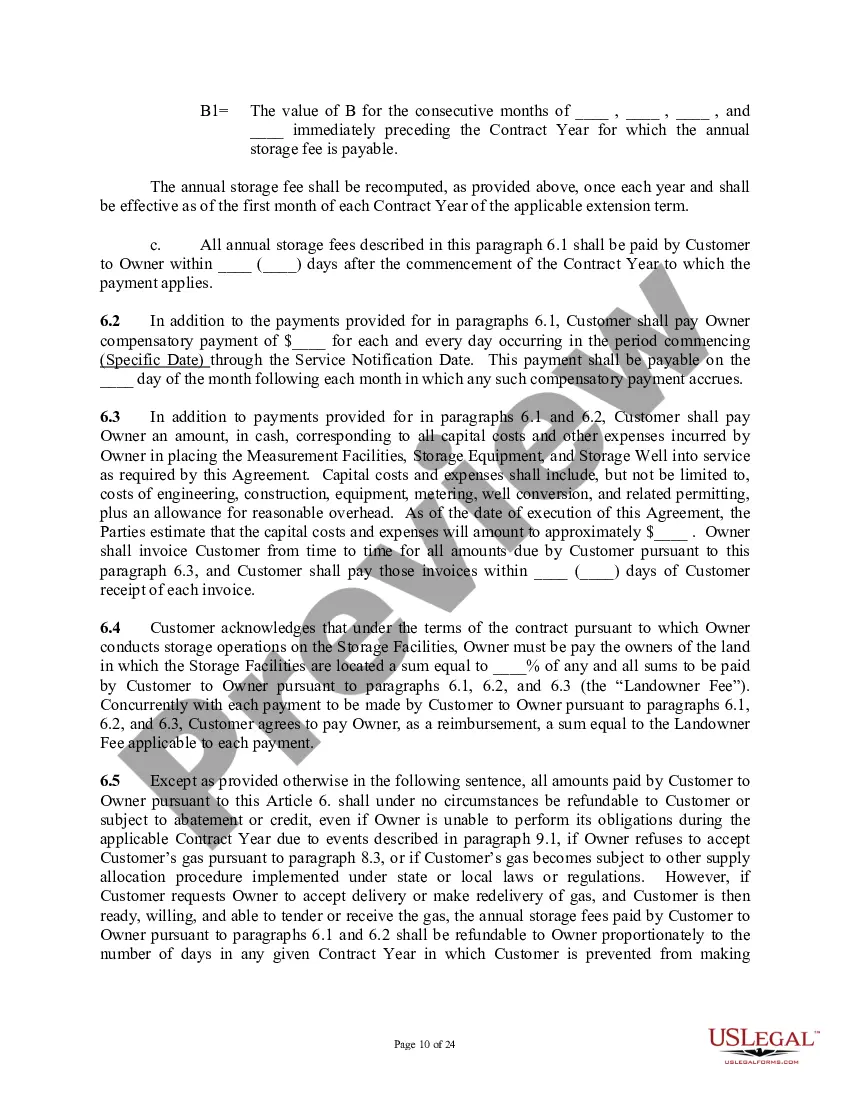
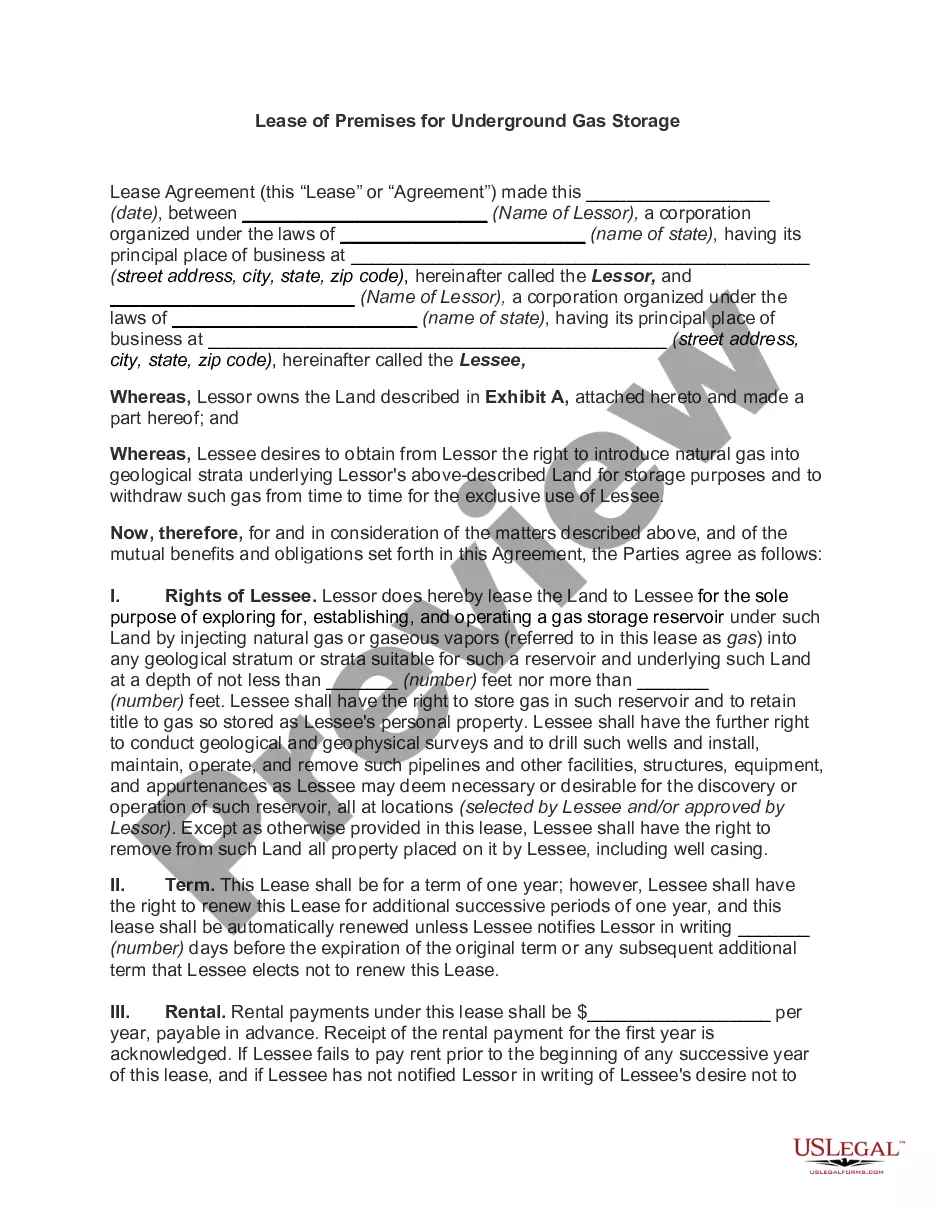
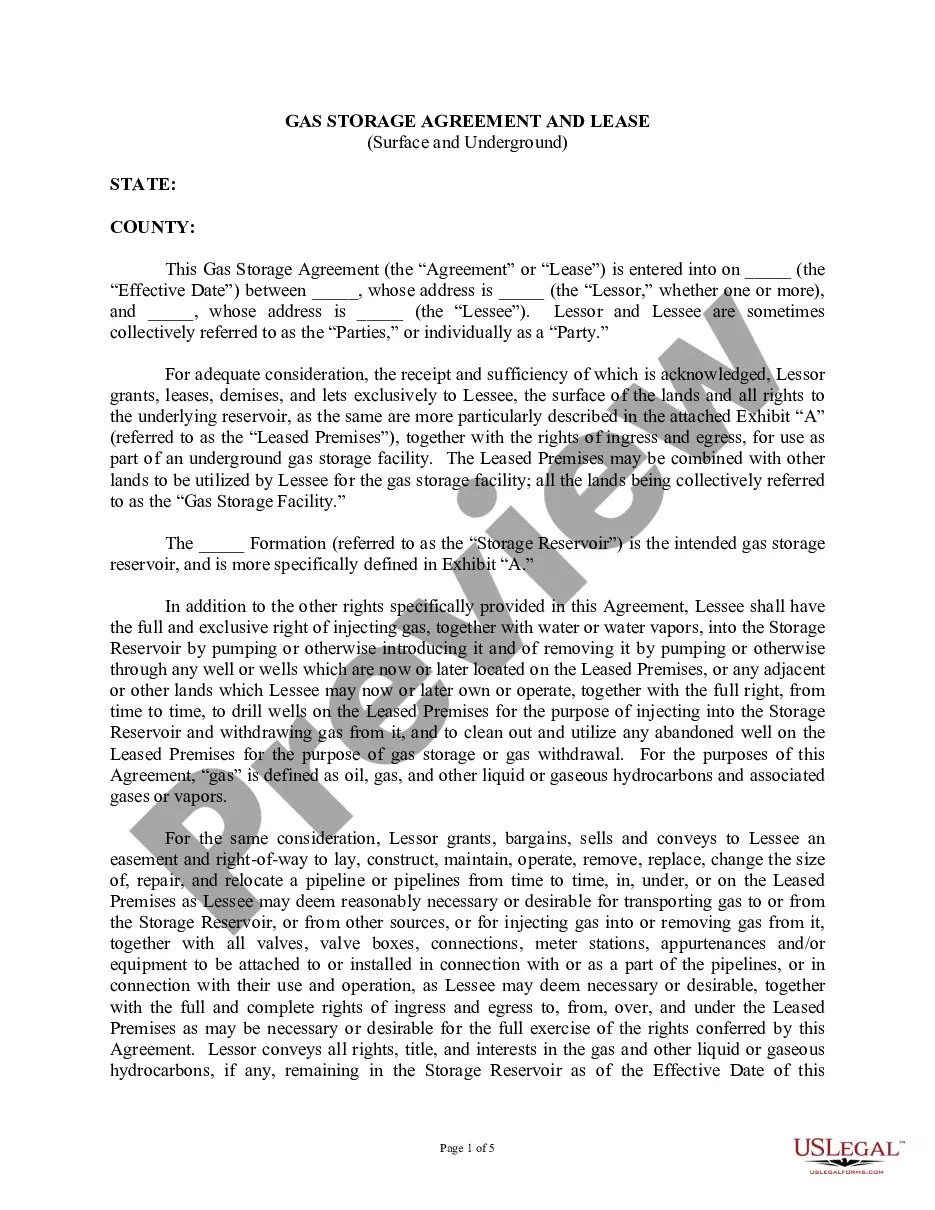
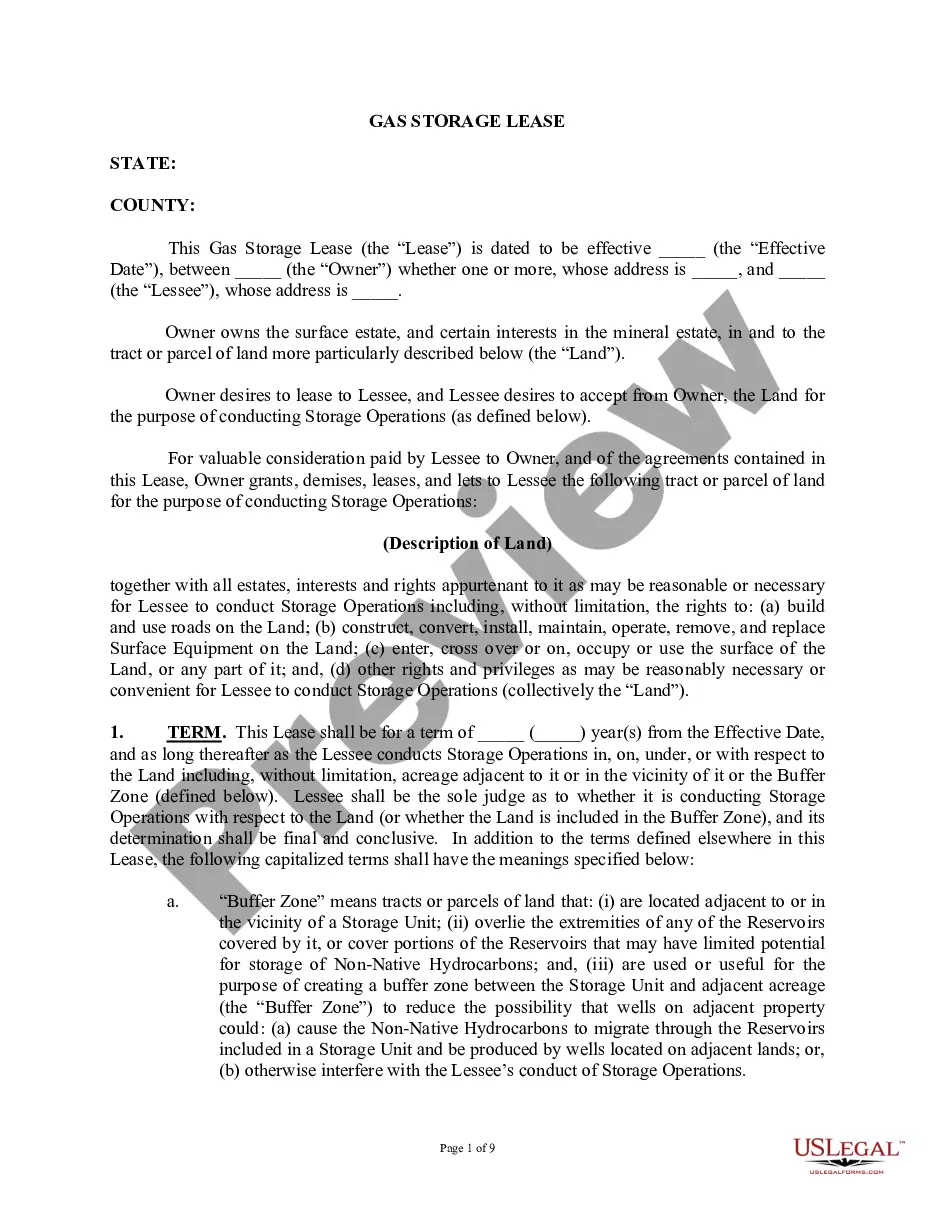
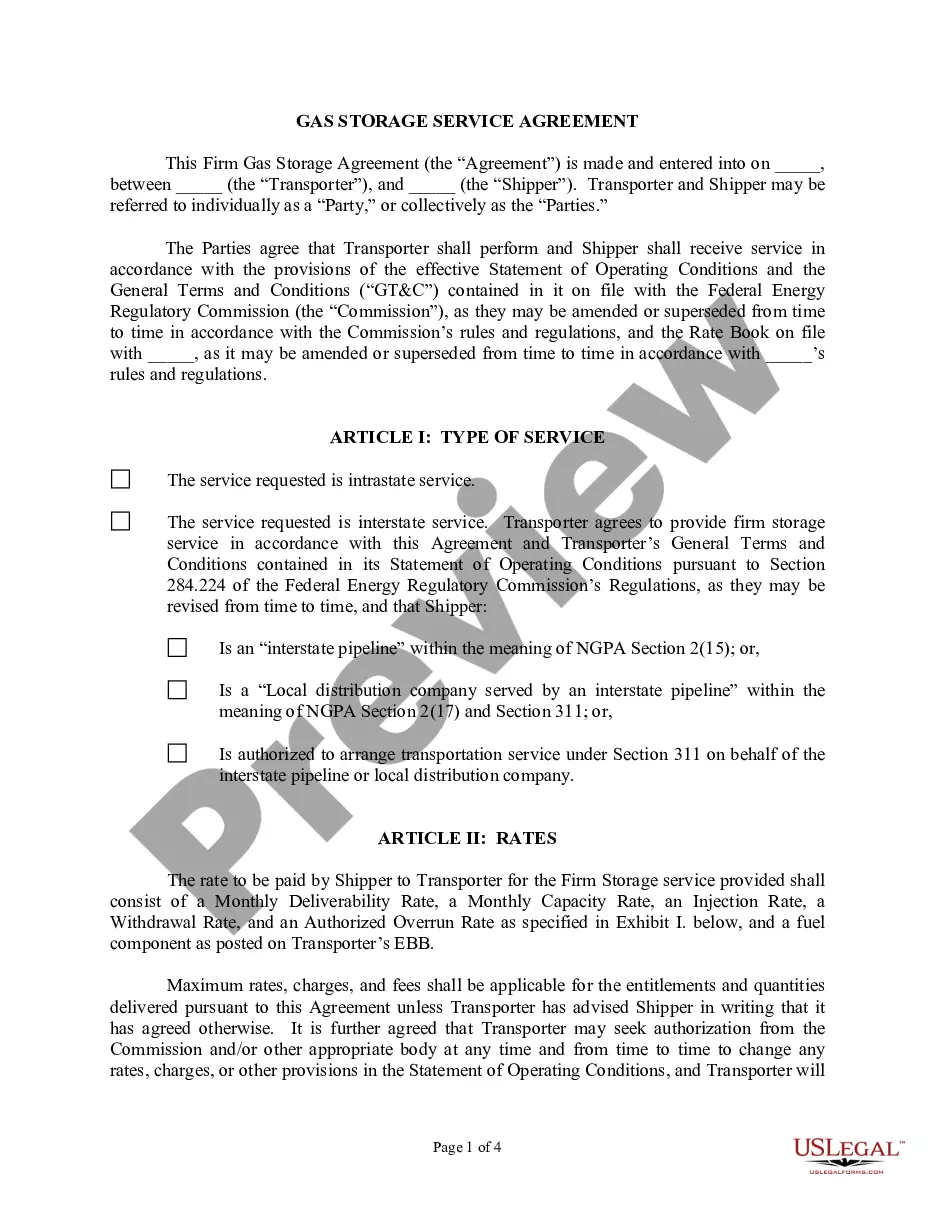
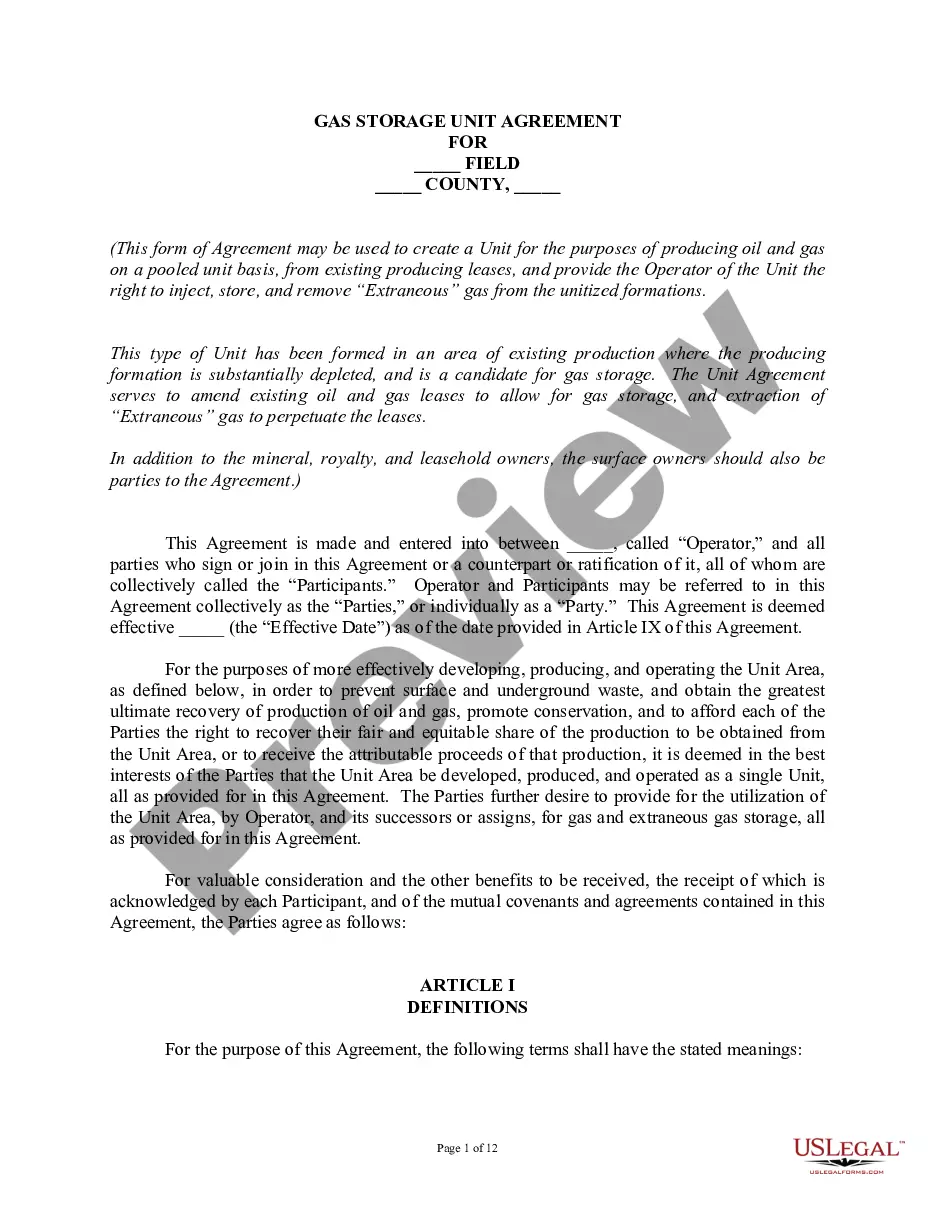
The Gas Storage Agreement is a legal document that outlines the terms and conditions under which a facility owner provides underground gas storage services to a customer. This form serves to formalize the relationship between the Owner, who operates gas storage facilities, and the Customer, who seeks to store natural gas for their operations. Unlike similar agreements, this template emphasizes specifics such as storage fees, gas quality requirements, and responsibilities of both parties, ensuring clarity and compliance with industry standards.
What’s included in this form
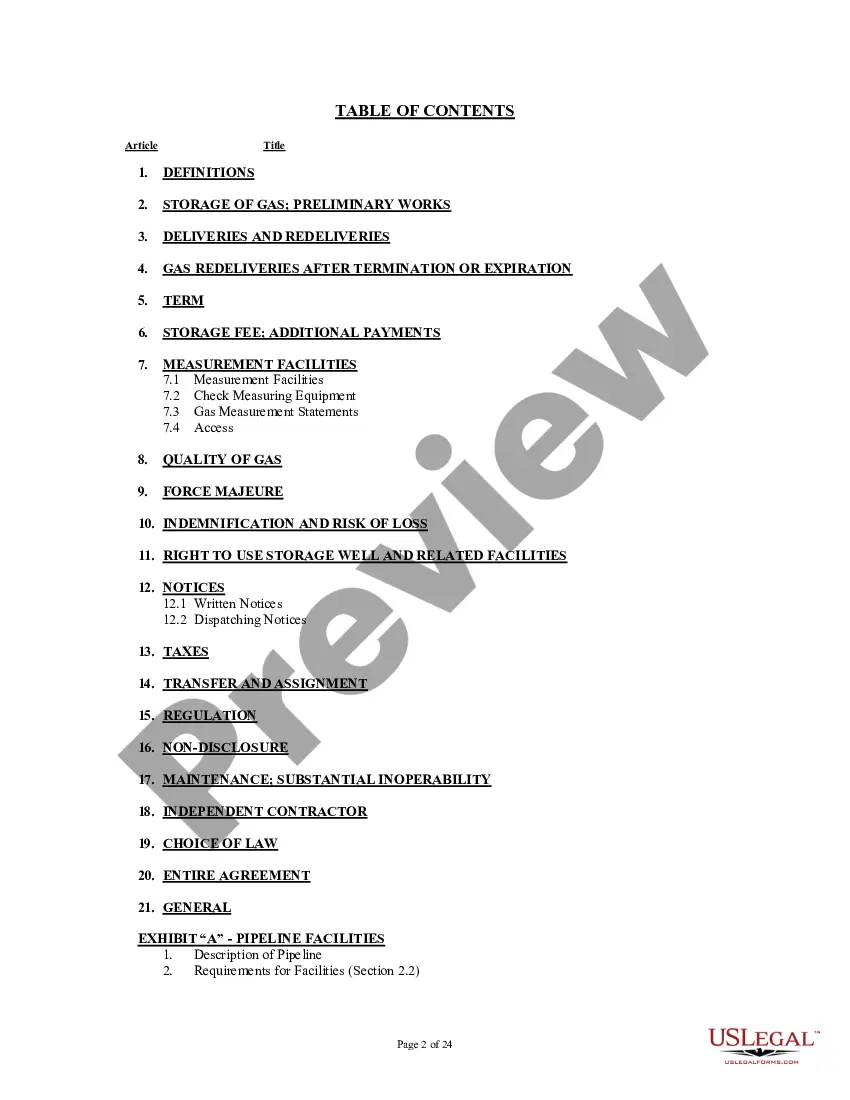
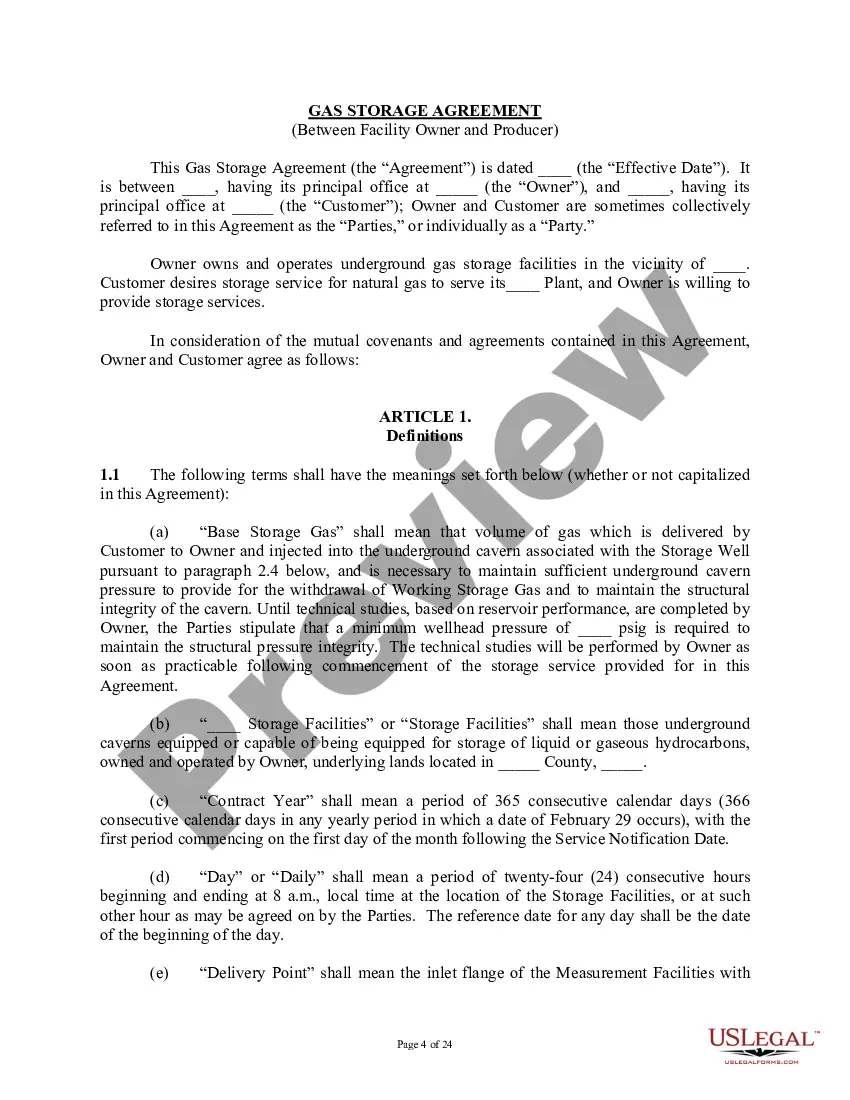
- Definitions: Clarifies key terms such as Base Storage Gas, Working Storage Gas, and Storage Well.
- Storage Obligations: Details the responsibilities and obligations of both Owner and Customer regarding the gas storage and delivery process.
- Measurement Facilities: Outlines the requirements and standards for measuring gas quantities during storage and redelivery.
- Fees and Payments: Specifies the annual storage fees and additional costs related to the management of the gas storage.
- Indemnification: Covers the liability and protection provisions for both parties against claims and losses.


Common use cases
This Gas Storage Agreement should be used when an established gas facility owner and a customer who requires gas storage services enter into a formal arrangement. It is particularly applicable in situations where the customer operates a plant that requires a consistent supply of stored natural gas and needs the technical and legal framework that defines the storage services to be rendered.
Who can use this document
This form is intended for:
- Gas facility owners who offer underground storage services.
- Businesses or industrial clients needing to store natural gas for operational purposes.
- Legal professionals involved in drafting or reviewing gas storage agreements.
Instructions for completing this form
- Identify the parties involved by entering the names and principal office addresses of both the Owner and Customer.
- Specify the effective date of the agreement and the location of the underground gas storage facilities.
- Complete the clauses concerning storage obligations, fees, and responsibilities based on the specific agreements made between the parties.
- Fill in the definitions section with precise terms relevant to the gas storage and measurements.
- Sign and date the agreement to make it legally binding.
Is notarization required?
This form does not typically require notarization to be legally valid. However, some jurisdictions or document types may still require it. US Legal Forms provides secure online notarization powered by Notarize, available 24/7 for added convenience.
Get your form ready online
Our built-in tools help you complete, sign, share, and store your documents in one place.
Make edits, fill in missing information, and update formatting in US Legal Forms—just like you would in MS Word.
Download a copy, print it, send it by email, or mail it via USPS—whatever works best for your next step.
Sign and collect signatures with our SignNow integration. Send to multiple recipients, set reminders, and more. Go Premium to unlock E-Sign.
If this form requires notarization, complete it online through a secure video call—no need to meet a notary in person or wait for an appointment.
We protect your documents and personal data by following strict security and privacy standards.
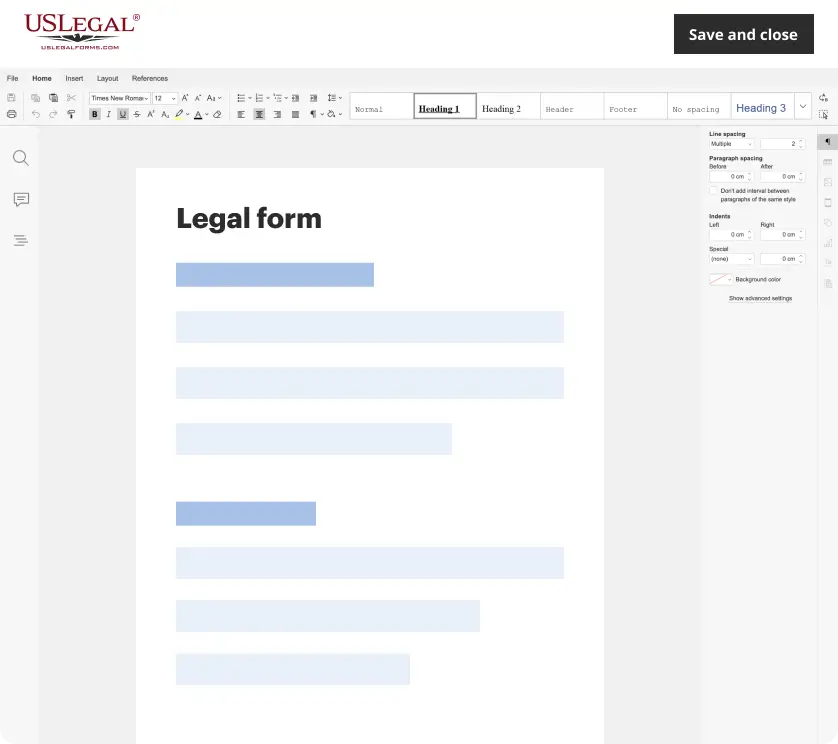
Make edits, fill in missing information, and update formatting in US Legal Forms—just like you would in MS Word.

Download a copy, print it, send it by email, or mail it via USPS—whatever works best for your next step.
Sign and collect signatures with our SignNow integration. Send to multiple recipients, set reminders, and more. Go Premium to unlock E-Sign.

If this form requires notarization, complete it online through a secure video call—no need to meet a notary in person or wait for an appointment.
We protect your documents and personal data by following strict security and privacy standards.
Avoid these common issues
- Failing to clearly define the delivery and redelivery points for the gas.
- Not specifying the fees and payment timelines accurately.
- Leaving out vital details in the definition of gas measurements and quality specifications.
- Neglecting to have both parties properly sign the document.
Why complete this form online
- Conveniency of filling out and storing the form securely online.
- Easy accessibility for updates and edits as storage needs change.
- Quick download options, enabling immediate use in negotiations.
- Saves time with structured templates designed by legal experts.
Looking for another form?
Form popularity
FAQ
Gas storage is principally used to meet load variations. Gas is injected into storage during periods of low demand and withdrawn from storage during periods of peak demand. It is also used for a variety of secondary purposes, including: Balancing the flow in pipeline systems.
Pay the balance owed. Perhaps the most obvious way to get out of a lease is to just pay out what's owed. Clear it out and then wait. Try to transfer the lease contract. Submit a request for lease release.
It doesn't matter if you're renting a storage unit for a short or longer period of time. You will have to sign a contract with the company you're renting from. And since it's not that uncommon that people don't understand the papyrology, signing this contract can be stressful.
A storage agreement is a contract that is set up by two parties. One party is the storer of the goods, known as the Warehouseman.This contract covers the items being stored and the rates or cost for storage, as well as information about what happens in case of damages.
Natural gas is usually stored underground, in large storage reservoirs. There are three main types of underground storage: depleted gas reservoirs, aquifers, and salt caverns. In addition to underground storage, however, natural gas can be stored as liquefied natural gas (LNG).
It is most commonly held in inventory underground under pressure in three types of facilities. These underground facilities are depleted reservoirs in oil and/or natural gas fields, aquifers, and salt cavern formations. Natural gas is also stored in liquid or gaseous form in aboveground tanks.
A gas sale agreement (GSA) is the key agreement documenting the sale and purchase of a quantity of natural gas. This standard document GSA provides for one seller and one buyer and is drafted from a neutral point of view.The GSA is a buyer-nominations contract and includes a take or pay commitment for the buyer.
The main problem with compressed gas storage is the low storage density, which depends on the storage pressure and thus on the storage tank construction material. Low-pressure spherical tanks can hold as much as 1300 kg of hydrogen at 1216 bar.
To keep natural gas a liquid, it requires a room temperature and maintains a pressure of about 32,000 kPa. Household metal tanks cannot resist this pressure.