Declaration of Pooled Unit - Long Form
What is this form?
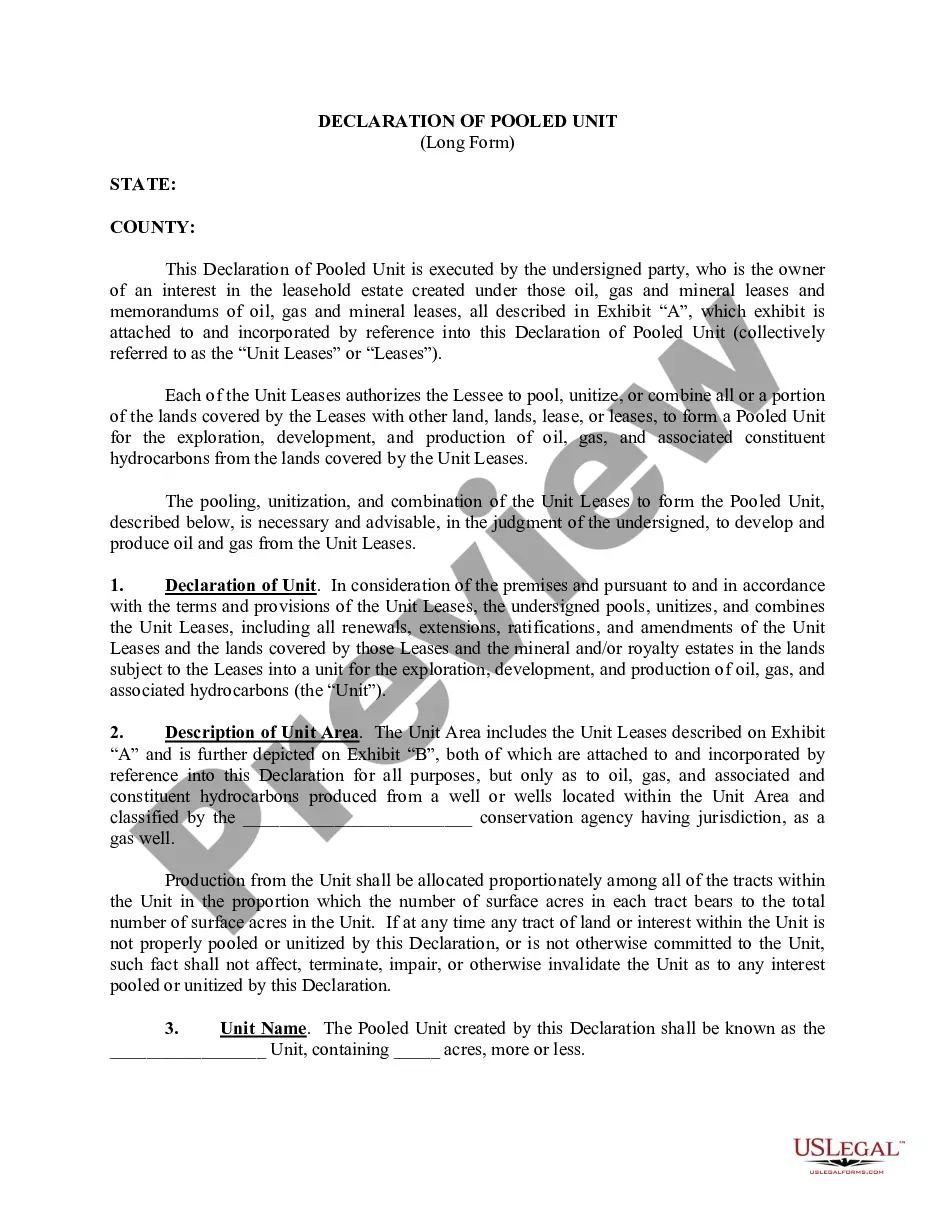
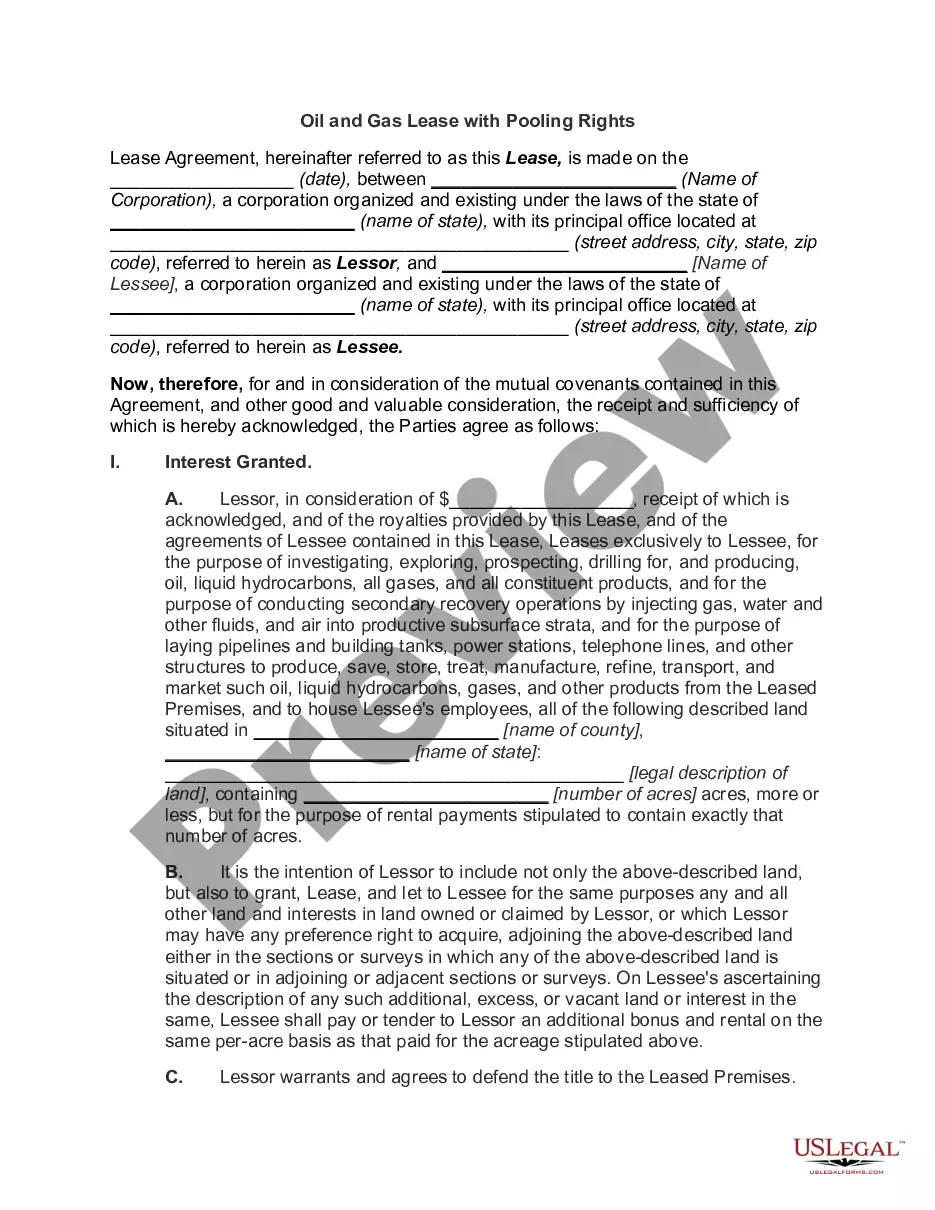
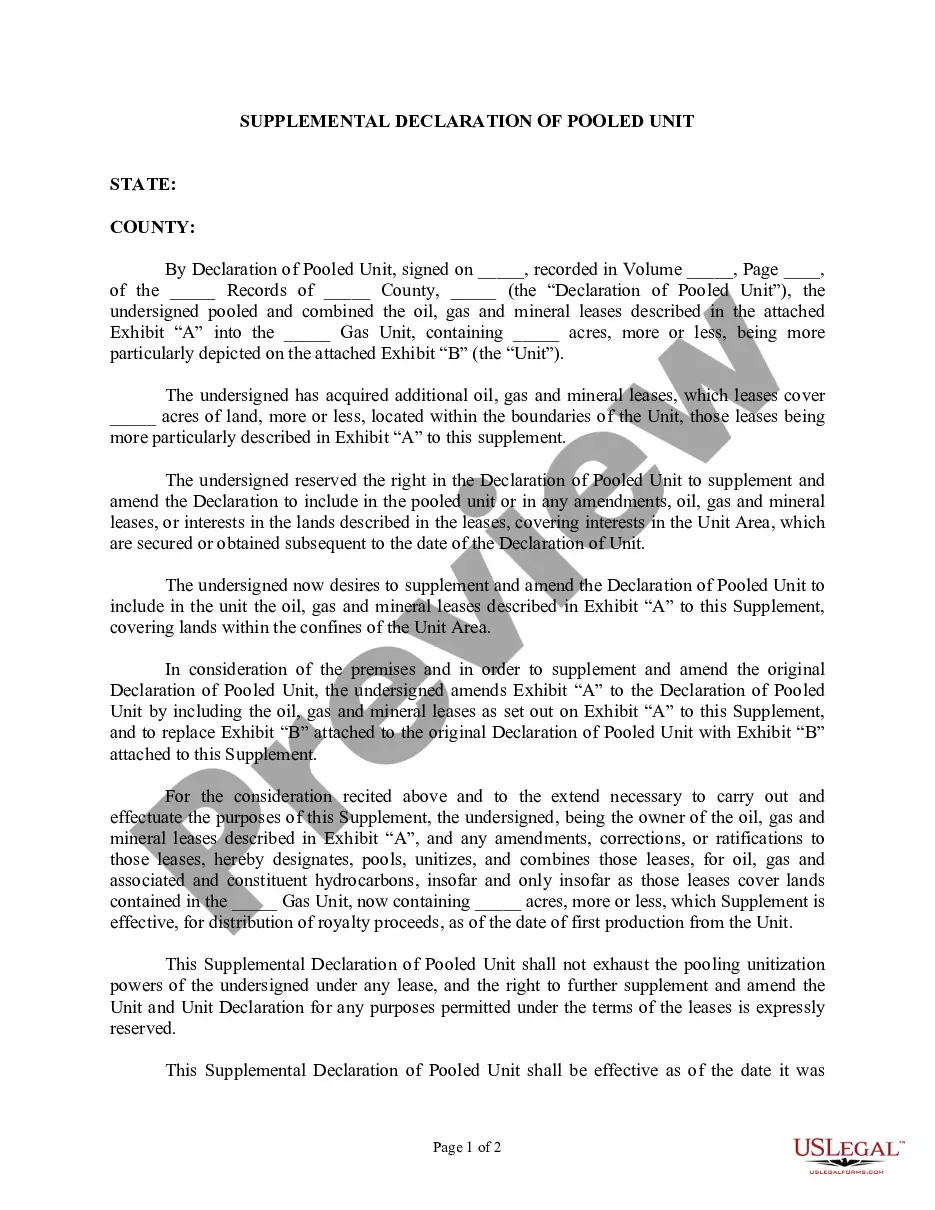
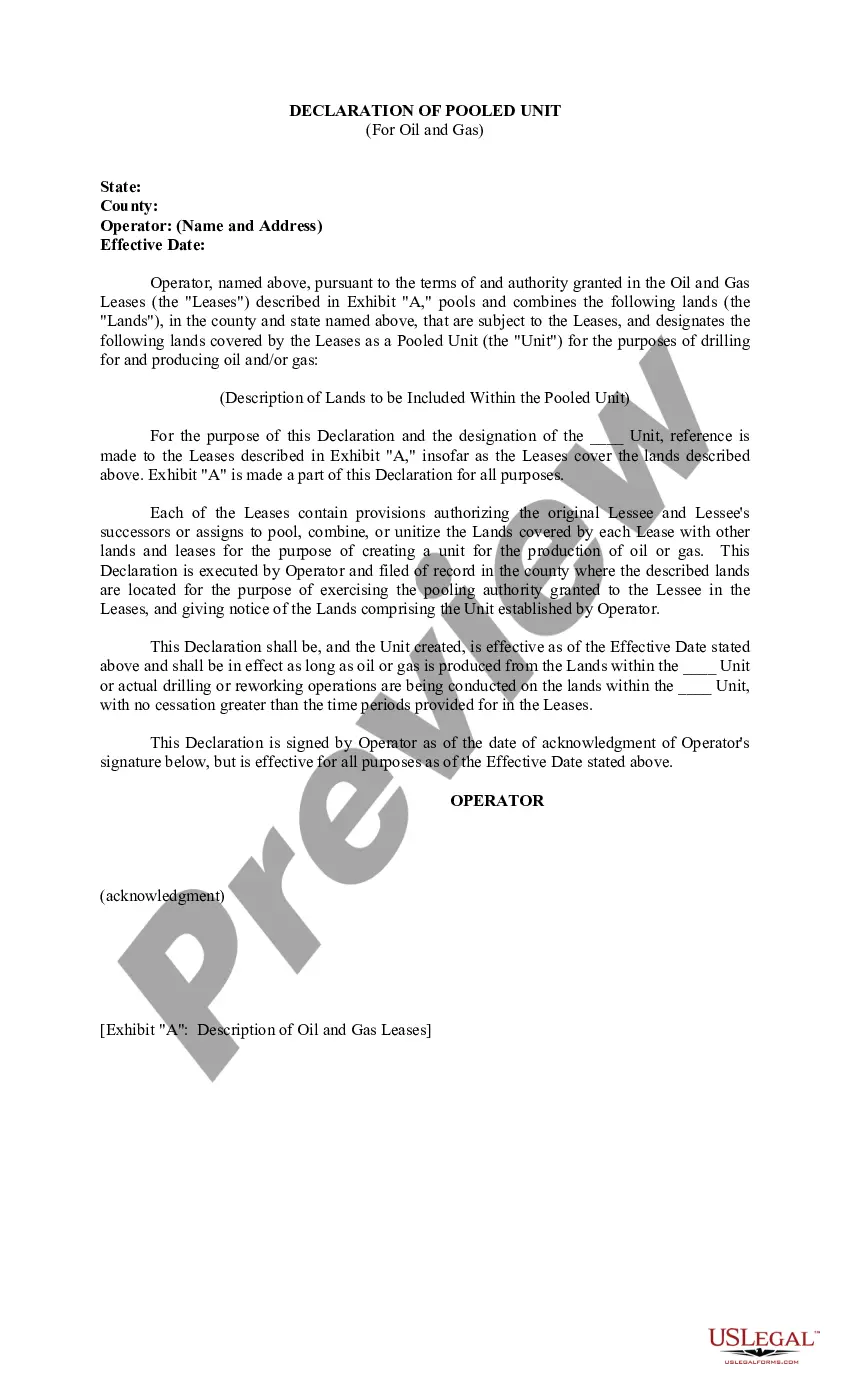
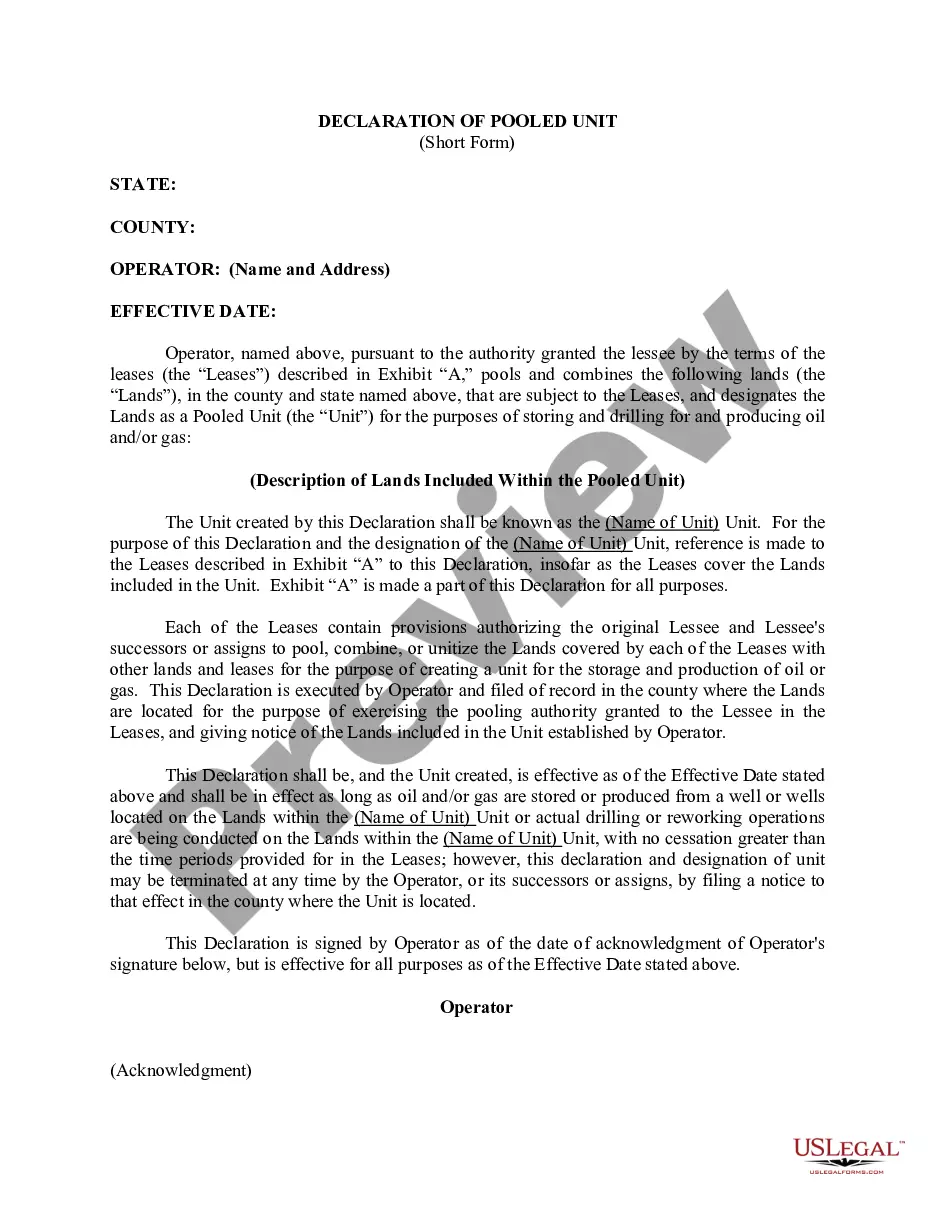
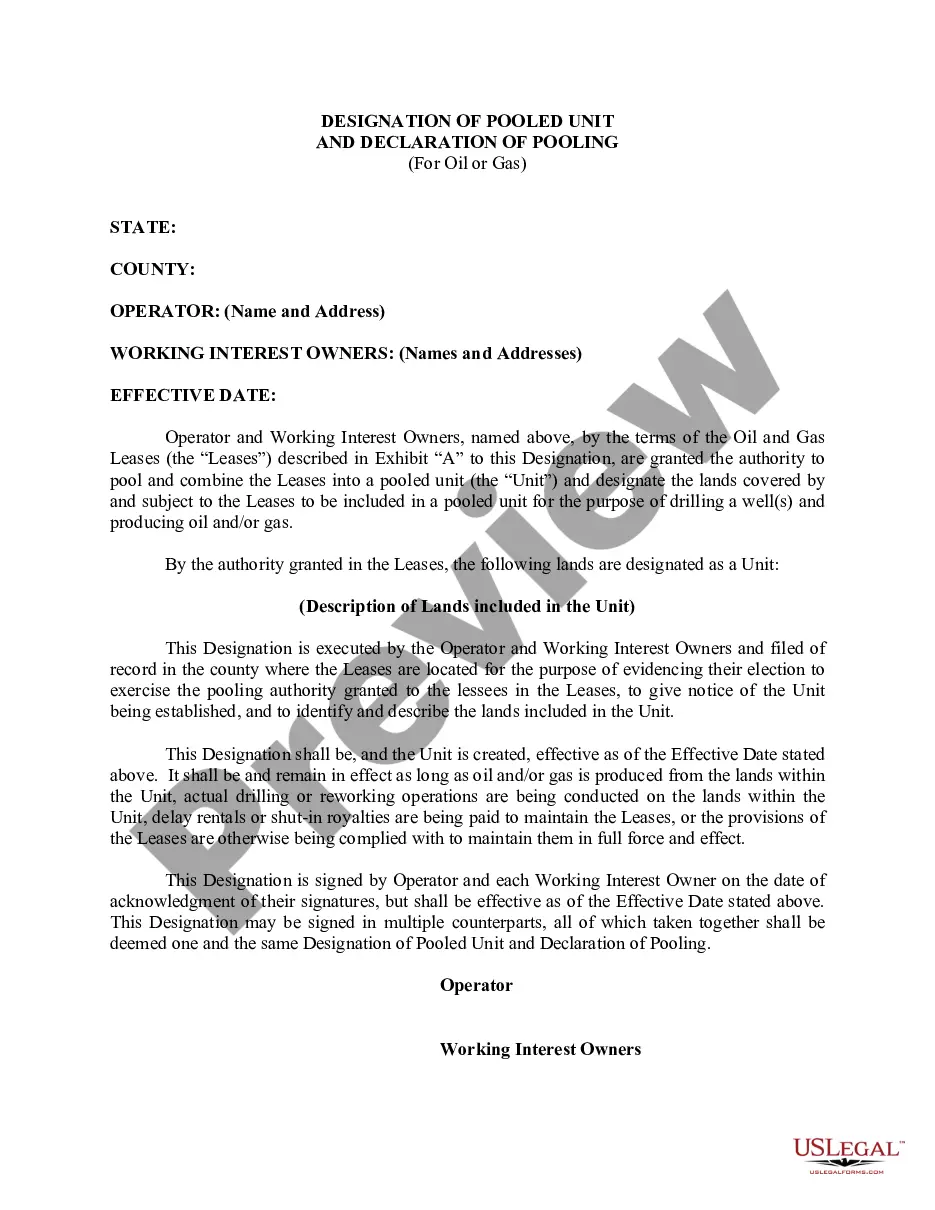
The Declaration of Pooled Unit is a legal document used by unit owners to notify relevant parties that they are pooling, unitizing, and combining various leases related to oil, gas, and minerals. This form facilitates the exploration, development, and production of these resources, allowing multiple leases to be consolidated into one operational unit. It differs from other lease agreements by providing specific provisions for pooling rights and obligations among stakeholders.
Form components explained
- Declaration of unit: Outlines the pooling of interests under specific leases.
- Description of unit area: Identifies the geographical area covered by the pooled unit.
- Unit name: Specifies the designated name for the pooled unit.
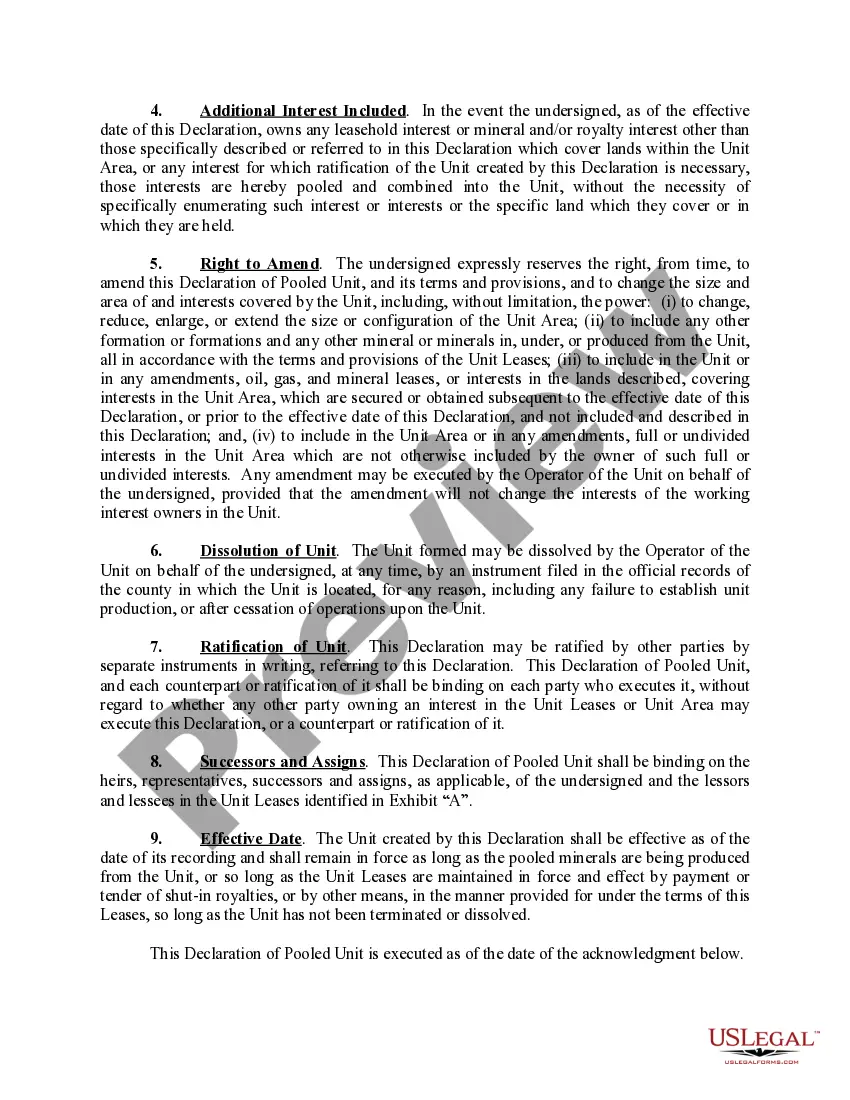
- Amendment rights: Allows for modifications to the declaration and unit configuration.
- Dissolution terms: Defines conditions under which the unit can be dissolved.
- Effectiveness clause: States when the pooling becomes effective.
When to use this document
This declaration is utilized when a unit owner seeks to combine multiple oil and gas leases into one operational unit for effective management. It is often needed in scenarios such as organizing a drilling operation, ensuring compliance with state regulations, or when collaborating with other leaseholders to maximize resource extraction. Use this form to formalize partnerships and clarify the roles of different stakeholders in the pooled unit.
Who this form is for
- Unit owners with interests in multiple oil and gas leases.
- Operators managing pooled units for resource extraction.
- Leaseholders entering into agreements with other landowners in the area.
- Legal representatives drafting declarations for clients involved in oil and gas operations.
How to prepare this document
- Identify the parties involved, including unit owners and associated leaseholders.
- Specify the location and description of all included Unit Leases in Exhibit A.
- Determine and enter the name of the pooled unit.
- Review and potentially include any additional interests in the unit as outlined.
- Sign and date the declaration before a notary if necessary.
Is notarization required?
To make this form legally binding, it must be notarized. Our online notarization service, powered by Notarize, lets you verify and sign documents remotely through an encrypted video session.
Get your form ready online
Our built-in tools help you complete, sign, share, and store your documents in one place.
Make edits, fill in missing information, and update formatting in US Legal Forms—just like you would in MS Word.
Download a copy, print it, send it by email, or mail it via USPS—whatever works best for your next step.
Sign and collect signatures with our SignNow integration. Send to multiple recipients, set reminders, and more. Go Premium to unlock E-Sign.
If this form requires notarization, complete it online through a secure video call—no need to meet a notary in person or wait for an appointment.
We protect your documents and personal data by following strict security and privacy standards.

Make edits, fill in missing information, and update formatting in US Legal Forms—just like you would in MS Word.

Download a copy, print it, send it by email, or mail it via USPS—whatever works best for your next step.

Sign and collect signatures with our SignNow integration. Send to multiple recipients, set reminders, and more. Go Premium to unlock E-Sign.

If this form requires notarization, complete it online through a secure video call—no need to meet a notary in person or wait for an appointment.

We protect your documents and personal data by following strict security and privacy standards.
Mistakes to watch out for
- Failing to accurately describe the leases or unit area.
- Not including all relevant parties in the declaration.
- Omitting necessary amendments or changes in future agreements.
Benefits of using this form online
- Convenient access to legal templates without needing face-to-face meetings.
- Edit the form to tailor it to specific needs easily.
- Access to up-to-date and attorney-drafted content for reliability.
- Quick downloads for immediate use in your legal matters.
Legal use & context
- This declaration serves as a binding agreement among multiple leaseholders for resource management.
- Proper execution ensures enforceability in oil, gas, and mineral rights disputes.
- Understanding the terms can help prevent future legal issues related to lease agreements.
Main things to remember
- The Declaration of Pooled Unit consolidates multiple leases for effective resource management.
- It is essential for ensuring all parties are clear about their rights and obligations.
- Use the form when entering into collaborative extraction efforts in oil and gas industries.
Looking for another form?


Form popularity
FAQ
Net revenue is the amount that is shared among the property owners. To determine net revenue interest, multiply the royalty interest by the owner's shared interest. For example, if you have a 5/16 royalty, your net royalty interest would be 25% multiplied by 5/16, which equals 7.8125% calculated to four decimal places.
Once a Pooling Order is entered, you will receive a copy of the Order, which will state your options as an owner of an interest in the unit. Typically, the Order will afford you a number of options of a cash bonus and royalty payments on production based on the fair market value of your interest.
Pooling Clause: Joining the Leased Land with Other Land The area formed is called a pool or sometimes a pooled unit. Pooling permits the lessee to prevent waste by avoiding unnecessary drilling and to protect the correlative rights of the mineral owners in the common reservoir.
Forced Pooling (sometimes called Statutory or Compulsory Pooling) is a legal mechanism that allows oil and gas operators to drill wells when they are unable to get 100% of the mineral interests to commit to support the drilling of a well.
The percentage each lease tract contributes to the overall PA (or Communitized Area) is referred to as the Tract Participation Factor (TPF). percentage of unit revenue was multiplied by the Royalty (or ORRI) burden, to determine the royalty burden for each tract.
As noted above, while pooling focuses on efficiently combining lands for the purpose of obtaining a drilling permit to drill a single well, unitization focuses on the combination of interests covering a larger area to facilitate development of all or part of a common source of supply (i.e. a field/reservoir).
It also records a "Declaration of Pooling" or similarly named document in the land records office at the local Courthouse. The declaration shows the boundaries of the pooling unit and identifies all the landowners and amount of property each landowner actually has in the unit.