Affidavit Declaring Beneficial / Equitable Ownership of Leasehold Interest
What this document covers
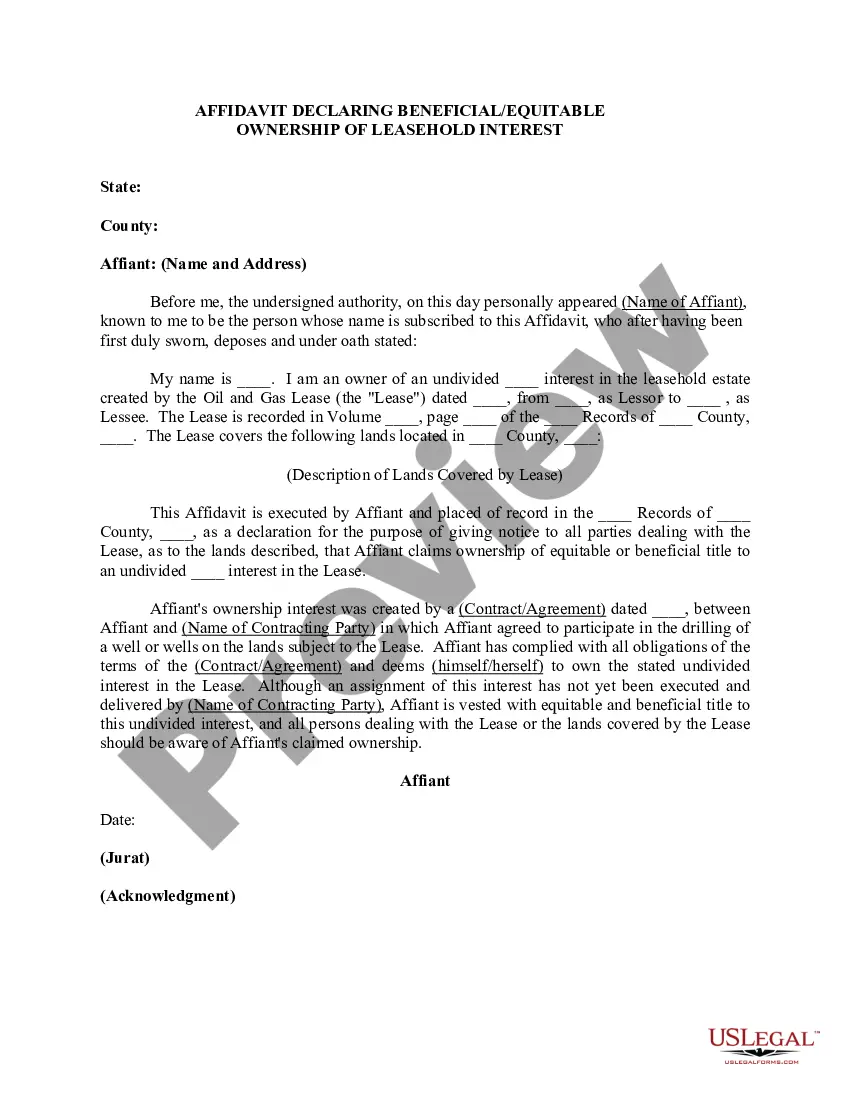
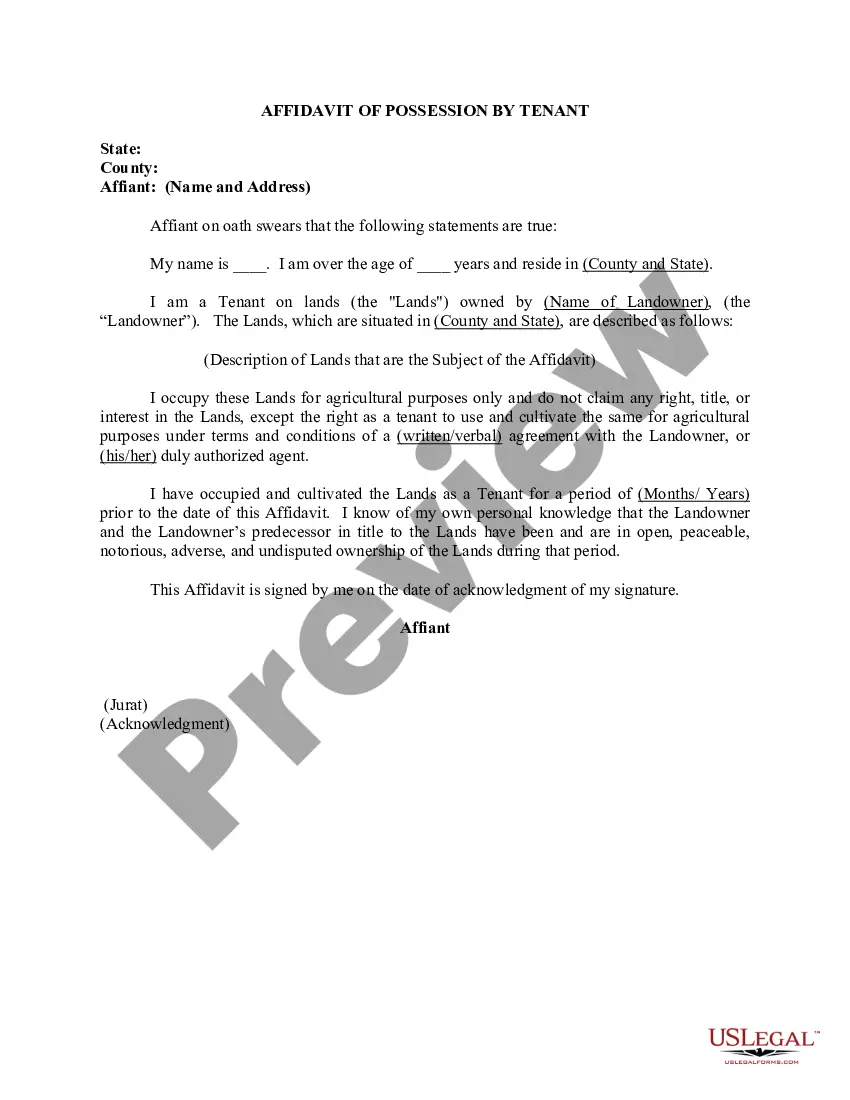
The Affidavit Declaring Beneficial / Equitable Ownership of Leasehold Interest is a legal document that allows an individual, known as the Affiant, to declare their ownership of an equitable or beneficial title to an undivided interest in a leasehold estate. This affidavit serves as a formal statement to notify all parties involved with the lease of the lands described, establishing the Affiant's claim to ownership. Unlike other forms, this affidavit specifically addresses ownership interests in leases, making it essential for those involved in oil and gas leases or similar agreements.
Main sections of this form
- Affiant's name and address
- Details of the leasehold interest, including dates and parties involved
- Legal description of the lands covered by the lease
- Affidavit execution and recording details
- Declaration of ownership interest created by a contract or agreement
- Affiant's compliance with obligations outlined in the contract

Common use cases
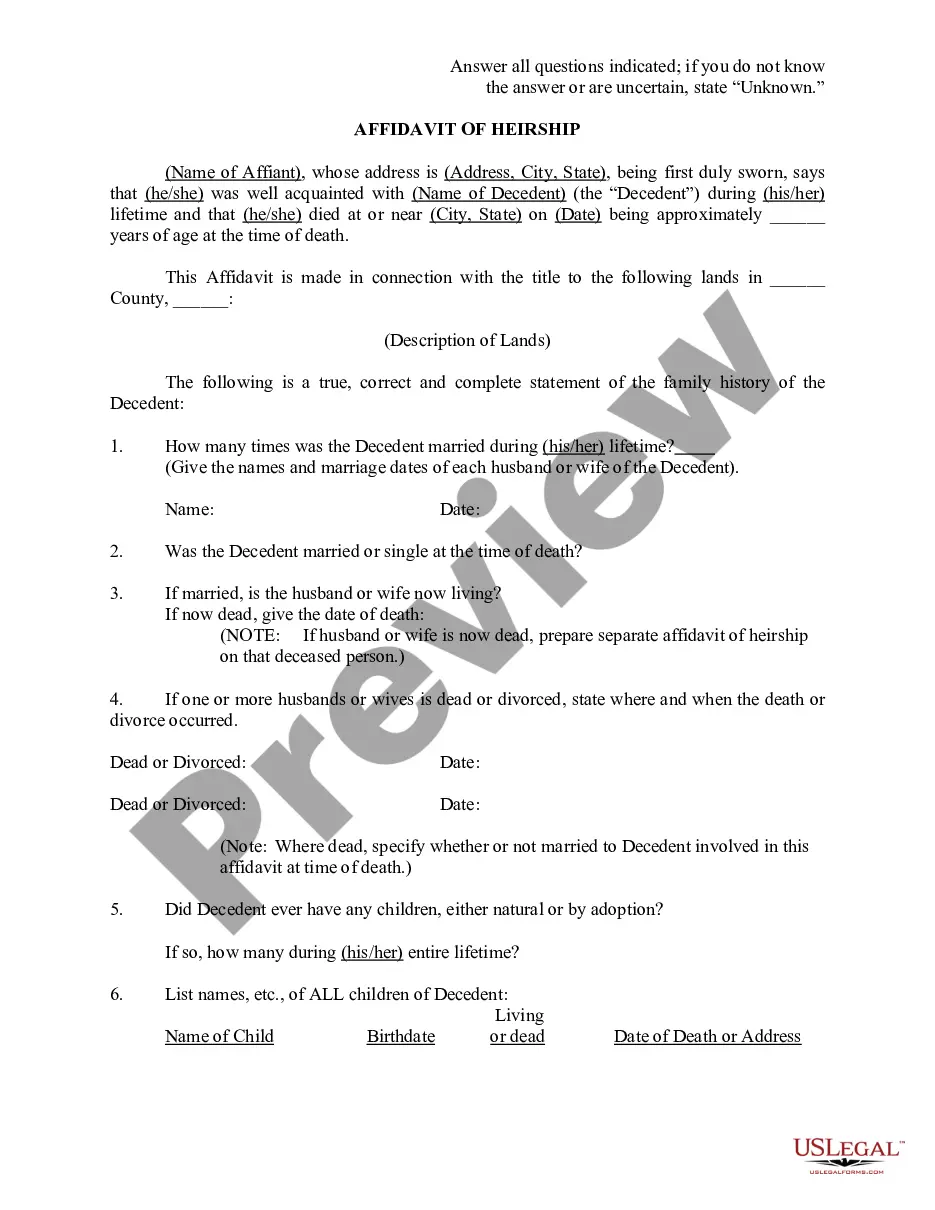
This affidavit is used when an individual wishes to officially declare their ownership of an undivided interest in a leasehold estate. It is commonly utilized in situations where there are multiple parties dealing with the lease, or when the ownership interest has not yet been formally assigned. Using this affidavit protects the Affiant's claim and informs other interested parties of their rights regarding the lease.
Who should use this form
- Individuals who own an equitable or beneficial interest in a lease
- Parties involved in oil and gas leases
- Individuals entering into lease agreements who want to declare their ownership
- Those who want to record their claim of ownership to ensure legal recognition
How to prepare this document
- Identify the Affiant and provide their name and address.
- Specify the details of the lease, including the date, lessor, and lessee.
- Clearly describe the lands covered by the lease.
- State the contract or agreement that created the ownership interest.
- Include a statement of compliance with obligations outlined in the contract.
- Sign the affidavit in the presence of a notary public to validate the document.
Notarization requirements for this form
Yes, this form must be notarized to be legally valid. It is important to sign the affidavit in the presence of a notary public, ensuring that the statement is sworn and recognized as accurate. US Legal Forms offers integrated online notarization services that are available 24/7 through secure video calls, allowing you to complete the process conveniently from home.
Get your form ready online
Our built-in tools help you complete, sign, share, and store your documents in one place.
Make edits, fill in missing information, and update formatting in US Legal Forms—just like you would in MS Word.
Download a copy, print it, send it by email, or mail it via USPS—whatever works best for your next step.
Sign and collect signatures with our SignNow integration. Send to multiple recipients, set reminders, and more. Go Premium to unlock E-Sign.
If this form requires notarization, complete it online through a secure video call—no need to meet a notary in person or wait for an appointment.
We protect your documents and personal data by following strict security and privacy standards.

Make edits, fill in missing information, and update formatting in US Legal Forms—just like you would in MS Word.

Download a copy, print it, send it by email, or mail it via USPS—whatever works best for your next step.

Sign and collect signatures with our SignNow integration. Send to multiple recipients, set reminders, and more. Go Premium to unlock E-Sign.

If this form requires notarization, complete it online through a secure video call—no need to meet a notary in person or wait for an appointment.

We protect your documents and personal data by following strict security and privacy standards.
Avoid these common issues
- Failing to include all necessary details about the lease and interest.
- Not having the affidavit notarized when required.
- Providing incorrect legal descriptions of the lands involved.
- Neglecting to mention compliance with the terms of the contract.
- Not recording the affidavit in the proper public records.
Why complete this form online
- Convenience of downloading and completing the form at any time.
- Editability allows customization for individual needs.
- Reliability of templates drafted by licensed attorneys.
Key takeaways
- The affidavit solidifies the Affiant's claim to ownership of a leasehold interest.
- It notifies all parties involved of the Affiant's rights and interests.
- Proper completion and notarization are essential for legal effectiveness.
- This form should be recorded in public records for validation.
Looking for another form?
Form popularity
FAQ
Understanding Beneficial Owners. For example, when shares of a mutual fund are held by a custodian bank or when securities are held by a broker in street name, the true owner is the beneficial owner, even though, for safety and convenience, the bank or broker holds the title.
Full name, date of birth and/or address of the beneficial owner and perform a KYC check. To verify a beneficial owner you must use reliable and independent electronic data that demonstrates the identity information you collected about the beneficial owner is correct.
Beneficial Owners Individuals considered to exercise significant control over your company are those responsible for managing and directing the business and may include executive officers or senior managers, such as CEO, CFO, COO, Managing Member, General Partner, President, Vice President, or Treasurer.
A beneficial owner is an individual who ultimately owns or controls more than 25% of a company's shares or voting rights, or who otherwise exercise control over the company or its management.
An interest in the economic benefit of property. The beneficial owner of the land will have a right to the income from the property or a share in it, and a right to the proceeds of sale of the property or part of the proceeds.A beneficial interest in property is an equitable interest.
A beneficial owner is a person entitled to the benefit of the land and on their death the equitable interest may not pass in the same way as the legal ownership does. The register does not guarantee that the proprietor is the beneficial owner and that they own the land for their benefit.
In order to establish a beneficial interest in a property, a cohabitant may be able to assert his or her interest by showing that there was some kind of implied trust in place. These trusts are often known as resulting or constructive trusts.
A: This is the person that has significant responsibility to control, manage, or direct the company. Examples include a chief executive officer, chief financial officer, chief operating officer, managing member, general partner, president, vice president, or treasurer.