Interest Verification
What this document covers
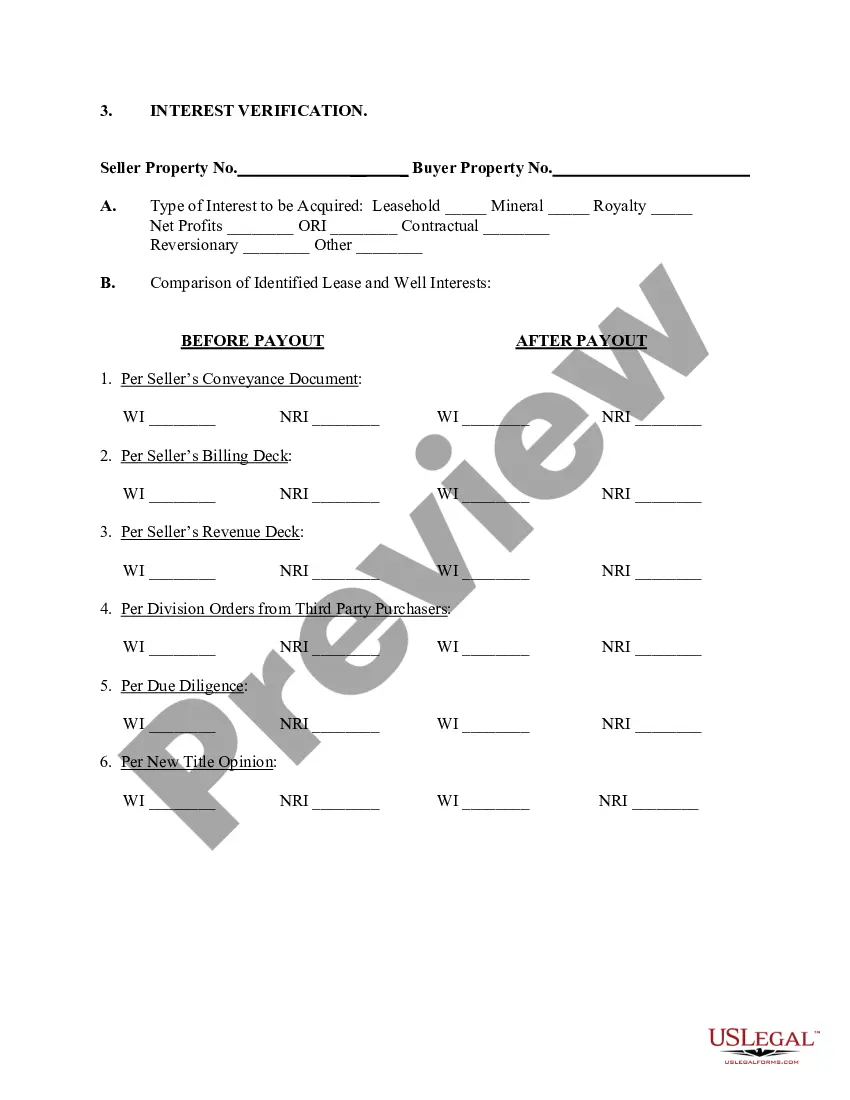
The Interest Verification form is a legal document used to confirm and outline the specific interests in a transaction involving property, such as mineral rights or leaseholds. This form is essential for both buyers and sellers to clarify ownership stakes and ensure a transparent agreement during a sale or lease negotiation. It stands out from similar forms by focusing specifically on verifying vested interests before and after a payout, ensuring all parties are informed and in agreement.
Key components of this form
- Seller Property Number: Identifies the property being sold.
- Buyer Property Number: Identifies the property being acquired.
- Type of Interest to be Acquired: Specifies the nature of the interest (e.g., leasehold, mineral, royalty).
- Comparison of Interests: A detailed comparison showing working interest (WI) and net revenue interest (NRI) both before and after payout based on various documents.
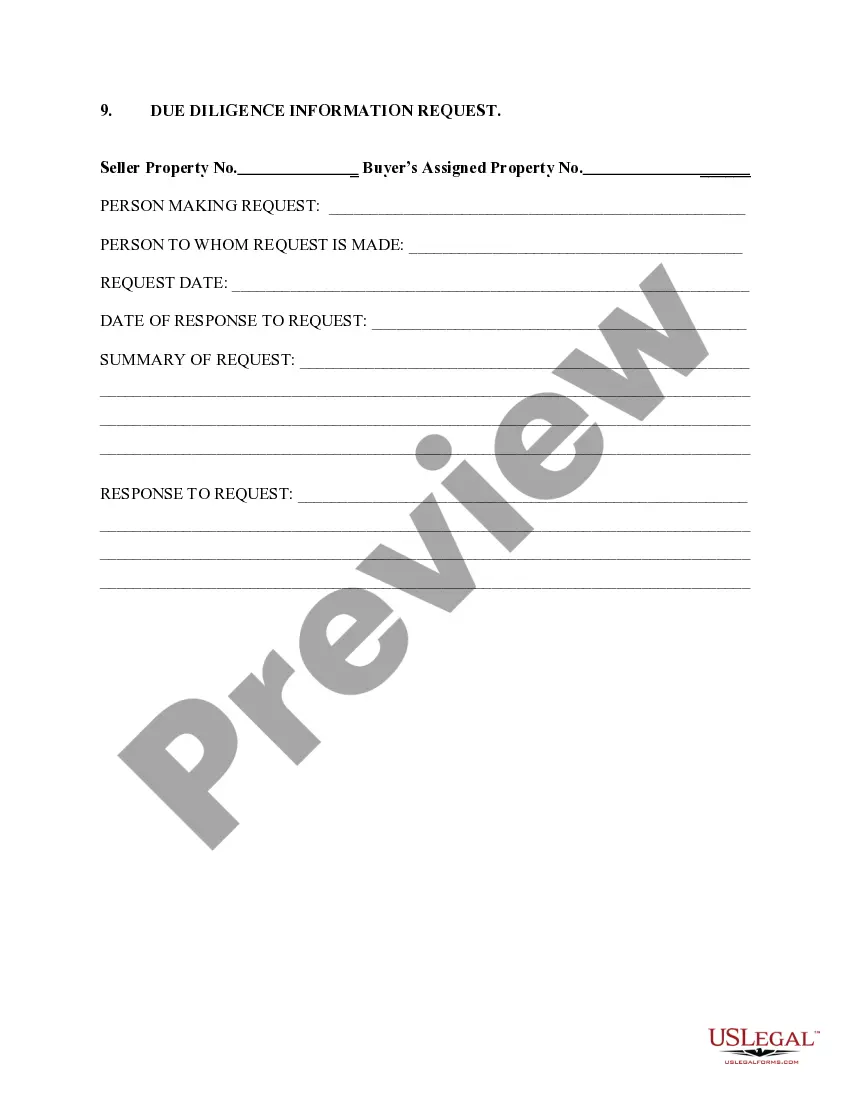
- Due Diligence Section: Ensures that all necessary checks have been made prior to finalizing the transaction.
- Title Opinion: Verifies the legitimacy of the title and rights being transferred.

When this form is needed
This form should be used in real estate transactions where verification of property interests is required. It is particularly useful in the oil and gas industry when transferring mineral rights, managing lease agreements, or clarifying ownership stakes. Whenever there is a need to ensure clarity in interest ownership, this form becomes a vital part of the documentation process.
Who this form is for
- Property sellers who need to verify and document the interests they hold.
- Buyers looking to confirm their rights to interests in a property.
- Industry professionals involved in real estate, oil, and gas transactions.
- Attorneys working on behalf of clients to facilitate property interest transfers.
How to prepare this document
- Identify the parties involved: Fill in the seller and buyer property numbers corresponding to the properties in question.
- Specify the type of interest to be acquired: Choose from the list, such as leasehold or mineral rights.
- Complete the comparison table: Fill in the working interests (WI) and net revenue interests (NRI) using appropriate documents to support the claims.
- Include due diligence findings: Document any checks conducted regarding the property title and interests.
- Review and verify: Ensure all information is accurate before finalizing the document.
Is notarization required?
Notarization is not commonly needed for this form. However, certain documents or local rules may make it necessary. Our notarization service, powered by Notarize, allows you to finalize it securely online anytime, day or night.
Get your form ready online
Our built-in tools help you complete, sign, share, and store your documents in one place.
Make edits, fill in missing information, and update formatting in US Legal Forms—just like you would in MS Word.
Download a copy, print it, send it by email, or mail it via USPS—whatever works best for your next step.
Sign and collect signatures with our SignNow integration. Send to multiple recipients, set reminders, and more. Go Premium to unlock E-Sign.
If this form requires notarization, complete it online through a secure video call—no need to meet a notary in person or wait for an appointment.
We protect your documents and personal data by following strict security and privacy standards.

Make edits, fill in missing information, and update formatting in US Legal Forms—just like you would in MS Word.

Download a copy, print it, send it by email, or mail it via USPS—whatever works best for your next step.

Sign and collect signatures with our SignNow integration. Send to multiple recipients, set reminders, and more. Go Premium to unlock E-Sign.

If this form requires notarization, complete it online through a secure video call—no need to meet a notary in person or wait for an appointment.

We protect your documents and personal data by following strict security and privacy standards.
Common mistakes to avoid
- Failing to correctly identify property and buyer numbers.
- Entering inaccurate interest types, leading to disputes later.
- Omitting necessary documentation in the comparison table.
- Not verifying due diligence findings before submitting the form.
Benefits of completing this form online
- Convenience: Easily download and complete the form from anywhere, anytime.
- Editability: Fill in or modify the form as needed before final submission.
- Reliability: Forms are drafted by licensed attorneys, ensuring legal compliance.
What to keep in mind
- The Interest Verification form is crucial for clarifying property interests in real estate transactions.
- Accurate completion of the form prevents disputes and ensures both parties have a clear understanding of interests involved.
- Utilizing the form online provides convenience and ease of access.
Looking for another form?
Form popularity
FAQ
Two years of personal tax returns. Two years of business tax returns including schedules K-1, 1120, 1120S. Business license. Year-to-date profit and loss statement (P&L) Balance sheet.
They verify income by looking at paycheck stubs showing year-to-date earnings, bank statements, and tax documents. They use these documents to verify your income to make sure that you have the ability to repay your loan.
Buying a home without a job is possible, but it's not easy. If you can't prove to a lender that you have a steady job, you'll instead need to prove that you have a sizable savings account, lots of liquid assets or a reliable source of income other than a traditional job.
Unemployment income and mortgagesIf you're currently on unemployment, your lender most likely won't be able to use your unemployment income towards qualifying for a home loan.Your lender must also determine that the income is likely to continue into the future, typically for at least three years.
Yes. However, have enough money in the bank to pay the other 50% anytime you want and still have 23 years of living expenses. Never give up equity to others unless a last resort. You can always got to a Hard Money Lender who loans on the asset and doesn't care about your income.
Your credit scores. Your credit history plays a big factor in auto loans, as well. Your down payment. Your loan term. Your car.
Show more income. Higher earnings could land you a bigger loan. Pay off other debt. Raise your credit score. Pay at least 20 percent down. Apply for a 7/1 ARM, FHA or VA loan.
You can no longer buy a house without proof of income. You have to prove you can pay the loan back somehow. But there are modern alternatives to stated income loans. For instance, you can show proof of income through bank statements, assets, or retirement accounts instead of W2 tax forms (the traditional method).
Tax returns. Mortgage lenders want to get the full story of your financial situation. Pay stubs, W-2s or other proof of income. Lenders may ask to see your pay stubs from the past month or so. Bank statements and other assets. Credit history. Gift letters. Photo ID. Renting history. 6 tips to save for a house.