Groundwater Lease
What this document covers
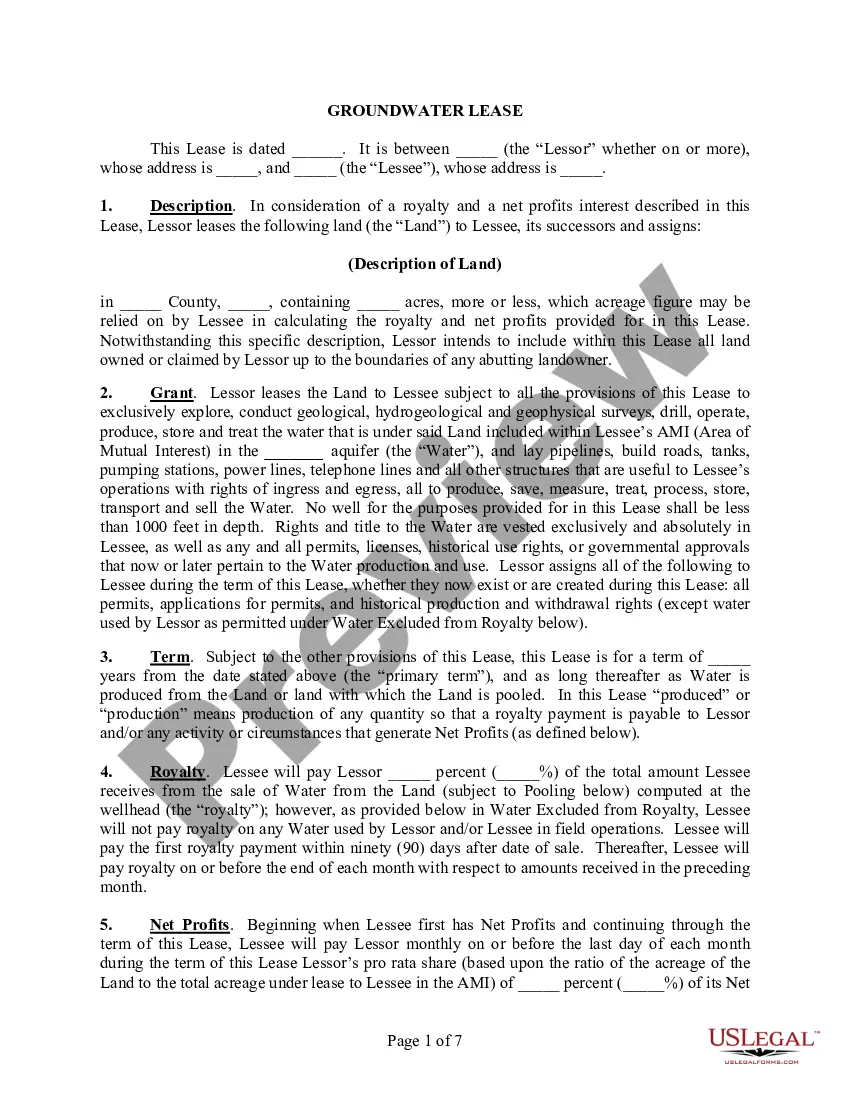
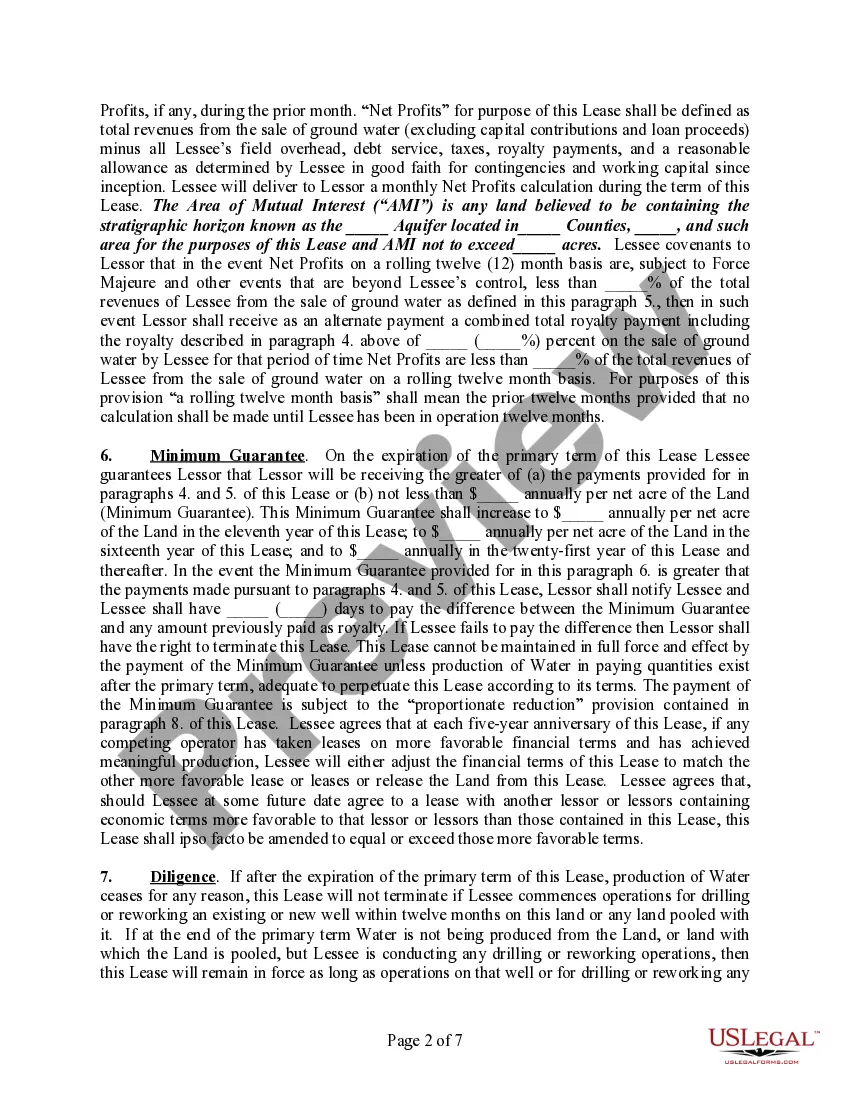
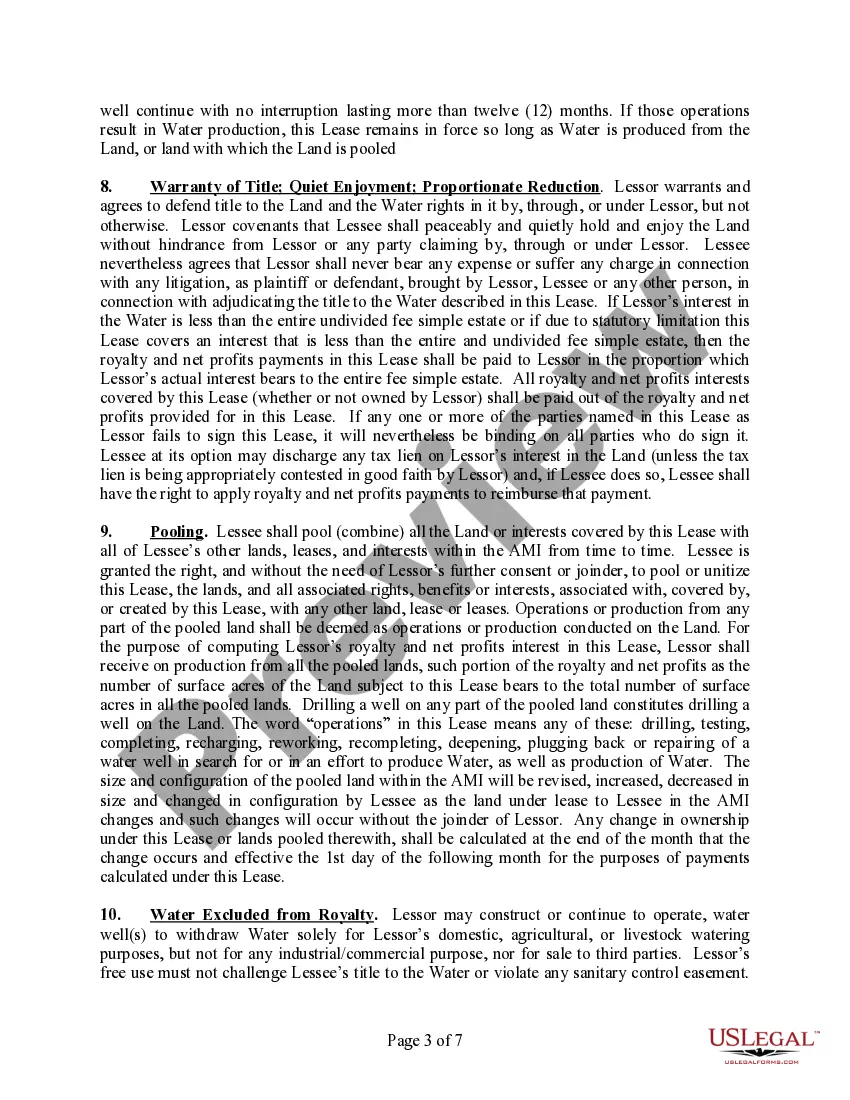
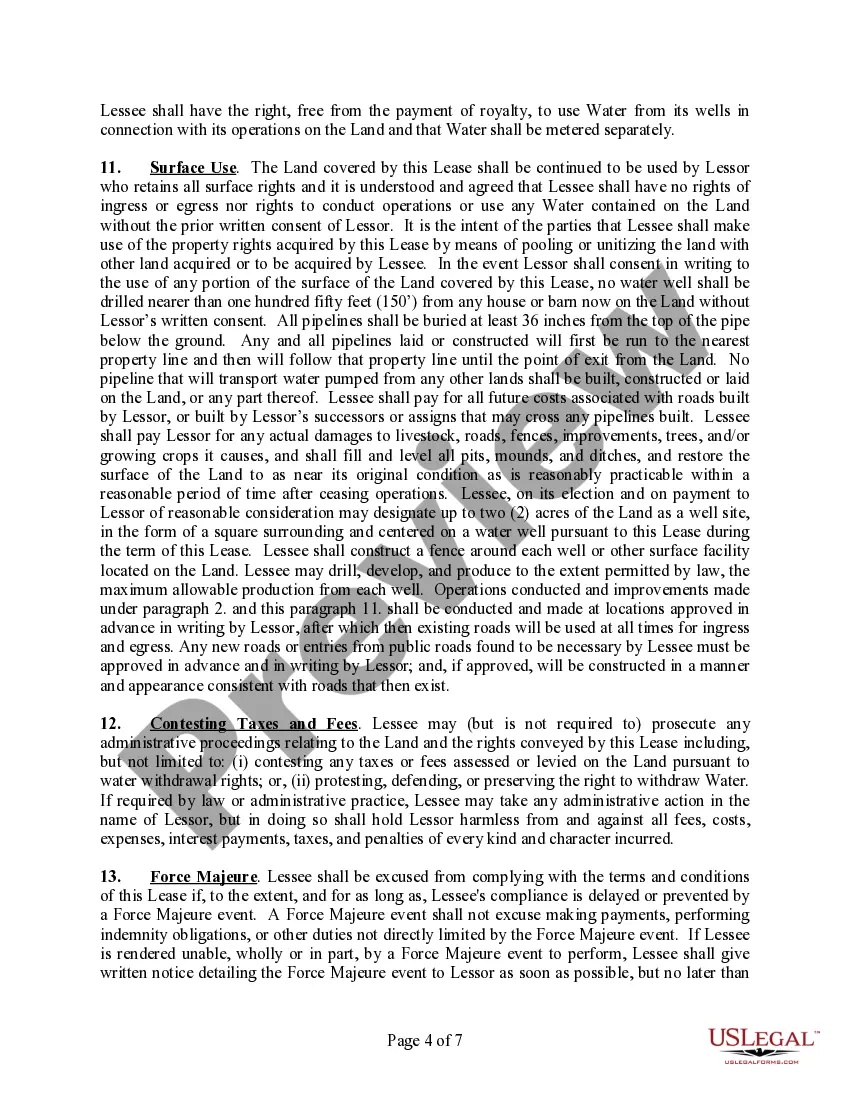
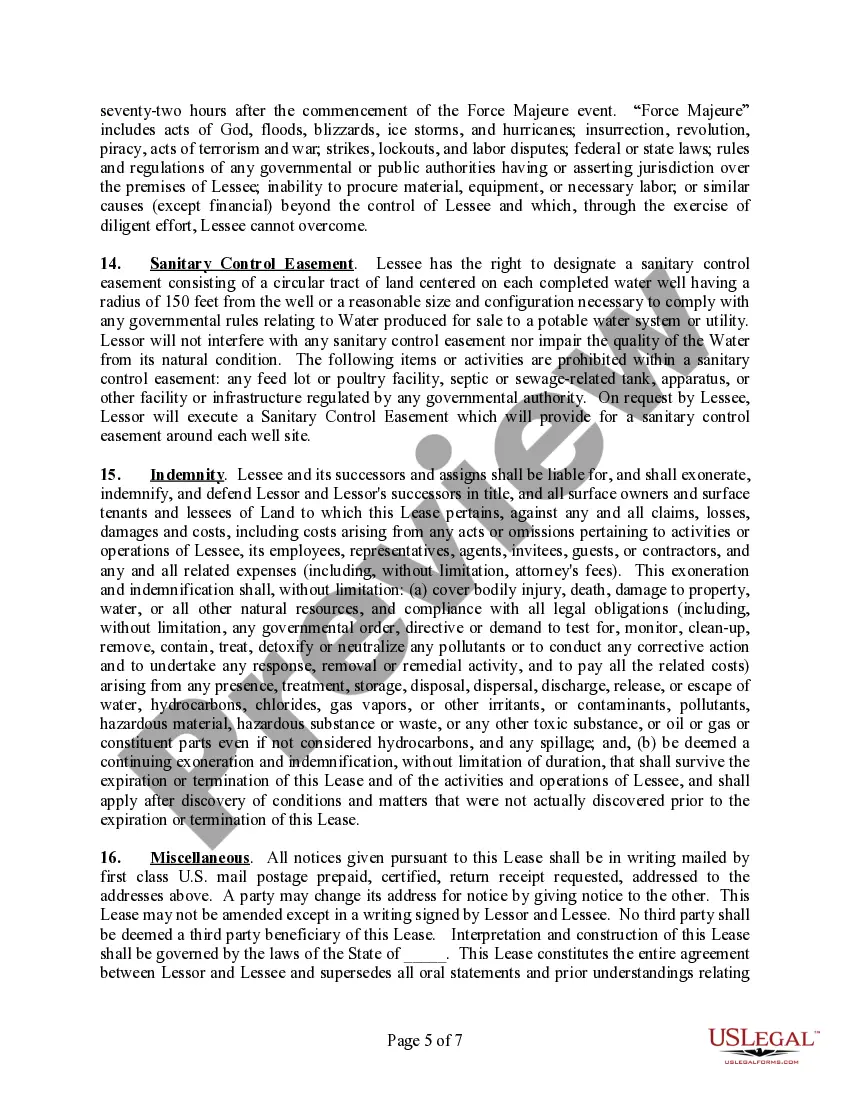
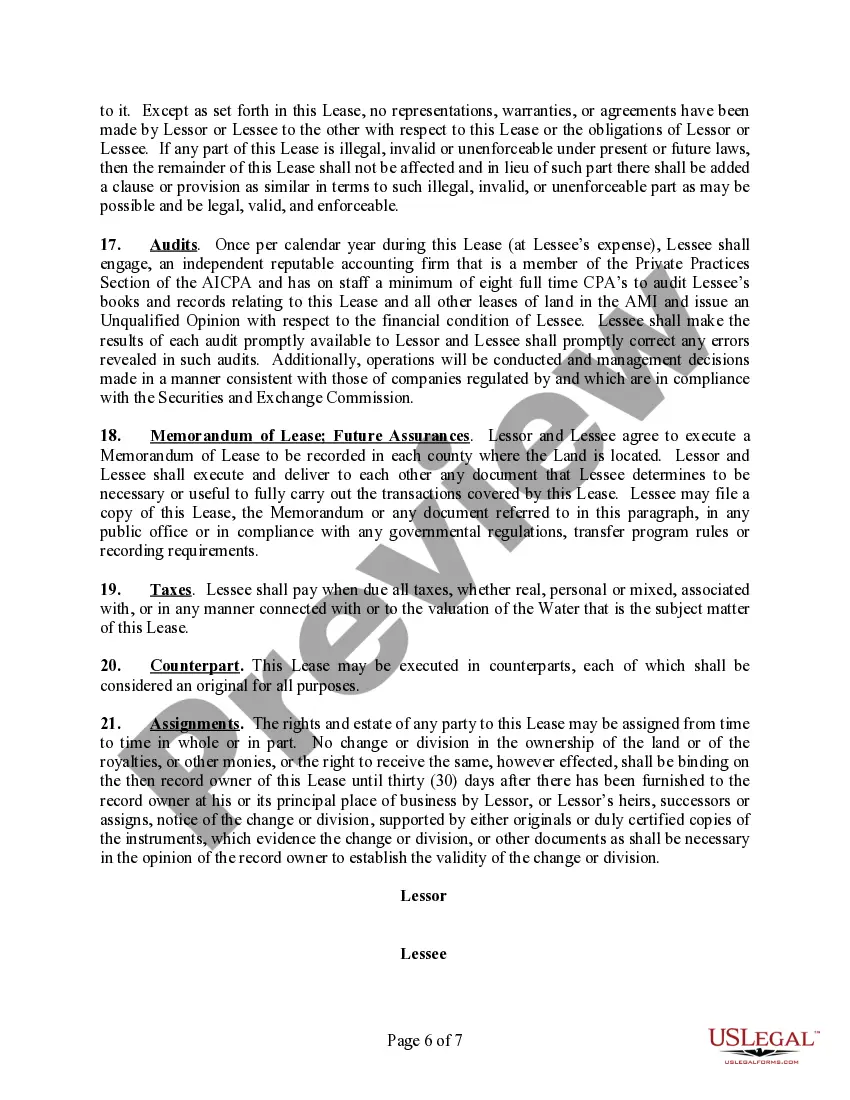
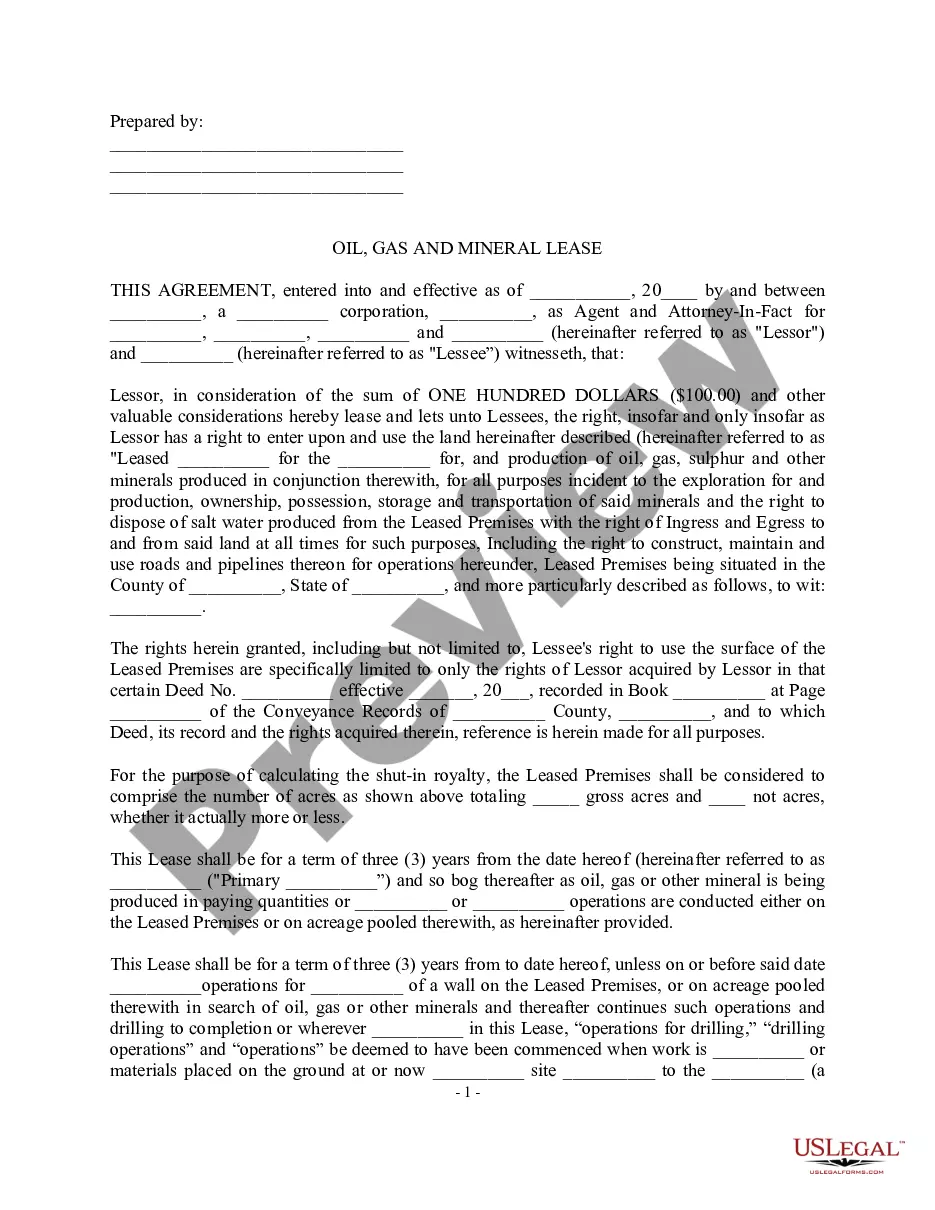
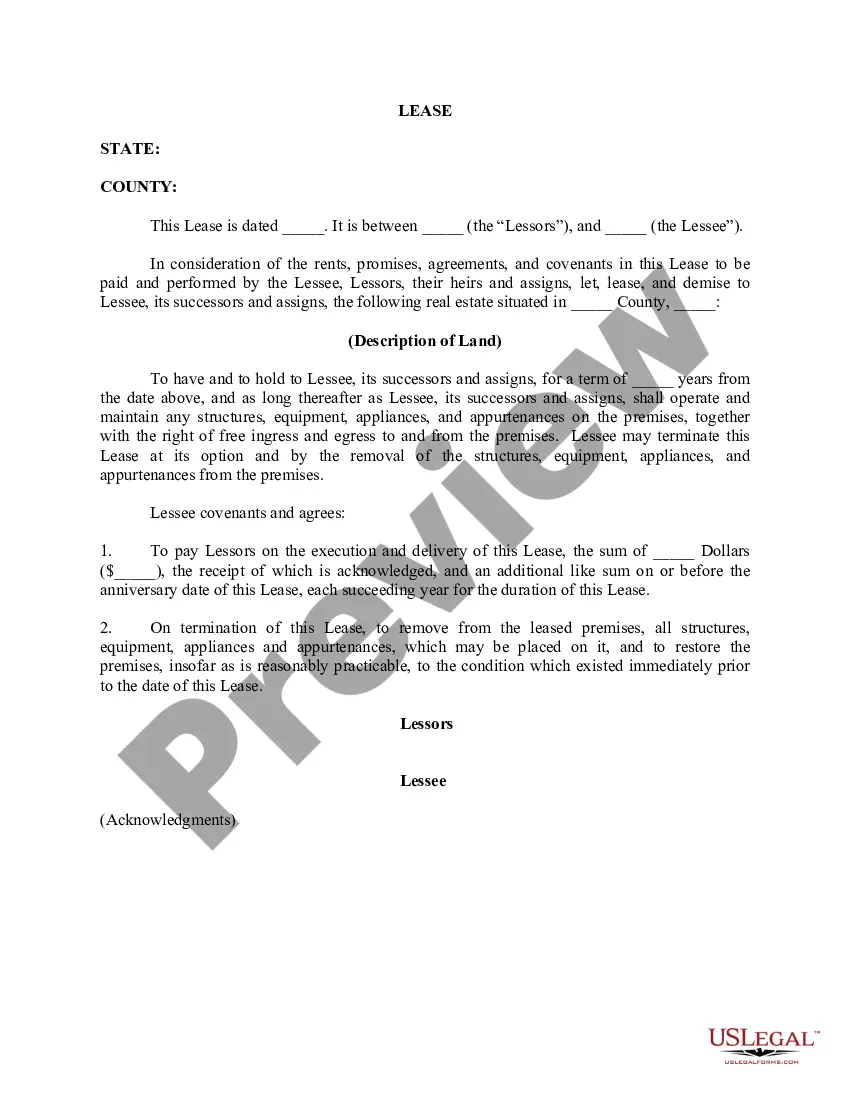
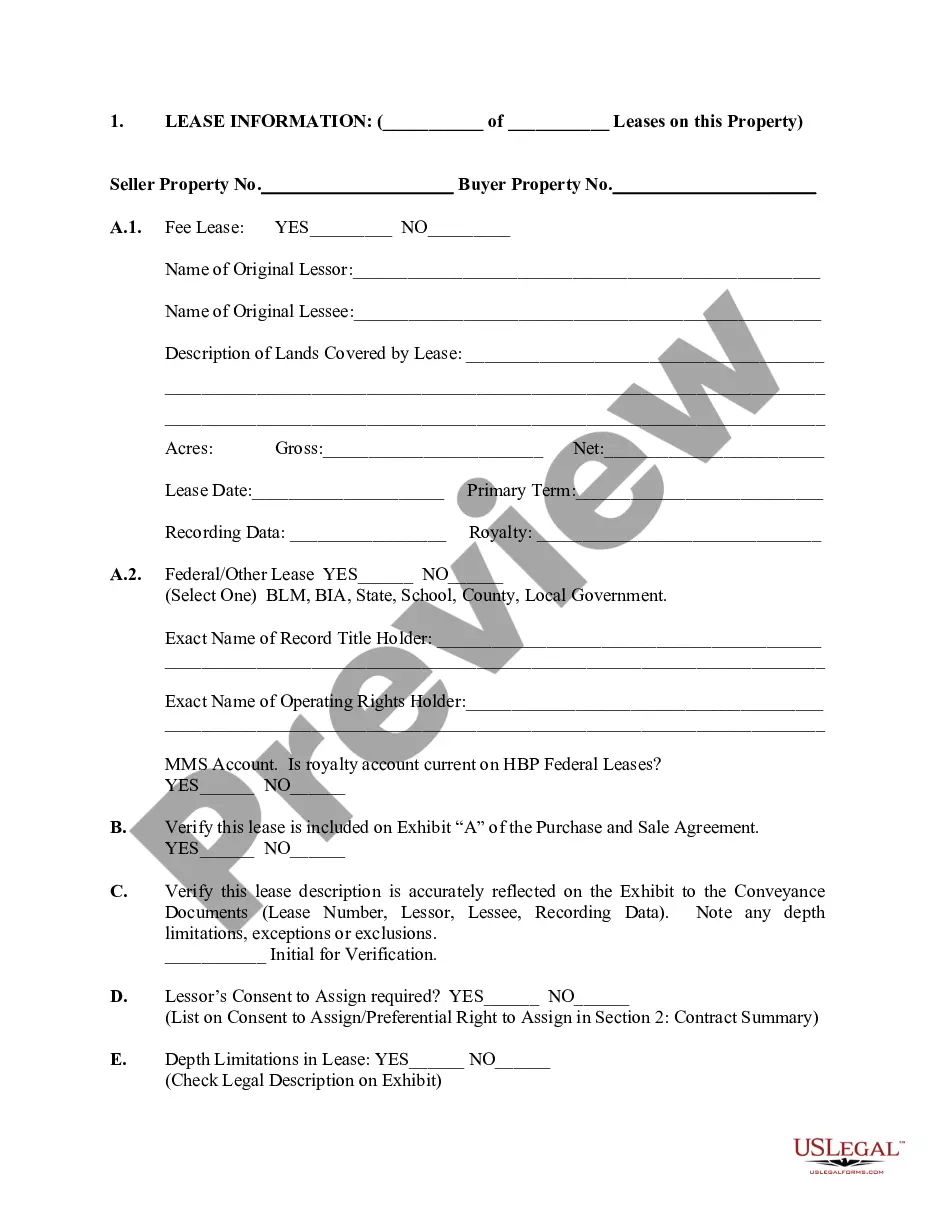
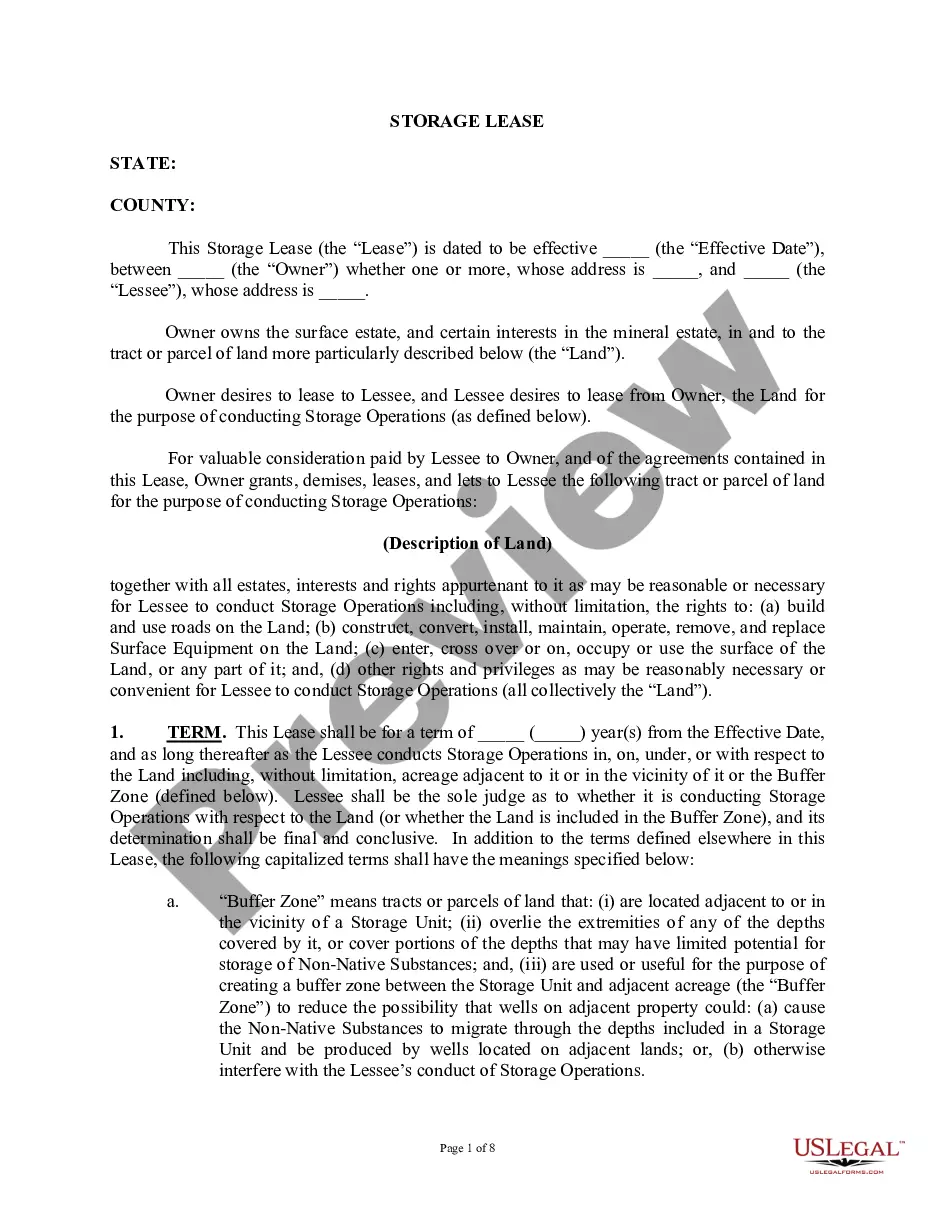
The Groundwater Lease is a legal document that facilitates the agreement between a landowner (Lessor) and a person or entity (Lessee) wishing to extract and use groundwater from the property. This lease emphasizes the rights of the Lessee to explore, produce, and manage groundwater, while ensuring that the Lessor receives royalties and benefits from the extracted resources. Unlike standard rental agreements, this lease specifically addresses the extraction and management of water resources, making it unique for parties involved in groundwater leasing arrangements.
What’s included in this form
- Date of lease and identification of the Lessor and Lessee.
- Description of the land and specified water rights included in the lease.
- Royalty arrangement outlining the percentage of profits shared with the Lessor.
- Details on the production term and conditions for lease renewal.
- Rights concerning water usage and potential for pooling with adjacent lands.
- Provisions for minimum guarantees and adjustments based on competing leases.
When to use this form
This form should be utilized when a landowner wishes to lease the groundwater rights of their property to another party for exploration and extraction. It is particularly relevant in scenarios involving agricultural operations, development projects, or when businesses require significant water resources for industrial purposes. The lease defines the legal framework for both parties, ensuring transparency and fair compensation for the extraction of water.
Who should use this form
- Landowners who want to lease groundwater rights to a third party.
- Businesses or individuals interested in extracting groundwater for commercial use.
- Attorneys or legal professionals assisting clients in groundwater leasing agreements.
- Agricultural producers needing additional water resources for crops or livestock.
Instructions for completing this form
- Enter the date the lease is signed and identify the Lessor and Lessee by filling in their names and addresses.
- Clearly describe the piece of land being leased, specifying its location, size, and any relevant boundaries.
- State the agreed percentage for royalty payments and other financial arrangements based on water sales.
- Complete the section regarding the term of the lease, including the number of years and conditions for renewal.
- Ensure all parties sign the form, indicating their agreement to the terms set forth in the lease.
Is notarization required?
Notarization is generally not required for this form. However, certain states or situations might demand it. You can complete notarization online through US Legal Forms, powered by Notarize, using a verified video call available anytime.
Get your form ready online
Our built-in tools help you complete, sign, share, and store your documents in one place.
Make edits, fill in missing information, and update formatting in US Legal Forms—just like you would in MS Word.
Download a copy, print it, send it by email, or mail it via USPS—whatever works best for your next step.
Sign and collect signatures with our SignNow integration. Send to multiple recipients, set reminders, and more. Go Premium to unlock E-Sign.
If this form requires notarization, complete it online through a secure video call—no need to meet a notary in person or wait for an appointment.
We protect your documents and personal data by following strict security and privacy standards.

Make edits, fill in missing information, and update formatting in US Legal Forms—just like you would in MS Word.

Download a copy, print it, send it by email, or mail it via USPS—whatever works best for your next step.

Sign and collect signatures with our SignNow integration. Send to multiple recipients, set reminders, and more. Go Premium to unlock E-Sign.

If this form requires notarization, complete it online through a secure video call—no need to meet a notary in person or wait for an appointment.

We protect your documents and personal data by following strict security and privacy standards.
Common mistakes to avoid
- Failing to specify the exact acreage and boundaries of the leased land.
- Omitting required signatures from all parties involved in the lease.
- Not clearly stating the percentage of royalties or minimum guarantees.
- Neglecting to address potential pooling agreements and the impact on royalties.
Why complete this form online
- Immediate access to a legally compliant template drafted by licensed attorneys.
- Edit the form as needed to fit specific arrangements before downloading.
- Ensured reliability of the document, minimizing potential legal disputes.
Looking for another form?



Form popularity
FAQ
Water found underground is called groundwater. Groundwater includes water found in aquifers, water found in the soil, in crevices of rocks, and any other water found beneath the surface of the earth.
Landowners may obtain a water right by applying for a permit from the Texas Commission on Environmental Quality (TCEQ). After obtaining a permit, the landowner can use surface water for domestic, agricultural, industrial, and other beneficial uses.
Groundwater is water that exists underground in saturated zones beneath the land surface. The upper surface of the saturated zone is called the water table.It fills the pores and fractures in underground materials such as sand, gravel, and other rock, much the same way that water fills a sponge.
Go Native. Use native plants in your landscape. Reduce Chemical Use. Manage Waste. Don't Let It Run. Fix the Drip. Wash Smarter. Water Wisely. Reduce, Reuse, and Recycle.
For the purposes of this Article, a lease is any temporary transfer, for. consideration, of actual water to instream flow. The possible permutations. of transfer arrangements are limited only by the parties' imaginations.
To reduce over usage of groundwater: The best way to reduce the over-usage of groundwater is to store the rainwater in everyone's home. The groundwater depletion and the subsiding of groundwaterlevel is a very popular cause of concern in the modern days.
Water that collects or flows beneath the Earth's surface, filling the porous spaces in soil, sediment, and rocks. Groundwater originates from rain and from melting snow and ice and is the source of water for aquifers, springs, and wells. The upper surface of groundwater is the water table.
Groundwater, water that occurs below the surface of Earth, where it occupies all or part of the void spaces in soils or geologic strata. It is also called subsurface water to distinguish it from surface water, which is found in large bodies like the oceans or lakes or which flows overland in streams.
Groundwater is fresh water (from rain or melting ice and snow) that soaks into the soil and is stored in the tiny spaces (pores) between rocks and particles of soil.