Defendant's Motion for Protective Order and Response to Plaintiff's Motion to Compel
What this document covers
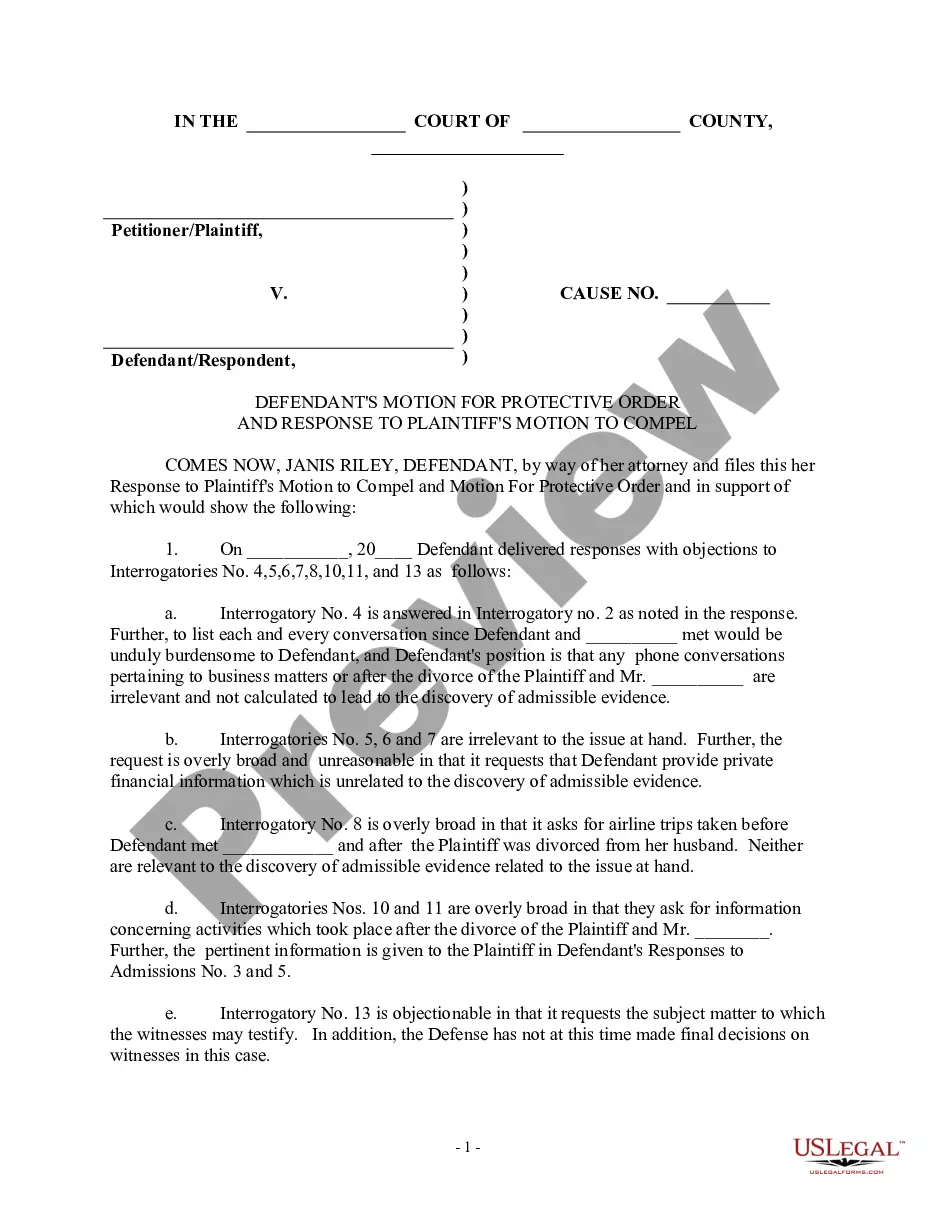
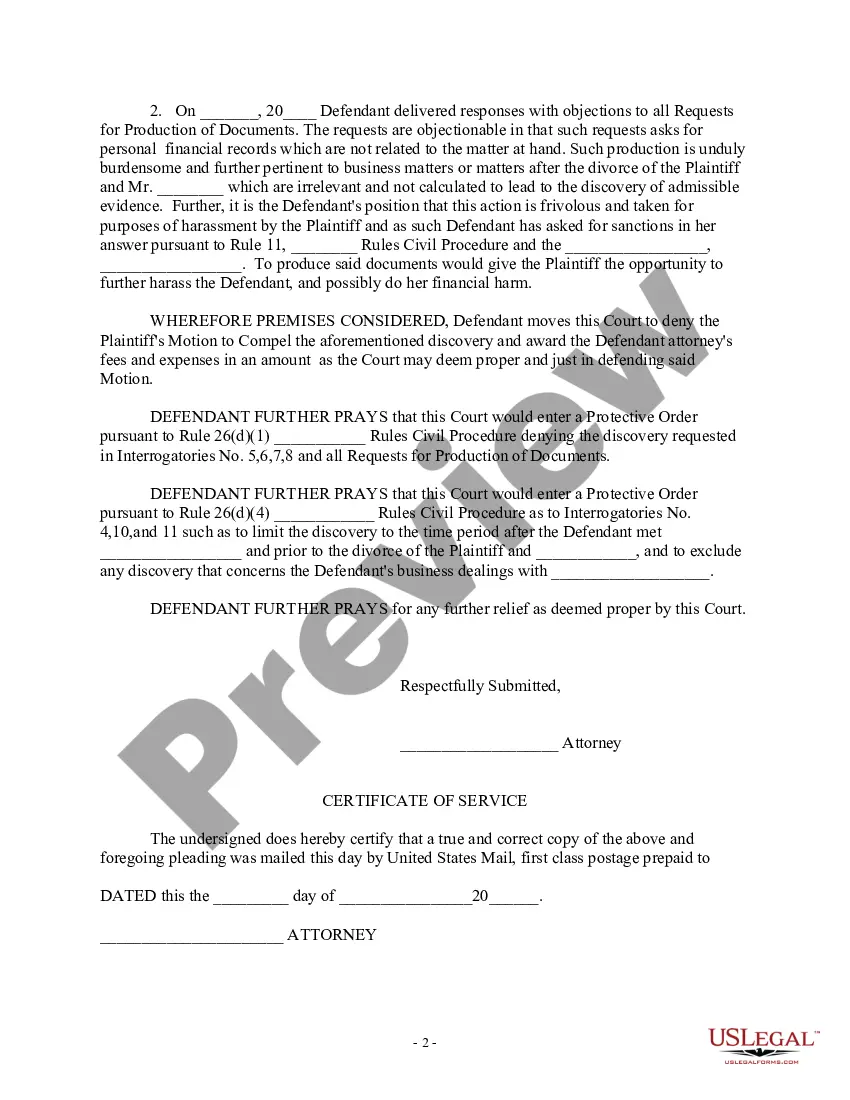
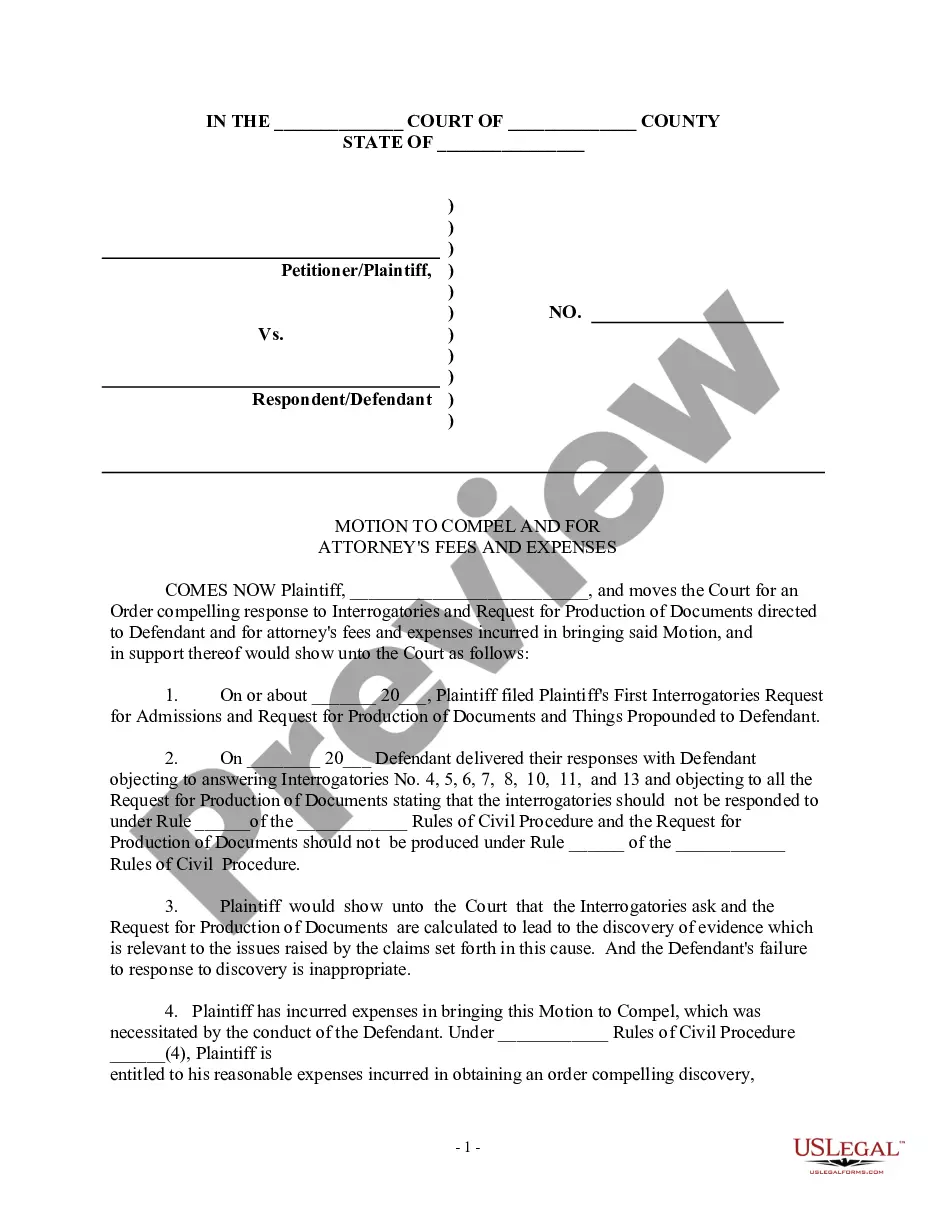
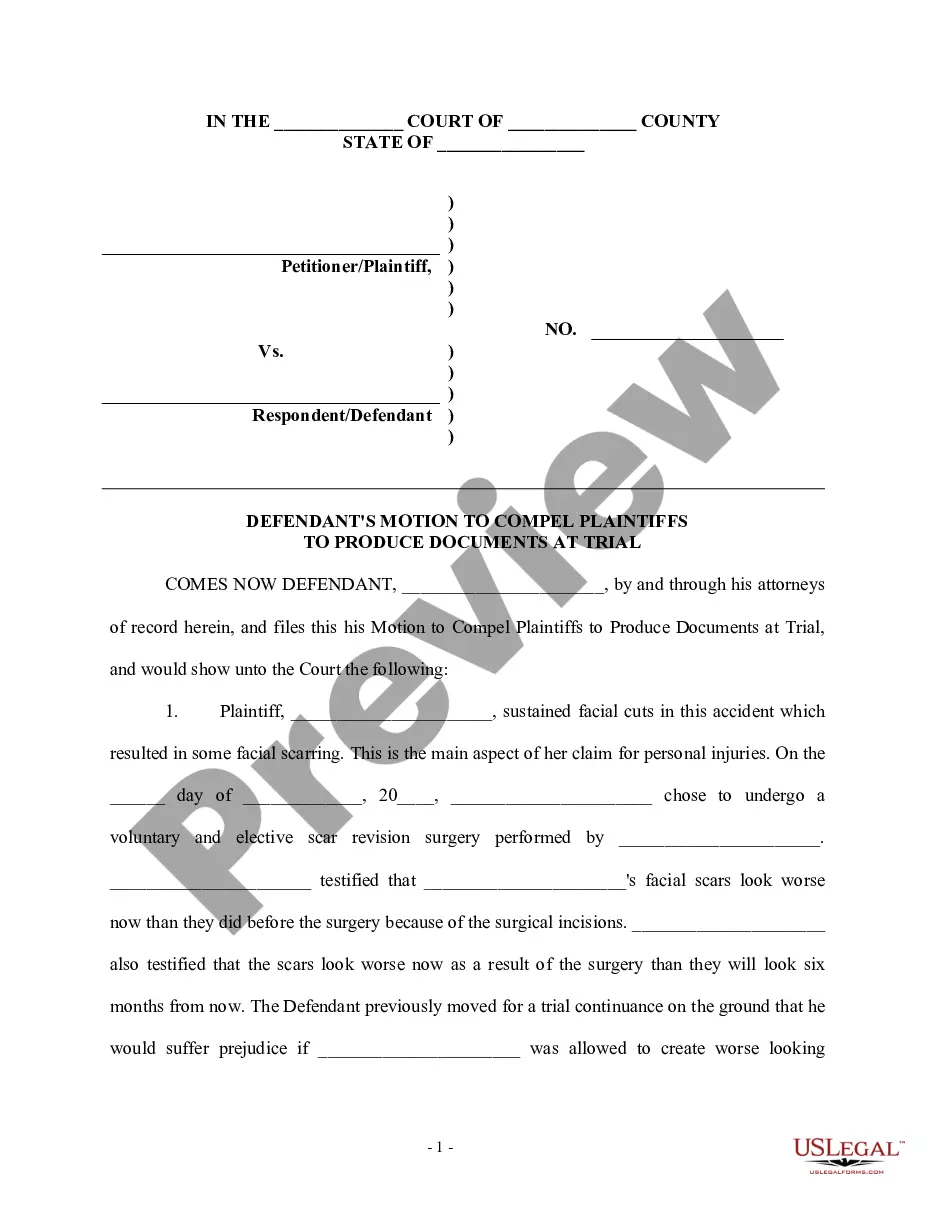
The Defendant's Motion for Protective Order and Response to Plaintiff's Motion to Compel is a legal document used in civil litigation. This form enables the defendant to respond to the plaintiff's request for discovery while seeking protection against intrusive or irrelevant information requests. It is crucial for maintaining privacy and ensuring that courts do not overwhelm parties with overly broad or irrelevant discovery demands. Unlike simple response forms, this document combines both a motion for protective relief and a response to compel, allowing for a comprehensive legal strategy in response to discovery requests.
Key components of this form
- Identification of the parties involved and court details.
- Specific objections to the plaintiff's interrogatories, detailing why they are burdensome or irrelevant.
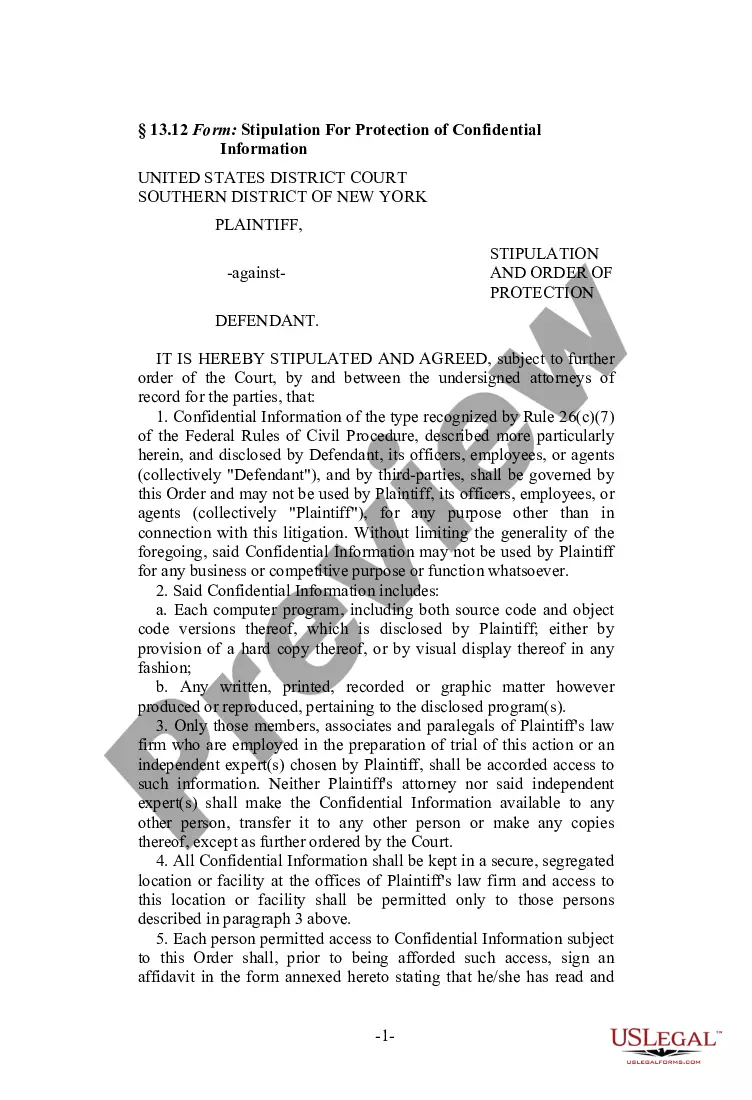
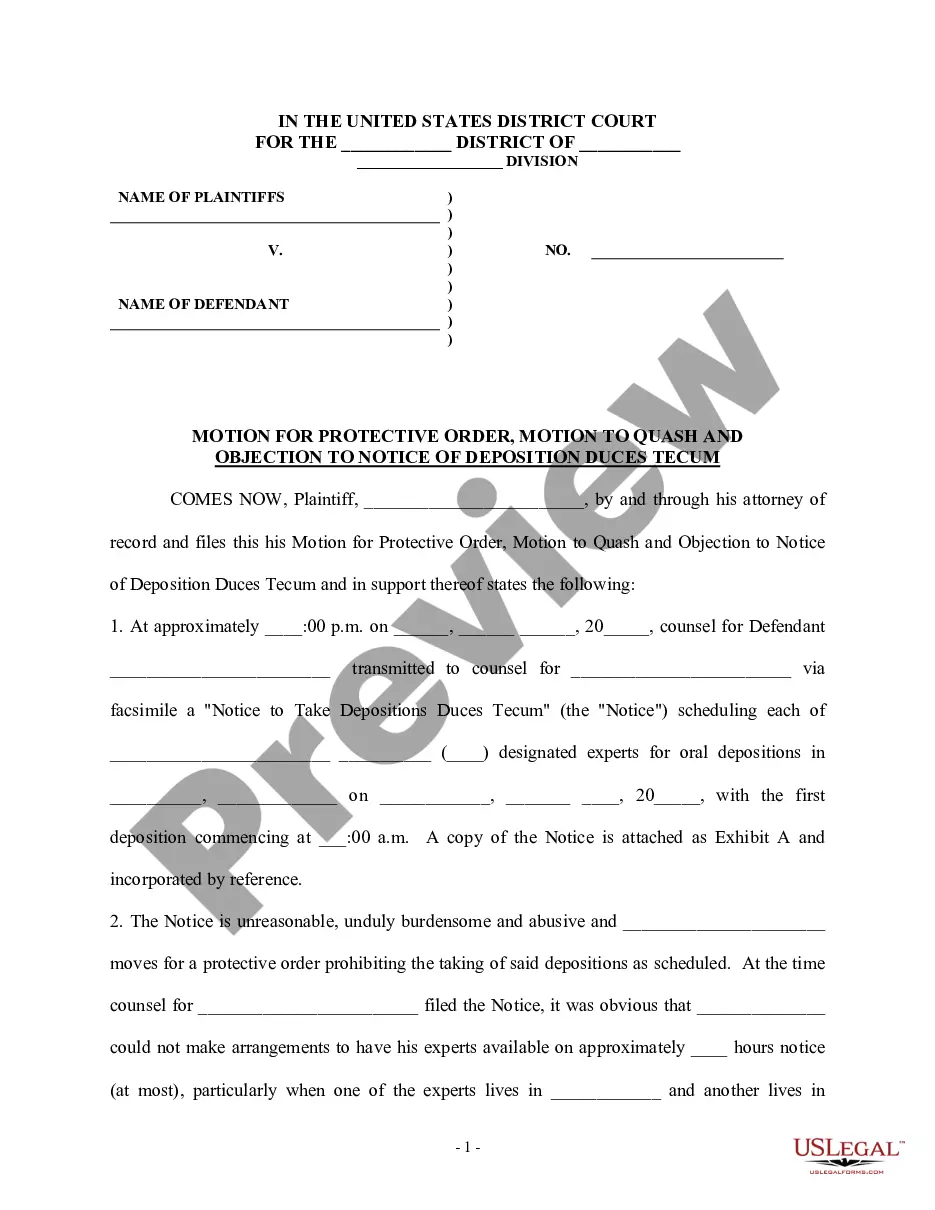
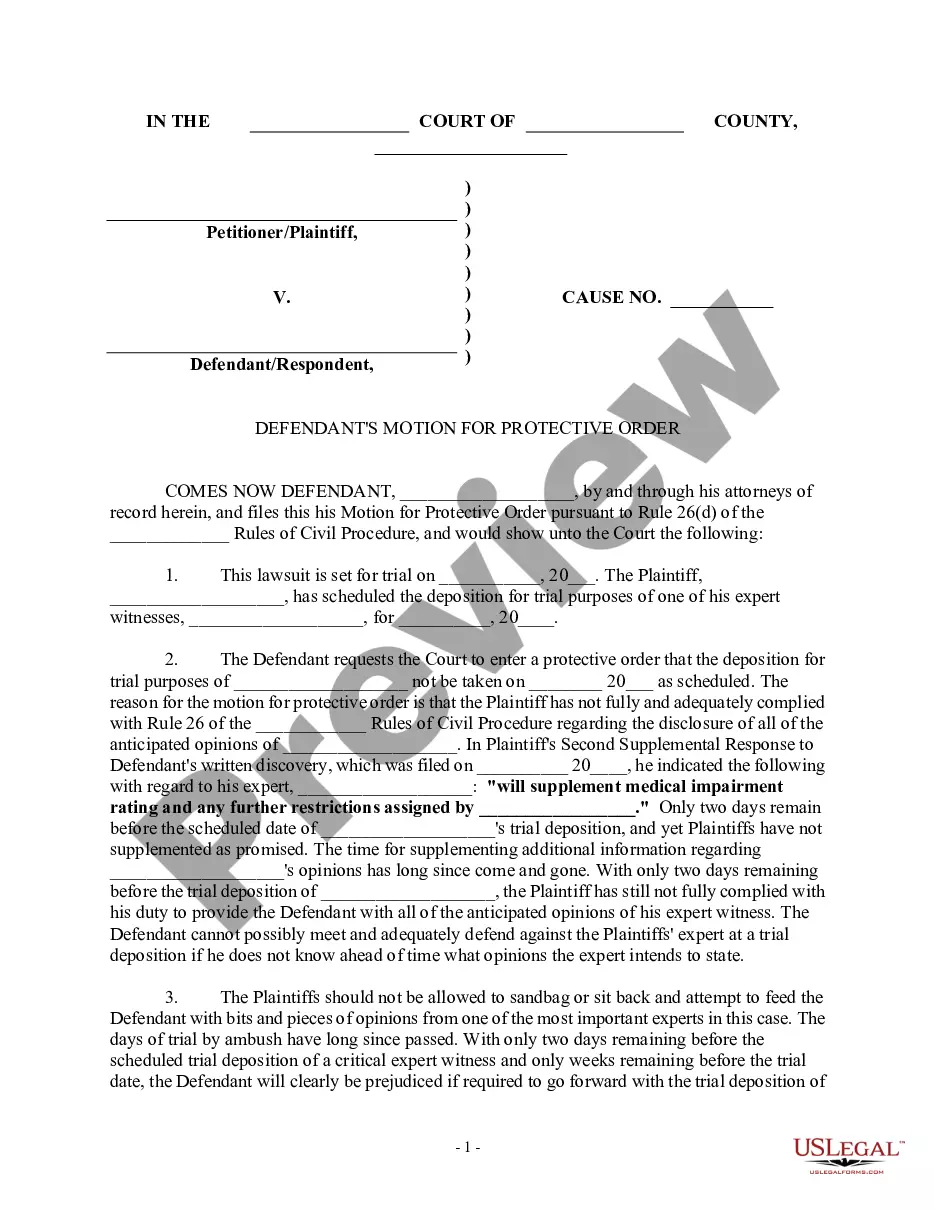
- Request for a protective order to limit the scope of discovery requests.
- Prayer for relief, seeking attorneys' fees and expenses incurred in defending the motion.
- Certificate of service confirming proper notification to involved parties.
When this form is needed
This form is particularly valuable when a defendant receives a motion from the plaintiff requesting extensive or sensitive information. It is used when the defendant believes the requests are not relevant to the case or would cause unnecessary harm. Examples of scenarios include ongoing divorce proceedings, business litigation, or any civil dispute where the discovery requests infringe on personal privacy or are excessively broad.
Who should use this form
This form is designed for:
- Defendants in civil litigation who need to protect their rights during the discovery process.
- Individuals responding to motions for discovery in family law, contract disputes, or similar cases.
- Legal representatives seeking to safeguard clients from irrelevant interrogations or document requests.
How to complete this form
- Identify the parties involved and complete the court header accordingly.
- Clearly articulate each objection to the plaintiffâs interrogatories, providing reasons for each claim.
- Include any necessary legal citations that support the protective order request.
- Specify the relief sought at the end of the document, including potential attorneys' fees.
- Sign the form before submission and ensure compliance with any service requirements.
Is notarization required?
This form does not typically require notarization unless specified by local law. Always check your jurisdiction's requirements to ensure compliance.
Get your form ready online
Our built-in tools help you complete, sign, share, and store your documents in one place.
Make edits, fill in missing information, and update formatting in US Legal Forms—just like you would in MS Word.
Download a copy, print it, send it by email, or mail it via USPS—whatever works best for your next step.
Sign and collect signatures with our SignNow integration. Send to multiple recipients, set reminders, and more. Go Premium to unlock E-Sign.
If this form requires notarization, complete it online through a secure video call—no need to meet a notary in person or wait for an appointment.
We protect your documents and personal data by following strict security and privacy standards.

Make edits, fill in missing information, and update formatting in US Legal Forms—just like you would in MS Word.

Download a copy, print it, send it by email, or mail it via USPS—whatever works best for your next step.

Sign and collect signatures with our SignNow integration. Send to multiple recipients, set reminders, and more. Go Premium to unlock E-Sign.

If this form requires notarization, complete it online through a secure video call—no need to meet a notary in person or wait for an appointment.

We protect your documents and personal data by following strict security and privacy standards.
Avoid these common issues
- Failing to specify clear objections to each interrogatory can undermine the effectiveness of the motion.
- Neglecting to cite relevant legal authority that supports the request for a protective order.
- Omitting to provide a signed certificate of service can lead to procedural delays or rejections.
Why complete this form online
- Convenient access to legally drafted documents ensures compliance with state laws.
- Editable templates allow customization to suit specific needs and circumstances.
- Instant download options facilitate timely filings and responses in legal contexts.
Legal use & context
- This form serves to protect defendants from unnecessarily intrusive discovery processes.
- Correctly filing this motion can limit the types of information the plaintiff can legally compel the defendant to provide.
- The outcome of this motion can significantly affect future proceedings in the case.
Quick recap
- Understanding the right to object to discovery requests is crucial for defendants.
- This form combines response and protective measures, saving time and increasing effectiveness.
- Completing the form accurately helps ensure defense strategies are preserved and respected in court.
Looking for another form?
Form popularity
FAQ
The Defendant's Motion for Protective Order and Response to Plaintiff's Motion to Compel is a standard civil-litigation filing that combines a request for protective relief with a response to a discovery motion. It lets a defendant object to intrusive or irrelevant discovery while asking the court to limit or condition disclosure, and it includes a certificate of service confirming proper notification, identification of the parties, objections to interrogatories, a prayer for relief, and related details.
Use this form to draft a formal response that includes specific objections to interrogatories or requests, a request for protective relief to narrow the scope, and a prayer for relief if applicable. It also requires identifying the parties and court details and attaching a certificate of service.
After a motion to compel is filed, this form can be used to respond and seek protective relief. The court will review the motion and decide whether to grant, deny, or modify the discovery requests, potentially issuing a protective order to limit further requests.
When a motion to compel is granted, the requested discovery is typically ordered to be produced. In this form, the defendant can address the grant by maintaining objections where appropriate and seeking protective relief to limit future disclosures, while ensuring proper service through the certificate of service.
A certificate of service confirms that all required parties were served with the motion and any responses, providing proof of delivery. It is one of the key components of this form, ensuring proper notice and compliance with court rules.
This form combines both a motion for protective relief and a response to a plaintiff's motion to compel in a single filing. It streamlines the process, aligns objections with protective relief arguments, and includes the required certificate of service and prayer for relief in one document.