Beach and Boating Regulations
What is this form?
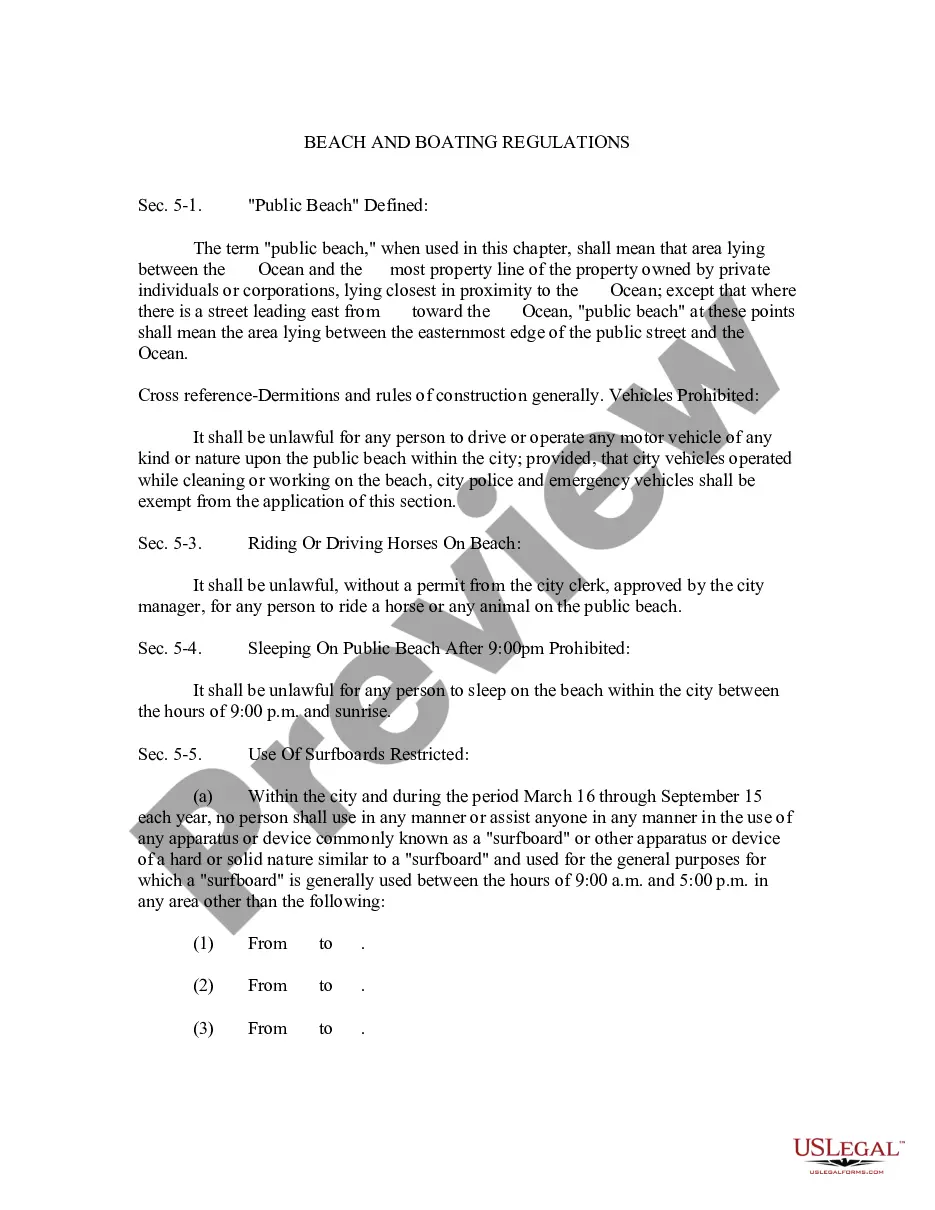
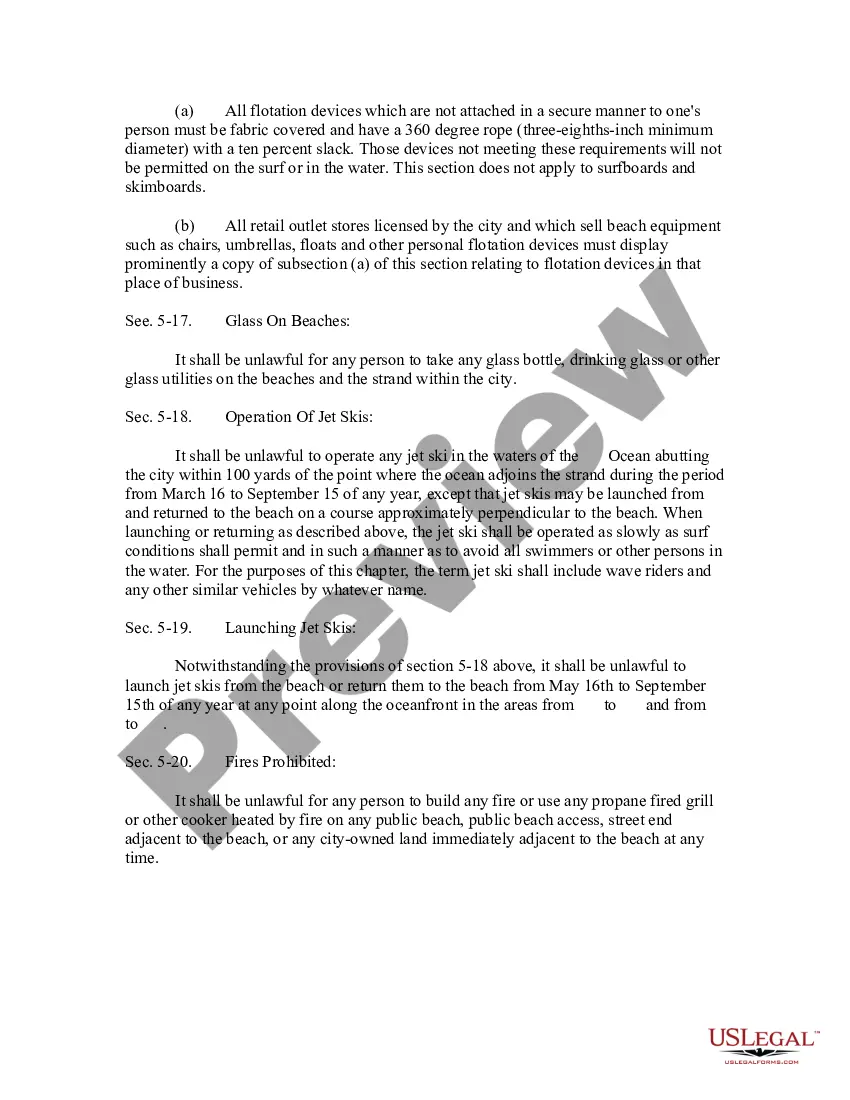
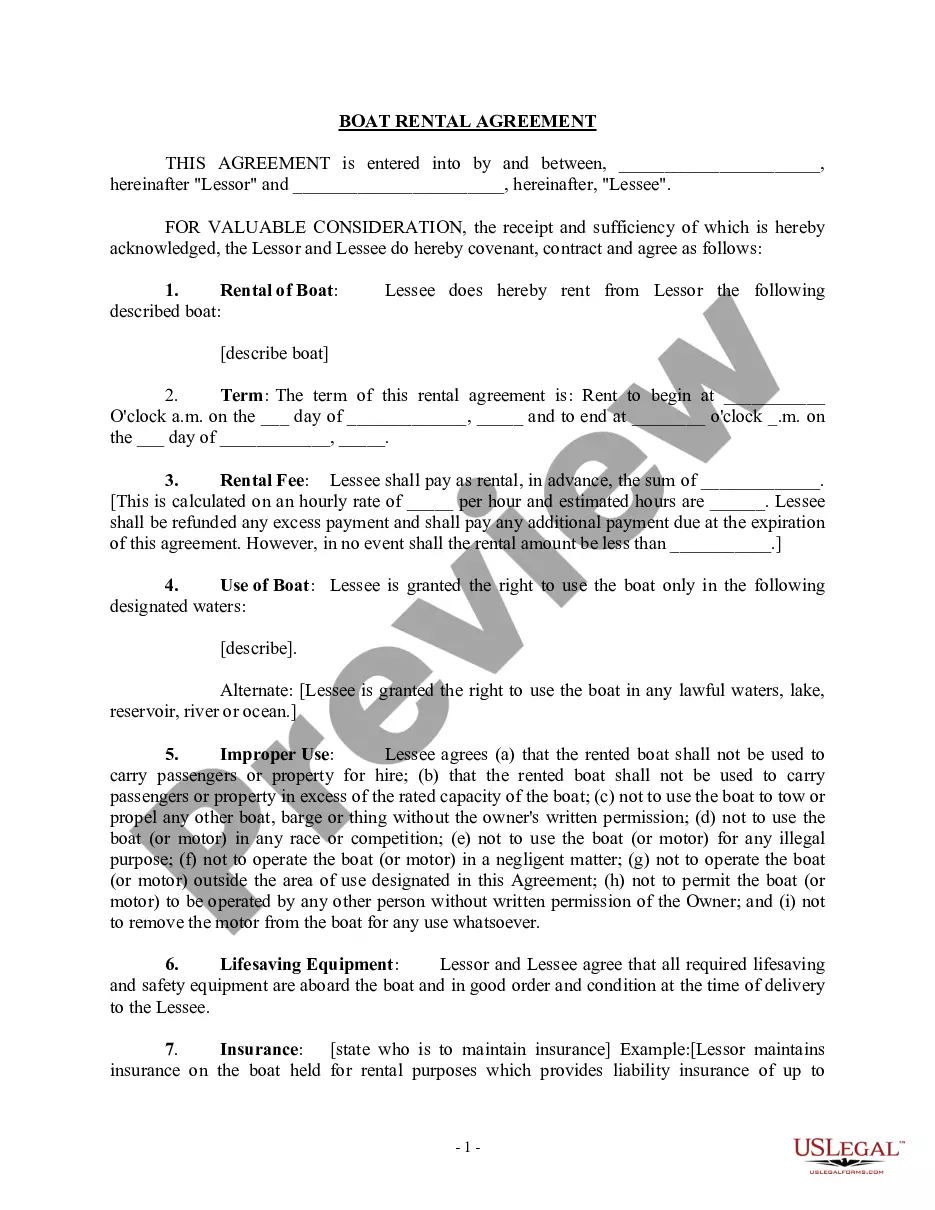
The Beach and Boating Regulations form outlines essential rules governing the use of public beaches and waterways. This form is crafted to help municipalities establish and enforce regulations that promote safety and enjoyment at public beaches. Unlike generic legal forms, this document is tailored to address specific activities related to beach and boating, ensuring compliance with local laws and regulations across various jurisdictions.
Key parts of this document
- Definition of public beach and relevant boundaries
- Prohibitions on vehicle access and requirements for obtaining permits
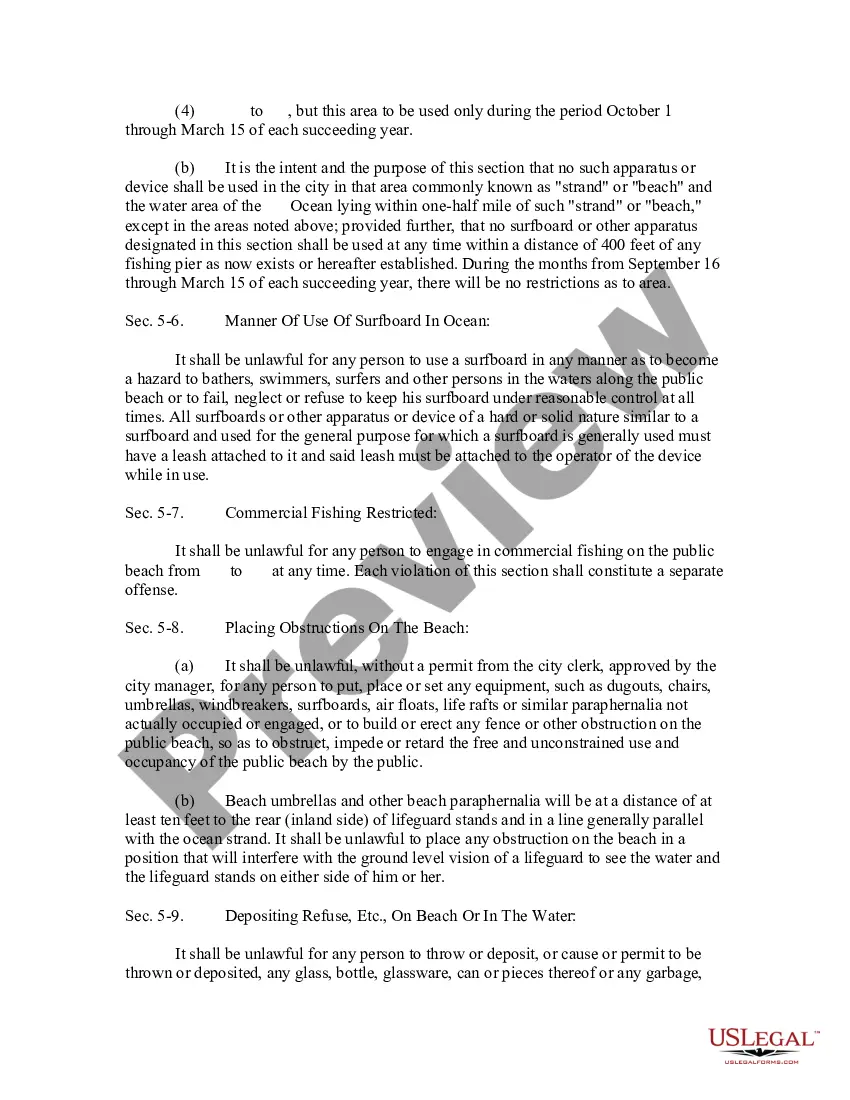
- Regulations regarding the use of surfboards and other water apparatus
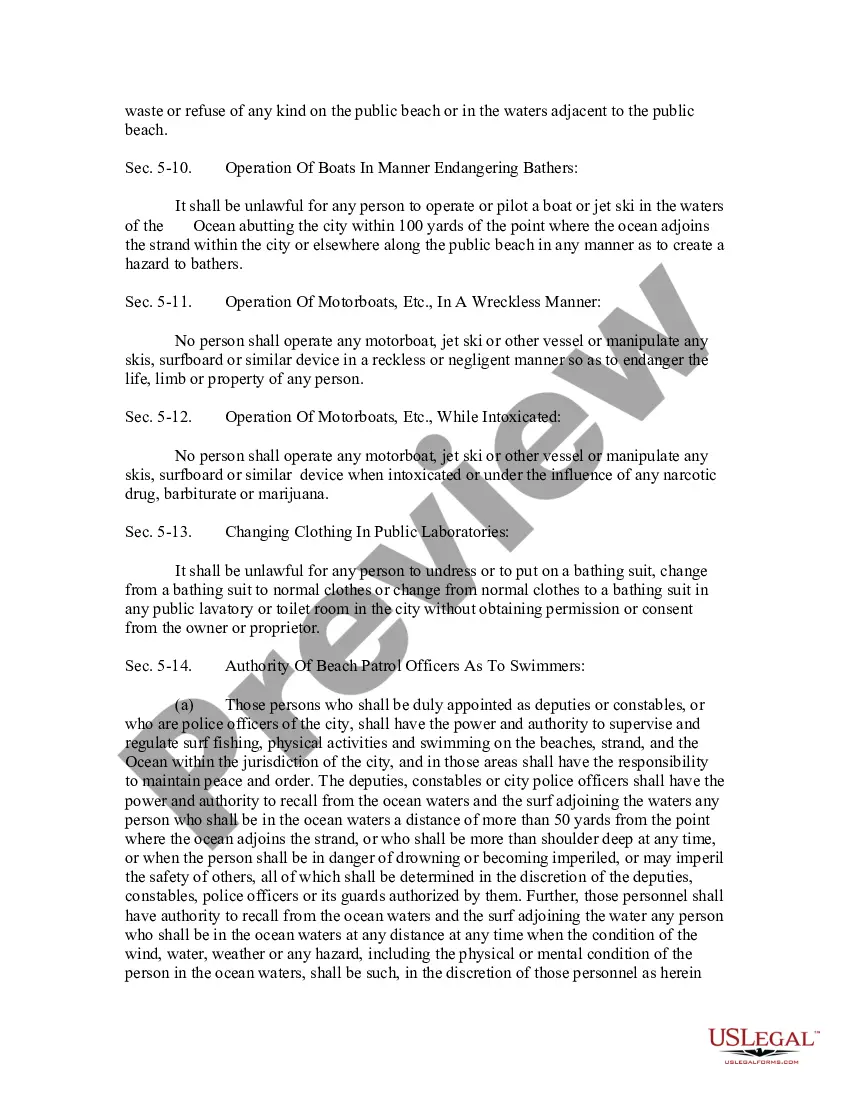
- Restrictions on commercial fishing and debris disposal
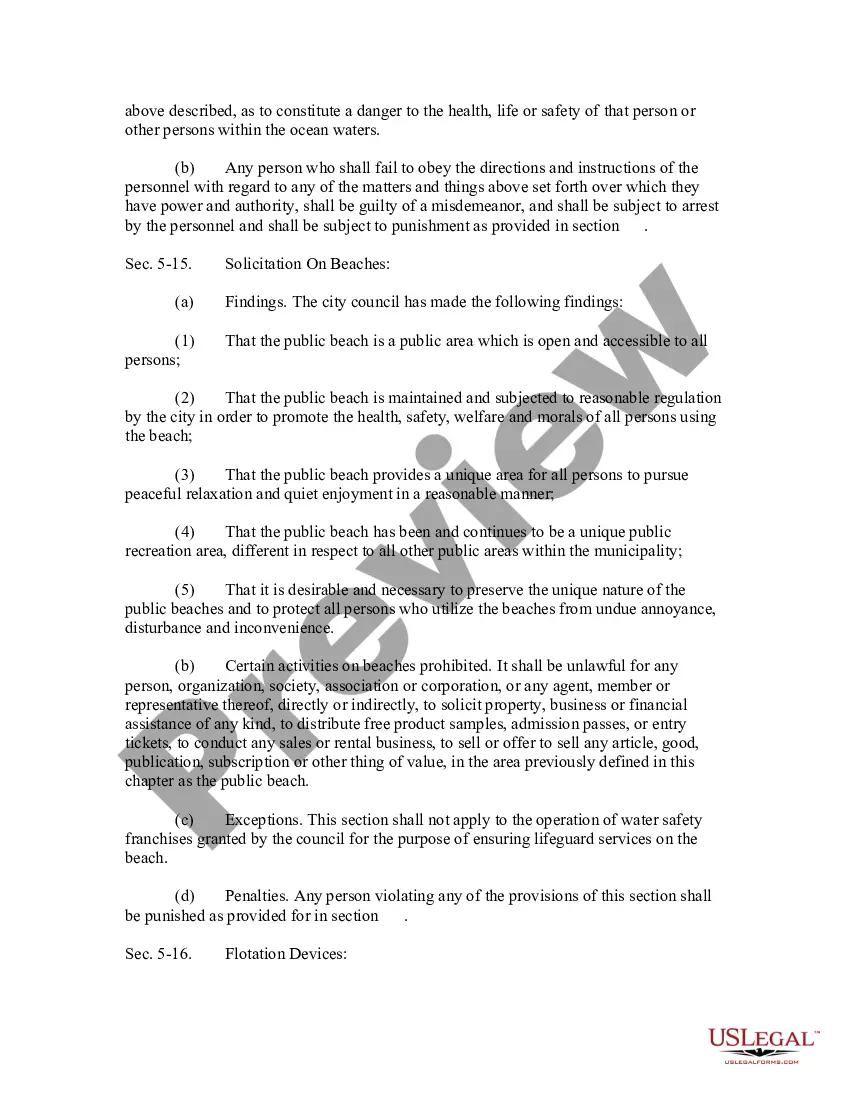
- Authority granted to beach patrol officers for maintaining safety
- Regulations on the use of flotation devices and glass on the beach
Situations where this form applies
This form should be utilized by local governments or municipalities when establishing or updating their beach and boating regulations. It is especially relevant for coastal cities looking to enhance safety for visitors and residents at public beaches. Use this form to create a legal framework for activities like swimming, boating, and other recreational sports, ensuring that the community adheres to the same standards.
Who can use this document
This form is intended for:
- City councils and local government officials
- Municipal lawyers and legal advisors
- Community association leaders overseeing public beach areas
- Environmental agencies involved in coastal management
Instructions for completing this form
- Identify the jurisdiction to which the regulations apply.
- Define the boundaries of the public beach as per local specifications.
- List prohibited activities and any required permits clearly.
- Establish safety protocols for beach patrol officers and regulatory enforcement.
- Ensure the form is reviewed and approved by local governing bodies before implementation.
Notarization requirements for this form
This form usually doesn’t need to be notarized. However, local laws or specific transactions may require it. Our online notarization service, powered by Notarize, lets you complete it remotely through a secure video session, available 24/7.
Get your form ready online
Our built-in tools help you complete, sign, share, and store your documents in one place.
Make edits, fill in missing information, and update formatting in US Legal Forms—just like you would in MS Word.
Download a copy, print it, send it by email, or mail it via USPS—whatever works best for your next step.
Sign and collect signatures with our SignNow integration. Send to multiple recipients, set reminders, and more. Go Premium to unlock E-Sign.
If this form requires notarization, complete it online through a secure video call—no need to meet a notary in person or wait for an appointment.
We protect your documents and personal data by following strict security and privacy standards.

Make edits, fill in missing information, and update formatting in US Legal Forms—just like you would in MS Word.

Download a copy, print it, send it by email, or mail it via USPS—whatever works best for your next step.

Sign and collect signatures with our SignNow integration. Send to multiple recipients, set reminders, and more. Go Premium to unlock E-Sign.

If this form requires notarization, complete it online through a secure video call—no need to meet a notary in person or wait for an appointment.

We protect your documents and personal data by following strict security and privacy standards.
Avoid these common issues
- Failing to define the public beach boundaries clearly.
- Omitting important regulations related to safety and usage.
- Not obtaining necessary approvals from local officials.
- Inconsistent language that may confuse users about regulations.
Benefits of completing this form online
- Immediate access to essential legal information regarding beach rules.
- Easy to download and review, ensuring users are informed.
- Regular updates available for changing regulations or safety measures.
- Allows local governments to customize the form for their specific needs.
Legal use & context
- The form establishes legally enforceable regulations for public beaches.
- Noncompliance may lead to fines or other penalties as stipulated under local ordinances.
- The regulations aim to protect public health and safety while promoting recreational activities.
Summary of main points
- The Beach and Boating Regulations form is vital for maintaining order and safety at public beaches.
- Local governments must tailor the form to their specific jurisdiction while adhering to general standards.
- Understanding the key components and applicable rules can facilitate effective implementation.
Looking for another form?

Form popularity
FAQ
In order to operate a motorboat of ten (10) horsepower or greater, Florida law requires anyone who was born on or after Jan. 1, 1988 to successfully complete an approved boating safety course and obtain a Boating Safety Education Identification Card issued by the FWC.
Life Jackets and personal floatation devices The USCG requires one approved Type I, II, III, or V, life jacket or life vest per person on board.Boats that are 40 to 65 feet in length should have three B-1 extinguishers or one B-1 and one B-2 USCG approved fire extinguisher.
California law designates the following dangerous operating practices as illegal. At more than 5 miles per hour: Within 200 feet of swimming areas, diving platforms, passenger landings, or areas where vessels are moored. Within 100 feet of swimmers.
California boating law requires that all boats 16 feet or more in length, except canoes and kayaks must carry one wearable life jacket (Type I, II, III or V) for each person on board and one throwable (Type IV) device in each boat. PFDs must be readily accessible.
A: Boaters should keep their distance from all military, cruise line, or commercial shipping. Do not approach within 100 yards, and slow to minimum speed within 500 yards of any U.S. naval vessel.
A: Boaters should keep their distance from all military, cruise line, or commercial shipping. Do not approach within 100 yards, and slow to minimum speed within 500 yards of any U.S. naval vessel.
In Florida, all boaters or passengers under 6 years of age onboard any vessel less than 26 feet in length must be wearing a U.S. Coast Guard-approved Type I, II, or III PFD while the vessel is underway in state waters.
No person shall operate a personal watercraft or a specialty prop-craft within five hundred feet of any designated bathing area, except in bodies of water where the opposing shoreline is less than five hundred feet from such designated area and in accordance with speed regulations and restrictions as provided by local