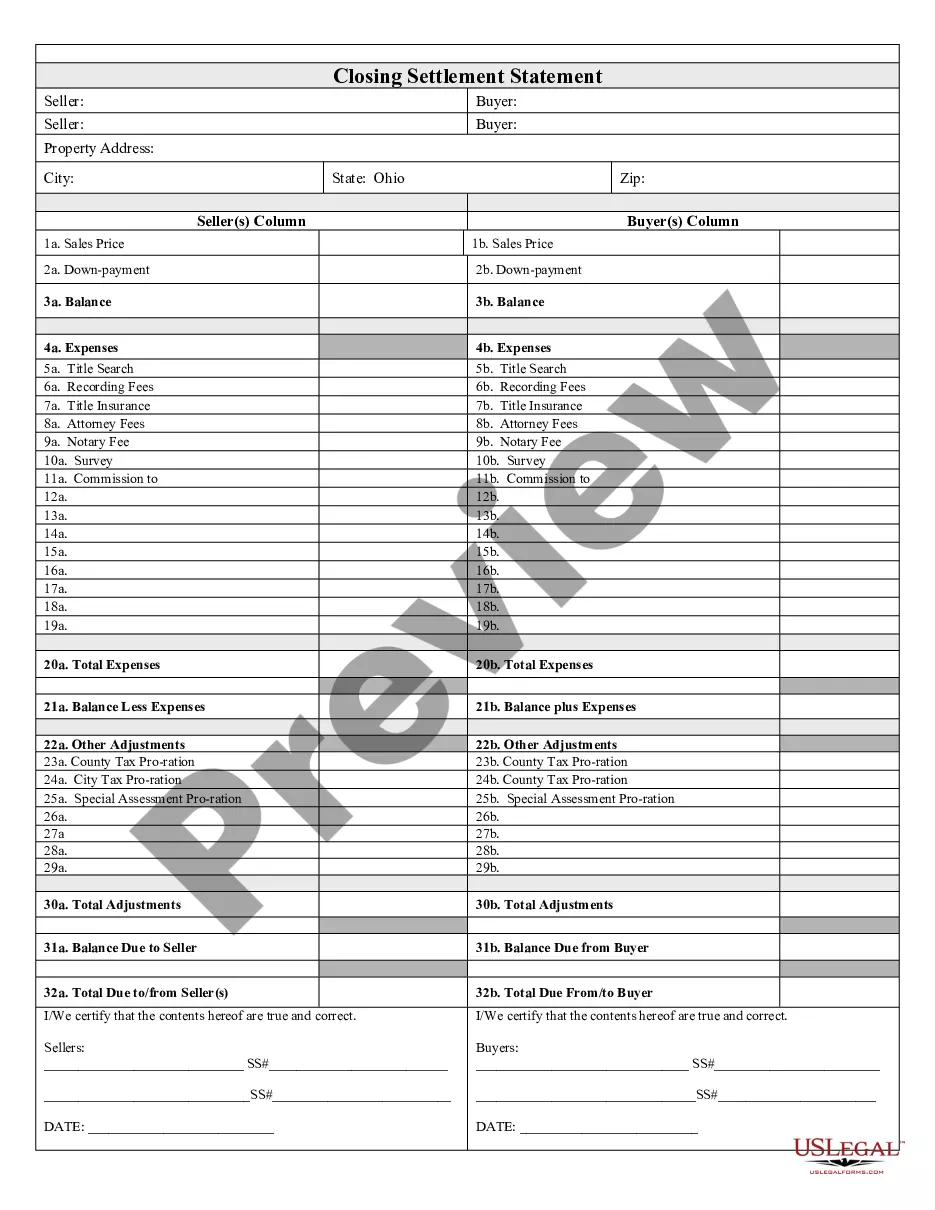
Loan Assumption Addendum
Understanding this form
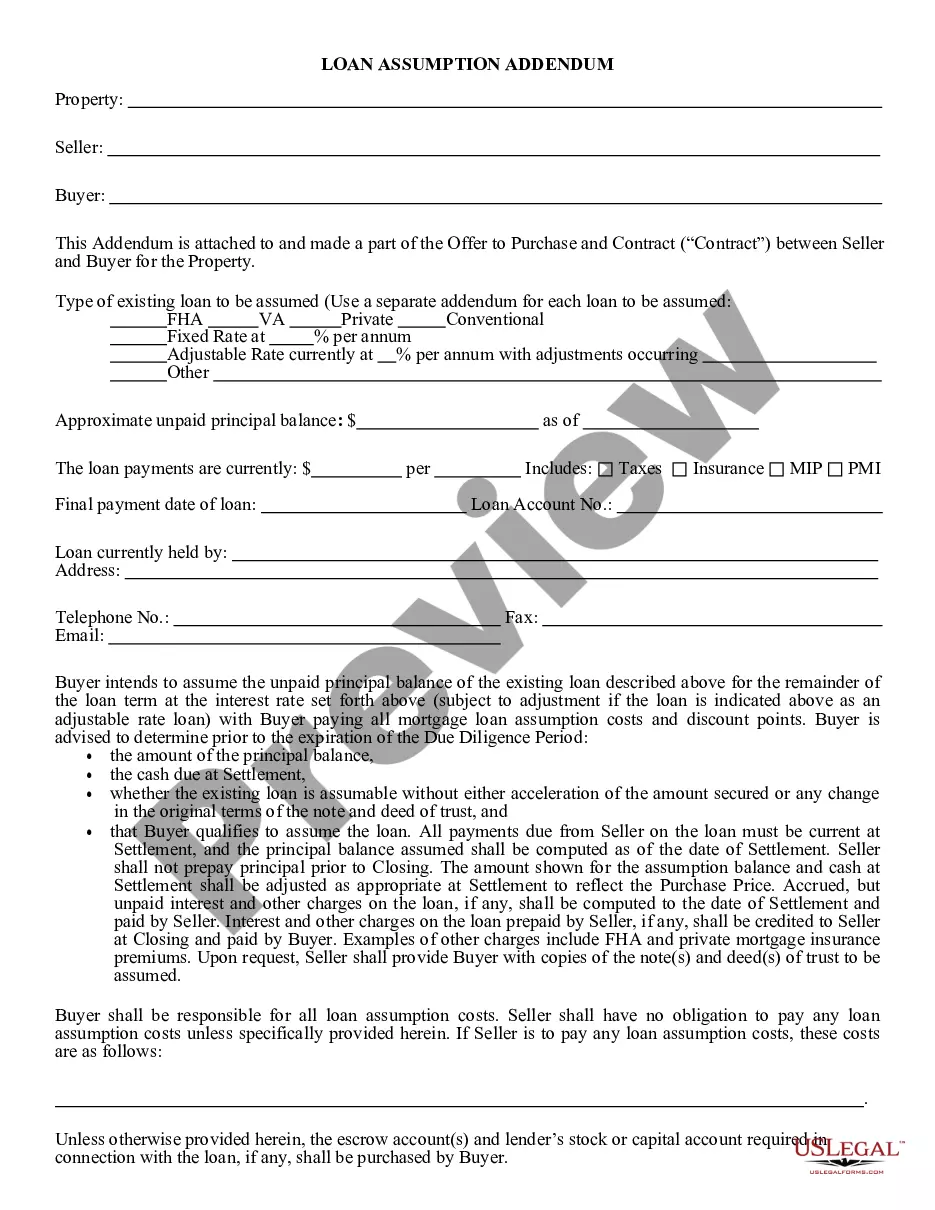
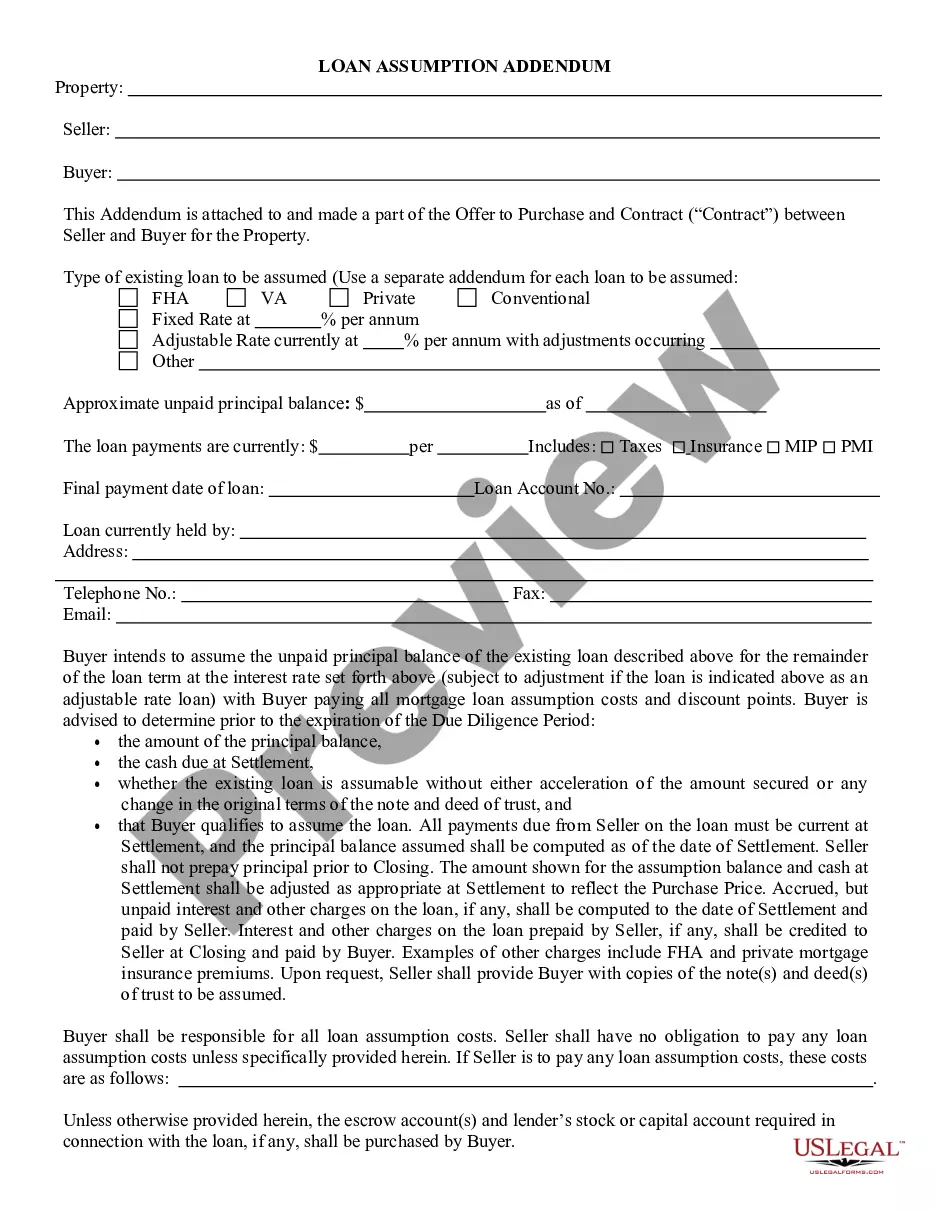
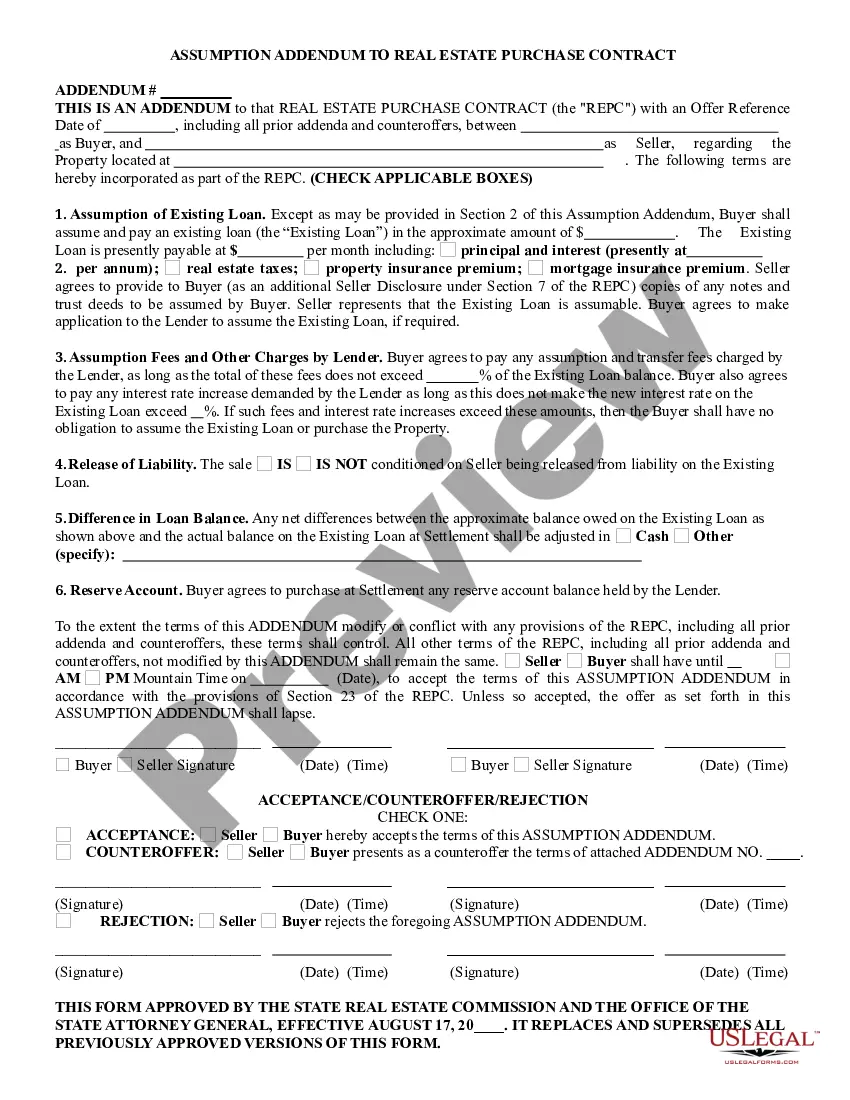
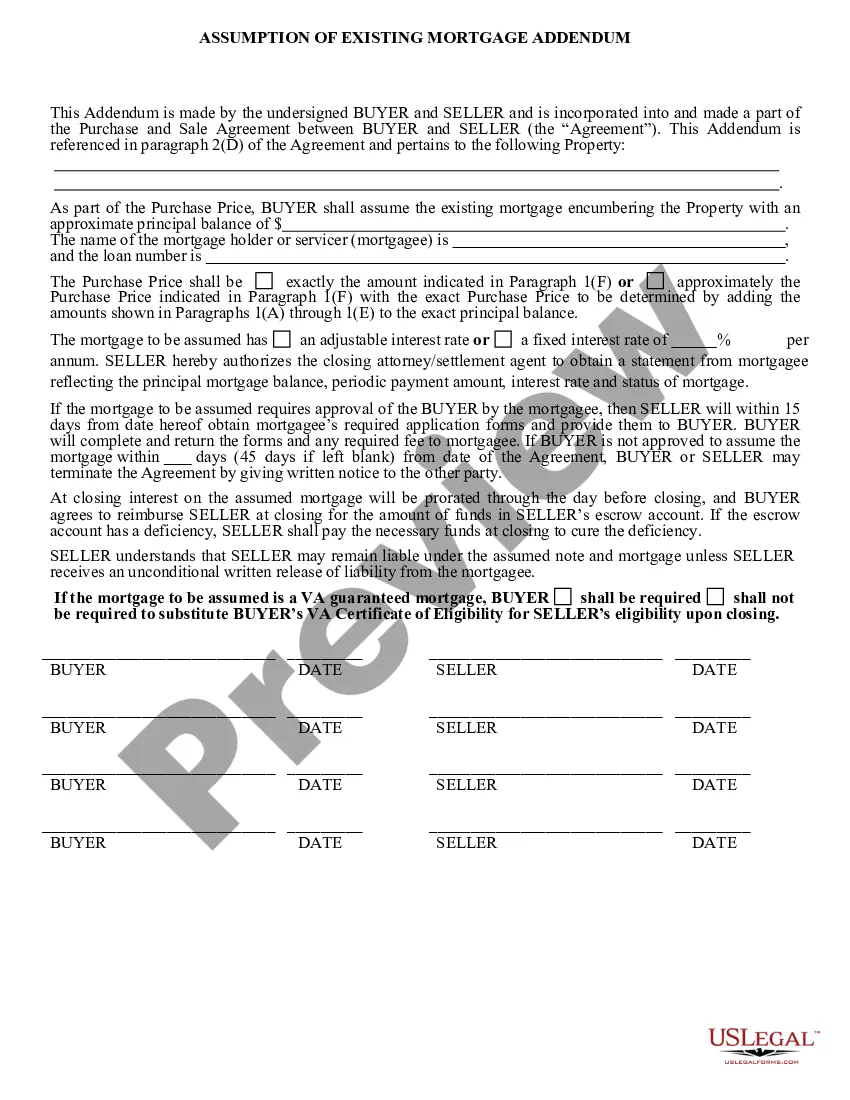
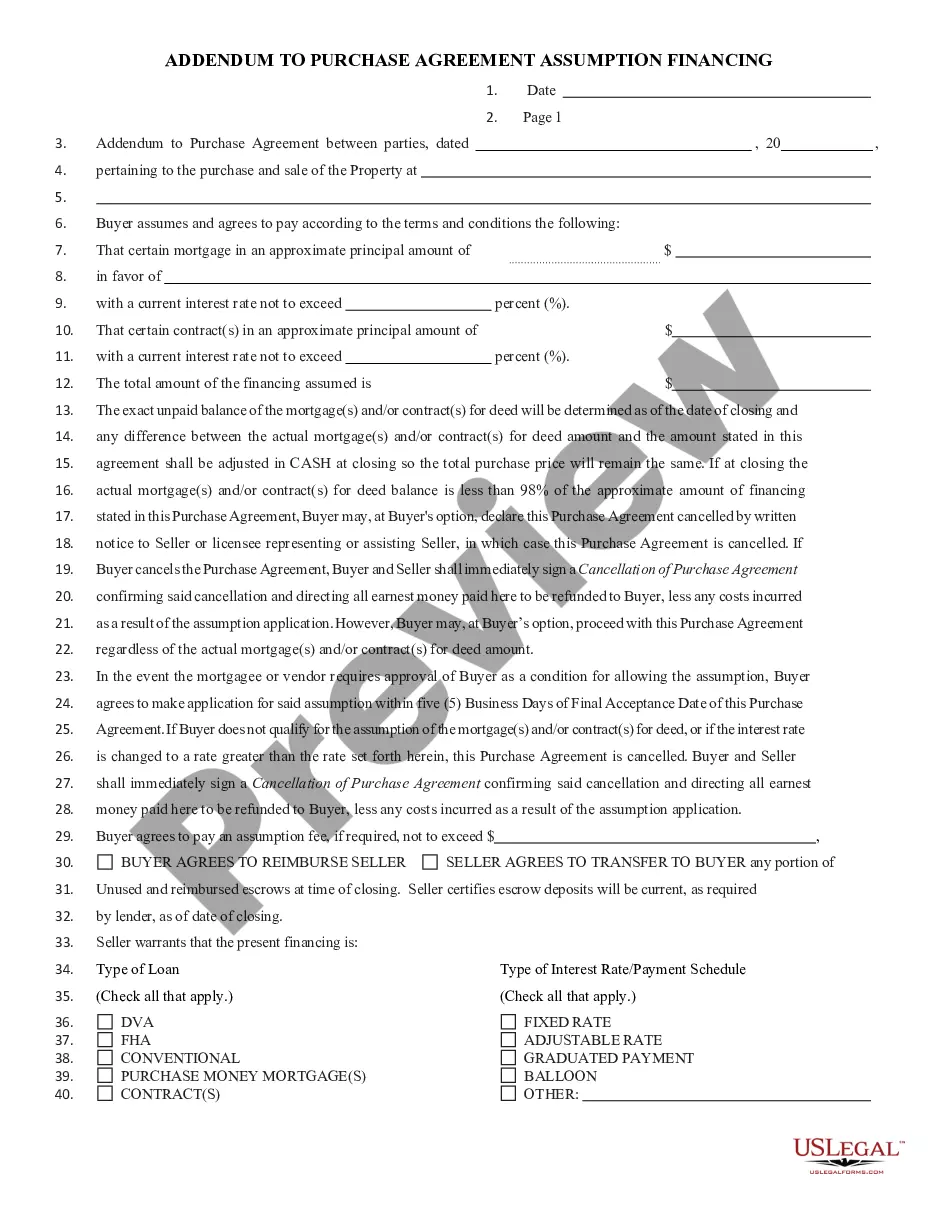
The Loan Assumption Addendum is a legal document that allows a buyer to assume the existing mortgage of a property from the seller. This addendum becomes part of the Offer to Purchase and Contract between the buyer and seller. It is important for buyers looking to take over the mortgage obligations without refinancing or altering the loan's original terms. This form specifically differs from a traditional mortgage application as it emphasizes the transfer of current loan terms rather than initiating new financing.
What’s included in this form
- Identification of the property, seller, and buyer involved in the transaction.
- Details about the loan type being assumed, including the interest rate and whether it's fixed or adjustable.
- Financial information, such as the unpaid principal balance and loan payment details.
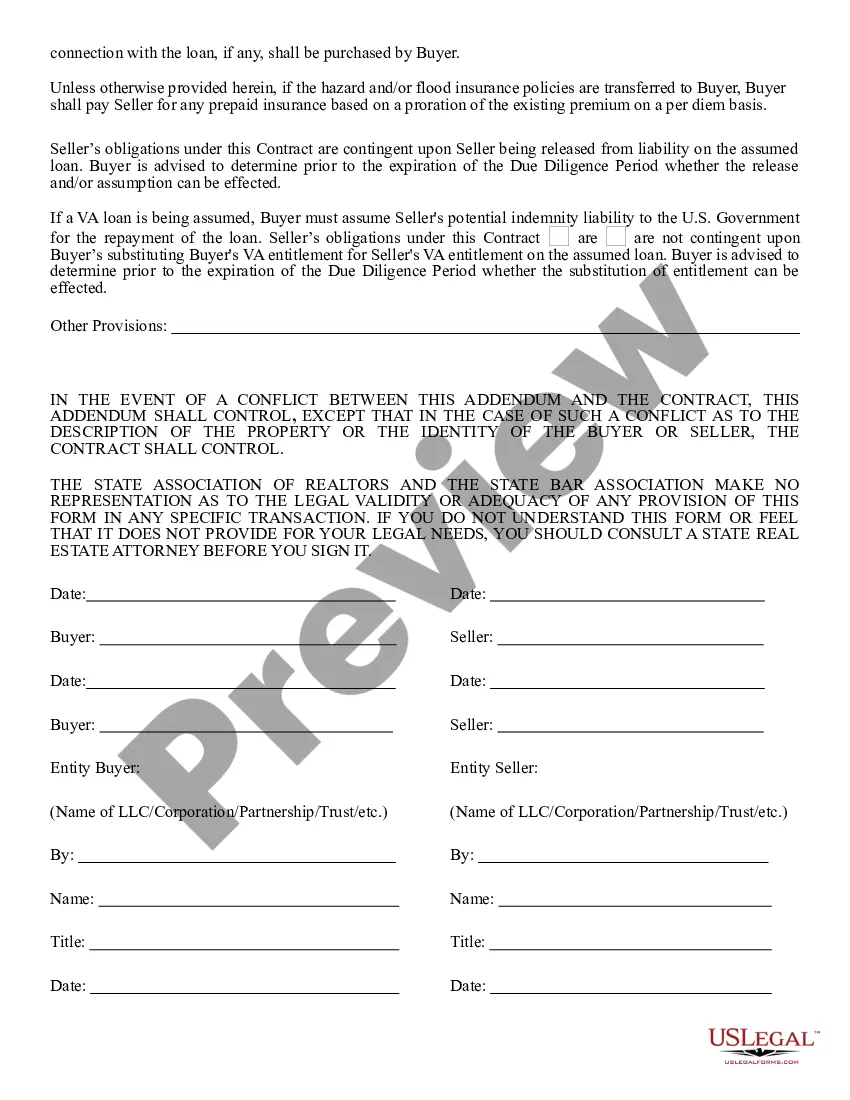
- Buyerâs responsibilities related to mortgage assumption costs and qualifications.
- Contingencies regarding seller's release from liability and VA loan indemnity, if applicable.
- Provisions for adjustments at settlement and transfer of prepaid insurance.
When to use this document
This form should be used when a buyer intends to take over the seller's existing mortgage. It is appropriate in scenarios where the seller has a favorable loan that the buyer wishes to assume, particularly in real estate transactions involving FHA, VA, conventional, or private loans. The Loan Assumption Addendum is especially useful when the buyer wants to avoid the costs and qualifications of applying for a new loan.
Intended users of this form
- Homebuyers looking to assume an existing mortgage rather than obtaining new financing.
- Sellers who want to transfer their mortgage to a buyer as part of a property sale.
- Real estate agents and attorneys assisting clients through the mortgage assumption process.
- Individuals involved in transactions that include FHA, VA, or conventional loans that are assumable.
Instructions for completing this form
- Clearly identify the property, seller, and buyer in the designated fields.
- Specify the type of existing loan to be assumed and include relevant financial details.
- Enter the loan account number and the contact information for the current lender.
- Determine and note any loan assumption costs the buyer may incur.
- Review and ensure both parties understand and agree to the contingencies listed.
- Obtain signatures from both the buyer and seller to finalize the addendum.
Does this document require notarization?
This form does not typically require notarization unless specified by local law. It is important to confirm any specific state requirements that may necessitate notarization for legal validity.
Get your form ready online
Our built-in tools help you complete, sign, share, and store your documents in one place.
Make edits, fill in missing information, and update formatting in US Legal Forms—just like you would in MS Word.
Download a copy, print it, send it by email, or mail it via USPS—whatever works best for your next step.
Sign and collect signatures with our SignNow integration. Send to multiple recipients, set reminders, and more. Go Premium to unlock E-Sign.
If this form requires notarization, complete it online through a secure video call—no need to meet a notary in person or wait for an appointment.
We protect your documents and personal data by following strict security and privacy standards.

Make edits, fill in missing information, and update formatting in US Legal Forms—just like you would in MS Word.

Download a copy, print it, send it by email, or mail it via USPS—whatever works best for your next step.

Sign and collect signatures with our SignNow integration. Send to multiple recipients, set reminders, and more. Go Premium to unlock E-Sign.

If this form requires notarization, complete it online through a secure video call—no need to meet a notary in person or wait for an appointment.

We protect your documents and personal data by following strict security and privacy standards.
Mistakes to watch out for
- Failing to verify if the existing loan is assumable before using the addendum.
- Not entering accurate financial details, such as the unpaid principal balance.
- Overlooking the need for signatures from both parties, which could invalidate the form.
- Neglecting to check if any specific state regulations apply to the mortgage assumption.
Benefits of completing this form online
- Easy access to a professionally drafted legal form tailored for your needs.
- Convenient download and customization options, allowing quick edits.
- Increased confidence in compliance with legal standards and best practices.
- Time-saving compared to seeking in-person legal counsel for simple mortgage assumptions.
Key takeaways
- The Loan Assumption Addendum allows for the transfer of an existing mortgage to a buyer.
- It is crucial to ensure the loan being assumed is eligible under its current terms.
- Buyers assume responsibility for all loan costs associated with the transaction.
- Both parties should thoroughly review the addendum before signing to avoid future disputes.
Looking for another form?


Form popularity
FAQ
An assumable mortgage works much the same as a traditional home loan, except the buyer is limited to financing through the seller's lender. Lenders must approve an assumable mortgage. If done without approval, sellers run the risk of having to pay the full remaining balance upfront.
You will need to complete an application, provide documents, and meet the lender's credit, income, and financial requirements to get the loan assumption approved. Lenders often have stricter mortgage underwriting standards for loan assumptions than they do for new loans.
When a buyer buys property and assumes a mortgage, the buyer becomes primarily liable for the debt and the seller becomes secondarily liable for the debt. "Assume" means the buyer takes on liability, and the seller is no longer primarily liable. "Subject to" means the seller is not released from responsibility.
Although the buyer agrees to make payments on the home loan during a simple assumption, the seller still remains responsible for the mortgage. Any delinquencies or defaults incurred by the buyer will also appear on the credit report of the the seller.
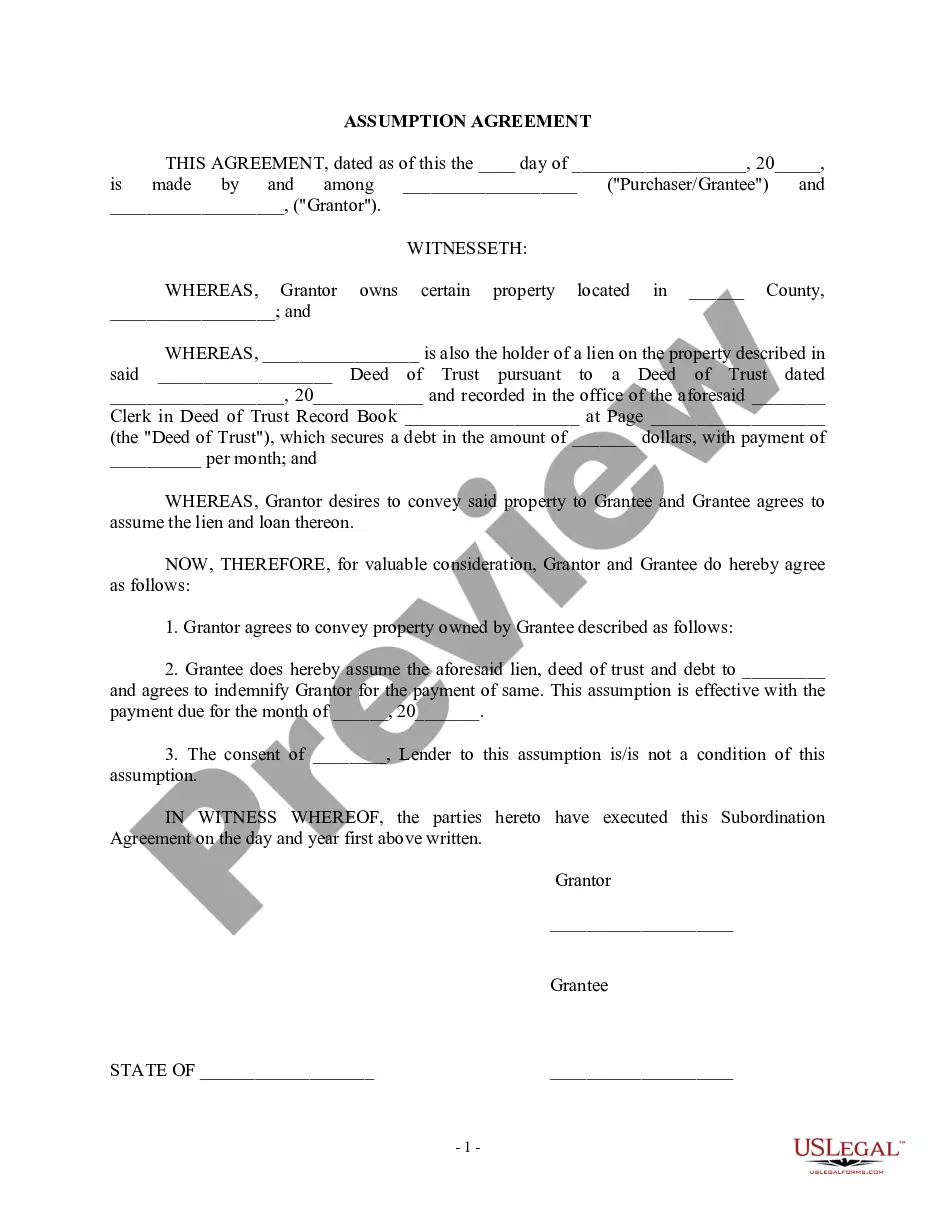
A loan assumption agreement is an agreement between a lender, original borrower, and a new borrower, where the new borrower agrees to assume responsibility for the debt owed by original borrower. These agreements are commonly seen in mortgages and real estate.
Loan assumption can be a powerful enticement for these buyers as they shop for houses, because it would allow them to pay lower interest rates even as the housing market becomes more expensive.
Keep in mind that the average loan assumption takes anywhere from 45-90 days to complete. The more issues there are with underwriting, the longer you'll have to wait to finalize your agreement. Do yourself a favor and get the necessary criteria organized in advance.
In a properly done assumption, the new borrower must jump through some of the same hoops it would take to qualify for a new loan. The loan's servicer requests the borrower's credit report, plus financial and employment information. Finally, the lender releases the original borrower's liability for the debt.