Answer to Alternate Complaint
What this document covers
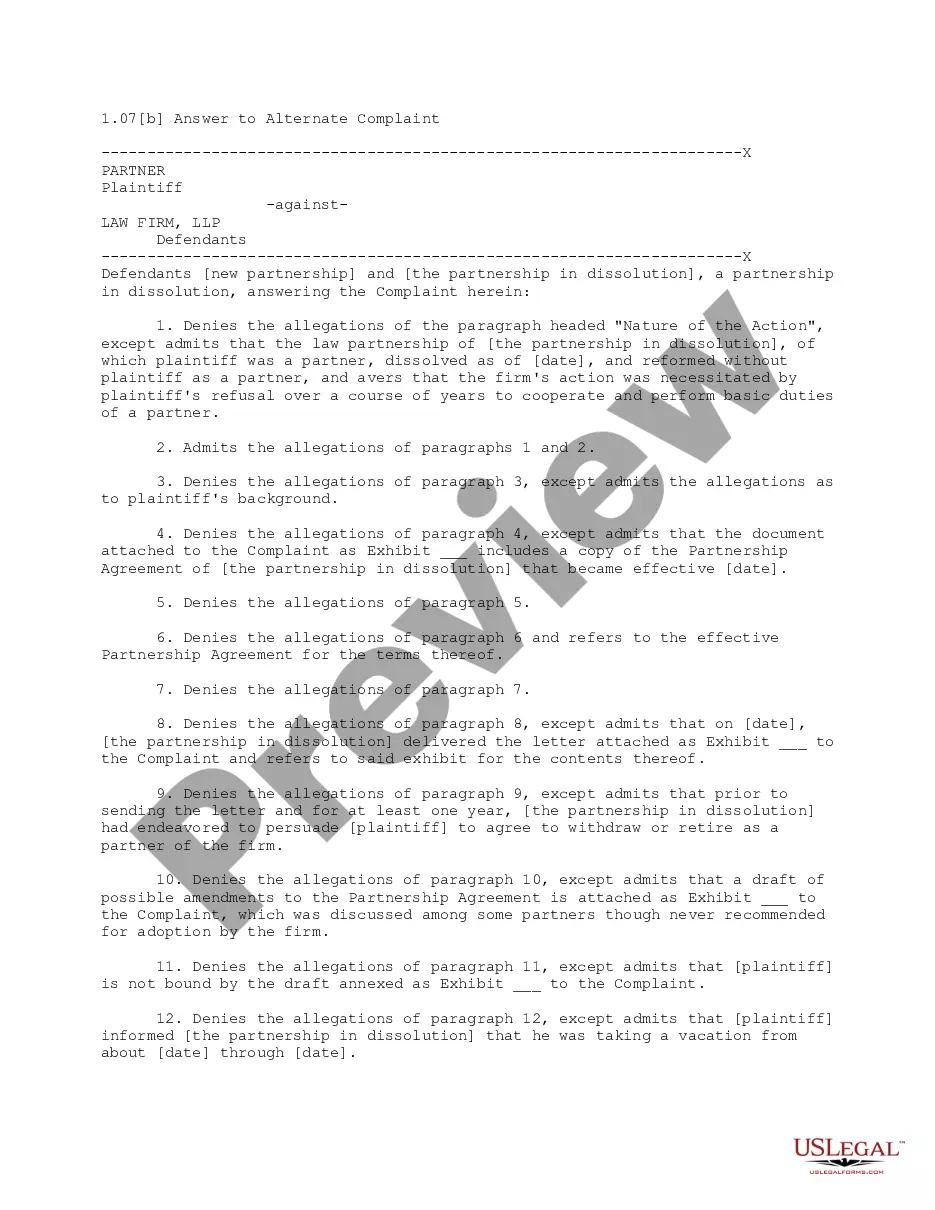
The Answer to Alternate Complaint is a legal document that responds to allegations made by a former partner regarding a partnership dispute. This form allows the responding party to deny the allegations, present their case, and assert affirmative defenses. Unlike other forms, this one is specifically tailored for partnership dissolution matters and counters claims related to accounting and misconduct.
What’s included in this form
- Identification of the partnership in question.
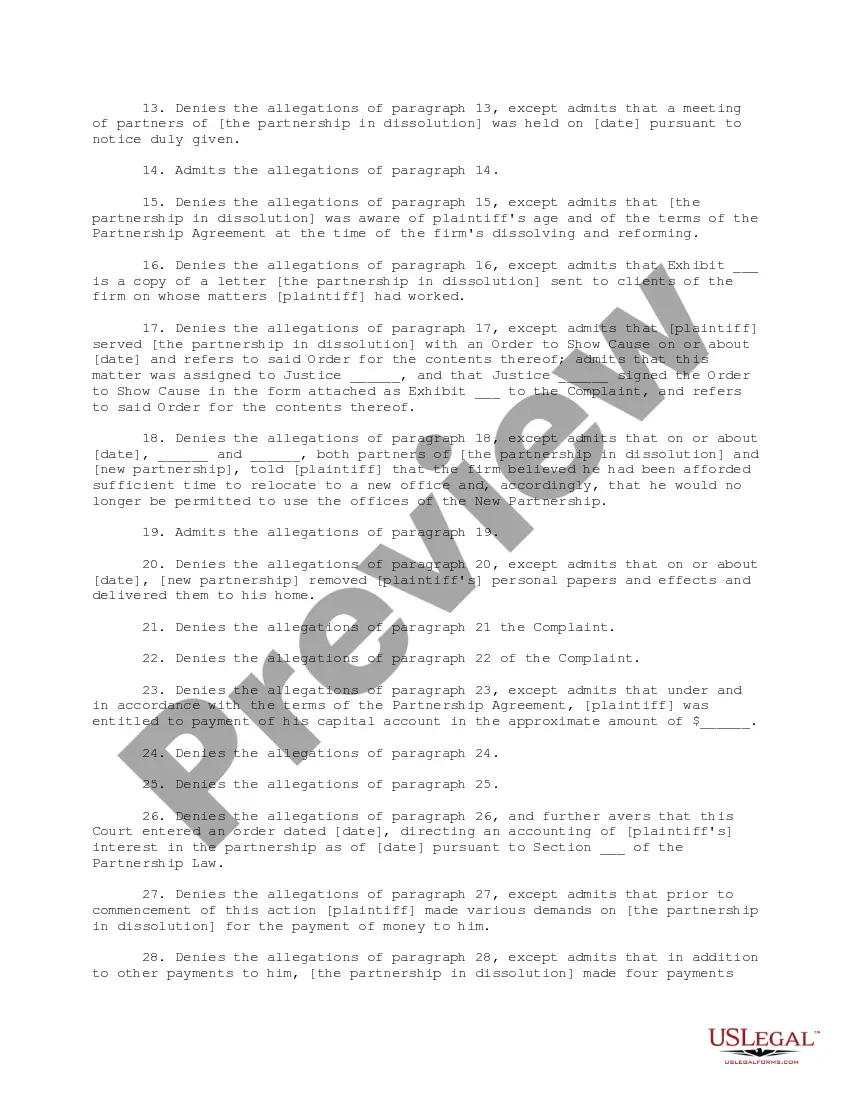
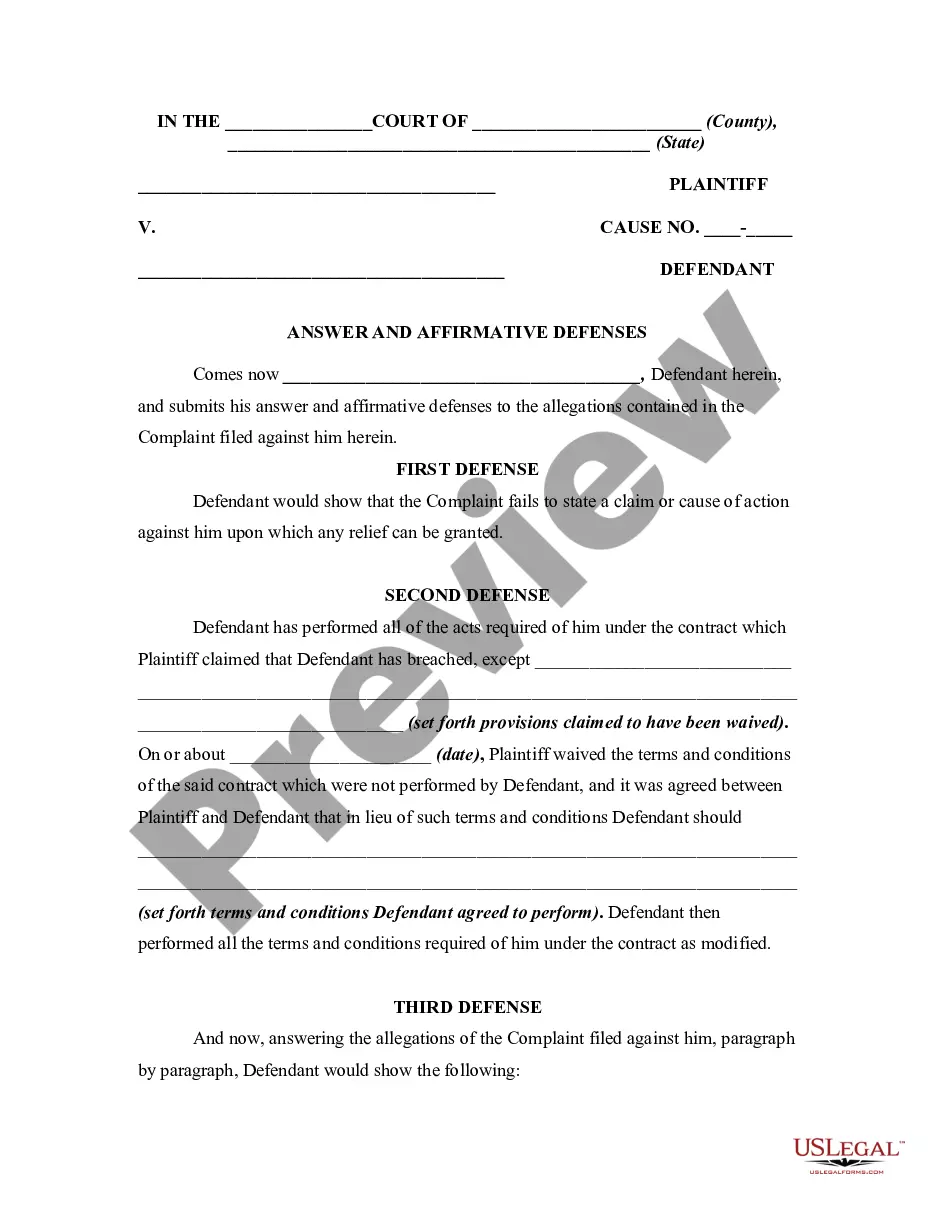
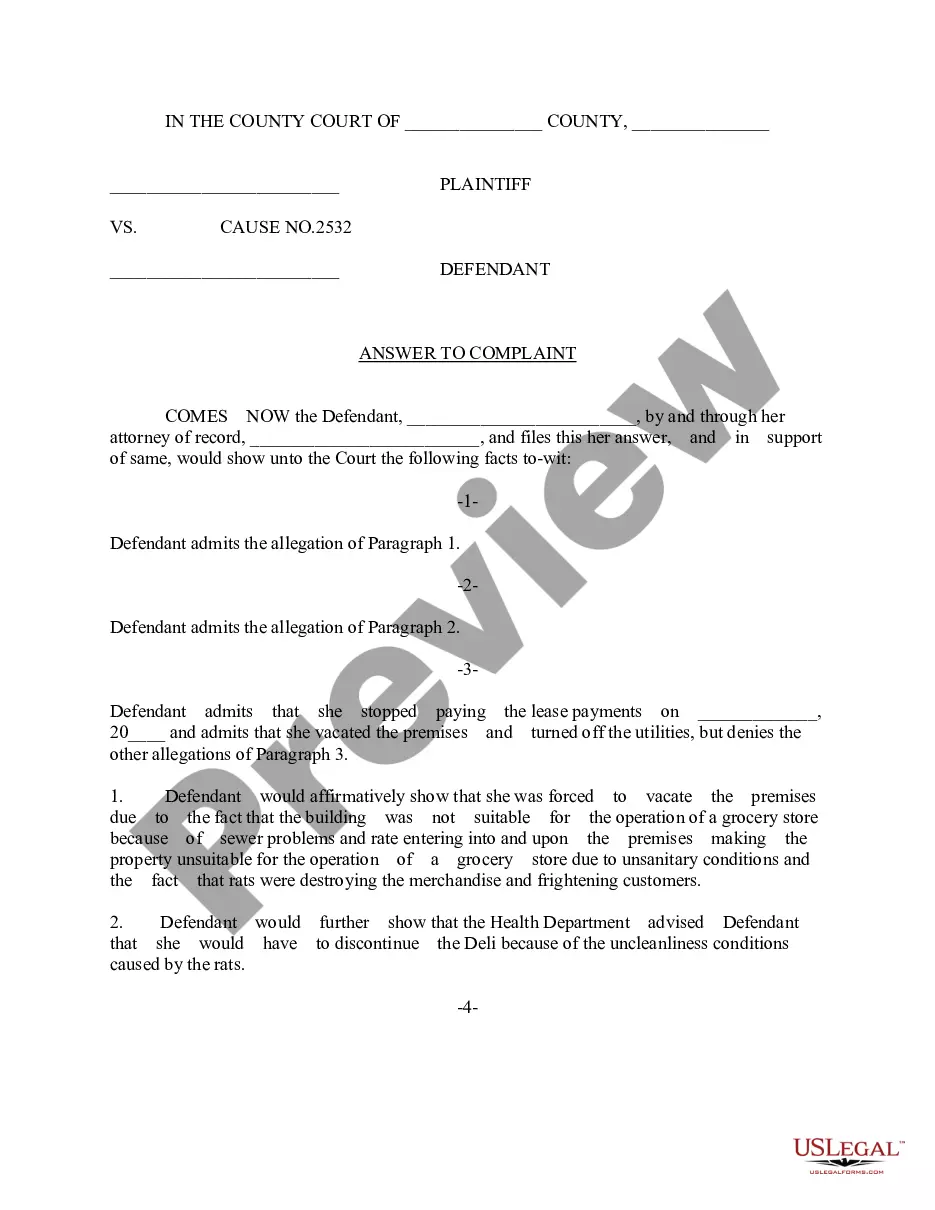
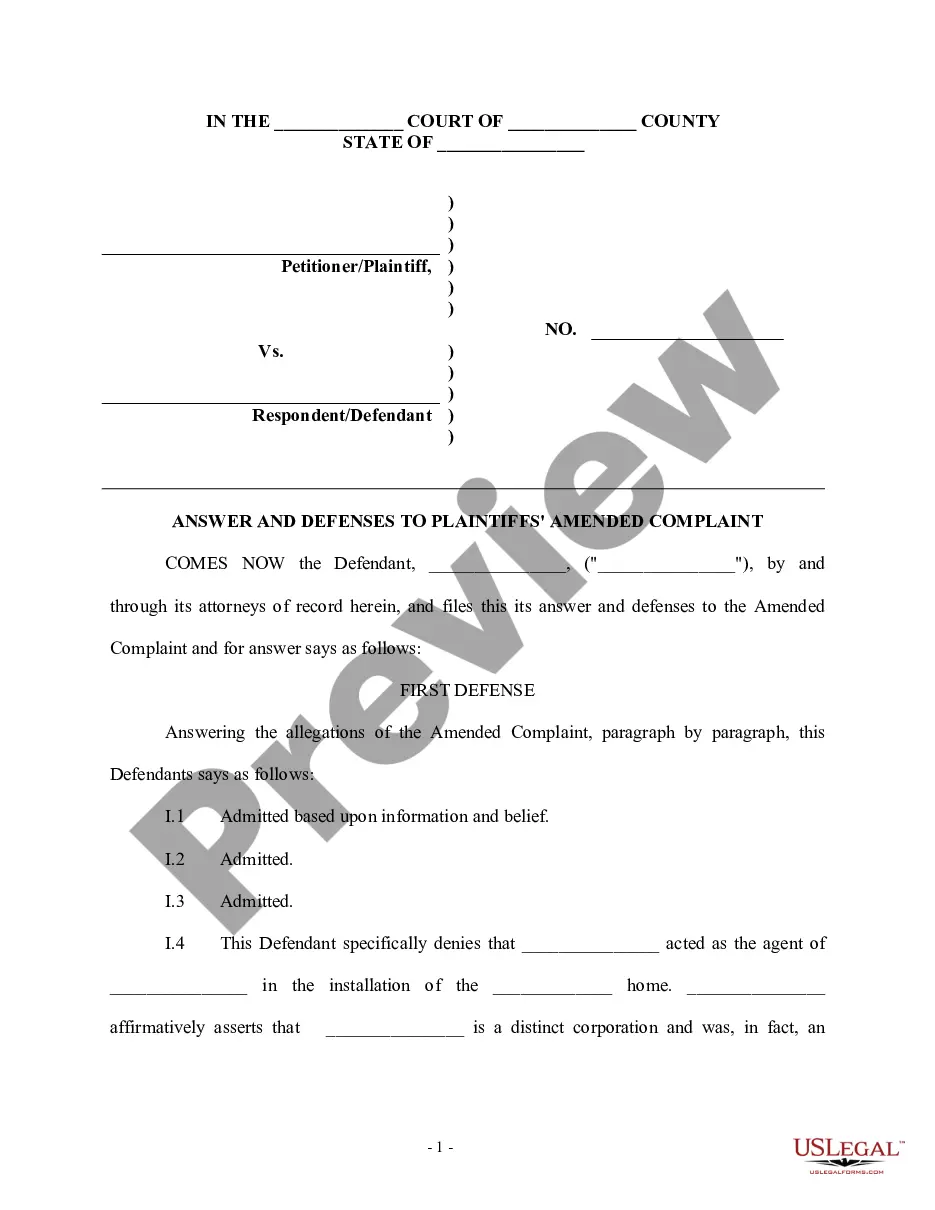
- A detailed denial of allegations specified in the complaint.
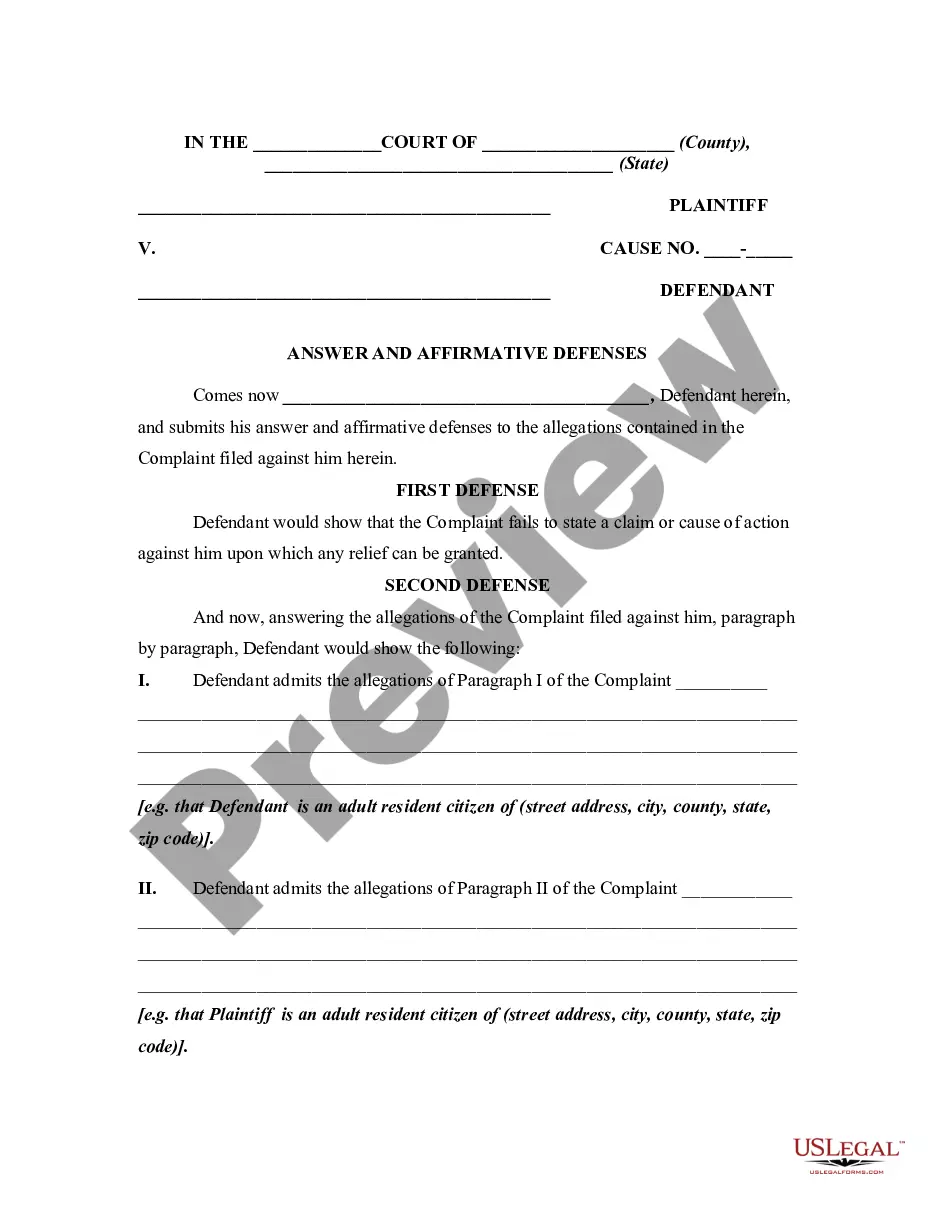
- Affirmative defenses to protect the responding party's interests.
- References to relevant exhibits and prior agreements.
- Provision for the court's order and directives related to the partnership.


When this form is needed
This form is necessary when a partner wishes to formally respond to a complaint that challenges their actions or rights within a partnership. Situations may include disputes over partnership terms, financial accounting, or accusations of misconduct leading to partnership dissolution. It is critical to utilize this form to protect rights and interests effectively in court proceedings.
Who can use this document
This form is intended for:
- Partners in a business partnership involved in a legal dispute.
- Individuals who have received a complaint regarding a partnership dissolution or misconduct.
- Legal representatives acting on behalf of a partner in a partnership dispute.
Instructions for completing this form
- Identify the parties involved in the partnership and the nature of the complaint.
- Clearly state your denials and response to each allegation presented in the complaint.
- Include your affirmative defenses, citing relevant terms from the partnership agreement.
- Reference and attach any relevant exhibits mentioned in your response.
- Sign and date the form to formalize your submission to the court.
Notarization requirements for this form
In most cases, this form does not require notarization. However, some jurisdictions or signing circumstances might. US Legal Forms offers online notarization powered by Notarize, accessible 24/7 for a quick, remote process.
Get your form ready online
Our built-in tools help you complete, sign, share, and store your documents in one place.
Make edits, fill in missing information, and update formatting in US Legal Forms—just like you would in MS Word.
Download a copy, print it, send it by email, or mail it via USPS—whatever works best for your next step.
Sign and collect signatures with our SignNow integration. Send to multiple recipients, set reminders, and more. Go Premium to unlock E-Sign.
If this form requires notarization, complete it online through a secure video call—no need to meet a notary in person or wait for an appointment.
We protect your documents and personal data by following strict security and privacy standards.

Make edits, fill in missing information, and update formatting in US Legal Forms—just like you would in MS Word.

Download a copy, print it, send it by email, or mail it via USPS—whatever works best for your next step.

Sign and collect signatures with our SignNow integration. Send to multiple recipients, set reminders, and more. Go Premium to unlock E-Sign.

If this form requires notarization, complete it online through a secure video call—no need to meet a notary in person or wait for an appointment.

We protect your documents and personal data by following strict security and privacy standards.
Mistakes to watch out for
- Failing to address each allegation specifically may weaken your response.
- Not including relevant exhibits that support your defense.
- Missing signatures or incorrect dates can lead to dismissal or delays.
Advantages of online completion
- Convenient and easy to download, saving time compared to traditional methods.
- Editable templates allow users to tailor the form to their specific situation.
- Reliable formats ensure compliance with legal standards.
Legal use & context
- This form is used in civil court to respond to a complaint about partnership issues.
- A properly completed and filed response can help protect the rights of the responding partner.
- Legal effectiveness may depend on compliance with local jurisdiction rules regarding partnerships.
Summary of main points
- The Answer to Alternate Complaint is essential for defending against partnership disputes.
- Properly addressing all allegations and asserting defenses is crucial for a strong response.
- Review state-specific rules to ensure compliance with local legal standards.
- Using an online form provides ease and immediate access to necessary legal templates.
Looking for another form?

Form popularity
FAQ
Contact the clerk's office of the court where the lawsuit was filed. You'll find a phone number and address for the clerk's office on your summons. The clerk will be able to tell you exactly what documents you should file with your answer and whether any filing fee is required.
(a) A defendant may file an answer with the reviewing official and the Office of Hearings and Appeals within 30 days of service of the complaint. An answer will be considered a request for an oral hearing.
Provide the name of the court at the top of the Answer. You can find the information on the summons. List the name of the plaintiff on the left side. Write the case number on the right side of the Answer. Address the Judge and discuss your side of the case. Ask the judge to dismiss the case.
Negotiate with the plaintiff to try and come to an agreement about settling the matter. You may be able to agree that the statement of claim is withdrawn. This means there will be no judgment against you. 200b200bPay the full amount owed and notify the court by filing a document called a notice of payment.
Provide the name of the court at the top of the Answer. You can find the information on the summons. List the name of the plaintiff on the left side. Write the case number on the right side of the Answer. Address the Judge and discuss your side of the case. Ask the judge to dismiss the case.
Read the summons and make sure you know the date you must answer by. Read the complaint carefully. Write your answer. Sign and date the answer. Make copies for the plaintiff and yourself. Mail a copy to the plaintiff. File your answer with the court by the date on the summons.
You can file an answer or a general denial. Filing an answer. You can file a motion In certain situations, you can respond to the lawsuit by filing a motion (a request) that usually tells the court that the plaintiff made a mistake in the lawsuit. Talk to a lawyer!
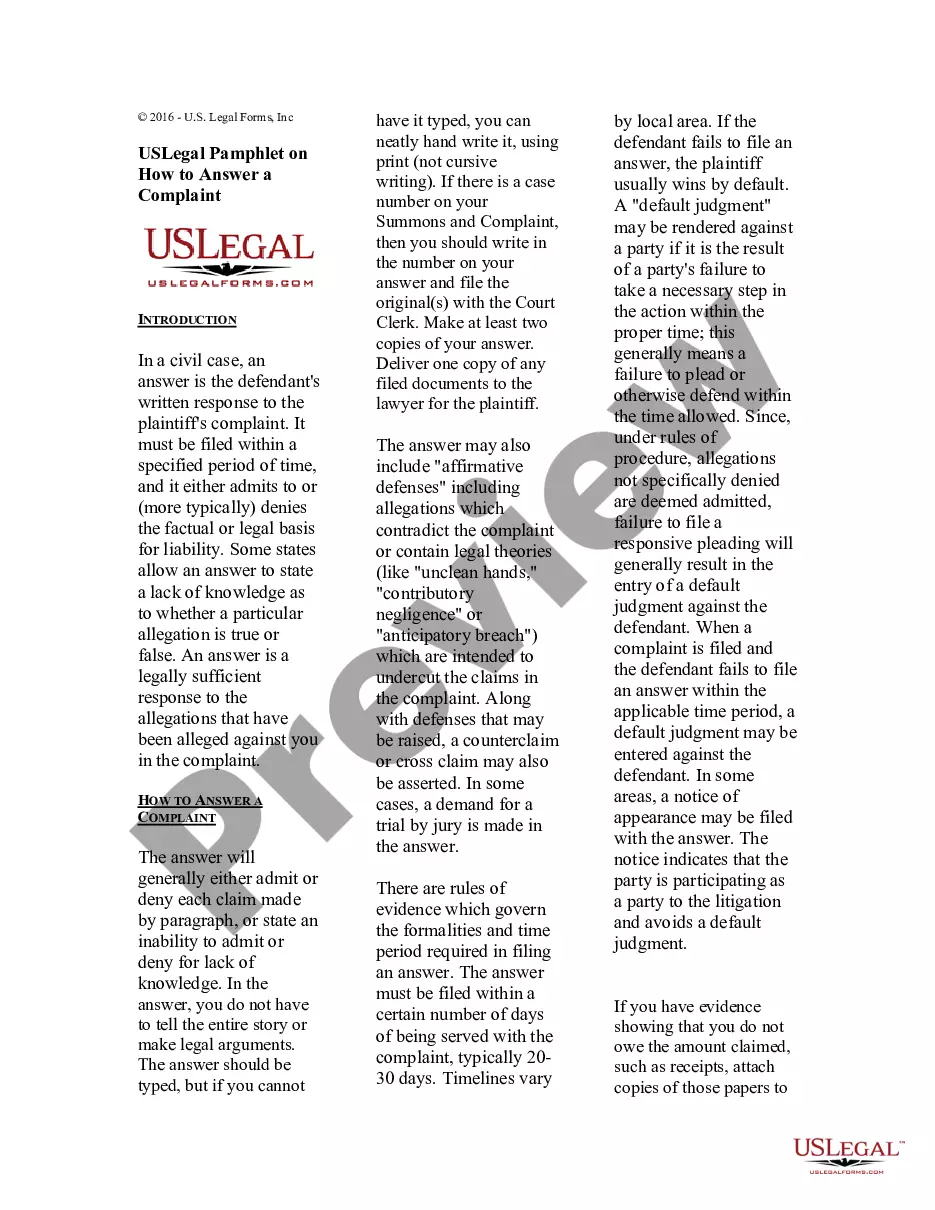
When drafting an answer, one must: (1) follow the local, state, and federal court rules; (2) research the legal claims in the adversary's complaint; (3) respond to the adversary's factual allegations; and (4) assert affirmative defenses, counterclaims, cross-claims, or third-party claims, if applicable.
Provide the name of the court at the top of the Answer. You can find the information on the summons. List the name of the plaintiff on the left side. Write the case number on the right side of the Answer. Address the Judge and discuss your side of the case. Ask the judge to dismiss the case.