4.08. Interactive Process
What this document covers
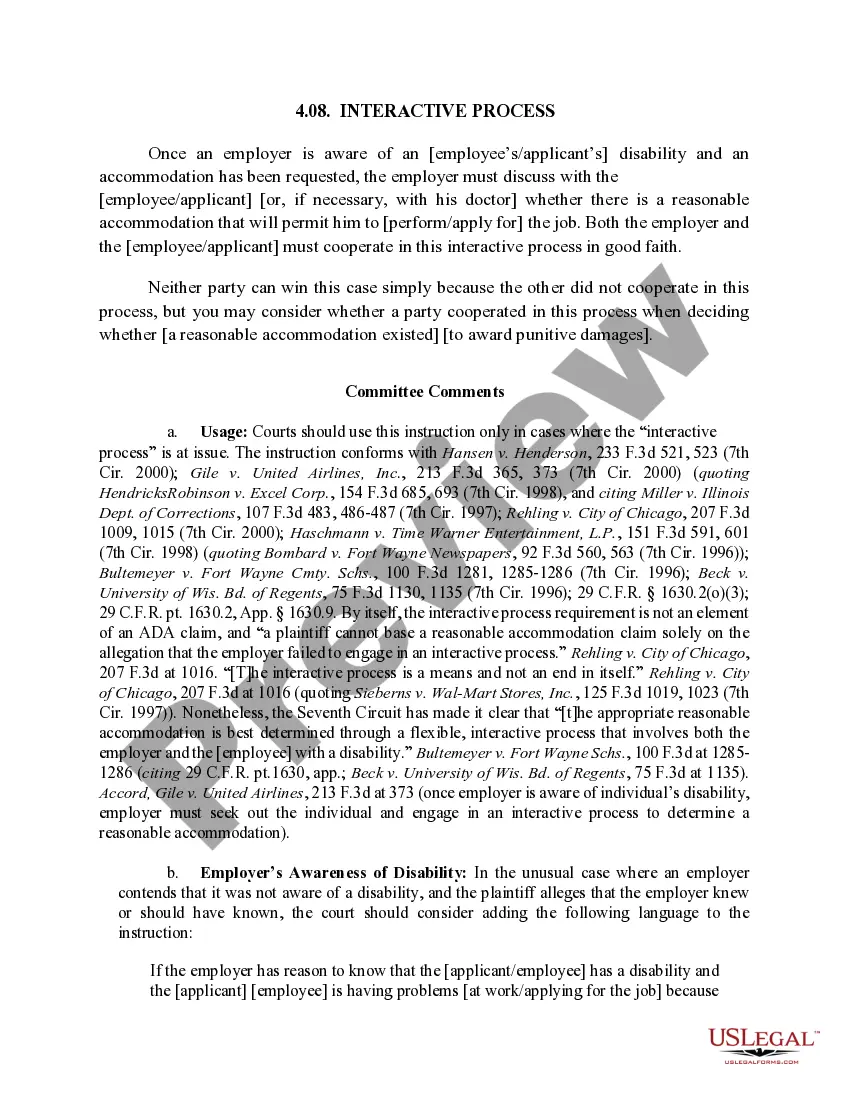
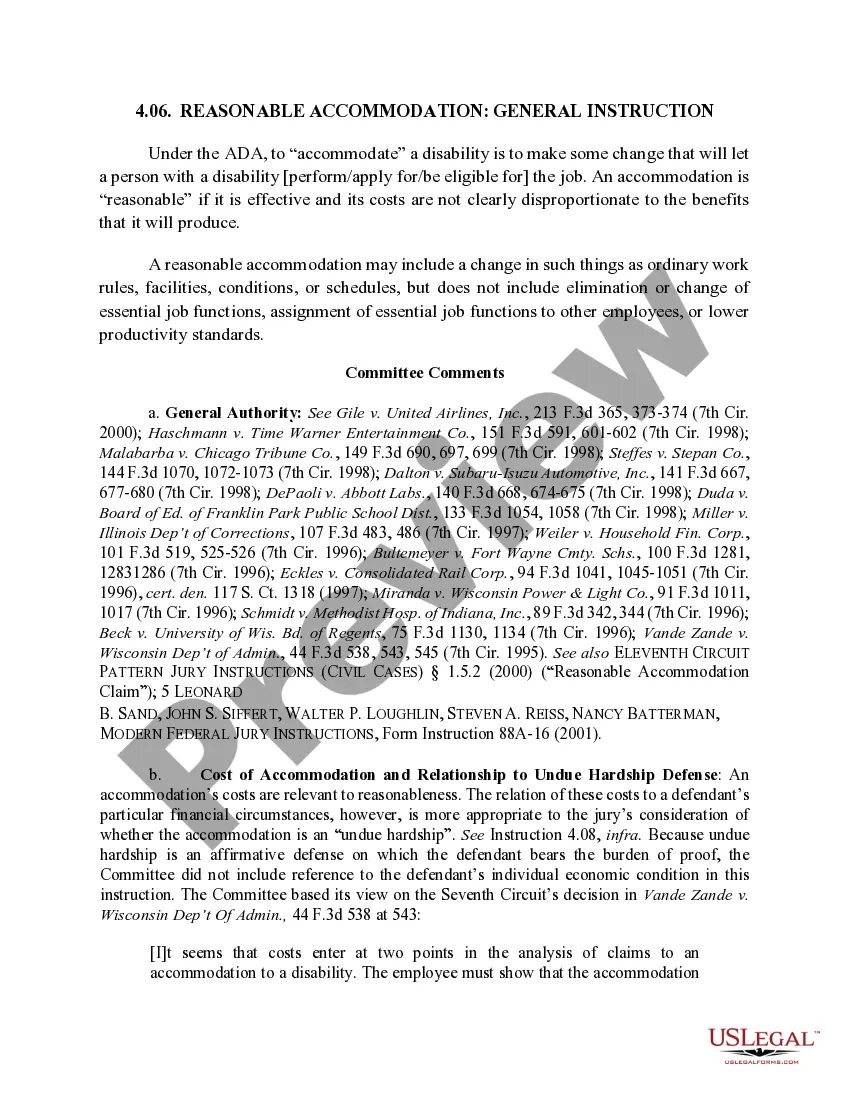
The Interactive Process form outlines the necessary steps an employer must take after being informed of an employee's or applicant's disability. This legal guideline emphasizes the obligation of both parties to engage in an open dialogue to find reasonable accommodations that allow individuals to perform their job duties effectively. This form differs from similar legal documents by specifically focusing on the collaborative discussions required under the Americans with Disabilities Act (ADA) compliance.
Key components of this form
- Employer's obligation to discuss requested accommodations with the employee or applicant.
- Requirement for both parties to cooperate in good faith during the interactive process.
- Consideration of cooperation in the process when determining awards for punitive damages.
- Guidance on what constitutes awareness of an employee's disability for the employer.
- References to relevant case law and regulations related to the interactive process.


Situations where this form applies
This form is essential when an employer has been made aware of an employee's or applicant's disability and has received a request for reasonable accommodation. It is crucial in scenarios where there may be disputes about whether the employer adequately engaged with the employee to find suitable accommodations, which could affect the outcome of ADA claims in court.
Who should use this form
- Employers who have been notified of an employee's or applicant's disability.
- Employees or applicants who have requested reasonable accommodations and wish to ensure that their rights are protected.
- Legal professionals working on cases related to disability and accommodation disputes.
Instructions for completing this form
- Identify the parties involved in the interactive process, including the employer and the employee/applicant.
- Document the discussion about the requested accommodation and any relevant responses from the employee/applicant.
- Ensure both parties agree on the reasonable accommodation discussed.
- Record the steps taken during the interactive process and any conclusions reached.
- File the completed form in the employee's records for compliance purposes.
Does this document require notarization?
Notarization is not commonly needed for this form. However, certain documents or local rules may make it necessary. Our notarization service, powered by Notarize, allows you to finalize it securely online anytime, day or night.
Get your form ready online
Our built-in tools help you complete, sign, share, and store your documents in one place.
Make edits, fill in missing information, and update formatting in US Legal Forms—just like you would in MS Word.
Download a copy, print it, send it by email, or mail it via USPS—whatever works best for your next step.
Sign and collect signatures with our SignNow integration. Send to multiple recipients, set reminders, and more. Go Premium to unlock E-Sign.
If this form requires notarization, complete it online through a secure video call—no need to meet a notary in person or wait for an appointment.
We protect your documents and personal data by following strict security and privacy standards.

Make edits, fill in missing information, and update formatting in US Legal Forms—just like you would in MS Word.

Download a copy, print it, send it by email, or mail it via USPS—whatever works best for your next step.

Sign and collect signatures with our SignNow integration. Send to multiple recipients, set reminders, and more. Go Premium to unlock E-Sign.

If this form requires notarization, complete it online through a secure video call—no need to meet a notary in person or wait for an appointment.

We protect your documents and personal data by following strict security and privacy standards.
Typical mistakes to avoid
- Failing to initiate the interactive process in a timely manner after being notified of a disability.
- Not properly documenting the discussions and decisions made during the interactive process.
- Assuming that a lack of immediate accommodation constitutes a failure without engaging in dialogue.
- Ignoring state-specific laws that may influence the interactive process requirements.
Advantages of online completion
- Easy access to a professionally drafted legal template prepared by licensed attorneys.
- Convenient downloading and printing options, allowing for immediate use.
- Editable formats to tailor the content specifically to your situation.
- Secure storage options for your legal records, ensuring compliance is maintained.
Legal use & context
- The Interactive Process form is essential for compliance with ADA requirements concerning reasonable accommodations.
- This form provides a framework to demonstrate that the employer engaged in necessary dialogues to support employees with disabilities.
- Failure to follow the outlined process can lead to legal disputes and potential punitive damages.
Looking for another form?

Form popularity
FAQ
For example, if an employee mentions to their supervisor that they're late getting to work because of medical treatment, that has triggered the interactive process. In another instance, an employee who uses a wheelchair tells the employer that their wheelchair doesn't fit under the desk in their office.
In the interactive process?a discussion about an applicant's or employee's disability--the applicant or employee, health care provider and employer each share information about the nature of the disability and the limitations that may affect his or her ability to perform the essential job duties.
Employers must initiate an ?interactive process? when an applicant or employee requests reasonable accommodations. The employer must also offer to initiate an interactive process when the employer becomes aware of the possible need for an accommodation.
Steps of the Interactive Process Step #1: Recognize the Accommodation Request.Step #2: Gather Information.Step #3: Explore Accommodation Options and Choose an Accommodation.
The interactive process is essentially a mutual dialogue between the employer and the employee, with the objective of arriving at an agreed upon, reasonable accommodation. The employee is required to participate in the process, and their failure or refusal to do so amounts to a waiver of rights under the ADA.
The Interactive Process is triggered as soon as the employer becomes aware that the employee may have a mental or physical impairment that limits his/her ability to perform any aspect of his/her job.
What Is The Interactive Process? The Interactive Process is the way in which employees, supervisors, and their departments determine whether reasonable accommodation can be made to an employee. The interactive process obligation applies to both workers' compensation and non- industrial related injuries or illnesses.