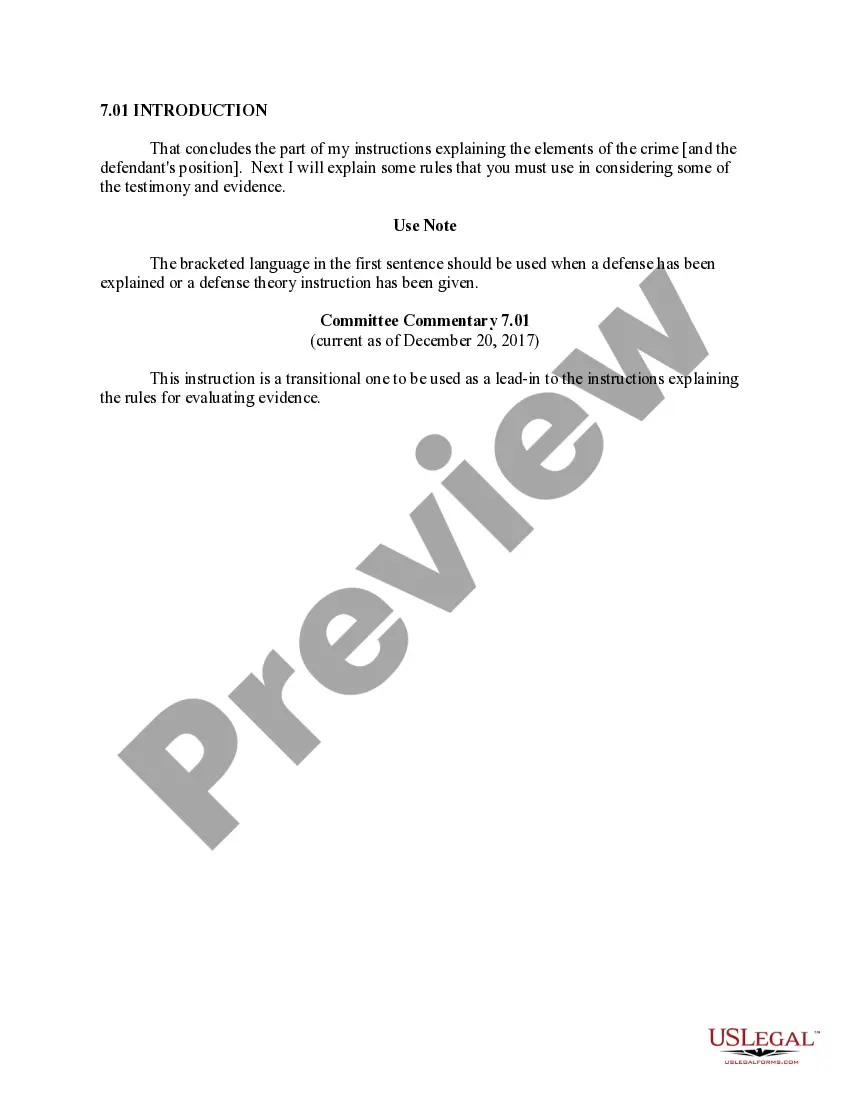
INTRODUCTION
What is this form?
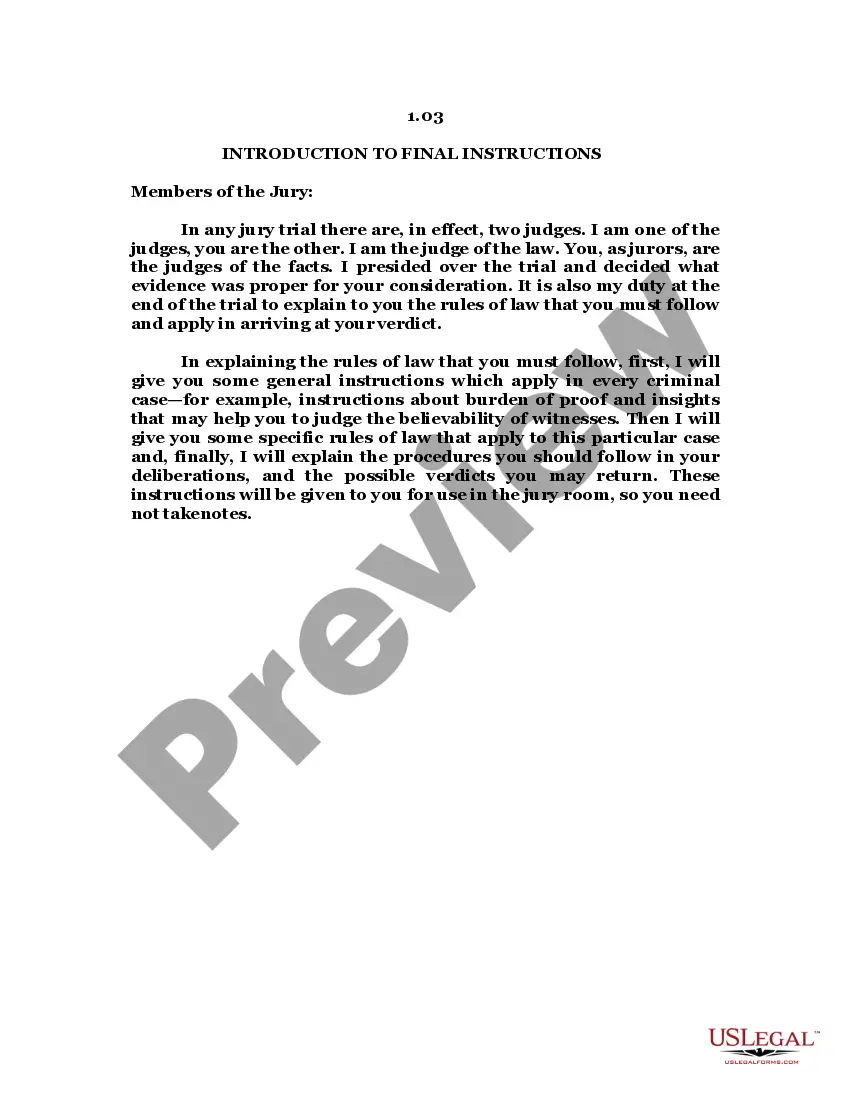
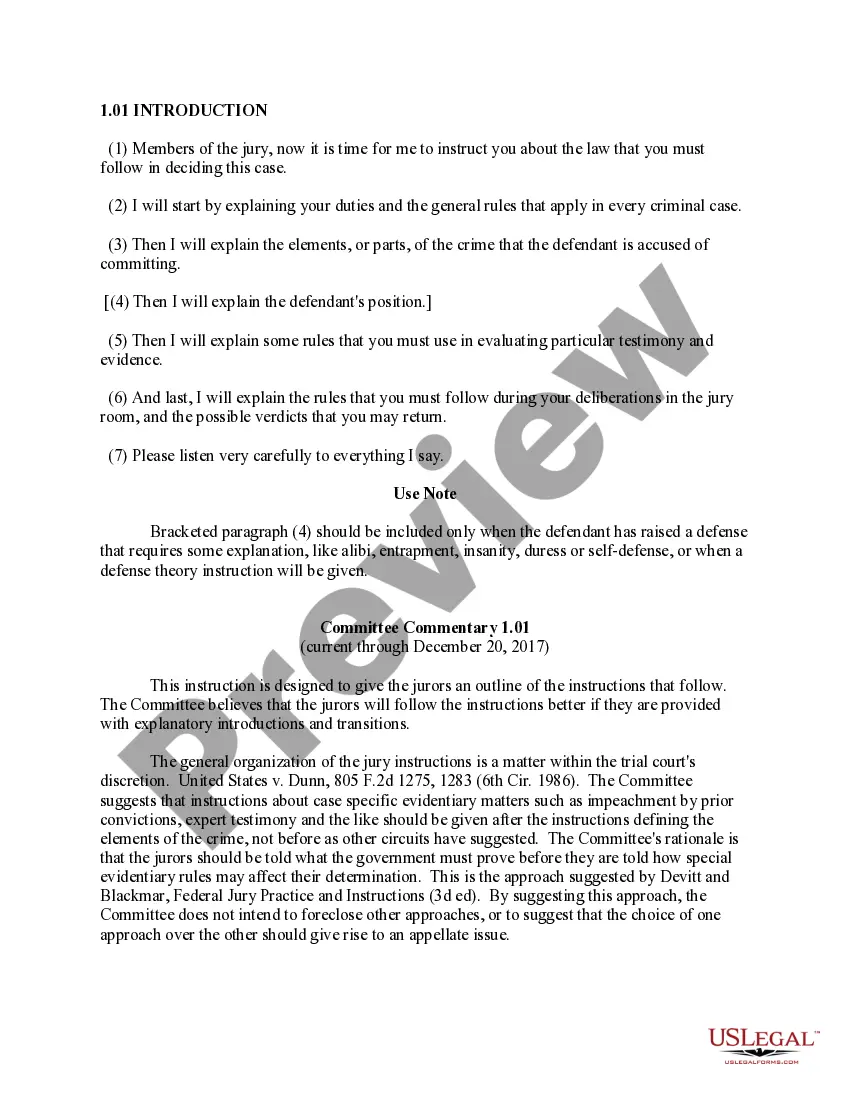
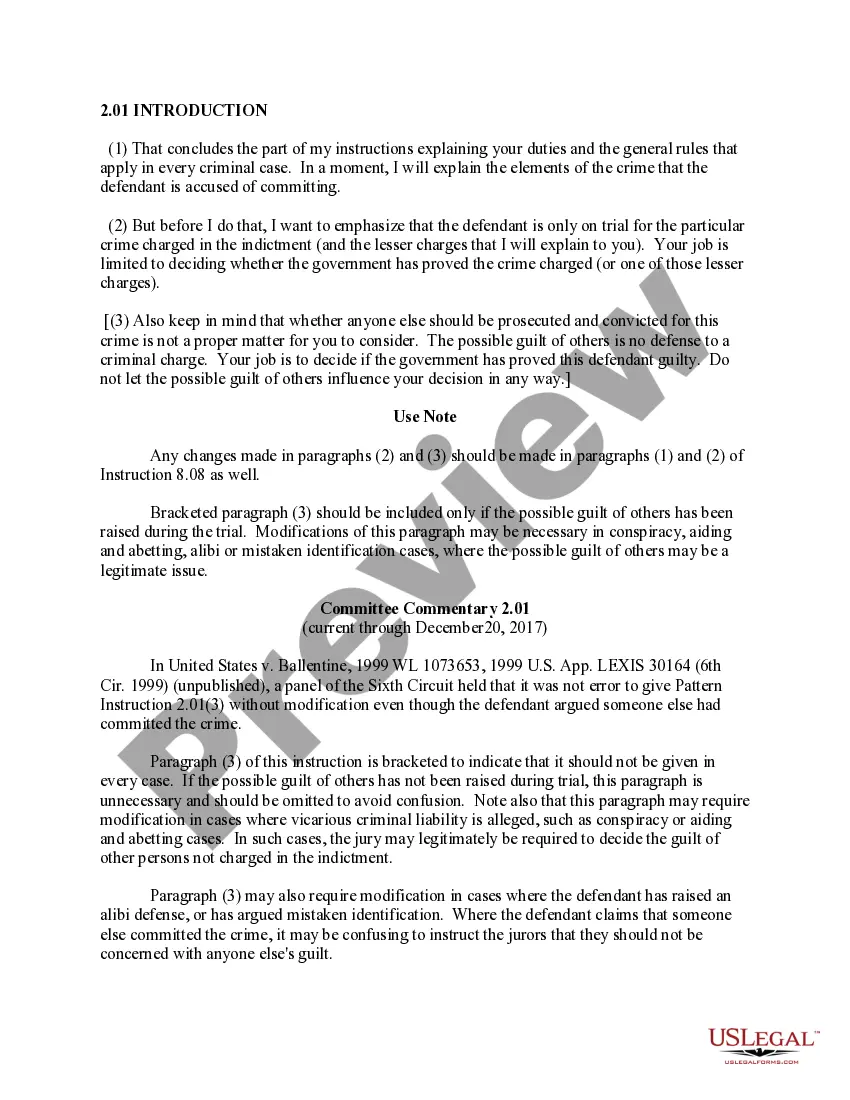
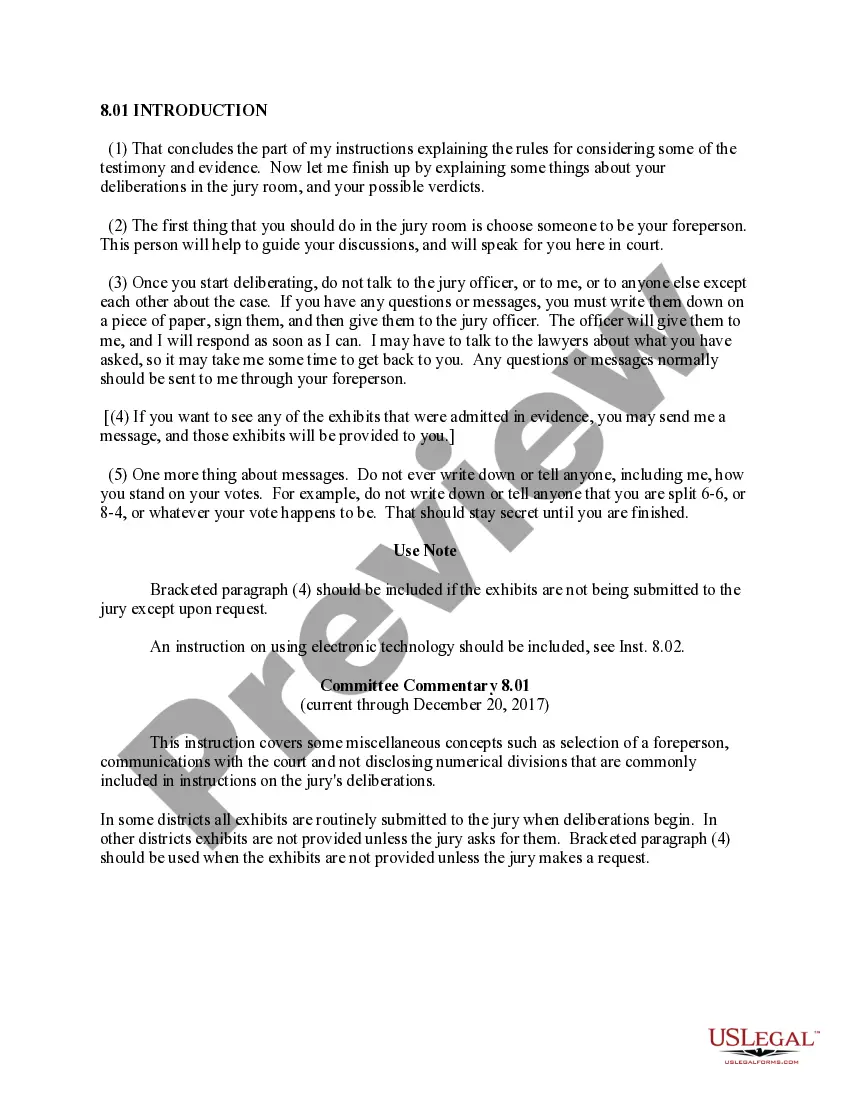
The INTRODUCTION form serves as a transitional statement in legal instructions, guiding juries on how to evaluate testimony and evidence. It is distinct from other legal forms because it provides crucial context for understanding the elements of a crime and the defendant's position, helping to ensure that jurors follow the appropriate rules during deliberations.
Key components of this form
- Instructions on evaluating evidence and testimony.
- Contextual framing for understanding the defendant's position.
- Guidance on applying legal standards in deliberation.
When to use this form
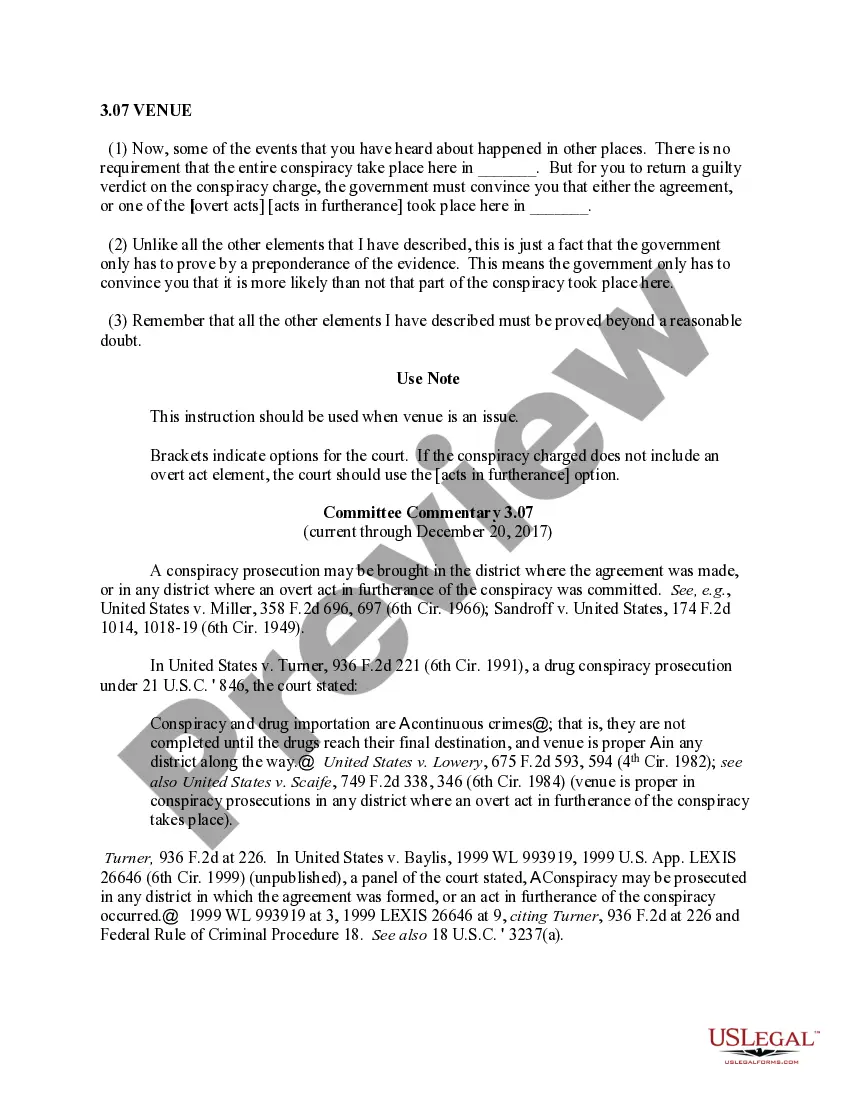
This form is used in legal proceedings where jurors must be guided on how to interpret evidence and testimonies related to a crime. It is particularly relevant in trials that involve complex defense theories that require careful consideration and understanding from the jury.
Who needs this form
- Judges preparing for jury instructions in a trial.
- Legal professionals outlining the framework for jurors.
- Defense attorneys presenting a case with specific theories.
How to prepare this document
- Identify the key elements of the crime to be explained.
- Clarify the position of the defendant to provide context.
- Outline relevant rules for evaluating evidence and testimony.
- Prepare the instructions in a clear and accessible language for jurors.
Is notarization required?
Notarization is not commonly needed for this form. However, certain documents or local rules may make it necessary. Our notarization service, powered by Notarize, allows you to finalize it securely online anytime, day or night.
Get your form ready online
Our built-in tools help you complete, sign, share, and store your documents in one place.
Make edits, fill in missing information, and update formatting in US Legal Forms—just like you would in MS Word.
Download a copy, print it, send it by email, or mail it via USPS—whatever works best for your next step.
Sign and collect signatures with our SignNow integration. Send to multiple recipients, set reminders, and more. Go Premium to unlock E-Sign.
If this form requires notarization, complete it online through a secure video call—no need to meet a notary in person or wait for an appointment.
We protect your documents and personal data by following strict security and privacy standards.

Make edits, fill in missing information, and update formatting in US Legal Forms—just like you would in MS Word.

Download a copy, print it, send it by email, or mail it via USPS—whatever works best for your next step.

Sign and collect signatures with our SignNow integration. Send to multiple recipients, set reminders, and more. Go Premium to unlock E-Sign.

If this form requires notarization, complete it online through a secure video call—no need to meet a notary in person or wait for an appointment.

We protect your documents and personal data by following strict security and privacy standards.
Typical mistakes to avoid
- Failing to clearly explain the defense position in relation to the crime.
- Neglecting to address the specific legal standards for evidence evaluation.
- Using complex legal jargon that may confuse jurors.
Why complete this form online
- Convenient access to prepared legal language, reducing drafting time.
- Editability allows legal professionals to customize instructions as needed.
- Reliable content drafted and vetted by licensed attorneys.
Legal use & context
- This form is crucial for ensuring that legal standards for evidence are met in trials.
- Non-compliance with proper instructions can lead to appeals or mistrials.
Key takeaways
- The INTRODUCTION form is essential for guiding juries in the evaluation of evidence.
- It helps clarify the context surrounding the defendant's position in a trial.
- Proper use of this form can significantly impact the fairness of a trial.
Looking for another form?





Form popularity
FAQ
This lesson explains seven ways to write an introduction. Funnel. Anecdote. Survey. Quotation. Question. Setting the Scene. Definition.
Introducing one person to a group of people For example: "Ladies and gentlemen, without further ado, it is my pleasure to introduce you to the Founder and CEO of Tasty Sweets, Mrs. Rachel Malloy." "Emily, Luis and Trent, I would like to introduce you to my grandmother, Mrs. Joan O'Malley."
The act of introducing or fact of being introduced. a presentation of one person to another or others. a means of presenting a person to another person, group, etc, such as a letter of introduction or reference. a preliminary part, as of a book, speech, etc.
There are four different ways of writing an introduction to an academic essay. These include; funnel, quotations, dramatic, and the turn-about form.
Here are a few examples of statements you can use to inform others you are making an introduction: "I would like you to meet..." "It's a pleasure to introduce..." "I would like to introduce..." "I would like to present..."
A good introduction should identify your topic, provide essential context, and indicate your particular focus in the essay. It also needs to engage your readers' interest.
An introduction is the first paragraph of your paper. The goal of your introduction is to let your reader know the topic of the paper and what points will be made about the topic. The thesis statement that is included in the introduction tells your reader the specific purpose or main argument of your paper.
Introduce Yourself Start with a quotation. Open with a relevant stat or fun fact. Start with a fascinating story. Ask your readers an intriguing question. Set the scene.