PRELIMINARY INSTRUCTIONS
About this form
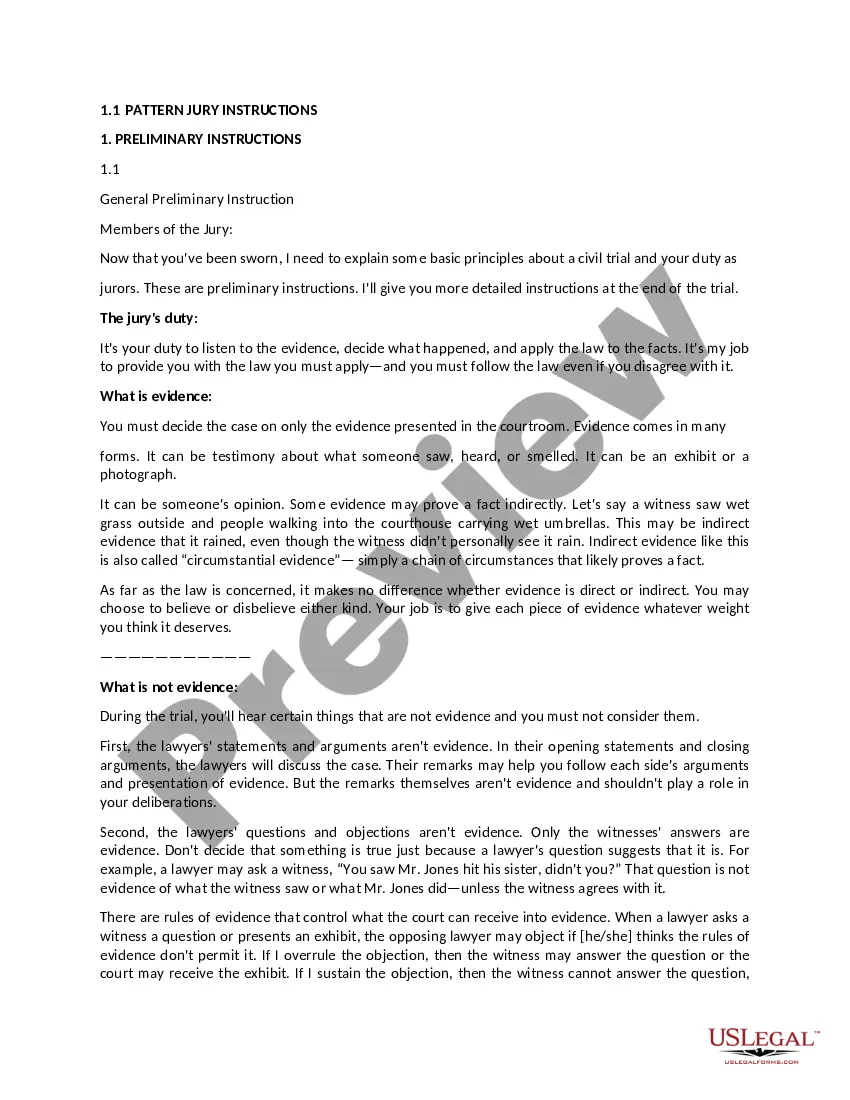
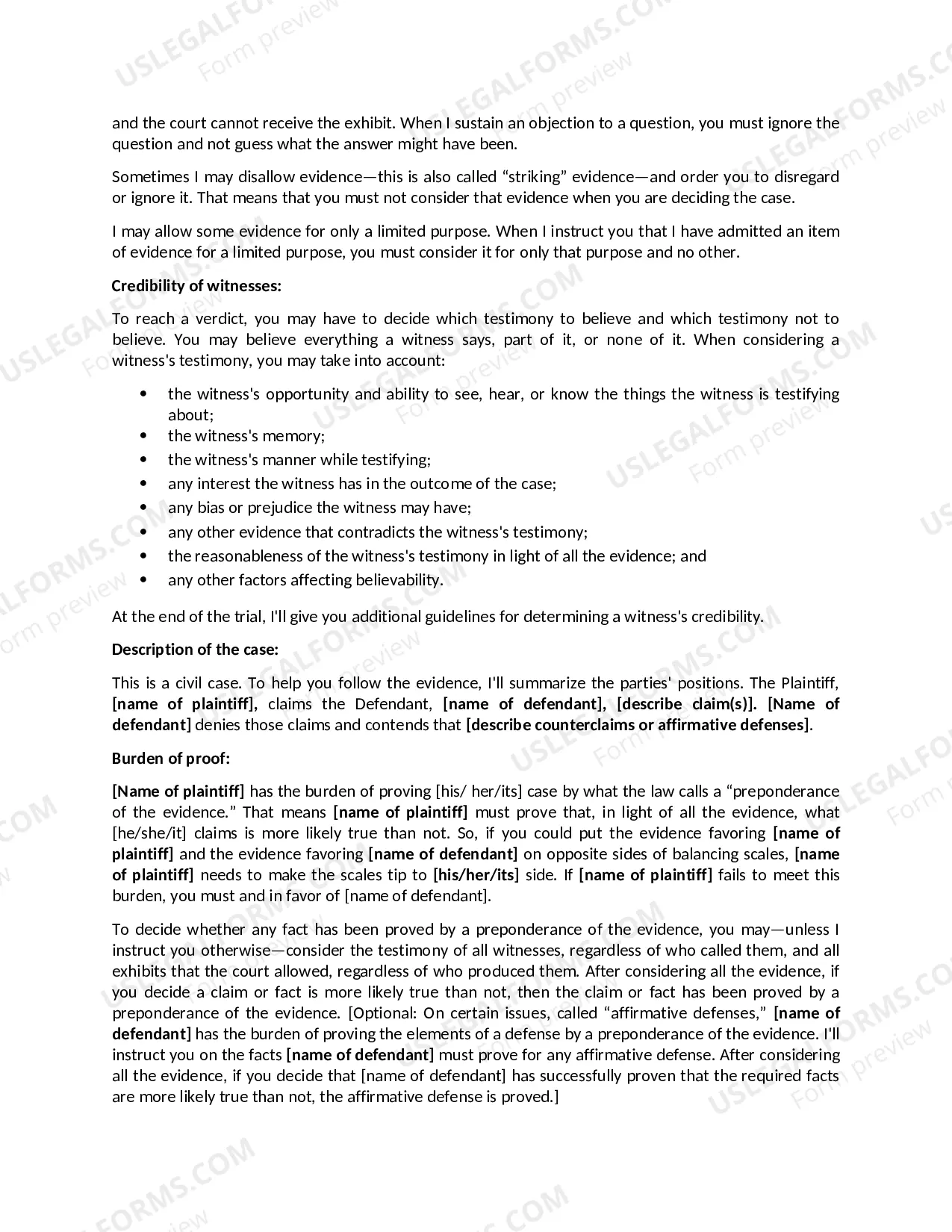
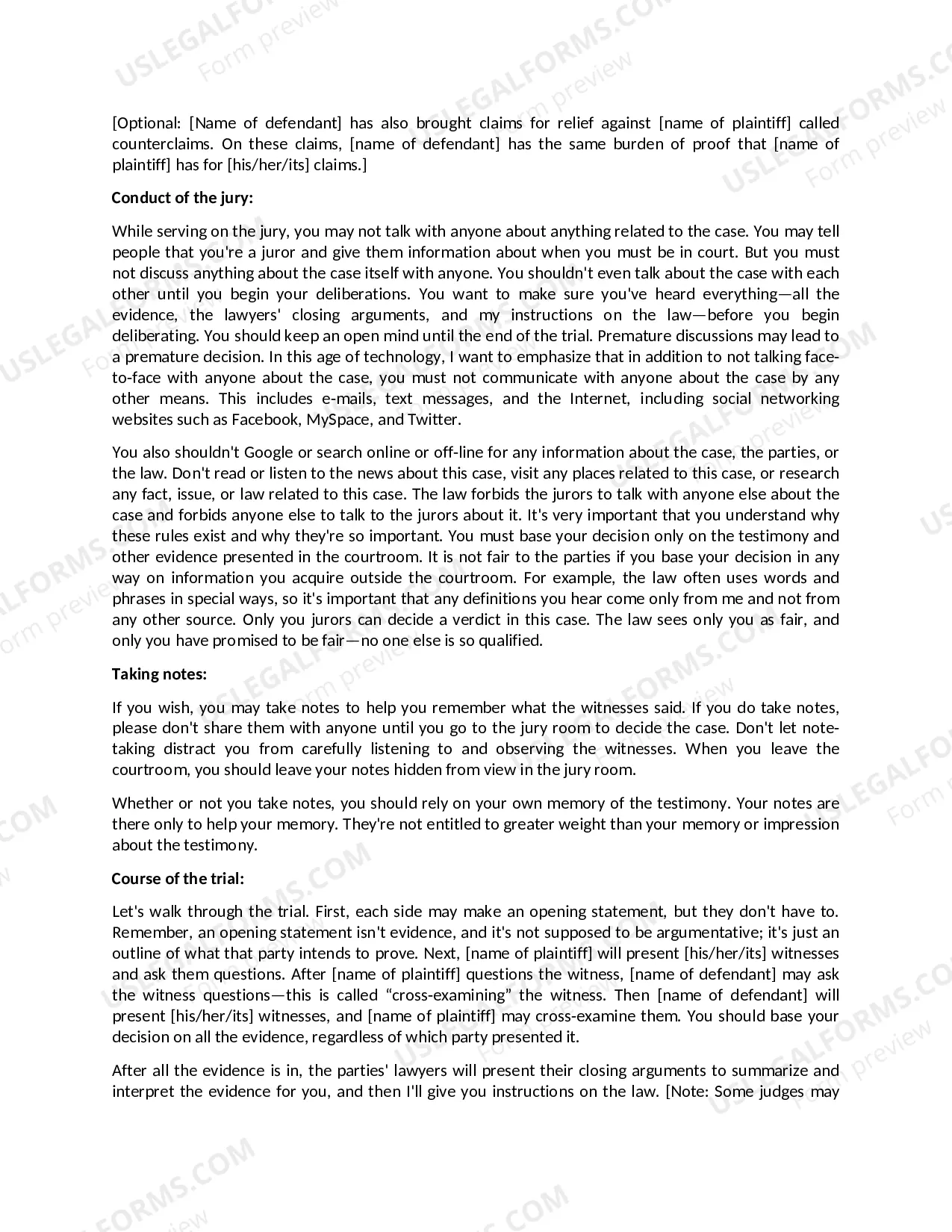
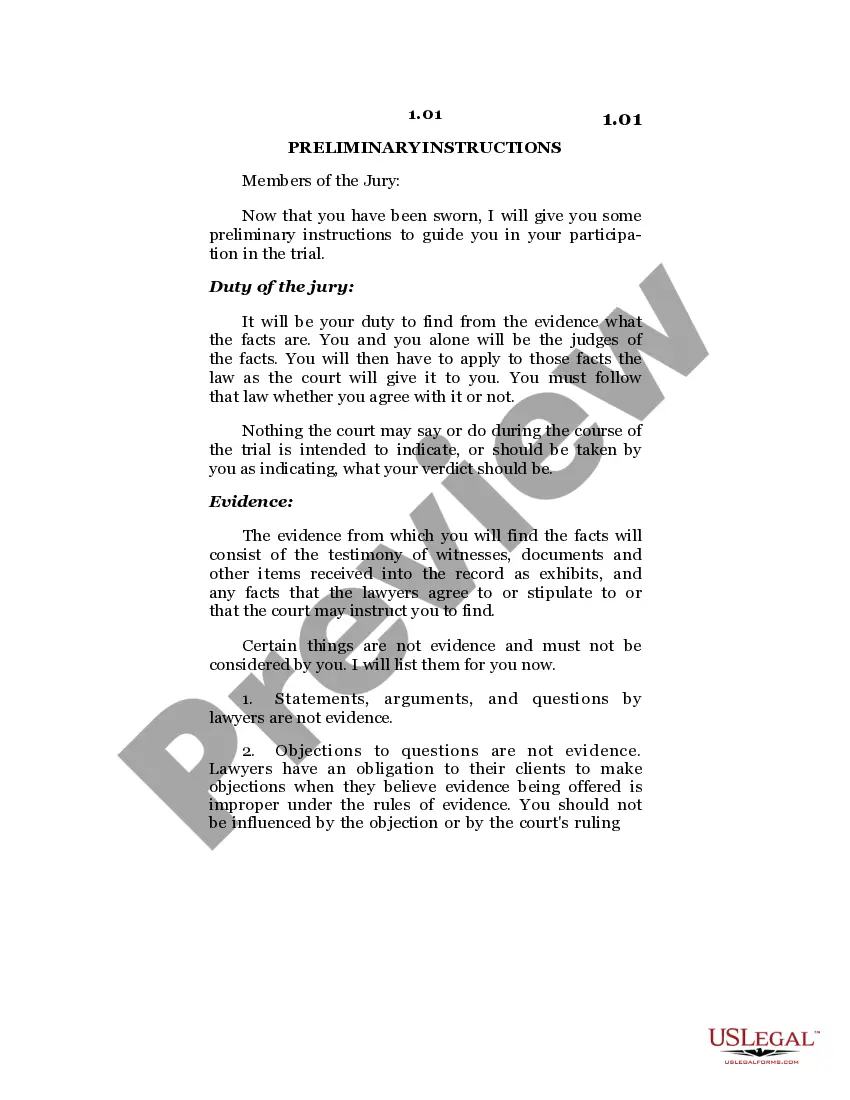
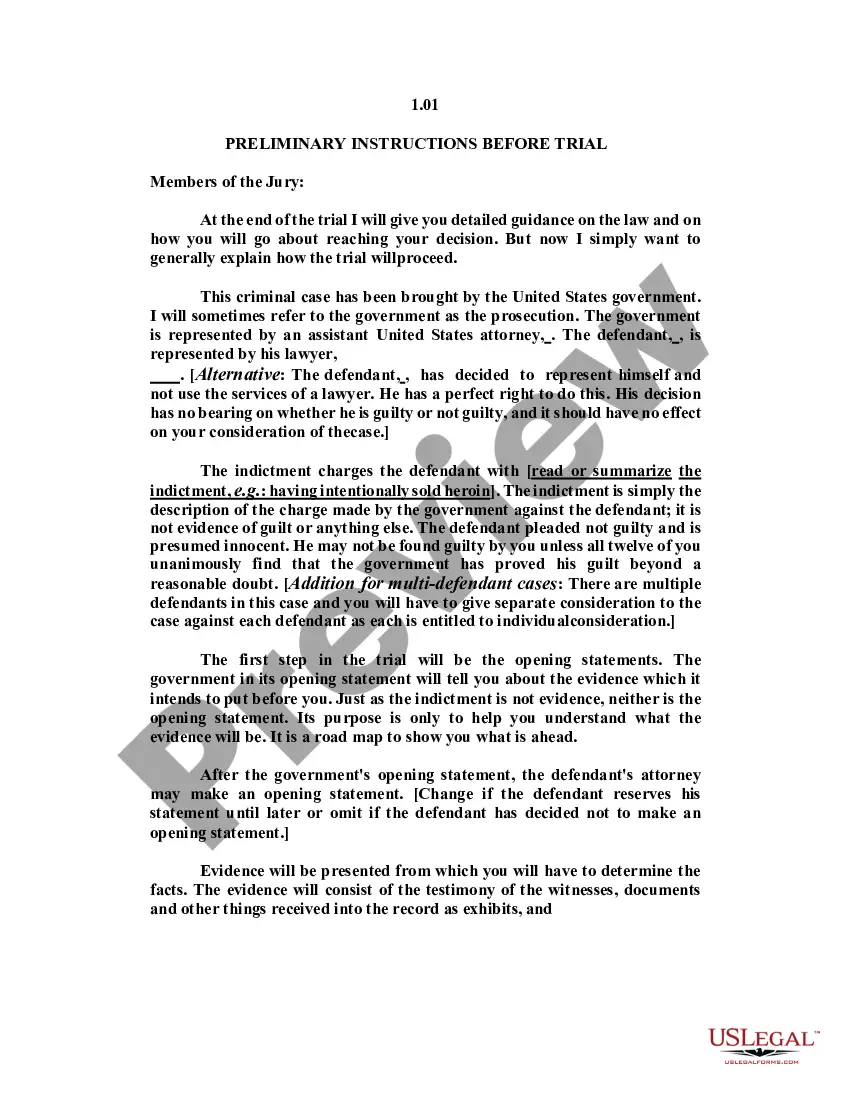
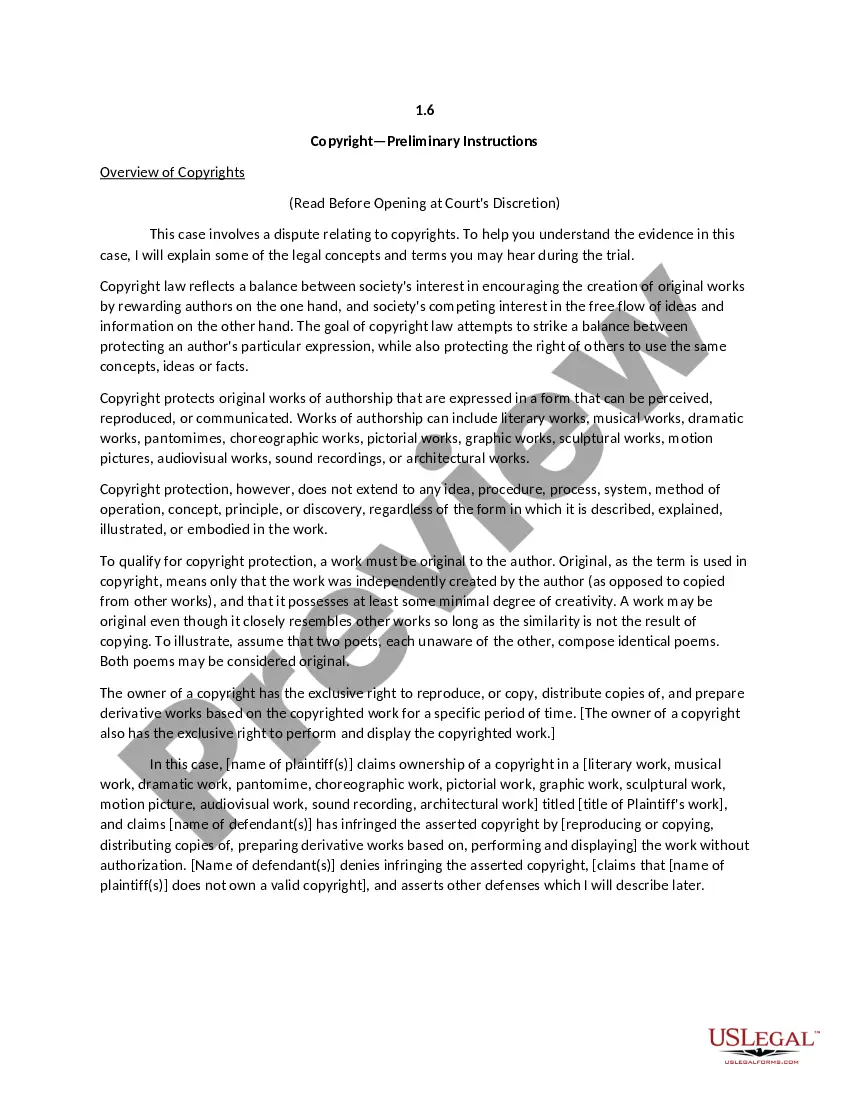
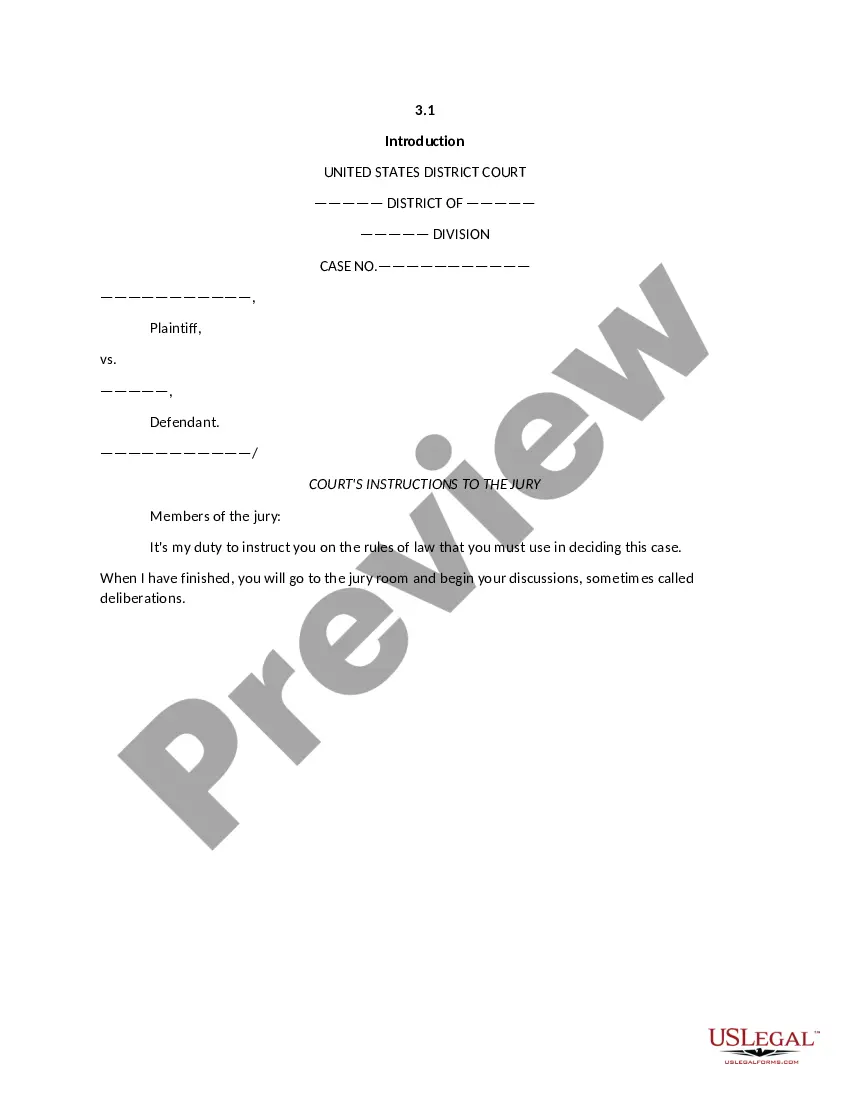
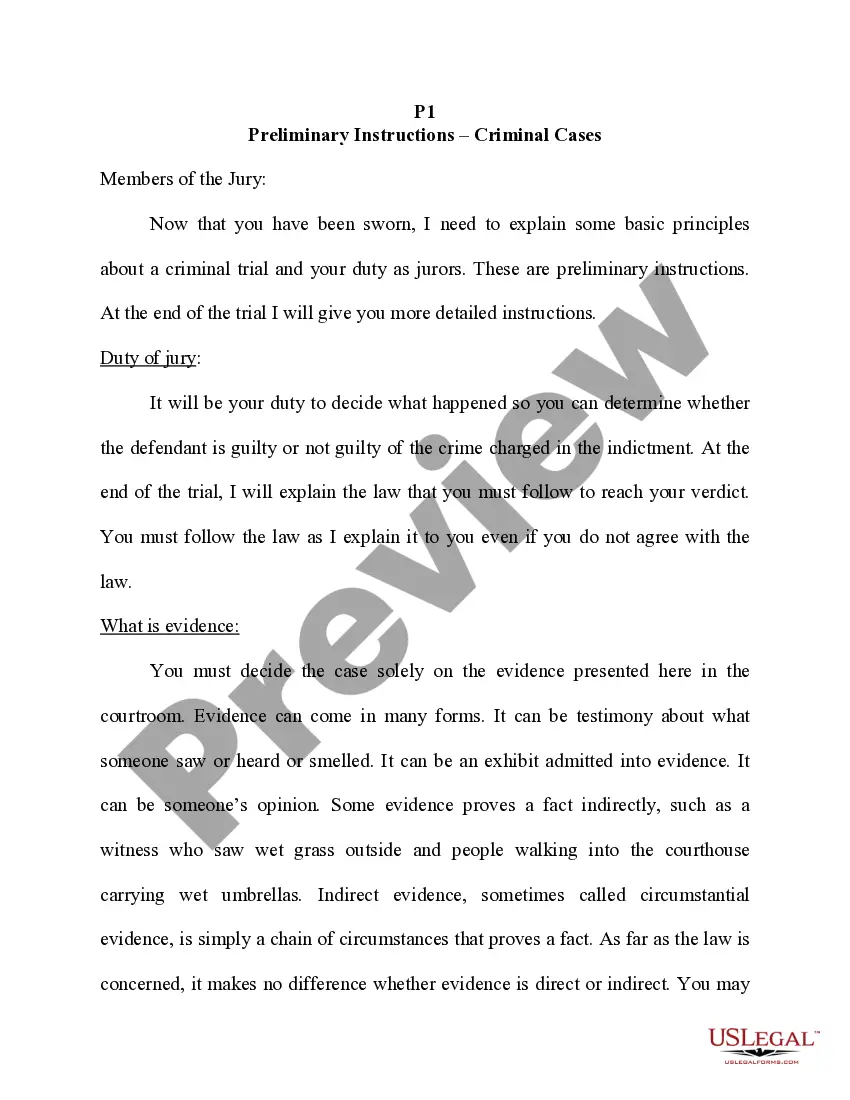
The Preliminary Instructions form is a set of guidelines provided to jurors in civil trials, specifically from the 11th Circuit Federal Court of Appeals. This legal form outlines the roles and responsibilities of jurors, how to evaluate evidence, and the importance of conducting deliberations without external influence. It is distinct from other jury instructions as it focuses on foundational principles that jurors need to understand before the trial progresses.
What’s included in this form
- General overview of juror duties and trial process.
- Explanation of what constitutes evidence and the distinction between direct and circumstantial evidence.
- Guidelines on assessing witness credibility.
- Clarification on the burden of proof placed on the plaintiff.
- Instructions on juror conduct during and after the trial.

Situations where this form applies
This form is used at the beginning of a civil trial to prepare jurors for their responsibilities. It is essential whenever a jury is convened, ensuring that all jurors understand how to handle the evidence presented and the legal standards they are to apply during their deliberations.
Who this form is for
This form is intended for:
- Jurors selected for service in civil trials.
- Judges providing instructions to jurors.
- Legal representatives and attorneys involved in the trial.
Steps to complete this form
To effectively use this form, follow these steps:
- Read the preliminary instructions thoroughly to understand your roles as a juror.
- Pay special attention to definitions of evidence and how to weigh it in deliberations.
- Note the guidelines related to witness credibility and how it will factor into your verdict.
- Attend all trial sessions without discussing the case with anyone outside of the jury.
- Use a notepad, if desired, to record important details while avoiding distractions.
Does this form need to be notarized?
Notarization is generally not required for this form. However, certain states or situations might demand it. You can complete notarization online through US Legal Forms, powered by Notarize, using a verified video call available anytime.
Get your form ready online
Our built-in tools help you complete, sign, share, and store your documents in one place.
Make edits, fill in missing information, and update formatting in US Legal Forms—just like you would in MS Word.
Download a copy, print it, send it by email, or mail it via USPS—whatever works best for your next step.
Sign and collect signatures with our SignNow integration. Send to multiple recipients, set reminders, and more. Go Premium to unlock E-Sign.
If this form requires notarization, complete it online through a secure video call—no need to meet a notary in person or wait for an appointment.
We protect your documents and personal data by following strict security and privacy standards.

Make edits, fill in missing information, and update formatting in US Legal Forms—just like you would in MS Word.

Download a copy, print it, send it by email, or mail it via USPS—whatever works best for your next step.

Sign and collect signatures with our SignNow integration. Send to multiple recipients, set reminders, and more. Go Premium to unlock E-Sign.

If this form requires notarization, complete it online through a secure video call—no need to meet a notary in person or wait for an appointment.

We protect your documents and personal data by following strict security and privacy standards.
Typical mistakes to avoid
- Discussing the case with others before deliberation begins.
- Relying on external information or media coverage related to the case.
- Confusing statements made by attorneys as evidence.
- Failing to consider all evidence presented before reaching conclusions.
Advantages of online completion
- Convenient access to essential jury instructions in a clear and structured manner.
- Editable to accommodate specific case details as needed.
- Drafted by licensed attorneys to ensure legal reliability and accuracy.
The Preliminary Instructions guide jurors on the legal obligations and processes they must follow for a fair trial. Its enforceability is rooted in proper courtroom procedures, ensuring that all jurors base their verdict solely on the evidence presented and not on outside opinions or influences.
Key takeaways
- The Preliminary Instructions form is essential for jurors in civil trials to understand their duties.
- It differentiates between types of evidence and highlights the importance of following legal guidelines.
- Jurors must avoid any external communication regarding the case until deliberations begin.
Looking for another form?
Form popularity
FAQ
In its current form, Rule 30 requires that the court instruct the jury after the arguments of counsel. In some districts, usually where the state practice is otherwise, the parties prefer to stipulate to instruction before closing arguments.
The judge instructs the jury about the relevant laws that should guide its deliberations. (In some jurisdictions, the court may instruct the jury at any time after the close of evidence. This sometimes occurs before closing arguments.) The judge reads the instructions to the jury.
Jury instructions are the only guidance the jury should receive when deliberating and are meant to keep the jury on track regarding the basic procedure of the deliberation and the substance of the law on which their decision is based.
The judge instructs the jury about the relevant laws that should guide its deliberations. (In some jurisdictions, the court may instruct the jury at any time after the close of evidence. This sometimes occurs before closing arguments.)
The judge instructs the jury that their vote must be unanimous and that, if found guilty, the boy will face the death penalty. Cut to the jury room where the story takes place. An anonymous vote is taken where all the jurors vote guilty, save one...
Thus, preliminary instructions should cover the statutory requirements, set forth the basic and important legal principles that a jury needs to know, attempt to explain to jurors things they will see and hear during a trial that might otherwise puzzle them, and try to assure jurors that rulings on objections and the
Charge to the jury - The judge's instructions to the jury concerning the law that applies to the facts of the case on trial. chief judge - The judge who has primary responsibility for the administration of a court.