Convertible Note Purchase Agreement
Understanding this form
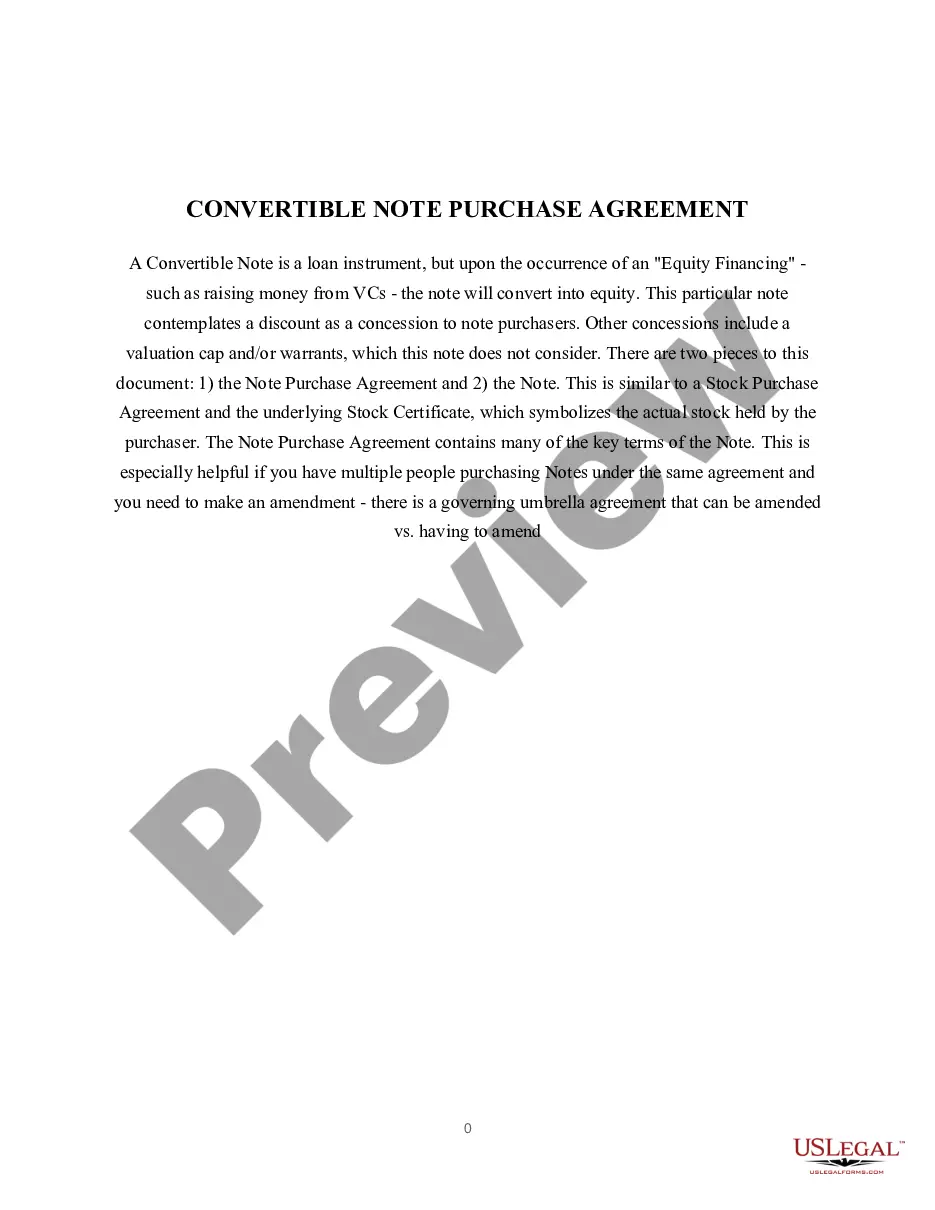
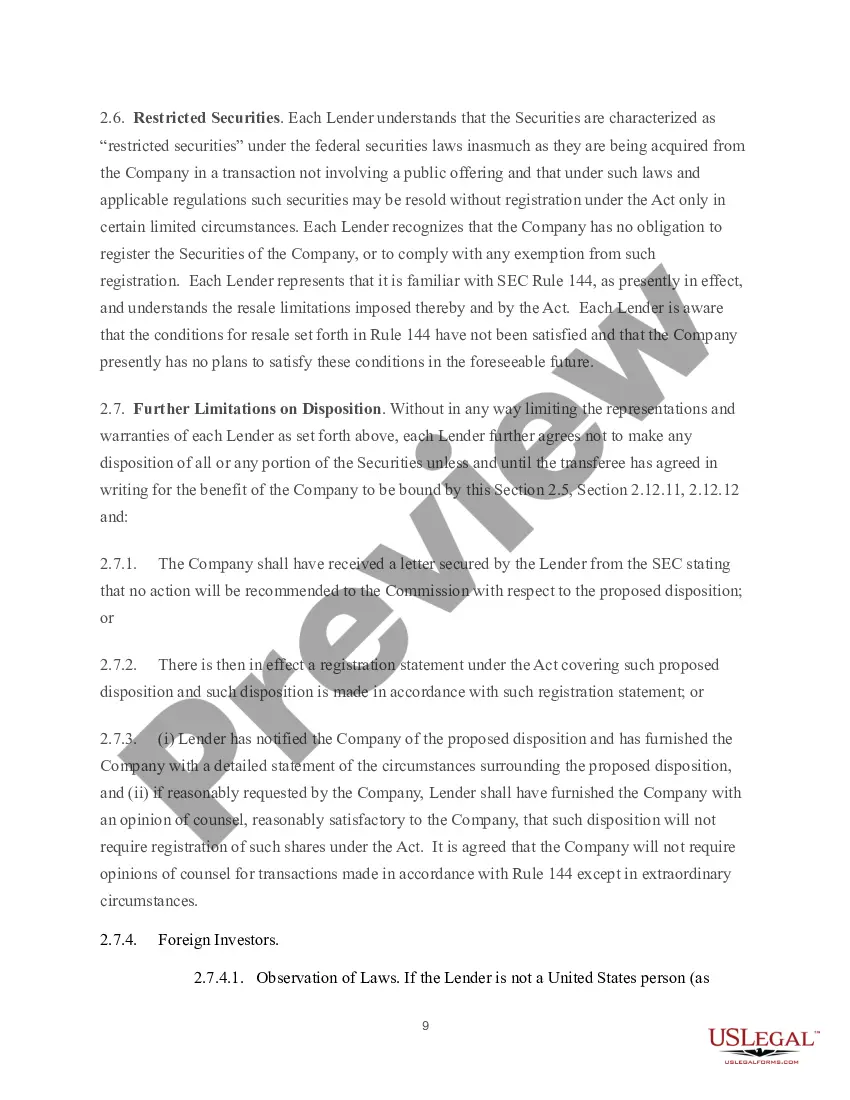
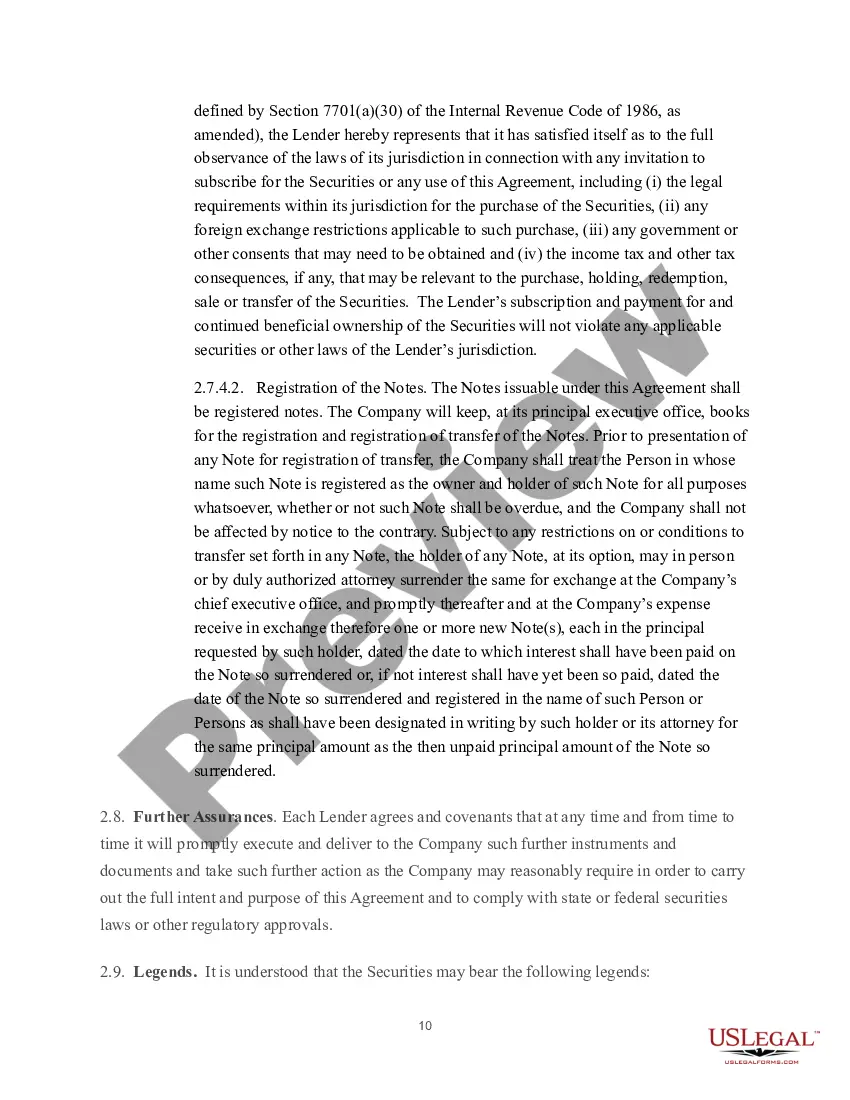
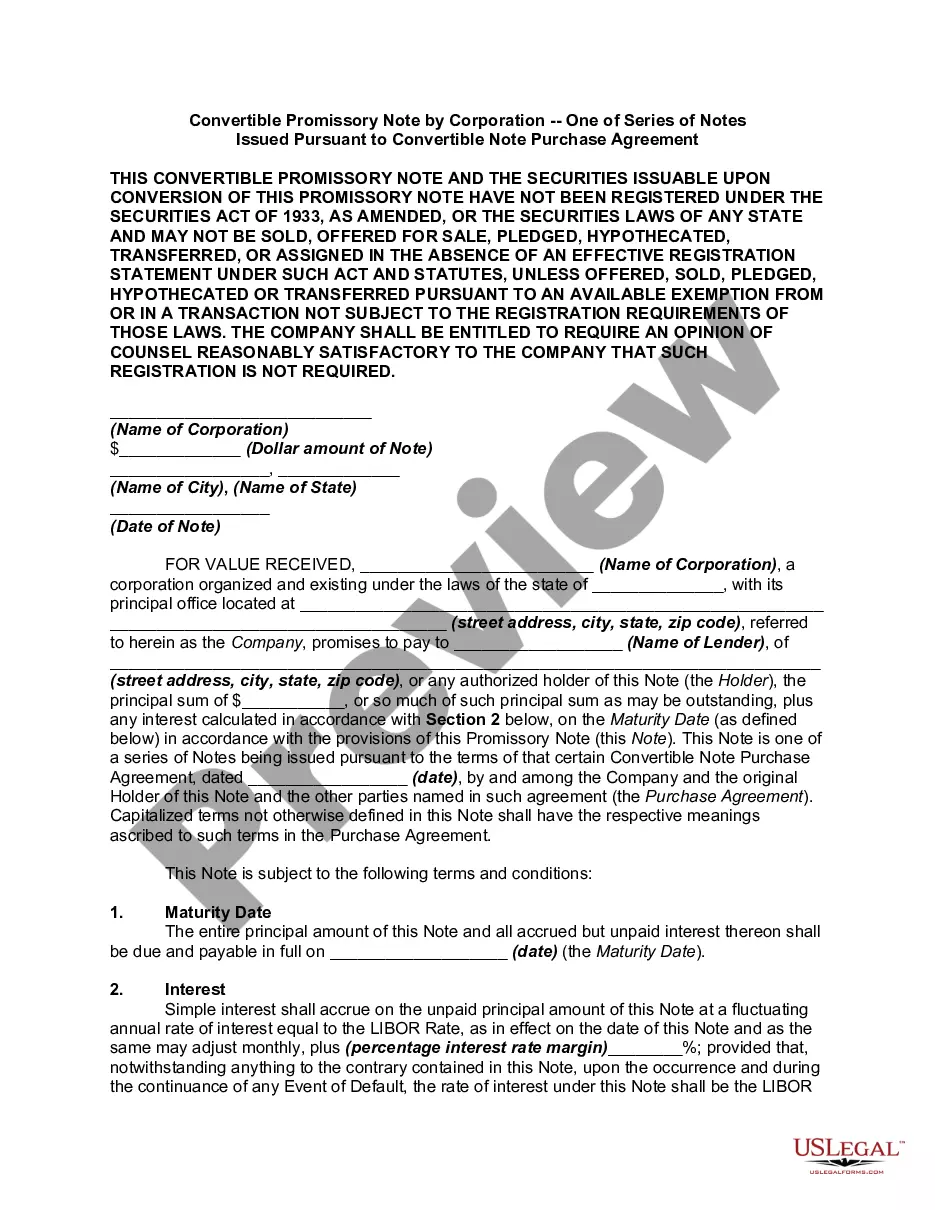
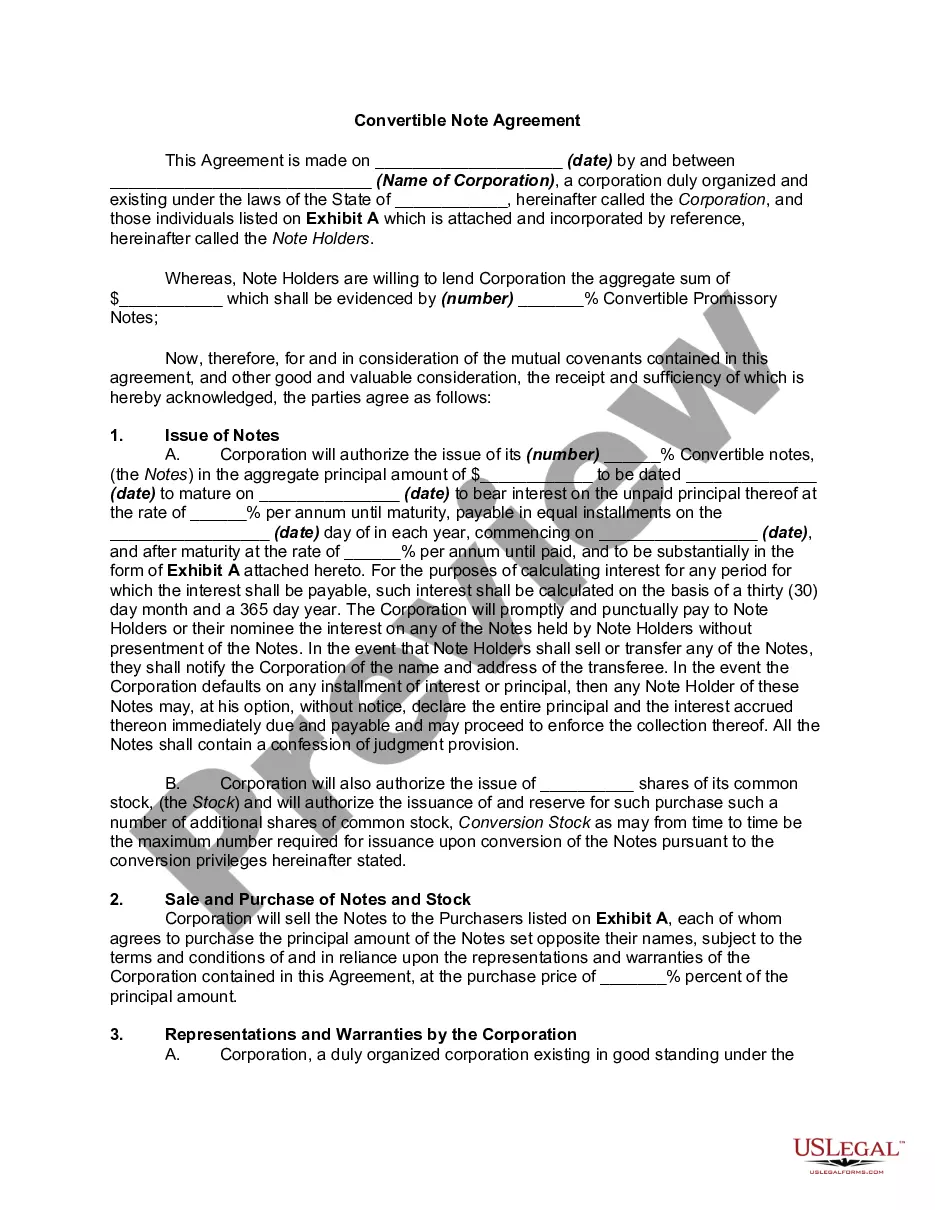
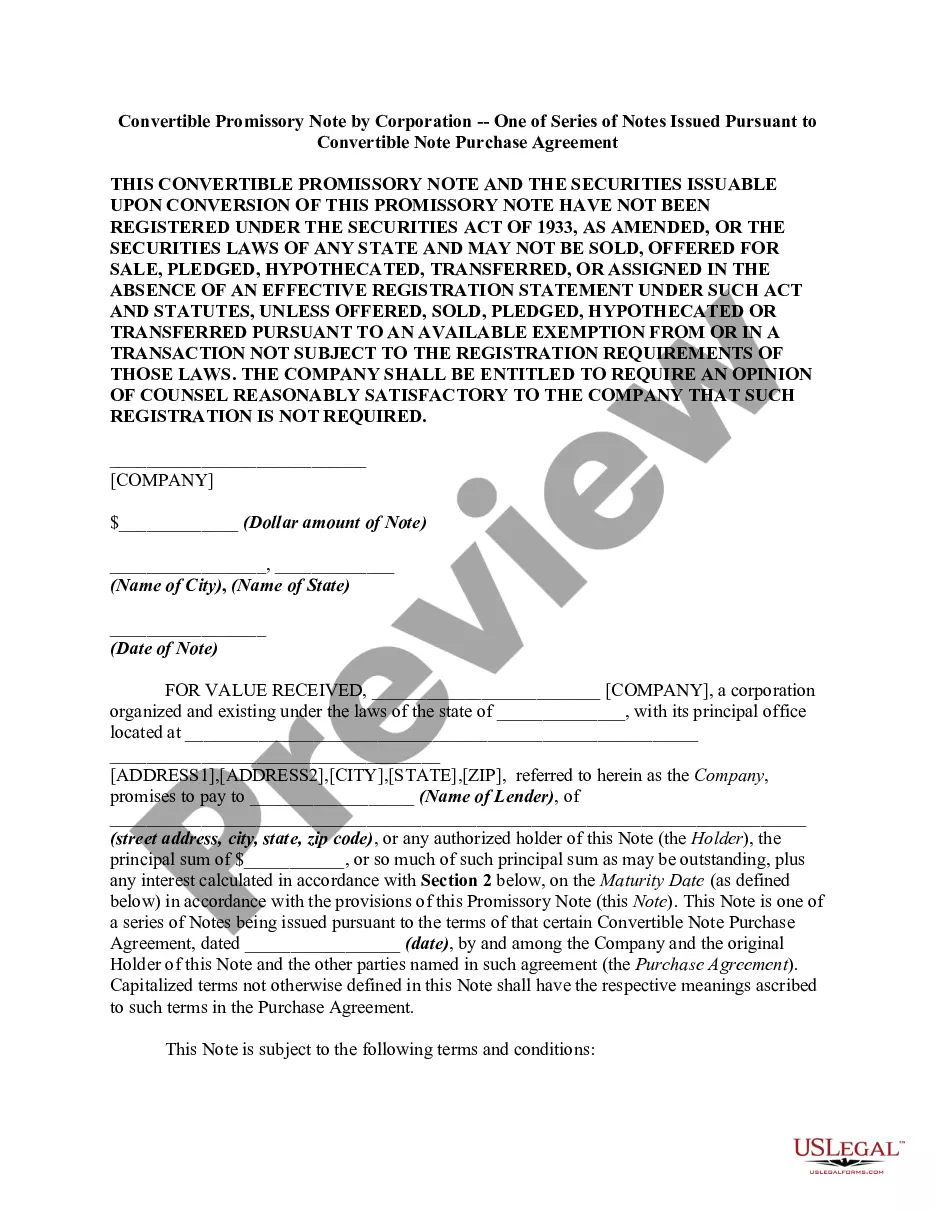
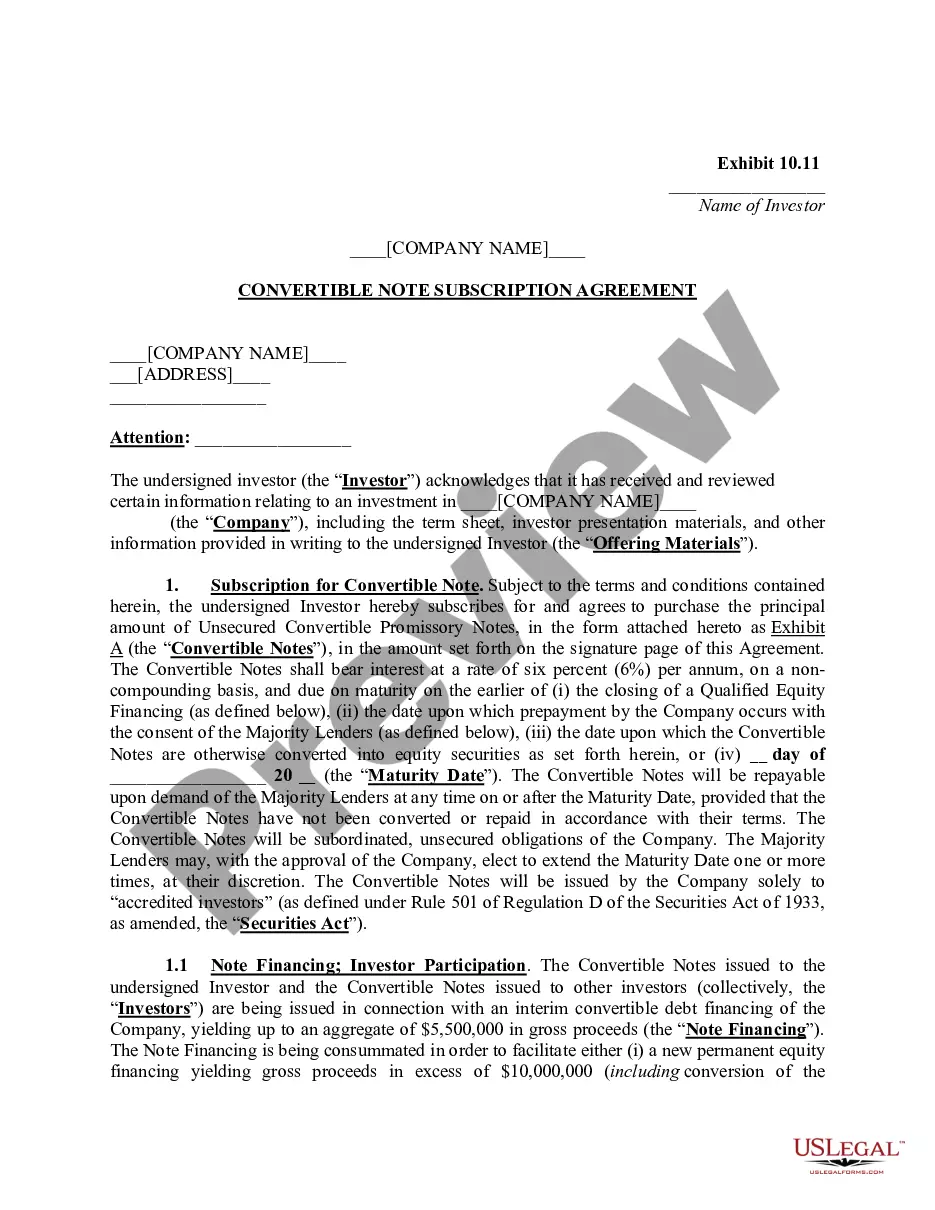
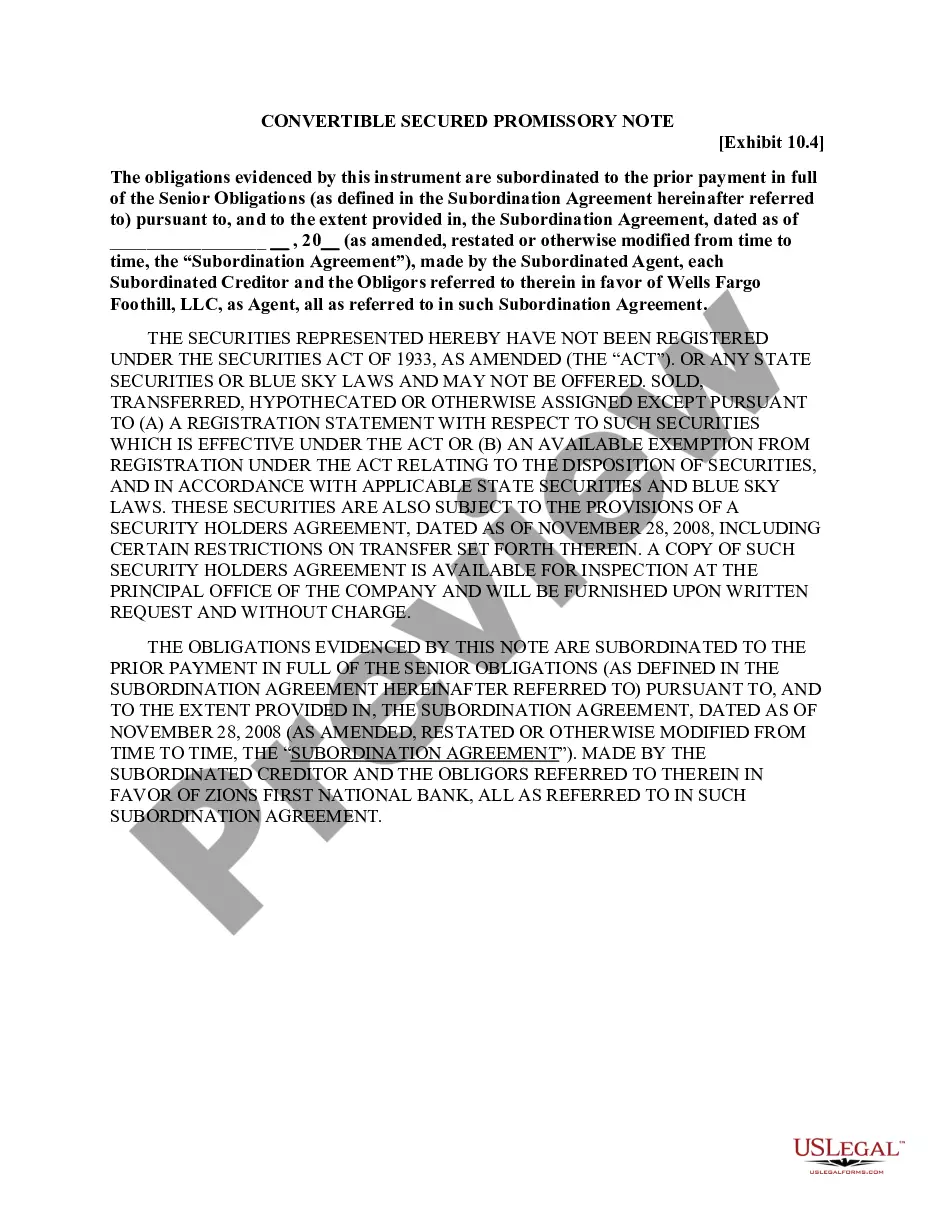
A Convertible Note Purchase Agreement is a legal document that outlines the terms and conditions under which investors provide financing to a company through convertible notes. This differs from other financing agreements, like stock purchase agreements, as it enables the debt to be converted into equity in the event of an equity financing round, such as a venture capital raise. This agreement is beneficial for companies looking to secure funding while offering investors the potential for future equity in the company.
Form components explained
- Agreement Termination Conditions: Specifies circumstances under which the agreement may be terminated or converted.
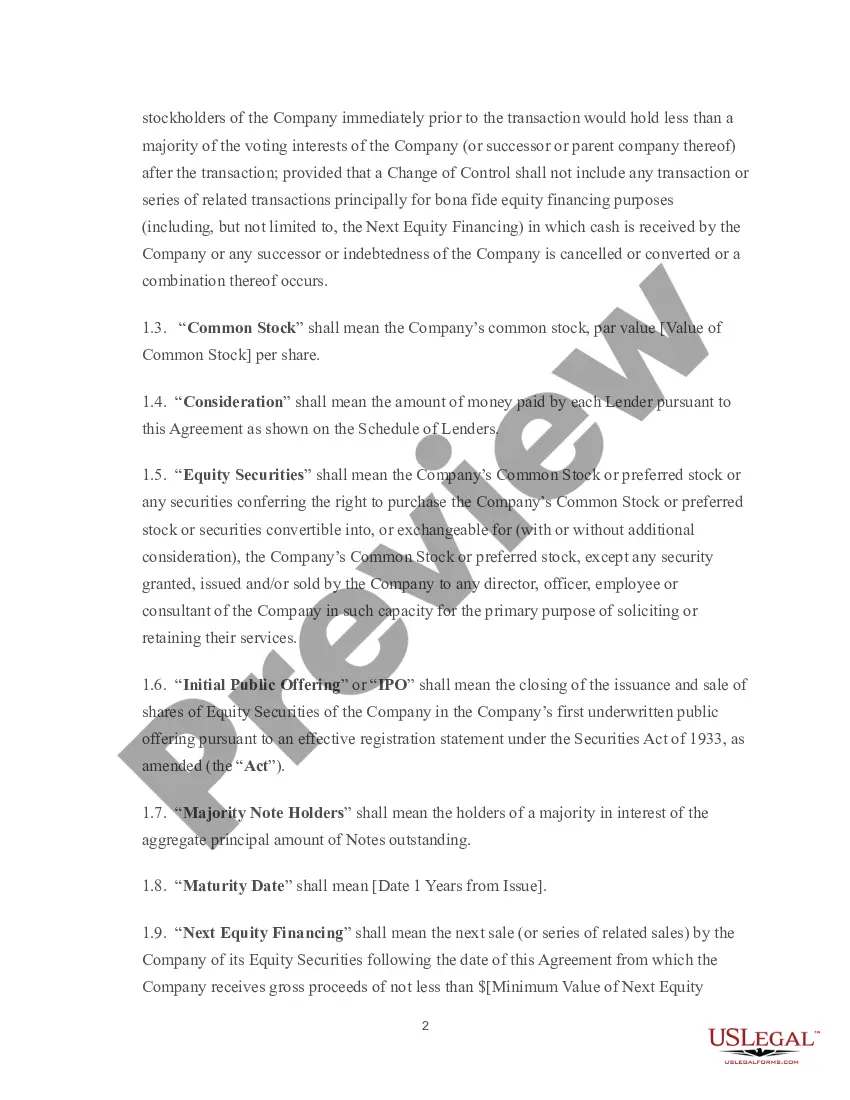
- Definitions Section: Outlines key terms utilized throughout the document.
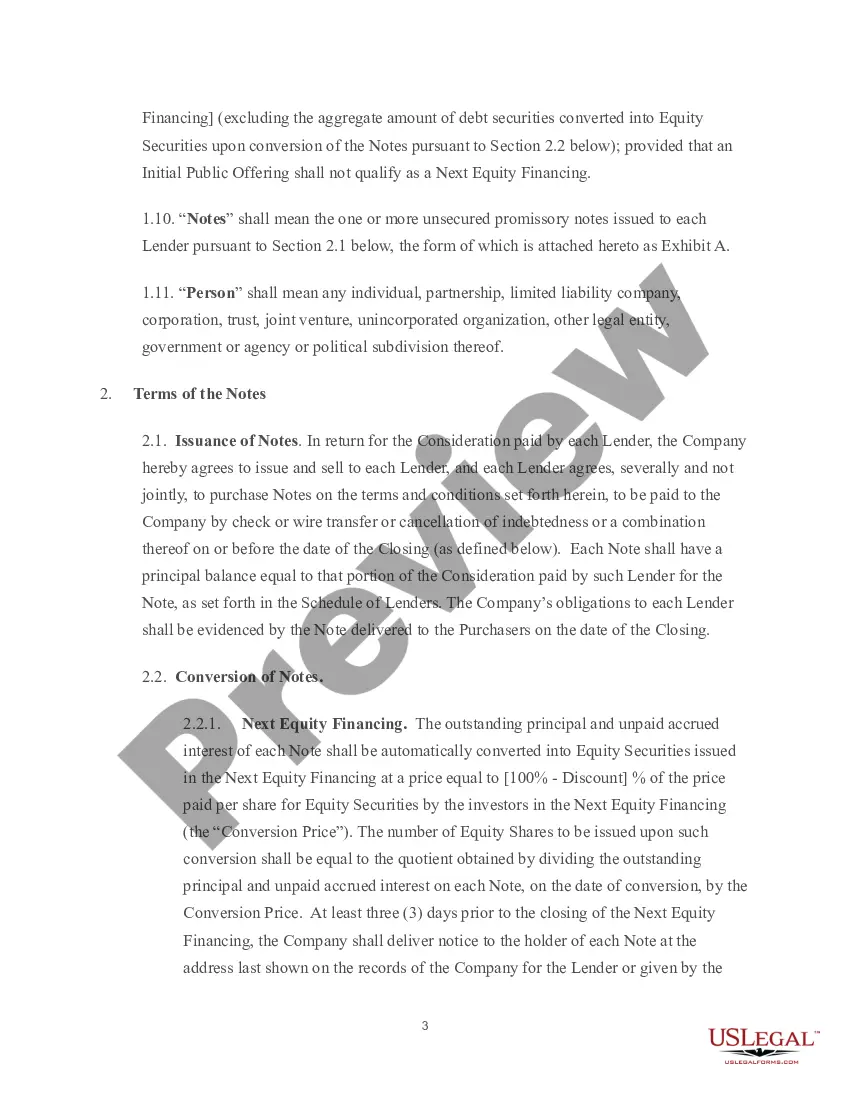
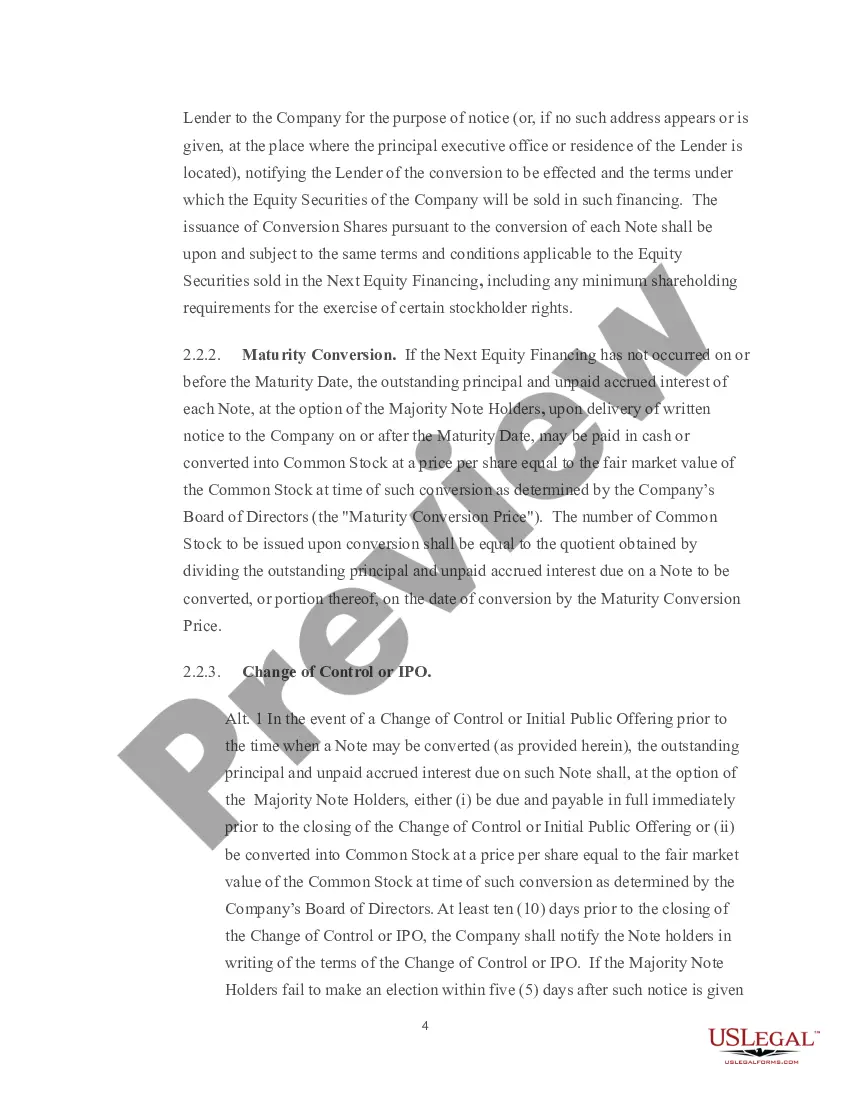
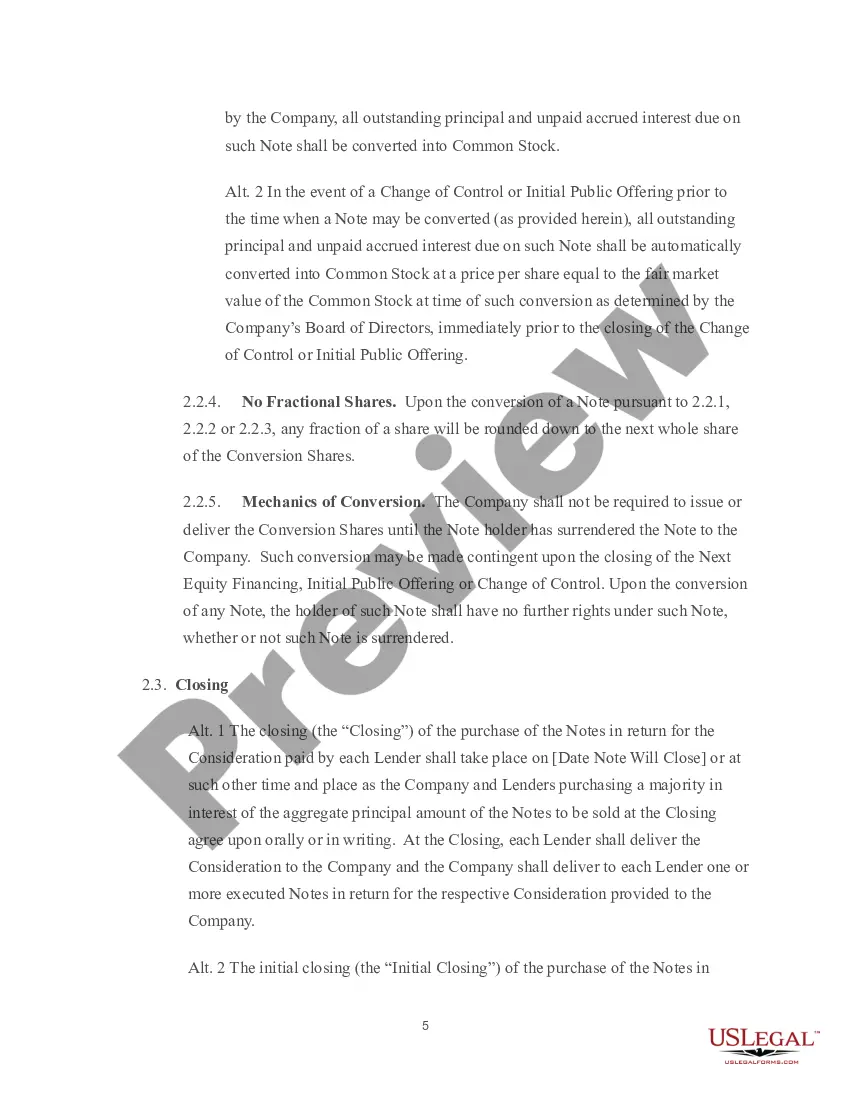
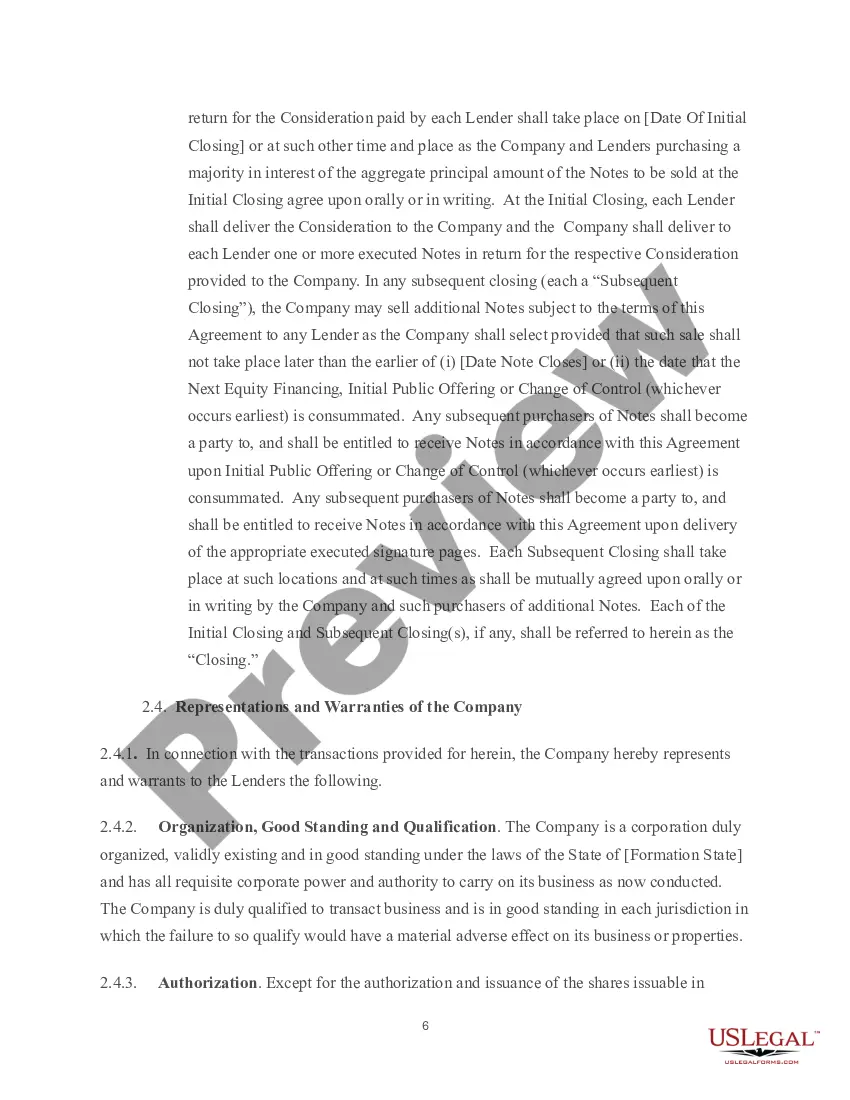
- Issuance and Terms of Notes: Details the process for issuing notes and the terms of repayment or conversion to equity.
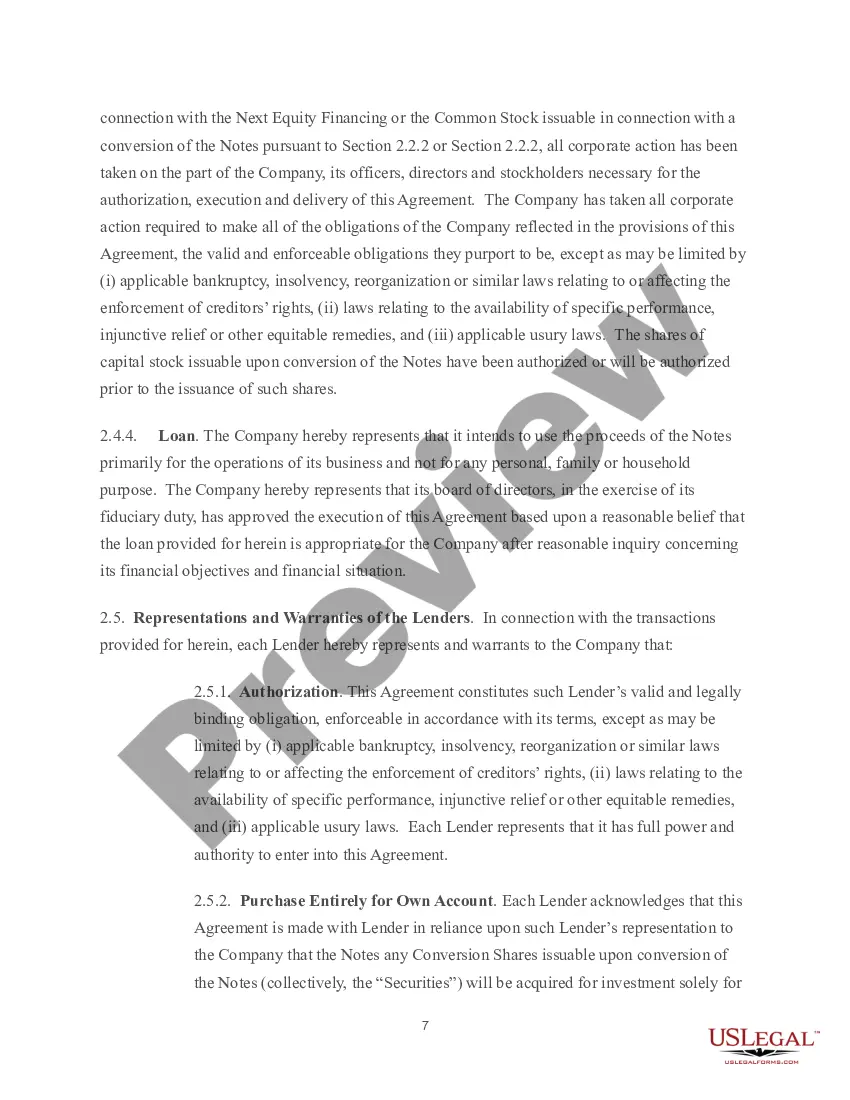
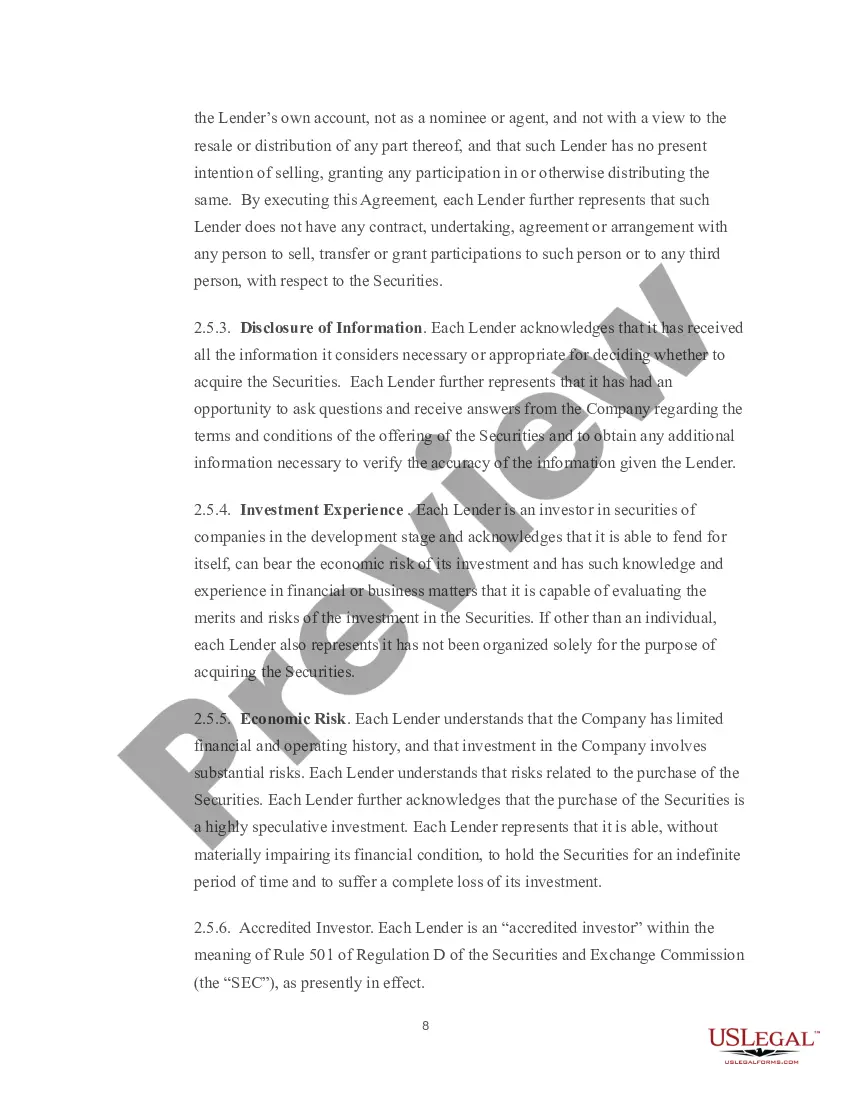
- Representations and Warranties: Lists obligations and assurances made by both the company and the lenders.
- Maturity and Payment Terms: Describes when payments are due and any interest or principal obligations.

Situations where this form applies
This form is useful when a company is seeking funding from multiple investors and aims to secure convertible debt instead of traditional equity funding. It should be utilized when the company is preparing for a future equity financing round and wants to offer investors the opportunity to convert their debt into equity at a favorable price. Startups and emerging companies often use this form during initial fundraising rounds.
Intended users of this form
- Startups or companies seeking to raise funds through convertible debt.
- Investors interested in funding companies with the option to receive equity in return.
- Attorneys drafting financing agreements for clients in the context of startup investments.
Instructions for completing this form
- Identify the parties involved: Clearly specify the company and the lenders.
- Detail the funding terms: Input the total consideration being provided by each lender in the Schedule of Lenders.
- Define repayment and conversion terms: Specify the maturity date and any applicable discounts for conversion into equity.
- Include necessary clauses: Ensure all relevant conditions, including default and remedies sections, are addressed.
- Sign and date the agreement: Have authorized representatives from both the company and the lenders sign the agreement to make it legally binding.
Does this form need to be notarized?
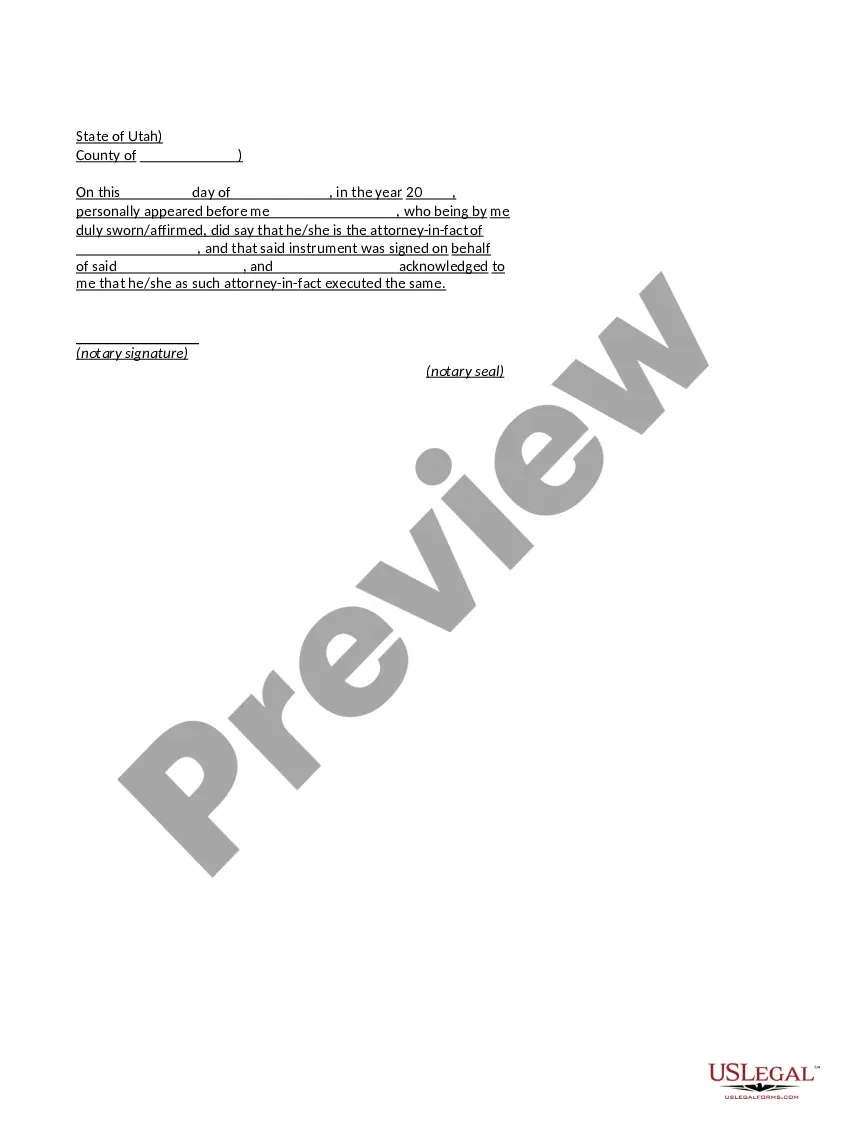
This form does not typically require notarization unless specified by local law. However, it is advisable to consult legal counsel to ensure compliance with any jurisdiction-specific requirements.
Get your form ready online
Our built-in tools help you complete, sign, share, and store your documents in one place.
Make edits, fill in missing information, and update formatting in US Legal Forms—just like you would in MS Word.
Download a copy, print it, send it by email, or mail it via USPS—whatever works best for your next step.
Sign and collect signatures with our SignNow integration. Send to multiple recipients, set reminders, and more. Go Premium to unlock E-Sign.
If this form requires notarization, complete it online through a secure video call—no need to meet a notary in person or wait for an appointment.
We protect your documents and personal data by following strict security and privacy standards.

Make edits, fill in missing information, and update formatting in US Legal Forms—just like you would in MS Word.

Download a copy, print it, send it by email, or mail it via USPS—whatever works best for your next step.

Sign and collect signatures with our SignNow integration. Send to multiple recipients, set reminders, and more. Go Premium to unlock E-Sign.

If this form requires notarization, complete it online through a secure video call—no need to meet a notary in person or wait for an appointment.

We protect your documents and personal data by following strict security and privacy standards.
Mistakes to watch out for
- Failing to accurately detail the conversion terms and conditions.
- Neglecting to review investor qualifications, especially in relation to accredited status.
- Overlooking state-specific regulations that may apply to convertible notes.
- Not having the agreement reviewed by legal counsel before execution.
Benefits of using this form online
- Convenient access to templates drafted by licensed attorneys.
- Editable format allowing for quick customizations to suit specific transaction needs.
- Immediate download capability, enabling rapid use in funding rounds.
Looking for another form?








Form popularity
FAQ
The main benefit of a convertible note is their relatively simple structure. Startup financing rounds can quickly become complex and take up significant time and money. Convertible note financings tend to be faster, simpler, and cheaper than priced rounds.
Convertible notes are usually used by seed investors who are investing in startups because they delay the task of deciding who much a company is worth until a later date when it's easier to perform a valuation.
The following are just a couple of the possible disadvantages of using convertible notes as a financing mechanism. If they don't convert, the notes eventually come due. This can result in the end of the startup if the note holders aren't willing to negotiate, and the startup doesn't have the means to pay off the notes.
A convertible note is a form of short-term debt that converts into equity, typically in conjunction with a future financing round; in effect, the investor would be loaning money to a startup and instead of a return in the form of principal plus interest, the investor would receive equity in the company.
A convertible note is a short-term debt agreement that converts into equity at a future date. Usually, this happens when one of these events takes place: ? The company raises enough capital to reach a pre-determined benchmark.
Convertible notes are promissory notes that serve an additional business purpose other than merely representing debt. Convertible notes include all of the terms of a vanilla promissory note, such as an interest rate and the pledge of underlying security (if applicable).
Dilution of Equity: The first and most obvious disadvantage of convertible debt is the dilution of equity as a result of conversions. If the company makes responsible financial decisions, then the market value of its shares is bound to go up.
Convertible notes are a type of debt that can convert into equity at a later time, while equity financing involves selling ownership in your company to investors. Convertible notes typically have a lower valuation than equity financing and may offer more favorable terms to early investors.