Recapitalization Agreement
What this document covers
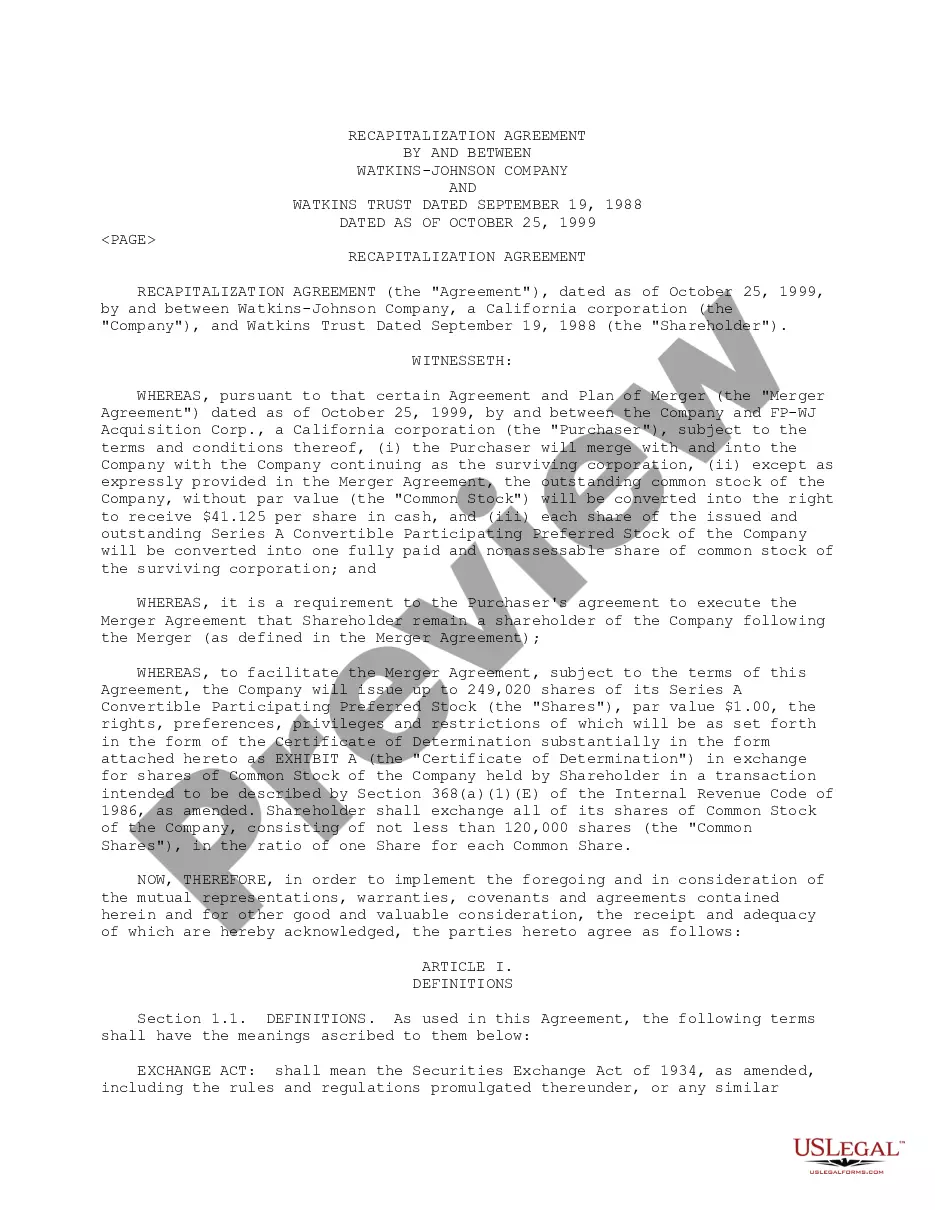
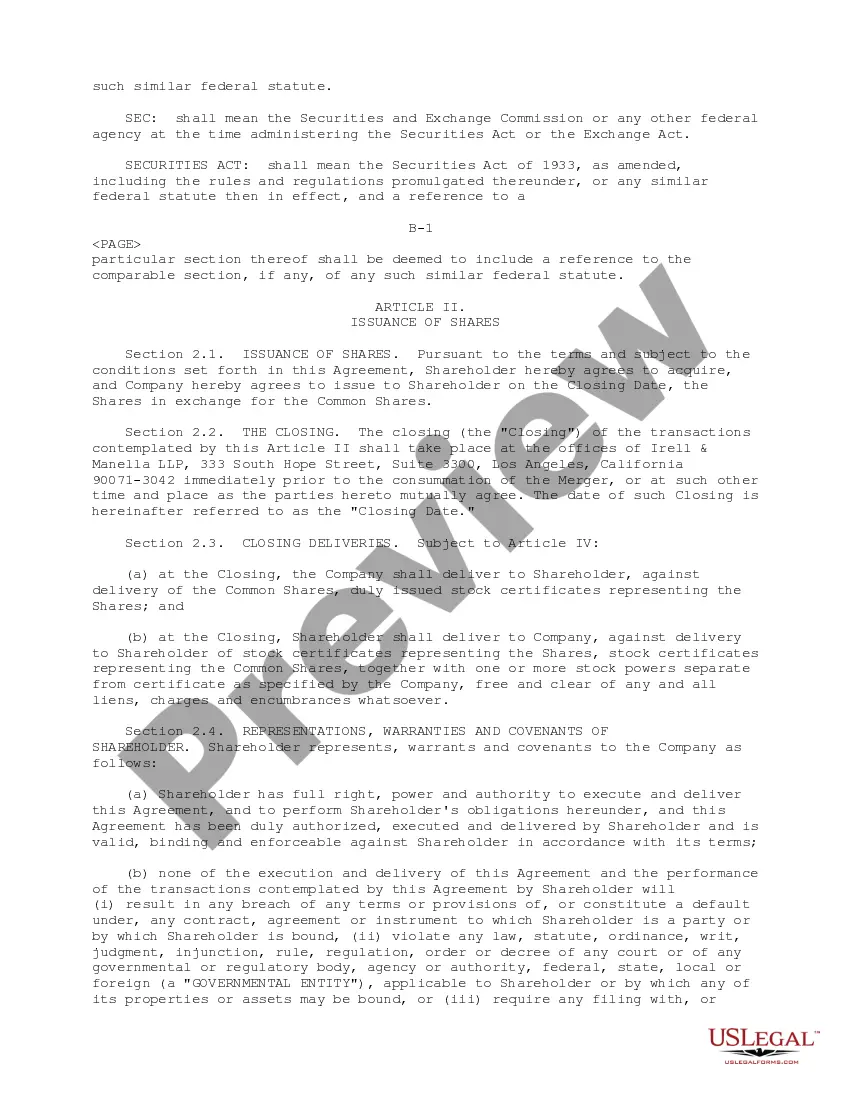
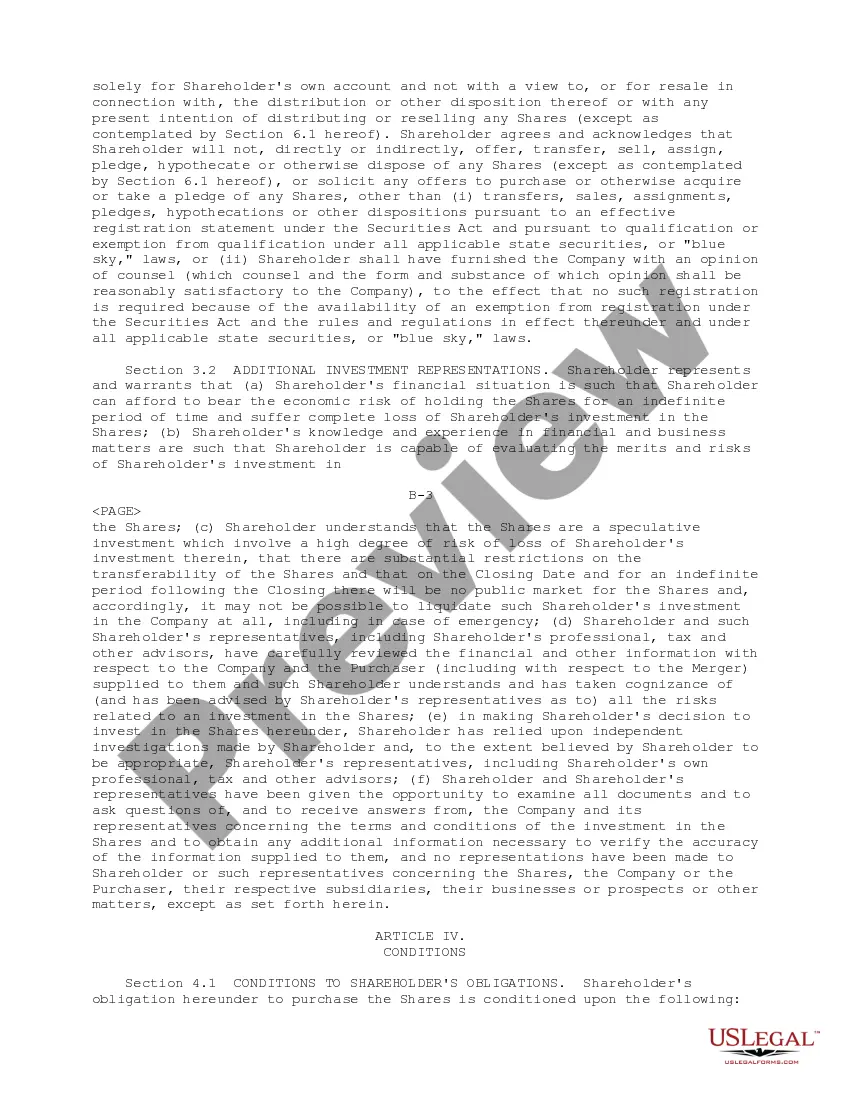
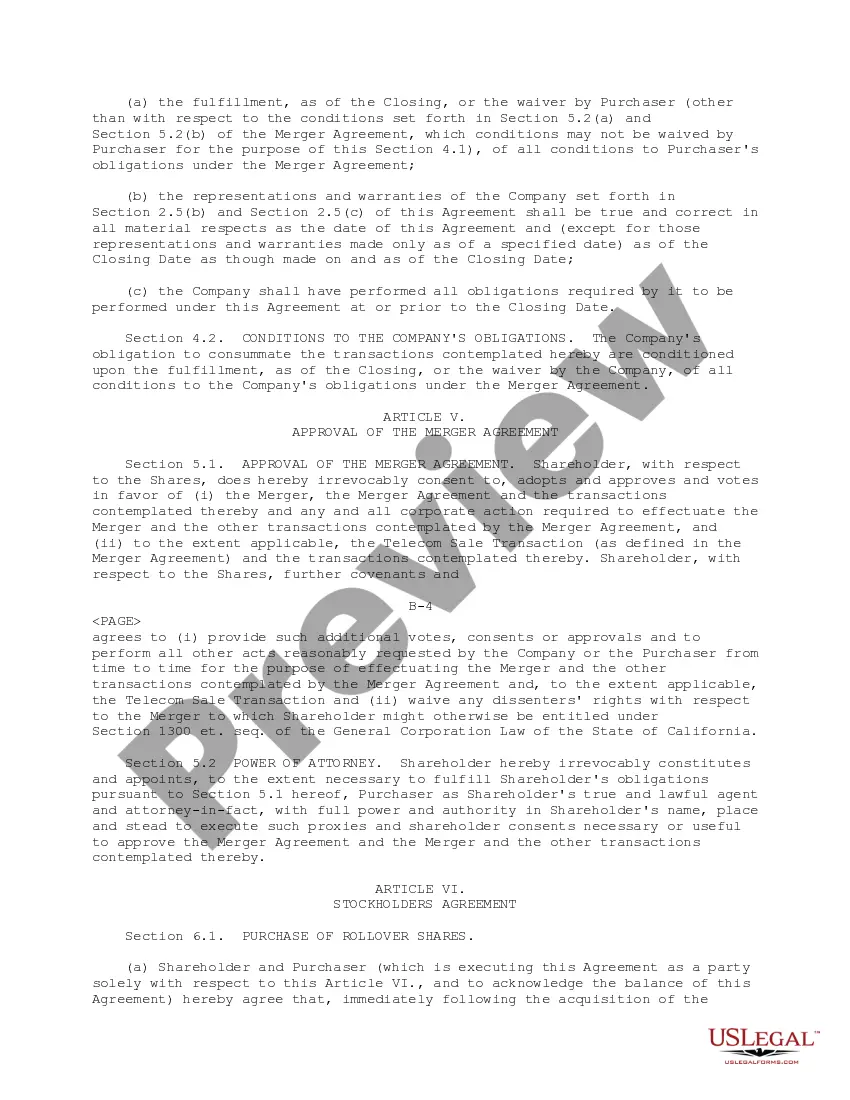
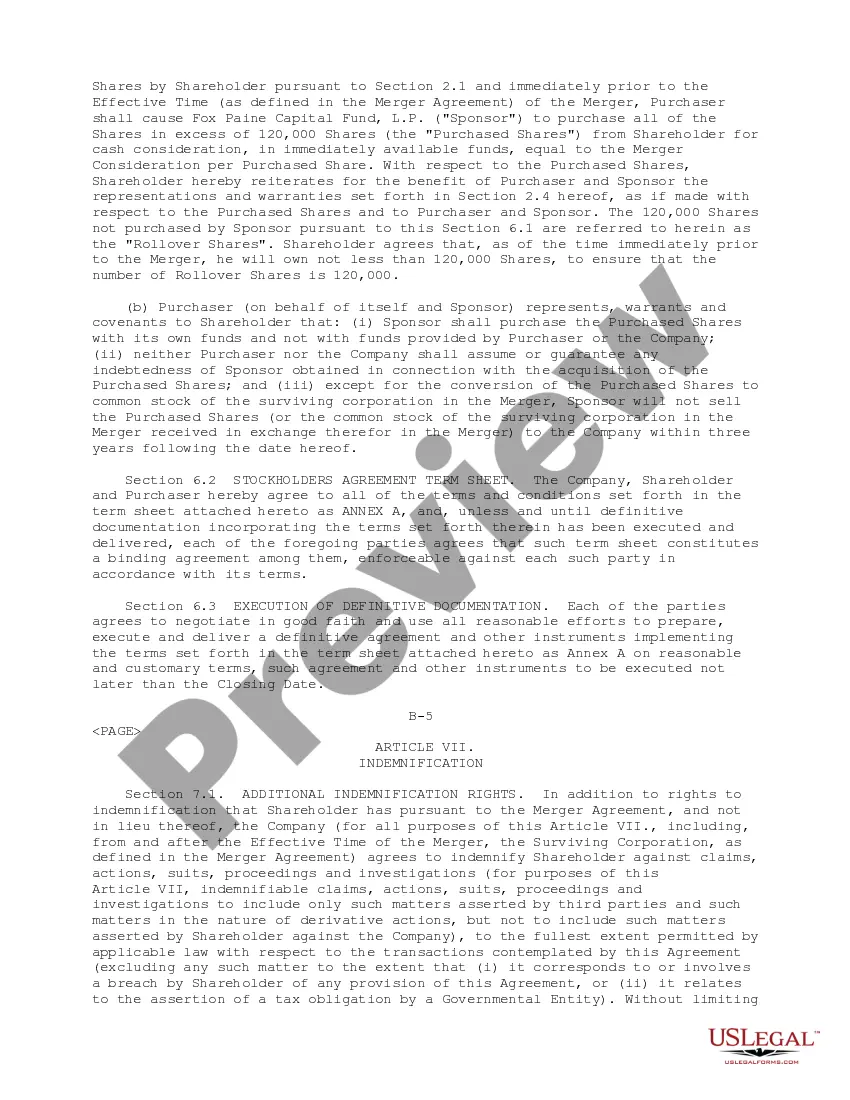
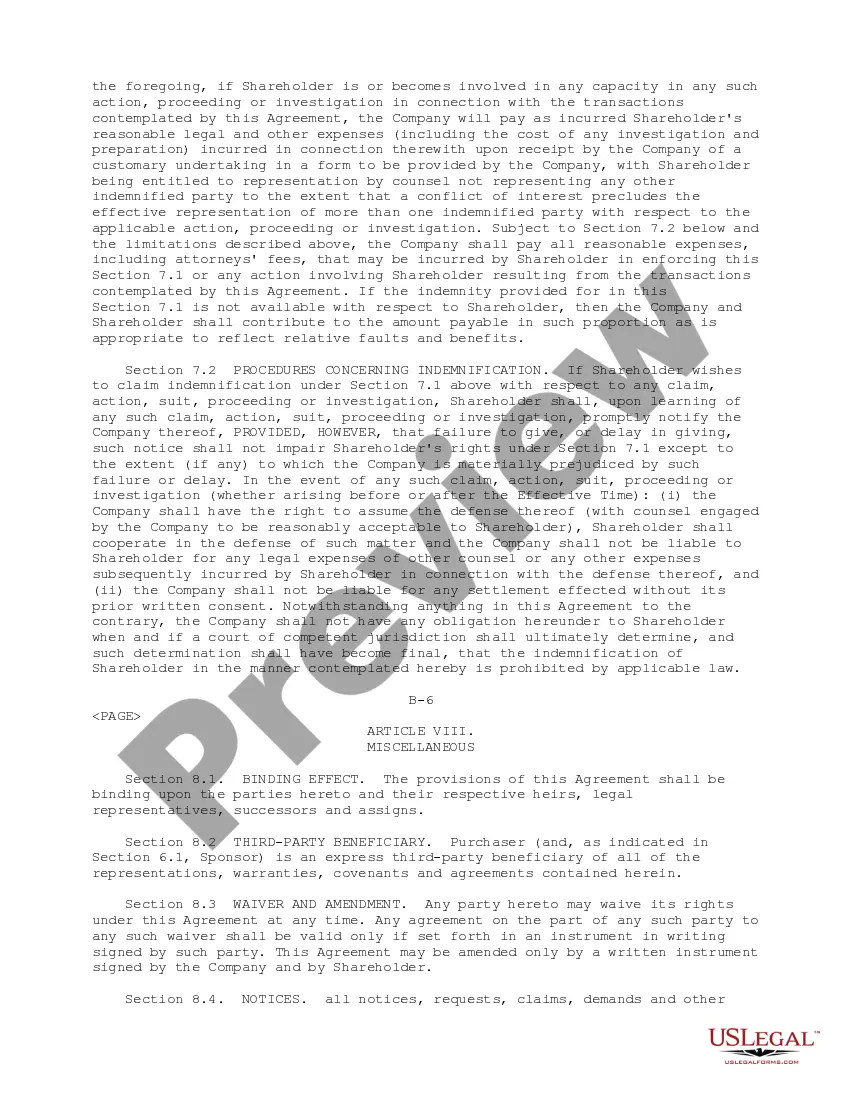
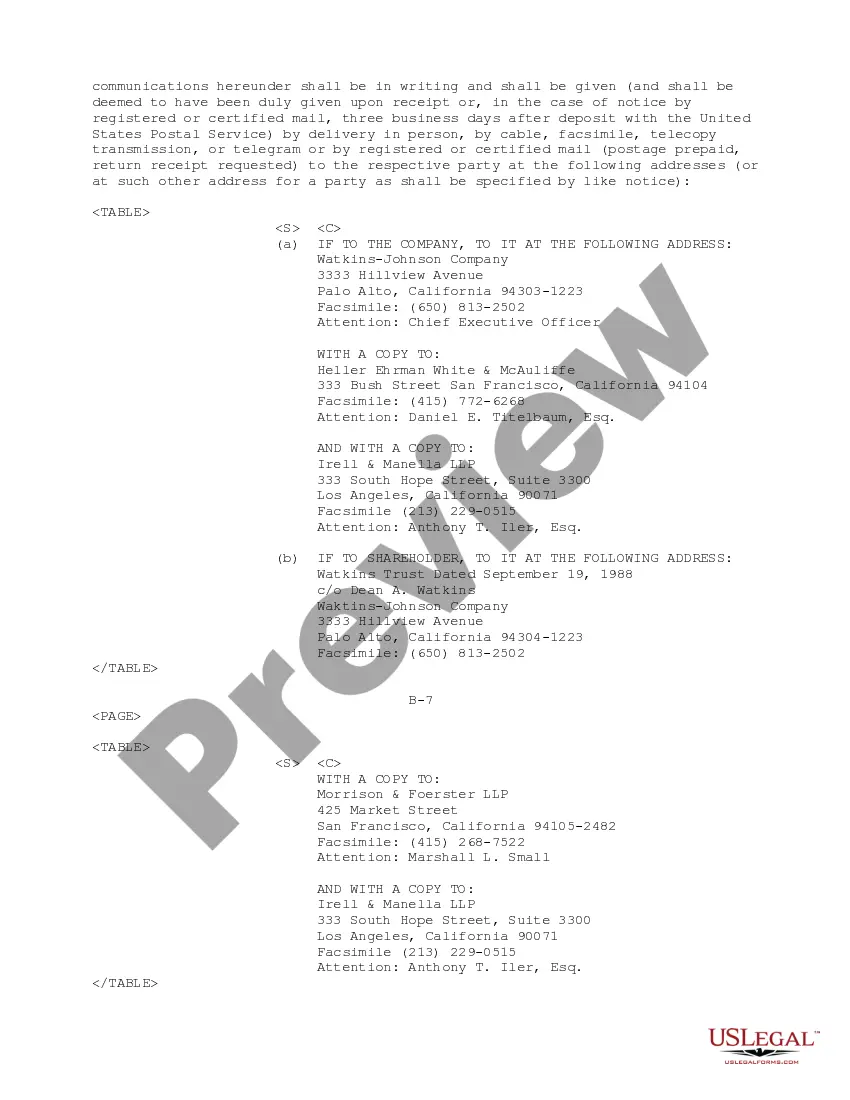
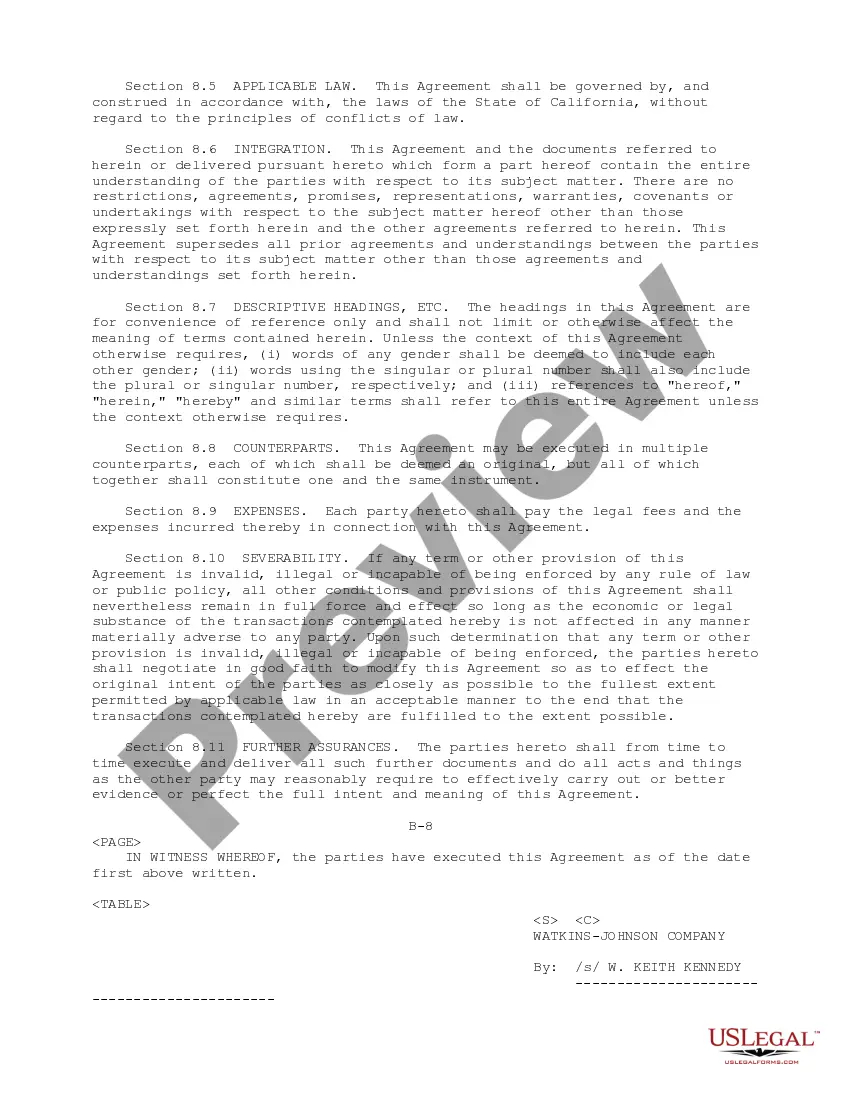
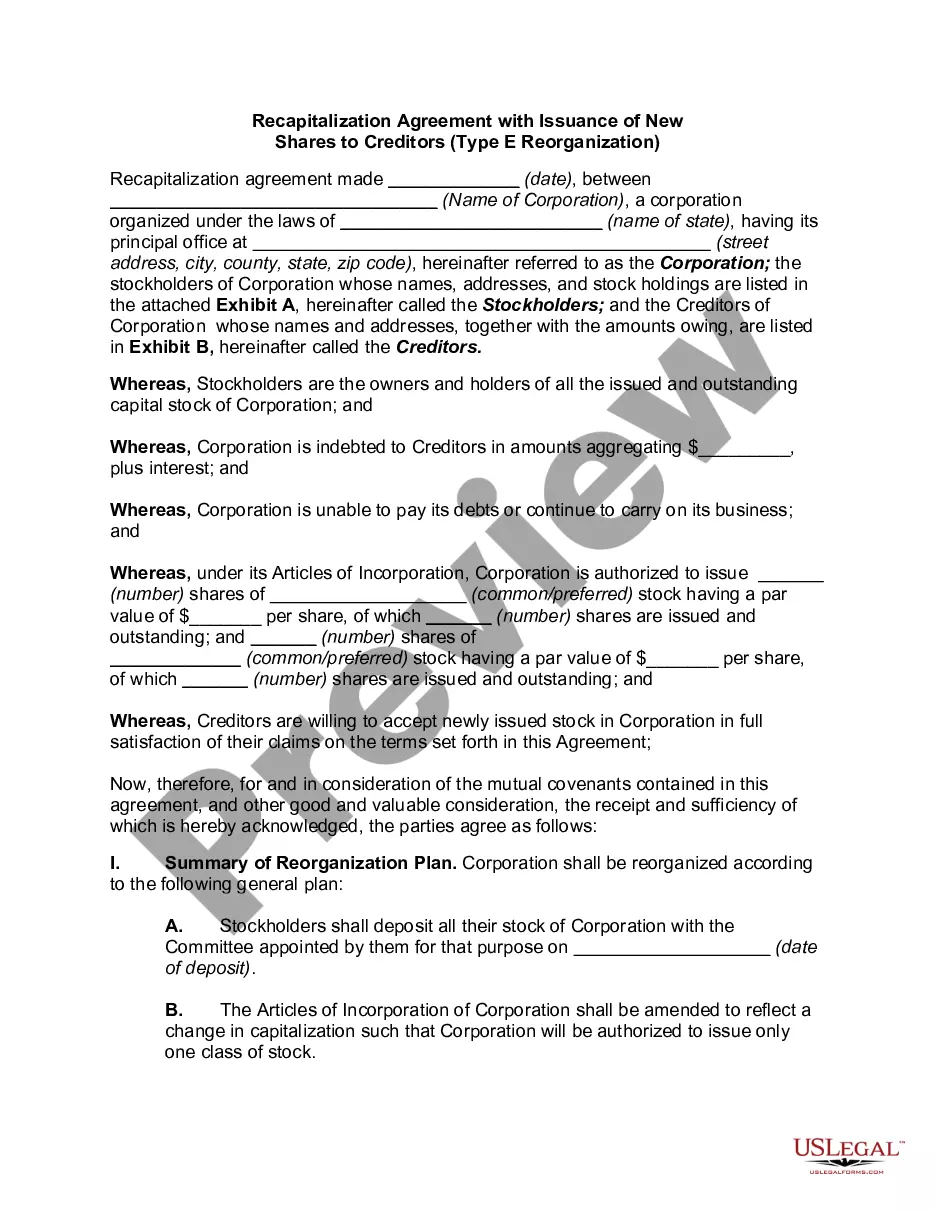
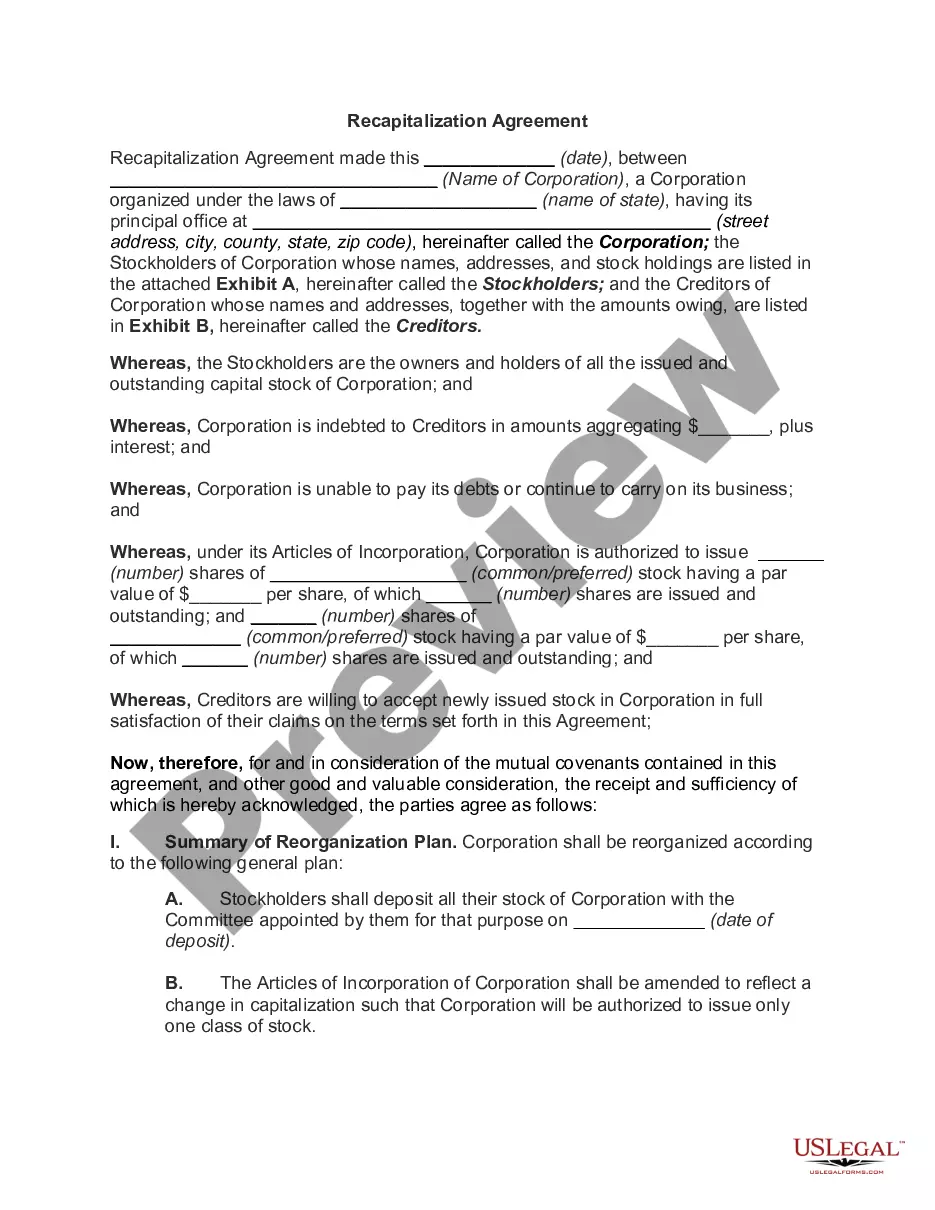
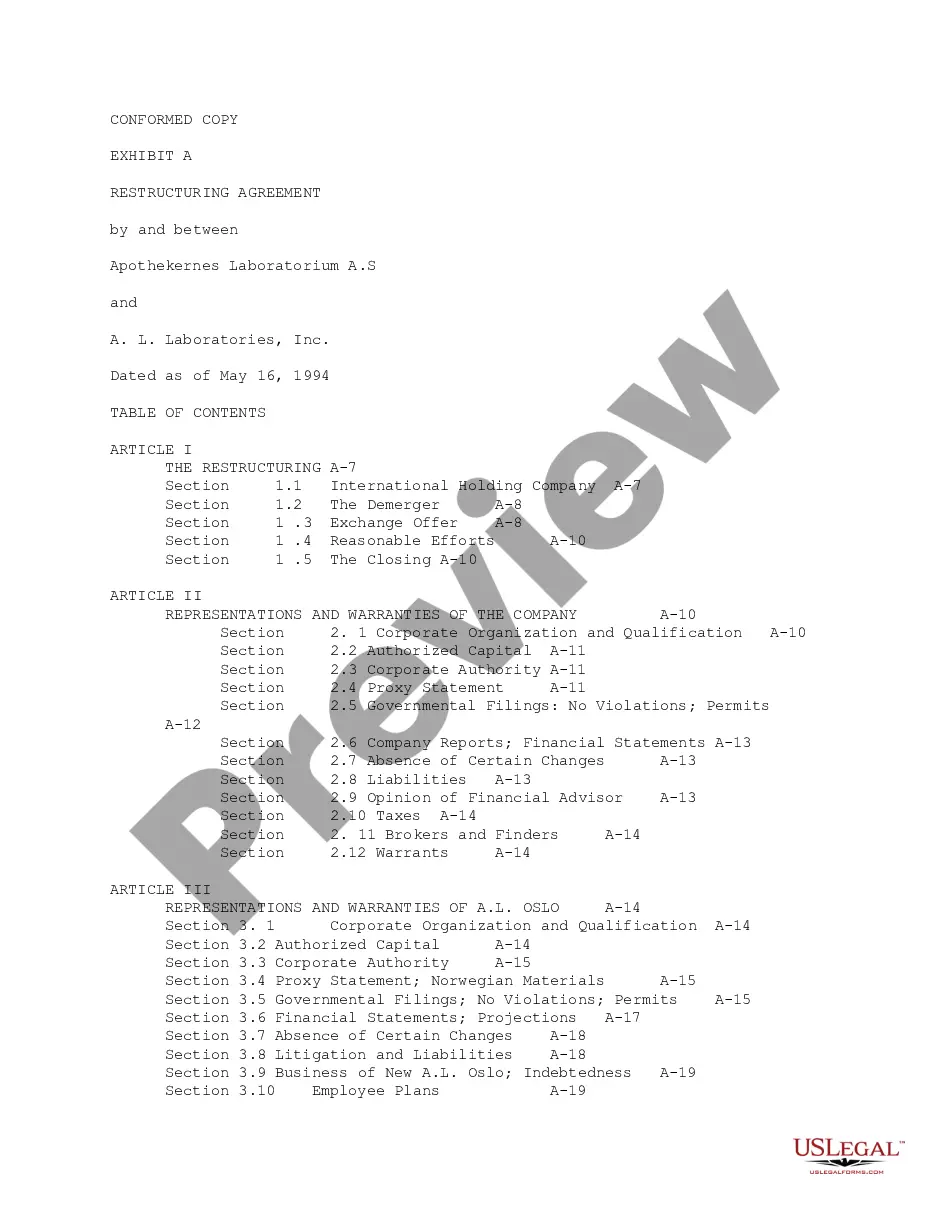
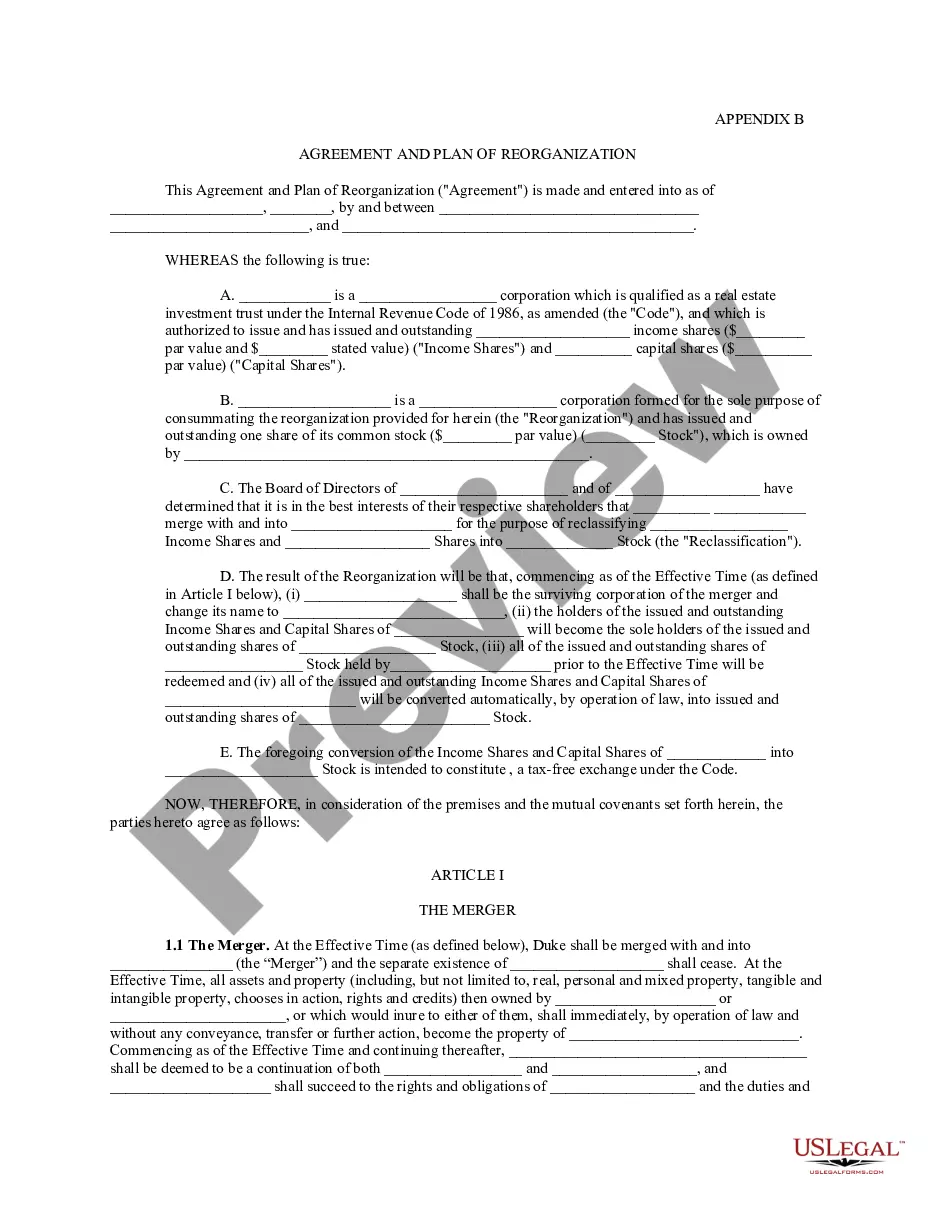
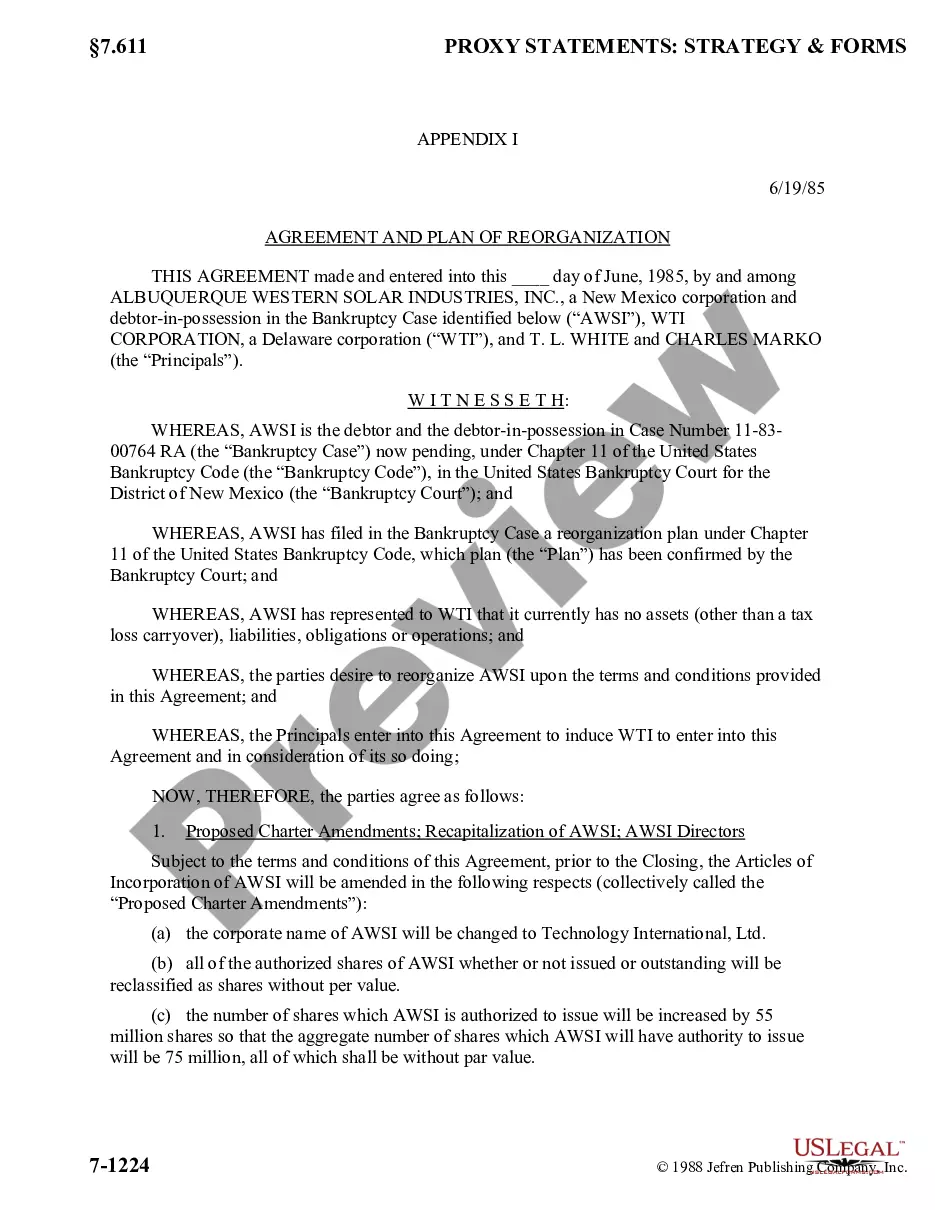
The Recapitalization Agreement is a legal document that outlines the terms and conditions under which one party agrees to exchange shares of a company's common stock for preferred stock as part of a recapitalization process. This form is specifically designed to facilitate transactions arising during a merger, ensuring compliance with relevant financial and legal obligations. Unlike other agreements that may not specifically address stock exchanges in mergers, this form provides a structured approach to share issuance and transfer between parties involved in the transaction.
Key parts of this document
- Definitions of important terms used within the agreement.
- Conditions for the issuance of shares of Series A Convertible Participating Preferred Stock.
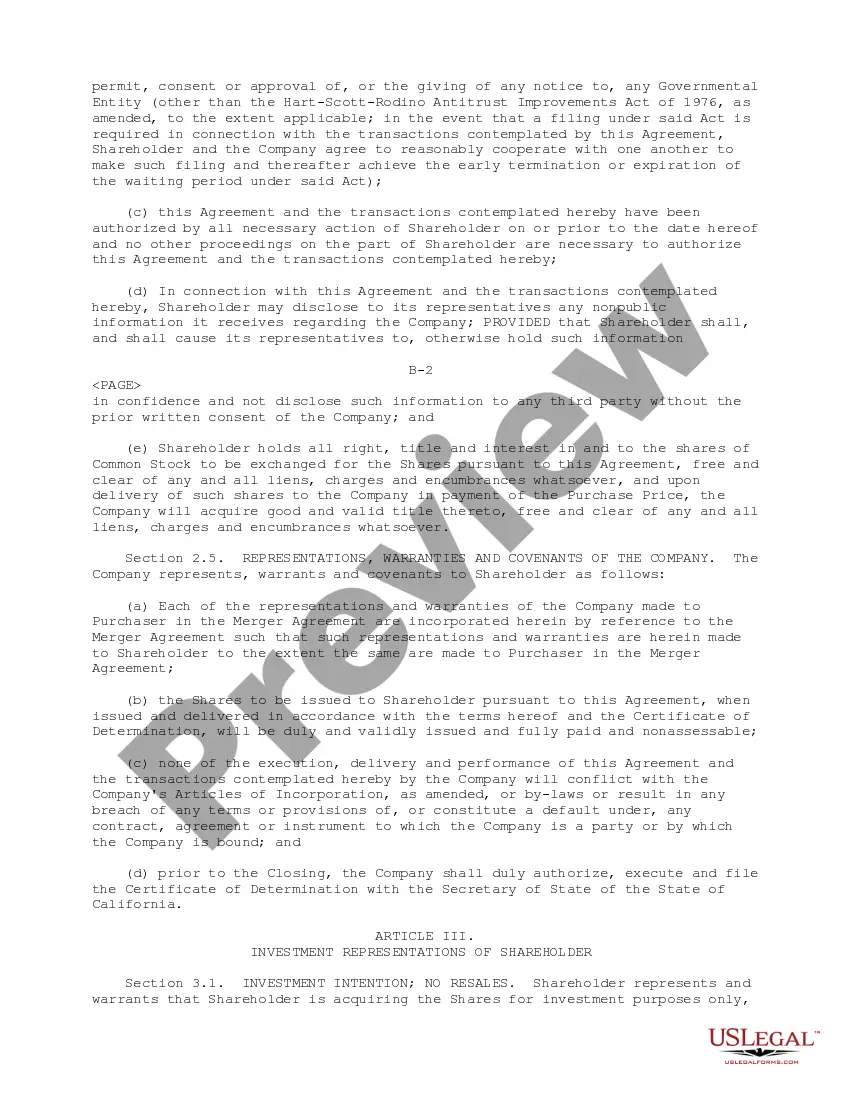
- Representations, warranties, and covenants of both parties, ensuring legal compliance and accountability.
- Indemnification provisions to protect parties from legal claims related to the agreement.
- Detailed instructions for the exchange of shares at the closing of the transaction.
When this form is needed
This form should be utilized when a company is undergoing a recapitalization as part of a merger or acquisition process. It is particularly relevant when one party is required to exchange a specified number of common stock shares for a certain quantity of preferred stock. When stakeholders wish to ensure that all legal and financial aspects are adequately documented and agreed upon, this form serves as a necessary tool.
Who this form is for
- Corporate professionals involved in mergers and acquisitions.
- Shareholders who need to formalize their participation in recapitalization agreements.
- Attorneys representing corporations or shareholders in financial transactions.
Completing this form step by step
- Identify the parties involved, including their names and roles (e.g., the company and shareholder).
- Specify the details of the share exchange, including the number of shares being exchanged and the type of preferred stock being issued.
- Include representations and warranties that confirm each party's authority and ability to enter into the agreement.
- Ensure all terms, conditions, and additional provisions are clearly documented and understood by both parties.
- Sign and date the agreement, ensuring that both parties have the necessary authority to do so.
Does this document require notarization?
This form usually doesn’t need to be notarized. However, local laws or specific transactions may require it. Our online notarization service, powered by Notarize, lets you complete it remotely through a secure video session, available 24/7.
Get your form ready online
Our built-in tools help you complete, sign, share, and store your documents in one place.
Make edits, fill in missing information, and update formatting in US Legal Forms—just like you would in MS Word.
Download a copy, print it, send it by email, or mail it via USPS—whatever works best for your next step.
Sign and collect signatures with our SignNow integration. Send to multiple recipients, set reminders, and more. Go Premium to unlock E-Sign.
If this form requires notarization, complete it online through a secure video call—no need to meet a notary in person or wait for an appointment.
We protect your documents and personal data by following strict security and privacy standards.

Make edits, fill in missing information, and update formatting in US Legal Forms—just like you would in MS Word.

Download a copy, print it, send it by email, or mail it via USPS—whatever works best for your next step.

Sign and collect signatures with our SignNow integration. Send to multiple recipients, set reminders, and more. Go Premium to unlock E-Sign.

If this form requires notarization, complete it online through a secure video call—no need to meet a notary in person or wait for an appointment.

We protect your documents and personal data by following strict security and privacy standards.
Common mistakes
- Failing to clearly define the rights and preferences of the new preferred stock.
- Neglecting to provide accurate representations about ownership and authority.
- Inadequate documentation of the conditions for the exchange, leading to potential disputes later.
Why complete this form online
- Convenient access to a legally-compliant document that can be filled out and customized easily.
- Instant download of the document allows for quick completion and implementation.
- Assurance that the form is drafted by licensed attorneys, increasing reliability.
Legal use & context
- The recapitalization agreement is enforceable under corporate law, provided it complies with applicable state regulations.
- This agreement typically limits rights related to resale or transfer of shares in accordance with securities regulations.
- Proper execution and adherence to the terms will protect parties against potential future disputes.
Key takeaways
- A recapitalization agreement reshapes the capital structure of a company during a merger.
- Clear definitions and well-outlined terms are crucial for enforceability.
- This form helps maintain investor confidence and compliance with legal requirements.
Looking for another form?

Form popularity
FAQ
A dividend recapitalization is often undertaken as a way to free up money for the PE firm to give back to its investors, without necessitating an IPO, which might be risky. A dividend recapitalization is an infrequent occurrence, and different from a company declaring regular dividends, derived from earnings.
Recapitalization is the process of restructuring a company's debt and equity mixture, often to stabilize a company's capital structure. The process mainly involves the exchange of one form of financing for another, such as removing preferred shares from the company's capital structure and replacing them with bonds.
An equity recapitalization represents an alternative to a complete sale of a company. The original owner can continue as a partner and/or manager of the company, while the new partner is a private equity firm that shares the business owner's culture and vision for the future.
Recapitalization is the process of restructuring a company's debt and equity mixture, often to stabilize a company's capital structure. The process mainly involves the exchange of one form of financing for another, such as removing preferred shares from the company's capital structure and replacing them with bonds.
Consequently, a recapitalization is only good news for investors willing to take the special dividend and run, or in those cases where it is a prelude to a deal that is actually worthy of the debt load and the risks it brings. (To learn more, see Evaluating a Company's Capital Structure.)
Verb. to provide (a bank, financial institution, or corporation) with more capital.
The term 'recapitalisation' refers to a company changing the proportions of its debt and equity, something which can be achieved in a variety of ways.