Unilateral Confidential Disclosure Agreement
What is this form?
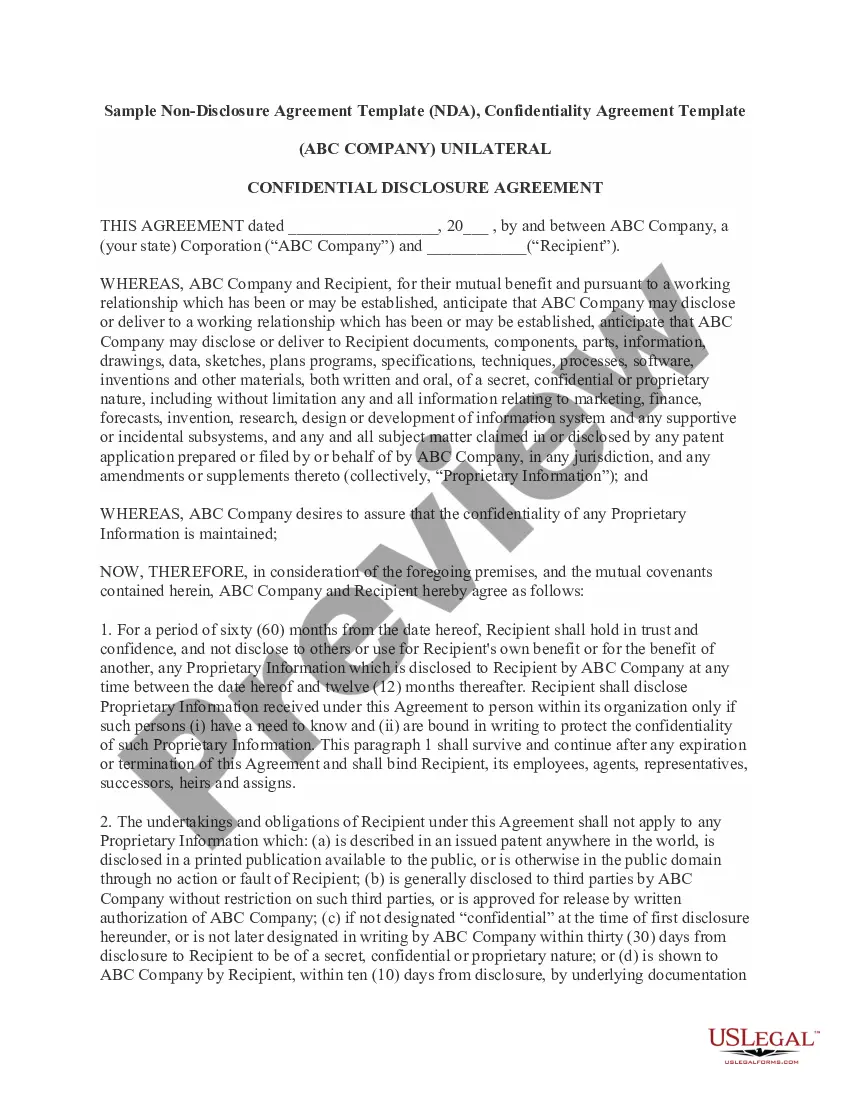
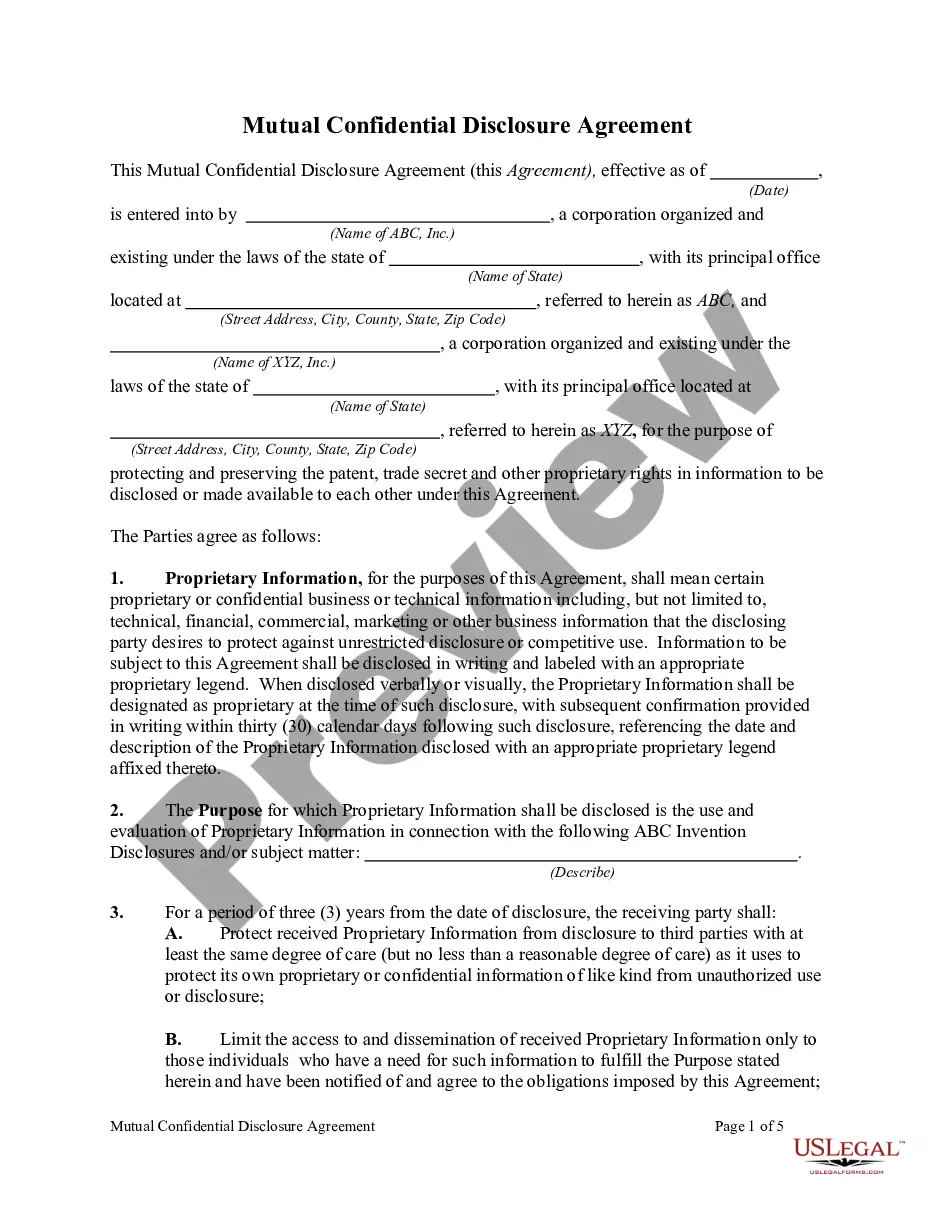
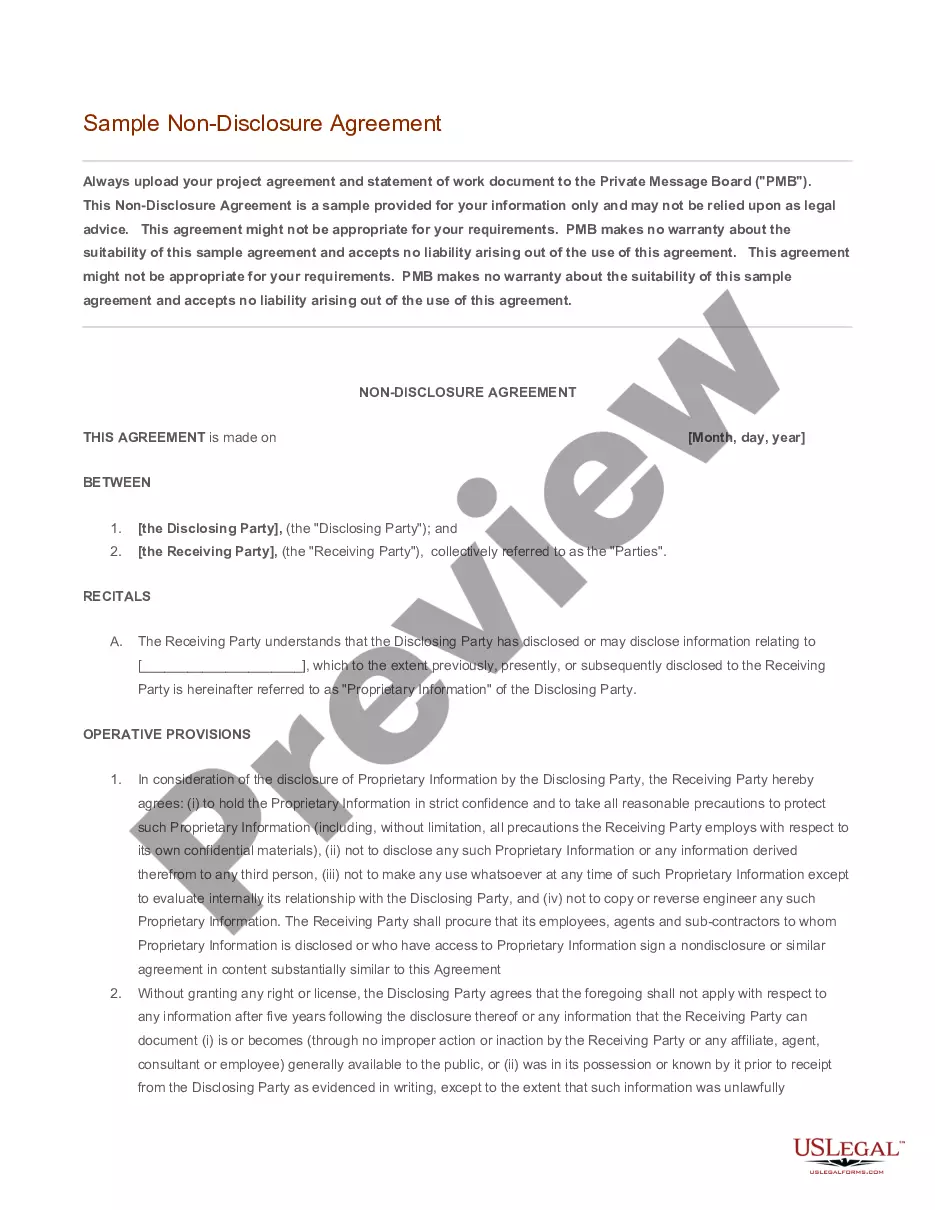
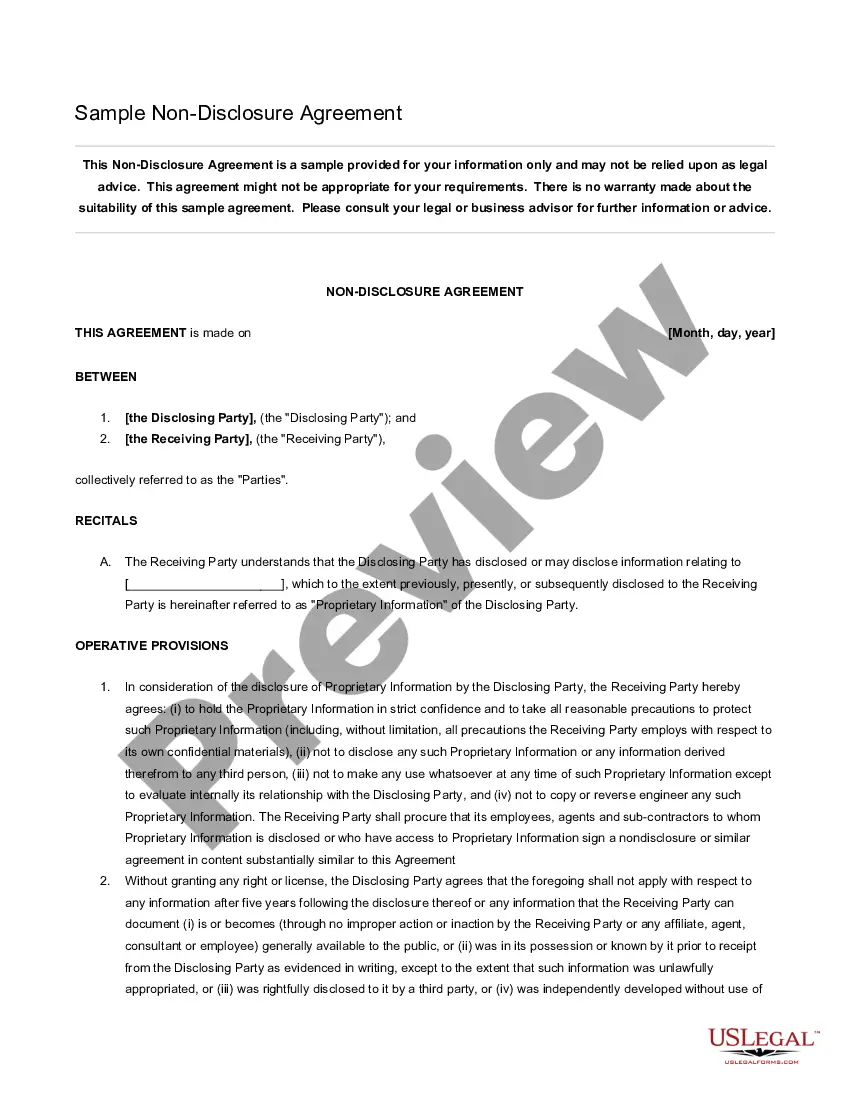
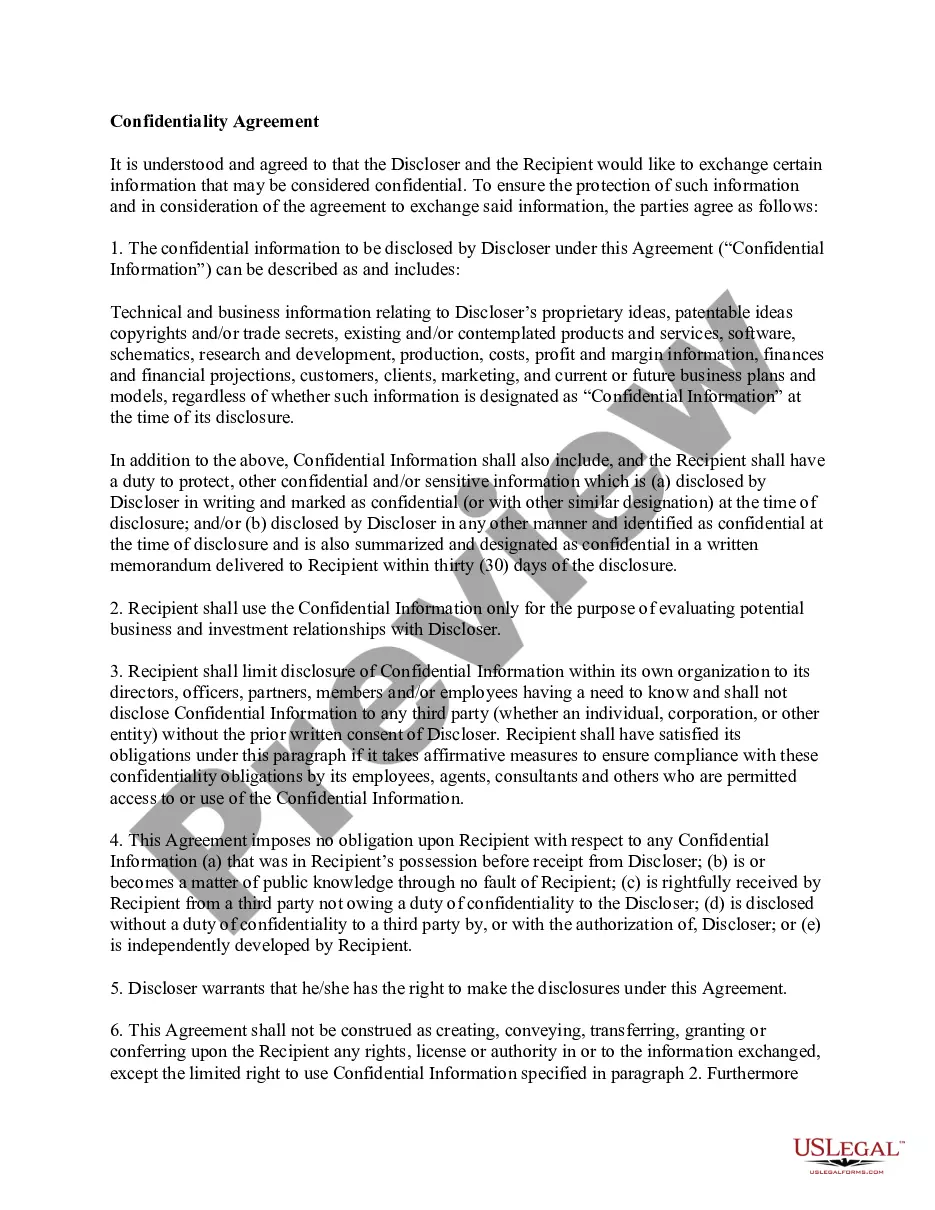
The Unilateral Confidential Disclosure Agreement is a legal document that allows one party (the disclosing party) to share its confidential information with another party (the recipient) while imposing restrictions on how that information can be used or disclosed. This agreement is essential for protecting sensitive data such as business strategies, trade secrets, and product designs. Unlike mutual agreements where both parties share secrets, a unilateral agreement focuses on one partyâs confidentiality needs.
What’s included in this form
- Identification of the parties involved in the agreement.
- Definition of "Proprietary Information" to clarify what information is protected.
- The duration of confidentiality obligations, typically set for sixty months.
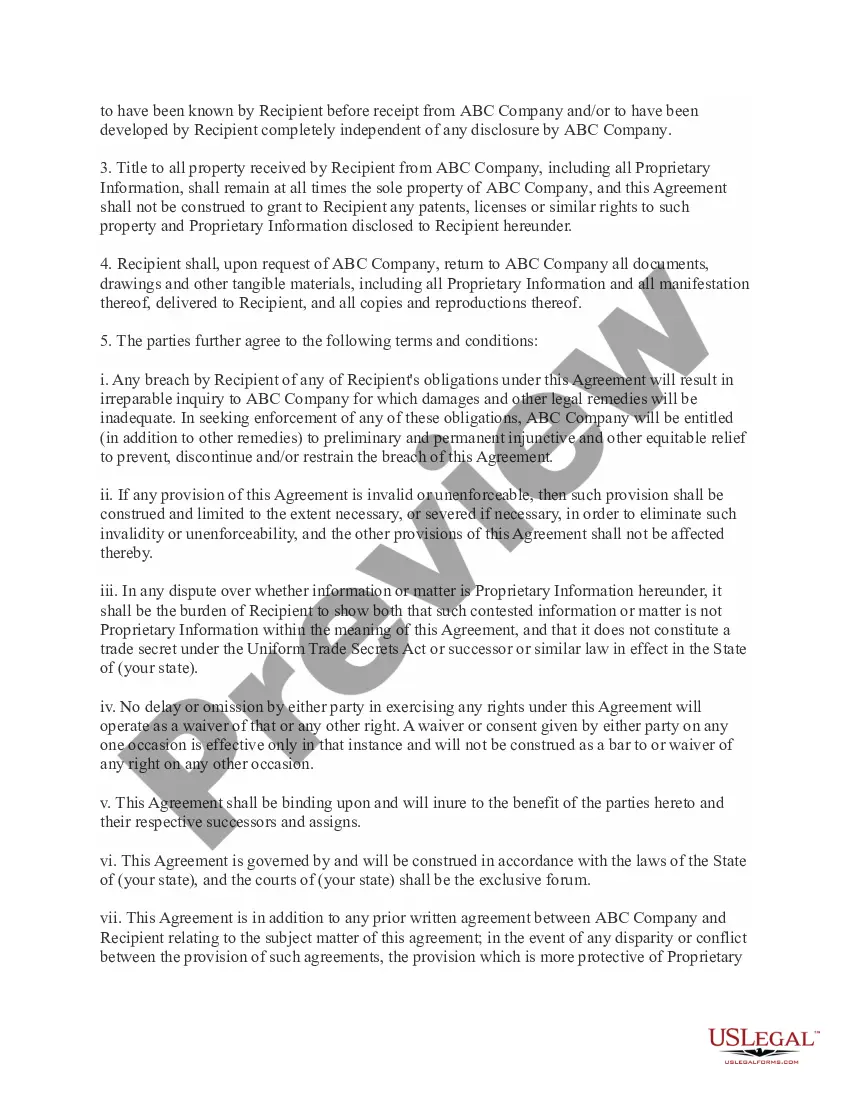
- Conditions under which the recipient can disclose the information.
- Retention of ownership rights by the disclosing party over the shared information.
- Procedures for return or destruction of confidential materials upon request.
Situations where this form applies
This agreement is useful when a company plans to disclose sensitive information to a third party, such as potential investors, business partners, or contractors. It is vital in situations where confidentiality is crucial to protect intellectual property or trade secrets during negotiations or collaborative efforts.
Intended users of this form
- Businesses looking to share proprietary information with trusted partners.
- Individuals seeking to protect their inventions or creative works in discussions with third parties.
- Organizations in collaboration with vendors or consultants where sensitive data may be disclosed.
- Startups seeking investment and needing to share business plans and pitches securely.
Steps to complete this form
- Identify and enter the full names of the disclosing party and the recipient.
- Specify the date the agreement goes into effect.
- Clearly define the confidential information to be protected, if necessary.
- Review the terms regarding the obligations of the recipient and the duration of the agreement.
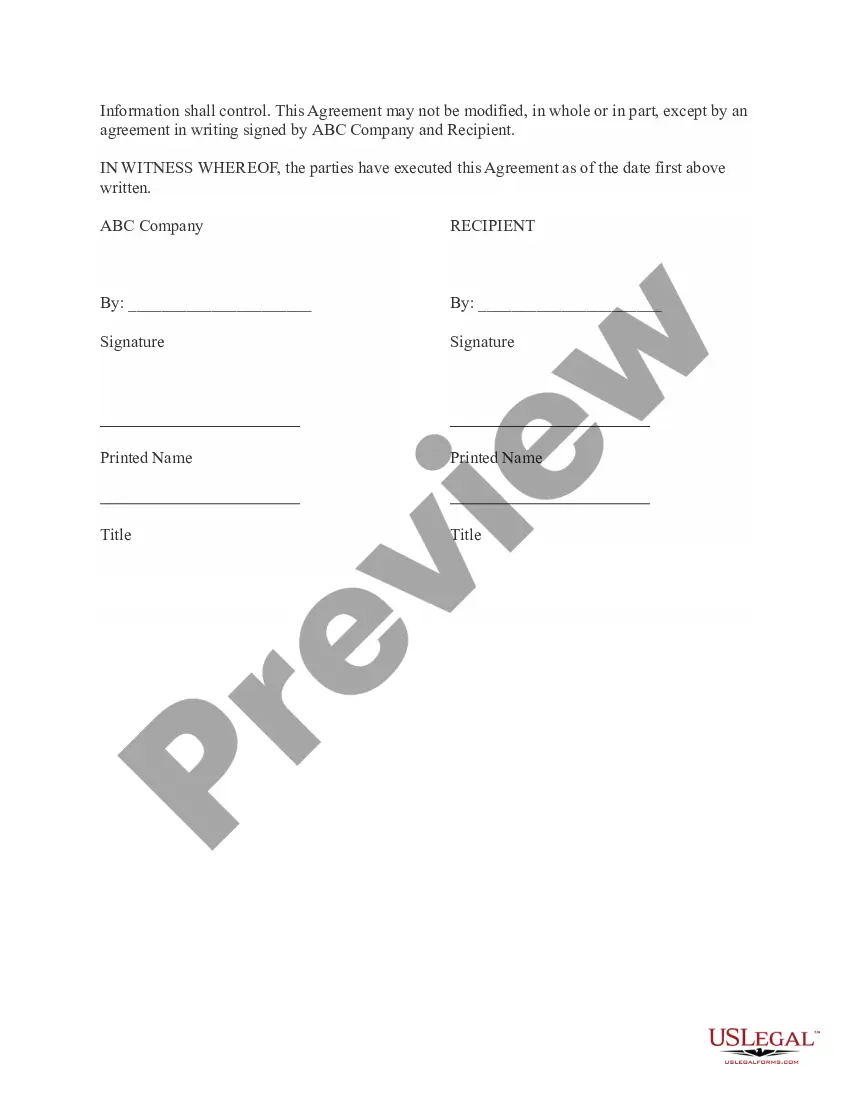
- Both parties should sign and print their names in the signature section.
Does this document require notarization?
This form does not typically require notarization unless specified by local law. However, notarization can provide additional validation and assurance in formal transactions.
Get your form ready online
Our built-in tools help you complete, sign, share, and store your documents in one place.
Make edits, fill in missing information, and update formatting in US Legal Forms—just like you would in MS Word.
Download a copy, print it, send it by email, or mail it via USPS—whatever works best for your next step.
Sign and collect signatures with our SignNow integration. Send to multiple recipients, set reminders, and more. Go Premium to unlock E-Sign.
If this form requires notarization, complete it online through a secure video call—no need to meet a notary in person or wait for an appointment.
We protect your documents and personal data by following strict security and privacy standards.

Make edits, fill in missing information, and update formatting in US Legal Forms—just like you would in MS Word.

Download a copy, print it, send it by email, or mail it via USPS—whatever works best for your next step.

Sign and collect signatures with our SignNow integration. Send to multiple recipients, set reminders, and more. Go Premium to unlock E-Sign.

If this form requires notarization, complete it online through a secure video call—no need to meet a notary in person or wait for an appointment.

We protect your documents and personal data by following strict security and privacy standards.
Common mistakes
- Not clearly defining what constitutes "Proprietary Information."
- Failing to specify the duration of confidentiality obligations.
- Overlooking the requirement for signature by both parties.
- Using the agreement without understanding the implications of breaching confidentiality.
Benefits of completing this form online
- Convenience of completing the form on any device at any time.
- Editable templates allow customization to fit specific needs.
- Instant access to a professionally drafted legal document without costly attorney fees.
- Secure storage of your completed forms for future reference.
Legal use & context
- This agreement is enforceable in a court of law as long as both parties consent to its terms.
- It serves as a legal remedy in the event of a breach, allowing the disclosing party to seek damages or injunctive relief.
- It's crucial that both parties adhere to the outlined obligations to avoid legal liabilities.
Key takeaways
- A Unilateral Confidential Disclosure Agreement is essential for protecting confidential information shared between parties.
- Clear definitions and obligations minimize misunderstandings and potential legal issues.
- Businesses and individuals should ensure proper completion and understanding of the agreement's terms before engaging in the sharing of sensitive information.
Looking for another form?
Form popularity
FAQ
The two main types of NDAs are Unilateral and Mutual. Unilateral NDAs are used when only one party is disclosing information such as an employer, a startup or a company to an employee, investor or consultant respectively. On the other hand, a mutual NDA is used when both parties are disclosing confidential information.
The unilateral non-disclosure agreement is used when only one party is disclosing confidential information ? for example, a company discloses marketing secrets to an ad agency, or a tech business discloses a new product to a software engineer. The term ?unilateral? is meant to signify this is a ?one-way arrangement?.
Unilateral NDAs are used when only one party is disclosing information such as an employer, a startup or a company to an employee, investor or consultant respectively. On the other hand, a mutual NDA is used when both parties are disclosing confidential information.
In a unilateral NDA, only one party agrees to keep the other party's confidential information private. However, in a bilateral NDA, both parties agree to keep the other's confidential information private.
Unilateral NDAs only require one party to disclose confidential information, while bilateral NDAs require two parties to disclose private information. Multilateral NDAs involve three parties and require at least one of them to disclose private information to the other parties.
A unilateral non-disclosure agreement, or 1-way NDA, is an agreement that requires only one (1) signatory is obligated to safeguard confidential information. If the obligated party shares the information, they may be subject to legal and monetary damages from a local court.
In the case where both parties share confidential information with one another, the contract is called a mutual NDA. This is the fundamental difference between unilateral and mutual NDAs: unilateral NDAs are one-way agreements, whereas mutual NDAs are two-way or reciprocal.