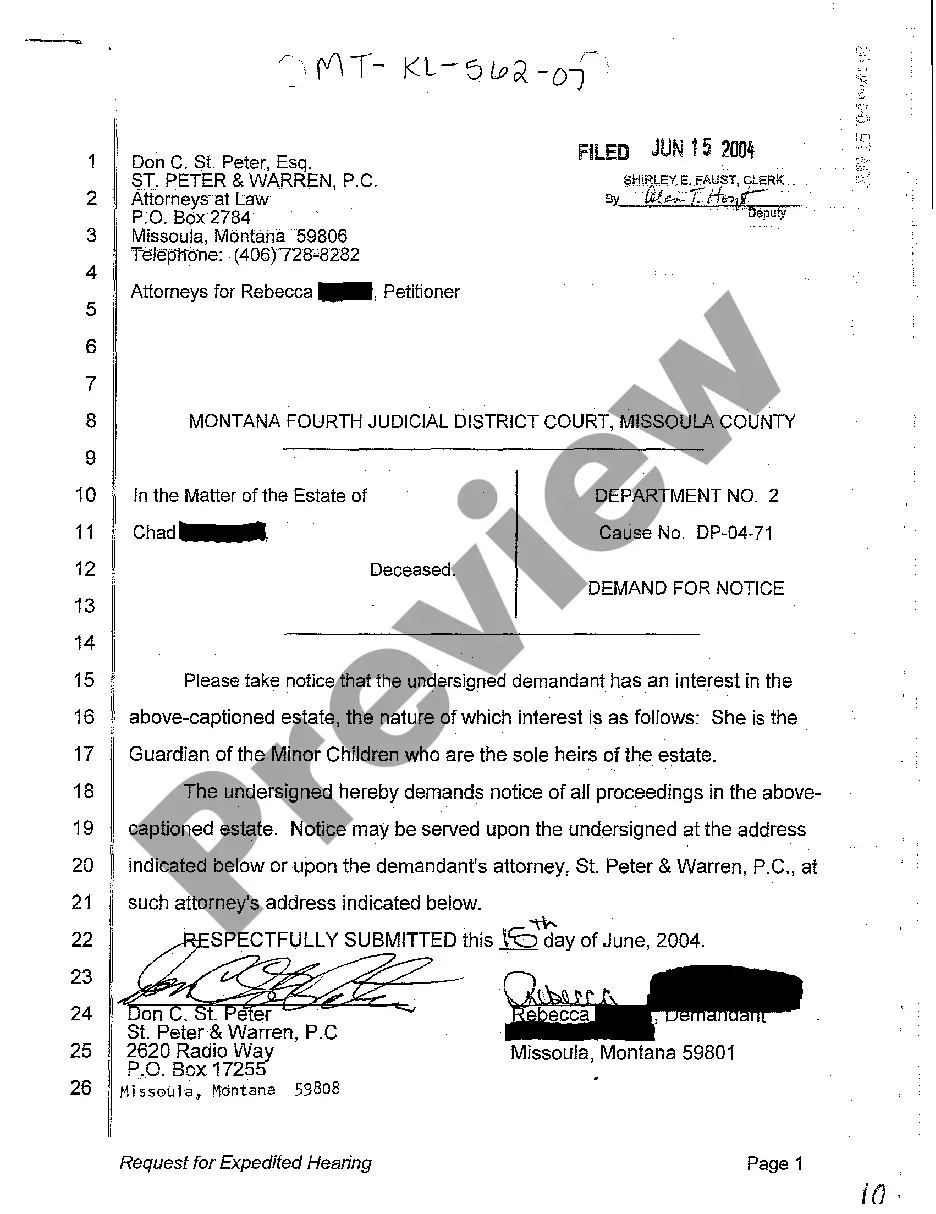
Complaint regarding Subcontractor against contractor and surety
Understanding this form
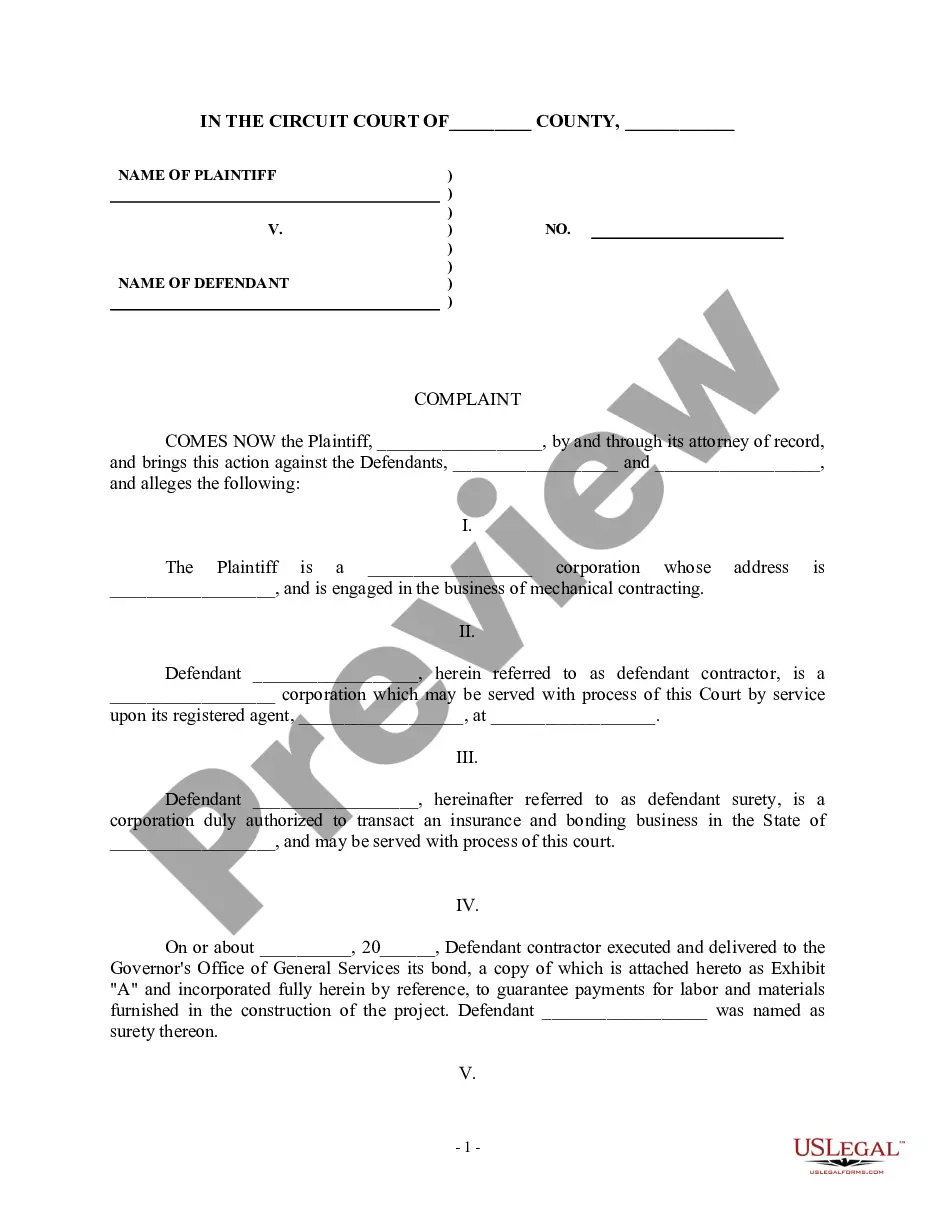
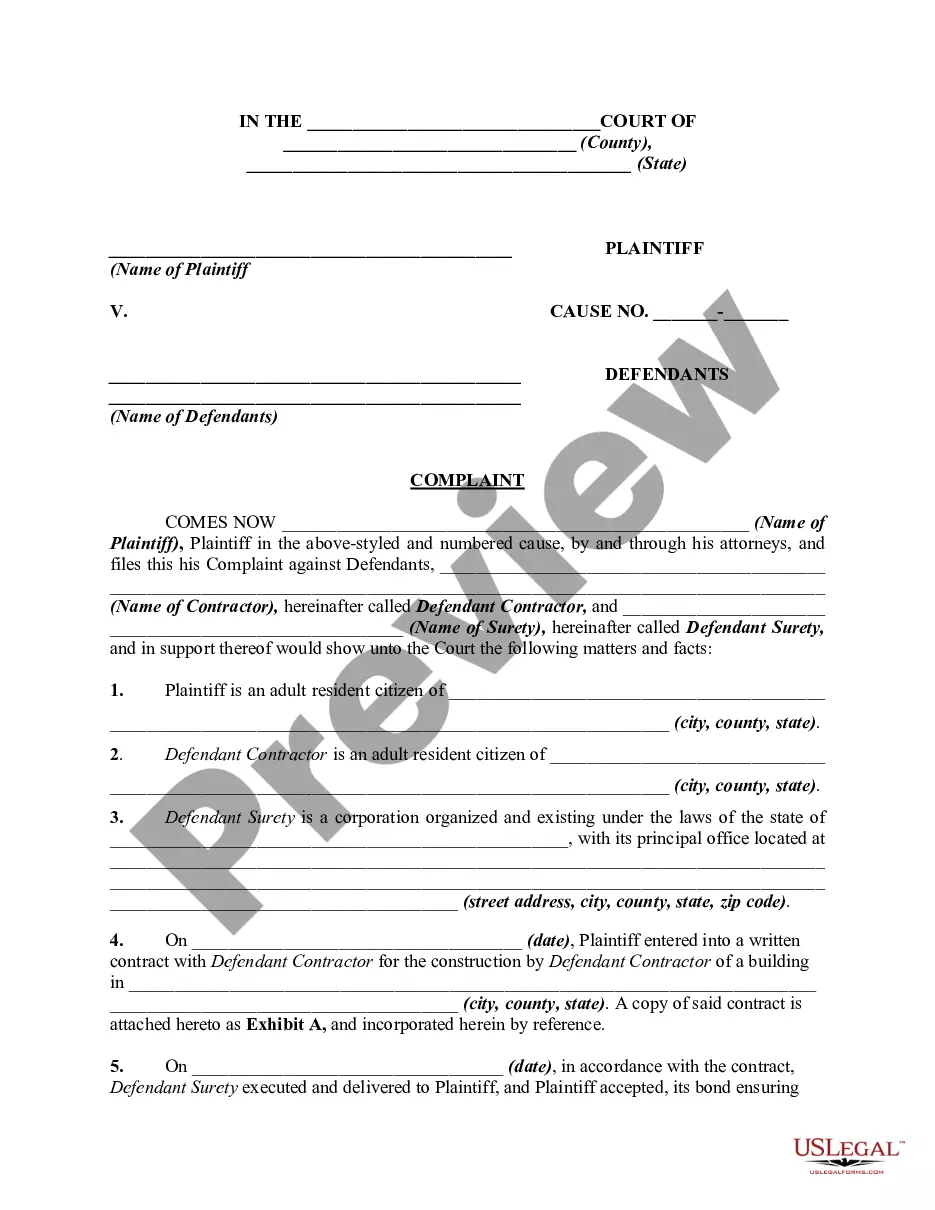
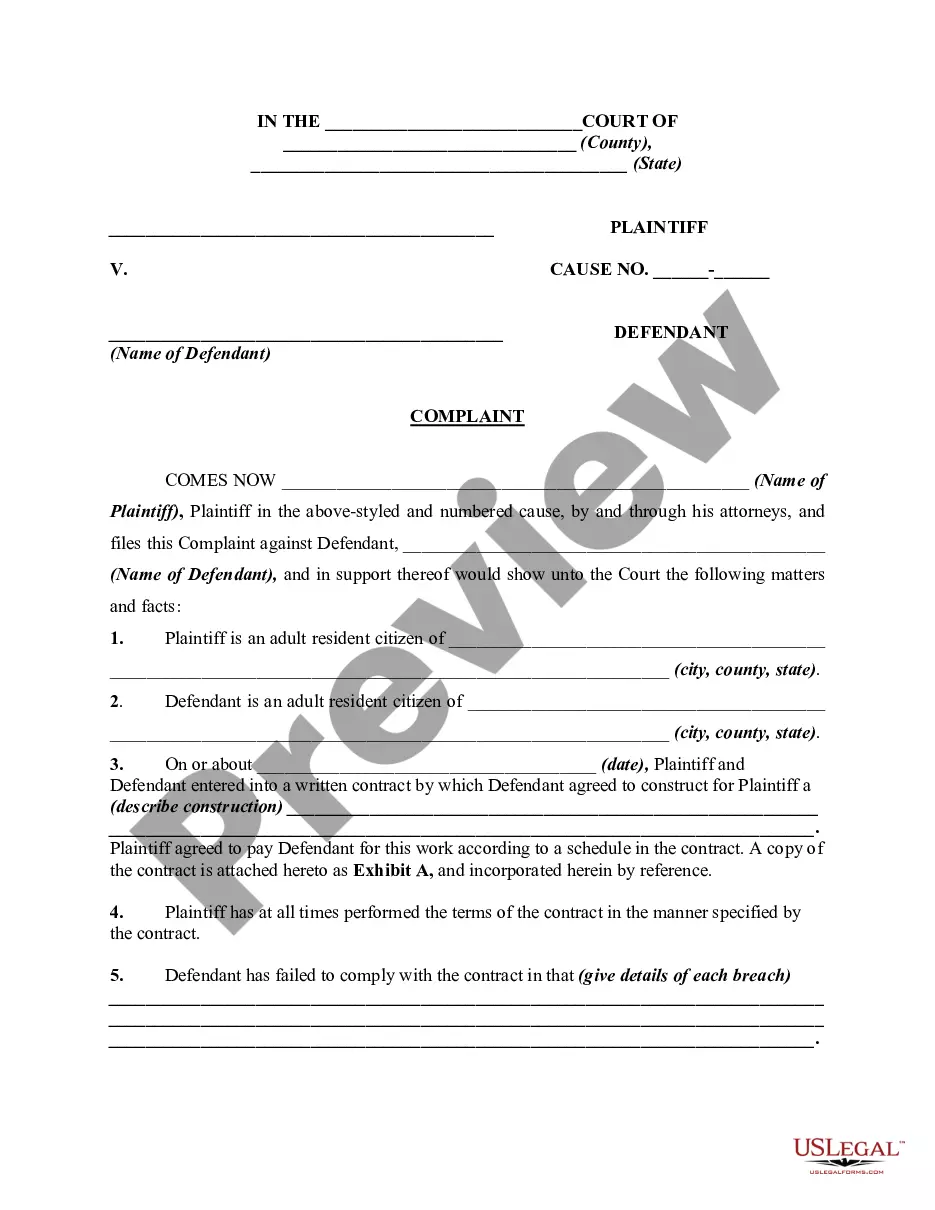
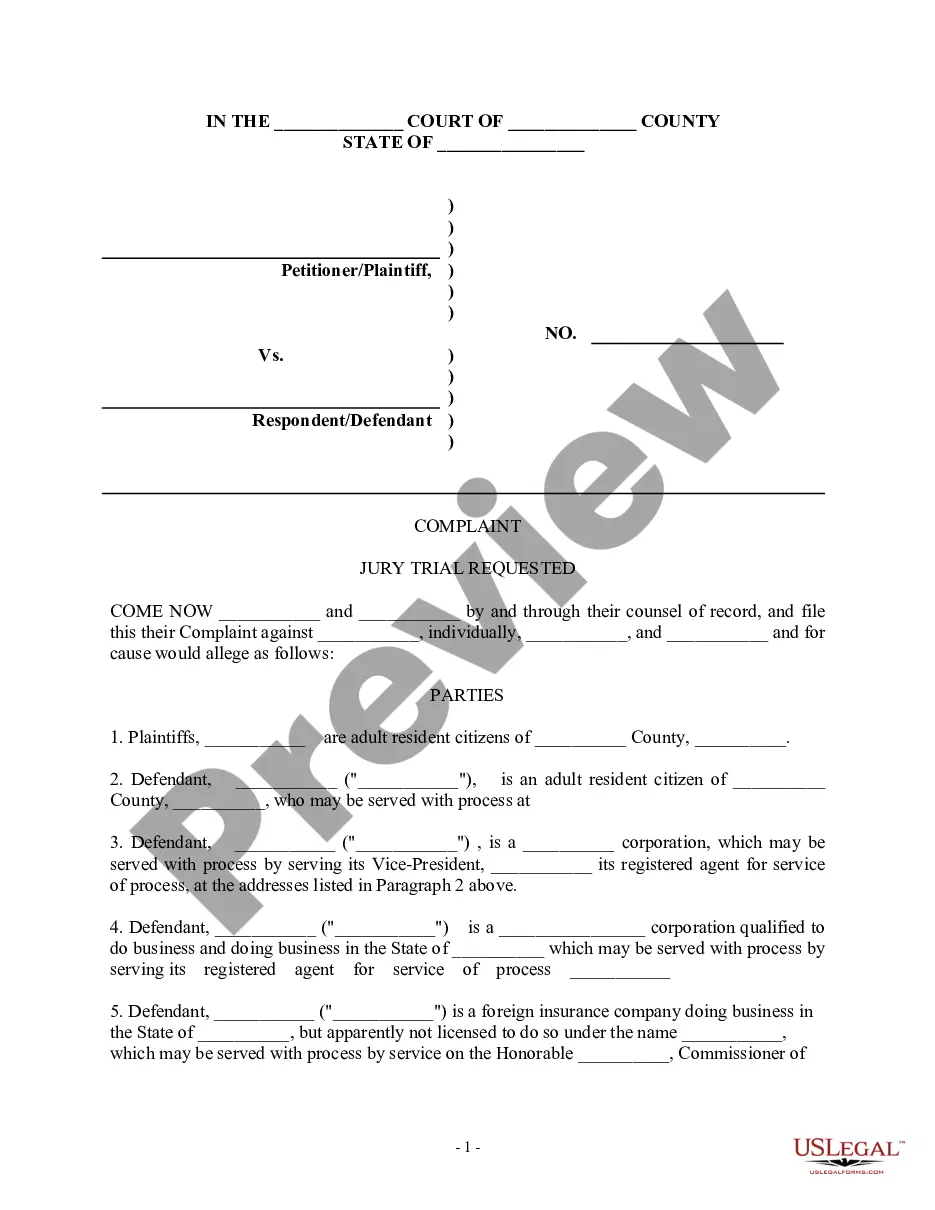
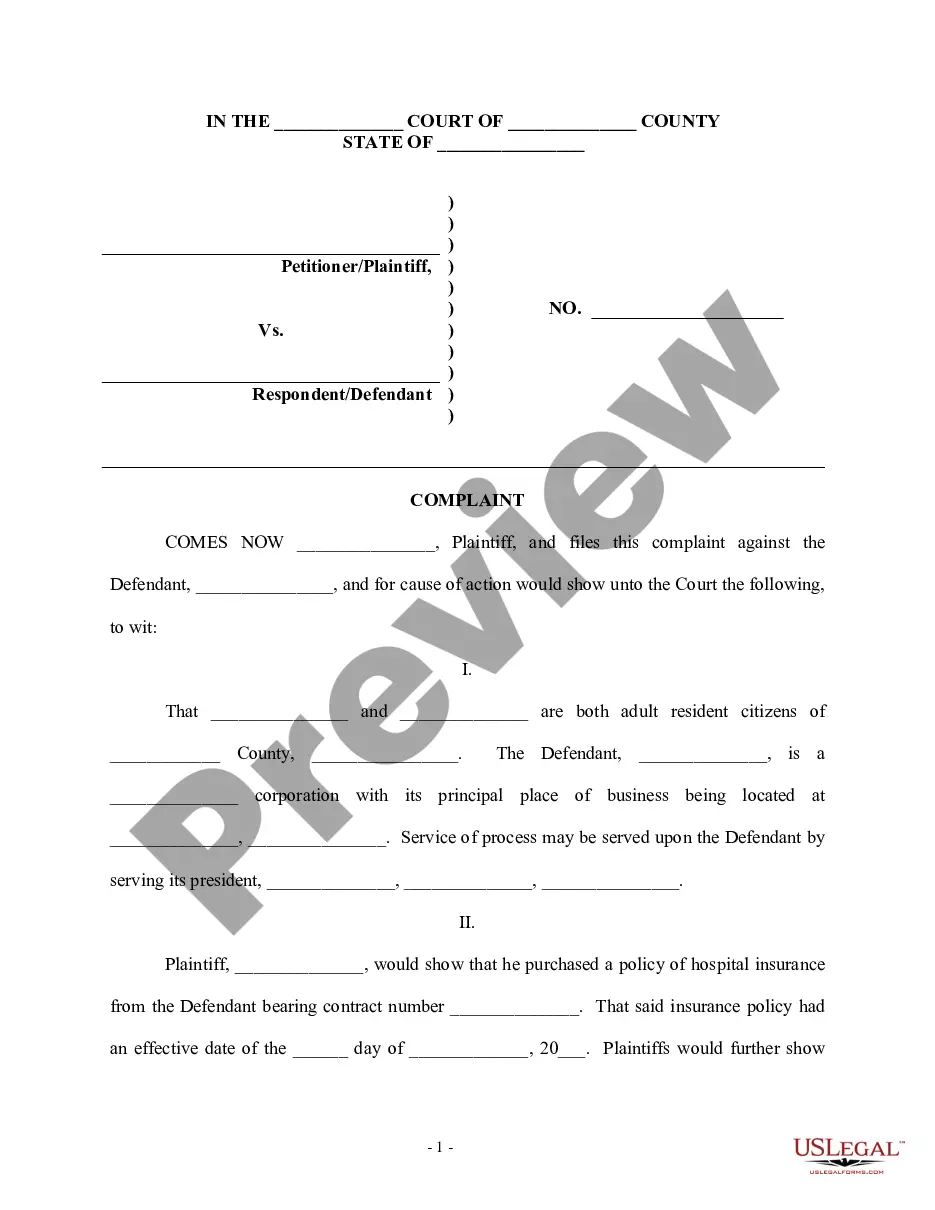
The Complaint regarding Subcontractor against Contractor and Surety is a legal document used by a subcontractor to initiate a lawsuit against a contractor and the surety responsible for a bond related to a construction project. This form allows the plaintiff to claim payment for work done and any related costs, making it essential for subcontractors facing non-payment issues. It differs from other complaints by specifically addressing the relationships and obligations under a subcontract and the associated surety bond.
What’s included in this form
- Plaintiff and Defendant Identification: Names and details of the parties involved.
- Contractor's Bond: Details of the bond executed for guaranteeing payments for labor and materials.
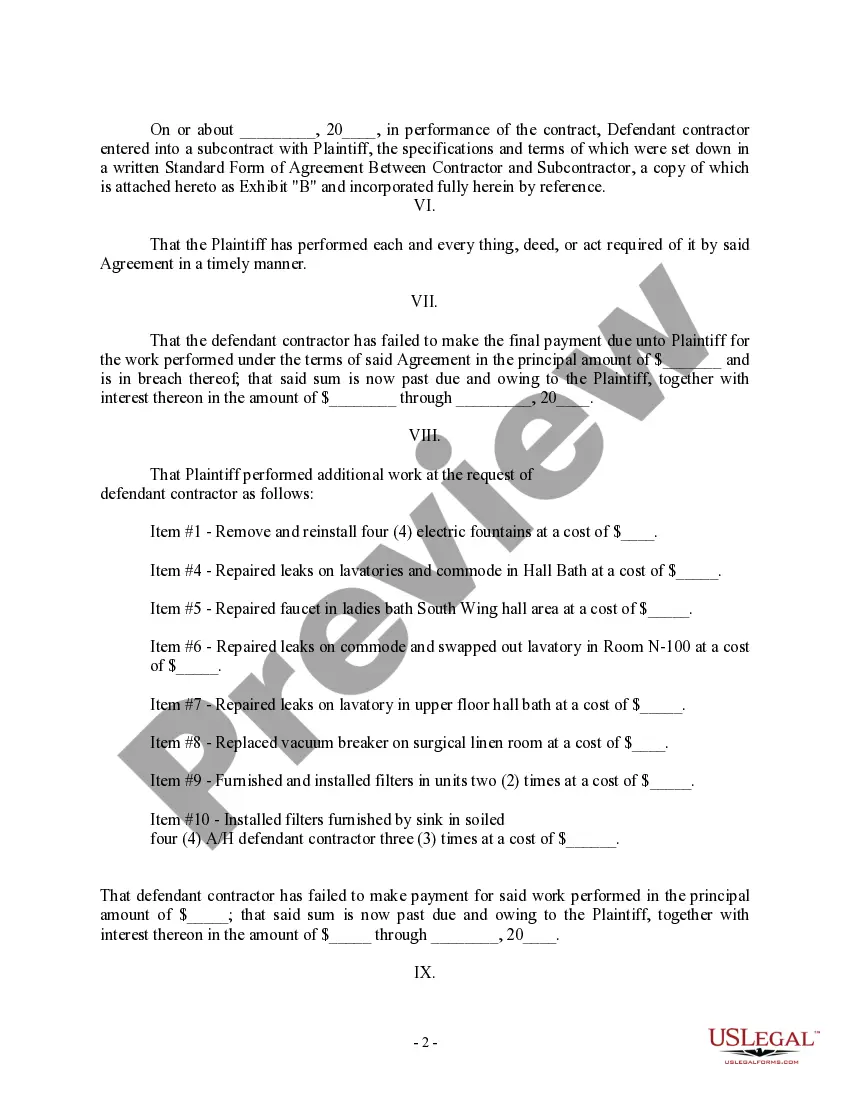
- Subcontract Details: Information regarding the subcontract agreement between the plaintiff and the contractor.
- Payment Claims: Summaries of amounts due, including principal payments, additional work performed, and incurred costs.
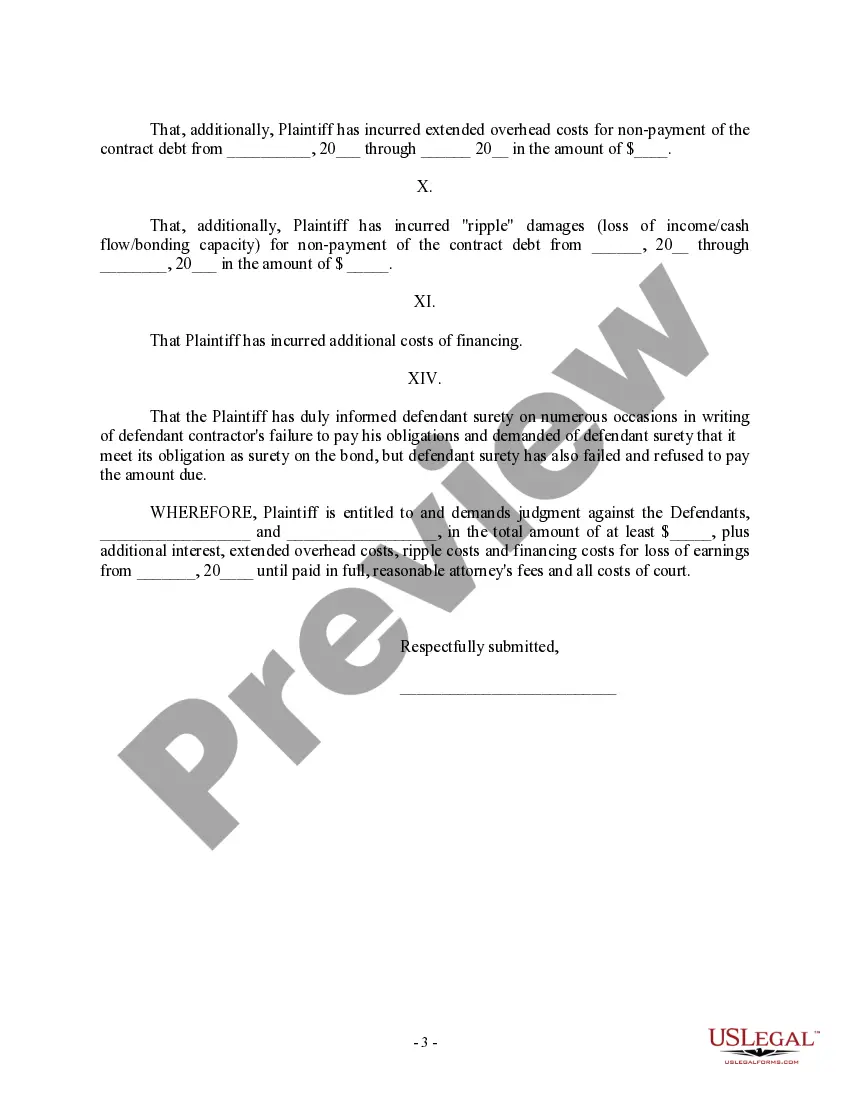
- Damages: Claims for extended overhead costs and ripple damages due to non-payment.
- Demand for Judgment: Specifies the total amount claimed and requests relief from the court.

When to use this document
This form is used when a subcontractor has completed work under a subcontract and has not received the final payment from the contractor. It is particularly relevant if the contractor has failed to honor payment terms, resulting in the subcontractor seeking recourse through legal action. Additionally, it is applicable when a surety must be held accountable for payments guaranteed under a bond.
Who this form is for
- Subcontractors who have not received payment for work performed.
- Contractors who are facing disputes over payments with their subcontractors.
- Lawyers representing subcontractors in payment disputes.
- Surety companies involved in construction project bonds.
Instructions for completing this form
- Identify the parties involved, including the plaintiff (subcontractor) and defendants (contractor and surety).
- Fill in the details of the contract and subcontract, including dates and related agreements.
- Specify the amounts due for work performed and any additional costs incurred.
- Clearly outline the reasons for the claim, including breaches of contract and damages suffered.
- Sign and date the form, ensuring all necessary information is included for court processing.
Is notarization required?
In most cases, this form does not require notarization. However, some jurisdictions or signing circumstances might. US Legal Forms offers online notarization powered by Notarize, accessible 24/7 for a quick, remote process.
Get your form ready online
Our built-in tools help you complete, sign, share, and store your documents in one place.
Make edits, fill in missing information, and update formatting in US Legal Forms—just like you would in MS Word.
Download a copy, print it, send it by email, or mail it via USPS—whatever works best for your next step.
Sign and collect signatures with our SignNow integration. Send to multiple recipients, set reminders, and more. Go Premium to unlock E-Sign.
If this form requires notarization, complete it online through a secure video call—no need to meet a notary in person or wait for an appointment.
We protect your documents and personal data by following strict security and privacy standards.

Make edits, fill in missing information, and update formatting in US Legal Forms—just like you would in MS Word.

Download a copy, print it, send it by email, or mail it via USPS—whatever works best for your next step.

Sign and collect signatures with our SignNow integration. Send to multiple recipients, set reminders, and more. Go Premium to unlock E-Sign.

If this form requires notarization, complete it online through a secure video call—no need to meet a notary in person or wait for an appointment.

We protect your documents and personal data by following strict security and privacy standards.
Typical mistakes to avoid
- Failing to provide complete details of the contractor and surety.
- Not specifying all amounts owed, including additional costs incurred.
- Omitting signatures or not properly formatting the document.
- Not attaching relevant exhibits or agreements referenced in the complaint.
Why complete this form online
- Convenient access to a legally vetted template that saves time.
- Easy to edit and personalize, ensuring all relevant details are covered.
- Access to immediate legal advice if needed during form completion.
- Secure storage of completed documents and easy re-access when necessary.
Legal use & context
- The form legally initiates a complaint in a court regarding payment disputes.
- It is enforceable as long as it adheres to local laws governing construction contracts and payment claims.
- Be aware of any limitations regarding the filing deadlines or court jurisdiction.
Quick recap
- This form is essential for subcontractors seeking payment from contractors and sureties.
- Accurate details and documentation are critical for the form's validity.
- Be mindful of local legal requirements regarding filing complaints.
Looking for another form?

Form popularity
FAQ
If the contractor defaults, the surety usually has three options: Pay the amount set in the bond as a penalty (or can settle that amount with the owner). Complete the project themselves or by hiring a new contractor. Provide money to the principle to complete the project.
Yes you can sue the subcontractor directly. You don't need a contract with someone to sue them for negligence. You can probably also sue them as a third party beneficiary of their contract with the general contractor.
A general rule of contributory negligence is that a main contractor is not liable for the negligence of its independent subcontractor. There are some exceptions to this rule, including: The main contractor had actual knowledge that the sub-contractor's work had been done in a foreseeably dangerous way and condoned it.
What rights does a surety have in the event of a contractor default? The surety can recover the debt from the defaulting contractor, the surety can sue the owner for claims that could be easily made by the contractor, or the surety could try to get the retainage held by the owner.
Usually, anything that subcontractors would be liable for, general contractors may also be liable for (with the caveat that if the contractor has to pay for damages, the subcontractor who is legally responsible will often reimburse the general contractor).
Bonding Company. The first step in filing your surety bond claim is to find out who bonded the offender. Make Contact. Maintain Contact.
What are subcontractors? Subcontractors undertake a contract from the contractor. Subcontractors undertake work that a contractor cannot do but for which the contractor is responsible.
A contractor who has been paid for a project and refuses to pay a subcontractor shall as a penalty, pay 2 percent of the amount due per month every month that the payment is not made. In addition, the prevailing party shall be entitled to his attorney's fees and costs.
Call to have a Complaint Form mailed to you 1-800-321-CSLB (2752), OR. Use the On-line Complaint Form, OR. Download and Print a Complaint Form.