Clauses resulting in Additional Rent
About this form
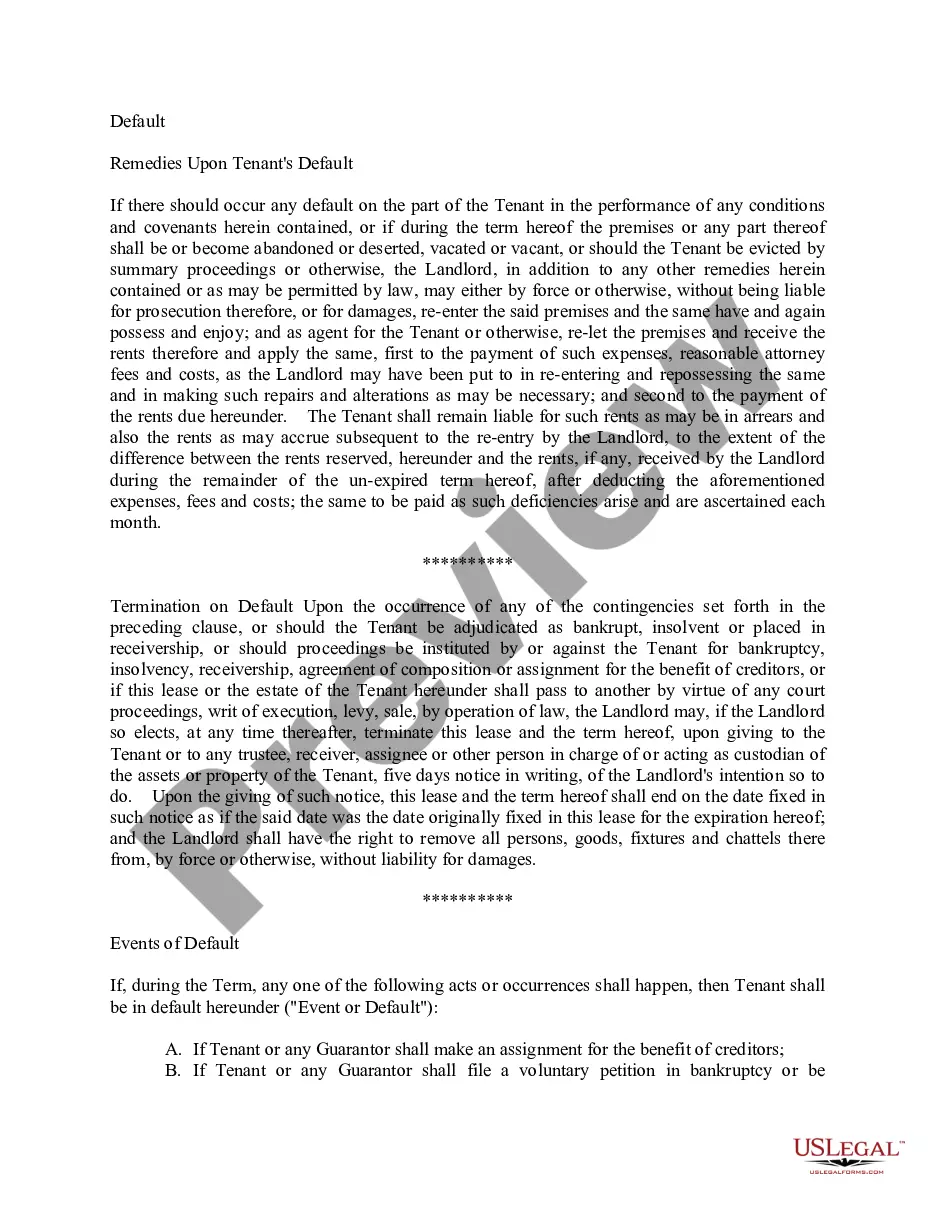
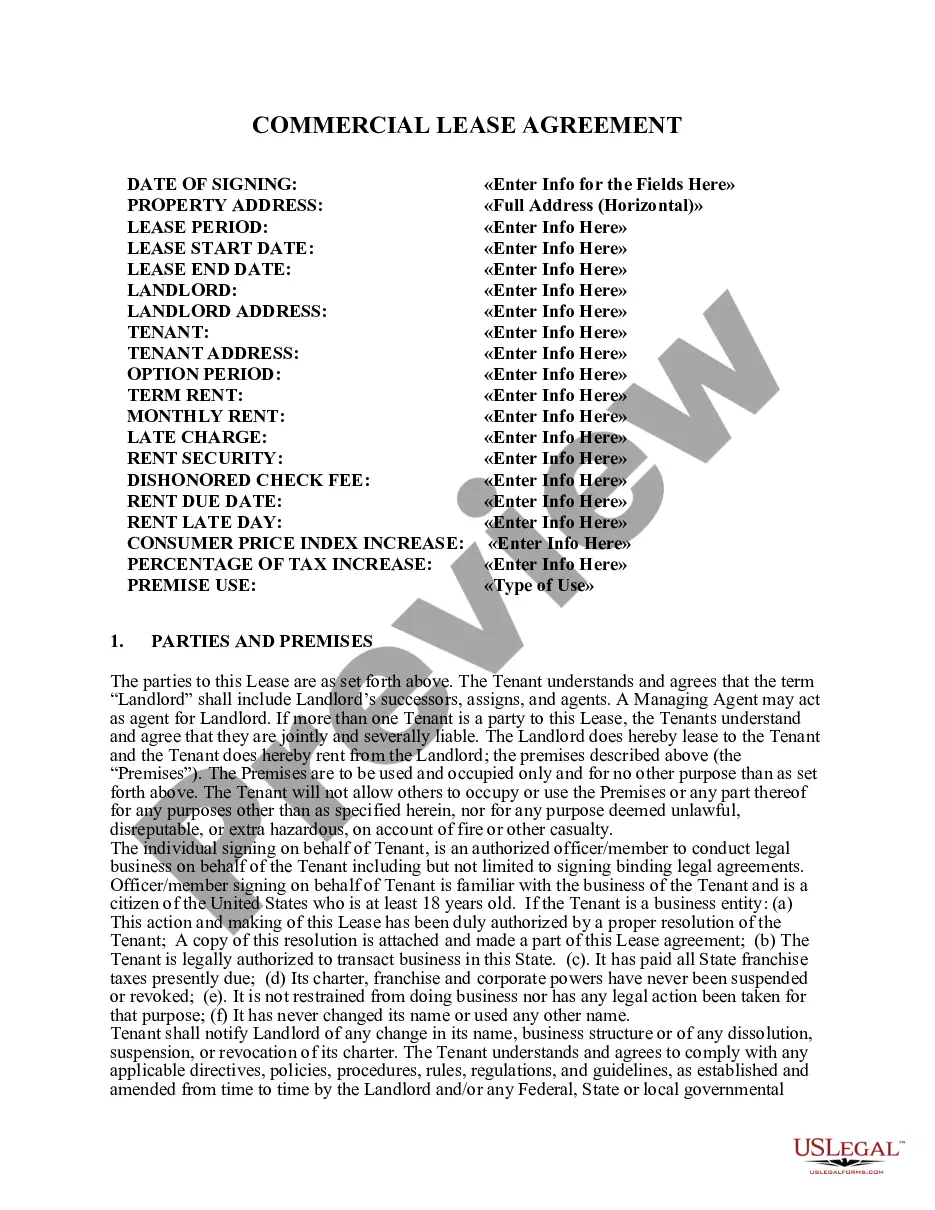
The Clauses Resulting in Additional Rent form is a legal document that outlines specific clauses in a lease agreement, which can lead to extra rental costs for tenants. This form differs from standard lease agreements by detailing additional fees that may arise, such as real estate taxes, operating costs, and cost of living adjustments, ensuring tenants understand their financial responsibilities under the lease terms.
What’s included in this form
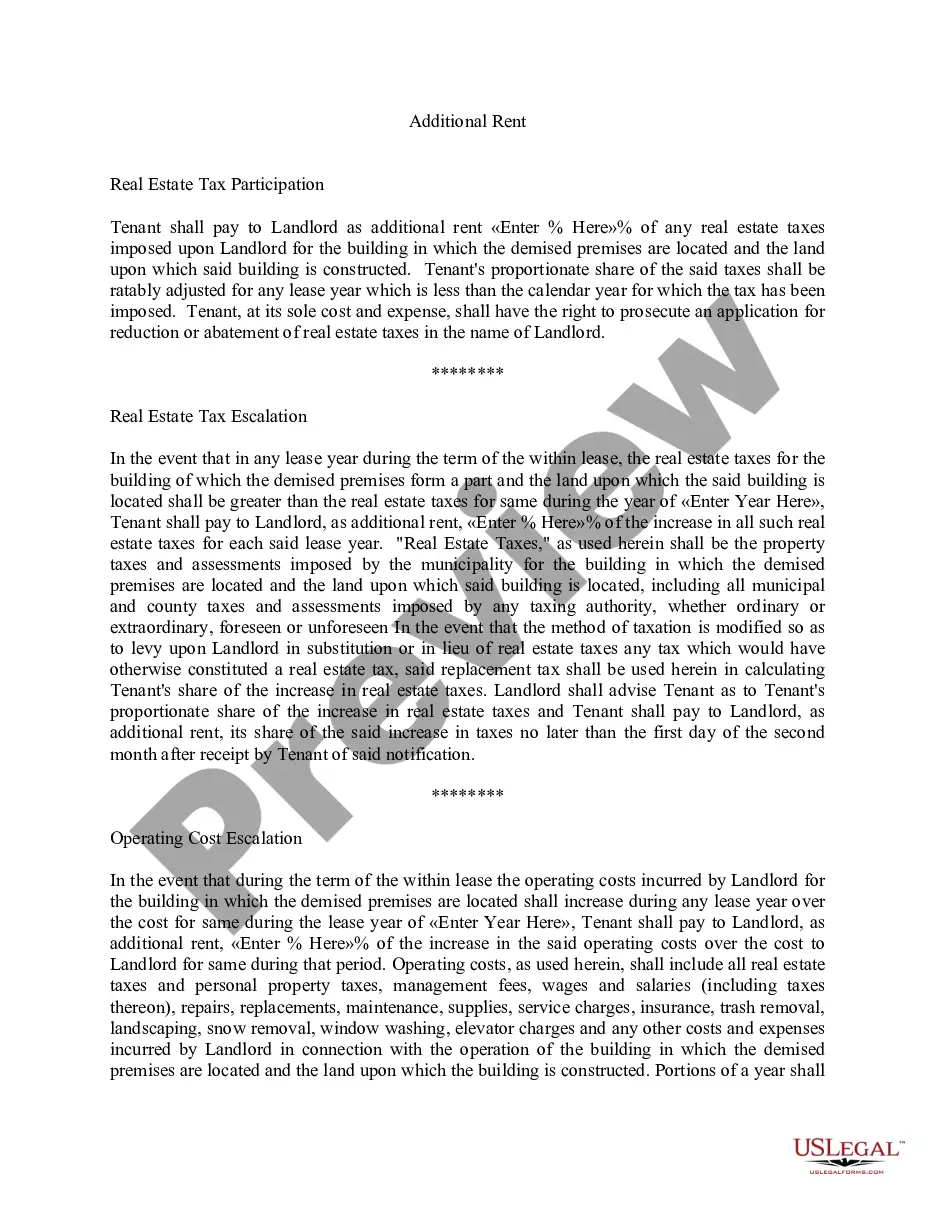
- Real estate tax participation clause
- Real estate tax escalation clause
- Operating cost escalation clause
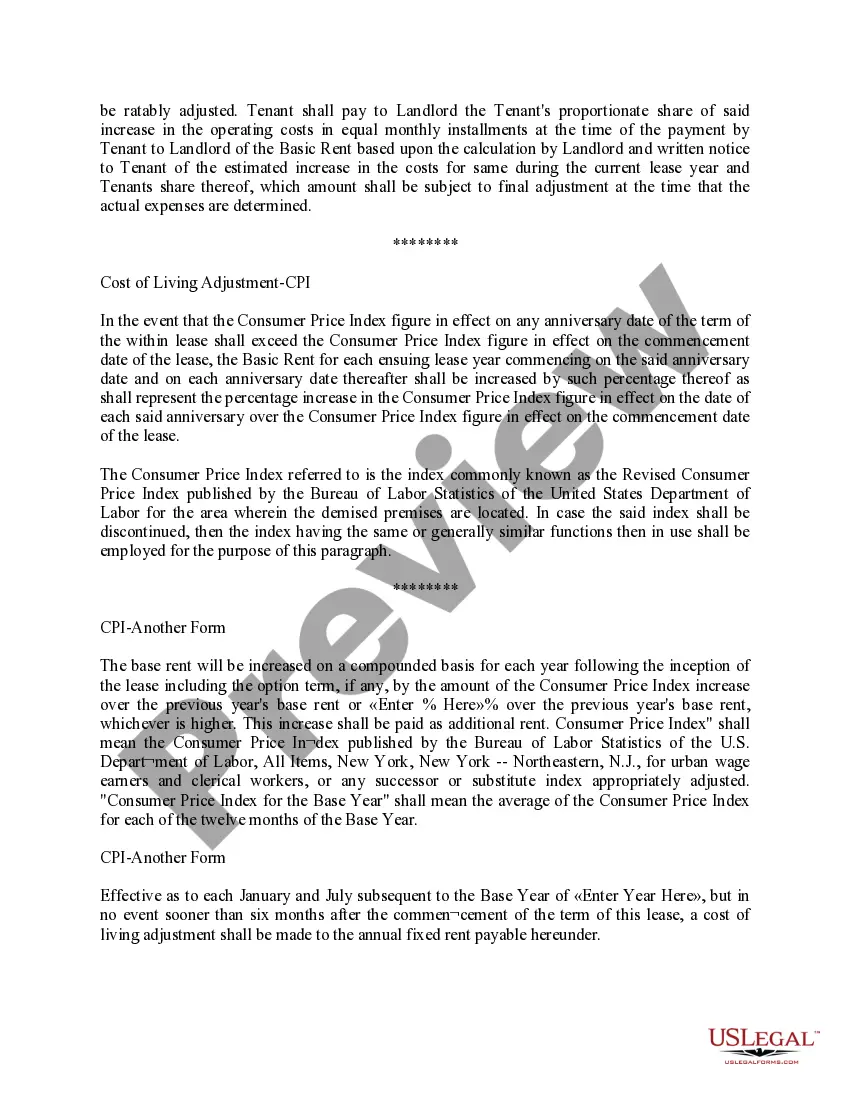
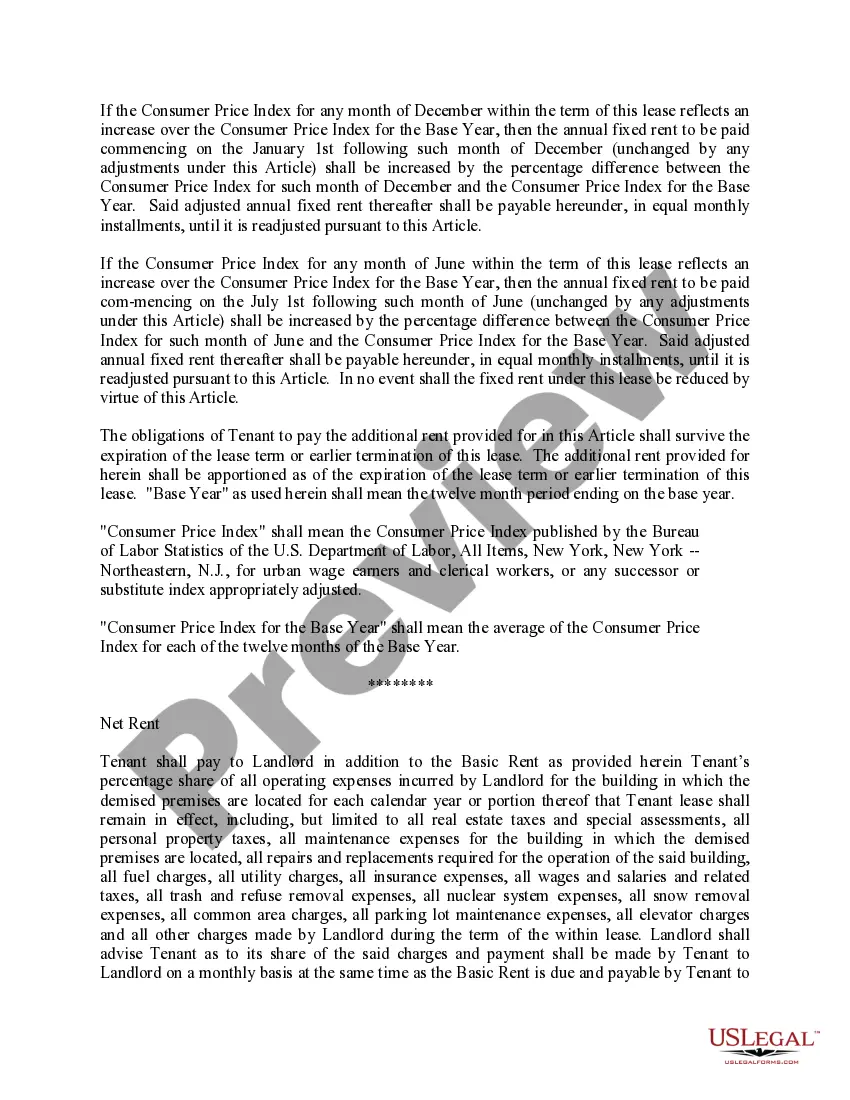
- Cost of living adjustment clause
- Net rent clause
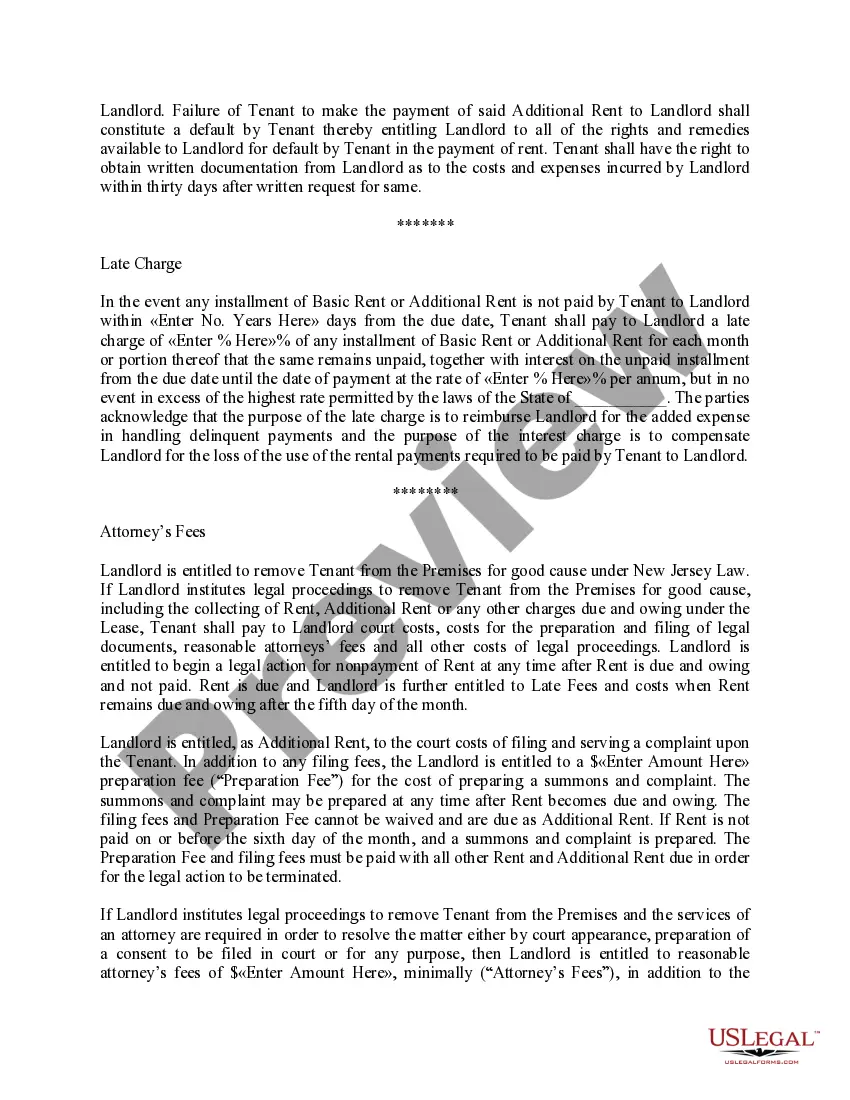
- Late charge clause
- Attorney's fees clause


When to use this form
This form should be used during lease negotiations to clearly define the additional rent obligations that tenants may incur. It is particularly important in commercial leasing, where tenants might be responsible for various extra costs like property taxes, maintenance fees, and legal expenses. Utilizing this form fosters transparency between landlords and tenants regarding potential additional financial responsibilities.
Intended users of this form
- Landlords seeking to formalize their additional rent clauses in lease agreements.
- Tenants wanting to understand their potential financial obligations in a lease.
- Property managers involved in drafting and enforcing lease agreements.
How to complete this form
- Identify the parties involved, including landlord and tenant information.
- Specify the property for which the lease is being created.
- Enter the year relevant to the lease agreement for tax escalations and adjustments.
- Detail any clauses relating to additional rent, including how fees will be calculated and communicated.
- Ensure all parties sign and date the form upon completion.
Notarization requirements for this form
This form does not typically require notarization to be legally valid. However, some jurisdictions or document types may still require it. US Legal Forms provides secure online notarization powered by Notarize, available 24/7 for added convenience.
Get your form ready online
Our built-in tools help you complete, sign, share, and store your documents in one place.
Make edits, fill in missing information, and update formatting in US Legal Forms—just like you would in MS Word.
Download a copy, print it, send it by email, or mail it via USPS—whatever works best for your next step.
Sign and collect signatures with our SignNow integration. Send to multiple recipients, set reminders, and more. Go Premium to unlock E-Sign.
If this form requires notarization, complete it online through a secure video call—no need to meet a notary in person or wait for an appointment.
We protect your documents and personal data by following strict security and privacy standards.

Make edits, fill in missing information, and update formatting in US Legal Forms—just like you would in MS Word.

Download a copy, print it, send it by email, or mail it via USPS—whatever works best for your next step.

Sign and collect signatures with our SignNow integration. Send to multiple recipients, set reminders, and more. Go Premium to unlock E-Sign.

If this form requires notarization, complete it online through a secure video call—no need to meet a notary in person or wait for an appointment.

We protect your documents and personal data by following strict security and privacy standards.
Mistakes to watch out for
- Not specifying the method for calculating additional rent, leading to confusion.
- Failing to adequately describe all potential cost increases associated with the lease.
- Overlooking the need for both partiesâ signatures, which can invalidate the agreement.
Why use this form online
- Convenient access to legally sound templates drafted by licensed attorneys.
- Editable digital formats allow for easy customization to meet specific leasing agreements.
- Fast downloads ensure you can quickly manage leasing contracts without delays.
Legal use & context
- This form is legally binding once completed and signed by both parties.
- It aids in clarifying the financial obligations of tenants, reducing potential disputes.
- Utilizing clearly defined clauses in lease agreements enhances legal enforceability.
Looking for another form?



Form popularity
FAQ
This means you can increase rent by either 5% plus the local CPI or by 10%. You must give the tenant 60 days' notice and can only increase rent twice a year.
Tenant shall pay to Landlord, as Additional Rent, an amount equal to Tenant's Proportionate Share of (i)Taxes (as such term is hereinafter defined) payable by Landlord during the Term, plus (it) Operating Expenses (as such term is hereinafter defined) payable by Landlord during the Term.
Also known as fixed rent. In a commercial lease context, the minimum rent due under a lease. Depending on the terms of the lease agreement, a lease with a base rent usually includes an escalation clause for taxes and operating expenses and sometimes a percentage rent clause.
This escalation clause specifies a set percentage or dollar amount by which the rent will increase each year. For example, the rent may increase by 3% annually, regardless of market conditions or inflation changes. This escalation clause ties the rent increase to the CPI, which measures the cost of living changes.
For a 3.1% increase on a $2000 rent for example the steps are: Convert the percentage figure (3.1%) into a decimal by dividing it by 100.Multiply the original rent by the rent increase to get the monthly dollar increase.Add the dollar amount of the increase to the original rent to get the new rent.
At any time hereafter, Landlord may substitute for the Premises other premises (herein called "The New Premises") provided that the New Premises shall be similar to the Premises in area and use for Tenant's purposes and shall be located in the Building.
Rent Adjustment Amount means an amount equal to the difference between (x) the Aggregate Base Annual Rental then in effect, and (y) the Maximum Allowed Annual Rental.
Escalator Clauses in Rental Contracts An escalator clause allows rent to increase by a specified amount each period, allowing the landlord to benefit from current market conditions and the renter to secure a long-term arrangement. Sometimes escalator clauses include a cap on the allowed increases.