Injury Absence Report
Overview of this form
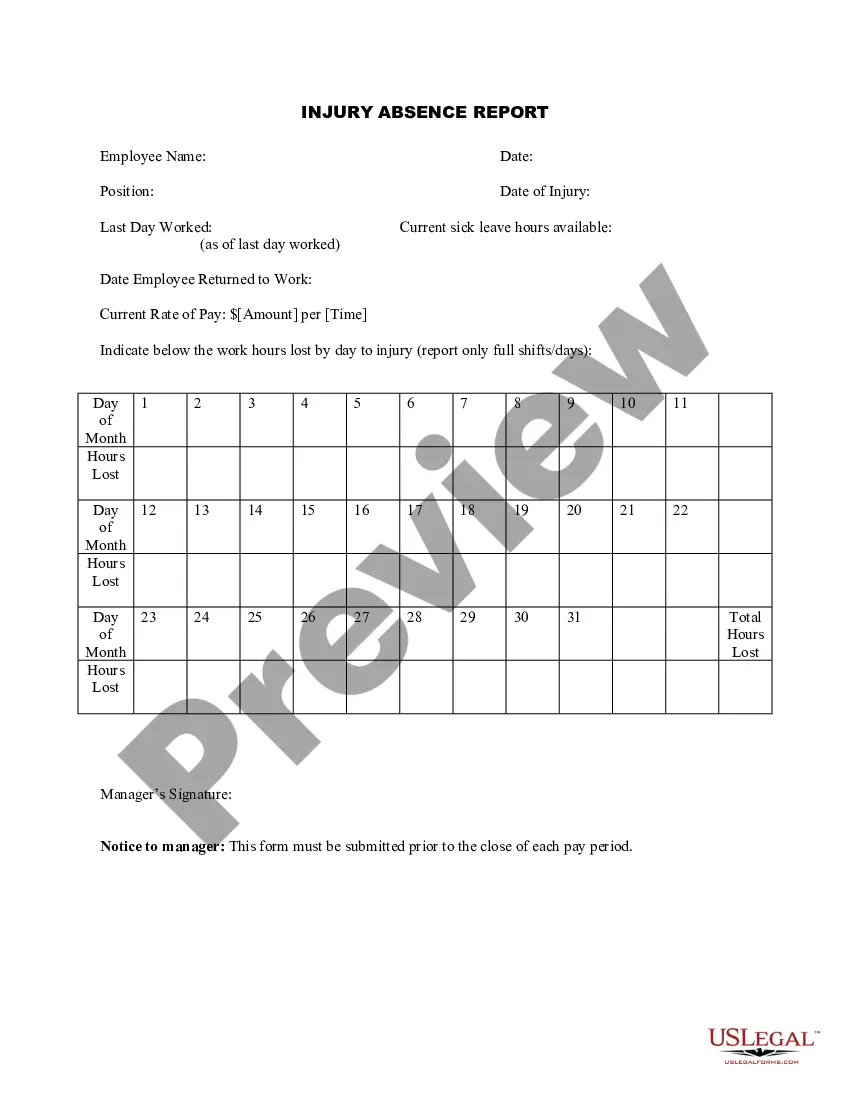
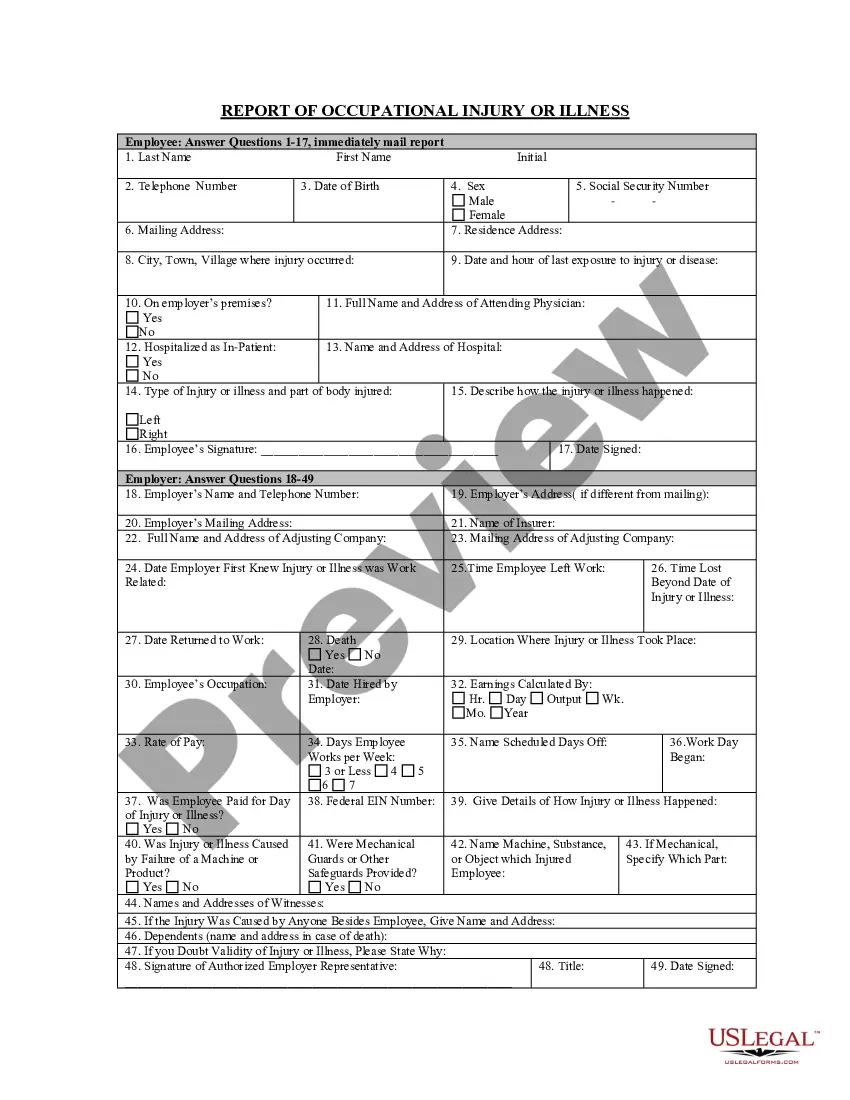
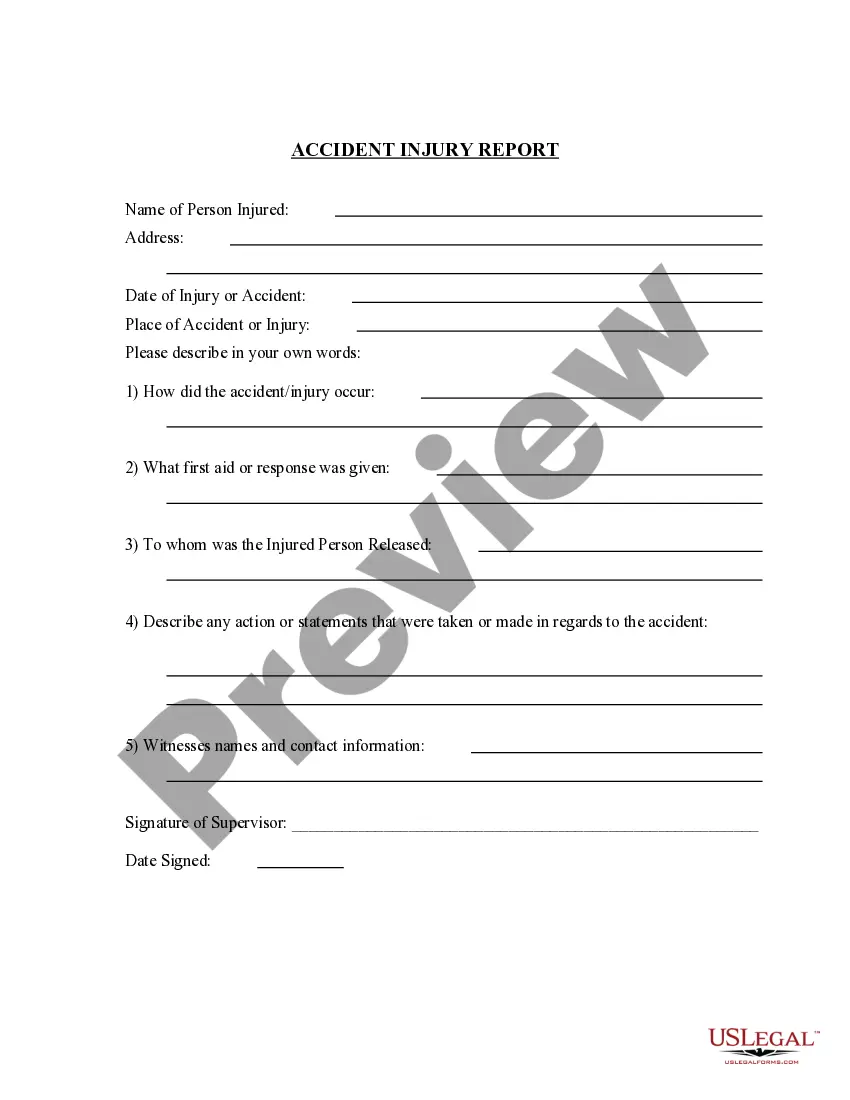
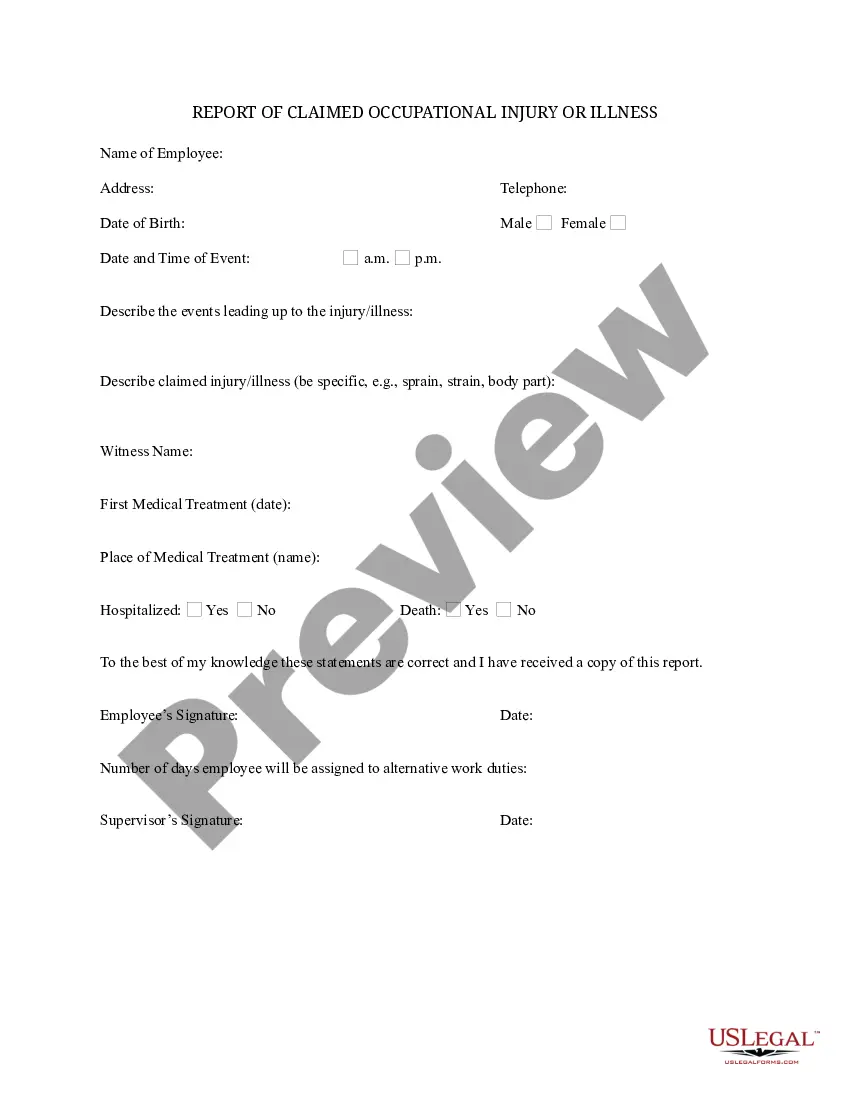
The Injury Absence Report is a legal document used to officially record an employee's absence due to a work-related injury. This form specifically documents the number of hours lost as a result of the injury and must be submitted before the close of each pay period. It is essential for managing workplace injuries and ensuring compliance with company policies and workers' compensation regulations.
Main sections of this form
- Employee's name and position
- Date of injury and last day worked
- Current sick leave hours available
- Days of the month indicating hours lost due to the injury
- Manager's signature to acknowledge receipt

When to use this form
This form should be used in the event that an employee is unable to work due to an injury sustained while performing job duties. It is essential for: - Documenting absences for payroll and compensation purposes. - Complying with employer reporting requirements regarding work injuries. - Planning for employee rehabilitation and return to work.
Who needs this form
This form is intended for:
- Employees who have sustained a work-related injury.
- Human resources personnel responsible for managing employee absences.
- Managers and supervisors overseeing workplace safety and compliance.
Instructions for completing this form
- Identify the employee and provide their name and position.
- Enter the date of the injury and the last day the employee worked.
- Input the current available sick leave hours the employee has.
- Fill in the section detailing hours lost by indicating the days of the month affected.
- Obtain the manager's signature to confirm the report has been reviewed.
Notarization requirements for this form
This form does not typically require notarization unless specified by local law.
Get your form ready online
Our built-in tools help you complete, sign, share, and store your documents in one place.
Make edits, fill in missing information, and update formatting in US Legal Forms—just like you would in MS Word.
Download a copy, print it, send it by email, or mail it via USPS—whatever works best for your next step.
Sign and collect signatures with our SignNow integration. Send to multiple recipients, set reminders, and more. Go Premium to unlock E-Sign.
If this form requires notarization, complete it online through a secure video call—no need to meet a notary in person or wait for an appointment.
We protect your documents and personal data by following strict security and privacy standards.

Make edits, fill in missing information, and update formatting in US Legal Forms—just like you would in MS Word.

Download a copy, print it, send it by email, or mail it via USPS—whatever works best for your next step.

Sign and collect signatures with our SignNow integration. Send to multiple recipients, set reminders, and more. Go Premium to unlock E-Sign.

If this form requires notarization, complete it online through a secure video call—no need to meet a notary in person or wait for an appointment.

We protect your documents and personal data by following strict security and privacy standards.
Common mistakes
- Failing to submit the form before the end of the pay period.
- Inaccurate reporting of hours lost.
- Not obtaining the required manager's signature.
- Overlooking the need to check local state-specific regulations.
Why complete this form online
- Easy access and convenience for employees and managers.
- Editable format allows for quick adjustments as needed.
- Secure storage of records for compliance and reference.
Quick recap
- The Injury Absence Report is essential for documenting work-related absences and ensuring compliance.
- Accurate completion and timely submission are crucial for effective record-keeping.
- Utilizing this form online simplifies the process and reduces errors.
Looking for another form?


Form popularity
FAQ
Find the Facts. First, you must determine the facts surrounding the injury. Determine the Sequence or Timeline. It is important to document in the report the sequence of events or timeline surrounding the incident that resulted in the injury. Analyze and Provide Feedback.
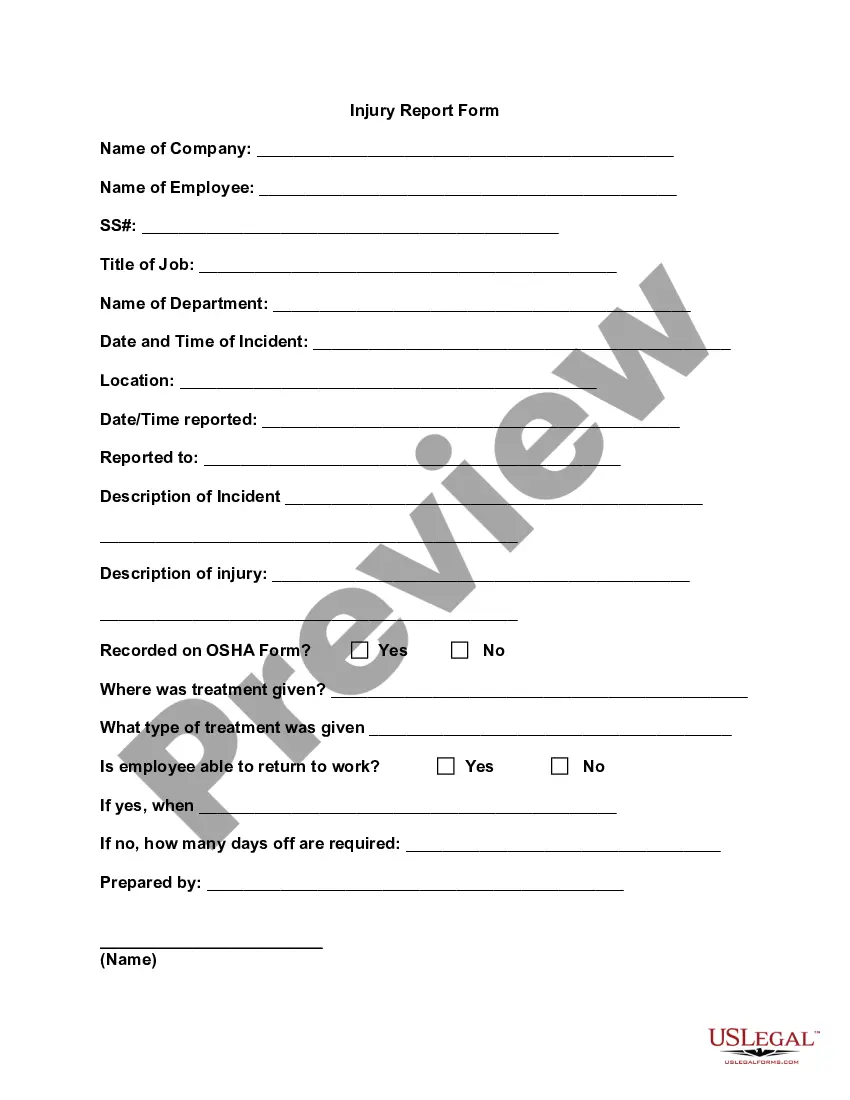
The Basics. Identify the specific location, time and date of the incident. The Affected. Collect details of those involved and/or affected by the incident. The Witnesses. The Context. The Actions. The Environment. The Injuries. The Treatment.
All employers are required to notify OSHA when an employee is killed on the job or suffers a work-related hospitalization, amputation, or loss of an eye. A fatality must be reported within 8 hours. An in-patient hospitalization, amputation, or eye loss must be reported within 24 hours.
Type of incident (injury, near miss, property damage, or theft) Address. Date of incident. Time of incident. Name of affected individual. A narrative description of the incident, including the sequence of events and results of the incident.
In regards to getting fired for getting injured, every employee is granted legal protection from undue backlash and workplace penalties. As an extension of the whistleblower act, you cannot be terminated solely for being injured on-the-job.
The definition of an incident is something that happens, possibly as a result of something else. An example of incident is seeing a butterfly while taking a walk. An example of incident is someone going to jail after being arrested for shoplifting. An event or occurrence.
If you haven't reported your injury, your employer may deny you medical treatment and benefits for missed time from work.Also, if the accident isn't filed immediately, your employer may deny the accident happened or claim that it took place outside of work.
Date, time, and location of the incident. Names of everyone involved, including witnesses. Events that led up to the incident. Environmental conditions. Circumstances. Specific injuries. Damage to equipment or area.
General Recording Criteria The injury or illness must have resulted in absences from work, restricted work, job transfer, medical treatment, or loss of consciousness. The case should be considered serious as diagnosed by a physician or licensed health care professional, or PLHCP.