Office Policy and Procedure, Consent and Agreement for Treatment of a Minor for Mental Health Profession
About this form
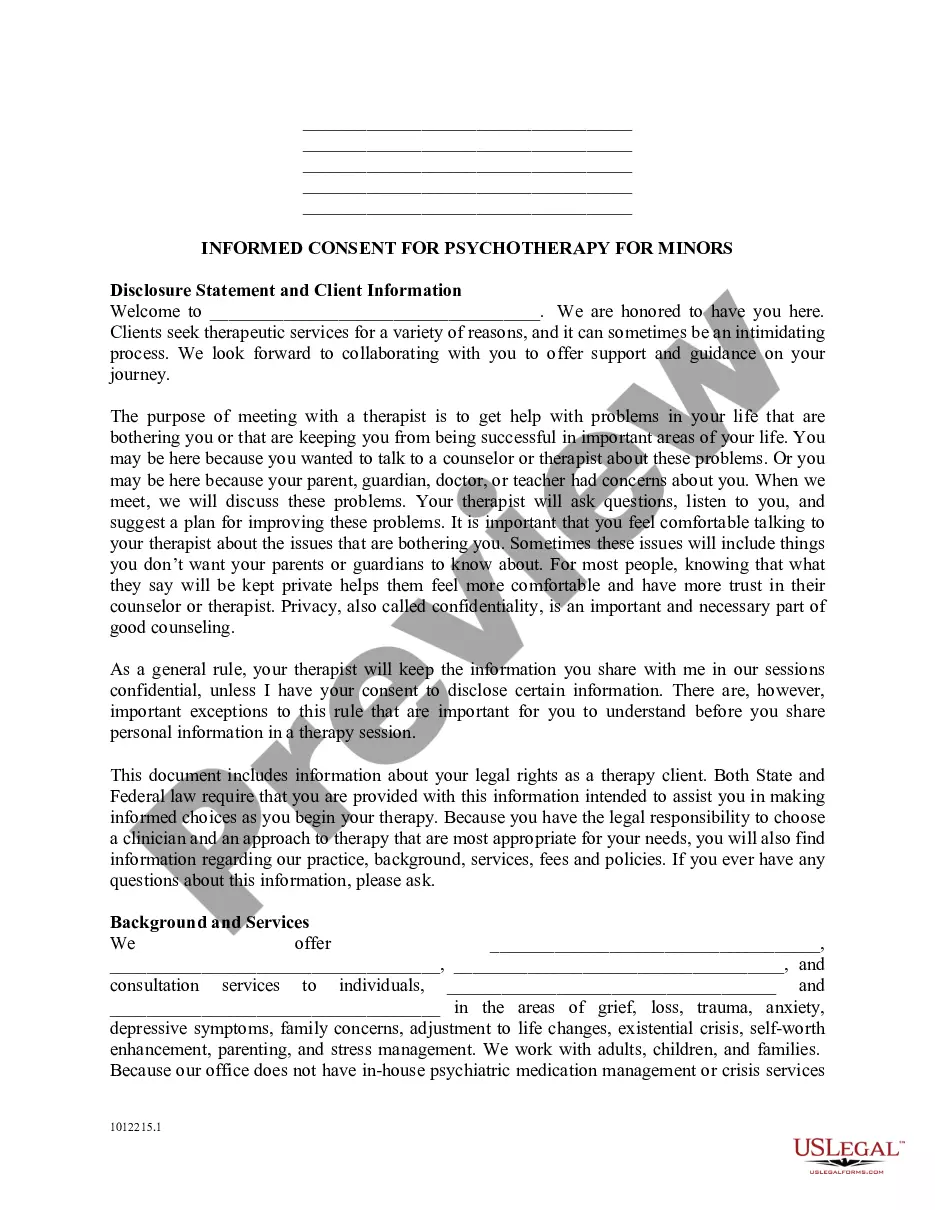
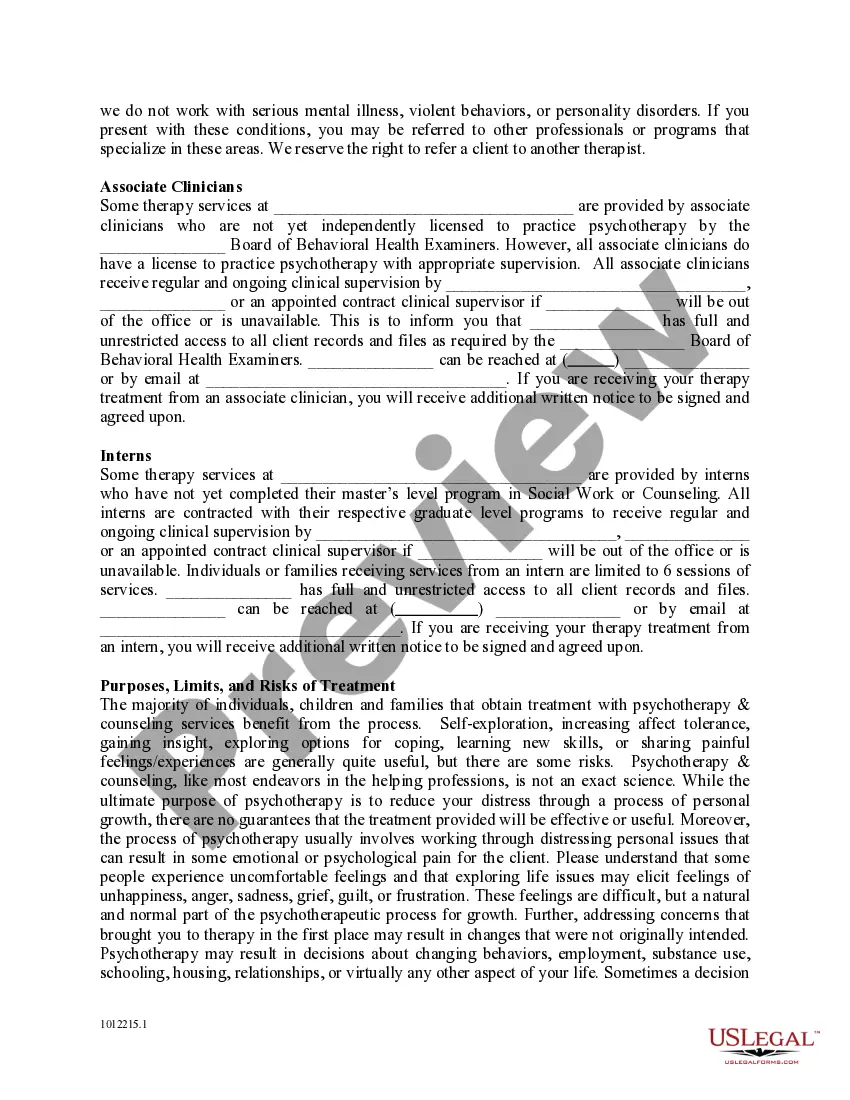
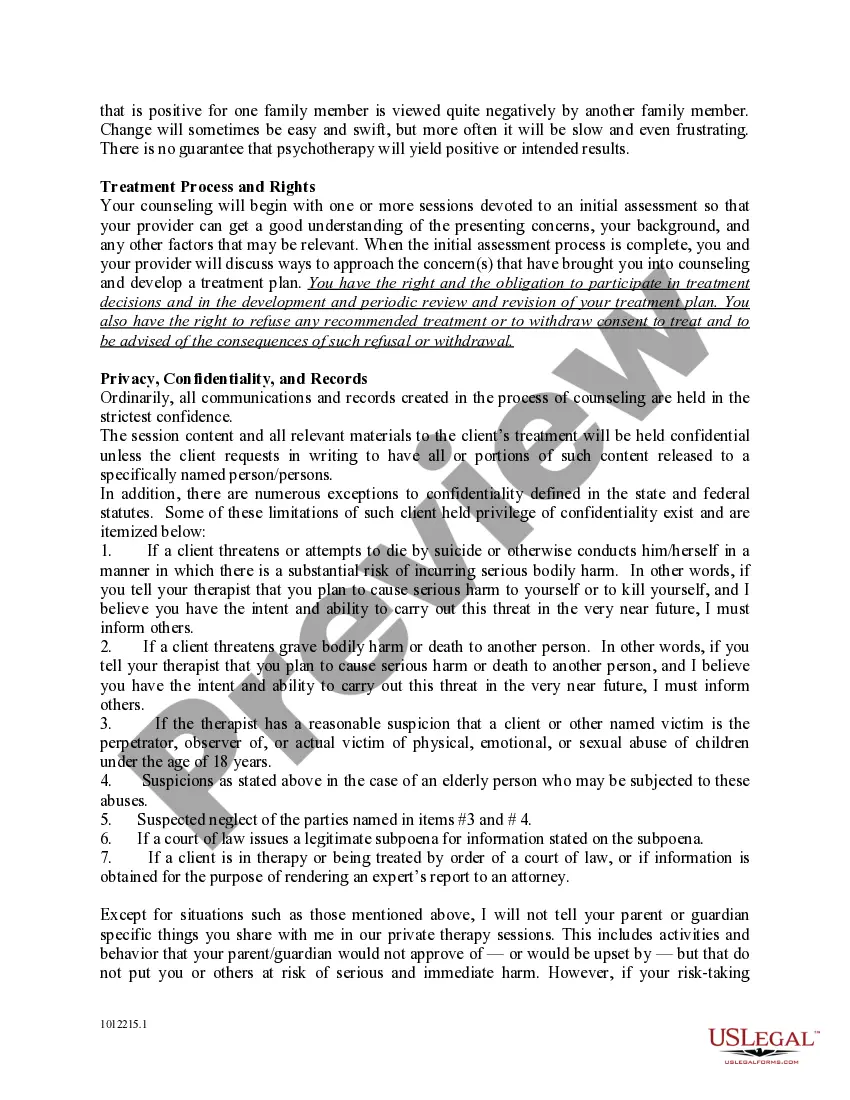
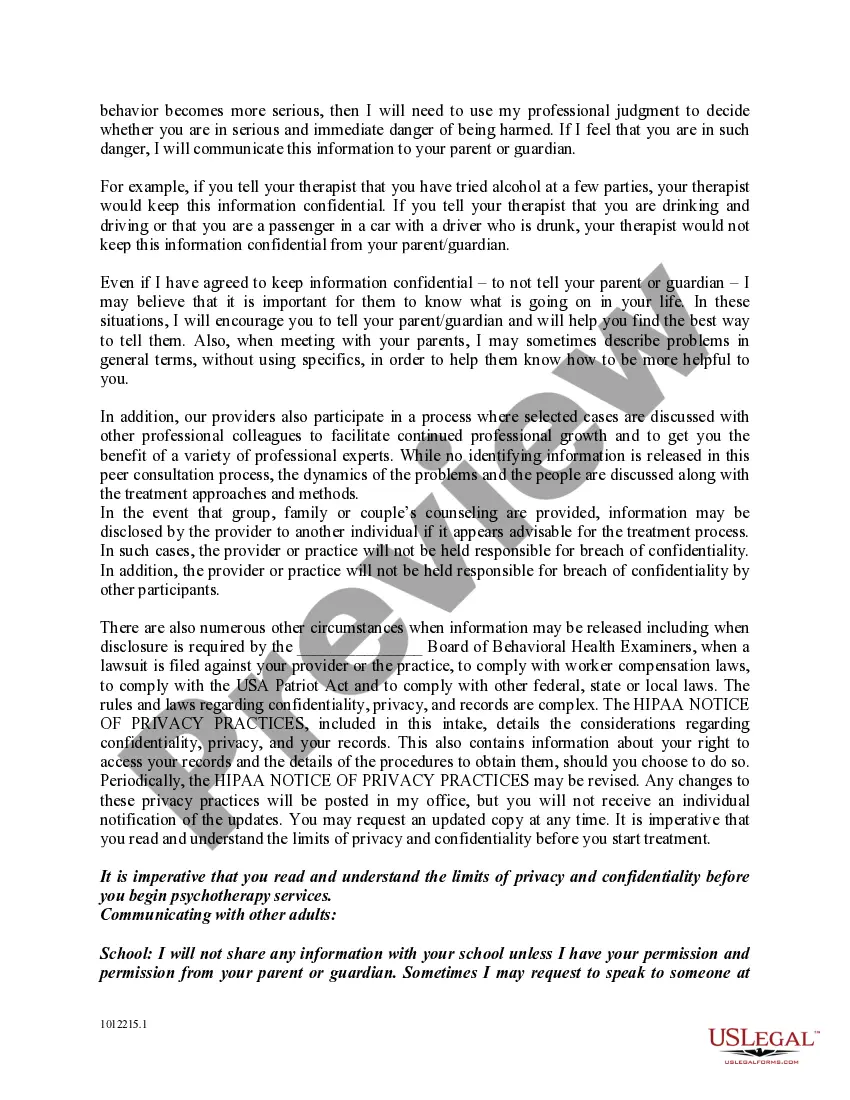
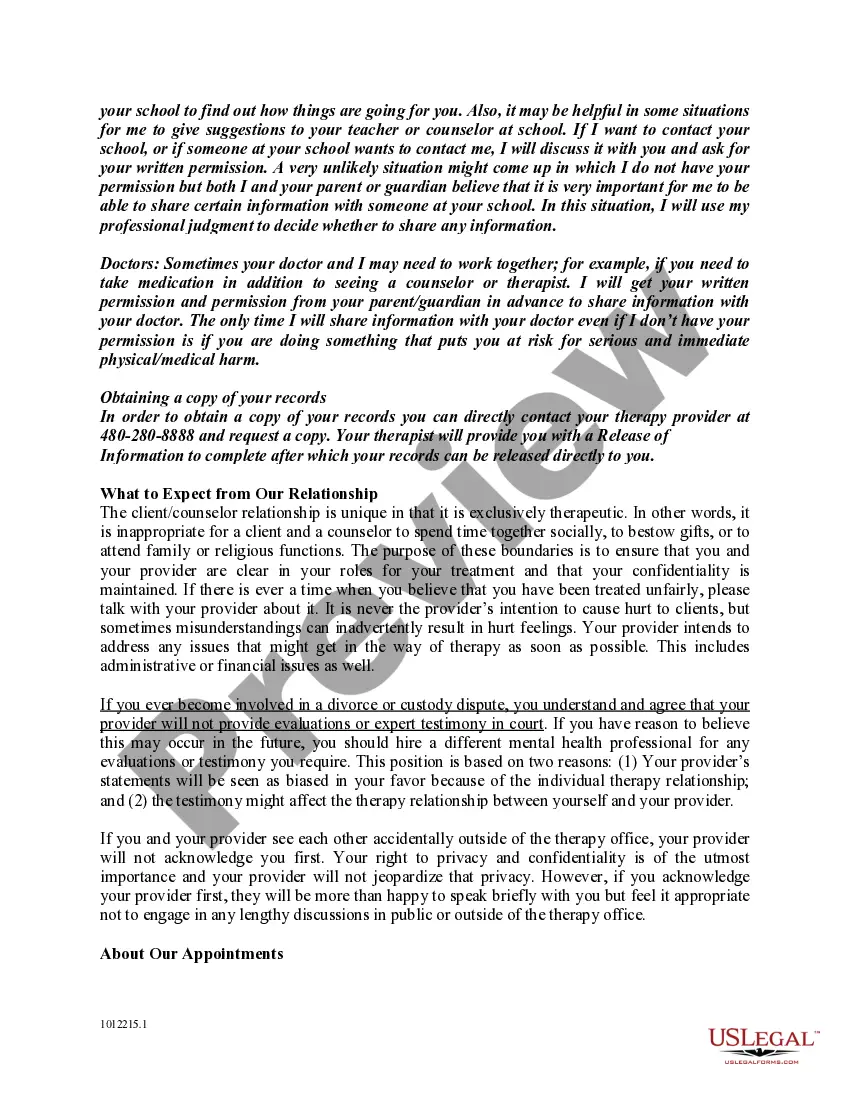
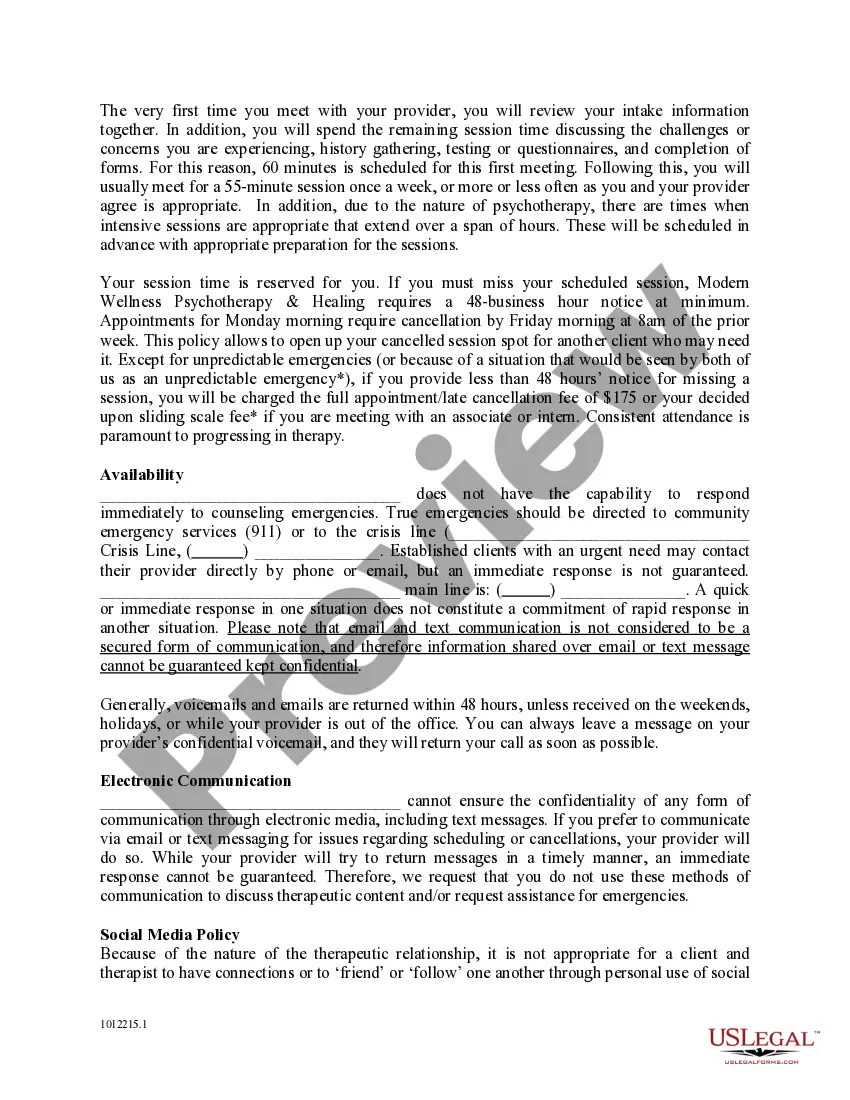
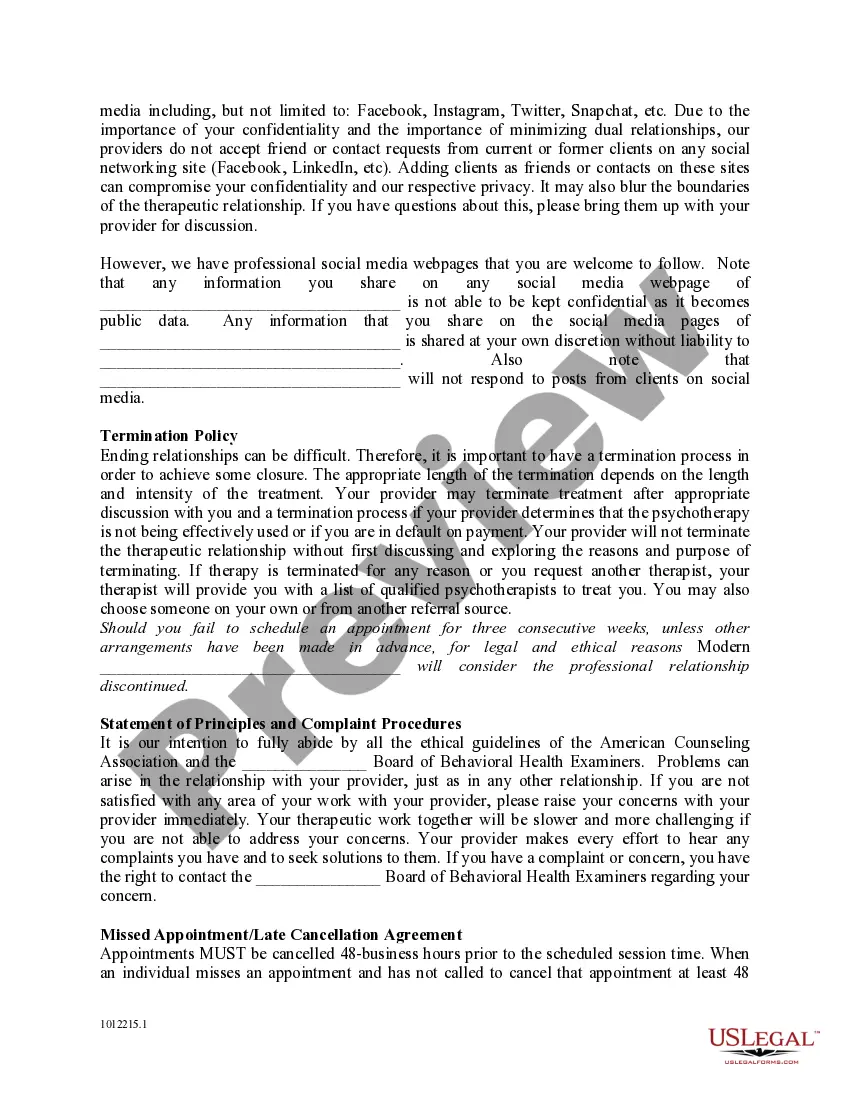
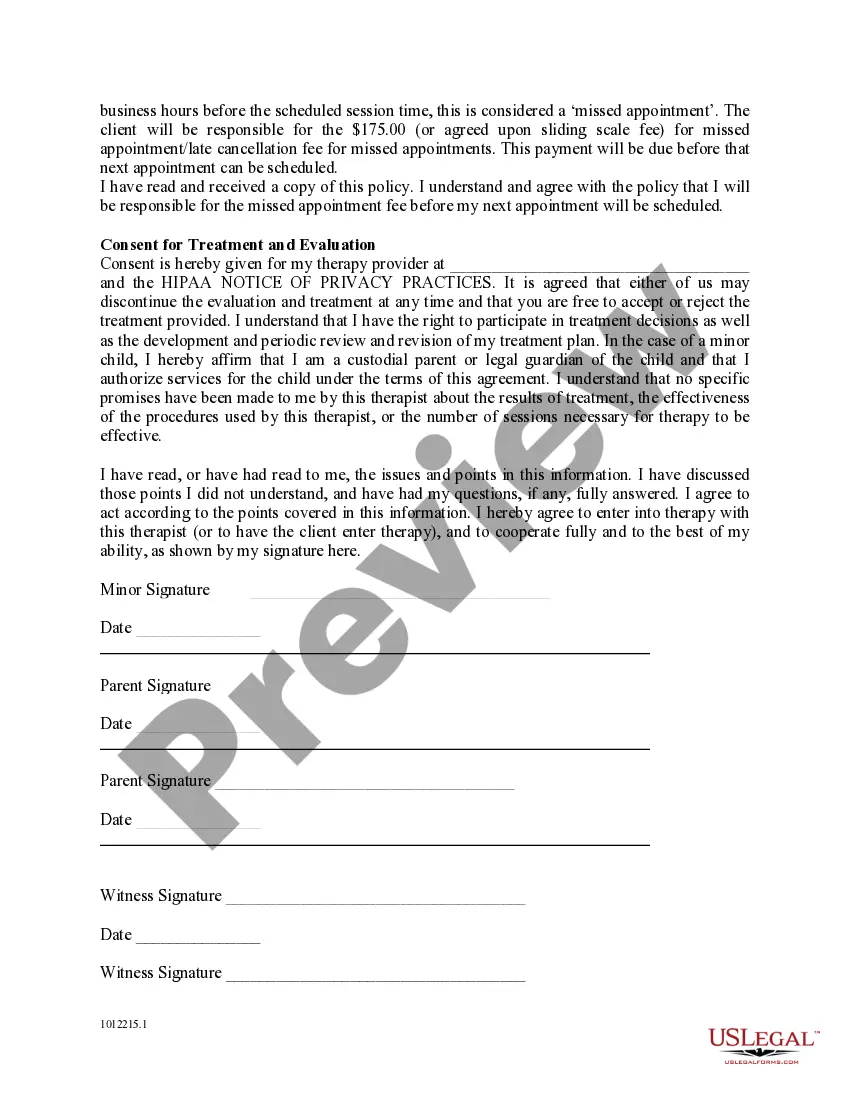
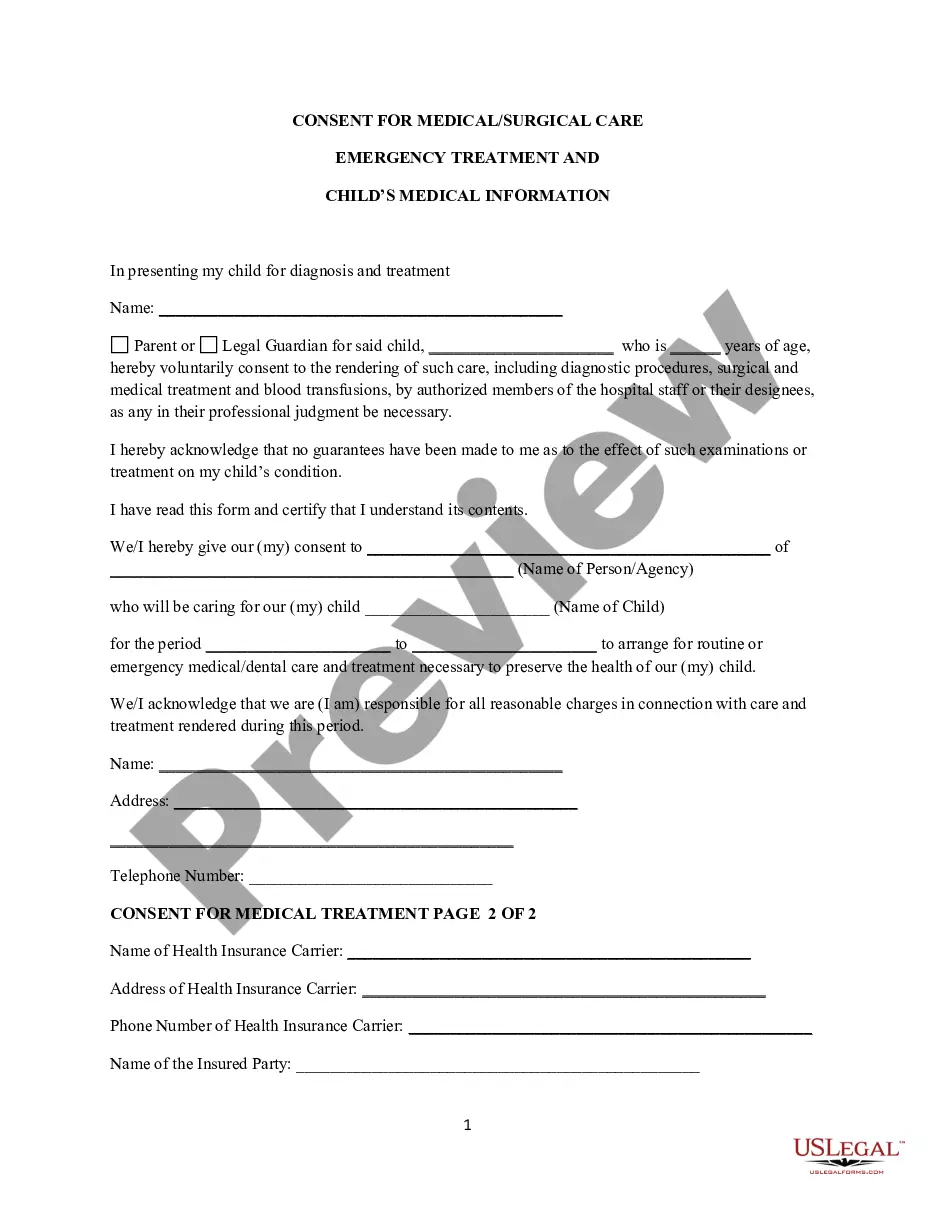
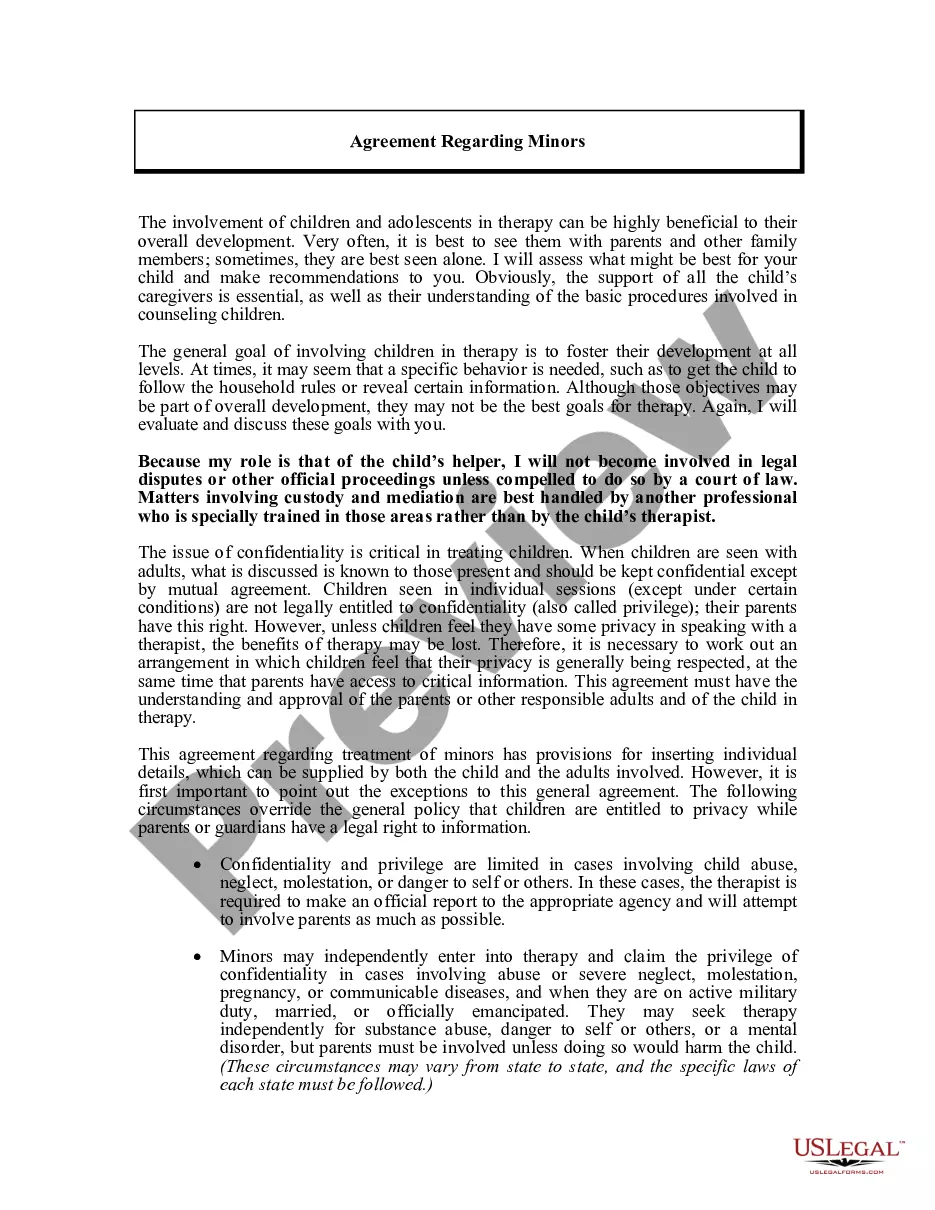
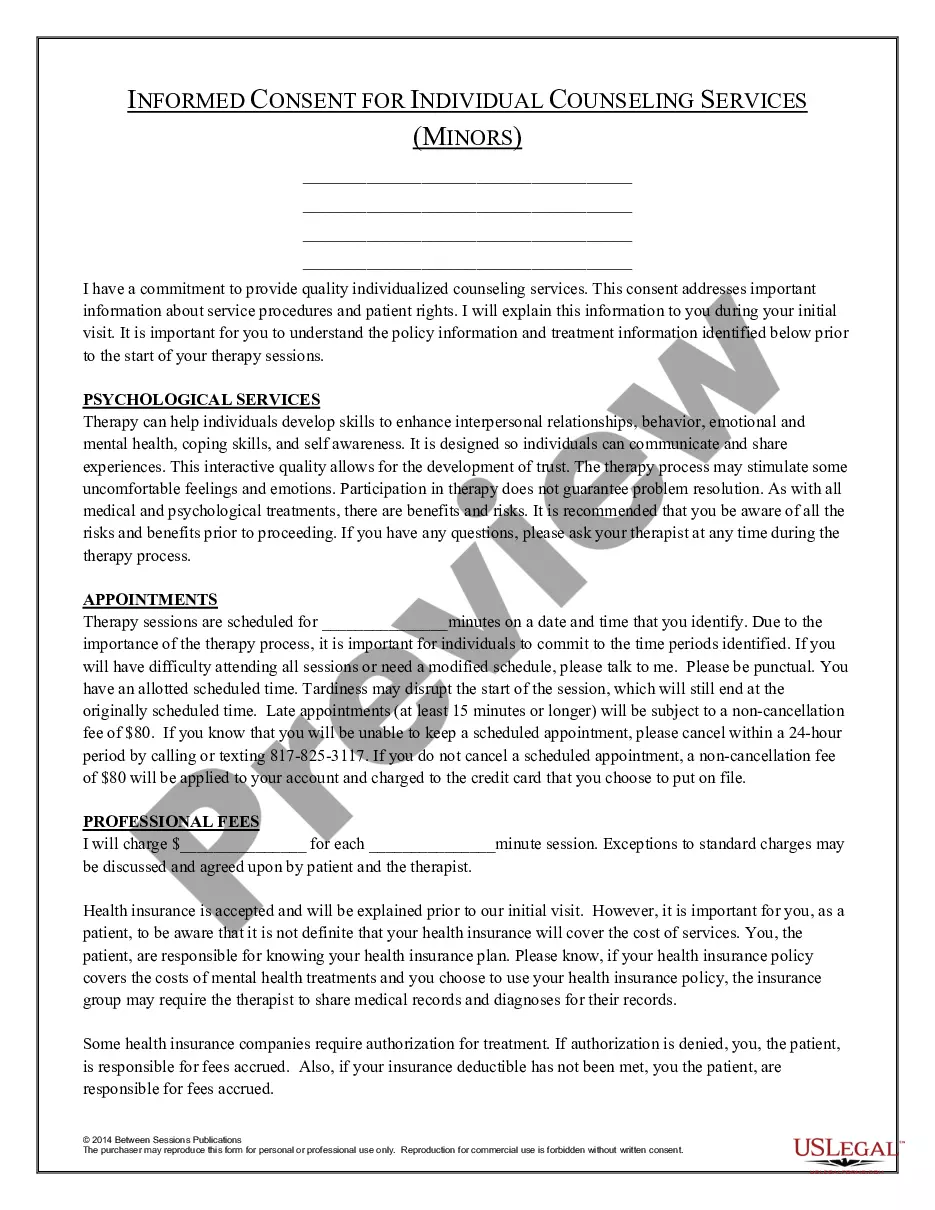
The Office Policy and Procedure, Consent and Agreement for Treatment of a Minor for Mental Health Profession form is a comprehensive document designed to inform the parents or guardians of minors about the policies, procedures, and guidelines set by a mental health professional. This form details the client's rights, the therapeutic process, confidentiality, and other essential practices that differ from traditional agreements by focusing specifically on the treatment of minors in a mental health context. It ensures that guardians fully understand what to expect from therapy and the obligations involved in the therapeutic relationship.
Key components of this form
- Disclosure statement regarding counseling services offered.
- Informed consent covering privacy and confidentiality rules.
- Details about therapist qualifications, including associate clinicians and interns.
- Information on the treatment process, rights, and limitations on treatment.
- Appointment policies, including cancellation fees and procedures.
- Termination policy and procedures for concluding therapy.
- Client's responsibilities regarding attendance and communication.

When to use this document
This form should be used whenever a guardian seeks mental health treatment for a minor. It is particularly crucial during the initial stages of therapy to ensure clarity for both the minor and the guardian regarding the rights and responsibilities involved in therapeutic sessions. The form aids in setting expectations and boundaries, making it a vital part of any minor's mental health treatment process.
Who can use this document
- Parents or guardians of minors seeking therapy.
- Mental health professionals providing services to minors.
- Schools or organizations referring minors for mental health services.
- Individuals seeking clarity on therapy practices related to minors.
How to complete this form
- Provide the name of the minor receiving treatment.
- Fill in the guardian's information, including names and contact details.
- Review the disclosure statement with the minor and explain the treatment process.
- Sign and date the consent section where indicated, ensuring all parties (guardians and minor) understand the agreement.
- Keep a copy for your records and provide one to the mental health professional.
Does this document require notarization?
This form does not typically require notarization unless specified by local law. However, it is important to check your state's requirements for any additional permissions that may be necessary to ensure the acceptance of this form in therapeutic settings.
Get your form ready online
Our built-in tools help you complete, sign, share, and store your documents in one place.
Make edits, fill in missing information, and update formatting in US Legal Forms—just like you would in MS Word.
Download a copy, print it, send it by email, or mail it via USPS—whatever works best for your next step.
Sign and collect signatures with our SignNow integration. Send to multiple recipients, set reminders, and more. Go Premium to unlock E-Sign.
If this form requires notarization, complete it online through a secure video call—no need to meet a notary in person or wait for an appointment.
We protect your documents and personal data by following strict security and privacy standards.

Make edits, fill in missing information, and update formatting in US Legal Forms—just like you would in MS Word.

Download a copy, print it, send it by email, or mail it via USPS—whatever works best for your next step.

Sign and collect signatures with our SignNow integration. Send to multiple recipients, set reminders, and more. Go Premium to unlock E-Sign.

If this form requires notarization, complete it online through a secure video call—no need to meet a notary in person or wait for an appointment.

We protect your documents and personal data by following strict security and privacy standards.
Mistakes to watch out for
- Not discussing the form thoroughly with the minor, leading to misunderstanding.
- Forgetting to sign the form or leaving it unsigned by all parties.
- Leaving out relevant medical or counseling history that could be important for treatment.
- Not adhering to the cancellation policy, leading to unnecessary fees.
- Failing to ask questions about confidentiality limits, which can affect trust in therapy.
Advantages of online completion
- Convenient access allows for easy downloading and printing from home.
- Editability ensures that guardians can customize the form to fit their specific situation.
- Quick retrieval of legal forms reduces the time needed to prepare for therapy sessions.
- Reliable source ensuring that forms are compliant with current legal standards.
Looking for another form?

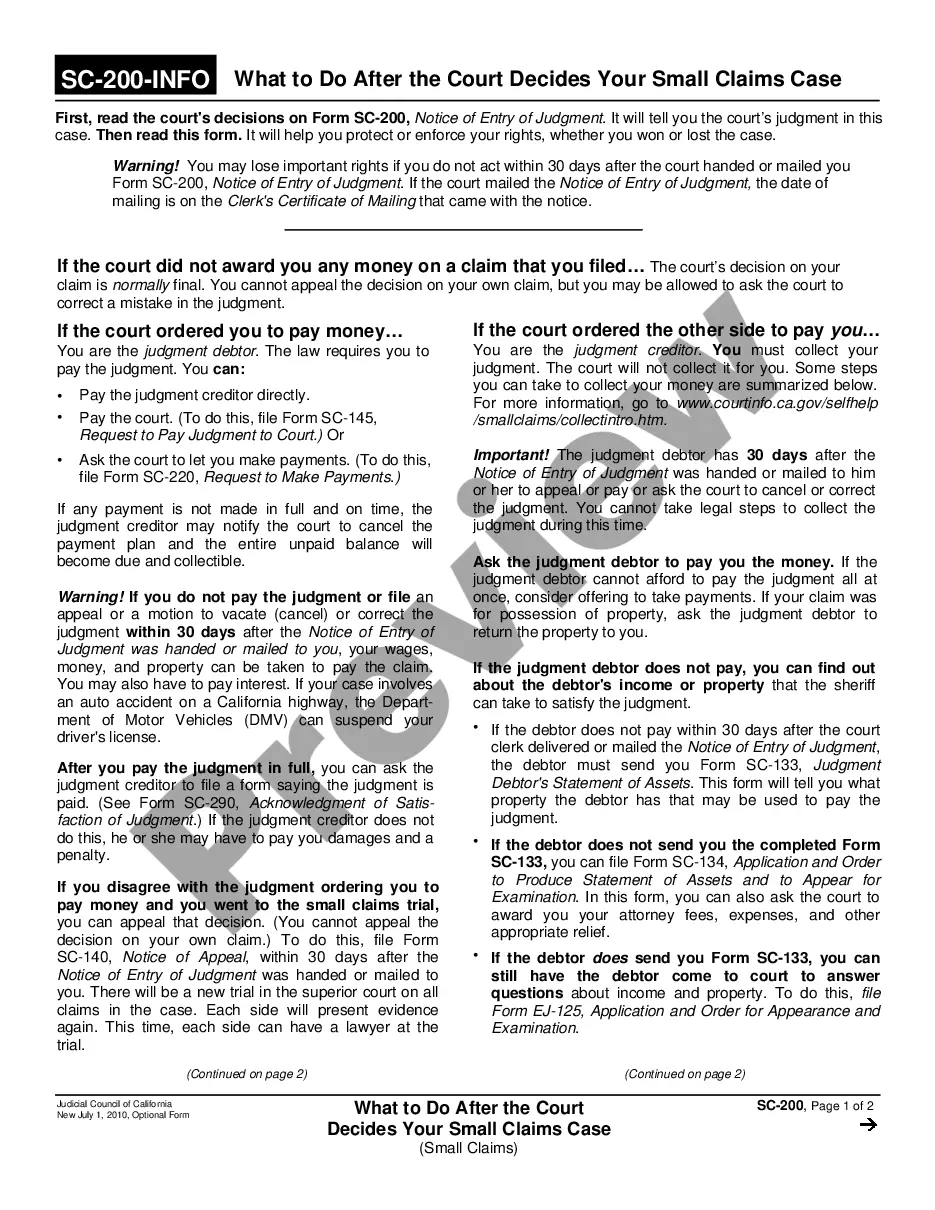
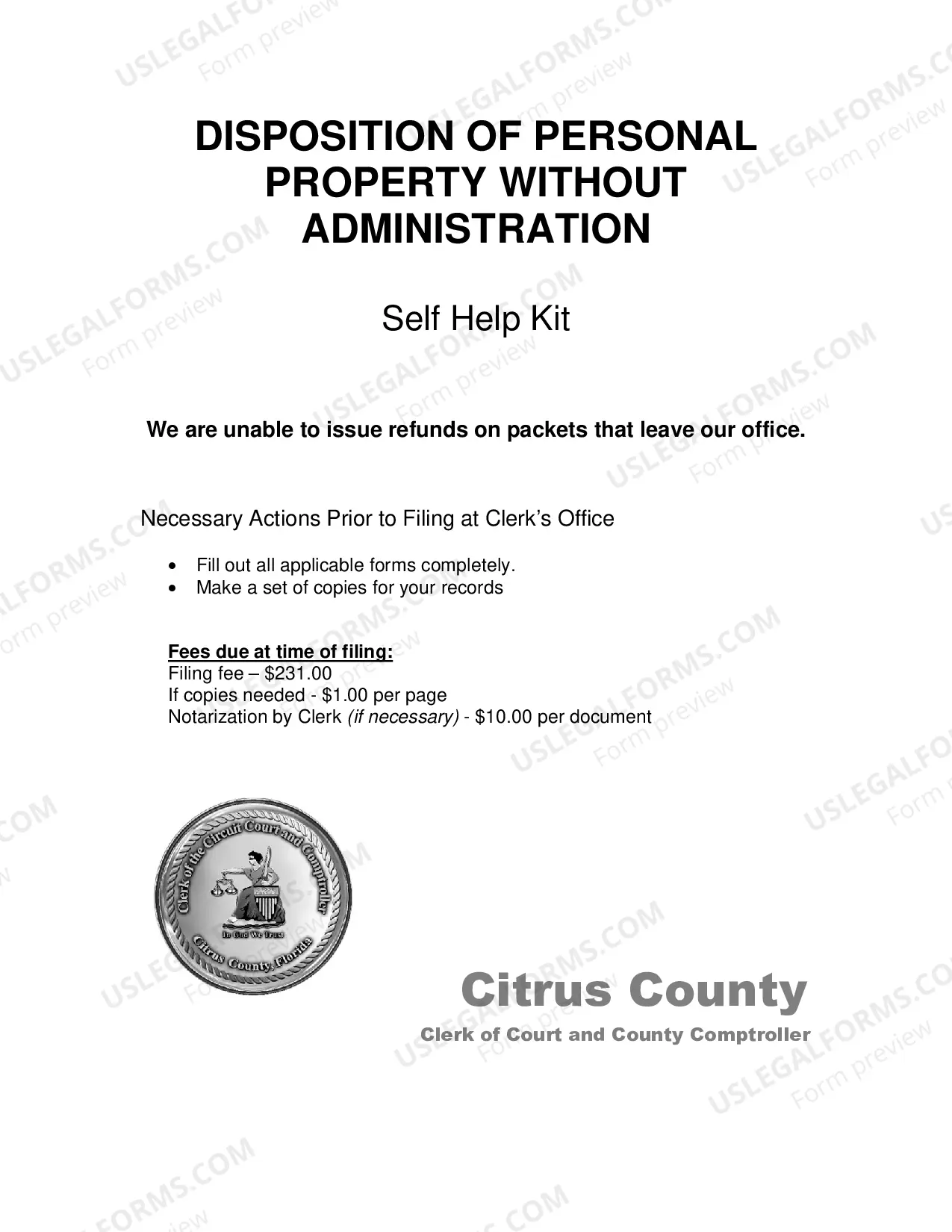
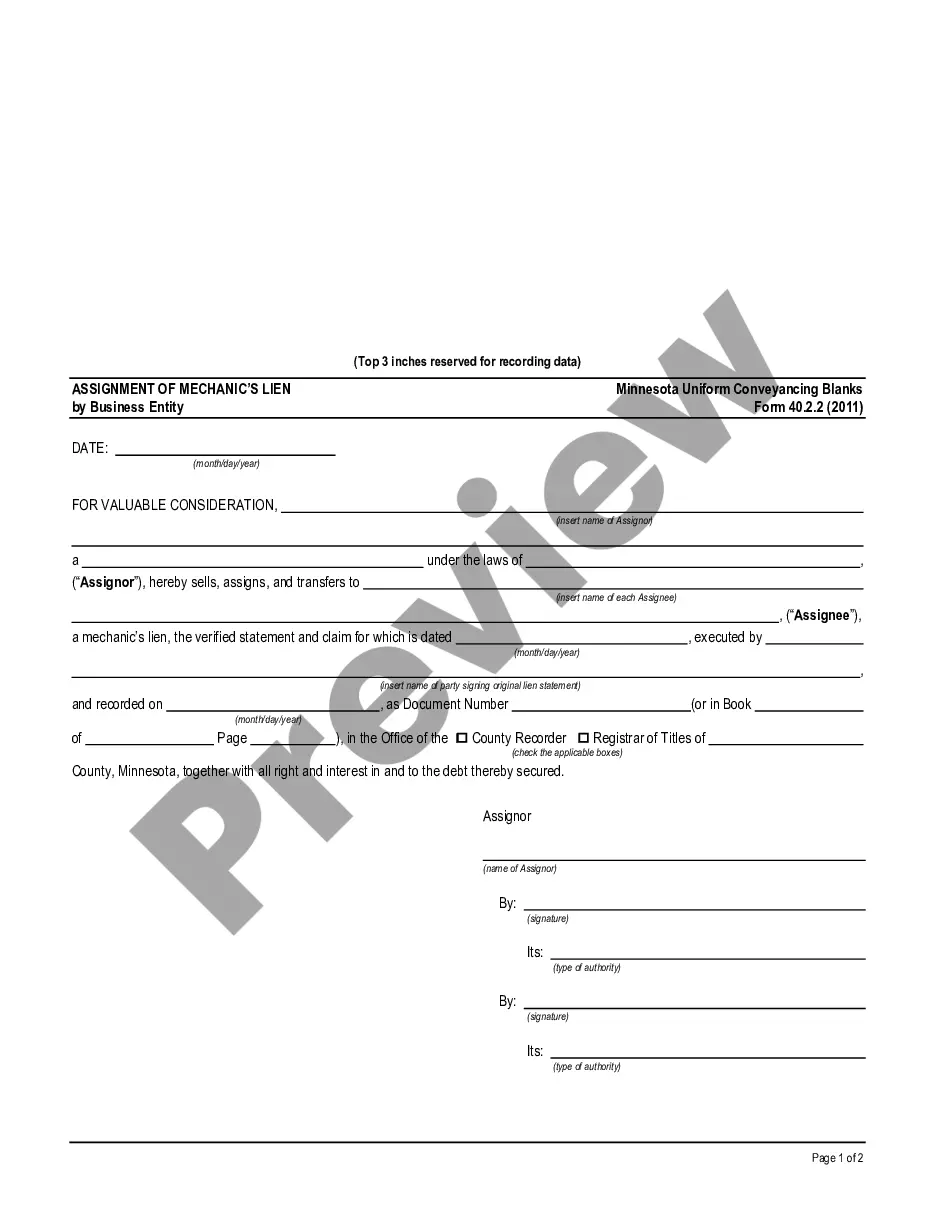
Form popularity
FAQ
Informed consent should be obtained for all major therapeutic and diagnostic procedures, which carry potential risks. Procedures/treatments requiring consent include but are not limited to: Surgical procedures under anesthesia. Biopsies and excisions.
Obtaining informed consent in medicine is process that should include: (1) describing the proposed intervention, (2) emphasizing the patient's role in decision-making, (3) discussing alternatives to the proposed intervention, (4) discussing the risks of the proposed intervention and (5) eliciting the patient's
Legally, children are not able to give true informed consent until they turn 18. So, before taking part in a clinical trial, they are asked for their assent. Assent means that they agree to take part. They may also dissent, which means they do not agree.
There are 4 components of informed consent including decision capacity, documentation of consent, disclosure, and competency.
What Is Informed Consent? There are 4 components of informed consent including decision capacity, documentation of consent, disclosure, and competency. Doctors will give you information about a particular treatment or test in order for you to decide whether or not you wish to undergo a treatment or test.
The informed consent process involves three key features: (1) disclosing to potential research subjects information needed to make an informed decision; (2) facilitating the understanding of what has been disclosed; and (3) promoting the voluntariness of the decision about whether or not to participate in the research.
A minor may give consent to all medical, mental, dental and other health counseling and services if the minor is living separately from parents or legal guardians and is independent of parental support.
Consent must be given voluntarily. The client must be competent (legally as well as cognitively/emotionally) to give consent. We must actively ensure the client's understanding of what she or he is agreeing to. The information shared and all that is agreed to must be documented.