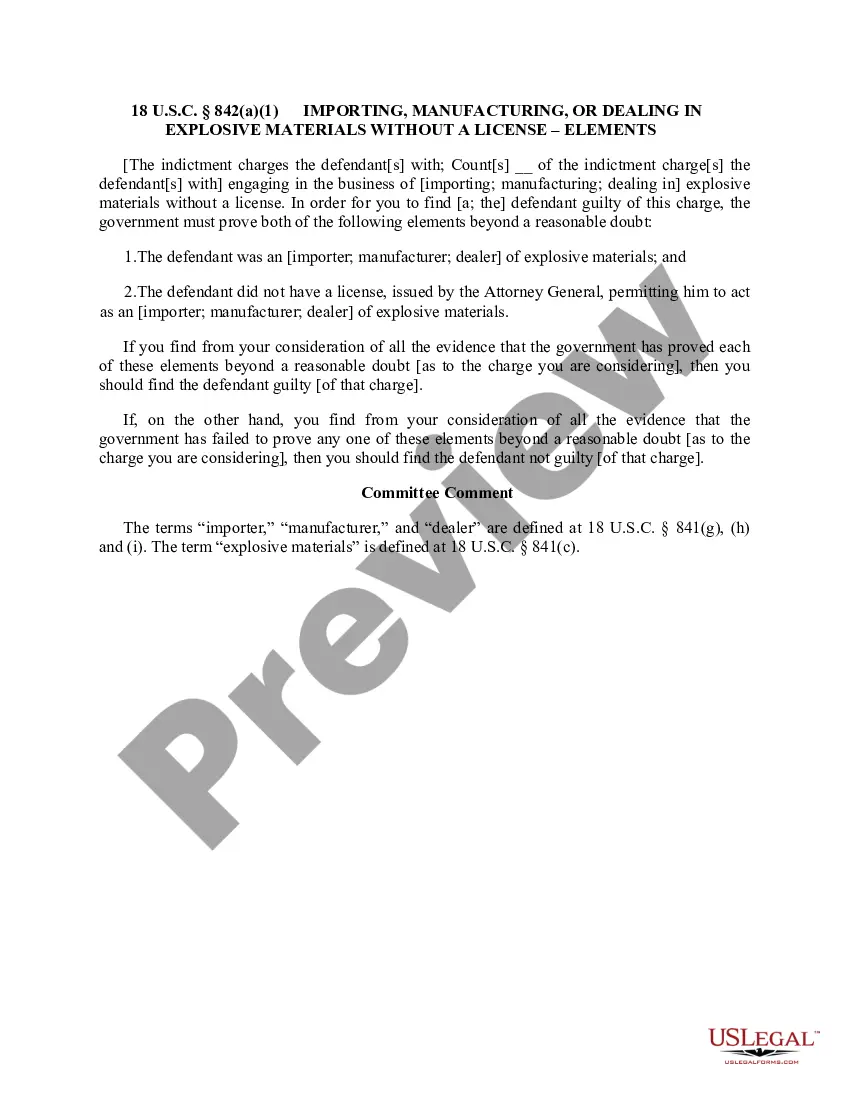
Dealing in Explosive Materials Without License
About this form
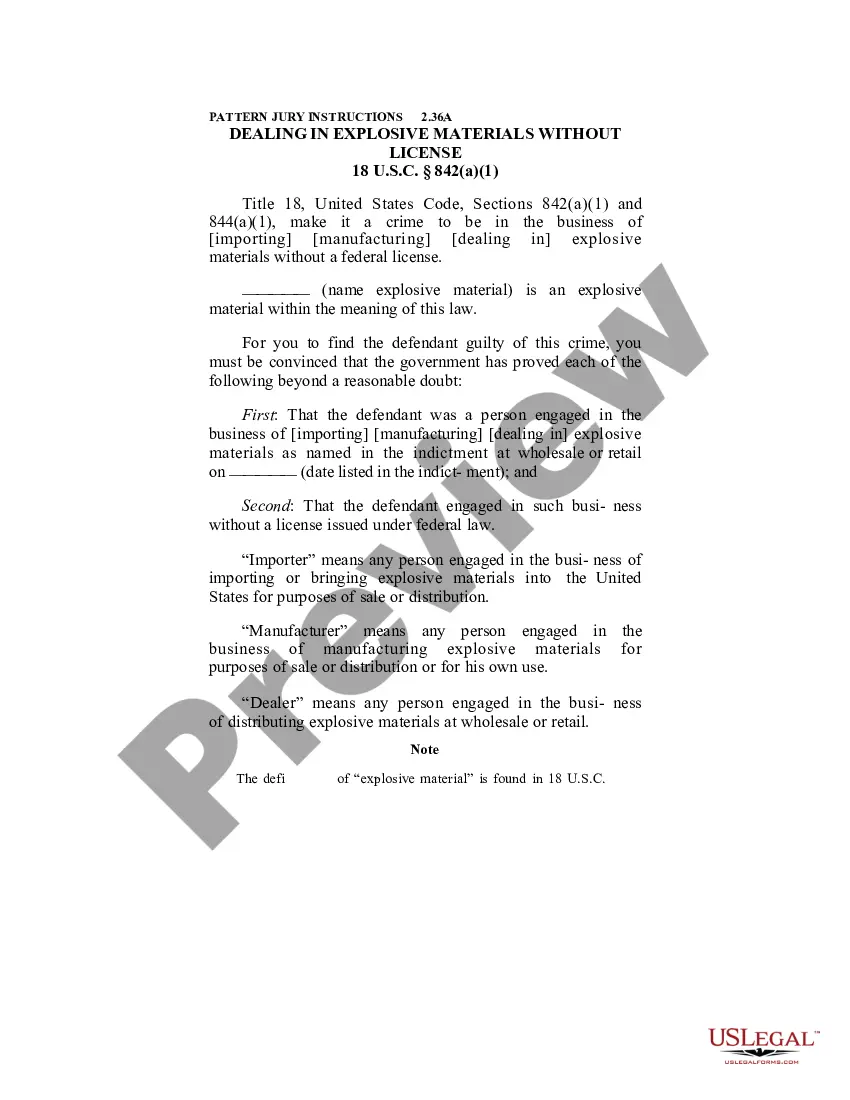
The Dealing in Explosive Materials Without License form addresses activities related to the importation, manufacture, and distribution of explosive materials without appropriate federal licensing. This form outlines the legal implications of engaging in such enterprise, distinguishing it from forms related to lawful handling of explosives with required permissions. It is vital for anyone involved in these operations to understand the legal requirements stipulated in the law to avoid serious criminal charges.
What’s included in this form
- Definition of explosive materials as per federal law.
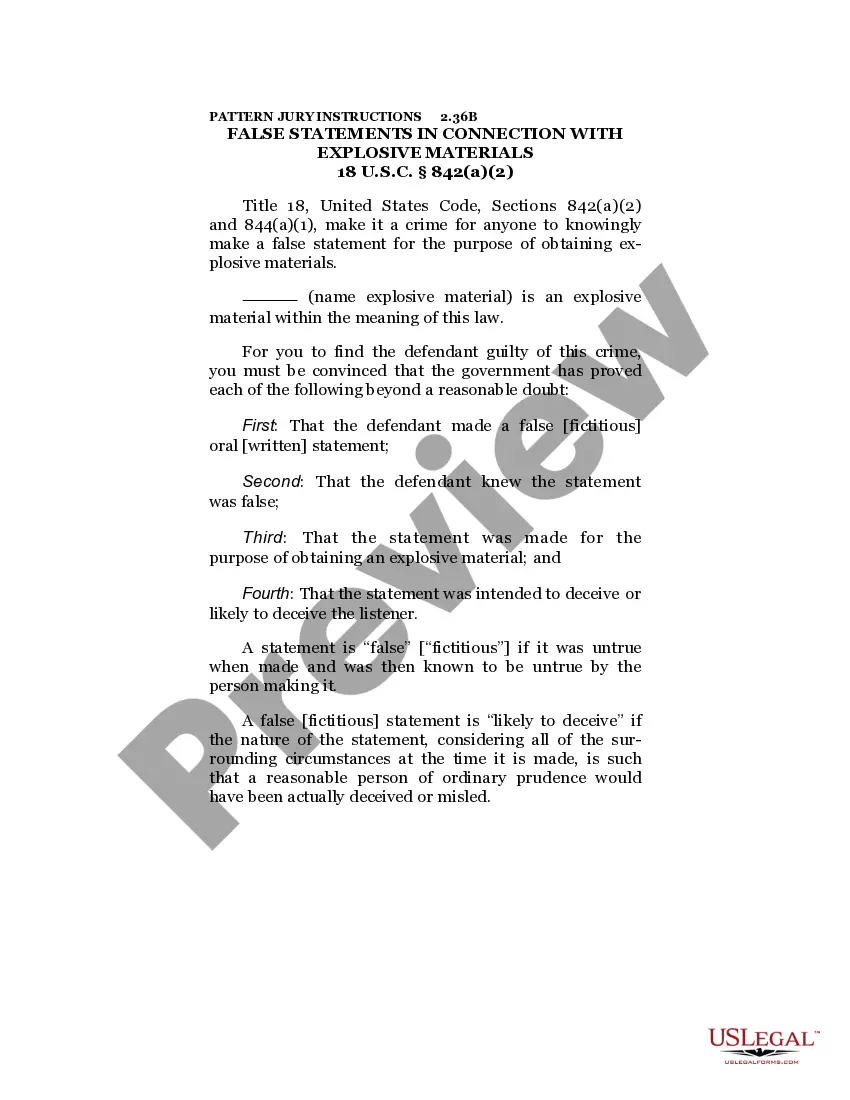
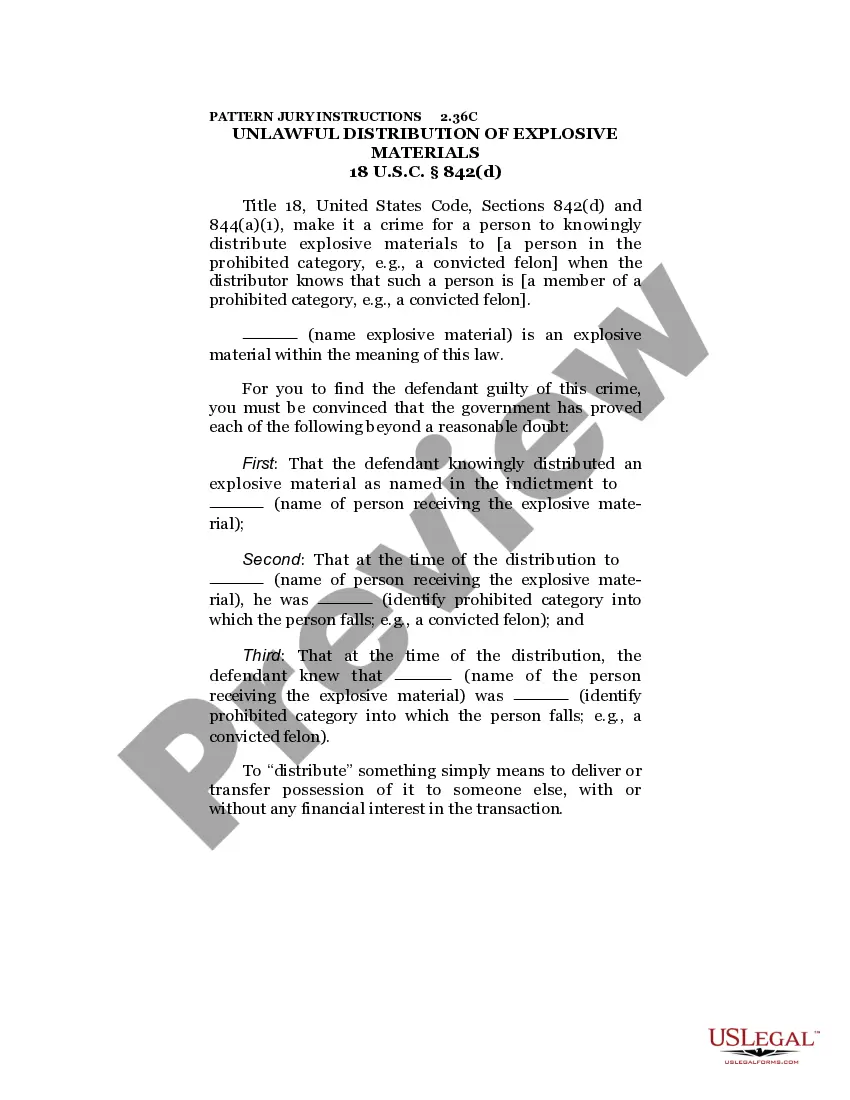
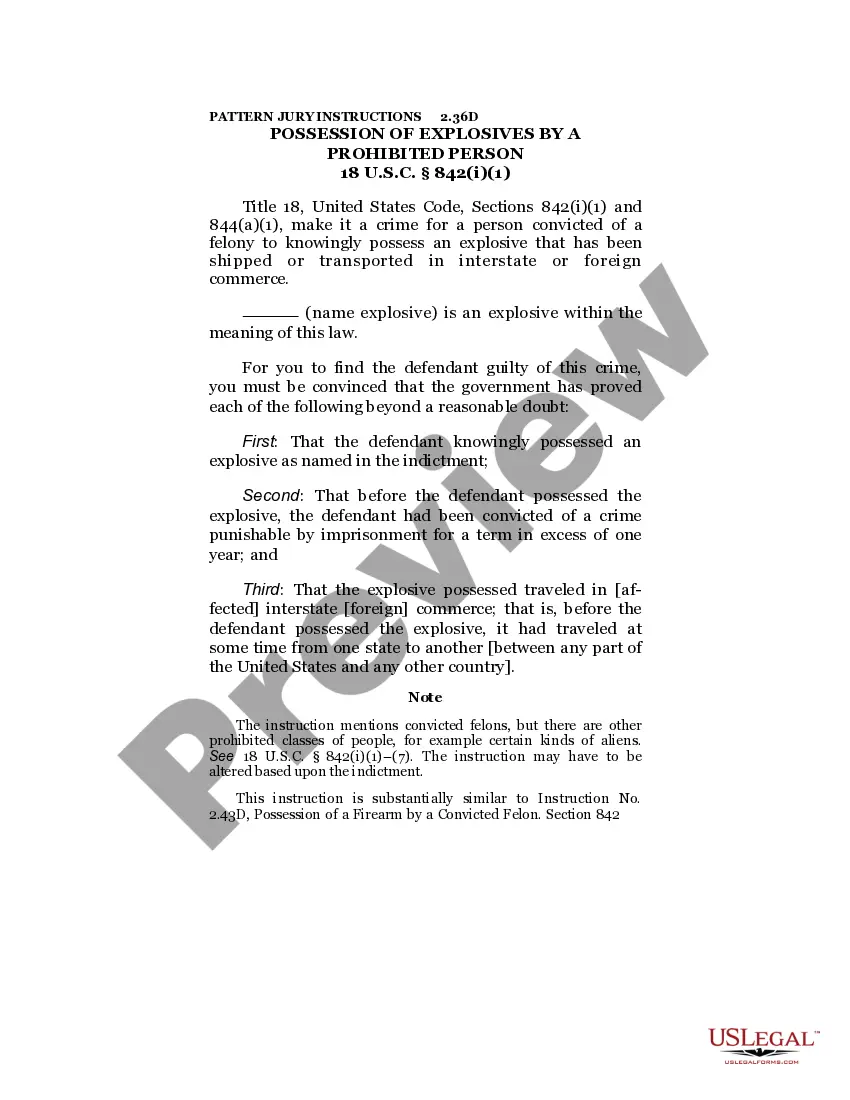
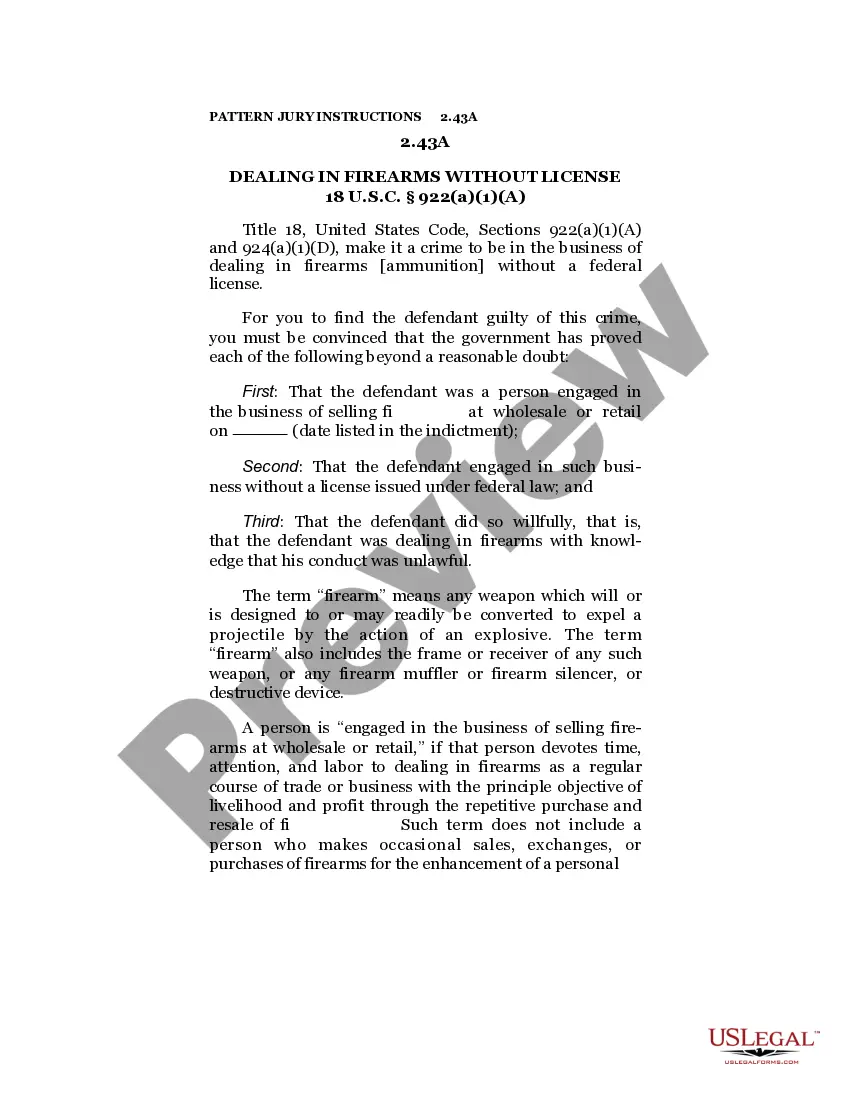
- Criteria for determining the guilt of a defendant, including the requirement of being engaged in the business of dealing with explosives.
- Specific roles defined, including importer, manufacturer, and dealer.
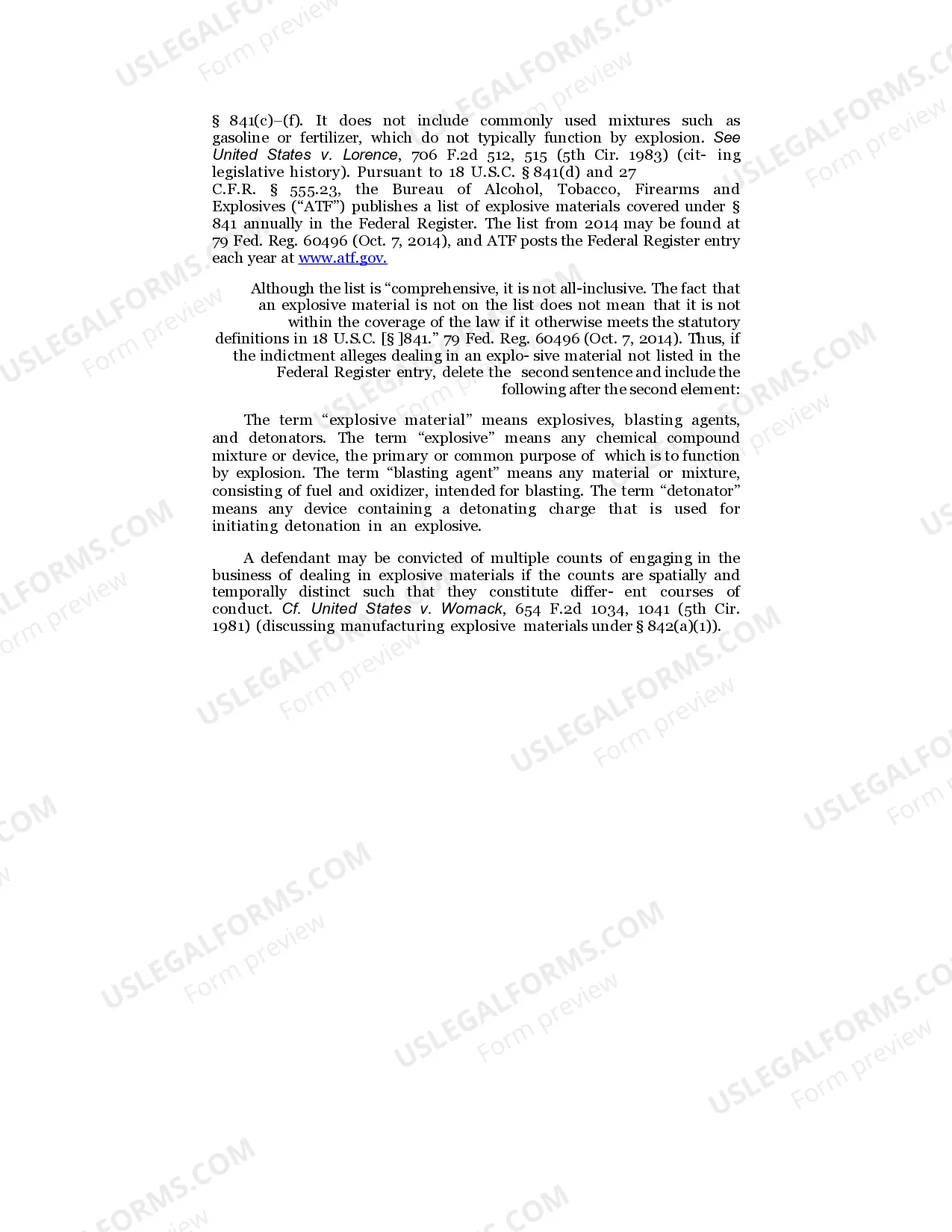
- Examples of materials classified as explosives and those not included.
- Instructions for the prosecution to establish evidence beyond a reasonable doubt.
When this form is needed
This form is used in instances where a person faces charges for unlawfully engaging in the business of dealing with explosive materials. It is essential for legal representatives who need to defend against allegations of such activities, ensuring that all necessary legal definitions and conditions are appropriately accounted for in the defense strategy.
Intended users of this form
- Defendants accused of dealing in explosive materials without a license.
- Lawyers representing clients in cases involving allegations of explosive materials violations.
- Individuals seeking to understand the legal framework surrounding the distribution of explosive materials.
Instructions for completing this form
- Identify and list the specific explosive materials involved in the case.
- Document the defendant's business activities related to exporting, manufacturing, or dealing in explosive materials.
- Specify the date of the alleged offenses as indicated in the indictment.
- Establish the absence of a federal license pertaining to the activities conducted.
- Prepare to present evidence supporting each required element of the offense as stipulated by the law.
Is notarization required?
This form does not typically require notarization to be legally valid. However, some jurisdictions or document types may still require it. US Legal Forms provides secure online notarization powered by Notarize, available 24/7 for added convenience.
Get your form ready online
Our built-in tools help you complete, sign, share, and store your documents in one place.
Make edits, fill in missing information, and update formatting in US Legal Forms—just like you would in MS Word.
Download a copy, print it, send it by email, or mail it via USPS—whatever works best for your next step.
Sign and collect signatures with our SignNow integration. Send to multiple recipients, set reminders, and more. Go Premium to unlock E-Sign.
If this form requires notarization, complete it online through a secure video call—no need to meet a notary in person or wait for an appointment.
We protect your documents and personal data by following strict security and privacy standards.

Make edits, fill in missing information, and update formatting in US Legal Forms—just like you would in MS Word.

Download a copy, print it, send it by email, or mail it via USPS—whatever works best for your next step.

Sign and collect signatures with our SignNow integration. Send to multiple recipients, set reminders, and more. Go Premium to unlock E-Sign.

If this form requires notarization, complete it online through a secure video call—no need to meet a notary in person or wait for an appointment.

We protect your documents and personal data by following strict security and privacy standards.
Typical mistakes to avoid
- Failing to recognize all materials that may be classified as explosives.
- Not verifying whether licensing requirements are met before engaging in explosive material dealings.
- Ignoring local state laws that may impose additional criteria or penalties.
Benefits of using this form online
- Convenient and immediate access to necessary legal documents.
- Easy to edit and customize the form according to specific case details.
- Reliable templates drafted by licensed attorneys, ensuring compliance with current legal standards.
Looking for another form?

Form popularity
FAQ
There are 3 classes of explosive materials: (a) High explosives (for example, dynamite, flash powders, and bulk salutes); (b) Low explosives (for example, black powder, safety fuses, igniters, igniter cords, fuse lighters, and ?display fireworks?, except for bulk salutes); and.
DOD Hazardous Material Classification Procedure is similar to the United Nations Classification Procedure. UN classifies explosives as Class 1 materials.
Explosive Materials -- Unlawful Acts -- 18 U.S.C. § 842. Section 842 contains numerous provisions enumerating specified unlawful acts, and includes new provisions implementing the "Plastic Explosives Convention." See Antiterrorism Act of 1996, Title VI, 110 Stat.
Class A explosives. Possessing, detonating, or otherwise maximum hazard; such as dynamite, nitroglycerin, picric acid, lead azide, fulminate of mercury, black powder, blasting caps, and detonating primers.
Explosives operations must be performed by trained and qualified employees under the supervision of an employee who is trained and qualified to understand the hazards of the operation. For this reason, a two-man rule is always in effect when working with explosives.
Under California Health and Safety Code 12085 HS, it is a crime to make, possess, or transport illegal explosives. A violation is a misdemeanor punishable by up to 6 months in jail and fines of up to $1000.00. The language of the code section states that: 12085.
A minimum of 8 hours of approved explosives refresher training are required every two Page 3 years to maintain WS certification. Certified employees who do not meet this requirement within 2 years of their last training will forfeit their certification.
Under federal explosives law, it is illegal to manufacture, store, distribute, receive or transport explosive materials without a federal explosives license or permit (FEL/FEP).